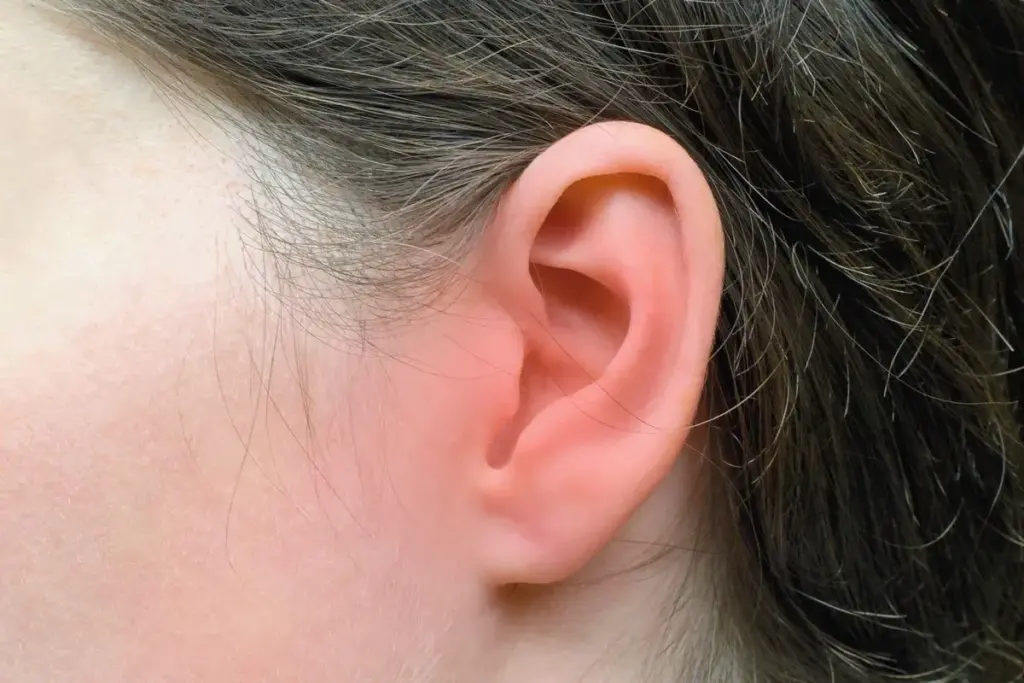
Conductive hearing loss happens when sound can’t get to the inner ear. This is often because of issues in the outer or middle ear. Problems like ear infections, blockages, or structural issues can cause it.
We know how much hearing loss affects daily life. We’re dedicated to giving our patients the best care. The National Center for Biotechnology Information says conductive hearing loss can come from defects in the outer ear, ear canal, eardrum, or middle ear ossicles.
Key Takeaways
- Conductive hearing loss is caused by problems in the outer or middle ear.
- Common causes include ear infections, blockages, and structural abnormalities.
- Treatment options are available to improve conductive hearing loss.
- Understanding the causes and symptoms is crucial for effective management.
- Expert care is available for patients with hearing impairment.
The Anatomy of Hearing: How Our Ears Process Sound

Our ears are made up of three main parts. Each part plays a key role in how we hear. Knowing about these parts helps us understand how sound is processed.
Outer Ear Structure and Function
The outer ear, or pinna, catches sound waves. It sends them into the ear canal. The ear canal has tiny hairs and earwax. Earwax keeps the ear clean and safe from harm.
Middle Ear Components and Sound Transmission
The middle ear is filled with air. It has three bones: the malleus, incus, and stapes. These bones help move vibrations from the eardrum to the inner ear. The eardrum vibrates when sound hits it, and the bones make these vibrations stronger.
Inner Ear and Neural Pathways
The inner ear has the cochlea and the vestibular system. The cochlea turns sound vibrations into electrical signals. These signals go to the brain, where we hear them. The vestibular system helps us stay balanced.
|
Ear Component |
Function |
|---|---|
|
Outer Ear (Pinna/Auricle) |
Collects sound waves |
|
Ear Canal (External Auditory Meatus) |
Directs sound waves to the eardrum |
|
Eardrum (Tympanic Membrane) |
Vibrates with sound waves |
|
Ossicles (Malleus, Incus, Stapes) |
Transmits vibrations to the inner ear |
|
Cochlea |
Converts vibrations into electrical signals |
|
Vestibular System |
Maintains balance and equilibrium |
What is Conductive Hearing Loss?

Conductive hearing loss happens when the middle ear can’t pass sound waves properly. This issue is linked to problems in the outer or middle ear. It stops sound from getting to the inner ear as it should.
Definition and Mechanism
Conductive hearing loss means hearing is not as clear because of a problem in the outer or middle ear. Sound can’t get to the inner ear right. This can be because of blockages, infections, or structural problems.
Many things can cause conductive hearing loss. For example, earwax impaction, ear infections, or abnormalities in the middle ear bones. These can stop the eardrum and ossicles from vibrating properly.
Sound Transmission Disruption
Problems in the outer ear, eardrum, or middle ear bones can disrupt sound transmission. Earwax buildup can block sound, while an ear infection can fill the middle ear with fluid. This fluid stops the eardrum and ossicles from moving.
|
Cause |
Effect on Sound Transmission |
|---|---|
|
Earwax Impaction |
Blocks sound from reaching the eardrum |
|
Ear Infections |
Causes fluid buildup, hindering eardrum and ossicle movement |
|
Ossicular Abnormalities |
Impairs the normal vibration and transmission of sound |
Typical Symptoms and Manifestations
The symptoms of conductive hearing loss vary. They can include feeling like the ear is full or blocked, hearing loss, or ringing or buzzing. People might also struggle to hear soft sounds or follow conversations in noisy places.
Conductive hearing loss can really affect someone’s life. Knowing what causes it, its symptoms, and how it works is key for the right treatment.
Organs and Structures Affected in Conductive Hearing Loss
It’s important to know which parts of the ear are affected by conductive hearing loss. This type of hearing loss happens when sound can’t get from the outer ear to the inner ear. Problems in different parts of the ear can cause it.
The External Ear Canal
The external ear canal connects the outer ear to the eardrum. It’s key for sound to reach the eardrum. But, blockages like earwax can stop sound from getting there.
“Earwax impaction is a common cause of conductive hearing loss,” as it can block the ear canal. Keeping the ear clean is important to avoid this.
The Tympanic Membrane (Eardrum)
The tympanic membrane, or eardrum, is thin and separates the outer ear canal from the middle ear. It vibrates with sound waves, sending them to the ossicles. Damage to the eardrum can stop this process, causing hearing loss.
A perforated eardrum can happen from trauma, infection, or Eustachian tube problems. The size and location of the hole affect how much hearing loss there is.
The Ossicular Chain (Malleus, Incus, Stapes)
The ossicular chain has three bones (malleus, incus, and stapes) that carry vibrations from the eardrum to the inner ear. Damage or fixation of these bones can cause hearing loss. Otosclerosis, where the stapes bone gets stuck, is a big problem.
The ossicles are important for making sound vibrations stronger. Damage or fixation of these parts in the ear can greatly reduce hearing.
Common Causes of Conductive Hearing Loss
Conductive hearing loss happens when sound can’t get through the outer or middle ear. We’ll look at the main reasons, like problems with the ear canal, eardrum, and middle ear.
Earwax Impaction (Cerumen)
Earwax buildup is a big reason for conductive hearing loss, especially in kids. When earwax blocks the ear canal, it can really hurt your hearing. It’s smart to clean your ears regularly and see a doctor to avoid this.
Foreign Body Obstruction
Foreign objects in the ear canal can cause hearing loss. This is more common in kids, who might put small things in their ears. If this happens, you need to see a doctor right away to get your hearing back.
Ear Infections and Fluid Buildup
Ear infections can cause fluid to build up in the middle ear, leading to hearing loss. According to hearing loss statistics, these infections are a big problem for kids.
|
Cause |
Description |
Commonly Affected |
|---|---|---|
|
Earwax Impaction |
Buildup of earwax in the ear canal |
Children and adults |
|
Foreign Body Obstruction |
Objects lodged in the ear canal |
Primarily children |
|
Ear Infections |
Fluid buildup due to infections like otitis media |
Children and adults |
|
Eustachian Tube Dysfunction |
Impaired regulation of air pressure in the middle ear |
Individuals with colds or allergies |
Eustachian Tube Dysfunction
The Eustachian tube helps control air pressure in the middle ear. When it doesn’t work right, often because of colds or allergies, it can cause hearing loss. Treatment usually focuses on fixing the cause.
Knowing why conductive hearing loss happens is key to treating it. Doctors can then find the right way to help you hear better and live a fuller life.
Otitis Media: Primary Cause in Pediatric Populations
In kids, otitis media often leads to conductive hearing loss. This middle ear inflammation is common in children. It can cause hearing problems if not treated right.
“Otitis media is a big health worry because it’s so common,” say health experts. We’ll look at otitis media’s types, how widespread it is, who’s at risk, and its possible problems.
Acute vs. Chronic Otitis Media
Otitis media comes in two forms: acute and chronic. Acute otitis media starts suddenly, often after a cold. Kids might feel ear pain, have a fever, and get cranky.
Chronic otitis media lasts longer and can cause serious hearing loss. It’s linked to Eustachian tube problems and can make kids very sick.
Global Prevalence Statistics
Otitis media affects millions of kids worldwide. The World Health Organization says it’s a top reason for hearing loss in kids under 5. This is especially true in poor countries where healthcare is hard to get.
The number of kids with otitis media varies by place. Some groups, like Indigenous kids or those with cleft palates, get it more often.
Risk Factors and Complications
Things like smoking, bottle feeding lying down, and daycare can make kids more likely to get otitis media. Young kids with short Eustachian tubes are also at higher risk.
If not treated, otitis media can cause serious problems. These include mastoiditis, tympanosclerosis, and cholesteatoma. These can be very serious and even life-threatening.
It’s important to catch otitis media early and treat it right. This helps prevent hearing loss and other serious issues. Parents and caregivers should watch for signs and get help if they think their child has otitis media.
Otosclerosis: When Middle Ear Bones Become Fixed
Otosclerosis is a condition where abnormal bone growth in the middle ear causes conductive hearing loss. It affects the middle ear bones, making them fixed and leading to hearing problems.
Pathophysiology and Progression
Otosclerosis involves abnormal bone remodeling in the middle ear, especially the stapes bone. This growth makes the stapes bone fixed, stopping it from vibrating to sound waves. This disrupts sound transmission to the inner ear, causing hearing loss.
The progression of otosclerosis varies. It can stay the same for years or quickly worsen, causing significant hearing loss.
Genetic Factors and Prevalence
Studies show otosclerosis has a genetic link, with some families more affected. The exact genetic causes are still being studied, but many genes are thought to play a role.
Otosclerosis is more common in women and often starts in the second to third decade of life. It affects about 0.3% to 0.5% of Caucasians worldwide.
|
Characteristics |
Otosclerosis |
|---|---|
|
Primary Affected Area |
Middle ear bones, particularly the stapes |
|
Main Cause of Hearing Loss |
Fixation of the stapes bone |
|
Genetic Component |
Yes, with familial tendencies |
|
Prevalence |
Affects approximately 0.3% to 0.5% of the Caucasian population |
Bilateral Hearing Loss Patterns
Otosclerosis can lead to hearing loss in both ears, but the severity can differ. Sometimes, one ear is more affected, causing uneven hearing loss.
This uneven hearing loss can make it hard for patients to locate sounds and understand speech in noisy places.
Sensorineural Hearing Loss: The Contrast
It’s important to know the difference between conductive and sensorineural hearing loss. Conductive loss happens when sound can’t get through the middle ear. Sensorineural loss is about problems in the inner ear or the nerves that carry sound to the brain.
Damage to Inner Ear and Nerve Pathways
Sensorineural hearing loss is caused by damage to the inner ear or the nerves. This damage can come from getting older, loud noises, infections, or certain medicines. For more info, check out the National Center for Biotechnology Information.
Causes of Sensorineural Hearing Loss
There are many reasons for sensorineural hearing loss. These include:
- Age-related hearing loss (presbycusis)
- Noise-induced hearing loss
- Infections such as meningitis
- Ototoxic medications
- Trauma to the head or ear
- Genetic predispositions
Key Differences from Conductive Loss
The main difference between conductive and sensorineural hearing loss is where the damage is. Conductive loss is in the outer or middle ear. Sensorineural loss is in the inner ear or nerves. Knowing this helps doctors choose the right treatment.
Mixed Hearing Loss: When Both Types Occur
Mixed hearing loss happens when you have problems in both the middle and inner ear. It’s a mix of conductive and sensorineural hearing loss. This condition needs a detailed diagnosis and treatment plan.
Diagnostic Challenges
Figuring out mixed hearing loss is tricky. It requires finding out about both conductive and sensorineural issues. Comprehensive audiological testing is key to understand the problem.
Tests like pure-tone audiometry and tympanometry help. They check the middle ear and inner ear for damage.
We need to look at the test results carefully. This helps us see how much each type of hearing loss affects the patient.
Treatment Complexity
Treating mixed hearing loss is hard because it involves two different problems. Surgical interventions might be needed for the middle ear. At the same time, hearing aids or other assistive devices could help with the inner ear issue.
We create a treatment plan that fits the patient’s specific needs. This plan considers the unique aspects of their mixed hearing loss.
Case Examples and Scenarios
Imagine a patient with otosclerosis and age-related hearing loss. They have mixed hearing loss. They might need surgery for otosclerosis and hearing aids for the sensorineural loss.
Another example is a patient with ear infections and trauma. They have both conductive and sensorineural hearing loss. Rehabilitation strategies could include treating the infection, surgery, and hearing aids.
Diagnosing Conductive Hearing Loss
We find out if you have conductive hearing loss by doing a few things. We look at you and use special tests. This way, we can figure out why you might be having trouble hearing and how to fix it.
Clinical Examination Techniques
Looking closely at your ears is key to finding out if you have conductive hearing loss. We check the outer ear, ear canal, and eardrum for any problems. Otoscopy lets us see inside your ear to find things like earwax or holes in the eardrum.
- Otoscopy to examine the ear canal and eardrum
- Tuning fork tests to assess sound conduction
Audiometric Testing Methods
Testing your hearing is very important. Pure-tone audiometry is a test that checks how well you can hear different sounds. It helps us know if your hearing loss is conductive or not.
- Pure-tone audiometry to assess hearing thresholds
- Speech audiometry to evaluate speech recognition
Tympanometry and Acoustic Reflexes
Tympanometry is a test that looks at how your eardrum moves and your middle ear muscles react. It can show if there’s fluid or if your Eustachian tube isn’t working right. Acoustic reflex testing checks how your stapedius muscle responds to sound, giving us clues about your middle ear.
Imaging Studies (CT, MRI)
Sometimes, we need to use CT scans or MRI to get a better look at your middle ear. These tests give us detailed pictures of your ear’s structures. They help us find things like bone growths or tumors.
By using all these methods, doctors can accurately find out if you have conductive hearing loss. Then, they can make a plan to help you hear better.
Treatment Approaches for Conductive Hearing Loss
We look at different ways to treat conductive hearing loss. This includes medical, surgical, and assistive options. The right treatment depends on the cause of the hearing loss. Causes can be earwax, infections, or middle ear problems.
Medical Management Options
Medical treatment is often the first step for conductive hearing loss. This can include:
- Antibiotics for ear infections that cause fluid buildup or inflammation in the middle ear.
- Earwax removal procedures to clear impacted cerumen that is obstructing sound transmission.
- Decongestants or nasal sprays to help alleviate Eustachian tube dysfunction.
These treatments aim to fix the cause of the hearing loss. They might help restore normal hearing.
Surgical Interventions
When medical treatment doesn’t work, surgery might be needed. Common surgeries include:
- Tympanoplasty to repair or replace the tympanic membrane (eardrum) and, if necessary, the ossicles.
- Ossiculoplasty to reconstruct or replace the ossicular chain.
- Stapedotomy or Stapedectomy for otosclerosis, where the stapes bone is fixed or replaced.
These surgeries can greatly improve hearing in people with specific middle ear problems.
Hearing Aids and Assistive Devices
For cases where medical or surgical options are not possible, hearing aids and assistive devices can help. These include:
- Conventional hearing aids that amplify sound.
- Bone-anchored hearing aids (BAHAs) that transmit sound through the skull.
- Assistive listening devices (ALDs) for specific situations, such as watching TV or using the telephone.
These devices can greatly improve communication and quality of life for those with conductive hearing loss.
|
Treatment Approach |
Description |
Indications |
|---|---|---|
|
Medical Management |
Use of medications to treat underlying causes |
Ear infections, earwax impaction, Eustachian tube dysfunction |
|
Surgical Interventions |
Surgical repair or replacement of middle ear structures |
Tympanic membrane perforation, ossicular damage, otosclerosis |
|
Hearing Aids and Assistive Devices |
Amplification or alternative sound transmission methods |
Permanent conductive hearing loss, cases where surgery is not an option |
Conductive Hearing Loss in Children
Conductive hearing loss in kids is a big issue that needs quick action. It makes it hard for them to hear and can hurt their speech and learning. This is why finding it early is so important.
Prevalence and Age-Related Patterns
Young kids often face conductive hearing loss. This can be because of ear infections, ear shape problems, or issues with the Eustachian tube. Research shows that more kids under three have hearing problems.
|
Age Group |
Prevalence of Conductive Hearing Loss |
|---|---|
|
0-3 years |
Higher incidence due to ear infections and anatomical issues |
|
4-6 years |
Moderate incidence, with some cases resolving as children grow |
|
7-12 years |
Lower incidence, but still a significant concern |
Impact on Speech and Language Development
Conductive hearing loss can really affect a child’s speech and language. Kids with hearing problems might talk and communicate later than their peers. It’s key to catch this early and help them catch up.
Educational Considerations
Kids with hearing loss need special help in school. This might include sitting closer to the teacher, using special listening tools, and personalized learning plans. These steps help them learn better.
Early Intervention Strategies
Acting fast is crucial for kids with conductive hearing loss. Treatment can include medicine, hearing aids, and speech therapy. Parents and caregivers are vital in spotting hearing issues and getting help early.
Knowing about conductive hearing loss in kids helps us support their growth and learning. This way, they can reach their full potential.
Adult-Onset Conductive Hearing Loss
Adult-onset conductive hearing loss can come from many sources, like aging and work hazards. As we get older, hearing loss becomes more common. This includes conductive hearing loss, where sound trouble happens in the middle ear.
Age-Related Changes in the Middle Ear
With age, the middle ear changes naturally. These changes can make sound transmission less effective. The eardrum may also get thinner and more likely to tear.
Age also raises the risk of other middle ear problems. For example, otosclerosis is a condition where bone growth blocks sound, causing hearing loss.
Occupational Risk Factors
Some jobs put people at higher risk for conductive hearing loss. Loud noises can harm the eardrum and bones in the middle ear. Workers in noisy places, like construction, face this risk.
Jobs with more ear trauma or infections also increase the risk. This includes certain types of work environments.
Quality of Life Impact
Conductive hearing loss can really affect your life. It makes talking and listening hard, both at work and with friends. This can lead to feeling left out and lonely.
It can also hurt your mental health, causing stress and lower self-esteem. Getting help for conductive hearing loss is key to improving your life.
Prevention and Management Strategies
To prevent conductive hearing loss, we need to take a few steps. These include keeping our ears clean, avoiding infections, and getting medical help when needed. By doing these things, we can lower the chance of getting conductive hearing loss.
Proper Ear Hygiene Practices
Good ear hygiene is key to avoiding conductive hearing loss. We should not use cotton swabs because they can push earwax deeper. Instead, clean the outer ear with a washcloth. Don’t put anything inside your ear canal.
It’s also important to check for earwax buildup. If you find some, get it removed by a professional.
Infection Prevention Measures
Stopping infections is another important step. This means washing your hands often, especially when you’re sick. Also, try to avoid secondhand smoke and get vaccinated against flu and pneumococcal disease.
When to Consult a Healthcare Professional
It’s crucial to know when to see a doctor. If you have ear pain, trouble hearing, or see discharge, go to a healthcare professional. Early treatment can help prevent further problems and might even fix your hearing.
If you try to remove earwax and it doesn’t work, or if you think something is stuck in your ear, see a doctor right away.
Regular Hearing Assessments
Getting your hearing checked regularly is very important. These tests can catch problems early, before they get worse. We suggest going to an audiologist or hearing specialist often, especially if you’re older, work with loud noises, or have had ear issues before.
By following these steps, we can lower the risk of conductive hearing loss. This makes life better for everyone.
Conclusion
Conductive hearing loss is a big problem that makes everyday life harder. It makes talking and socializing tough. We know how important it is to find and treat this condition well.
We’ve looked at what causes conductive hearing loss, its signs, and how to treat it. Knowing how the ear works helps people understand this condition better.
Getting a proper diagnosis is key to managing conductive hearing loss. Our team uses the latest tests to find out why someone can’t hear well.
There are many ways to treat conductive hearing loss, from medicine to surgery and hearing aids. With the help of doctors, people can get their hearing back and live better lives.
We’re dedicated to giving top-notch care to those with conductive hearing loss. We aim to help them deal with the challenges of hearing loss treatment and improve their hearing health.
FAQ
What is conductive hearing loss?
Conductive hearing loss happens when sound can’t reach the inner ear properly. This is due to a blockage or disruption in the sound pathway.
What are the common causes of conductive hearing loss?
Causes include earwax buildup, foreign objects in the ear, infections, and problems with the Eustachian tube. Otosclerosis is another cause.
How is conductive hearing loss diagnosed?
Doctors use a detailed evaluation to diagnose it. This includes a clinical exam, audiometric tests, and imaging studies.
What are the treatment options for conductive hearing loss?
Treatment varies based on the cause. It can include medical care, surgery, or using hearing aids and assistive devices.
Can conductive hearing loss be prevented?
Yes, it can be prevented. By keeping ears clean, avoiding infections, and getting regular hearing checks.
How does conductive hearing loss affect children?
It can harm a child’s speech and language skills. Early detection and treatment are key.
What is the difference between conductive and sensorineural hearing loss?
Conductive loss is due to blockages or disruptions in the sound pathway. Sensorineural loss is from damage to the inner ear or nerve pathways.
Can adults develop conductive hearing loss?
Yes, adults can get it. It’s due to age, work-related risks, or other factors.
What is mixed hearing loss?
It’s when you have both conductive and sensorineural loss. This makes diagnosis and treatment harder.
How can conductive hearing loss impact quality of life?
It can greatly affect your life. It impacts how you communicate and do daily tasks.
Reference
https://www.ncbi.nlm.nih.gov/books/NBK565860