
Sensorineural hearing loss (SNHL) affects millions globally. It happens when the inner ear or the vestibulocochlear nerve gets damaged. This type of hearing loss makes up about 90% of all cases.
At Liv Hospital, we know how much SNHL affects daily life. Our team uses advanced tests to find out why someone has SNHL. This could be because of aging, loud noises, or genetics.
It’s important to know what causes SNHL and the latest treatments. We’ll look at the reasons, symptoms, and ways to treat SNHL. This will help those dealing with this condition.
Key Takeaways
- Sensorineural hearing loss accounts for about 90% of reported hearing loss cases.
- SNHL results from damage to the inner ear or the vestibulocochlear nerve.
- Causes of SNHL include aging, noise exposure, and genetic factors.
- Modern medicine offers various treatment options for SNHL.
- Understanding SNHL causes and treatment options is key to a better life.
Understanding Sensorineural Hearing Loss (SNHL)
Sensorineural hearing loss is becoming more common. It’s important to understand what it is, how it affects people, and how widespread it is. Knowing about SNHL helps those who have it and doctors who treat them.
Definition and Prevalence
Sensorineural hearing loss happens when the inner ear or the nerve paths to the brain get damaged. It’s usually permanent and can vary from mild to severe. The World Health Organization says by 2050, about 2.5 billion people will have some hearing loss. Over 700 million will need help to hear better.
Many things can cause SNHL, like getting older, loud noises, some health issues, and genetics.
How SNHL Affects the Inner Ear
SNHL damages the hair cells or the auditory nerve in the inner ear. The inner ear has tiny hair cells that turn sound into signals for the brain. If these hair cells get hurt, hearing problems start.
This damage is often permanent, which is why stopping it early is key.
Global Statistics and Future Projections
SNHL’s impact is big worldwide. Right now, over 430 million people have hearing loss that makes it hard to communicate. This number will likely go up because of more people getting older and being exposed to loud noises.
The World Health Organization says we need to do more to prevent hearing loss. We also need to make hearing care services more available everywhere.
Common Causes of Sensorineural Hearing Loss
Many things can cause sensorineural hearing loss, from getting older to being exposed to loud noises. This condition affects millions and damages the inner ear or the auditory nerve. Knowing what causes it helps in preventing and treating it.
Age-Related Hearing Loss (Presbycusis)
Presbycusis, or age-related hearing loss, is the top reason for sensorineural hearing loss worldwide. It makes hearing worse, mainly in high sounds. As we get older, our inner ear’s cells wear out, making it hard to hear in noisy places.
Research shows hearing loss gets more common with each decade after 50. By the eighth decade, almost everyone has it. This makes it a big health issue for older people.
Noise-Induced Hearing Loss
Noise-induced hearing loss happens from too much loud noise. It can come from work, fun activities, or city life. It can really hurt someone’s life quality.
The World Health Organization says over 1 billion young people risk hearing loss from loud music. We need to teach people to protect their ears in loud places.
Medical Conditions and Other Factors
Many health issues and factors can lead to sensorineural hearing loss. Viral infections, head injuries, and some genes can cause it. Some medicines, called ototoxic drugs, can also harm hearing.
| Cause | Description | Prevalence/Impact |
| Age-Related Hearing Loss (Presbycusis) | Gradual hearing loss due to aging | Prevalence doubles each decade after 50 |
| Noise-Induced Hearing Loss | Hearing loss from prolonged noise exposure | Over 1 billion young people at risk |
| Medical Conditions | Viral infections, head trauma, genetic factors | Varies by condition; significant impact on quality of life |
Sensorineural hearing loss comes from many sources. Knowing these helps us find better ways to prevent and treat it. By understanding the causes, doctors and patients can improve life quality together.
Medical Expert, Audiologist
Recognizing Sensorineural Hearing Loss Symptoms
The signs of SNHL can start off small but are important to catch early. This condition gets worse slowly, so spotting the first signs is key. This way, you can get help quickly.
Early Warning Signs
People with SNHL might find it hard to follow conversations, mainly in loud places. They might also hear tinnitus or ringing in the ears. A doctor said, “Not being able to tell apart different sounds, mainly in noisy places, is a common early sign.”
Other signs include:
- Having trouble understanding phone calls
- Thinking people are mumbling
- Struggling to hear high-pitched sounds
Progressive Symptoms by Age Group
SNHL symptoms change with age. Young people might first notice trouble hearing in loud places or high-pitched sounds. Older folks might find it harder to understand speech, even in quiet places.
As SNHL gets worse, people of all ages might start using visual cues more. This could mean lip-reading to get what’s being said. It shows how much SNHL can affect how we communicate.
Impact on Communication and Quality of Life
SNHL can really change how we talk and live. It can cause misunderstandings, frustration, and even make us pull back from social events. It can also hurt our mental health, leading to loneliness and depression.
Managing SNHL means more than just treating it. It’s about improving how we communicate. This can include using hearing aids and other tools, and getting help with speech and counseling.
By spotting the signs of SNHL early and understanding its effects, we can take steps to manage it. This can help us live a better life.
Treatment Options and Management Approaches
While sensorineural hearing loss can’t be reversed, there are many ways to make life better. Understanding and using these treatments and strategies is key. We’ll look at devices, surgery, and therapy.
Hearing Aids and Assistive Listening Devices
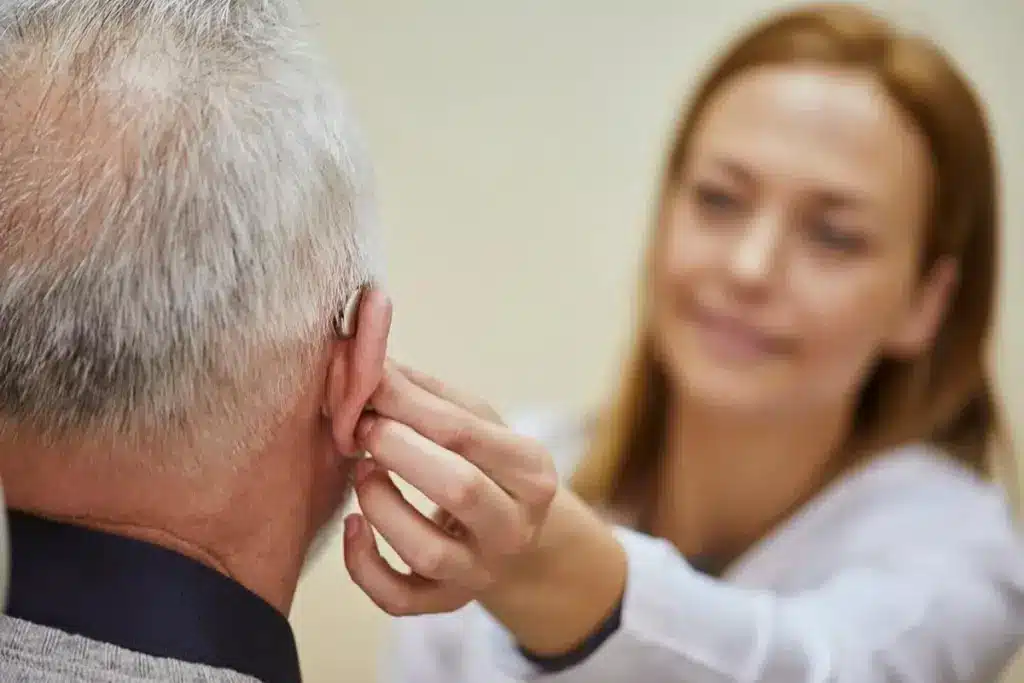
Hearing aids are a main treatment for sensorineural hearing loss. They make sounds louder. Today’s hearing aids have cool features like noise reduction and feedback cancellation.
Assistive listening devices (ALDs) work with hearing aids. They help in places like TV watching or noisy areas.
Cochlear Implants and Other Surgical Options
For very bad hearing loss, cochlear implants are an option. They send sound straight to the nerve. This way, they bypass damaged parts of the ear.
Other surgeries, like bone-anchored hearing aids, use the skull to send sound waves.
Rehabilitation Therapies and Coping Strategies
Auditory rehabilitation therapy is key for those with sensorineural hearing loss. It helps them adjust and manage their hearing.
Learning to communicate better and managing stress are also important. They help improve life quality.
Here’s a comparison of the main treatment options for sensorineural hearing loss:
| Treatment Option | Description | Benefit |
| Hearing Aids | Amplify sound for better hearing | Improves communication in daily life |
| Cochlear Implants | Bypass damaged ear parts to stimulate the auditory nerve | Provides significant improvement for severe hearing loss |
| Assistive Listening Devices | Help in specific listening situations | Enhances hearing in challenging environments |
Conclusion:
Sensorineural hearing loss (SNHL) is a complex condition that affects millions worldwide. It’s important to understand its causes and symptoms for effective management. SNHL can come from many factors, like age-related hearing loss or presbycusis.
At our organization, we offer top-notch healthcare and support for international patients. Recognizing SNHL symptoms and getting medical care can help. There are treatments like hearing aids and cochlear implants available. For more info, check out the National Center for Biotechnology Information.
We hope this article has given you useful insights into SNHL. It’s about taking control of your hearing health. With the right care, people with SNHL can live better and communicate more easily.
FAQ:
What is sensorineural hearing loss?
Sensorineural hearing loss is hearing loss caused by damage to the inner ear (cochlea) or the auditory nerve, affecting the transmission of sound signals to the brain.
Is presbycusis a type of sensorineural hearing loss?
Yes, presbycusis is age-related sensorineural hearing loss that gradually occurs as people get older.
What are the symptoms of sensorineural hearing loss?
Common symptoms include difficulty hearing conversations, muffled sounds, trouble understanding speech in noisy environments, and ringing in the ears (tinnitus).
Can sensorineural hearing loss be cured?
No, it cannot be cured, but it can be managed with hearing aids, cochlear implants, and communication strategies.
What are the treatment options for sensorineural hearing loss?
Treatment options include hearing aids, cochlear implants, assistive listening devices, and auditory rehabilitation therapy to improve communication.
How does noise-induced hearing loss contribute to sensorineural hearing loss?
Exposure to loud noise can damage hair cells in the cochlea, leading to permanent sensorineural hearing loss over time.
What are the early warning signs of sensorineural hearing loss?
Early signs include difficulty following conversations, frequently asking others to repeat themselves, turning up the volume on devices, and noticing ringing in the ears.
How does sensorineural hearing loss affect communication and quality of life?
It can cause social isolation, frustration, difficulty at work or school, and emotional distress due to challenges in understanding speech.
What is the role of rehabilitation therapies in managing sensorineural hearing loss?
Rehabilitation therapies, like auditory training and speech-reading exercises, help improve communication skills and adapt to hearing loss.
Can certain medical conditions cause sensorineural hearing loss?
Yes, conditions like diabetes, high blood pressure, infections, autoimmune disorders, and certain medications can contribute to sensorineural hearing loss.
References:
National Center for Biotechnology Information. Evidence-Based Medical Insight. Retrieved from https://www.ncbi.nlm.nih.gov/books/NBK565860/[1