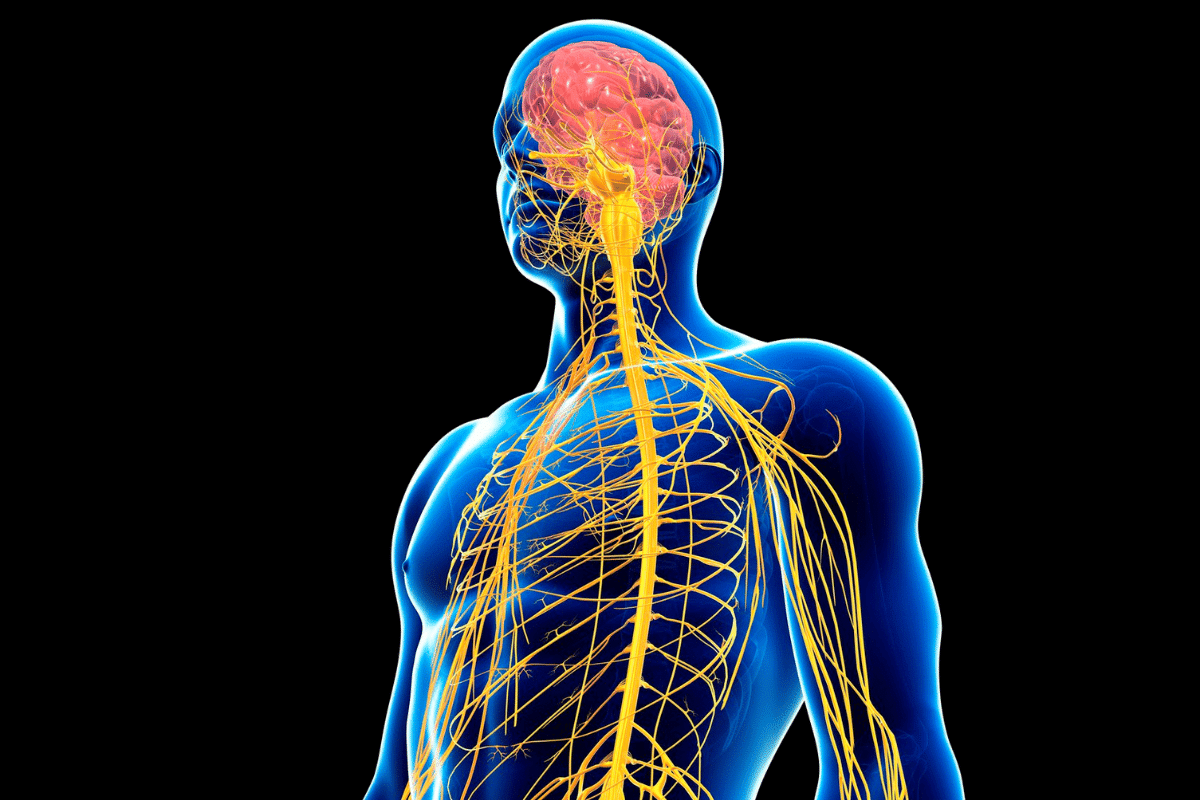
The central nervous system is the body’s command center. It includes the brain and spinal cord. It works fast, using billions of neurons to control every action and feeling cns nervous system.
We say the central nervous system is the main part of the nervous system. It’s made up of the brain and spinal cord. It helps control movement, feelings, thoughts, and emotions.
Knowing about the central nervous system helps us understand our bodies better. If it doesn’t work right, it can cause big problems. So, it’s important to know how it works and why it’s so vital.
Key Takeaways
- The central nervous system is the body’s command center.
- It consists of the brain and spinal cord.
- The CNS processes information through billions of neurons.
- It controls movement, sensation, thought, and emotion.
- Understanding the CNS is key to understanding human physiology.
Understanding the CNS Nervous System
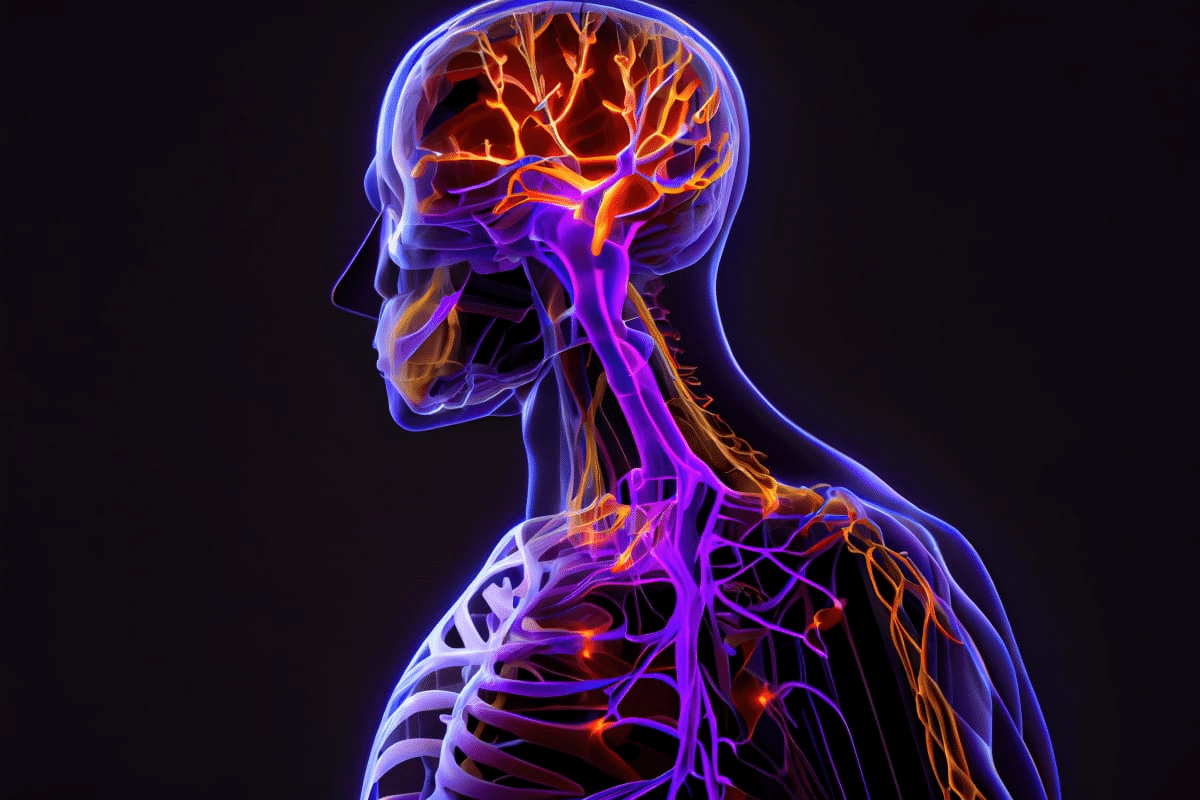
The CNS is the body’s main processing center. It handles all sensory information and controls the body’s functions. It includes the brain and spinal cord, acting as the body’s control center.
Definition and Basic Functions
The central nervous system (CNS) is the core of the nervous system. It integrates information from all parts of the body. The CNS, made up of the brain and spinal cord, controls how we respond to the world.
“The CNS is the body’s control center, and without it, our ability to function would be severely impaired,” as noted by medical professionals. It manages movement, sensations, and vital functions like heart rate and blood pressure.
Distinction from the Peripheral Nervous System
The CNS is different from the peripheral nervous system (PNS). The PNS is made up of nerves that connect the brain and spinal cord to the rest of the body. It transmits information between the CNS and the body.
The CNS and PNS have different structures and functions. The CNS is centralized, while the PNS is a network of nerves. Knowing this helps us understand how the CNS works with the rest of the nervous system.
The CNS and PNS work together to help the body react to stimuli and keep balance. The CNS processes information from the PNS and sends out responses to change the body.
Evolution and Development of the Central Nervous System

The CNS starts as a tiny part of an embryo and grows into a complex system. Its development involves genes and the environment.
Embryonic Development
The CNS starts in the embryo as the neural tube. This neural tube formation is a critical step in the development process, as it eventually gives rise to the brain and spinal cord. The process involves complex cellular movements and differentiation, orchestrated by a precise genetic program.
During the embryonic development stage, the neural tube undergoes several key processes, including proliferation, differentiation, and migration of neural cells. These processes are critical for the formation of the various structures within the CNS. Any disruptions during this stage can lead to significant neurological defects.
Evolutionary Perspective
The CNS has evolved over millions of years. It started with simple nerve nets in ancient organisms and now we have the complex CNS in humans. This evolution has helped organisms adapt to their environments better. The CNS’s development has been key in allowing species to develop complex behaviors and thinking.
Studies in comparative neuroanatomy and evolutionary biology have shown how the CNS has evolved. The increase in complexity and functionality of the CNS has been a key factor in the evolutionary success of vertebrates, like mammals and birds.
Understanding the CNS’s evolution and development helps us know more about its structure and function. It also helps us understand neurological disorders better. This knowledge is important for finding new treatments for CNS disorders.
The Brain: Command Center of the Body
The brain is the most complex organ in the human body. It controls everything from movement to memory. It is the key part of the central nervous system (CNS), playing a vital role in controlling the body’s functions.
Size and Composition
The human brain is a remarkable structure, weighing about 3 pounds (1.4 kilograms) on average. It has several distinct regions, each with its own functions and characteristics. The brain is divided into three main parts: the cerebrum, brainstem, and cerebellum.
Cerebrum: The largest part of the brain, it processes sensory information, controls movement, and manages higher-level cognitive functions like thought, emotion, and memory.
Brainstem: Connecting the cerebrum to the spinal cord, the brainstem regulates basic life functions such as breathing, heartbeat, and blood pressure.
Cerebellum: Located at the back of the brain, the cerebellum coordinates muscle movements, balance, and posture.
Neuron Count and Oxygen Consumption
The brain has an estimated 100 billion neurons, specialized cells that process and transmit information. These neurons form complex networks that enable various brain functions.
The brain is a highly energetic organ, consuming about 20% of the body’s total oxygen supply. Despite making up only about 2% of the body’s mass, this high energy demand is necessary to maintain its functions and support its vast network of neurons.
|
Characteristics |
Details |
|---|---|
|
Average Weight |
Approximately 3 pounds (1.4 kilograms) |
|
Estimated Neuron Count |
100 billion |
|
Oxygen Consumption |
20% of total body oxygen |
Basic Functions Overview
The brain’s functions are diverse and complex. It controls voluntary movements and manages cognitive processes like perception, attention, and memory. It interprets sensory information from the environment, enabling us to understand and interact with the world.
The brain also plays a key role in regulating autonomic functions. It controls heart rate, blood pressure, and body temperature, ensuring the body’s internal environment remains stable.
Major Regions of the Brain
The brain is mainly split into three big parts: the cerebrum, brainstem, and cerebellum. Each part does different things to help the brain work well.
The Cerebrum and Its Functions
The cerebrum is the biggest part of the brain. It handles things like feeling, moving, and thinking. It’s split into two sides: left and right, each with its own job.
The cerebrum’s key functions include:
- Processing sensory information
- Controlling voluntary movements
- Managing higher-level cognitive functions
The Brainstem: Vital Control Center
The brainstem links the cerebrum to the spinal cord. It’s key for things we do without thinking, like breathing and heart rate. It has three main parts: midbrain, pons, and medulla oblongata.
The brainstem is vital for:
- Regulating basic functions necessary for life
- Serving as a bridge between the cerebrum and spinal cord
The Cerebellum: Coordination and Balance
The cerebellum is at the back of the brain, under the cerebrum. It helps with movement, keeping balance, and learning new motor skills.
|
Brain Region |
Primary Functions |
|---|---|
|
Cerebrum |
Processes sensory information, controls movement, manages higher-level cognitive functions |
|
Brainstem |
Controls automatic functions like breathing, heart rate, and blood pressure |
|
Cerebellum |
Coordinates movements, maintains posture, regulates balance |
The Cerebrum in Detail
The cerebrum is the biggest part of the brain and controls many important functions. It has two hemispheres: the left and the right. Each hemisphere has its own tasks but works together.
Cerebral Cortex and Lobes
The outer layer of the cerebrum is called the cerebral cortex. It handles sensory info, movement, and thinking. The cerebrum has four lobes: frontal, parietal, temporal, and occipital.
The frontal lobe deals with making decisions and solving problems. It also controls movement, with the primary motor cortex in the precentral gyrus.
The parietal lobe handles touch and spatial info. The temporal lobe is key for hearing and memory. It also helps with speech.
The occipital lobe focuses on vision. Damage here can cause vision problems or blindness.
Functions of Different Cerebral Areas
Each part of the cerebrum has its own job. For example, Broca’s area and Wernicke’s area are vital for speaking and understanding language.
The left and right hemispheres do different things. The left side is for language and logic. The right side is for spatial skills, recognizing faces, and music.
The cerebrum’s complex structure shows its key role in our brain. It shows how the brain can handle and mix lots of information.
The Spinal Cord: Information Highway
The spinal cord is like a highway for the body. It helps the brain talk to the rest of the body. This lets the body work together smoothly.
Structure and Organization
The spinal cord is a long, thin tube. It runs from the brain to the lower back. It’s covered by the spinal column, made of vertebrae.
The spinal cord has different parts for different body areas. This helps the body work right.
Key Components of the Spinal Cord:
- Cervical segments: Control neck and arm movements
- Thoracic segments: Regulate functions related to the torso
- Lumbar segments: Control leg movements and some pelvic functions
- Sacral segments: Manage bladder control, bowel movements, and some aspects of sexual function
Function as Signal Conductor
The spinal cord sends signals between the brain and the body. It helps with both moving on purpose and things we don’t control, like blood pressure.
|
Function |
Description |
|---|---|
|
Motor Control |
Transmits signals from the brain to muscles and glands, enabling voluntary movements. |
|
Sensory Input |
Receives and transmits sensory information from the body to the brain, including pain, temperature, and touch. |
|
Reflex Actions |
Facilitates reflex arcs that allow for immediate responses to certain stimuli without needing the brain’s direct input. |
The spinal cord is key for the body to work together. Knowing how it works helps us understand the brain and body better.
Integration Between Brain and Spinal Cord
It’s important to know how the brain and spinal cord work together. This helps us understand how our body reacts to different things. The central nervous system (CNS) connects these two parts to help our body move and respond.
Communication Pathways
The brain and spinal cord talk to each other through special paths. These paths help control our movements, keep our body working right, and process what we feel.
Signal Transmission: This happens when tiny messengers called neurotransmitters send signals. These signals move quickly from the brain to the rest of our body.
Reflex Arcs and Autonomic Functions
Reflex arcs are paths in our brain and spinal cord that control actions we don’t think about. These actions happen fast, without us even knowing it.
Autonomic Functions: Our autonomic nervous system controls things like our heart rate and breathing. The brain and spinal cord work together to keep these things running smoothly.
|
Function |
Description |
Control Level |
|---|---|---|
|
Reflex Actions |
Involuntary movements in response to stimuli |
Spinal Cord |
|
Autonomic Control |
Regulation of involuntary actions like heart rate and digestion |
Brainstem and Spinal Cord |
|
Voluntary Movements |
Conscious movements controlled by the brain |
Brain |
In summary, the brain and spinal cord working together is key to our body’s function. By understanding how they communicate and control our body, we see how we stay healthy and react to the world around us.
Cellular Composition of the CNS
It’s important to know how the CNS is made up. The CNS has two main parts: gray and white matter. These work together to help the CNS do its job.
Gray Matter: Neuron Cell Bodies
Gray matter has neuron cell bodies. These are key for processing information in the CNS. You can find gray matter in the brain and the spinal cord.
It has most of the CNS’s neuron cell bodies. These are vital for controlling movement, handling sensory info, and thinking.
White Matter: Myelinated Axons
White matter is made of myelinated axons. These are parts of neurons that send signals to other neurons, muscles, or glands. The myelin sheath helps these signals move fast.
White matter is mainly in the brain and spinal cord. It’s like the wiring that connects different parts of the CNS.
Gray and white matter are not just different in look; they also have different jobs. Gray matter deals with processing info, while white matter sends this info around. Together, they help the CNS do its complex tasks.
|
Characteristics |
Gray Matter |
White Matter |
|---|---|---|
|
Composition |
Neuron cell bodies |
Myelinated axons |
|
Primary Function |
Information processing |
Signal transmission |
|
Location |
Brain regions, anterior horn of spinal cord |
Brain tracts, spinal cord tracts |
Knowing about gray and white matter helps us understand the CNS better. This is key for diagnosing and treating brain and spinal cord problems.
Protective Systems of the Central Nervous System
The Central Nervous System (CNS) has a strong protective system. It includes bony structures, protective membranes, and a cushioning fluid. This system is key to keeping the CNS safe from harm and disease.
Bony Protection: Skull and Vertebrae
The brain is protected by the skull, a hard bony shell. The vertebrae protect the spinal cord, forming the spinal column. These bones are the first defense for the CNS.
- The skull shields the brain from outside impacts.
- The vertebrae safeguard the spinal cord, allowing nerve signals to pass through.
Meninges: Protective Membranes
Underneath the bones, the CNS is covered by the meninges. These are three membranes that wrap around the brain and spinal cord. They are:
- Dura mater: The outermost layer, a tough, fibrous cover.
- Arachnoid mater: The middle layer, filled with cerebrospinal fluid.
- Pia mater: The innermost layer, closely attached to the brain and spinal cord.
Cerebrospinal Fluid: Cushioning and Protection
The cerebrospinal fluid (CSF) is a clear, colorless liquid. It surrounds the brain and spinal cord, providing cushioning and protection. It:
- Acts as a shock absorber, lessening the effect of outside forces.
- Keeps a stable environment for the CNS by controlling chemical balance.
- Helps remove waste from the CNS.
In summary, the CNS’s protective systems, including bones, meninges, and cerebrospinal fluid, work together to safeguard it. Understanding these systems is key to appreciating the CNS’s complexity and resilience.
Common Disorders and Diseases of the Central Nervous System
The CNS can get many diseases and disorders. Each has its own cause and effect. These can really change someone’s life, so it’s important to know about them.
Neurodegenerative Diseases
Neurodegenerative diseases make neurons lose structure or function. Alzheimer’s disease and Parkinson’s disease are common examples. Alzheimer’s causes memory loss and thinking problems. Parkinson’s affects movement, leading to tremors and stiffness.
Finding out why these diseases happen is key to finding treatments. Studies show genetics, environment, and lifestyle play a part.
Traumatic Injuries
Traumatic injuries to the CNS can be very bad. Traumatic brain injuries (TBI) happen when the brain gets hurt, causing problems with thinking, feeling, and moving. Spinal cord injuries can make it hard to move or feel things below the injury.
How bad an injury is can vary a lot. But, thanks to better medical care and rehab, many people can get better.
Infections and Inflammatory Conditions
The CNS can get infections and inflammatory conditions. Meningitis is an infection of the brain and spinal cord’s protective membranes. It can be caused by bacteria, viruses, or fungi. Encephalitis is inflammation of the brain, usually from a virus.
These need quick medical help to avoid serious problems. Treatment includes antibiotics and care to help symptoms and recovery.
We know CNS disorders are complex and varied. Understanding them is the first step to better care and treatment.
Conclusion: The Remarkable Central Nervous System
The central nervous system (CNS) is complex and vital for our health. We’ve looked at its parts, like the brain and spinal cord. We’ve also talked about how they work together.
This system controls many body functions, like movement and feelings. It helps us think and feel emotions too. The CNS is key for handling information and keeping us balanced.
Knowing how the CNS works is important. Problems with it can cause big issues. So, we need to keep studying and improving in neurology.
In short, the CNS is amazing and deserves our admiration. By understanding its role, we can grasp the complex processes in our lives better.
FAQ
What is the central nervous system?
The central nervous system (CNS) is a complex system. It includes the brain and spinal cord. It plays a key role in controlling various bodily functions.
What does the central nervous system consist of?
The CNS is made up of the brain and spinal cord. They work together to process and transmit information.
What is the difference between the central nervous system and the peripheral nervous system?
The CNS includes the brain and spinal cord. The peripheral nervous system has nerves that connect the CNS to the rest of the body.
What are the primary functions of the central nervous system?
The CNS controls various bodily functions. This includes movement, sensation, perception, and cognition.
How does the central nervous system develop?
The CNS develops from the embryonic neural tube. It forms the brain and spinal cord through a complex process.
What is the role of the cerebrum in the central nervous system?
The cerebrum is the largest part of the brain. It processes sensory information, controls movement, and manages higher-level cognitive functions.
What is the function of the spinal cord?
The spinal cord acts as a signal conductor. It transmits information between the brain and the rest of the body.
How is the central nervous system protected?
The CNS is protected by bony structures, meninges, and cerebrospinal fluid. These provide cushioning and protection against injury and disease.
What are some common disorders and diseases that affect the central nervous system?
The CNS can be affected by various conditions. This includes neurodegenerative diseases, traumatic injuries, and infections.
What is the significance of understanding the central nervous system?
Understanding the CNS is key. It helps us appreciate its complexity and importance in maintaining overall health and function.
What comprises the CNS?
The CNS is made up of the brain and spinal cord.
What does CNS stand for in medical terms?
CNS stands for Central Nervous System.
What is the definition of the central nervous system in psychology?
In psychology, the CNS refers to the complex system. It controls behavior, cognition, and emotion.
References
Sharp What Is The CNS Nervous System: Definition & Components https://www.ncbi.nlm.nih.gov/books/NBK542179/