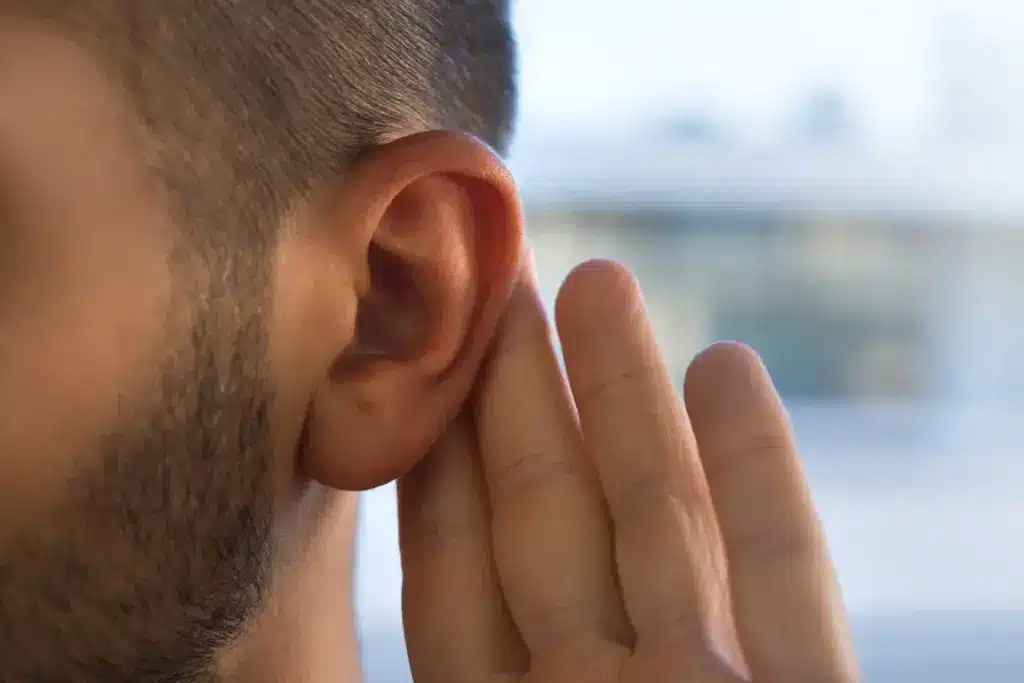
Do you feel like your ears are always full or under pressure? This feeling might be because of a sinus infection. These infections can block the eustachian tubes, making your ears feel clogged.
A sinus infection can make your ears feel tight because of the swelling and extra mucus. This is why it’s important to treat the root cause of the problem. Only then can you get rid of the ear blockage.
We will look into how treating the cause can help. This way, you can get rid of the stuffy nose and clogged ears. And you’ll be able to hear normally again.
Key Takeaways
- Sinus infections can cause eustachian tube dysfunction, leading to clogged ears.
- Treating the underlying sinus infection is essential to resolving ear congestion.
- Eustachian tube dysfunction can cause ear pressure and discomfort.
- Inflammation and excess mucus production can block the eustachian tubes.
- Restoring normal ear function requires addressing the underlying sinus infection.
Understanding Sinus Infection Ear Pressure

It’s important to know how sinus infections and ear pressure are connected. Sinus infections can cause ear pressure and congestion. This happens because of how our ears and sinuses are structured.
The Eustachian tube is key to keeping ear pressure balanced. It links the middle ear to the back of the throat. When sinuses get infected, they can block this tube. This blockage makes the ears feel full or pressured.
The Eustachian Tube Connection
The Eustachian tube helps keep air pressure in the ears steady. But, when we have a sinus infection, it can get affected. This can cause ear pressure, muffled hearing, and discomfort.
Eustachian Tube Function: Normally, the Eustachian tube opens and closes to regulate air pressure in the ears. During a sinus infection, this function can be impaired.
Symptoms of Sinus-Related Ear Congestion
Knowing the symptoms of ear congestion due to sinus infections is important. Common signs include:
- Muffled hearing
- Ear pain or discomfort
- Feeling of fullness or pressure in the ears
- Dizziness or balance issues
These symptoms happen because the Eustachian tube isn’t working right. It’s vital to treat these symptoms to avoid more problems.
| Symptom | Description | Possible Relief |
| Muffled Hearing | Hearing sounds as if they are coming from a distance or are unclear. | Decongestants, nasal sprays |
| Ear Pain | Pain or discomfort in the ear, often due to pressure imbalance. | Pain relievers, warm compresses |
| Feeling of Fullness | Sensation that the ear is blocked or full. | Nasal decongestants, Eustachian tube exercises |
Understanding the Eustachian tube’s role and recognizing ear congestion symptoms is the first step to relief from sinus infection ear pressure.
Effective Medications for Ear Congestion Relief

Medications are key in easing ear congestion from sinus infections. Sinus pressure can block the Eustachian tube, causing ear congestion. Luckily, many over-the-counter and prescription drugs can ease this discomfort.
Decongestants: Does Sudafed Help with Clogged Ears?
Decongestants like Sudafed help with nasal congestion, which can ease ear pressure. Pseudoephedrine, Sudafed’s main ingredient, reduces swollen nasal tissues. This helps the Eustachian tube work better, unclogging ears.
So, does Sudafed help with clogged ears? Yes, it does. It helps by reducing nasal congestion. But, always follow the dosage and talk to a doctor if symptoms don’t go away.
Nasal Sprays: Types and Proper Usage
Nasal sprays are also good for ear congestion from sinus infections. Saline nasal sprays moisturize and thin mucus, making it easier to clear. Steroid nasal sprays reduce nasal inflammation, improving sinus drainage and easing ear pressure.
It’s important to use nasal sprays as directed and not overuse them. Overuse can cause rebound congestion. For those wondering will nasal spray help with clogged ears, yes, it can, if the clog is due to nasal congestion.
Mucinex and Other Mucus-Thinning Options
Mucinex, with guaifenesin, is an expectorant that thins mucus. This makes it easier to cough up, helping to clear sinuses and Eustachian tube. So, does Mucinex help clogged ears? Yes, it does, by aiding in mucus clearance.
| Medication Type | Active Ingredient | Effect on Ear Congestion |
| Decongestants (e.g., Sudafed) | Pseudoephedrine | Reduces nasal congestion, alleviating ear pressure |
| Saline Nasal Sprays | Saline solution | Moisturizes nasal passages, thins mucus |
| Steroid Nasal Sprays | Steroid formulation | Reduces nasal inflammation, improves sinus drainage |
| Mucinex | Guaifenesin | Thins mucus, promotes easier expulsion |
For more on ear congestion and treatments, check Healthline’s ear congestion page. Knowing your options can help you manage ear congestion from sinus infections better.
Home Remedies to Unclog Sinus-Related Ear Blockage
There are many home remedies to help with ear blockage caused by sinuses. These can help manage symptoms and make you feel better while you wait for your sinus infection to clear up.
Steam Inhalation and Warm Compress Techniques
Steam inhalation is a great way to clear out ear blockage. It loosens mucus, making it easier to breathe and helping the Eustachian tubes open. To do this, boil water, put it in a bowl, and cover your head with a towel to inhale the steam. Adding eucalyptus oil or menthol can make it even more effective.
Using a warm compress on your face and ears can also help. The warmth thins out mucus, making it easier to get rid of. It also helps reduce ear pressure. Just soak a cloth in warm water, wring it out, and apply it for a few minutes.
Hydration and Dietary Adjustments
Drinking lots of water is key to keeping mucus thin and preventing it from building up. It helps keep your ears clear. Also, changing your diet can help your sinuses. Try to avoid processed foods and eat more fruits and veggies to reduce inflammation.
Eating foods rich in vitamins and minerals, like vitamin C, can boost your immune system. Foods with antioxidants, like berries and leafy greens, can also help fight inflammation.
| Remedy | Description | Benefits |
| Steam Inhalation | Inhaling steam from boiled water, potentially with eucalyptus oil or menthol. | Loosens mucus, opens Eustachian tubes. |
| Warm Compress | Applying a warm, damp cloth to the face and ears. | Promotes drainage, reduces ear pressure. |
| Hydration | Drinking plenty of water and fluids. | Thins mucus, prevents buildup. |
| Dietary Adjustments | Avoiding processed foods, increasing intake of fruits and vegetables. | Reduces inflammation, supports sinus health. |
When to Seek Medical Attention
Home remedies can help a lot, but sometimes you need to see a doctor. If your symptoms get worse or you have severe ear pain, fever, or discharge, get help. Also, if you often get sinus infections or have complications, see a doctor.
Knowing when to go to the doctor is important. It helps avoid serious problems and makes sure you get the right treatment.
Conclusion
Treating the root cause of a sinus infection is key to easing ear congestion. Understanding the link between sinus infections and ear pressure helps us take action. We’ve looked at ways to ease sinus infection ear pressure, like using decongestants and nasal sprays, and home remedies like steam inhalation and staying hydrated.
If you’re dealing with ear congestion from sinus issues, a nasal spray can help. It can unclog your ears by reducing nasal congestion. But, if your symptoms don’t get better or get worse, see a doctor to avoid more problems.
Learning how to clear sinuses and ears can help us feel better. We suggest trying the methods we’ve talked about and getting medical help when needed. This way, we can recover quickly.
FAQ
Will nasal spray help with clogged ears?
Yes, nasal sprays can reduce nasal congestion and help open the Eustachian tube, relieving clogged ears.
Does Sudafed help with ear congestion?
Yes, Sudafed (pseudoephedrine) can reduce nasal and sinus swelling, which may improve Eustachian tube drainage.
Can a sinus infection cause clogged ears?
Yes, sinus infections can block the Eustachian tube, leading to ear fullness or pressure.
How does Mucinex help with clogged ears?
Mucinex thins mucus in the sinuses and nasal passages, promoting drainage and reducing ear congestion.
What are some home remedies for sinus-related ear blockage?
Home remedies include steam inhalation, warm compresses, saline nasal sprays, swallowing, yawning, and gentle pressure-equalizing exercises.
When should I seek medical attention for sinus-related ear congestion?
See a doctor if ear pressure is severe, persistent, accompanied by pain, fever, hearing loss, or dizziness.
Can hydration help relieve ear congestion caused by sinus infections?
Yes, drinking plenty of water helps thin mucus, improving sinus and Eustachian tube drainage.
Are there dietary adjustments that can help alleviate sinus-related ear congestion?
Yes, reducing dairy, processed foods, and inflammatory foods while eating anti-inflammatory foods may help reduce mucus and congestion.
References
National Center for Biotechnology Information. Evidence-Based Medical Insight. Retrieved from https://pubmed.ncbi.nlm.nih.gov/34919345/