
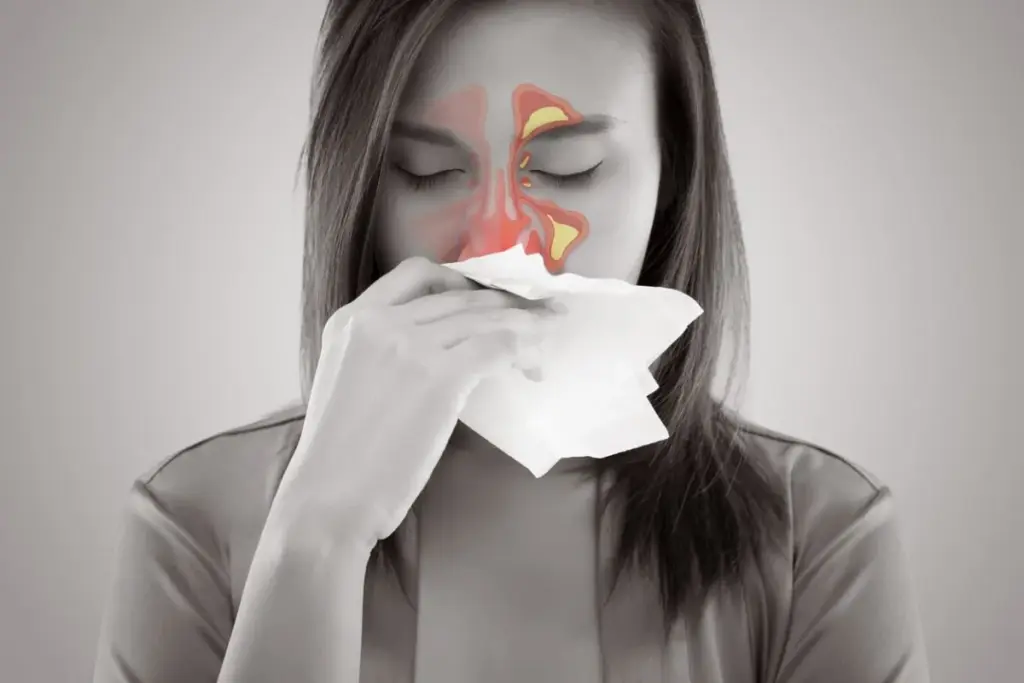
Did you know that over 30 million adults in the United States are diagnosed with sinusitis each year? This condition makes the tissue lining the sinuses swell. It leads to a range of uncomfortable symptoms.
It’s important to know the symptoms of sinus infection to get the right treatment. Sinusitis can cause face pain, nasal blockage, and other issues. These problems can really affect your daily life.
Sinus infection symptoms include smells. Get best info. Bad breath signals bacteria. Treating the source is vital for amazing hygiene.
Key Takeaways
- Sinusitis is a common condition affecting millions of adults in the US.
- It involves inflammation or swelling of the sinus tissue.
- Recognizing the symptoms is key to proper diagnosis.
- Symptoms can include facial pain, nasal congestion, and more.
- Understanding sinus infection symptoms can lead to better treatment outcomes.
Understanding Sinus Infections and Their Impact on Smell
Sinus infections can really mess with our sense of smell. But first, we need to know what sinuses are and how they work. The sinuses are air-filled spaces inside the nose. They help us breathe by making mucus to humidify the air and filter out dust.
What Are Sinuses and How Do They Function?
The sinuses include four pairs: frontal, maxillary, ethmoid, and sphenoid. These sinuses have mucous membranes that make mucus. This mucus then flows into the nasal passages.
The Four Pairs of Paranasal Sinuses
The frontal sinuses are in the forehead. The maxillary sinuses are in the cheeks. The ethmoid sinuses are between the nose and eyes. And the sphenoid sinuses are deeper, behind the nasal cavity.
Normal Sinus Drainage and Ventilation
For sinuses to work right, they need to drain and ventilate well. Mucus flows from the sinuses into the nasal passages. But if these paths get blocked, it can cause sinus problems.
The Connection Between Sinuses and Your Sense of Smell
The sense of smell is tied to the sinuses because the olfactory receptors are in the nasal cavity. When the sinuses get inflamed or infected, it can mess with these receptors.
How the Olfactory System Works
The olfactory system uses special cells in the nasal cavity to detect smells. These cells send signals to the brain, where smells are understood.
How Inflammation Disrupts Smell Perception
When sinuses get inflamed, the nasal cavity gets congested. This makes it hard for the olfactory receptors to detect smells. So, our sense of smell can get weaker.
Sinus Infection Symptoms
It’s important to know the signs of a sinus infection to get the right treatment quickly. Sinus infections, or sinusitis, can make life hard. They cause symptoms like nasal congestion, facial pain, and headaches.
Nasal Congestion and Discharge
Nasal congestion and discharge are common signs of sinus infections. The nasal passages get inflamed. This makes you feel stuffy and increases nasal secretions.
Characteristics of Infectious Discharge
The discharge from sinus infections can look and feel different. Bacterial sinusitis discharge is thick and yellow or green, showing pus. Viral sinusitis discharge is clearer.
Facial Pain and Pressure
Facial pain and pressure are key symptoms of sinus infections. The pain can be in the cheeks, forehead, or around the eyes. It matches the location of the sinuses.
Location-Specific Symptoms
The pain’s location can tell you which sinuses are affected. For example, cheek pain might mean maxillary sinusitis. Forehead pain could mean frontal sinusitis.
Headaches and Fever
Headaches and fever are symptoms of sinus infections. The headaches can be mild or severe. They often get worse when you bend forward.
When Symptoms Indicate Severity
While most sinus infections are not serious, some symptoms are a warning sign. A high fever, severe headache, or swelling around the eyes need quick medical help.
|
Symptom |
Description |
Possible Indication |
|---|---|---|
|
Nasal Congestion |
Feeling of stuffiness in the nasal passages |
Sinus infection or allergy |
|
Discharge |
Thick, colored discharge |
Bacterial sinusitis |
|
Facial Pain |
Pain in the cheeks or forehead |
Sinusitis affecting specific sinuses |
|
Headache |
Headache worsening when bending forward |
Sinus pressure |
Can Loss of Smell Indicate a Sinus Infection?
Loss of smell, or anosmia, is a key sign of a sinus infection. It can last from a short time to forever. Knowing how sinus infections and smell loss are connected is key for the right treatment.
How Sinus Inflammation Affects Olfactory Function
Sinus inflammation can really mess with your sense of smell. It happens in two main ways:
- Mechanical Obstruction: Swelling in the nose can block smells from reaching your smell receptors.
- Inflammation of Olfactory Neurons: Sinusitis can also damage the smell neurons, making it hard to smell.
Differentiating Between Temporary and Persistent Smell Loss
It’s important to tell if smell loss is short-term or long-term. This helps decide what to do next.
Recovery Timeline for Smell Function
Often, smell comes back after treating the sinus infection. But, how long it takes to recover depends on the infection’s severity and treatment success.
When to Be Concerned About Prolonged Anosmia
If anosmia lasts longer than expected, it might mean a bigger problem. You should see a doctor for more tests.
Types of Sinus Infections and Their Distinct Symptoms
It’s important to know the different types of sinus infections. This helps doctors diagnose and treat them better. Each type has its own symptoms and needs.
Acute Sinusitis
Acute sinusitis is a short-term issue, lasting less than four weeks. It’s usually caused by a virus. Symptoms include stuffy nose, facial pain, and headaches.
Duration and Intensity of Symptoms
Symptoms of acute sinusitis are strong but don’t last long. They can go away on their own or with treatment in a few weeks.
Chronic Sinusitis
Chronic sinusitis lasts more than 12 weeks. It can be caused by allergies, physical issues, or infections.
Long-term Effects on Smell and Quality of Life
Chronic sinusitis can really affect your life. It can cause ongoing nasal blockage, smell loss, and facial pressure.
Recurrent Sinusitis
Recurrent sinusitis means having many short-term sinusitis episodes in a year. There are breaks in between.
Pattern Recognition and Management
Managing recurrent sinusitis means spotting patterns and triggers. It’s about taking steps to prevent more episodes.
|
Type of Sinusitis |
Duration |
Common Symptoms |
|---|---|---|
|
Acute Sinusitis |
Less than 4 weeks |
Nasal congestion, facial pain, headache |
|
Chronic Sinusitis |
12 weeks or more |
Persistent nasal congestion, loss of smell, facial pressure |
|
Recurrent Sinusitis |
Multiple episodes within a year |
Varies, often similar to acute sinusitis |
Causes and Risk Factors for Sinus Infections
It’s important to know what causes sinus infections to prevent and treat them well. Sinusitis, or inflammation of the sinuses, can really affect someone’s life.
Viral, Bacterial, and Fungal Causes
Many things can cause sinus infections, like viruses, bacteria, and fungi. Viral sinusitis is the most common, often after a cold or flu. Bacterial sinusitis happens when bacteria infect the sinuses, usually after a viral infection. Fungal sinusitis is rare but serious, mainly in people with weak immune systems.
Common Pathogens Involved
Some common pathogens in sinus infections are rhinoviruses, influenza viruses, Streptococcus pneumoniae, and Haemophilus influenzae. Fungi like Aspergillus can also cause sinusitis.
Anatomical Factors and Predispositions
Some physical issues can make you more likely to get sinus infections. A deviated septum or nasal polyps can block the sinuses, leading to infection.
Deviated Septum and Nasal Polyps
A deviated septum can cause uneven airflow. Nasal polyps can block the sinuses. Both can lead to chronic sinusitis if not treated.
Environmental Triggers
Things like allergies, pollution, and irritants can start or make sinus infections worse. Allergies can make the nose inflamed. Pollutants and irritants can directly harm the sinuses.
Allergies, Pollution, and Irritants
- Allergens like pollen, dust, and pet dander can trigger allergic reactions.
- Pollutants from smoke, vehicles, and industrial activities can irritate the sinuses.
- Irritants such as strong odors or chemicals can also contribute to sinusitis.
Diagnosing a Sinus Infection: When to See a Doctor
Knowing the signs of a sinus infection and when to see a doctor is key. It can greatly affect how well you’ll recover.
Self-Assessment of Symptoms
Start by checking your symptoms at home. Look for signs like nasal congestion, facial pain, and a persistent cough. How long your symptoms last is very important.
Using Symptom Duration as a Guide
If your symptoms last more than 7-10 days or get worse, see a doctor. Long-lasting symptoms might mean you need antibiotics.
Medical Examination and Tests
A doctor will do a detailed check-up. This might include nasal endoscopy to look inside your nasal passages and sinuses.
Imaging Studies for Sinus Infections
At times, imaging studies like CT scans are needed. They help see how bad the sinus inflammation is and if there are any complications.
CT Scans and Their Diagnostic Value
CT scans give clear pictures of your sinuses. They help find chronic sinusitis, any unusual shapes, or other issues. This info is vital for a good treatment plan.
Treatment Options for Sinus Infection Symptoms
Managing sinus infection symptoms needs a full plan. This plan includes different treatments. The right treatment depends on the infection’s cause, how long it lasts, and the patient’s health.
Over-the-Counter Medications
For mild to moderate sinus infections, OTC meds can help a lot. These include:
- Decongestants: They reduce nasal congestion, making breathing easier.
- Antihistamines: They’re good if allergies cause sinusitis, as they lessen inflammation.
- Pain Relievers: Like acetaminophen or ibuprofen, they ease facial pain and headaches.
Prescription Treatments
If OTC meds don’t work or the infection is severe, you might need prescription meds.
Antibiotics, Steroids, and Antifungals
Antibiotics are for bacterial sinus infections. Steroids help with chronic inflammation. Antifungals treat fungal infections.
Surgical Interventions for Chronic Cases
For chronic or recurring infections that don’t get better with other treatments, surgery might be needed.
FESS and Balloon Sinuplasty
Functional Endoscopic Sinus Surgery (FESS) removes blockages or issues causing sinusitis. Balloon sinuplasty is a less invasive method that widens the sinus passages with a balloon.
It’s important for patients to talk to a healthcare professional. They can find the best treatment for each person’s situation.
Home Remedies to Alleviate Sinus Infection Symptoms
Sinus infections can be a real nuisance, but there are several home remedies that can help alleviate the symptoms. These remedies focus on relieving congestion, reducing inflammation, and promoting healing.
Nasal Irrigation and Steam Therapy
Nasal irrigation and steam therapy are two effective home remedies for sinus infection symptoms. Nasal irrigation involves rinsing the nasal passages with a saline solution to clear out mucus and debris.
Proper technique is key for maximum benefit. Use a neti pot or a squeeze bottle with a nasal spray tip, and make sure to use sterile or distilled water.
Proper Techniques for Maximum Benefit
To get the most out of nasal irrigation, it’s essential to use the right technique. Tilt your head to one side, pour the saline solution into the top nostril, and let it flow out of the other nostril.
Hydration and Dietary Considerations
Staying hydrated is vital when dealing with sinus infections. Drinking plenty of fluids helps thin out mucus, making it easier to expel.
Certain foods can also help or worsen symptoms. For example, spicy foods can help clear sinuses, while dairy products can exacerbate mucus production.
Foods That Help or Worsen Symptoms
|
Food |
Effect on Sinus Infection Symptoms |
|---|---|
|
Spicy foods |
Helps clear sinuses |
|
Dairy products |
Can exacerbate mucus production |
|
Vitamin C-rich foods |
Boosts immune system |
Rest and Environmental Modifications
Getting plenty of rest is key for recovery. Elevating your head while sleeping can also help reduce congestion.
Using a humidifier can add moisture to the air, relieving dryness and congestion. Reducing allergens in your environment can also help alleviate symptoms.
Humidification and Allergen Reduction
Using a humidifier and reducing allergens can significantly improve sinus infection symptoms. Regularly cleaning your humidifier is essential to prevent bacterial growth.
“Humidifiers can be very helpful during the dry winter months when sinus congestion is more common.”
Warning Signs: When Sinus Infections Become Dangerous
It’s important to know the warning signs of sinus infections that could be serious. Most sinus infections are treatable, but some can cause severe problems.
Spread of Infection to Nearby Structures
One serious issue with sinus infections is when the infection spreads to nearby areas. This can cause serious problems like orbital and intracranial complications.
Orbital and Intracranial Complications
Orbital complications can lead to vision loss or double vision. Intracranial complications can cause meningitis or brain abscesses. These need immediate medical help.
Severe Symptoms Requiring Emergency Care
Some symptoms mean a sinus infection is getting worse and needs emergency care. These include vision changes, severe headaches, and changes in mental status.
Vision Changes, Severe Headache, and Mental Status Changes
Vision changes, like blurred or lost vision, are serious. Severe headaches can mean increased pressure in the brain. Mental status changes, like confusion or being out of it, are also warning signs.
High-Risk Populations
Some groups are more likely to get severe sinus infections. These include people with weakened immune systems, who need quick treatment.
Immunocompromised Patients and Special Considerations
People with weakened immune systems, like those with HIV/AIDS or on chemotherapy, are at higher risk. They should watch for any signs of complications closely.
Warning Signs Summary:
|
Symptom |
Description |
Action Required |
|---|---|---|
|
Vision Changes |
Blurred vision, double vision, or loss of vision |
Seek emergency care |
|
Severe Headache |
Persistent and severe headache |
Seek emergency care |
|
Mental Status Changes |
Confusion, altered consciousness |
Seek emergency care |
Preventing Sinus Infections: Proactive Measures
By taking proactive steps, you can lower your chance of getting sinus infections. This can make your life better. Simple habits and smart lifestyle choices can help you avoid sinus problems.
Hygiene Practices and Lifestyle Changes
Good hygiene is key to avoiding sinus infections. Frequent hand washing is a simple yet powerful way to stop viruses and bacteria. Also, quitting smoking is important because it can harm your nasal passages and raise your risk of sinus infections.
Hand Washing and Smoking Cessation
- Wash your hands often with soap and water, mainly during cold and flu season.
- Stay away from smoking and secondhand smoke.
Managing Allergies and Environmental Factors
Controlling allergies is also vital in preventing sinus infections. Allergy testing can pinpoint what allergens are causing problems. For severe cases, immunotherapy might be suggested.
Allergy Testing and Immunotherapy
|
Method |
Description |
Benefits |
|---|---|---|
|
Allergy Testing |
Identifies specific allergens triggering reactions. |
Helps in targeted treatment plans. |
|
Immunotherapy |
Gradual exposure to allergens to build tolerance. |
Reduces severity of allergic reactions over time. |
Strengthening Immune System Function
A strong immune system can better fight off infections, like sinusitis. Nutrition and exercise are important for a healthy immune system.
Nutrition and Exercise Recommendations
Eat a diet full of fruits, vegetables, and whole grains. Also, stay active with regular exercise. This can boost your immune system.
Sinus Infections vs. Other Conditions with Similar Symptoms
Sinus infections can be hard to figure out because their symptoms are similar to other illnesses. This makes it tough to know what’s really causing your pain.
Allergies and Common Cold
Allergies and the common cold can have symptoms like nasal congestion and discharge, just like sinus infections. Distinguishing features include how long symptoms last and if you have a fever.
Distinguishing Features and Duration
Allergies keep coming back as long as you’re around the allergen. Sinus infections usually have a clear start and end. The common cold goes away in a week or two.
COVID-19 and Smell Dysfunction
COVID-19 can cause smell dysfunction, just like sinus infections. But COVID-19 also brings fever and cough.
Characteristic Differences in Smell Loss
COVID-19 smell loss happens suddenly and comes with other symptoms. Sinus infection smell loss builds up over time.
Migraine and Tension Headaches
Migraines and tension headaches can feel like sinus infections because they cause facial pain and pressure. Pain patterns and other symptoms like nausea help tell them apart.
Pain Patterns and Associated Symptoms
Migraines usually hurt on one side and come with nausea or light sensitivity. Sinus infection pain is more spread out and linked to nasal stuffiness.
Conclusion
Sinus infections can significantly impact your comfort and sense of smell. We’ve looked at the symptoms, causes, and ways to treat them in this article.
It’s important to know the signs of a sinus infection to get help quickly. Knowing the difference between acute, chronic, and recurrent sinusitis helps in finding the right treatment.
Managing sinus infections requires both medical care and changes in your daily life. There are many treatments, from medicines you can buy to surgery, to help you feel better and prevent future problems.
In short, knowing about sinus infection symptoms and treatment options helps you manage your condition. This can improve your health and overall well-being.
FAQ
What are the common symptoms of a sinus infection?
Symptoms include nasal congestion and discharge, facial pain and pressure, headaches, and fever. The discharge is often thick and yellow or green in color.
How does a sinus infection affect my sense of smell?
Sinus inflammation can block odor molecules and damage smell neurons. This can lead to a loss of smell, which may be temporary or permanent.
What are the different types of sinus infections?
There are three main types: acute, chronic, and recurrent sinusitis. Each type has its own symptoms and duration.
What causes sinus infections?
Sinus infections can be caused by viruses, bacteria, or fungi. Anatomical issues, allergies, and environmental factors also play a role.
When should I see a doctor for sinus infection symptoms?
See a doctor if symptoms last or get worse, or if you have severe symptoms like facial swelling or trouble breathing.
What are the treatment options for sinus infection symptoms?
Treatments include over-the-counter meds, prescription antibiotics and steroids, and surgeries like FESS and balloon sinuplasty.
How can I alleviate sinus infection symptoms at home?
Home remedies include nasal irrigation, steam therapy, staying hydrated, and rest. Also, make environmental changes.
What are the warning signs of a sinus infection becoming dangerous?
Warning signs include infection spreading, severe symptoms needing emergency care, and risks for immunocompromised patients.
How can I prevent sinus infections?
Preventive measures include good hygiene, managing allergies, and a strong immune system. Lifestyle changes also help.
How can I differentiate sinus infections from other conditions with similar symptoms?
Look at symptom duration and intensity, smell loss and pain patterns, and other symptoms like itching or sneezing.
What is the role of nasal endoscopy in diagnosing sinusitis?
Nasal endoscopy helps see the nasal passages and sinuses. It aids in diagnosing sinusitis and finding any abnormalities.
Can sinus infections be contagious?
Sinus infections themselves are not contagious. But, the causes like viruses or bacteria can be contagious.
Reference
National Center for Biotechnology Information. Evidence-Based Medical Insight. Retrieved from https://www.ncbi.nlm.nih.gov/books/NBK547701/