
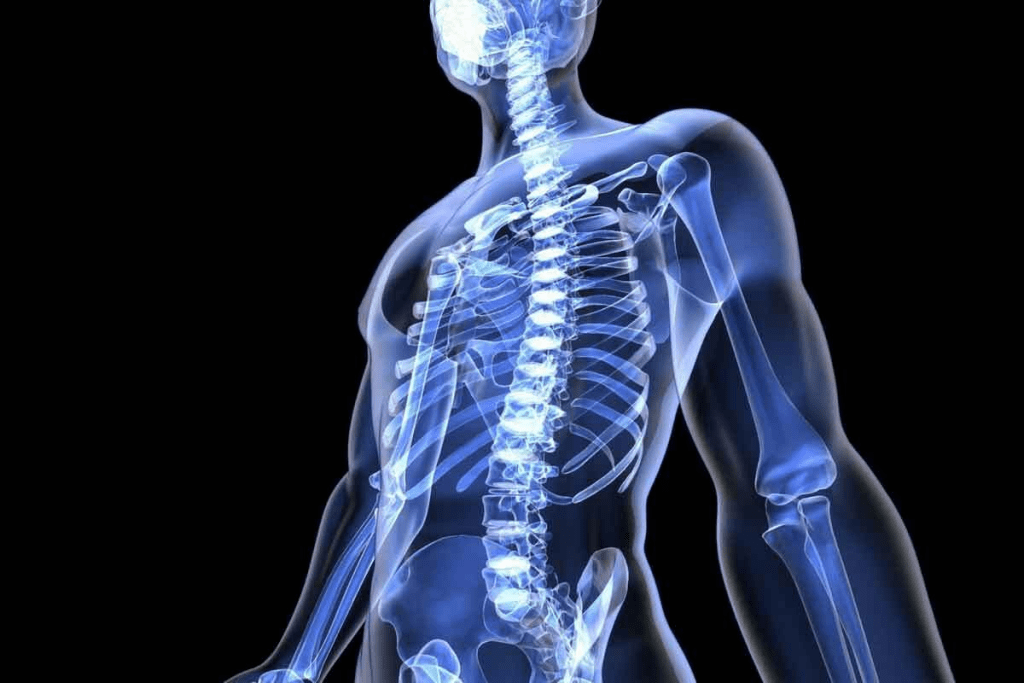
Skeletal scintigraphy, also known as bone scintigraphy, is a precise imaging technique. It maps active bone formation and metabolism in the skeleton.
We use this tool to diagnose and assess bone diseases and conditions. This includes cancer metastasis, occult fractures, and infections. We can spot these issues before they show up on standard X-rays.
Bone scintigraphy is very sensitive. It’s key for detecting bone abnormalities and tracking therapy. This makes it a vital tool in managing bone-related diseases.
Key Takeaways
- Understand the basics of skeletal scintigraphy and its diagnostic capabilities.
- Learn how bone scintigraphy detects bone abnormalities.
- Discover the importance of this technique in managing bone-related diseases.
- Find out how bone scintigraphy is used to monitor therapy.
- Explore the role of nuclear medicine in diagnosing bone conditions.
Understanding Skeletal Scintigraphy: The Fundamentals of Bone Scanning
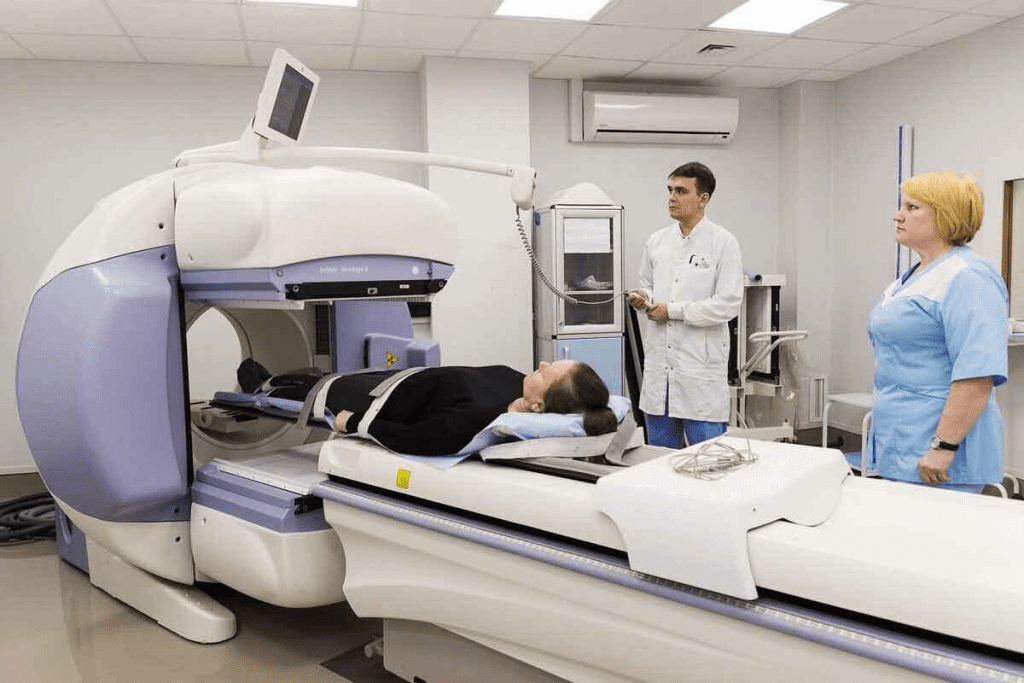
Skeletal scintigraphy is a top-notch diagnostic tool. It uses radiotracers to see how bones work and find diseases early. This method is key for spotting bone problems before they get worse.
Definition and Basic Principles
A bone scan, or skeletal scintigraphy, is a test that uses a tiny bit of radioactive tracer. This tracer goes to active bone areas, showing how bones are working. It finds changes in bones before X-rays can.
We pick radiotracers like 99mTc-MDP because they stick to bones well. This helps find many bone issues, like cancer, hidden breaks, infections, and arthritis.
The Role of Radiotracers in Bone Imaging
Radiotracers are key in bone scans. They go to bones that are changing a lot. How much they stick around tells us about bone health. For example, “hot spots” might mean a fracture, infection, or cancer.
Technetium-99m is often used because it’s good for this job. A study on theNational Center for Biotechnology Information says it’s the best for bone scans.
| Radiotracer | Characteristics | Clinical Use |
| Technetium-99m MDP | High affinity for bone tissue, suitable half-life | Detection of bone metastasis, fractures, infections |
| Other Phosphonates | Varying affinities and pharmacokinetics | Alternative options for specific conditions |
How Technetium-99m Maps Bone Metabolism
Technetium-99m MDP sticks to bone, showing where bones are changing. This helps see normal and abnormal bone activity. It’s great for finding bone problems.
In cancer or infections, bones change a lot, so the tracer shows up more. This helps doctors see and treat these issues better.
Understanding skeletal scintigraphy and radiotracers like technetium-99m shows its power. It’s a key tool for finding and treating bone diseases. It helps doctors make better choices for patients.
The Remarkable Diagnostic Sensitivity of Bone Scans
Bone scans are very good at finding bone problems. They can spot fractures with 95“100% accuracy. This makes them key for diagnosing bone pain and checking how treatments work.
95-100% Sensitivity for Certain Fractures
Bone scans are top-notch at finding fractures, even when X-rays can’t. They can spot occult fractures that X-rays miss. This is super helpful for athletes or military folks with stress fractures.
- Early detection of fractures
- High accuracy in diagnosing occult fractures
- Valuable for monitoring bone health in patients with cancer
Early Detection Capabilities Compared to X-rays
Bone scans can find bone issues way before X-rays can. This early catch is key for quick treatment. For example, spotting osteomyelitis early through bone scans can really help patients.
“Bone scans have become an essential diagnostic tool in nuclear medicine, showing high sensitivity for a variety of bone disorders.”
-Radiology experts highlight
Specificity Variations Across Different Conditions
Even though bone scans are very sensitive, their accuracy can change with different conditions. For instance, they’re very good at finding bone metastasis in cancer patients. But they might not be as accurate for all fractures. Knowing this helps doctors make better treatment plans.
Healthcare providers should think about bone scans’ sensitivity when checking for bone problems. This helps them make better choices for patient care and treatment.
Key Medical Conditions Detected Through Skeletal Scintigraphy
Healthcare professionals use skeletal scintigraphy to find many bone-related issues. This tool is great for spotting disorders like cancer spreading to bones and inflammatory diseases.
Cancer Metastasis to Bone
Skeletal scintigraphy is key in finding cancer that has spread to bones. Metastatic bone disease happens when cancer cells move to bones from other parts of the body. Bone scans can spot these early, even before symptoms show up.
We use this test to see how far cancer has spread. It helps us check if treatments are working and find new bone metastases. This info is vital for planning the best cancer treatment.
Occult and Stress Fractures
Skeletal scintigraphy is also good at finding occult fractures that X-rays can’t see. These fractures can cause a lot of pain, mainly in older or active people.
It also finds stress fractures, which happen from too much stress on bones. Catching these early is key to avoiding more damage and helping bones heal right.
Osteomyelitis and Bone Infections
Osteomyelitis, or bone infection, can be spotted with skeletal scintigraphy. This infection comes from germs and needs quick treatment to avoid serious problems.
- Spotting osteomyelitis early means we can act fast.
- Bone scans show how big the infection is.
- They also help see if antibiotics are working.
Arthritis and Inflammatory Conditions
Skeletal scintigraphy helps with arthritis and other inflammatory bone issues. It checks bone activity to see how severe the inflammation is and if treatments are working.
- It finds where inflammation is happening.
- It shows how much joints are involved.
- It tracks changes in bone activity over time.
Knowing what skeletal scintigraphy can find helps us use it better in treating patients. This leads to better health outcomes for everyone.
Different Types of Bone Scans and Their Clinical Applications
Bone scans come in many forms, each suited for different needs. They are key in diagnosing and tracking bone issues. Knowing the types helps doctors make better choices.
Planar Bone Imaging: The Standard Approach
Planar bone imaging is the most used scan, showing two-dimensional views of bones. It uses a gamma camera to turn radiotracer emissions into images. It’s great for checking bone health and finding big bone problems.
SPECT Scanning: Three-Dimensional Assessment
SPECT scanning gives a detailed, three-dimensional look at bone activity. It rotates the gamma camera around the patient. This makes it excellent for looking at the spine and pelvis.
Full-Body Bone Scans: Comprehensives Evaluation
Full-body scans check the whole skeleton, perfect for finding cancer spread and tracking bone diseases. They’re key in cancer care, spotting bone metastases and disease extent.
SPECT/CT: Enhanced Anatomical Correlation
SPECT/CT combines SPECT’s function with CT’s anatomy, boosting accuracy. It links metabolic activity with precise anatomy. This is super for complex cases needing exact abnormal location.
The Complete Bone Scan Procedure: From Preparation to Completion
Learning about the bone scan procedure can ease worries and prepare you for your visit. We’ll guide you through each step, from getting ready to finishing the scan.
Pre-Scan Preparation Guidelines
Before your bone scan, follow some key steps for a smooth process. These include:
- Removing jewelry and other metal objects that could interfere with the scan
- Informing the technologist about any medical conditions or allergies
- Drinking plenty of water to help the radiotracer distribute throughout the body
Wear comfy clothes and avoid lotions or creams on the scan day.
Radiotracer Injection Process
The scan starts with a small radiotracer injection, usually Technetium-99m, into a vein. A nuclear medicine technologist does this. It’s quick and might feel like a pinch.
After the injection, you’ll wait a few hours for the radiotracer to spread. You can usually do your normal activities during this time.
Imaging Timeframes and Positioning
When the radiotracer spreads, you’ll do the imaging part. You’ll lie on a table while a gamma camera takes pictures of your skeleton. This can take 30 minutes to several hours, depending on the scan.
You might need to change positions or stay very quiet to get clear images. Our technologists will help you to stay comfortable and get accurate pictures.
Same-Day Completion Protocol
Usually, the bone scan is done in one visit. After the imaging, you can go back to your usual activities. The whole process, from start to finish, aims to be quick and comfortable.
Our team is dedicated to making your experience smooth. We’ll answer any questions and ensure the procedure is done with care and professionalism.
Interpreting Bone Scan Results: Normal vs. Abnormal Findings
Understanding bone scan results is key for accurate diagnosis and treatment. We look for patterns of radiotracer uptake to find bone-related conditions.
Normal Uptake Patterns in Healthy Bone
In healthy adults, bone scans show symmetric uptake. This symmetry shows normal bone metabolism. A leading nuclear medicine expert says, “Symmetric uptake is the hallmark of a normal bone scan.”
We see uniform uptake in the skeletal system. Some variation is normal due to bone density and metabolic activity.
Identifying Pathological Hotspots
Abnormal bone scans show increased or decreased uptake. These “hotspots” can mean fractures, infections, or cancer. Identifying these hotspots means we need to investigate further.
Common Causes of Increased Tracer Uptake
Increased uptake can be from several conditions, including:
- Osteomyelitis or bone infections
- Fractures, including occult or stress fractures
- Metastatic cancer to the bone
- Arthritis and other inflammatory conditions
Each condition shows differently on a bone scan. Knowing these differences is key for accurate diagnosis.
When Further Imaging Is Recommended
Bone scans are very sensitive but not always definitive. When findings are unclear or more detailed images are needed, we suggest CT, MRI, or SPECT/CT. A recent study found, “The integration of bone scan results with other imaging modalities can significantly enhance diagnostic accuracy.”
By carefully interpreting bone scan results and knowing when to recommend more imaging, we offer the best care for bone-related conditions.
Safety Profile and Possible Side Effects of Bone Scintigraphy
It’s important for patients and doctors to know about bone scintigraphy’s safety. This test uses a special dye that shows up on scans. We need to look at how safe and effective it is.
Radiation Exposure Considerations
Bone scintigraphy uses a dye that gives off radiation. Adults get a very small dose of radiation, about 0.0057 millisieverts (mSv) per MBqaccording to the National Center. Even though it’s low, it’s good to know about the risks and benefits.
The good news is that the benefits of this test usually outweigh the risks. We try to use the least amount of radiation needed for clear images.
Rare Allergic Reactions to Radiotracers
Side effects are rare, but some people might have mild reactions. These can be redness, itching, or swelling where the dye was given. In very rare cases, more serious reactions can happen, and we’re ready to handle them.
It’s good to know that serious allergic reactions are very rare, happening in less than 1 in 100,000 cases. But we always take steps to keep patients safe.
Special Precautions for Pregnant Women and Children
Pregnant women should talk to their doctor before getting this test. It involves radiation, which needs careful thought. For kids, we adjust the dye dose based on their weight and age to lower radiation.
We’re extra careful with pregnant women and kids. We weigh the benefits against risks and look for other tests when we can.
Post-Procedure Safety Measures
After the test, patients should drink lots of water. This helps get rid of the dye. We also tell them to avoid being close to pregnant women and young kids for 24 hours.
Following these steps helps keep patients safe and lowers risks to others.
Technological Advances in Modern Bone Scanning
New imaging tech has made bone scans more precise and safe. These changes have greatly helped doctors in diagnosing and tracking bone issues.
Faster Acquisition Protocols
Today’s bone scintigraphy machines scan faster. This means patients spend less time in the scanner. It’s great for those who can’t stay in one place for long.
Reduced Radiation Dose Techniques
There’s been a big drop in radiation from bone scans. Doctors now use less radioactive material and better scanning methods. This makes scans safer without losing image quality.
Enhanced Image Resolution and Processing
New tech has made bone scan images clearer. For example, PET/CT and SPECT/CT combine different views. This gives doctors more accurate and detailed pictures.
Integration with Other Imaging Modalities
Combining bone scans with CT and PET scans has opened up new ways to diagnose. F18-NaF PET-CT, for instance, offers better images and sensitivity than old scans.
These advances have made bone scans more accurate and safer for patients. As tech keeps getting better, we’ll see even more improvements in bone scanning.
Conclusion: The Enduring Value of Skeletal Scintigraphy in Clinical Practice
We’ve looked at how skeletal scintigraphy helps diagnose and manage bone issues. It’s a key tool in healthcare because it’s very good at finding bone problems.
Bone scans, or bone scintigraphy, show how bones work. They help find problems early. This makes them very useful in treating many conditions, from cancer to hidden fractures.
New medical imaging tech is making bone scans even better. We’re getting faster scans, using less radiation, and seeing clearer images. These changes show why bone scans are so valuable in healthcare.
Healthcare teams use bone scans to give better care. They make smart choices with the detailed info from these scans. This helps improve patient care and treatment plans.
FAQ
What is skeletal scintigraphy?
Skeletal scintigraphy, also known as a bone scan, is a way to see bone problems. It uses a special tracer to find issues like cancer, hidden fractures, and infections in bones.
How does technetium-99m work in bone scans?
Technetium-99m is a special tracer used in bone scans. It goes to areas where bones are active. This helps doctors see bone diseases by showing where the bone is working too much.
What can a bone scan detect?
A bone scan can find many health issues. It can spot cancer spreading to bones, hidden or stress fractures, infections, and arthritis. It can see these problems before they show up on regular X-rays.
What are the different types of bone scans?
There are several types of bone scans. These include planar imaging, SPECT scanning, full-body scans, and SPECT/CT. Each type has its own uses and benefits.
How is a bone scan procedure performed?
Getting a bone scan involves a few steps. First, you prepare before the scan. Then, a tracer is injected into you. After that, you go through imaging and are positioned for the scan. It usually takes a few hours.
How are bone scan results interpreted?
To understand bone scan results, doctors look at how healthy bones work. They look for areas where bones are not working right. If needed, more scans are done to get a clearer picture.
Is bone scintigraphy safe?
Bone scintigraphy is mostly safe. But, it does involve some radiation. Rarely, people might have an allergic reaction to the tracer. Pregnant women and kids are extra careful during the scan.
What are the benefits of bone scans?
Bone scans are very good at finding fractures and tracking cancer in bones. They are a key tool for doctors to manage bone diseases.
How has bone scanning technology advanced?
Bone scanning has gotten better over time. Now, scans are faster and use less radiation. They also have better image quality and can work with other imaging methods. This makes them safer and more accurate.
What is the role of SPECT/CT in bone imaging?
SPECT/CT combines two imaging types. It shows how bones work and their structure. This helps doctors understand bone problems better.
Can bone scans detect infections?
Yes, bone scans can find infections like osteomyelitis. They do this by showing where the bone is inflamed.
Are there any side effects of bone scintigraphy?
Bone scintigraphy is mostly safe. But, it does involve some radiation. Rarely, people might have an allergic reaction to the tracer. After the scan, steps are taken to keep you safe.
References
- Adams, C., et al. (2023). Bone Scan. In StatPearls.https://www.ncbi.nlm.nih.gov/books/NBK531486/
- .Brenner, A. I. (2012). The Bone Scan. Seminars in Nuclear Medicine.https://www.sciencedirect.com/science/article/abs/pii/S0001299811000961