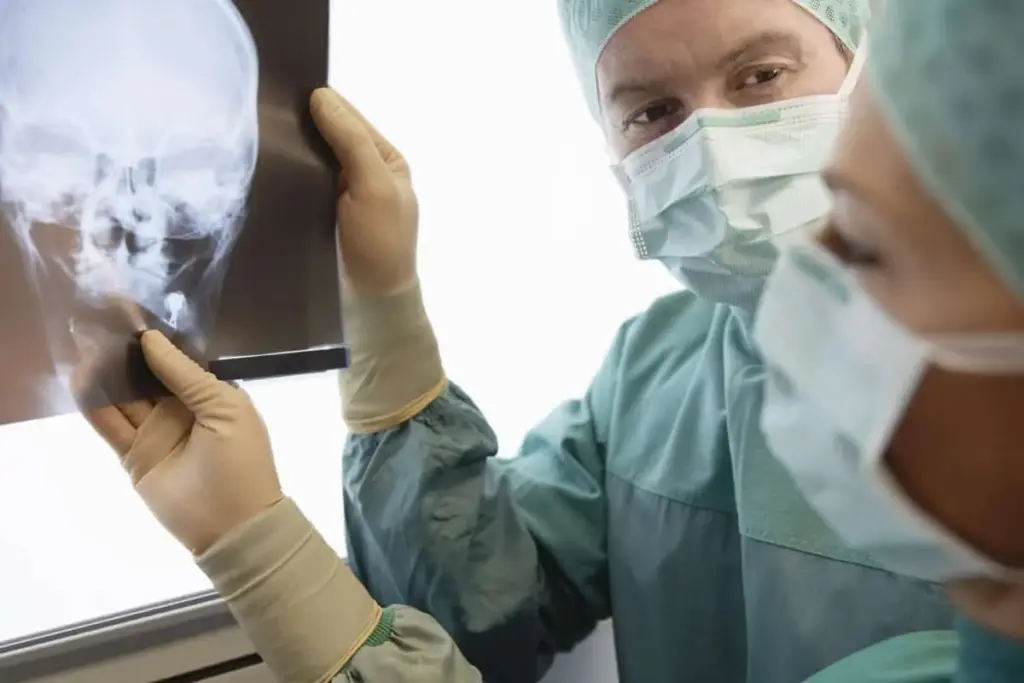
Skull base surgery is a specialized field. It deals with complex conditions at the cranial base. This is where the brain, vessels, and nerves meet. Why do you need surgery on your Skull? This essential guide explains the vital reasons and offers amazing expert tips for a safe result.
This area has many tumors, vascular malformations, and congenital defects. Surgery here is both challenging and delicate.
New techniques in skull base surgery have made treatments more precise. This has improved patient outcomes.
Key Takeaways
- The cranial base is a complex anatomical region.
- Skull base surgery treats tumors, vascular malformations, and congenital defects.
- Minimally invasive techniques improve precision and patient outcomes.
- This surgical specialty requires a high level of expertise.
- Advances in the field have transformed treatment options.
Understanding the Skull Base Anatomy
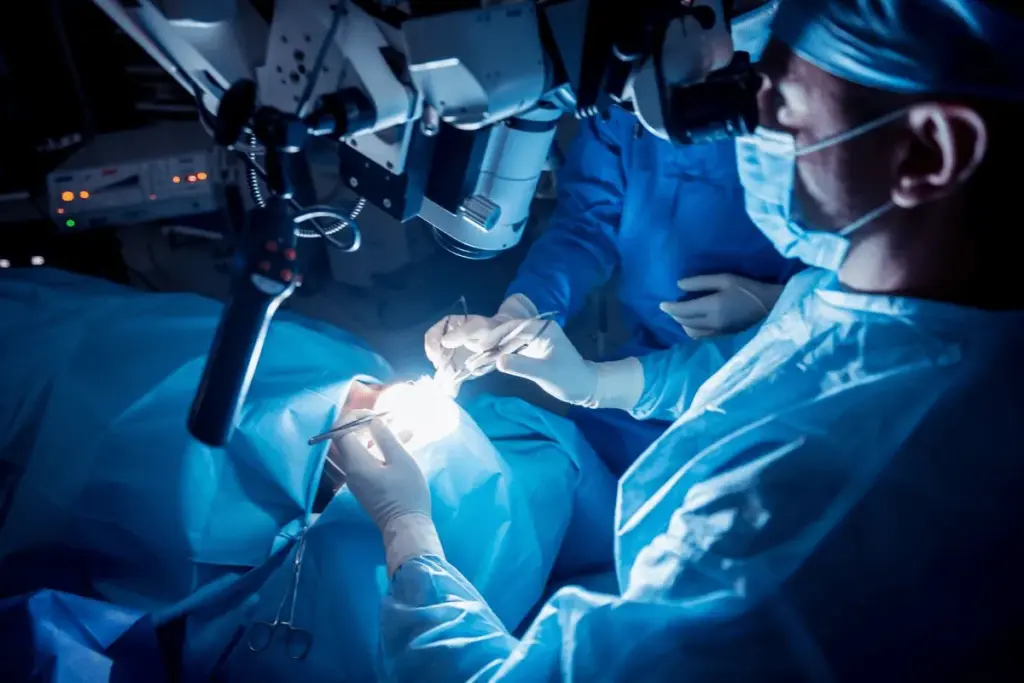
The skull base is a key part of the skull. It protects important nerves and blood vessels. It’s a complex area that doctors study a lot because of its detailed structure and important role.
The skull base is made of several bones that join together. It has many foramina and fissures. These allow nerves and blood vessels to pass through.
Critical Structures at the Skull Base
There are many important things at the skull base, like:
- The internal carotid artery, which brings blood to the brain.
- Cranial nerves, like the optic and trigeminal nerves, which help us see and feel things.
- The pituitary gland, which helps control hormones.
These things are very close together in a small space. This makes surgery here very hard. A neurosurgeon said, “Understanding the skull base is very complex because of how all the parts work together.”
This complexity means we need to plan surgeries carefully and work together as a team.
Anatomical Challenges for Surgical Access
Surgery at the skull base is very tricky. The nerves and blood vessels are very important and need to be treated carefully. Surgeons must know the three-dimensional layout and use new imaging methods.
Some big challenges are:
- Getting around without hurting anything important.
- Keeping cerebrospinal fluid from leaking.
- Seeing the area clearly with new imaging and endoscopy.
To overcome these, we need skilled surgeons, new technology, and a focus on the patient.
Defining Skull Base Surgery
Skull base surgery is a complex field that deals with the base of the skull. This area is full of important nerves and blood vessels. It has a long history and has evolved a lot.
This surgery is tricky because it must protect the brain while removing tumors or fixing blood vessel problems. Thanks to new technology, doctors can now do this work more accurately and safely.
Historical Development of the Field
Skull base surgery has changed a lot over the years. It used to be very basic, but now it’s very advanced. In the past, doctors had trouble seeing and understanding the skull base because of its complex anatomy.
New imaging tools like MRI and CT scans have changed everything. They help doctors plan surgeries better. A study on the National Center for Biotechnology Information shows how important these tools are.
- Early Challenges: Doctors didn’t know much about the skull base and had old tools.
- Modern Advancements: New imaging and tools have made surgeries more precise.
Modern Surgical Approaches
Today, skull base surgery uses many different methods. These range from open surgeries to tiny endoscopic procedures. The choice depends on the problem, where it is, and the patient’s health.
Some common methods include:
- Endoscopic Endonasal Approach (EEA): A small, less invasive way to reach some skull base problems.
- Transcranial Approaches: Open surgeries that give direct access, used for bigger problems.
- Combined Approaches: Mixing endoscopic and open surgeries for tough cases.
These new methods have made surgery better. They help patients recover faster and with less pain. They also make the surgery more precise.
The Skull and Its Base: Functional Importance
The skull, and its base in particular, is key to protecting and guiding neurovascular structures. This area is vital for the brain’s health and function.
Protective Role of the Skull Base
The skull base acts as a protective barrier for the brain and important neurovascular structures. It forms a strong floor that keeps these delicate parts safe from harm. The skull base’s bony structure creates a safe space for the brain’s lower parts and the spinal cord’s upper parts.
It also has special openings called foramina. These allow nerves and blood vessels to pass through. These openings are designed to minimize the risk of damage to these vital structures as they move from one area to another.
Neurovascular Pathways Through the Skull Base
The skull base is home to many neurovascular pathways that are key to our body’s functions. These include cranial nerves that help with facial movements, carry sensory information, and control our body’s automatic functions. Major blood vessels, like the internal carotid arteries and vertebral arteries, also go through the skull base. They bring oxygen-rich blood to the brain.
Because of its complex anatomy, the skull base requires careful surgery to avoid harming delicate neurovascular structures. Surgeons must understand the detailed relationships between these structures to perform successful skull base surgery.
Conditions Treated with Skull Base Surgery
Many conditions affect the skull base, like tumors, vascular malformations, and more. Skull base surgery is a complex field that has grown to tackle these tough cases.
Benign and Malignant Tumors
Skull base tumors can be benign or malignant. Benign tumors grow slowly and might not need surgery right away. But, if they press on important nerves, surgery is needed. Malignant tumors grow fast and spread, needing quick and complex surgery.
Vascular Malformations
Vascular malformations, like aneurysms and AVMs, are risky because they can burst and bleed. Skull base surgery is key in treating these, often with other methods. The aim is to remove the malformation safely.
Congenital Defects
Congenital defects, like encephalocele, let brain tissue bulge through the skull. Surgery is needed to fix these to avoid leaks and infections. Skull base surgeons use special techniques to repair these defects.
Traumatic Injuries
Head trauma can cause serious skull base injuries, like fractures. Surgery might be needed to fix damaged areas, manage leaks, or handle blood vessel injuries. These cases require a lot of skill in skull base surgery.
In summary, skull base surgery is a critical treatment for many skull base issues. The variety of these conditions highlights the importance of a team approach to care, aiming for the best results for patients.
Pituitary Adenomas and Skull Base Surgery
Skull base surgery is a key treatment for pituitary adenomas. It can cure or greatly improve symptoms. These tumors grow in the pituitary gland, a small gland at the brain’s base. They can be benign or cancerous and affect health differently.
Diagnosis and Evaluation
Diagnosing pituitary adenomas involves a detailed check-up. This includes clinical exams, imaging, and hormone tests. Magnetic Resonance Imaging (MRI) is vital, showing the tumor’s size and where it is.
Checking hormone levels is also important. This is because these tumors can disrupt hormone production. This leads to various symptoms. The diagnosis helps understand the tumor’s type and its health impact.
Surgical Management Options
Surgery for these tumors often uses skull base surgery. The method chosen depends on the tumor and the patient’s health.
Endoscopic endonasal surgery is a common choice. It’s less invasive, leading to fewer complications and quicker healing. This method uses an endoscope to see the tumor and the area around it, allowing for precise removal.
Outcomes and Follow-up Care
The results of skull base surgery vary. They depend on the tumor and the surgery method. Successful surgery can greatly improve or even cure symptoms.
After surgery, regular check-ups are key. These include imaging and hormone tests. This ensures the tumor doesn’t come back and manages hormone issues. A team of doctors works together to provide the best care.
Minimally Invasive Approaches in Skull Base Surgery
The endoscopic endonasal approach has changed skull base surgery. These new methods are less invasive and improve patient care.
Endoscopic Endonasal Approach (EEA)
The Endoscopic Endonasal Approach (EEA) is a new way to operate. It uses the nasal cavity to reach the skull base. This method cuts down on external cuts and tissue damage.
It’s great for treating things like pituitary adenomas and craniopharyngiomas. These are found in the sellar and suprasellar areas.
Benefits Over Traditional Open Approaches
EEA and other minimally invasive methods have big advantages. They include:
- Lower risk of complications
- Less pain after surgery
- Shorter hospital stays
- Better looks after healing
- Quicker recovery
A top neurosurgeon said, “The endoscopic endonasal approach has greatly lowered the risks of old-school skull base surgeries.”
Technological Advancements Enabling Minimally Invasive Techniques
New tech has been key in making these surgeries better. Better endoscopes, imaging, and tools have made them safer and more precise.
For example, using imaging and navigation during surgery has made EEA even better. It helps surgeons see and avoid important areas.
Patient Selection and Candidacy for Skull Base Surgery
Choosing the right patient for skull base surgery is complex. It involves many medical and anatomical factors. The skull base’s anatomy and the delicate structures around it need careful evaluation.
Medical Considerations and Contraindications
Medical factors are key in deciding if a patient can have skull base surgery. Conditions like severe heart disease or uncontrolled diabetes might make surgery too risky. Contraindications can be strict or flexible, based on how serious the condition is and the surgeon’s experience.
Before surgery, a detailed check-up is vital. It helps find and manage risks. This might mean treating chronic conditions, changing medications, and getting advice from other doctors.
Age and Comorbidity Factors
Age and other health issues are important in choosing patients. Older patients might face more risks due to their health. Geriatric patients need a special look at their health, how well they function, and if surgery will help them.
|
Comorbidity |
Considerations |
Preoperative Management |
|---|---|---|
|
Hypertension |
Control blood pressure to reduce cardiovascular risk |
Adjust antihypertensive medications |
|
Diabetes |
Optimize blood glucose control to minimize infection risk |
Coordinate with endocrinology for perioperative management |
|
Coronary Artery Disease |
Assess cardiac risk and consider preoperative cardiac evaluation |
Consult cardiology for possible interventions or optimization |
Tumor Characteristics Influencing Surgical Decisions
The type, size, and location of the tumor greatly affect surgery plans. Benign tumors might need surgery if they cause symptoms or could grow and cause problems later. Malignant tumors might need a more aggressive treatment, possibly involving a team of specialists.
The tumor’s location also shapes the surgical approach. Tumors near important structures might need a careful or less invasive method to avoid damage.
The Multidisciplinary Team in Skull Base Procedures
The success of skull base procedures relies on a multidisciplinary team. This team includes experts from different medical fields. They work together to care for patients with complex skull base conditions.
Skull base anatomy is complex, and the surrounding structures are delicate. A team with neurosurgeons, otolaryngologists, radiation oncologists, and specialized nurses is key. They work together to achieve the best results.
Neurosurgeons and Otolaryngologists Collaboration
The partnership between neurosurgeons and otolaryngologists is central to skull base surgery success. Neurosurgeons handle neurological conditions and navigate neural structures. Otolaryngologists focus on ear, nose, and throat issues and use endoscopic techniques.
Together, they tackle complex conditions that affect both the brain and ear, nose, and throat. Their teamwork makes surgery more precise and safe.
Role of Radiation Oncologists
Radiation oncologists are vital in treating skull base tumors, whether benign or malignant. They use advanced radiation therapy to target tumors safely.
Adding radiation therapy to treatment plans is key for controlling tumors and easing symptoms. Radiation oncologists work with the surgical team to create a treatment plan that meets each patient’s needs.
Importance of Specialized Nursing Care
Specialized nursing care is essential for patients before, during, and after skull base surgery. Nurses with neurocritical care and otolaryngology expertise support patients greatly.
They educate patients, watch for complications, and manage post-surgery care. Their work is critical for a smooth recovery and the best patient outcomes.
In summary, a multidisciplinary team is vital for the success of skull base procedures. By combining neurosurgeons, otolaryngologists, radiation oncologists, and specialized nurses, patients get the care they need for complex conditions.
Preoperative Planning and Patient Preparation
The preoperative phase is key in getting patients ready for skull base surgery. It involves careful planning and preparation. This phase includes many important steps for a successful surgery.
Imaging Studies and Their Interpretation
Imaging studies are vital in preoperative planning. They give detailed views of the skull base’s anatomy and any problems. MRI and CT scans help see how big the problem is and how it affects nearby nerves and blood vessels.
Advanced imaging techniques like functional MRI and diffusion tensor imaging give more details. This helps in planning the surgery. The use of imaging data in surgical planning software makes precise surgical navigation possible during the surgery.
Medical Optimization Before Surgery
Medical optimization is a big part of getting ready for surgery. It aims to lower risks by managing health problems and improving overall health. This includes checking the patient’s medical history, current health, and any medicines that might affect surgery or recovery.
- Reviewing and managing chronic conditions such as diabetes and hypertension.
- Adjusting or discontinuing medications that may interfere with surgery or recovery.
- Implementing measures to reduce the risk of infection and other complications.
By improving the patient’s health, the chance of problems during and after surgery goes down. This makes the surgery more likely to be successful.
Patient Education and Expectations
Patient education is a big part of getting ready for surgery. It makes sure patients know about their surgery, what to expect, and how to recover. This includes talking about the surgery’s goals, possible risks, and what to do after surgery.
It’s important to talk clearly and set realistic hopes. This helps lower anxiety and makes patients happier with their care. Educational materials and talks help patients understand their part in recovery. This includes any lifestyle changes and follow-up care they need.
Surgical Techniques for Specific Skull Base Regions
Different parts of the skull base need special surgery because of their unique challenges. The skull base is split into three main areas: the front, middle, and back. Each area needs its own method because of its complex shape and the important structures inside.
Anterior Skull Base Approaches
Surgeons use different ways to reach the front skull base. They might choose the endoscopic endonasal approach (EEA) or open transcranial methods. The right choice depends on the problem’s type and size.
- Endoscopic Endonasal Approach (EEA): This method is less invasive. It’s used for tumors and growths that can be reached through the nose.
- Transcranial Approaches: These are needed for growths that can’t be reached through the nose or need more space.
Middle Skull Base Techniques
The middle skull base is tricky because it’s close to important blood vessels and nerves. The methods used here include:
- Preauricular infratemporal fossa approach: This is good for growths in the infratemporal fossa area.
- Retrosigmoid approach: Though often used for the back of the skull, it can also reach parts of the middle skull base.
Posterior Skull Base Strategies
The back skull base is operated on with the retrosigmoid and far-lateral methods. These are for growths in the back of the skull and the foramen magnum area.
- Retrosigmoid Approach: This method gets to the back of the skull. It’s often used for vestibular schwannomas.
- Far-Lateral Approach: This method reaches the foramen magnum and lower clivus. It’s useful for growths in this hard-to-reach area.
Each area and its surgery need a deep understanding of the anatomy and the problem being treated. Choosing the right surgery is key to good results for patients with skull base surgery.
Managing Cerebrospinal Fluid Leaks
Managing cerebrospinal fluid leaks is key in skull base surgery. These leaks can happen during or after surgery. They can cause serious problems like meningitis or cerebral abscess if not handled right.
Prevention Strategies During Surgery
To prevent CSF leaks, surgeons use careful techniques and planning. They do several things to lower the risk:
- Careful handling of tissues to avoid damage
- Use of advanced imaging techniques to understand the anatomy
- Application of grafts or flaps to reinforce possible leak sites
Table: Prevention Strategies for CSF Leaks
|
Strategy |
Description |
Benefits |
|---|---|---|
|
Tissue Handling |
Careful dissection and handling of tissues |
Reduces risk of tissue damage |
|
Advanced Imaging |
Use of MRI and CT scans for anatomical understanding |
Enhances precision in surgery |
|
Grafting Techniques |
Application of grafts or flaps to possible leak sites |
Reinforces areas prone to leaks |
Reconstruction Techniques
Reconstruction techniques are vital in preventing and managing CSF leaks. They include using vascularized flaps, free grafts, and synthetic materials to fix the skull base.
The right technique depends on the defect’s size and location, and the patient’s health. Effective reconstruction stops leaks and keeps the skull base strong.
Treatment of Postoperative Leaks
CSF leaks can happen after surgery, even with prevention. The first step is usually conservative management, like lumbar drainage and bed rest. If leaks don’t stop, surgery might be needed to fix the problem.
Prompt recognition and treatment of postoperative CSF leaks are critical to prevent further complications. A team of neurosurgeons, otolaryngologists, and other specialists often work together to manage these cases effectively.
Risks and Complications of Skull Base Surgery
It’s important to know the risks and complications of skull base surgery. This surgery is complex and delicate. It involves working on critical areas at the base of the skull, which can lead to various complications.
Neurological Complications
Neurological complications are a big risk in skull base surgery. These can include damage to cranial nerves. This can cause visual problems, facial weakness, or swallowing issues. Careful planning before surgery and monitoring during it are key to reduce these risks.
Infection and CSF Leak Management
Infections and cerebrospinal fluid (CSF) leaks are major concerns. Infections can be treated with antibiotics, but CSF leaks might need more surgery. Using preventive measures like careful closure and lumbar drains can help avoid CSF leaks.
|
Complication |
Prevention Strategies |
Management Strategies |
|---|---|---|
|
Infection |
Prophylactic antibiotics, sterile technique |
Antibiotics, possible surgical drainage |
|
CSF Leak |
Meticulous closure, lumbar drains |
Conservative management, surgical repair |
Vascular Injuries and Their Prevention
Vascular injuries during skull base surgery can be very serious. Knowing the patient’s vascular anatomy before surgery is key to avoiding these injuries. Tools like intraoperative navigation systems and Doppler ultrasound help in preserving vital blood vessels.
Long-term Sequelae
Long-term effects of skull base surgery can include lasting neurological problems, endocrine issues, or cosmetic changes. Rehabilitation and follow-up care are vital to manage these effects and improve outcomes. A team of neurosurgeons, otolaryngologists, and rehabilitation specialists is needed for full care.
Postoperative Care and Recovery
Recovery from skull base surgery needs careful postoperative care for the best results. The time after surgery is key for watching for problems and helping the patient get better.
Immediate Postoperative Management
Right after surgery, patients stay in the ICU to watch for any bad signs. Managing pain, nausea, and other symptoms is very important to help them feel better and recover faster.
- Monitoring of vital signs and neurological status
- Management of pain and other symptoms
- Prevention and detection of complications
Hospital Course and Monitoring
While in the hospital, patients get checked often to see how they’re doing. This includes regular checks of their brain function, imaging, and lab tests to catch any problems early.
- Regular neurological assessments
- Imaging studies to monitor surgical site
- Laboratory tests to check for infection or other complications
Discharge Planning and Home Care
When patients start to get better, planning for their discharge is key. This means teaching them and their caregivers about how to care for themselves at home, including wound care, taking medicine, and keeping up with doctor’s visits.
- Patient and caregiver education
- Arranging for home care services if necessary
- Scheduling follow-up appointments
Good postoperative care and recovery plans are vital for the best results after skull base surgery. By focusing on the right care in the hospital and at home, doctors can help their patients recover well.
Rehabilitation After Skull Base Surgery
Patients who have had skull base surgery get a lot of help from a special plan. This plan includes physical therapy, speech and swallowing therapy, and support for the mind. It helps them deal with the challenges after surgery.
Physical Therapy Interventions
Physical therapy is key in getting better. It helps patients get stronger, move better, and do daily tasks again. A physical therapist makes a plan just for them, focusing on things like balance and pain.
For example, those who had surgery on the back of the skull might need help with balance and walking. A good physical therapy plan can really help them get back to normal faster.
Speech and Swallowing Rehabilitation
Speech and swallowing therapy is also very important. Patients might have trouble speaking clearly or swallowing after surgery. A speech-language pathologist (SLP) will make a plan to help them talk better and eat safely.
They might do exercises to make swallowing easier or use special tools to help with eating. The goal is to help patients communicate well and eat safely again.
Neuropsychological Support
Neuropsychological support is also key. It helps with the mind and feelings after surgery. Patients might feel different mentally or emotionally, which can make it hard to get better.
A neuropsychologist can offer counseling and training to help. They might work on memory or mood issues. This support helps patients feel better and get back to their life.
|
Rehabilitation Component |
Goals |
Interventions |
|---|---|---|
|
Physical Therapy |
Improve strength, mobility, balance, and functional abilities |
Personalized exercise programs, balance training, pain management |
|
Speech and Swallowing Rehabilitation |
Enhance speech clarity, voice quality, and swallowing safety |
Speech therapy, swallowing exercises, adaptive equipment |
|
Neuropsychological Support |
Address cognitive and emotional challenges |
Counseling, cognitive training, emotional support |
Conclusion
Skull base surgery is a complex field that needs a team effort. It involves understanding the skull base’s detailed anatomy. This is key because it faces unique challenges for surgeons.
Understanding the skull base’s anatomy is vital. It helps surgeons plan and perform surgeries better. This includes using advanced techniques and careful post-surgery care.
Neurosurgeons, otolaryngologists, and others work together for the best results. Their teamwork is essential for patient care.
Healthcare professionals must grasp the complexities of skull base surgery. This knowledge helps them offer top-notch care. This summary wraps up the main points, showing how important skull base surgery is.
FAQ
What is skull base surgery?
Skull base surgery is a complex surgery. It involves the base of the skull. This area has important structures like nerves, blood vessels, and the brainstem.
What conditions are treated with skull base surgery?
This surgery treats many conditions. These include tumors, both benign and malignant. It also treats vascular malformations, congenital defects, and injuries to the skull base.
What is the skull base anatomy?
The skull base anatomy is complex. It includes the cranial nerves, blood vessels, and the bone at the skull’s base. This forms the floor of the cranial cavity.
What are the challenges of skull base surgery?
The surgery is challenging. The skull base’s anatomy is complex. There are critical structures present. The goal is to preserve neurological function.
What is the role of a multidisciplinary team in skull base surgery?
A team of experts is key. This includes neurosurgeons, otolaryngologists, radiation oncologists, and nurses. They provide complete care and improve outcomes.
What are the benefits of minimally invasive approaches in skull base surgery?
Minimally invasive methods, like the endoscopic endonasal approach, have benefits. They cause less trauma and pain. Recovery is faster.
How are cerebrospinal fluid leaks managed during skull base surgery?
Leaks are managed through prevention and reconstruction. Treatment for postoperative leaks is also important.
What are the risks and complications of skull base surgery?
Risks include neurological problems, infection, and CSF leaks. Vascular injuries and long-term effects are also possible.
What is the importance of rehabilitation after skull base surgery?
Rehabilitation is vital for the best outcomes. It includes physical therapy and support for speech and swallowing. Neuropsychological support is also important.
What is the significance of the skull base in protecting the brain?
The skull base protects the brain. It acts as a barrier against injury and infection. It also houses important neurovascular pathways.
How is patient selection and candidacy determined for skull base surgery?
Patient selection is based on a detailed evaluation. This includes medical history, age, and comorbidities. Tumor characteristics are also considered.
What is the role of imaging studies in preoperative planning for skull base surgery?
Imaging studies, like MRI and CT scans, are essential. They provide detailed information about the skull base’s anatomy and pathology.
References
National Center for Biotechnology Information. Evidence-Based Medical Insight. Retrieved from https://pmc.ncbi.nlm.nih.gov/articles/PMC4533361/



 Departments
 Related Videos
 Our Doctors
 News
News