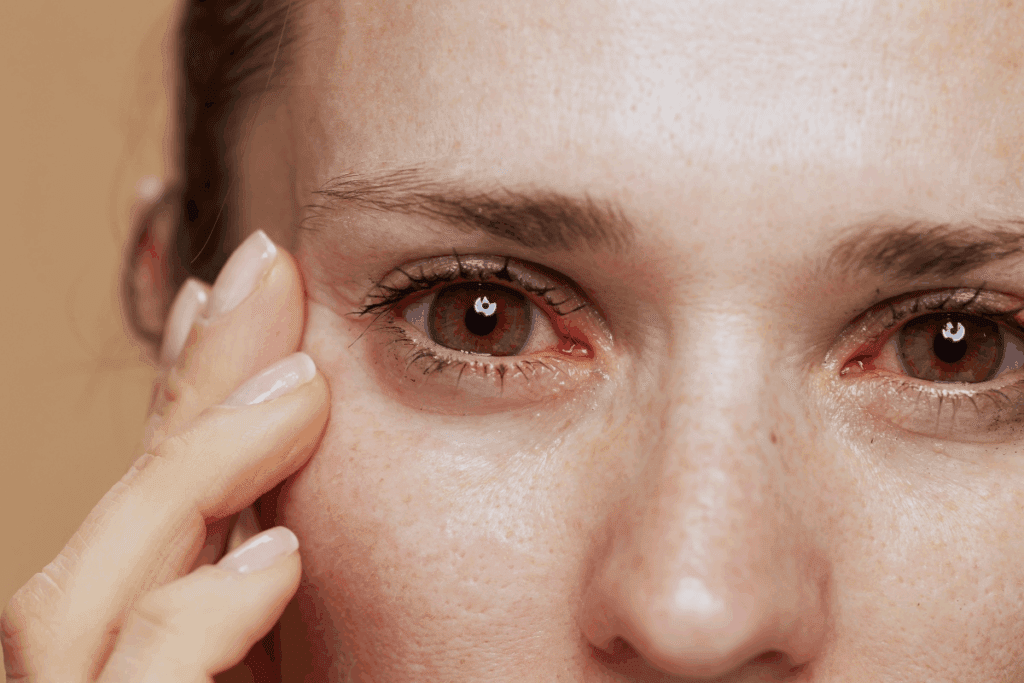
Feeling sore and red in the corner of your eye can worry many. It might mean there’s something wrong that needs attention. Finding out why is key to feeling better.
Many things can bother the eye area, from small annoyances to serious infections. For example, dacryocystitis, an infection of the tear duct, or a sty (hordeolum), can hurt the corner of the eye. These usually get better in a week or two.
Knowing about the eye corner’s anatomy and what can go wrong is important. We’ll look into why the inner corner of the eye might hurt, like infections or swelling. This will help you find a way to fix the problem.
Key Takeaways
- Redness and soreness in the corner of the eye can be caused by various conditions.
- Infections such as dacryocystitis can cause pain in the corner of the eye.
- A sty (hordeolum) is another common condition that can cause eye corner pain.
- Understanding the causes is key to getting the right treatment.
- Getting a proper diagnosis is vital to solve the problem.
Understanding Eye Corner Anatomy

To understand why your eye corner might hurt and look red, you need to know about the anatomy. The eye corners, both inner and outer, have many parts that are important for eye health.
Key Structures in the Inner and Outer Eye Corners
The inner corner of your eye, near the lacrimal sac, is more likely to get infected. This area has the lacrimal puncta, small holes for tears to drain into your nose. The outer corner, being more exposed, can get dry and irritated easily.
The eye corners have several important parts: – The lacrimal caruncle at the inner corner, which can swell up. – The canthi (plural of canthal), the corners where your eyelids meet.
How These Structures Can Become Irritated
Many things can irritate the eye corners. The inner corner is at risk of infections because of its close location to the lacrimal sac and tear ducts. Problems here can cause dacryocystitis. The outer corner, being more exposed, can get irritated by the environment and dryness.
The Role of Tears in Eye Corner Health
Tears are essential for eye health, keeping it moist and protected from infections. They flow out of the body through the tear ducts in the inner corner of the eye. Issues with these ducts, like blockages, can cause pain and redness in the eye corners.
Structure | Location | Potential Issues |
Lacrimal Puncta | Inner corner of the eye | Blockage, infection |
Lacrimal Caruncle | Inner corner of the eye | Inflammation |
Canthi | Both inner and outer corners | Irritation, infection |
Knowing about these parts and their roles helps you figure out why your eye corner might be sore and red. It could be due to issues in the inner corner like pain inner eye corner or problems in the outer corner like outer corner of eye sore and red.
What Causes a Sore Inner Corner of Eye?

Soreness in the inner corner of the eye is a common issue. It can come from many causes. The inner corner, or medial canthal area, has many structures that can get irritated or inflamed.
Dacryocystitis: Infected Tear Ducts
Dacryocystitis happens when tear ducts get blocked and infected. This is often due to bacteria like staph and strep. It can be caused by infections, injuries, or aging.
Symptoms include inflammation, redness, too many tears, and discharge. “Dacryocystitis is typically characterized by a painful swelling in the inner corner of the eye, near the nose.” If not treated, it can cause abscesses.
Inflammation of the Lacrimal Caruncle
The lacrimal caruncle is a small, pinkish structure at the inner corner of the eye. It has sweat and sebaceous glands, making it prone to inflammation. Irritation can cause it to become red, swollen, and painful.
Good eyelid hygiene and avoiding irritants are key. Sometimes, antibiotic ointments or anti-inflammatory medications are needed to treat it.
Trochleitis: Tendon Inflammation Near the Inner Eye
Trochleitis is inflammation of the trochlea, a small pulley system near the inner corner of the eye. It helps the superior oblique muscle tendon move. This condition can cause pain in the inner corner of the eye, making it hard to move the eye.
It’s often linked to tenderness and can be made worse by conditions like rheumatoid arthritis or systemic lupus erythematosus.
“Trochleitis is a less common but significant cause of inner eye corner pain, requiring a thorough examination to diagnose accurately.”
Treatment for trochleitis includes anti-inflammatory measures. This can include corticosteroid injections or oral anti-inflammatory medications.
Outer Corner Eye Pain and Redness
Outer corner eye pain and redness can come from many sources. It’s key to find out why to get the right treatment.
Angular Blepharitis: Symptoms and Causes
Angular blepharitis hits the outer corners of the eyelids. It’s caused by bacteria and leads to inflammation. Symptoms include redness, swelling, and tenderness in the outer corner of the eye. Without treatment, it can get worse.
Dry Eye Syndrome Effects on Eye Corners
Dry Eye Syndrome can also cause pain and redness in the outer corners. It happens when the eyes don’t make enough tears or the tears are bad. Using a humidifier and taking breaks from screens can help.
Contact Dermatitis and Allergic Reactions
Contact dermatitis happens when the skin around the eyes reacts to something it shouldn’t. This makes the outer corner red, sore, and inflamed. It’s important to find and avoid the cause to manage it.
Condition | Symptoms | Treatment |
Angular Blepharitis | Redness, swelling, tenderness | Warm compresses, topical antibiotics |
Dry Eye Syndrome | Dryness, irritation, redness | Artificial tears, humidifier use |
Contact Dermatitis | Redness, soreness, inflammation | Avoiding allergens, topical creams |
Styes and Chalazia: Infected Oil Glands
Infected oil glands in the eyelids can cause styes or chalazia. These conditions are painful and uncomfortable. They happen when the meibomian glands get blocked or infected. These glands are important for the health of the eye.
Identifying a Stye
A stye is a painful lump on the eyelid caused by bacteria like Staphylococcus aureus. Look for a red, swollen area on the eyelid. It might be painful to the touch and have a pus-filled center.
- A red, swollen area on the eyelid
- Pain or tenderness to the touch
- A pus-filled center in some cases
Styes can be on the outside or inside of the eyelid. External styes are more common and usually less severe.
The Development Process of Styes
Styes happen when bacteria infect the oil glands along the eyelid. Poor eyelid hygiene and rubbing the eyes can help bacteria spread. This leads to swelling and pain.
Good hygiene, like washing your hands before touching your eyes, can prevent styes. Warm compresses can help bring the pus to a head and drain it, aiding in healing.
When Styes Become Chalazia
If a stye doesn’t go away and the infection stays, it can turn into a chalazion. A chalazion is a larger, usually painless lump from a blocked oil gland. Unlike styes, chalazia are not painful but can be a cosmetic concern.
Styes are painful and have pus, while chalazia are painless and don’t have obvious infection.
Characteristics | Stye (Hordeolum) | Chalazion |
Pain Level | Typically painful | Usually painless |
Cause | Infection of an oil gland | Blockage of an oil gland |
Appearance | Red, swollen, possibly with pus | Swollen lump, usually without pus |
Knowing the difference between styes and chalazia helps you get the right treatment. If you’re unsure or if the condition doesn’t go away, see an eye care professional.
Conjunctivitis and Its Impact on Eye Corners
Conjunctivitis, also known as pink eye, can make your eye corners sore and uncomfortable. It happens when the conjunctiva, a thin membrane, gets inflamed. This can affect the white part of your eye and the inside of your eyelids. We’ll look at how conjunctivitis impacts the eye corners and what you can do to feel better.
Types of Conjunctivitis and Their Symptoms
Conjunctivitis can be caused by infections or allergies. The symptoms depend on the type of conjunctivitis.
- Bacterial Conjunctivitis: This type causes a thick, yellow or green discharge. It can make your eyelids stick together, mainly after sleeping.
- Viral Conjunctivitis: It’s often linked to a watery discharge and can come with a cold or respiratory infection.
- Allergic Conjunctivitis: This is caused by an allergic reaction to things like pollen, dust, or pet dander. It leads to itching, redness, and watery discharge.
The American Academy of Ophthalmology says conjunctivitis is a common eye condition. It can significantly affect the eye corners.
“Conjunctivitis can cause redness, itchiness, and discharge. It makes it hard to open your eyes, mainly in the morning.”
— American Academy of Ophthalmology
How Conjunctivitis Causes Soreness in Eye Corners
The inflammation from conjunctivitis can make your eye corners sore and red. The discharge from bacterial and viral conjunctivitis can irritate the corners. Allergic conjunctivitis can cause itching and eye rubbing, which irritates the corners even more.
Type of Conjunctivitis | Common Symptoms | Effect on Eye Corners |
Bacterial | Thick discharge, redness | Accumulation of discharge, irritation |
Viral | Watery discharge, redness | Irritation, soreness |
Allergic | Itching, watery discharge | Itching, rubbing, irritation |
Knowing the type of conjunctivitis you have is key to effective treatment. We suggest seeing an eye care professional for a proper diagnosis and treatment plan.
Treating Conjunctivitis to Relieve Eye Corner Soreness
Treatment for conjunctivitis varies based on its cause. Bacterial conjunctivitis is treated with antibiotic eye drops or ointment. Viral conjunctivitis usually gets better on its own but may need antiviral medication. Allergic conjunctivitis can be managed with anti-allergic eye drops or oral medications.
By treating the underlying cause of conjunctivitis, you can reduce the soreness and redness in your eye corners. We’ll discuss more about treatment options in the following sections.
Diagnosing Eye Corner Problems
To solve issues like a sore inner corner of the eye, a detailed check-up is key. A thorough eye exam is needed to find out why it hurts.
Common Diagnostic Procedures
Eye doctors use many tools and methods to find eye problems. A full eye check-up includes:
- A visual acuity test to check your vision sharpness.
- A slit-lamp exam to look at your eye’s parts, like eyelids and cornea.
- Tonometry to measure your eye pressure.
These steps help doctors spot issues like inflammation or infection in the eye corner.
Tests to Rule Out Serious Conditions
Sometimes, more tests are needed to check for serious problems. These might include:
Test | Purpose |
Fluorescein staining | To find corneal ulcers or abrasions. |
Tear production tests | To check for dry eye. |
Imaging tests (e.g., OCT) | To look at the retina and inside the eye. |
These tests make sure serious issues are found and treated right.
What Your Eye Doctor Will Look For
Your eye doctor will search for signs of different problems during the exam. They’ll check for:
- Inflammation or infection in the eyelids or conjunctiva.
- Any issues with tear production or how they drain.
- Corneal ulcers or other problems on the eye surface.
By finding the cause of your symptoms, your doctor can create a good treatment plan for you.
Medical Treatments for Sore and Red Eye Corners
There are many medical treatments for sore and red eye corners. These include prescription drugs and procedures. The right treatment depends on the cause, like infections or blocked tear ducts.
Prescription Medications and Antibiotics
Antibiotic eye drops or ointments are often used for infections. They work well against bacterial conjunctivitis and other infections. Sometimes, anti-inflammatory drugs are also suggested to lessen swelling and pain.
- Antibiotic eye drops for bacterial infections
- Anti-inflammatory medications for reducing swelling
- Antiviral medications for viral infections, when applicable
Procedures for Blocked Tear Ducts
A blocked tear duct can be very uncomfortable and may lead to infections. To fix this, doctors use:
- Tear duct probing to diagnose and clear blockages
- Dacryocystorhinostomy (DCR) surgery to create a new tear drainage path
- Balloon dacryoplasty to widen the tear duct
Treatment Approaches for Different Conditions
Each condition needs its own treatment plan. For example:
- Styes and chalazia may be treated with warm compresses and, in some cases, surgical drainage
- Conjunctivitis treatment depends on whether it’s bacterial, viral, or allergic
- Dry eye syndrome may be managed with lubricating eye drops and lifestyle changes
It’s important to know why you have pain in the corner of my eye. Talking to an eye doctor is key to finding the right treatment.
Home Remedies and Self-Care Strategies
Sore and red eye corners can often be managed with simple self-care techniques and home remedies. While these methods can provide relief, it’s essential to understand when to seek medical attention. We will explore various strategies that can help alleviate discomfort and promote healing.
Warm Compress Application Techniques
Applying a warm compress is a simple yet effective way to soothe a sore eye corner. To do this, soak a clean cloth in warm water, wring it out, and apply it to the affected area for a few minutes. Repeat this process several times a day. The warmth helps to loosen any blockages in the oil glands and can reduce inflammation.
Tips for effective warm compress application:
- Use a clean cloth each time to avoid infection
- Ensure the water is not too hot to avoid burning the delicate skin around the eyes
- Gently apply the compress; avoid pressing too hard
Proper Eyelid Hygiene Routines
Maintaining good eyelid hygiene is key for preventing and managing conditions that cause a sore corner of the eye. This involves gently cleaning the eyelids and lashes to remove dirt, oil, and other debris.
Steps for proper eyelid hygiene:
- Use a mild, non-irritating cleanser or baby shampoo diluted with water
- Gently massage the cleanser onto the eyelids and lashes using a cotton swab
- Rinse thoroughly with warm water
- Pat dry with a clean towel
Over-the-Counter Solutions That Work
Several over-the-counter (OTC) products can help manage symptoms of a sore and red eye corner. These include artificial tears to lubricate dry eyes, antihistamine drops for allergic reactions, and antibiotic ointments for mild infections.
When using OTC solutions:
- Always follow the product instructions
- Be aware of possible side effects or allergic reactions
- If symptoms persist or worsen, consult a healthcare professional
When Self-Treatment Is Not Recommended
While home remedies and self-care can be effective for mild cases, there are situations where medical attention is necessary. If you experience severe pain, vision changes, or if symptoms do not improve with self-care, it’s important to consult an eye care professional.
Signs that you need medical attention:
- Persistent or severe eye pain
- Vision disturbances or loss
- Increased sensitivity to light
- Pus or discharge from the eye
By understanding when to use home remedies and when to seek professional help, you can effectively manage a sore and red corner of the eye. Remember, if in doubt, it’s always best to consult with a healthcare professional for personalized advice.
Conclusion: Protecting Your Eye Health
Keeping your eyes healthy is key to avoiding long-term problems. Regular eye exams and good eye care are important. Knowing why your eyes might hurt and taking action can prevent big issues.
We’ve looked at why your eye corner might hurt and be red. This could be due to infections, inflammation, dry eye, or allergies. Spotting the signs early and getting medical help is critical for treating it right.
Good eye hygiene, warm compresses, and following your doctor’s advice can help a lot. Also, avoiding eye irritants and managing health issues are key to keeping your vision sharp.
By focusing on eye health and acting early, you can lower the risk of serious problems. If you have ongoing or severe eye issues, see an eye doctor. They can make sure you get the right care.
FAQ
Why is the corner of my eye sore and red?
The corner of your eye can get sore and red for many reasons. This includes infections, inflammation, or irritation. Issues like dacryocystitis, inflammation of the lacrimal caruncle, or trochleitis can cause this.
What is dacryocystitis and how is it treated?
Dacryocystitis is an infection or inflammation of the tear ducts. It’s often treated with antibiotics. Sometimes, a procedure to clear the blocked tear duct is needed.
How can I identify a stye in the corner of my eye?
A stye is a small, painful lump on the eyelid. It’s often caused by an infected oil gland. You can spot it by its redness, swelling, and tenderness.
What is the difference between a stye and a chalazion?
A stye is painful and caused by an infection. A chalazion is usually painless and caused by a blocked oil gland. A stye can turn into a chalazion if it becomes chronic and painless.
How is conjunctivitis diagnosed and treated?
Conjunctivitis, or pink eye, is diagnosed by symptoms and a physical exam. Treatment varies by cause. Bacterial conjunctivitis gets antibiotics, viral conjunctivitis often heals on its own, and allergic conjunctivitis is treated with anti-allergic meds.
What are the symptoms of angular blepharitis?
Angular blepharitis causes inflammation of the eyelid margins, mainly at the corners. Symptoms include redness, irritation, and sometimes a burning feeling.
How can dry eye syndrome affect the eye corners?
Dry eye syndrome can cause irritation, redness, and discomfort in the eye corners. This is due to not enough tear production or poor tear quality.
What home remedies can help alleviate sore and red eye corners?
Warm compresses, proper eyelid hygiene, and over-the-counter solutions can help. But, if symptoms don’t go away, see an eye doctor.
When should I seek medical attention for eye corner problems?
See a doctor if you have persistent or severe eye pain, vision changes, increased light sensitivity, or a lot of discharge or pus.
Can contact dermatitis cause eye corner redness and soreness?
Yes, contact dermatitis or allergic reactions to makeup, skincare products, or chemicals can cause redness and soreness in the eye corners.
How can I prevent eye corner problems?
Good eyelid hygiene, not sharing makeup or makeup tools, and protecting your eyes from irritants can prevent many issues.
References
National Center for Biotechnology Information. Sore, Red Eye Corner: Causes and Concerns. Retrieved from https://www.ncbi.nlm.nih.gov/pmc/articles/PMC5391903/



 Departments
 Related Videos
 Our Doctors
 News
News