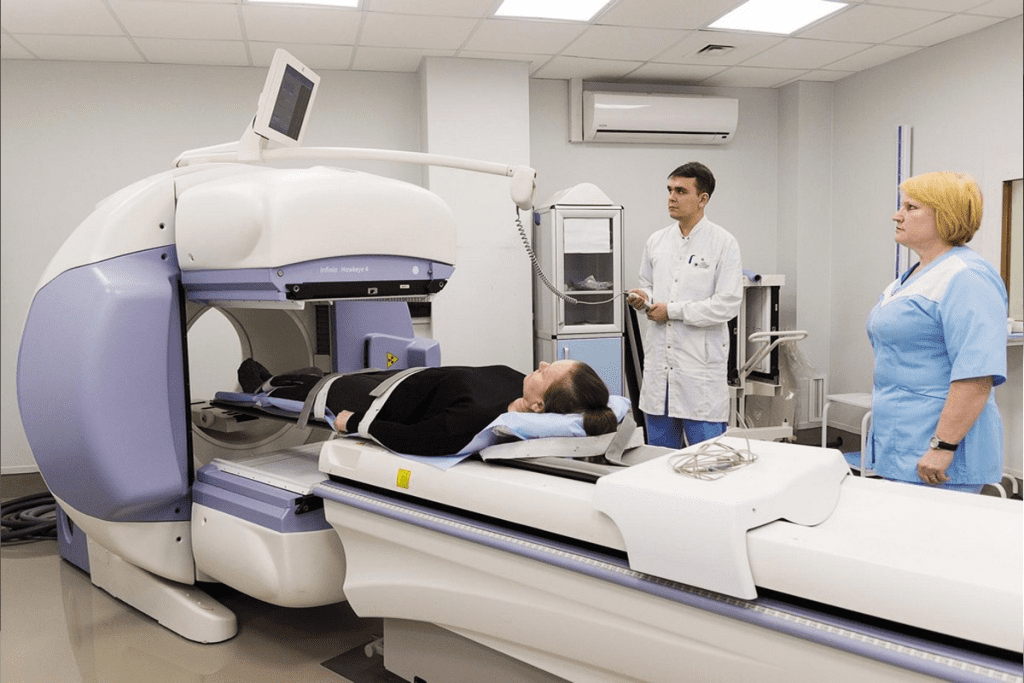
Arthritis affects millions worldwide, causing a lot of pain and disability. Getting an accurate diagnosis is key to managing it well. We use advanced imaging like SPECT/CT to check for joint inflammation and diagnose arthritis.
SPECT/CT combines functional and anatomical information, giving us a full view of the affected joints. This nuclear medicine imaging helps us see how much inflammation is in the joints. It guides us in making treatment plans.
Using arthritis imaging technologies, we can find the main causes of joint pain. This helps us create specific treatment plans. Getting a correct joint inflammation diagnosis is the first step to managing arthritis well.
Key Takeaways
- Advanced imaging techniques like SPECT/CT are key for arthritis diagnosis.
- SPECT/CT combines functional and anatomical information for a full assessment.
- Accurate diagnosis is essential for effective arthritis management.
- Nuclear medicine imaging is vital in understanding joint inflammation.
- Targeted treatment plans can be made based on accurate imaging results.
What is a SPECT Scan?
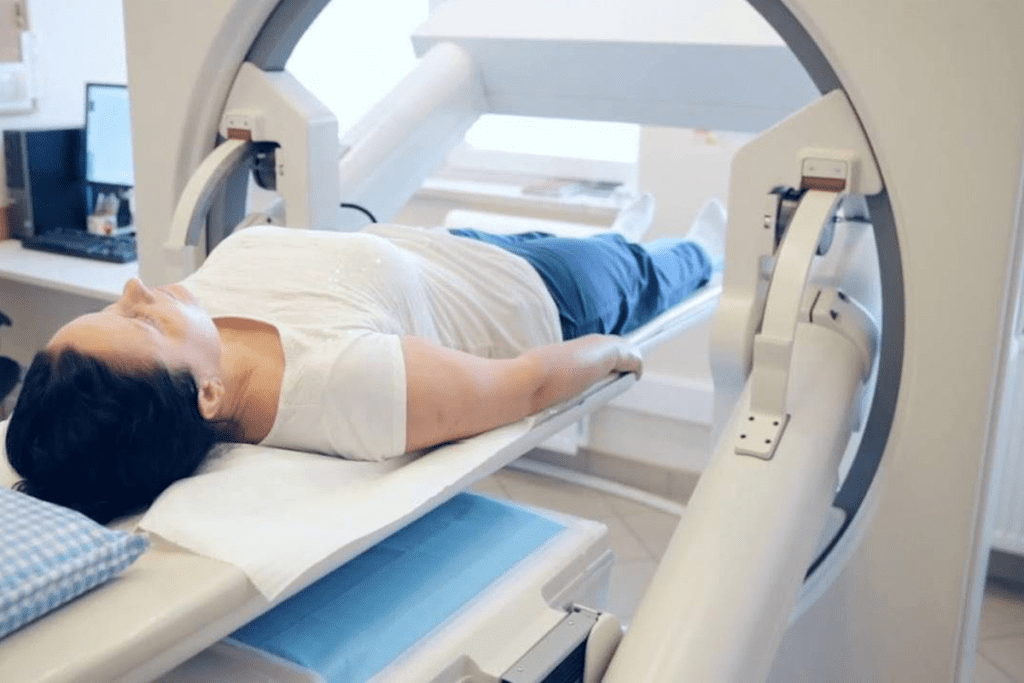
SPECT scans use small amounts of radioactive tracers to look inside the body. They are great for checking bone health, like in arthritis.
Basic Principles of Nuclear Medicine Imaging
Nuclear medicine, like SPECT scans, uses radiotracer uptake. We give a tiny amount of radioactive material, like technetium-99m. It goes to areas that are very active, like growing bones or inflamed tissues.
The tracer sends out gamma rays. The SPECT scanner catches these rays. Then, it makes detailed, 3D pictures of what’s happening inside.
How SPECT Technology Works
SPECT tech uses a gamma camera that moves around the patient. It takes pictures from different sides. Then, it uses special math to make a full picture of the area.
First, we inject the radiotracer into the body. As the camera moves, it picks up the gamma rays. This info helps make the final images.
| Key Components | Function |
| Radiotracer | Emits gamma rays, which are detected by the SPECT scanner |
| Gamma Camera | Rotates around the patient, capturing images from multiple angles |
| Reconstruction Algorithm | Creates detailed, 3D images from the captured data |
The Connection Between Bone Metabolism and Joint Inflammation
The link between bone metabolism and joint inflammation is key to understanding arthritis. Arthritis causes inflammation in the joints, which affects bone metabolism. This connection helps in diagnosing and managing the condition.
How Arthritis Affects Bone Activity
Arthritis impacts bone activity by causing joint inflammation. This inflammation increases bone turnover. Increased bone turnover can lead to pain, deformity, and loss of function.
In inflammatory arthritis, like rheumatoid arthritis, bone erosion occurs. This leads to structural damage. In degenerative joint diseases, like osteoarthritis, bone spurs may form.
Radiotracer Uptake in Inflamed Joints
SPECT scans use radiotracers to show bone metabolism in inflamed joints. The uptake of radiotracers, like Technetium-99m methylene diphosphonate (Tc-99m MDP), shows bone activity. In inflamed areas, there’s increased radiotracer uptake due to higher bone turnover.
The level of radiotracer uptake tells us about inflammation and disease activity. This info is key for diagnosing arthritis, tracking disease progression, and checking treatment success.
- Increased radiotracer uptake shows active inflammation and bone metabolism.
- The uptake pattern helps identify different types of arthritis.
- Quantifying uptake helps measure the severity of joint inflammation.
Understanding the link between bone metabolism and joint inflammation helps manage arthritis better. SPECT scans are vital in this process. They provide detailed images of bone activity and inflammation.
Types of Arthritis Detectable with SPECT Scans
SPECT scans can show detailed images of bone activity. They help diagnose different types of arthritis. Arthritis causes joint pain, inflammation, and can lead to disability. SPECT scans are key in identifying and managing these conditions.
Inflammatory Arthritis
Inflammatory arthritis includes conditions like rheumatoid arthritis (RA) and psoriatic arthritis (PsA). These conditions happen when the body’s immune system attacks the joints. This leads to inflammation and pain. SPECT scans can spot the increased bone activity seen in these conditions.
Key Features of Inflammatory Arthritis on SPECT:
- Increased radiotracer uptake in affected joints
- Symmetrical involvement in conditions like RA
- Asymmetrical involvement in PsA
Degenerative Joint Disease
Osteoarthritis (OA), or degenerative joint disease, is when cartilage in joints breaks down. SPECT scans can show OA by highlighting areas of increased bone activity. This shows the body’s attempt to repair damaged joints.
| Condition | SPECT Scan Characteristics |
| Rheumatoid Arthritis | Symmetrical joint involvement, increased radiotracer uptake |
| Psoriatic Arthritis | Asymmetrical involvement, enthesitis |
| Osteoarthritis | Increased bone activity, joint space narrowing |
Spondyloarthropathies and Other Forms
Spondyloarthropathies, like ankylosing spondylitis, mainly affect the spine and sacroiliac joints. SPECT scans can spot inflammation and new bone formation in these conditions.
“SPECT scans provide valuable information on the metabolic activity of joints, aiding in the diagnosis and management of various arthritis types.” – Expert in Nuclear Medicine
Understanding the different arthritis types SPECT scans can detect helps healthcare providers. They can give more accurate diagnoses and treatment plans. This improves patient outcomes.
SPECT Arthritis Detection: Accuracy and Sensitivity
We use SPECT scans to find arthritis with great precision. They show detailed images of joint activity. This is key to managing arthritis well.
SPECT scans are known for their accuracy and sensitivity in finding arthritis. Studies have shown that SPECT scans can accurately detect arthritis in various joints. They are very good at spotting early signs of the disease.
Detection Rates in Different Joint Types
SPECT scans have different detection rates for different joints. For example:
- High sensitivity in detecting inflammatory arthritis in hands and feet.
- Effective detection of degenerative joint disease in knees and hips.
- Accurate identification of spondyloarthropathies in the spine and sacroiliac joints.
Early Arthritis Identification Capabilities
SPECT scans are great at finding early signs of arthritis. This early detection is very important for:
- Starting treatment early to stop the disease from getting worse.
- Improving patient outcomes through early action.
- Enhancing the quality of life for patients by reducing pain and inflammation.
By finding arthritis early, doctors can create better treatment plans. This improves how we manage the disease.
SPECT/CT Hybrid Imaging for Arthritis Diagnosis
SPECT/CT hybrid imaging is changing how we diagnose and manage arthritis. It combines SPECT’s functional info with CT’s detailed images. This gives a full view of the condition.
Benefits of Combined Anatomical and Functional Imaging
Using SPECT and CT together has many benefits. It helps pinpoint where joint changes happen. This is key for knowing how bad arthritis is.
- Enhanced Diagnostic Accuracy: SPECT/CT hybrid imaging makes diagnosing arthritis more accurate.
- Comprehensive Assessment: It lets doctors fully check joint inflammation and wear, helping plan better treatments.
- Improved Patient Outcomes: With better diagnoses, doctors can give more focused treatments, leading to better results for patients.
Enhanced Diagnostic Precision
SPECT/CT hybrid imaging is more precise than SPECT or CT scans alone. It gives both functional and anatomical views, making the disease picture clearer.
The main benefits of this precision include:
- Better Detection of Early Disease: SPECT/CT can spot arthritis early, before big changes show up.
- More Accurate Assessment of Disease Severity: It lets doctors see both how joints work and look, helping them judge arthritis severity better.
- Guiding Treatment Decisions: The detailed info from SPECT/CT helps doctors choose the best treatments for patients.
In summary, SPECT/CT hybrid imaging is a big step forward in arthritis diagnosis. It offers better precision and a deeper understanding of the disease.
When Doctors Order SPECT Scans for Arthritis
Doctors might use SPECT scans to find arthritis. Finding arthritis can be hard, and they use many ways to check for it.
Diagnostic Challenges Requiring Nuclear Imaging
Doctors face many challenges when diagnosing arthritis. They need to know the type, how much damage there is, and the best treatment. SPECT scans help a lot in these situations.
SPECT scans show how joints work, not just what they look like. They help doctors see where there’s inflammation and damage. This is important for diagnosing arthritis.
Clinical Scenarios Where SPECT Provides Value
SPECT scans are very helpful in certain situations. They help doctors:
- See how much inflammation and damage there is in joints.
- Check if treatments are working and need to be changed.
- Find people with early arthritis who can get help sooner.
- Tell the difference between different types of arthritis.
The table below shows when SPECT scans are most useful:
| Clinical Scenario | How SPECT Scans Help |
| Assessing joint inflammation | Provides functional information about joint activity |
| Evaluating treatment effectiveness | Helps in assessing changes in joint metabolism over time |
| Early-stage arthritis identification | Enables early detection and intervention |
| Differentiating arthritis types | Assists in distinguishing between various forms of arthritis based on metabolic activity |
Using SPECT scans helps doctors make better choices for their patients. This leads to better care for people with arthritis.
Comparing SPECT to Other Arthritis Imaging Methods
There are many ways to diagnose arthritis, each with its own benefits and drawbacks. We’ll look at how SPECT scans compare to other methods. This includes MRI, X-rays, CT scans, and ultrasound.
SPECT vs. MRI for Arthritis
MRI is great for showing soft tissues like cartilage and tendons in detail. But SPECT scans have their own strengths, like showing bone activity and inflammation.
SPECT advantages over MRI: It gives functional info about bone and can scan the whole body at once.
MRI advantages over SPECT: It has better resolution for soft tissues and doesn’t use radiation.
| Imaging Modality | Strengths | Weaknesses |
| SPECT | Functional information, whole-body imaging | Lower resolution, radiation exposure |
| MRI | High soft tissue resolution, no radiation | Limited functional information, higher cost |
SPECT vs. X-ray and CT Scans
X-rays and CT scans are good for looking at bones and joint damage. But they don’t offer the same functional info as SPECT scans.
SPECT advantages over X-ray and CT: It can spot metabolic changes and arthritis early.
X-ray and CT advantages over SPECT: They have better anatomy detail and X-rays are quicker.
SPECT vs. Ultrasound for Joint Inflammation
Ultrasound is great for checking joint inflammation and soft tissue issues. It’s non-invasive and can be used live. But it doesn’t give the same metabolic info as SPECT scans.
SPECT advantages over ultrasound: It offers metabolic info and can see deeper structures.
Ultrasound advantages over SPECT: It doesn’t use radiation and can be used in real-time.
| Imaging Modality | Radiation | Soft Tissue Detail | Functional Information |
| SPECT | Yes | Limited | High |
| Ultrasound | No | High | Limited |
| MRI | No | High | Limited |
| X-ray/CT | Yes | Limited/High | No |
Clinical Applications of SPECT in Arthritis Management
SPECT scans are now a key tool in arthritis care. They help doctors see how much inflammation is in joints. This information helps create better treatment plans.
Treatment Planning Based on SPECT Results
SPECT scans are important for planning treatment for arthritis patients. They show which joints are most active and inflamed. This helps doctors focus treatment on the right areas.
A study on rheumatoid arthritis showed SPECT scans can spot early inflammation. This early detection can lead to better treatment results. This highlights SPECT’s role in managing patients proactively.
| Treatment Aspect | SPECT’s Role | Clinical Benefit |
| Identifying Inflamed Joints | Highlights areas of increased radiotracer uptake | Targets treatment to affected areas |
| Assessing Disease Extent | Provides a complete view of joint involvement | Helps plan treatment overall |
| Monitoring Treatment Response | Tracks bone activity changes over time | Allows for treatment adjustments |
Monitoring Disease Progression and Treatment Response
SPECT imaging is not just for initial diagnosis. It also helps track how arthritis changes and how well treatments work. By comparing scans, doctors can see if treatments are effective and make needed changes.
“The ability to monitor disease activity and treatment response using SPECT scans represents a significant advancement in arthritis care, allowing for more personalized and effective management strategies.” – A Rheumatologist
Key benefits of using SPECT for monitoring include:
- Early detection of changes in disease activity
- Objective assessment of treatment efficacy
- Data-driven adjustments to treatment plans
Using SPECT technology, doctors can provide more precise and effective care for arthritis patients. This leads to better outcomes and a better quality of life for patients.
SPECT for Specific Joint Arthritis Assessment
SPECT scans are a key tool for checking arthritis in different body joints. They give detailed views of joint health. This helps doctors make better care plans for patients.
Spinal Arthritis and Facet Joint Pain Evaluation
SPECT scans are key in spotting spinal arthritis. They help find inflammation and wear in the spine. Facet joint pain, a common problem, is also checked with SPECT. It shows the activity in facet joints, helping find pain sources.
Using SPECT for spinal and facet joint pain is very helpful. It helps diagnose and treat diseases like degenerative joint disease and spondyloarthropathies. SPECT imaging gives a clear view of joint activity, helping doctors plan treatments.
Small Joint Arthritis Detection
SPECT scans are great for finding arthritis in small joints, like hands and feet. Small joint arthritis is hard to spot with regular imaging. But SPECT can find early signs of joint changes.
By spotting increased activity, we can catch small joint arthritis early. This means we can start treatment sooner. It can slow down the disease and help patients feel better.
Knee and Hip Joint Assessment
SPECT scans are also good for checking bigger joints like knees and hips. Knee and hip joint assessment with SPECT gives important info on degeneration and inflammation.
For those with suspected osteoarthritis or other joint problems, SPECT scans are very useful. They help doctors understand joint health. This information is key for deciding on treatment, whether it’s non-surgical or surgery.
The Patient Experience During SPECT Arthritis Imaging
Getting ready for SPECT arthritis imaging can make you feel nervous. We want to help you know what to expect. This way, you can have a better experience.
Preparation and Procedure Details
Before your SPECT scan, you’ll get instructions on how to prepare. You might need to avoid certain foods or medicines that could affect the scan.
On the day of the scan, arrive a bit early. You’ll need to fill out paperwork and get ready for the radiotracer injection. This tracer shows where inflammation or bone activity is.
What to Expect During and After the Scan
During the scan, you’ll lie on a table that moves into a gamma camera. The camera picks up the radiotracer, showing images of the areas of interest.
After the scan, you can go back to your usual activities. The radiotracer leaves your body in a few hours.
| Procedure Step | Patient Experience |
| Preparation | Avoid certain foods or medications; arrive early for paperwork |
| Radiotracer Injection | Minor discomfort; radiotracer highlights areas of inflammation |
| Scan Procedure | Lie on a table; camera captures images |
| After the Scan | Resume normal activities; radiotracer flushed out within hours |
Quantification and Analysis in SPECT Arthritis Imaging
SPECT arthritis imaging uses precise quantification and analysis to help decide on treatments. It measures arthritis severity through uptake measurement and scoring systems. This information is key for guiding treatment plans.
Uptake Measurement Techniques
Uptake measurement is vital for understanding inflammation and damage in arthritis-affected joints. It looks at how much radiotracer is taken up in the joints. This shows the level of inflammation and bone activity.
Methods of Uptake Measurement:
- Region of Interest (ROI) analysis
- Standardized Uptake Value (SUV) measurements
- Comparison with contralateral or reference regions
Scoring Systems for Arthritis Severity
Scoring systems help standardize arthritis severity assessments from SPECT images. They grade joint inflammation and damage. This makes it easier to compare scans from different patients.
| Scoring System | Description | Application |
| SPECT Arthritis Severity Score (SASS) | Grades the severity of arthritis based on radiotracer uptake | Research and clinical settings |
| Joint Inflammation Score (JIS) | Quantifies the extent of joint inflammation | Monitoring disease progression |
Healthcare providers use these methods to make better decisions for patient care and treatment planning.
SPECT for Prosthesis-Related Arthritis and Complications
SPECT imaging is a key tool for checking on prosthetic issues like loosening and joint inflammation. After joint replacement surgery, patients hope for a better life. But, problems can happen, making it important to diagnose and manage them well.
Problems with prosthetics can really affect how well a patient does. SPECT scans are great for spotting these issues early. They help us see how prosthetic joints are doing, so we can catch problems before they get worse.
Detecting Loosening and Infection
Loosening and infection are big worries with prosthetic joints. SPECT scans can find these problems by showing where bone metabolism is off. Infection needs quick action to avoid serious problems.
SPECT scans work by showing how active the bone is around the prosthesis. By looking at how much radiotracer is taken up, we can see if there’s a problem like loosening or infection.
Evaluating Periprosthetic Joint Inflammation
Joint inflammation around prosthetics is another issue. SPECT scans help us see how bad the inflammation is. This info is key for figuring out the right treatment.
By really understanding the inflammation, we can make treatment plans that fit the patient’s needs. This helps improve their life and health.
Limitations and Challenges of SPECT in Arthritis Diagnosis
SPECT scanning for arthritis has its challenges and limitations. It’s key to know these to use it best for diagnosis.
Radiation Exposure Considerations
SPECT scans involve radiation, which is a big concern. While doses are safe, too much can harm. We must think about the risks, like in young patients or those needing many scans.
Reducing radiation is a big challenge. New tech and better scanning methods help lower doses. But, we must always follow best practices to keep exposure low.
Interpretation Challenges
Reading SPECT scans for arthritis can be tricky. It takes a lot of skill to tell different types of arthritis apart. Expertise in nuclear medicine is vital for making accurate diagnoses.
“Accurate interpretation of SPECT scans demands a deep understanding of both the technology and the underlying pathology of arthritis.” “ A radiologist
Availability and Cost Factors
Access to SPECT scans varies by area. Big hospitals usually have them. But, the cost can be high, making it hard for some to get.
When choosing a diagnostic path, these factors are important. SPECT scans are valuable, but we must weigh them against other options based on cost and availability.
In summary, SPECT scans are useful for arthritis diagnosis, but we must understand their limits. By tackling these issues, we can give patients the best care and accurate diagnoses.
Conclusion: The Role of SPECT in Arthritis Care
SPECT scans are key in arthritis care, giving doctors important info for treatment. They use nuclear medicine to see how joints work. This helps doctors find and track arthritis types.
Using SPECT with CT scans makes diagnosis even better. This combo is great for complex joint diseases. As nuclear medicine gets better, SPECT’s role in arthritis care will grow. This will help patients get better faster.
SPECT scans give a clear view of joint inflammation and bone health. This helps doctors create better care plans. So, patients can live better lives with their arthritis.
FAQ
What is a SPECT scan and how does it help in diagnosing arthritis?
A SPECT scan is a special imaging technique. It uses a small amount of radioactive material to show where inflammation or disease is in the body. This helps doctors see the bones and joints better.
How does a SPECT scan detect arthritis?
A SPECT scan finds arthritis by looking for areas where the bone is more active. This means it can spot inflamed joints. The scan uses a special material that lights up these areas.
What types of arthritis can be detected using a SPECT scan?
SPECT scans can find many types of arthritis. This includes inflammatory arthritis, like rheumatoid arthritis, and degenerative joint disease. They are great for seeing where the inflammation is and how bad it is.
Is a SPECT scan more accurate than other imaging methods for diagnosing arthritis?
SPECT scans are good at finding certain types of arthritis. They are better than some other methods in early stages or in complex joints. But, the best method depends on the patient’s situation. SPECT/CT scans are even better because they show both function and structure.
How does SPECT/CT hybrid imaging improve arthritis diagnosis?
SPECT/CT scans are better because they show both the function and structure of the joints. This means doctors can find inflammation more accurately. It helps in planning treatment better.
What are the benefits of using SPECT scans in managing arthritis?
SPECT scans help find arthritis early and see how bad it is. They help doctors plan treatment. They also track how the disease changes and how well treatment works.
Are there any limitations or challenges associated with using SPECT scans for arthritis diagnosis?
Yes, there are challenges. These include the risk of radiation, needing special equipment and experts, and interpreting the images. Also, cost and availability can be a problem in some places.
How can SPECT scans be used to evaluate prosthesis-related arthritis and complications?
SPECT scans can check for problems with prosthetic joints. They look for signs of loosening or infection. This helps doctors manage patients with prosthetics better.
What should I expect during a SPECT arthritis imaging procedure?
During a SPECT scan, you’ll get an injection of a special material. Then, you’ll have to stay very quiet for about 30 minutes to an hour. You might need to avoid some foods or medicines beforehand.
How are SPECT scan images analyzed in the context of arthritis?
Doctors look at SPECT scan images to see where the material is most active. This shows where the inflammation is. They use numbers to measure how severe the disease is.
References
- Bhargava, P., Bhattacharya, A., & Kamaleshwaran, K. (2012). Pictorial review of SPECT/CT imaging applications in clinical nuclear medicine. Indian Journal of Nuclear Medicine, 27(3), 122“136. https://www.ncbi.nlm.nih.gov/pmc/articles/PMC3477728/