

speeding up disc degeneration
Degenerative disc disease affects millions worldwide, causing significant pain and discomfort. It’s estimated that up to 80% of adults will experience lower back pain at some point in their lives, with degenerative disc disease being a major contributor.Understand what habits speeding up disc degeneration and worsen degenerative disc disease.
Degenerative disc disease is when the spinal discs lose their integrity. This leads to pain and reduced mobility. Knowing what speeds up its progression is key to managing it well.
Key Takeaways
- Degenerative disc disease is a common condition affecting spinal health.
- Several factors can accelerate the progression of degenerative disc disease.
- Understanding these risk factors is key to managing the condition.
- Lifestyle changes and medical interventions can help slow down disease progression.
- Awareness and early intervention are crucial for maintaining spinal health.
The Nature of Degenerative Disc Disease

spinal discs degeneration
Spinal discs are key to our spinal health. Their degeneration can lead to big problems. They help absorb shock, keep the spine flexible, and support the vertebrae.
Normal Structure and Function of Spinal Discs
Spinal discs have two main parts: the nucleus pulposus and the annulus fibrosus. The nucleus pulposus is like a gel that absorbs shock. The annulus fibrosus is a tough outer layer that holds the nucleus and supports the spine. Together, they help the spine move and absorb pressure.
Healthy discs are important for keeping the spine mobile and preventing damage. They act as shock absorbers, spreading out the load and allowing for smooth movement.
Pathological Changes in Disc Degeneration
Disc degeneration causes changes that affect how discs work. As discs degenerate, they lose water and shrink, reducing their ability to absorb shock. The annulus fibrosus can tear, allowing the nucleus pulposus to bulge and press on nerves.
Things like smoking and poor posture can make discs degenerate faster. Smoking cuts off blood flow to discs, hurting their health. Bad posture puts uneven stress on discs, speeding up wear and tear.
Knowing about these changes helps us find better ways to treat and prevent disc degeneration.
Genetic Factors Influencing Disc Health
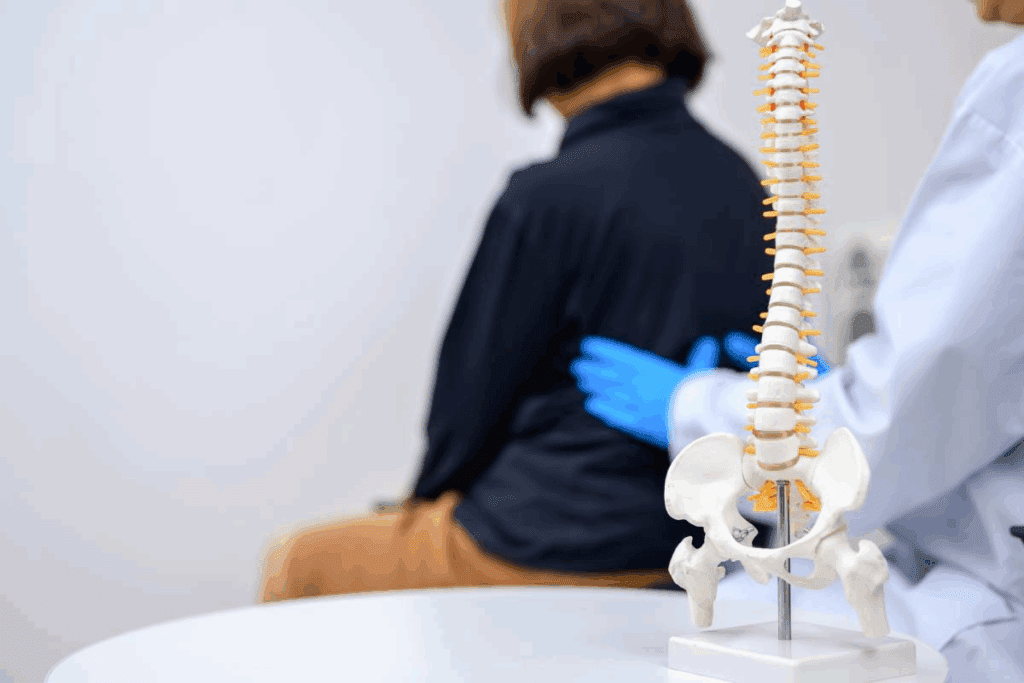
Genetic Factors Influencing Disc Health
It’s key to know how genetics affect disc health to prevent and treat problems. Degenerative disc disease is complex, influenced by genetics, environment, and lifestyle.
Hereditary Predisposition to Disc Problems
Research shows family history plays a big role in disc issues. If your family has a history of degenerative disc disease, you might face similar problems. This means certain genetic traits can be passed down, raising your risk of disc degeneration.
Studies found genes linked to a higher risk of degenerative disc disease. These genes play roles in the disc’s structure, inflammation, and how it handles stress.
Genetic Markers for Accelerated Degeneration
Some genetic markers speed up disc degeneration. For example, changes in genes for collagen and aggrecan can weaken the discs. This makes them more likely to degenerate.
Finding genetic markers for disc degeneration helps early detection and management. This personalized care can lead to better prevention and treatment plans.
| Genetic Factor | Influence on Disc Health | Potential Impact |
| Collagen gene variations | Affects disc matrix structure | Increased risk of degeneration |
| Aggrecan gene variations | Impacts disc hydration and resilience | Accelerated degeneration |
| Inflammatory gene markers | Influences inflammatory response | Potential for increased disc damage |
Understanding genetic factors in disc health helps healthcare providers give better care. This targeted approach helps those with a genetic predisposition and advances our understanding of degenerative disc disease.
Lifestyle Habits Speeding Up Disc Degeneration
lifestyle habits disc degeneration
Certain lifestyle habits can speed up spinal disc degeneration, causing health problems. Our daily choices greatly affect our spine’s health. Knowing these factors is key to keeping our back healthy.
Smoking and Nicotine’s Impact on Disc Nutrition
Smoking is a major risk for disc degeneration. Nicotine and other chemicals in cigarettes harm the blood vessels that feed discs. This makes it hard for discs to repair and stay healthy. Stopping smoking is vital for reducing disc degeneration risk and improving spinal health.
A study in the Journal of Orthopaedic Research showed smoking reduces disc height and increases degeneration. Quitting can lessen these effects and boost overall health.
Sedentary Behavior and Disc Metabolism
A sedentary lifestyle harms disc health by slowing down disc metabolism. This leads to less production of proteoglycans, vital for disc hydration and structure. Regular exercise keeps disc metabolism healthy.
- Do regular aerobic exercise to boost blood flow and nutrient delivery to discs.
- Add strength training to support spine muscles.
- Do flexibility exercises to keep range of motion and reduce stiffness.
Sleep Deprivation and Spinal Recovery
Enough sleep is crucial for spinal disc recovery and repair. During sleep, discs rehydrate and recover from daily wear. Sleep deprivation slows this process, speeding up degeneration.
“Sleep is essential for spinal disc health, allowing them to recover and rehydrate. Chronic sleep deprivation harms disc health.”
To support healthy spinal recovery, consider:
- Keep a regular sleep schedule.
- Make your sleep environment conducive.
- Avoid stimulating activities before bed.
Obesity and Excessive Weight Bearing
obesity and spinal health
Obesity affects not just our health but also our spine, especially with degenerative disc disease. It speeds up disc wear and tear in many ways.
Biomechanical Stress from Excess Weight
Carrying extra weight puts more stress on our spine. This stress makes the discs wear out faster. The lumbar spine, in particular, bears the brunt of this excess weight, leading to more lower back problems.
Metabolic Influences of Obesity on Disc Health
Obesity can change our metabolism, harming our disc health. For example, it can cause chronic inflammation. Inflammatory cytokines can mess with the discs’ normal function, causing them to degenerate.
Obesity’s effects on our spine are complex. It’s important to understand these to find ways to slow down disc degeneration.
Poor Posture and Spinal Alignment Issues
poor posture and spinal alignment
Our daily posture greatly affects our spinal health. Keeping our spine aligned right is key to avoiding stress on our discs and vertebrae.
Forward Head Posture and Upper Spine Stress
When our head is in front of our shoulders, it puts a lot of stress on our upper spine. This can happen from working on computers or phones without the right setup.
Key effects of forward head posture include:
- Increased strain on the muscles of the upper back and neck
- Potential for accelerated degeneration of the cervical discs
- Headaches and neck pain due to muscle tension
Slouching and Lumbar Disc Pressure
Slouching puts a lot of pressure on our lumbar discs. When we slouch, our spine is not aligned right. This leads to uneven weight distribution and stress on the discs.
The consequences of slouching include:
- Accelerated wear and tear on the lumbar discs
- Increased risk of disc herniation
- Lower back pain due to strained muscles and ligaments
Improper Sleep Positions and Nocturnal Disc Stress
Bad sleep positions can also harm our spine and discs. When we sleep in ways that don’t align our spine, it can strain our discs and muscles.
Tips for improving sleep posture include:
- Using a supportive mattress and pillows
- Avoiding sleeping on the stomach, which can cause the neck to be twisted
- Sleeping on the side with a pillow between the knees to maintain hip alignment
By paying attention to our posture and keeping our spine aligned, we can lower the risk of disc problems and spinal issues.
Occupational Risk Factors
occupational risk factors
Our jobs can really affect our spinal discs. Work-related risks can speed up degenerative disc disease. Different jobs expose us to various hazards that harm our spines.
Heavy Manual Labor Professions
Jobs that require heavy lifting are a big risk for spinal problems. Construction, manufacturing, and other tough jobs can lead to disc wear and tear.
Construction workers, for example, face a higher risk of back problems. Proper training and ergonomic practices can help lessen these risks.
Desk Job Hazards and Prolonged Sitting
Desk jobs that involve sitting for long periods can also harm our spines. Sitting too much can cause poor posture and muscle imbalances.
A sedentary lifestyle weakens the muscles that support our spines. Regular breaks and stretching exercises can help counteract these effects.
Vibration Exposure in Certain Occupations
Jobs that involve operating heavy machinery or driving expose workers to whole-body vibration. This stress can speed up disc degeneration.
Drivers, for instance, face a higher risk of spinal problems due to vehicle vibrations. Using vibration-dampening technology can help reduce this risk.
| Occupational Risk Factor | Impact on Spinal Health | Mitigation Strategies |
| Heavy Manual Labor | Increased risk of disc degeneration due to repetitive strain and heavy lifting | Proper training, ergonomic practices |
| Prolonged Sitting | Poor posture, muscle imbalances, reduced spinal flexibility | Regular breaks, stretching exercises |
| Vibration Exposure | Increased stress on spinal discs | Vibration-dampening technology |
A study shows that work factors, like physical workload and ergonomics, are key in degenerative disc disease.
“The workplace environment and job demands can significantly influence an individual’s risk of developing degenerative disc disease.”
Physical Activities That Accelerate Disc Wear
high-impact sports and spinal disc wear
Physical activities are key for our health but can also harm our spinal discs. Certain exercises and sports, especially those with high-impact or repetitive movements, stress the discs. This can lead to faster wear and tear.
High-Impact Sports and Repetitive Spinal Loading
High-impact sports like football, rugby, and gymnastics stress the spinal discs a lot. Repetitive spinal loading happens when the spine is compressed or twisted over and over. This can cause the discs to degenerate, leading to herniation and loss of height.
- Running and Jumping Sports: Activities like long-distance running and jumping sports can lead to repetitive impact on the spine.
- Contact Sports: Sports involving physical contact, such as football and hockey, increase the risk of acute spinal injuries, which can accelerate disc degeneration.
Improper Exercise Form and Technique
Using improper exercise form and technique can harm the discs. It’s important to keep the right posture and use the correct muscles to avoid straining the spine. For example, bad lifting techniques can cause sudden disc herniation or other injuries.
- Ensure proper warm-up and cool-down routines to prevent sudden strain on the spine.
- Use correct lifting techniques, bending at the knees rather than the waist.
- Engage core muscles to support the spine during exercise.
Extreme Sports and Spinal Trauma Risk
Extreme sports like skydiving, downhill mountain biking, or big wave surfing raise the risk of spinal trauma. Such injuries can directly harm the spinal discs and speed up degeneration. The danger isn’t just from the initial injury but also from long-term effects.
- High-Speed Activities: Sports involving high speeds increase the risk of severe spinal injuries upon impact or fall.
- High-Risk Maneuvers: Performing complex maneuvers or stunts in sports like skateboarding or freestyle motocross can lead to spinal injuries.
Knowing how different activities affect our spinal discs helps us take steps to protect them. We can choose the right exercises, use proper techniques, and be aware of the risks in certain activities.
Nutritional Deficiencies and Dietary Factors
Nutritional factors play a big role in keeping our spinal discs healthy. A diet without the right nutrients can speed up disc wear and tear. On the other hand, eating well can help keep our spines in good shape. We’ll look at how diet affects our discs and what foods are key to keeping them healthy.
Pro-Inflammatory Diet Patterns
Eating foods that cause inflammation can harm our discs. Foods like red meat, dairy, and refined grains can make inflammation worse. But, eating foods like fruits, veggies, and whole grains can help fight inflammation and support our discs.
- Foods to Limit: Processed meats, sugary snacks, refined grains
- Foods to Emphasize: Fruits, vegetables, whole grains, lean proteins, omega-3 rich foods
Hydration Status and Disc Health
Drinking enough water is key to keeping our discs healthy. Our discs need water to work right. Not drinking enough water can make our discs shrink and more prone to damage. Staying hydrated is a must for our disc health.
- Drink at least 8-10 glasses of water per day
- Monitor urine color to ensure proper hydration (it should be pale yellow)
- Avoid excessive caffeine and alcohol, which can dehydrate the body
Essential Nutrients for Disc Maintenance
Some nutrients are super important for our discs. Vitamin D helps our bones, omega-3s fight inflammation, and antioxidants like vitamins C and E protect against damage. Getting enough of these through food or supplements can help keep our discs healthy.
Eating right, staying hydrated, and getting the right nutrients can help keep our discs healthy. This can also lower the chance of disc disease.
Traumatic Injuries and Their Long-term Effects
Spinal trauma can harm our spinal discs, speeding up degeneration. Accidents, sports, or other incidents can damage the spine right away. This damage can lead to long-term health issues.
Acute Spinal Trauma and Subsequent Degeneration
Acute spinal trauma can start a degenerative process in the spinal discs. Studies show it can change the disc’s biochemical environment, speeding up degeneration. The severity of the initial trauma often correlates with the extent of subsequent degeneration.
Research shows that acute spinal injuries can disrupt disc function. This can cause a loss of disc height and stress on other spinal structures. Over time, this can lead to degeneration of not just the injured disc but also nearby ones.
Whiplash and Cervical Disc Damage
Whiplash, often from car accidents, can harm the cervical spine. The neck’s rapid movement can injure cervical discs, causing long-term degenerative changes. Symptoms may not show up right away but can include chronic neck pain and reduced mobility.
Whiplash can cause inflammation and structural damage in cervical discs, speeding up degeneration. The cervical spine is especially vulnerable due to its mobility and the stresses it faces during a whiplash event.
Cumulative Microtrauma from Daily Activities
Cumulative microtrauma is about the repeated minor injuries from daily activities or certain jobs. These injuries can wear down spinal discs over time. Activities like repetitive lifting, bending, or twisting can contribute to this.
| Activity | Potential Impact on Spinal Discs | Preventive Measures |
| Heavy Lifting | Increased pressure on lumbar discs | Proper lifting techniques, regular exercise |
| Repetitive Bending | Wear and tear on spinal discs | Ergonomic practices, stretching exercises |
| Twisting Movements | Stress on spinal joints and discs | Core strengthening, mindful movement |
It’s important to understand how traumatic injuries affect spinal health to prevent long-term degenerative changes. By taking preventive measures and being aware of the risks of certain activities, we can lower our chance of degenerative disc disease.
Chronic Inflammation and Autoimmune Factors
Understanding how chronic inflammation and autoimmune responses work together is key to fighting degenerative disc disease. These factors are now seen as major players in this condition’s worsening.
Systemic Inflammatory Conditions Affecting the Spine
Systemic inflammatory conditions, like rheumatoid arthritis, really hurt spinal health. They cause long-term inflammation, speeding up disc wear and tear.
- Inflammatory Mediators: Cytokines and other inflammatory mediators play a big role in breaking down discs.
- Immune System Activation: When the immune system gets active, it hurts disc health through inflammation.
Local Inflammatory Processes in Disc Tissues
Inflammation happening right in the disc tissues also speeds up degeneration.
- Pro-inflammatory Cytokines: Having pro-inflammatory cytokines in the disc tissue makes it break down faster.
- Disc Cell Senescence: When disc cells get old, they can’t keep the disc matrix healthy, leading to more damage.
Autoimmune Disorders and Accelerated Degeneration
Autoimmune disorders can make disc degeneration worse by starting or making inflammation worse.
- Autoimmune Diseases: Conditions like lupus or rheumatoid arthritis can hurt the spine, making it degenerate faster.
- Immune Response: The immune response in autoimmune diseases can attack spinal discs, causing inflammation and damage.
Psychological Stress and Disc Health
Psychological stress affects disc health in many ways. It triggers complex body responses that can speed up disc wear. Stress impacts our spinal discs significantly.
Stress Hormones and Their Effect on Tissue Repair
Stress makes our body release hormones like cortisol. Cortisol hinders healing and can cause discs to degenerate faster. Chronic stress means more cortisol, making things worse.
Stress hormones also boost inflammation. Inflammation harms disc tissues, speeding up degeneration. Knowing how stress hormones work can help find ways to stop this.
Muscle Tension Patterns During Stress
Stress makes our muscles tight, especially in the back. This tightness adds pressure on discs, speeding up wear. Chronic muscle tension strains the spine, leading to disc damage.
Muscle tension also changes how the spine works. This can put extra stress on discs, causing them to break down.
Mind-Body Connection in Spinal Health
The mind and body are closely linked in spinal health. Stress can change how we feel pain and respond to it. Mindfulness and stress reduction techniques can help by easing muscle tension and promoting calm.
Understanding the link between stress and disc health helps us manage spinal health better. We can tackle both physical and mental stress to slow down disc degeneration.
Factors Speeding Up Disc Degeneration in Daily Life
Daily life can speed up spinal disc degeneration. Our daily activities and home environments greatly affect our spine’s health.
Non-Ergonomic Home Environments
A non-ergonomic home can harm our spinal discs. Poorly designed furniture, bad lighting, and clutter can lead to bad posture. Creating an ergonomic home can help prevent disc degeneration.
For example, sitting in a chair without back support or working with a low computer monitor can cause slouching. This puts extra stress on our spinal discs.
Improper Lifting and Carrying Techniques
Lifting heavy objects improperly can harm our spine. Incorrect lifting techniques can strain our spinal discs, speeding up degeneration.
To lift safely, bend at the knees, keep the object close, and lift with your legs. This method reduces spinal disc pressure.
Repetitive Bending and Twisting Movements
Repetitive bending and twisting are common in daily tasks. While these tasks are needed, doing them carelessly can harm our discs.
| Activity | Risk Factor | Prevention Tip |
| Gardening | Repetitive bending | Use knee pads and take regular breaks |
| Lifting groceries | Improper lifting | Bend at knees, lift with legs |
| Household chores | Twisting movements | Use proper twisting techniques, avoid overreaching |
By being aware of these daily activities and making small changes, we can lower the risk of disc degeneration.
Medical Conditions Accelerating Disc Deterioration
Certain medical conditions can make spinal discs wear out faster. Knowing about these conditions helps us manage and slow down disc degeneration.
Metabolic Disorders and Disc Nutrition
Metabolic disorders, like diabetes, harm disc health a lot. They make it hard for the body to keep discs well-nourished, speeding up wear and tear. Diabetes, for example, can stop nutrients from reaching the discs, making things worse.
“The connection between metabolic disorders and disc degeneration is getting more research,” studies say. “Learning about this can help us find better ways to help patients with disc problems.”
Vascular Health and Disc Blood Supply
Vascular health is key to keeping spinal discs healthy. Discs need blood vessels to get nutrients and get rid of waste. Problems like atherosclerosis can make this harder, speeding up disc wear.
Bone Density Issues and Vertebral Support
Bone density problems, like osteoporosis, hurt the spine a lot. Weak vertebrae put more stress on discs, making them wear out faster. Keeping bones strong is vital for spinal health.
By knowing how these medical issues affect discs, we can find better ways to manage disc degeneration. This can lead to better results for patients.
Lack of Core Strength and Spinal Support
Weak core muscles can make degenerative disc disease worse. The core muscles, like the abdominals and back extensors, support the spine and keep it straight. Without strong core muscles, the spine can become unstable and put more stress on the discs.
Abdominal Muscle Weakness and Spinal Stability
The abdominal muscles are key for keeping the spine stable. Weak abdominal muscles can cause the lower back to curve inward too much. This extra pressure can speed up disc wear and might even cause spondylolisthesis.
- Weak abdominal muscles can lead to poor posture.
- Increased pressure on the lumbar discs can accelerate degeneration.
- Core strengthening exercises can help improve spinal stability.
Back Extensor Strength and Posture Maintenance
The back extensor muscles are crucial for keeping the spine straight and strong. Strong back extensors help fight against gravity and other forces that can harm the spine. If these muscles are weak, the spine may lean forward too much, putting more stress on the discs and speeding up wear.
- Strong back extensors help maintain proper posture.
- Weak back extensors can lead to increased stress on spinal discs.
- Regular exercise can strengthen back extensor muscles.
Muscle Imbalances and Abnormal Spinal Loading
Muscle imbalances happen when some muscles work too much and others too little. This can cause uneven stress on the spine, making discs degenerate faster. For instance, if the abdominals are weak and the back extensors are too strong, it can cause the lower back to curve too much and put more pressure on the discs.
To avoid or lessen muscle imbalances, it’s important to do exercises that strengthen the core and improve flexibility. A balanced exercise routine can help keep the spine loaded properly and lower the risk of degenerative disc disease.
Delayed or Improper Treatment Approaches
Delayed or improper treatment for disc degeneration can have serious effects. It can cause long-lasting pain and disability. This is why it’s crucial to address it early.
We will look at the problems caused by not treating disc degeneration on time. Early and correct treatment is key. Studies show it greatly improves outcomes for those with this disease.
Ignoring Early Warning Signs and Symptoms
Ignoring early signs and symptoms is a big problem. Many people think minor pain is not serious. But, ignoring these signs can make the problem worse. It’s important to see a doctor right away.
Self-Medication Without Proper Diagnosis
Self-medicating without a doctor’s advice is common. Using over-the-counter drugs or untested remedies can hide symptoms. But, it doesn’t fix the real problem. This can make things worse.
Inappropriate Treatment Selection
Choosing the wrong treatment is a big issue. It can fail to help or even harm. It’s vital to work with doctors to find the right treatment.
Knowing the dangers of delayed or wrong treatment is important. It helps us understand the need for early and correct care. This knowledge helps us manage our condition better and live a better life.
Conclusion: Managing and Slowing Disc Degeneration
We’ve looked at what causes degenerative disc disease. This includes genetics, lifestyle, and work-related risks. To manage disc degeneration well, we need a full plan. This includes prevention, lifestyle changes, and the right treatment.
Knowing the risks is key to slowing down disc degeneration. Risks like being overweight, bad posture, and smoking can speed it up. By tackling these, we can slow down the degeneration and lower the chance of problems.
Prevention is vital. This means staying at a healthy weight, exercising often, and keeping good posture. A mix of these steps and medical care is best for spinal health.
Understanding and acting on the causes of disc degeneration can help. It’s important to have a detailed plan to slow it down. This way, we can improve our lives and stay healthy.
FAQ
What are the primary factors that accelerate degenerative disc disease?
Genetics, smoking, and being sedentary are key factors. Obesity, poor posture, and certain jobs also play a role. Nutritional issues, injuries, chronic inflammation, and stress are important too.
How does smoking affect disc health?
Smoking harms disc health by cutting off nutrition and blood flow. It also increases stress and speeds up degeneration.
Can poor posture contribute to disc degeneration?
Yes, bad posture can wear down discs. This includes forward head posture and slouching. It also affects how we sleep.
How does obesity impact disc health?
Being overweight puts extra stress on the spine. This leads to faster wear and tear on discs.
Are there any genetic markers associated with accelerated disc degeneration?
Yes, some genes increase the risk of disc degeneration. Family history can also affect disc health.
Can certain physical activities accelerate disc degeneration?
Yes, high-impact sports and extreme activities can harm discs. So can bad exercise form.
How does diet affect disc health?
Eating too much of certain foods can harm discs. But a balanced diet and staying hydrated can help keep them healthy.
Can traumatic injuries lead to long-term degenerative changes in the spine?
Yes, injuries like whiplash can cause lasting damage to the spine. So can daily wear and tear.
How does psychological stress influence disc health?
Stress can tighten muscles, putting more strain on the spine. It can also slow down healing, speeding up degeneration.
What role do core muscles play in supporting the spine?
Core muscles help keep the spine stable and in good posture. Weakness in these muscles can harm the spine.
What are the consequences of delaying or mismanaging treatment for disc degeneration?
Ignoring or treating disc problems wrong can make things worse. It can lead to more pain and a lower quality of life.
How can everyday activities contribute to disc degeneration?
Activities like lifting and bending can harm discs if done wrong. So can a non-ergonomic home and bad lifting techniques.
Can certain medical conditions accelerate disc degeneration?
Yes, conditions like metabolic disorders and bone density problems can speed up disc degeneration.
References
- Adams, M. A., & Dolan, P. (2019). Intervertebral disc degeneration: Evidence from studies of spinal load. The Spine Journal, 19(3), 391–402. https://pubmed.ncbi.nlm.nih.gov/30419349/