Did you know that toe injuries are very common in emergency rooms? Many of these injuries affect the ligaments in the toes. Ligaments help our toes move and stay stable. When they get stretched or torn, it can cause a sprained toe, which is very painful.
We will look into why toe ligaments are important. We’ll also talk about sprained toe injuries, including what causes them, their symptoms, and how to treat them. Knowing about these can help us manage and prevent such injuries.
Key Takeaways
- Toe ligaments play a crucial role in toe movement and stability.
- A sprained toe occurs when these ligaments are stretched or torn.
- Understanding the causes and symptoms is key to managing sprained toe injuries.
- Proper treatment can significantly reduce recovery time.
- Preventive measures can help avoid such injuries.
Anatomy of the Toes
It’s important to know how the toes work and how they can get hurt. The toes, or digits, have bones, muscles, tendons, and ligaments working together.
Bones of the Toes
The toes have 14 phalanges, or toe bones. These are split into three groups: proximal, middle, and distal phalanges. The proximal phalanges are the base bones that connect to the metatarsal bones in the foot. The middle phalanges are smaller and connect the proximal and distal phalanges. The distal phalanges are the bones at the tips of the toes.
- The big toe has two phalanges (proximal and distal).
- The other toes have three phalanges each (proximal, middle, and distal).
Muscles and Tendons
The muscles of the toes are split into intrinsic and extrinsic muscles. Intrinsic muscles are inside the foot and control toe movements. Extrinsic muscles are in the lower leg and also help move the toes through tendons.
Tendons are strong, flexible cords that connect muscles to bones. In the toes, they help move the bones by passing forces from the muscles.
Ligaments of the Toes
Ligaments are fibrous connective tissues that connect bones to other bones. They help keep the joints stable. In the toes, they support the joints between the phalanges and metatarsals, helping with smooth movement and preventing too much stress on the joints.
The bones, muscles, tendons, and ligaments in the toes work together. This allows for many movements, like flexion and extension. Knowing this helps doctors diagnose and treat toe injuries.
Function of Toe Ligaments
Toe ligaments are key for stability and movement in the toes. They are fibrous tissues that link bones together. This is crucial for the toes’ function.
Stability and Support
The main job of toe ligaments is to keep the toe stable and supported. They keep the bones in line and stop too much movement that could hurt. Ligaments are vital for soaking up shock and spreading out forces when we walk or run.
This table highlights the critical role that ligaments play in maintaining toe stability:
|
Ligament Function |
Description |
Importance |
|---|---|---|
|
Stability |
Maintains bone alignment |
Prevents excessive movement |
|
Support |
Absorbs shock and distributes forces |
Crucial during physical activities |
Movement Facilitation
Toe ligaments also help with movement. They let us move our toes for different activities. Good ligament function is key for smooth toe movement.
If toe ligaments get hurt, it can cause a sprained toe. This makes it hard to move and do daily tasks. Knowing how toe ligaments work helps us take care of our toes and avoid injuries.
What Is a Sprained Toe?
A sprained toe happens when the ligaments around the toe joints get stretched or torn. This injury is common and can really hurt your daily life because of the pain and discomfort.
Definition and Mechanism of Injury
A sprained toe is an injury to the ligaments around the toe joints. It usually happens when you twist or bend your toe suddenly. This can happen during sports, accidents, or even just walking.
The ligaments help keep the toe joints stable. If they get stretched too far or torn, you get a sprain. How bad it is depends on how much damage the ligaments take.
Grades of Toe Sprains
Toe sprains are divided into three levels based on how bad they are:
- Grade 1: This is a mild sprain where the ligaments are stretched but not torn. You might feel some pain and swelling.
- Grade 2: This is a moderate sprain with some tearing of the ligaments. You’ll feel more pain, swelling, and bruising.
- Grade 3: This is the worst kind, where the ligaments are completely torn. You’ll have a lot of pain, swelling, and your toe joint will feel unstable.
Common Causes of Sprained Toes
Knowing why toes get sprained is key to avoiding and treating it. Sprained toes can happen from many things. Knowing what they are can help us stay safe.
Sports Injuries
Sports injuries often lead to sprained toes. Running, quick turns, or kicking can hurt toes. Sports like soccer, basketball, and tennis are big culprits. Athletes in these sports need to watch out for their toes.
Accidents and Falls
Accidents and falls also cause sprained toes. Tripping or falling can hurt your toes. Being careful where you step can help avoid these accidents.
Improper Footwear
Wearing the wrong shoes is another big risk. Shoes that are too tight, too loose, or don’t fit right can hurt your toes. Wearing the right shoes is important to avoid toe sprains.
By knowing these common causes, we can lower our risk of spraining a toe. Whether it’s through training, the right shoes, or being careful, prevention is the best way.
Symptoms of a Sprained Toe
Knowing the signs of a sprained toe is key to getting it treated right. A toe injury can cause different symptoms, depending on how bad the sprain is.
Pain and Tenderness
Pain is a main symptom of a sprained toe. It can be mild or very bad. The pain is usually felt in the injured toe and gets worse with movement or pressure. Touching the toe can also be painful.
Swelling and Bruising
Swelling happens because of inflammation from the injury. Sometimes, bruising occurs too, from damaged blood vessels. This leads to color changes in the area. How much swelling and bruising there is can show how serious the sprain is.
Limited Mobility
A sprained toe can make it hard to move the toe. This affects daily activities like walking or standing. The pain and stiffness make it hard to move around easily.
To sum up, symptoms of a sprained toe include pain, tenderness, swelling, bruising, and trouble moving. Spotting these signs is crucial for getting the right medical help and starting to heal.
Sprained Toe vs. Broken Toe
Telling a sprained toe from a broken one is key for the right treatment. Both can hurt a lot, but they need different care. Knowing the difference helps you choose the best treatment.
Symptom Differences
It’s hard to tell the difference without a doctor’s help. But, some signs point to a broken toe. Severe pain when you move the toe is common in both. But, a broken toe might also have:
- Deformity: The toe looks wrong or crooked.
- Coldness or numbness: These happen if the break hurts nerves or blood vessels.
- Instability: The toe feels shaky or can’t hold weight.
A sprained toe comes from stretched or torn ligaments. It hurts, swells, and bruises around the toe.
When to Suspect a Fracture
See a doctor if you notice these signs of a break:
- Immediate severe pain after the injury.
- Deformity or abnormal positioning of the toe.
- Inability to bear weight on the toe without a lot of pain.
- Coldness, numbness, or tingling in the toe.
A medical expert says, “A broken toe hurts as much as a sprained one. But, the right healing starts with knowing what it is and treating it right.”
“The difference between a sprained and a broken toe isn’t always easy to see. But, signs like severe pain, deformity, or instability mean you should see a doctor right away.”
It’s important to know the difference for the right treatment. If you’re not sure if your toe is sprained or broken, see a doctor.
Sprained Big Toe (Turf Toe)
Turf toe is a painful condition that affects your big toe. It can make moving around and doing daily tasks hard. It happens when the ligaments around the big toe’s joint get stretched or torn. This usually happens during sports or when you suddenly stop or change direction.
Unique Characteristics
The sprained big toe, or turf toe, is different from other toe injuries. The metatarsophalangeal joint is key for toe movement and supports your body weight during activities. When this joint is sprained, it causes a lot of pain and limits how you can move.
Some key features include:
- Pain and swelling at the base of the big toe
- Limited mobility of the big toe
- Difficulty in performing activities that involve pushing off with the toe
Impact on Mobility and Daily Activities
A sprained big toe can really limit how you move and do daily things. Even simple actions like walking or running can hurt because of the pain and stiffness from turf toe.
|
Activity |
Impact of Turf Toe |
|---|---|
|
Walking |
Pain and stiffness can make walking uncomfortable |
|
Running or Jumping |
Activities that involve pushing off with the toe can be particularly painful |
|
Daily Activities |
Simple tasks like climbing stairs or standing for long periods can be affected |
It’s important to know about turf toe’s unique traits and how it affects your daily life. If your symptoms don’t get better or get worse, see a doctor.
Other Common Toe Injuries
Sprained toes are a big deal, but other injuries like jammed toes and metatarsophalangeal joint sprains are important too. These injuries have similar symptoms and treatments. Knowing about them is key for a quick recovery.
Jammed Toe
A jammed toe happens when the toe gets pushed up, jamming the joint. It’s common in sports and activities that need quick turns. Symptoms include pain, swelling, and trouble moving the toe.
Treatment for Jammed Toe:
- Rest and ice to reduce pain and swelling
- Compression bandages to support the toe
- Elevation to minimize swelling
- Proper footwear to avoid further irritation
Sprained Pinky Toe
The pinky toe is small and easy to hurt. A sprained pinky toe happens when the ligaments get stretched or torn. This can happen from hitting the toe or from doing the same thing over and over.
Symptoms and Treatment:
- Pain and tenderness around the pinky toe
- Swelling and bruising
- Treatment involves rest, ice, and sometimes taping the toe to adjacent toes for support
Metatarsophalangeal Joint Sprain
The metatarsophalangeal (MTP) joint connects the toe to the foot. A sprain here, known as “turf toe” for the big toe, can happen from bending the toe too much. It’s common in athletes who need to start and stop quickly.
Key Characteristics:
- Pain and swelling at the base of the toe
- Limited mobility and stiffness
- Treatment may include rest, ice, compression, and elevation, as well as physical therapy to regain strength and mobility
In conclusion, knowing about these toe injuries is important for the right treatment. By recognizing symptoms and using the right care, people can heal faster and get back to their activities.
Diagnosing Toe Injuries
To diagnose toe injuries, doctors use a detailed method. This includes a physical check-up and sometimes, imaging tests. Getting the diagnosis right is key to treating the injury well and avoiding future problems.
Physical Examination
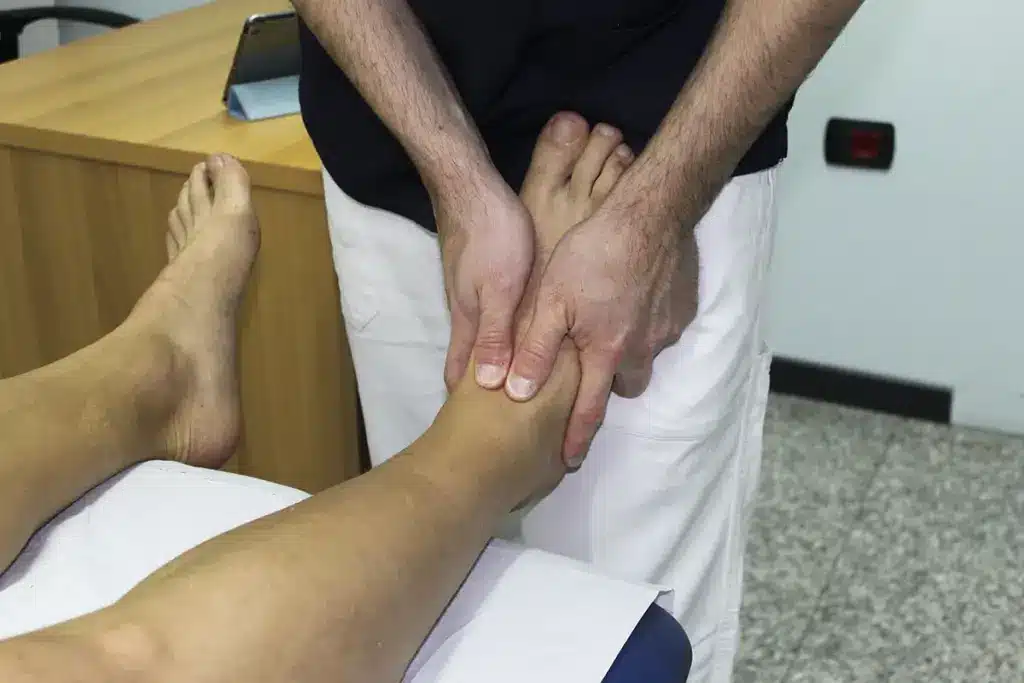
The first step in diagnosing toe injuries is a thorough physical check. Doctors check how well the toe moves, look for swelling or bruises, and test for tenderness.
They might also move the toe to see where it hurts and how stable it is. This helps them understand how serious the injury is.
Imaging Tests
Even with a physical check, imaging tests are often needed to confirm the diagnosis. X-rays are usually the first choice to check for bone breaks.
For soft tissue damage or complex injuries, doctors might use MRI or CT scans. These tests give more detailed images.
|
Imaging Test |
Use in Toe Injury Diagnosis |
|---|---|
|
X-ray |
Primary use is to identify fractures and bone misalignments. |
|
MRI |
Useful for evaluating soft tissue injuries, such as ligament sprains. |
|
CT Scan |
Provides detailed images of bones and can be used when X-rays are inconclusive. |
Differential Diagnosis
Differential diagnosis is a crucial step in diagnosing toe injuries. Doctors must figure out if the injury is a sprain, fracture, or something else.
They look at the patient’s history, symptoms, and results from the physical check and imaging tests. This helps them make an accurate diagnosis.
By using these methods together, doctors can create a treatment plan that fits the patient’s specific injury.
Home Treatment for Sprained Toes
Treating a sprained toe at home means resting, managing pain, and supporting the toe. These steps help reduce discomfort and speed up healing.
RICE Method
The RICE method is a top choice for treating sprained toes. RICE stands for Rest, Ice, Compression, and Elevation.
- Rest: Stay away from activities that make the pain worse.
- Ice: Use ice to lessen swelling.
- Compression: A compression bandage helps reduce swelling.
- Elevation: Keep your foot higher than your heart to cut down on swelling.
Over-the-Counter Pain Relief
Over-the-counter pain relievers can ease the pain of a sprained toe. Ibuprofen and acetaminophen are common choices.
|
Medication |
Dosage |
Frequency |
|---|---|---|
|
Ibuprofen |
200-400 mg |
Every 4-6 hours |
|
Acetaminophen |
325-1000 mg |
Every 4-6 hours |
Toe Taping Techniques
Toe taping is a simple way to support a sprained toe. It involves taping the injured toe to the one next to it for stability.
- Clean and dry your toes before taping.
- Use medical tape to secure the injured toe to the next one.
- Make sure to check the tape often to avoid it being too tight.
Medical Treatment Options
Many sprained toes can be treated at home. But, some need professional help. Knowing when to see a doctor is key.
When to See a Doctor
Look for these signs to know when to see a doctor: severe pain that doesn’t get better, a lot of swelling or bruising, trouble moving the toe, or if you think it’s broken. People with diabetes or poor blood flow should also see a doctor quickly.
Professional Treatment Approaches
Doctors use different treatments for sprained toes, based on how bad the injury is. These can include:
- Immobilization: A cast, splint, or special shoe to keep the toe still and help it heal.
- Physical Therapy: Exercises to make the toe move better and strengthen the muscles around it.
- Medications: Pain relievers, either over-the-counter or by prescription, to help with pain and swelling.
Rehabilitation Exercises
Rehab exercises are important for getting better. They help strengthen and flex the toe. Examples are toe bends, toe spreads, and picking up small things with your toes. A doctor can create a plan just for you.
Knowing about medical treatments helps you make good choices for your care. This way, you can get the best results for your sprained toe.
Recovery Timeline for Sprained Toes
The time it takes for a sprained toe to heal can vary a lot. Knowing how long it will take is key to managing your expectations and helping it heal right.
Mild Sprains
Mild sprains, or Grade 1, have little damage to the ligaments. They usually heal quickly, in a few days to a week. You might feel some pain and swelling, but you can often go back to normal activities soon.
Moderate Sprains
Moderate sprains, or Grade 2, cause more damage to the ligaments. They take longer to heal, usually 1 to 3 weeks. You might feel more pain, swelling, and bruising, which can make daily tasks harder.
Severe Sprains
Severe sprains, or Grade 3, mean the ligament is completely torn. Healing from severe sprains takes the longest, often several weeks to a few months. You’ll likely feel a lot of pain, swelling, and instability, making it hard to move or do everyday things.
While how bad the sprain is matters, other things like your age, health, and treatment also affect healing time.
To help your toe heal faster, use the RICE method (Rest, Ice, Compression, Elevation) and follow your doctor’s advice. This can make your recovery better and lower the chance of problems.
- Mild Sprains: Recover within a few days to a week.
- Moderate Sprains: Take 1 to 3 weeks to heal.
- Severe Sprains: Require several weeks to a few months for complete recovery.
Complications of Untreated Toe Sprains
Untreated toe sprains can cause many problems that affect how well you live. If a toe sprain isn’t treated, it can lead to ongoing pain and more serious issues later.
Chronic Pain and Instability
One major issue with untreated toe sprains is chronic pain. This pain can be very hard to deal with and can make everyday tasks hard. It can also make the toe unstable, making simple actions like walking hard.
The pain from untreated toe sprains can also change how you walk or stand. People might change their natural way of moving to avoid pain. This can lead to back pain or problems in other parts of the foot.
Degenerative Changes
Untreated toe sprains can also cause degenerative changes in the joint. The repeated strain and inflammation can wear down the joint over time. This can lead to conditions like osteoarthritis, causing ongoing pain and less mobility.
These changes can also affect the tissues and joints around the affected area. This can lead to a series of problems that can really affect your quality of life. It’s very important to treat toe sprains early to avoid these long-term issues.
Preventing Toe Injuries
Toe injuries can be really tough to deal with. But, there are ways to stop them from happening. Knowing why toe injuries happen and taking steps to prevent them can help a lot.
Proper Footwear
Wearing the right footwear is key to avoiding toe injuries. Shoes that fit right and match the activity you’re doing can help a lot. For example, stiff soles prevent toe bending injuries. Wide toe boxes also help by spreading out the pressure.
Strengthening Exercises
Strengthening exercises are also important. Doing toe curls and toe spreads can make your toes stronger and more stable. Regular exercise also boosts your foot’s health and lowers injury risk.
Environmental Awareness
Knowing your surroundings is also crucial. Watch out for things that could trip you up or hurt your toes. Wear protective shoes in dangerous places and be careful on slippery or uneven ground.
By wearing the right shoes, doing strengthening exercises, and being careful where you are, you can lower your risk of toe injuries. This helps keep your toes healthy and working well.
Conclusion
Understanding toe injuries, especially sprained toes, is key to managing them well. We’ve looked at the anatomy of toes, the role of ligaments, and the details of sprained toe injuries. This includes their causes, symptoms, diagnosis, and treatment.
Proper care and prevention can help avoid complications like chronic pain and instability. Wearing the right shoes, doing strengthening exercises, and watching out for hazards can protect your toes.
In summary, a sprained toe needs quick and proper care. Knowing how injuries happen and taking preventive steps helps in recovery. Taking care of toe injuries is vital for keeping your feet mobile and healthy.
FAQ
What are the symptoms of a sprained toe?
A sprained toe shows pain, tenderness, and swelling. You might also see bruising and have trouble moving it. The severity of these signs depends on the sprain’s grade.
How do I know if my toe is sprained or broken?
A sprained toe hurts, swells, and bruises around the joint. A broken toe is more painful, deformed, or hard to move. If unsure, see a doctor for a correct diagnosis.
What is turf toe, and how is it different from a regular sprained toe?
Turf toe is a sprain of the big toe joint. It happens when the ligaments stretch or tear. It’s common in sports that require quick stops or changes in direction.
How long does it take for a sprained toe to heal?
The healing time for a sprained toe varies. Mild sprains might heal in a few days to a week. Severe sprains can take weeks to heal.
What is the RICE method, and how can it help with a sprained toe?
The RICE method is for Rest, Ice, Compression, and Elevation. It helps reduce pain, swelling, and aids in healing a sprained toe.
Can I treat a sprained toe at home, or do I need to see a doctor?
Mild sprains can be treated at home with RICE and pain relief. But, severe pain, swelling, or trouble moving the toe needs a doctor’s check-up.
How can I prevent toe injuries, such as sprained toes?
To avoid toe injuries, wear the right shoes, do strengthening exercises, and watch your surroundings to avoid accidents.
What are some common complications of untreated toe sprains?
Untreated toe sprains can cause chronic pain, instability, and degenerative changes in the joint. Proper management is key to avoid these issues.
Can a sprained toe lead to long-term problems if not properly treated?
Yes, untreated sprained toes can cause chronic pain and instability. Proper treatment and rehabilitation are vital to prevent these problems.
Are there any exercises that can help strengthen my toes and prevent future sprains?
Yes, exercises like toe curls and spreads can strengthen your toes. They improve stability and lower the risk of sprains.
National Center for Biotechnology Information. Evidence-Based Medical Insight. Retrieved from https://pmc.ncbi.nlm.nih.gov/articles/PMC9354648/[3