
Find the right stroke ICD codes for cerebrovascular disease. This is the essential guide for medical billing and coding professionals. Cerebrovascular disease is a significant contributor to illness and mortality.in. It’s a big cause of sickness and death around the world. A lot of people get sick from these conditions every year. Cerebral infarction, or stroke, is a top reason for disability.
Knowing the ICD-10 codes for cerebrovascular disease is key. For example, icd-10 i67.9 is for unspecified cerebrovascular disease. This helps doctors and hospitals with billing and coding.
Key Takeaways
- ICD-10 codes are essential for accurate medical billing and coding.
- Cerebrovascular disease includes conditions like cerebral infarction and brain aneurysm.
- The code i63 is used for cerebral infarction.
- i67.9 is the code for unspecified cerebrovascular disease.
- Accurate coding is crucial for ensuring proper patient care and reimbursement.hcare professionals.
Understanding Cerebrovascular Disease and Medical Coding
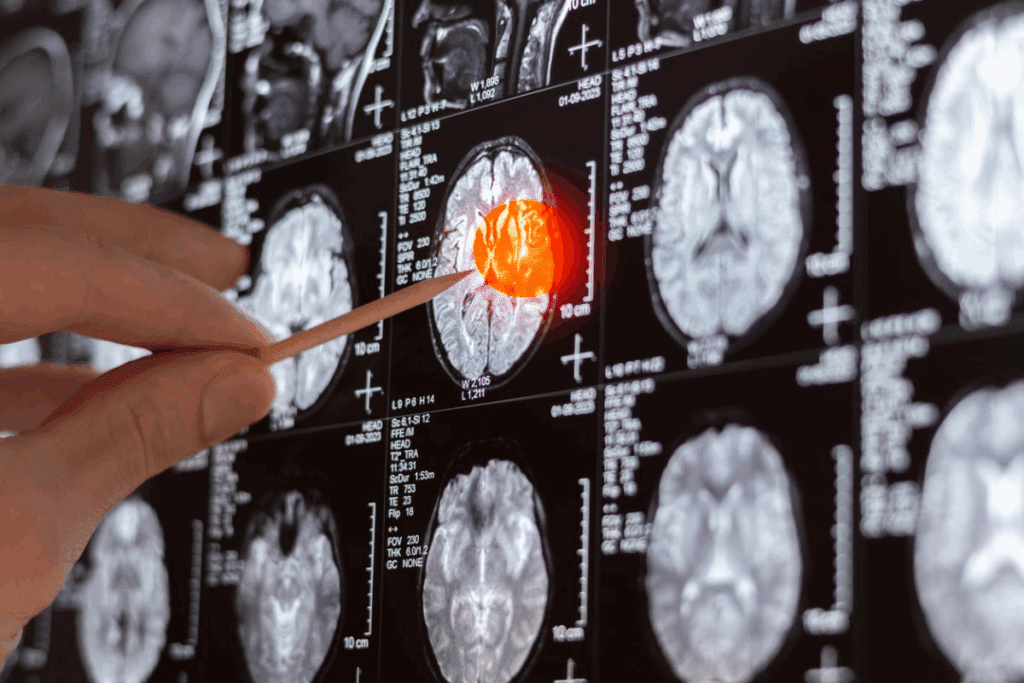
Cerebrovascular disease is a significant contributor to illness and mortality. It needs careful coding for research and payment. This includes stroke and transient ischemic attacks.
Correct coding of cerebrovascular diseases is key for tracking, planning, and research. The ICD-10 system helps classify these conditions well.
Cerebrovascular disease is a significant contributor to illness and mortality.
Cerebrovascular disease harms the brain’s blood vessels. The World Health Organization says stroke is a big killer worldwide.
Accurate coding is crucial for ensuring proper patient care and reimbursement.
Key Facts About Cerebrovascular Disease:
- A major cause of disability and mortality worldwide
- Influenced by modifiable risk factors such as hypertension and smoking
- Requires precise diagnosis and coding for effective management
Importance of Accurate Medical Coding
Accurate coding is crucial for ensuring proper patient care and reimbursement. It makes sure doctors get paid right for their work. It also helps in research to find new treatments.
“Accurate coding is not just about reimbursement; it’s about advancing our understanding of diseases and improving patient care.” –
A leading medical coding expert
Impact on Healthcare Reimbursement and Research
Accurate coding is crucial for ensuring proper patient care and reimbursement.
Aspect | Impact of Accurate Coding |
Reimbursement | Ensures correct payment for healthcare services |
Research | Facilitates understanding of disease patterns and treatment outcomes |
Healthcare Planning | Informs resource allocation and service development |
The Centers for Disease Control and Prevention (CDC) shows how important accurate coding is. For example, knowing the APOE genotype can help in genetic research.
Overview of the ICD-10 Coding System
The ICD-10 coding system is key in today’s healthcare. It helps document patient data accurately and efficiently. It’s vital for healthcare providers, payers, and researchers.
History and Development of ICD-10
The World Health Organization (WHO) created the ICD-10 coding system. It replaced the ICD-9 system to offer more detailed coding. ICD-10 was officially implemented in the United States in 2015.
Creating ICD-10 involved big updates to coding. These updates aimed to improve health data collection. They also help with better healthcare planning and research.
Structure of ICD-10 Codes
ICD-10 codes are made of 3 to 7 characters. They are more specific than before. Codes are grouped into categories like:
- Certain infectious and parasitic diseases
- Neoplasms
- Diseases of the circulatory system
- External causes of morbidity
The first character shows the category. The rest give more details about the diagnosis or procedure.
Differences Between ICD-10-CM and ICD-10-PCS

In the U.S., there are two main parts of the ICD-10 system. These are ICD-10-CM and ICD-10-PCS.
ICD-10-CM is for coding diagnoses in all healthcare settings. It’s a detailed way to classify diseases and health conditions.
ICD-10-PCS is for coding procedures in inpatient settings. It’s more detailed and complex, allowing for precise coding.
Accurate coding is crucial for ensuring proper patient care and reimbursement.
Primary ICD-10 Codes for Cerebrovascular Disease
It’s important to know the main ICD-10 codes for cerebrovascular disease. This knowledge helps with accurate billing and understanding health trends. Cerebrovascular disease includes conditions like stroke and cerebral infarction.
I67.9: Unspecified Cerebrovascular Disease
The ICD-10 code I67.9 is for unspecified cerebrovascular disease. It’s used when the exact type of disease isn’t known. It’s key to use this code wisely to keep health data accurate.
Key considerations for using I67.9 include:
- Use when the type of cerebrovascular disease is not specified
- Apply when documentation is insufficient to assign a more specific code
- Avoid using as a default; strive for specificity whenever possible
I67 Series: Other Cerebrovascular Diseases
The I67 series in ICD-10 covers various cerebrovascular diseases. Some notable codes include:
Code | Description |
I67.0 | Dissection of cerebral arteries, non-ruptured |
I67.1 | Cerebral aneurysm, non-ruptured |
I67.2 | Cerebral atherosclerosis |
I67.4 | Hypertensive encephalopathy |
When to Use Unspecified vs. Specific Codes
Deciding between unspecified and specific ICD-10 codes depends on the available information. Specific codes are best when they provide detailed patient data.
Best practices include:
- Reviewing medical documentation thoroughly to identify specific diagnoses
- Consulting with healthcare providers when documentation is unclear
- Using unspecified codes only when specific information is not available
Stroke ICD Codes: A Detailed Guide
Cerebrovascular disease is a significant contributor to illness and mortality.
Definition and Types of Stroke
There are three main types of stroke: ischemic, hemorrhagic, and transient ischemic attack (TIA). Ischemic stroke happens when a brain blood vessel gets blocked. Hemorrhagic stroke occurs when a weak blood vessel bursts and bleeds into the brain.
TIA, or “mini-stroke,” is a short-term blockage of brain blood flow that doesn’t last long.
General Coding Approach for Stroke
The ICD-10 system has a detailed way to classify stroke. It focuses on the stroke type and its cause. For example, ischemic strokes are coded in the I63 series. Hemorrhagic strokes are coded based on their location and cause.
Importance of Laterality in Stroke Coding
Laterality, or the side of the body affected, is key in ICD-10 coding. Knowing the affected side is vital for the right code. This affects treatment and how outcomes are measured.
For instance, ischemic stroke codes (I63) need to say which cerebral artery is affected and if it’s on one side or both.
Stroke Type | ICD-10 Code Series | Description |
Ischemic Stroke | I63 | Cerebral infarction due to various causes |
Hemorrhagic Stroke | I60-I62 | Subarachnoid, intracerebral, and other nontraumatic intracranial hemorrhages |
Transient Ischemic Attack (TIA) | G45 | Temporary disruption of brain blood flow without infarction |
Knowing about stroke ICD codes is important for doctors. It helps with accurate diagnosis, treatment, and research. By using the right ICD-10 codes, doctors can help patients better and improve disease management.
Ischemic Stroke ICD-10 Codes
Accurate coding is crucial for ensuring proper patient care and reimbursement.
I63 Code Series Overview
The I63 code series in ICD-10 deals with cerebral infarction, or ischemic stroke. It has codes for different stroke causes like thrombosis, embolism, or stenosis. These codes give detailed info on the stroke’s cause and brain area affected.
Key aspects of the I63 code series include:
- Specificity regarding the cause of the ischemic stroke
- Coding for different types of cerebral infarction
- Inclusion of laterality when applicable
Specific Codes Based on Etiology
The I63 code series has specific codes for stroke causes. For example:
Code | Description |
I63.0 | Cerebral infarction due to thrombosis of precerebral arteries |
I63.1 | Cerebral infarction due to embolism of precerebral arteries |
I63.2 | Cerebral infarction due to unspecified occlusion or stenosis of precerebral arteries |
I63.3 | Cerebral infarction due to thrombosis of cerebral arteries |
I63.4 | Cerebral infarction due to embolism of cerebral arteries |
I63.9: Unspecified Cerebral Infarction
The code I63.9 is for cerebral infarction without a known cause. It’s used when detailed info is missing.
It’s important to use the most specific code possible based on the patient’s diagnosis and records. If the cause is known, use a more specific I63 code instead of I63.9.
Cerebral Infarction (I63) Coding Guidelines
Cerebral infarction, or I63, needs careful documentation for correct ICD-10 coding. This is key for healthcare providers to get the right payment for patients with this condition.
Documentation Requirements for I63 Codes
For accurate I63 coding, detailed documentation is a must. It should cover the type of infarction, the artery affected, and any other important clinical details. It’s vital to clearly distinguish between different types of cerebral infarctions to pick the right code.
The documentation should include:
- Clinical diagnosis of cerebral infarction
- Specific artery involved (if known)
- Cause of the infarction (if known)
- Laterality (left, right, or bilateral)
Specificity in Cerebral Infarction Coding
Specificity is key in ICD-10 coding, and the I63 series is no different. Codes should be as specific as possible based on the information available. For example, if the artery involved is known, a more detailed code can be used, like I63.1 for an embolism of the vertebral artery.
Using specific codes makes coding more accurate. It also helps in better data for studies and healthcare planning.
Coding for Multiple or Recurrent Infarctions
Coding for multiple or recurrent cerebral infarctions is more complex. Each infarction should be coded separately if they happen in different arteries or are of different types. But, if they happen in the same artery, you might need just one code for all.
For recurrent infarctions, documenting the sequence and details of each is essential for accurate coding.
Hemorrhagic Stroke ICD-10 Codes
Understanding ICD-10 codes for hemorrhagic stroke is key for healthcare providers. It helps ensure accurate diagnosis and treatment. Hemorrhagic stroke is a severe condition with high mortality rates. It has several subtypes, each needing specific coding.
Intracerebral Hemorrhage (I61) Coding
Intracerebral hemorrhage falls under the I61 category in ICD-10. This category has various fourth-character specifications. They denote the location of the hemorrhage.
- I61.0: Nontraumatic intracerebral hemorrhage in hemisphere, subcortical
- I61.1: Nontraumatic intracerebral hemorrhage in hemisphere, cortical
- I61.2: Nontraumatic intracerebral hemorrhage in hemisphere, unspecified
- I61.3: Nontraumatic intracerebral hemorrhage in brain stem
- I61.4: Nontraumatic intracerebral hemorrhage in cerebellum
- I61.5: Nontraumatic intracerebral hemorrhage, intraventricular
- I61.6: Nontraumatic intracerebral hemorrhage, multiple localized
- I61.8: Other intracerebral hemorrhage
- I61.9: Nontraumatic intracerebral hemorrhage, unspecified
Subarachnoid Hemorrhage (I60) Coding
Subarachnoid hemorrhage is classified under the I60 category. The fourth character specifies the location of the hemorrhage.
Code | Description |
I60.0 | Subarachnoid hemorrhage, carotid siphon and bifurcation |
I60.1 | Subarachnoid hemorrhage, middle cerebral artery |
I60.2 | Subarachnoid hemorrhage, anterior communicating artery |
I60.3 | Subarachnoid hemorrhage, posterior communicating artery |
I60.4 | Subarachnoid hemorrhage, basilar artery |
I60.5 | Subarachnoid hemorrhage, vertebral artery |
I60.6 | Subarachnoid hemorrhage, other intracranial arteries |
I60.7 | Subarachnoid hemorrhage, intracranial artery, unspecified |
I60.8 | Other subarachnoid hemorrhage |
I60.9 | Subarachnoid hemorrhage, unspecified |
Other Nontraumatic Intracranial Hemorrhage (I62)
The I62 category includes other nontraumatic intracranial hemorrhages not classified under I61 or I60.
Example: I62.0 – Nontraumatic subdural hemorrhage.
Accurate coding is crucial for ensuring proper patient care and reimbursement.
Brain Aneurysm Coding in ICD-10
ICD-10 coding for brain aneurysms needs to be precise. This ensures the right care and payment for patients. Aneurysms, whether they burst or not, are complex and require careful coding.
Unruptured Cerebral Aneurysm Codes (I67.1)
The ICD-10 code I67.1 is for unruptured cerebral aneurysms. This code is key for tracking aneurysms that haven’t burst. It helps in planning the right care for these patients.
Ruptured Aneurysm Classification
Ruptured aneurysms are coded differently based on their location and how they burst. For example, a ruptured aneurysm causing bleeding in the brain is coded as I60. Knowing the right code is important for patient care.
When coding ruptured aneurysms, we look at where the rupture happened and the bleeding it caused. This detail is key for both treatment and coding.
Condition | ICD-10 Code | Description |
Unruptured cerebral aneurysm | I67.1 | Cerebral aneurysm without rupture |
Ruptured cerebral aneurysm | I60 | Subarachnoid hemorrhage due to rupture |
Coding for Aneurysm Treatment Procedures
Accurate coding is crucial for ensuring proper patient care and reimbursement.
The codes for these treatments depend on the procedure done. For instance, clipping or coiling an aneurysm has specific codes. These need to be in the patient’s records for billing and care.
Transient Ischemic Attack (TIA) Coding
Accurate diagnosis and coding of transient ischemic attacks (TIAs) are key in patient care and healthcare stats. TIAs, also known as “mini-strokes,” are short periods of brain or eye problems without lasting damage.
G45.9 and Related TIA Codes
The ICD-10 code G45.9 is for Transient ischemic attack, unspecified. It’s part of the G45 category, which covers different types of transient cerebral ischemic attacks and related syndromes.
Other related codes include:
- G45.0: Vertebro-basilar artery syndrome
- G45.1: Carotid artery syndrome (hemispheric)
- G45.2: Multiple and bilateral precerebral artery syndromes
- G45.3: Amaurosis fugax
- G45.8: Other transient cerebral ischemic attacks and related syndromes
Differentiating TIA from Stroke in Coding
It’s important to tell TIA from stroke for accurate coding. Both have similar symptoms, but the main difference is the symptom duration and imaging findings.
Condition | ICD-10 Code | Description |
TIA | G45.9 | Transient ischemic attack, unspecified |
Ischemic Stroke | I63 | Cerebral infarction |
Hemorrhagic Stroke | I61 | Intracerebral hemorrhage |
Documentation Challenges for TIA
Documenting TIA accurately is hard because it’s short-lived and relies on patient history. Healthcare providers need to document symptoms, duration, and diagnostic findings well.
Key documentation elements include:
- Detailed description of symptoms
- Duration of symptoms
- Results of diagnostic imaging (e.g., MRI, CT scans)
- Any relevant medical history
Understanding TIA coding and its challenges helps healthcare providers improve coding accuracy. This enhances patient care and healthcare data.
Cerebrovascular Accident (CVA) ICD Classification
The ICD-10 coding system helps classify cerebrovascular accidents, or strokes. These are big causes of illness and death around the world. It’s key for doctors to code CVAs right to give good care and get paid.
Understanding CVA in Medical Coding
In coding, CVAs are split into ischemic or hemorrhagic strokes. The ICD-10 has special codes for each type. Knowing these codes is important for doctors to record patient info right.
ICD-10 has many codes for CVAs, like I63 for ischemic strokes and I60-I62 for hemorrhagic ones. This detail helps doctors make better choices and researchers study more accurately.
Appropriate Code Selection for CVA
Picking the right ICD-10 code for CVA needs a good grasp of the patient’s condition. Coders must look at the stroke type, side, and any aftereffects. For example, I63.9 is for unspecified cerebral infarction, and I60.9 is for subarachnoid hemorrhage, unspecified.
It’s important to check the official ICD-10 guidelines and updates. Coders should also keep up with coding changes to stay accurate and follow rules.
Common Coding Errors with CVA
Common mistakes in coding CVAs include picking the wrong code, being too vague, and not updating codes. For example, using a code for the wrong stroke type or not noting the side can cause errors. To avoid these, coders should carefully check patient records and talk to doctors when needed.
Getting regular training and updates on ICD-10 coding for CVAs can cut down on mistakes. By knowing the latest coding rules and best practices, healthcare groups can follow rules better and improve their coding.
Vascular Dementia ICD-10 Codes
It’s important to code vascular dementia correctly for patient care and research. The ICD-10 code series F01 is used for this. Vascular dementia happens when blood flow to the brain is reduced, often after a stroke or cerebrovascular disease.
F01 Code Series for Vascular Dementia
The F01 code series in ICD-10 is for vascular dementia. It covers vascular dementia with or without behavioral issues.
- F01.0: Vascular dementia of acute onset
- F01.1: Multi-infarct dementia
- F01.2: Subcortical vascular dementia
- F01.3: Mixed cortical and subcortical vascular dementia
- F01.8: Other vascular dementia
- F01.9: Vascular dementia, unspecified
Choosing the right code in the F01 series is key for accurate records and payment.
Coding Dementia as a Cerebrovascular Sequela
Cerebrovascular disease is a significant contributor to illness and mortality.ascular dementia. Coding dementia as a result of cerebrovascular disease needs careful thought about the patient’s history and current state.
Cerebrovascular disease is a significant contributor to illness and mortality.
Healthcare providers must show the link between cerebrovascular disease and dementia to pick the right ICD-10 code.
Differentiating Vascular Dementia from Other Types
Vascular dementia is different from other dementias, like Alzheimer’s. It’s important to diagnose and code it correctly to tell them apart.
The ICD-10 system lets us code different dementias. This helps healthcare providers manage these conditions well.
In summary, using the right ICD-10 codes for vascular dementia is key for patient care, research, and managing healthcare. Knowing the F01 code series and how to code dementia as a cerebrovascular sequela helps healthcare providers document accurately and improve patient outcomes.
Cerebrovascular disease is a significant contributor to illness and mortality.
It’s important to know about the effects of cerebrovascular disease for ICD-10 coding, mainly with the I69 series. This disease can cause lasting health issues. It affects patients’ lives and needs ongoing medical care.
Coding for Late Effects of Stroke
The I69 category in ICD-10 is for the late effects of cerebrovascular disease. This includes problems caused by a stroke or other brain events. Correct coding is key for getting paid by insurance and for tracking health trends. The I69 series has codes for different problems, like memory loss, speech issues, and muscle weakness.
“The late effects of stroke can show up in many ways, like muscle weakness, speech problems, and memory issues,” as noted in coding rules. To code these right, you need to understand the patient’s medical history well.
Documentation Requirements for Sequelae
To code the sequelae right with the I69 series, doctors need to document well. They should note the type of brain disease, the effects, and any findings. This helps in coding accurately.
- It’s important to show how the brain disease led to the effects.
- Details about the patient’s condition, like how bad the symptoms are and how it affects daily life, are key.
- Also, document any treatments or help for the effects.
Common Sequelae and Their Specific Codes
The I69 series has specific codes for different effects of cerebrovascular disease. For example, I69.0 is for muscle weakness on one side after bleeding in the brain. I69.3 is for speech and arm problems after a brain stroke.
Choosing the right code depends on the specific effects and the cause. For example, memory problems after a stroke might be coded as I69.8. Speech issues are coded as I69.9 if not more detailed.
Understanding the I69 code series and keeping good records helps doctors code right. This improves patient care and health data analysis.
Common Coding Challenges and Errors
Cerebrovascular disease is a significant contributor to illness and mortality.
Insufficient Documentation Issues
Insufficient documentation is a big problem in cerebrovascular disease coding. Incomplete or vague medical records make it hard for coders to get the right codes. This can lead to denied claims or wrong health data.
- Lack of detail regarding the type of cerebrovascular disease
- Inadequate information about the patient’s condition
- Failure to document relevant comorbidities or complications
To fix these issues, healthcare providers need to focus on detailed documentation. They should make sure all important information is recorded accurately.
Specificity Problems in Cerebrovascular Coding
Specificity is key in ICD-10 coding, and it’s true for cerebrovascular disease too. Lack of specificity can mean using less detailed codes. This can mess up health stats and payment.
Common problems include:
- Failing to code to the highest level of specificity available
- Not distinguishing between different types of cerebrovascular conditions
- Omission of laterality information when required
Strategies for Accurate Code Assignment
To tackle cerebrovascular disease coding challenges, healthcare providers can use several strategies:
- Provide thorough training for coding staff on ICD-10 guidelines and updates
- Use coding resources and get help from specialists when needed
- Focus on detailed documentation to ensure complete and accurate info
- Regularly check coding practices to find and fix errors
By using these strategies, healthcare providers can make cerebrovascular disease coding more accurate. This improves patient care and financial results.
Future Directions: ICD-11 Classification for Stroke
ICD-11 is set to change how we classify stroke and cerebrovascular diseases. The World Health Organization (WHO) is updating the International Classification of Diseases (ICD). This update aims to reflect the latest in medical knowledge and practices.
Anticipated Changes in Stroke Classification
ICD-11 will bring big changes to stroke classification. It will include more specific codes for different stroke types. This means we can better tell apart various stroke subtypes.
For example, ICD-11 will have detailed classifications for ischemic stroke. It will also make it easier to track the cause of strokes.
Key anticipated changes include:
- More detailed classification for stroke subtypes
- Improved coding for stroke etiology
- Enhanced specificity for laterality and severity
Implementation Timeline and Preparation
The timeline for ICD-11’s implementation is important for healthcare workers. The WHO released ICD-11 in May 2019. It’s set to be fully implemented by 2027 in many countries, including the U.S.
Healthcare providers should start getting ready. They need to learn about the new coding and update their electronic health records (EHRs).
Year | Milestone |
2019 | ICD-11 Officially Released |
2022-2027 | Preparation and Training Phase |
2027 | Expected Implementation Date |
Potential Improvements in Cerebrovascular Disease Coding
ICD-11 will improve coding for cerebrovascular diseases. It will offer more precise coding for stroke and its effects. It will also better capture stroke severity and location.
Accurate coding is crucial for ensuring proper patient care and reimbursement.
“The ICD-11 represents a significant step forward in the classification and coding of diseases, including stroke. Its implementation will enhance our ability to track, manage, and understand cerebrovascular diseases more effectively.”
The move to ICD-11 will need a lot of work from healthcare providers, coders, and IT staff. But, the benefits in data accuracy, patient care, and research make it worth it.
Conclusion: Best Practices in Cerebrovascular Disease Coding
Accurate coding is crucial for ensuring proper patient care and reimbursement.
Cerebrovascular disease is a significant contributor to illness and mortality.
To code accurately, healthcare workers should aim for detailed and specific documentation. They need to grasp the coding rules for different strokes and their aftereffects. By following these best practices, healthcare providers can improve patient care, enhance research, and get better reimbursement.
FAQ
What is the ICD-10 code for cerebrovascular disease?
The ICD-10 code for unspecified cerebrovascular disease is I67.9. Other codes in the I67 series cover different cerebrovascular disease conditions.
How do I code ischemic stroke using ICD-10?
Ischemic stroke is coded in the I63 series of ICD-10. The exact code depends on the stroke’s cause. I63.9 is for unspecified cerebral infarction.
What is the ICD-10 code for hemorrhagic stroke?
Hemorrhagic stroke includes intracerebral hemorrhage (I61) and subarachnoid hemorrhage (I60). The code used depends on the type of hemorrhage.
How do I differentiate between TIA and stroke in coding?
TIAs are coded as G45.9. Strokes are coded differently, like I63 for ischemic and I61 for intracerebral hemorrhage. Accurate coding needs detailed documentation.
What is the ICD-10 code for vascular dementia?
Vascular dementia is coded in the F01 series of ICD-10. The exact code depends on the dementia diagnosis details.
How do I code late effects of stroke?
Late effects of stroke are coded in the I69 series of ICD-10. Specific codes within this series are for various sequelae, like cognitive deficits or paralysis.
What are the common challenges in cerebrovascular disease coding?
Challenges include insufficient documentation, specificity issues, and differentiating between TIA and stroke. Accurate coding requires detailed documentation and understanding of guidelines.
What changes can be expected in ICD-11 for cerebrovascular disease coding?
ICD-11 will change how stroke and cerebrovascular disease are classified and coded. Healthcare professionals should stay updated on these changes.
Accurate coding is crucial for ensuring proper patient care and reimbursement.
Accurate coding is crucial for ensuring proper patient care and reimbursement.
What is the importance of specificity in cerebrovascular disease coding?
Specificity is vital for accurate coding. It affects patient care, reimbursement, and research. Using the most specific code based on documentation is critical.
References
World Health Organization. ICD-10 Coding in Cerebrovascular Disease Diagnosis and Management. Retrieved from https://icd.who.int/browse10/2019/en#/I60-I69