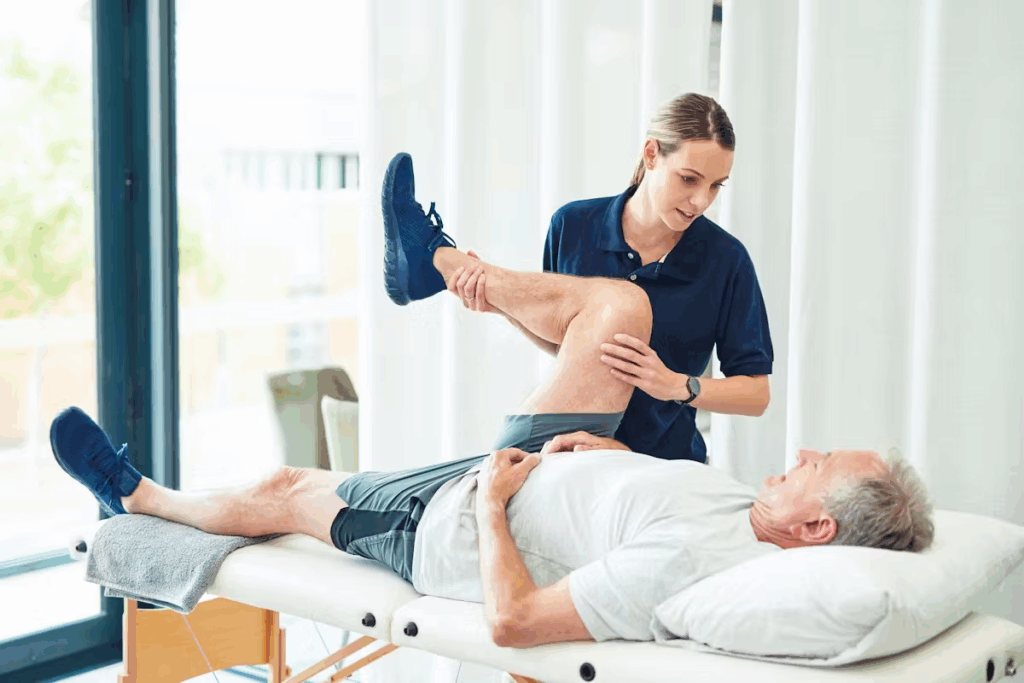
Recovering from a stroke needs more than just medical care. Rehabilitation exercises at home are key to helping survivors get back on their feet. They help improve life quality and independence.stroke rehabilitation exercisesWhat Is the Most Neglected Component Rehabilitation Program? Ultimate Key Insights
Studies show that early, personalized exercise programs can greatly boost physical function. At Liv Hospital, we focus on creating rehabilitation plans that meet each patient’s specific needs.
Doing exercises for stroke patients can make a big difference. It helps improve thinking and movement skills. We’re here to support stroke survivors every step of the way.
Key Takeaways
- Personalized exercise programs can significantly improve recovery outcomes.
- Early initiation of rehabilitation exercises is key for the best results.
- Tailored rehabilitation plans meet the unique needs of each stroke survivor.
- Structured exercises boost cognitive and motor skills.
- Rehabilitation exercises at home support independence and quality of life.
The Critical Role of Early Rehabilitation After Stroke
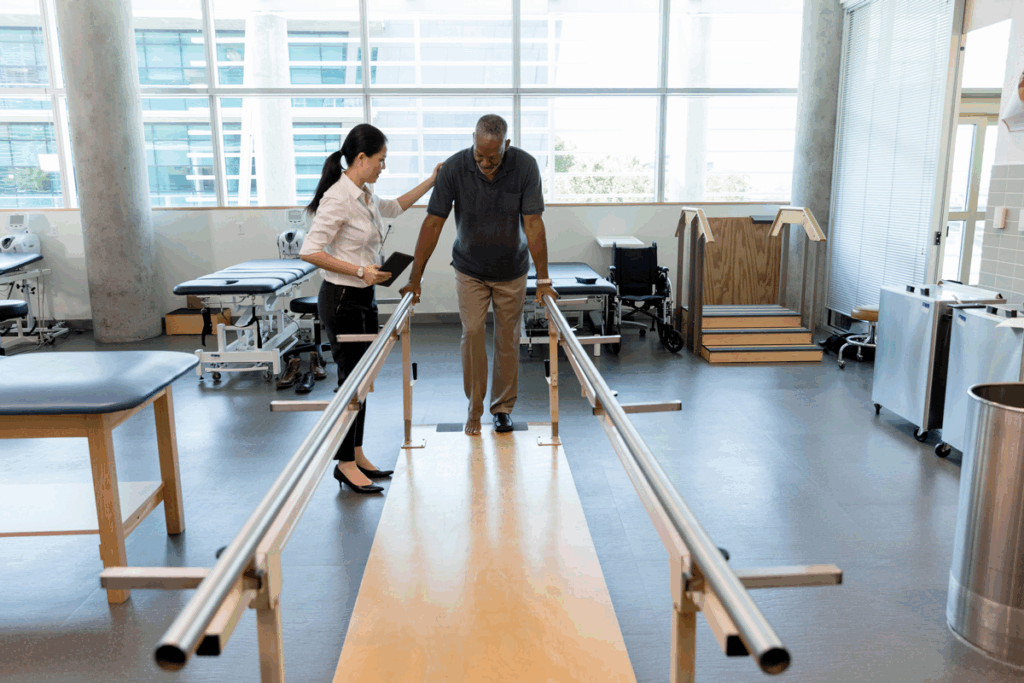
Early rehabilitation after a stroke is key to improving recovery chances. Every year, about 15 million people worldwide suffer from a stroke. This can lead to partial paralysis, speech issues, and brain function problems.
Understanding Stroke’s Impact on Physical Function
A stroke happens when blood flow to the brain is cut off. This stops brain cells from getting oxygen and nutrients. It can damage or kill brain cells, affecting physical functions.
The damage’s extent depends on the brain area affected and the stroke’s severity. Common issues include weakness on one side of the body, balance problems, and daily activity challenges.
Why Active Rehabilitation Trumps Complete Rest
Research shows early, active rehabilitation is better than rest for stroke recovery. Stroke rehabilitation physical therapy exercises help the brain make new connections. This aids in regaining lost functions and improving recovery.
Studies reveal that those who do after stroke exercises early on recover better than those who rest for a long time. These exercises help with physical, cognitive, and emotional recovery.
Adding stroke exercises to daily routines can boost recovery. It’s vital to work with healthcare professionals to create a personalized rehabilitation plan. This plan should meet specific needs and goals.
The Science Behind Recovery: Neuroplasticity and Timing
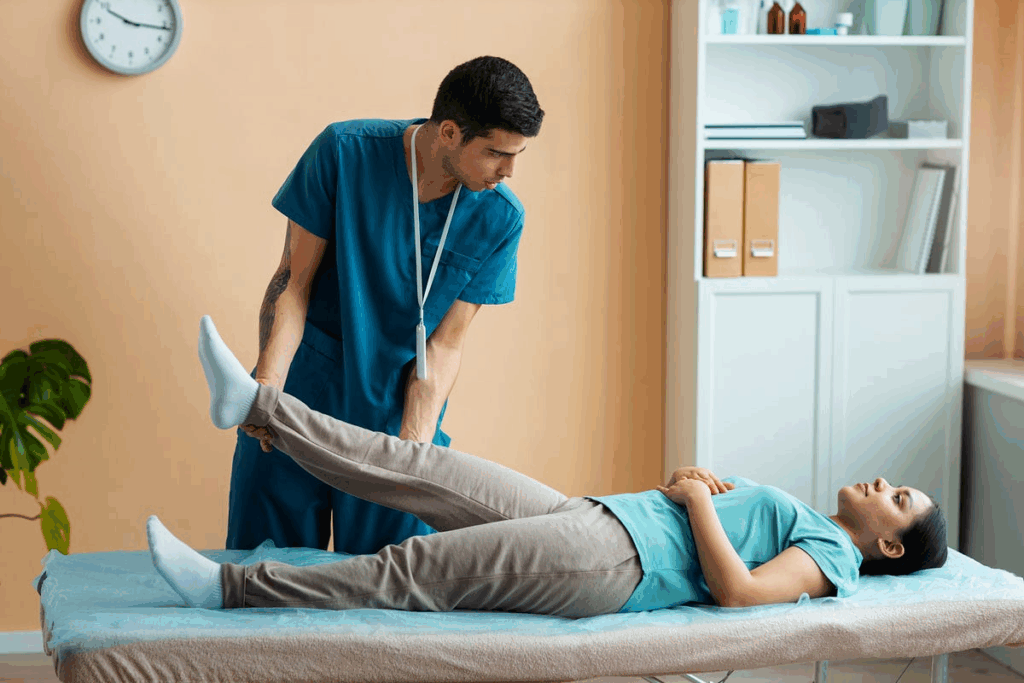
The brain’s ability to change and adapt, known as neuroplasticity, is vital for recovering after a stroke. It allows the brain to make new connections and compensate for damaged areas. This is why stroke rehabilitation exercises are so important for recovery.
How the Brain Rewires After Stroke
After a stroke, the brain starts to change and try to recover. It creates new pathways and strengthens old ones. By doing stroke rehabilitation exercises regularly, people can help their brain recover.
Studies have found that the brain’s motor areas can change after injury. This change, called cortical reorganization, can help people regain lost motor skills. For example, research shows that intense stroke recovery workout programs can greatly improve motor function.
Research on Optimal Rehabilitation Timing
When to start rehabilitation is very important for the best results. Research suggests that starting within the first few months after a stroke is best. The brain is most open to change during this time.
Rehabilitation Timing | Recovery Outcomes |
Early Intervention (<3 months) | Significant improvement in motor function |
Late Intervention (>6 months) | Moderate improvement, with possible further progress |
Even though early intervention is best, recovery can happen later too. The important thing is to keep practicing and adjusting stroke rehabilitation exercises as needed.
Preparing for Home-Based Stroke Rehabilitation Exercises
To get the most out of stroke rehab exercises at home, we need to set up a good environment. This means more than just doing the exercises. It’s about making our space ready and knowing how to stay safe while we do our therapy.
Essential Equipment and Space Requirements
For home stroke rehabilitation, having the right gear and enough room is key. You’ll need a clear area for moving around, a strong chair for support, and tools like resistance bands or therapy balls if your doctor suggests them.
Think about the lighting and temperature in your space too. Good lighting helps avoid accidents, and a comfy temperature helps you focus on your exercises.
Safety Considerations for Home Therapy
When doing exercises after a stroke at home, safety is top priority. Clear your space of tripping hazards and make sure your exercise area is free from obstacles. Keep a phone nearby in case of emergencies.
It’s also important to listen to your healthcare team about how hard and often to do your stroke workout. This helps you stay safe and avoid pushing too hard.
By getting our home ready and knowing how to stay safe, we can do stroke rehab exercises well. This helps us recover and live better.
Creating Your Personalized Rehabilitation Program
A tailored rehabilitation plan can greatly improve recovery after a stroke. Every person’s journey is different, and a personalized approach is key for the best results.
Working with Healthcare Professionals
It’s important to work with healthcare professionals to create a good rehabilitation program. They will assess your condition, set goals, and make a plan that fits your needs. As Medical Expert, a renowned neurologist, notes, “Collaboration between patients, caregivers, and healthcare providers is the cornerstone of successful stroke rehabilitation.”
“The key to successful rehabilitation is a team effort, involving not just healthcare professionals, but also the patient and their family.”
At your first meeting, healthcare professionals will do a detailed evaluation. They will talk to you to understand your past abilities and what daily tasks are hard after the stroke. This info is key to making a plan that meets your specific needs.
Assessing Your Functional Level
Checking your functional level is a big step in making a personalized rehabilitation program. This check helps find areas that need work and sets a starting point for progress. The evaluation might include tests for strength, mobility, balance, and thinking skills.
Setting Realistic Recovery Goals
Setting realistic recovery goals is key to success in your rehabilitation program. Your healthcare team will help you set goals that are reachable and match your needs and priorities. By having specific, measurable goals, you can see how you’re doing and stay motivated.
As you move through your rehabilitation, it’s important to keep checking and adjusting your goals. This ensures they stay relevant and challenging. Regularly reviewing your goals helps you stay focused and get the most out of your recovery.
By working with healthcare professionals, checking your functional level, and setting realistic goals, you can make a rehabilitation program that fits you. This approach helps you recover in the best way possible.
Upper Extremity Stroke Rehabilitation Exercises
Upper extremity stroke rehabilitation exercises are key for stroke survivors to regain arm and hand function. These exercises help improve mobility, strength, and coordination. This makes it easier for individuals to do daily activities.
Shoulder and Arm Mobility Exercises
Shoulder and arm mobility exercises are vital for getting range of motion back and reducing stiffness after a stroke. Some effective exercises include:
- Arm Circles: Hold your arm straight out to the side and make small circles with your hand.
- Wall Slides: Stand with your back against the wall and slide your arm up the wall, keeping it straight.
- Shoulder Rolls: Roll your shoulders forward and backward in a circular motion.
Do these exercises gently and within a comfortable range to avoid discomfort or injury. Consistency is key to seeing improvement.
Hand and Wrist Strengthening Activities
Hand and wrist strengthening activities are essential for improving dexterity and grip strength. Some beneficial exercises include:
- Finger Bending: Place your hand flat on a table and gently bend your fingers down toward your palm.
- Hand Grip: Squeeze a soft rubber ball or hand grip device to strengthen your grip.
- Wrist Extension: Hold your arm straight out in front of you and lift your hand up, keeping your wrist straight.
Start with gentle exercises and gradually increase the intensity as your hand and wrist strength improve. Practicing these exercises regularly can significantly enhance your ability to perform daily tasks.
For stroke patients, incorporating these exercises into a daily routine can lead to substantial improvements in upper extremity function. We recommend working with healthcare professionals to tailor a rehabilitation program that meets your specific needs and abilities.
Lower Extremity and Mobility Exercises
After a stroke, exercises for the lower body can greatly improve life quality. These exercises help regain strength and stability in the legs. This is key for walking, standing, and moving around.
Leg Strengthening for Stability
Leg exercises are essential for better balance and fewer falls. Simple exercises like leg lifts, squats, and lunges work well. Start with support and increase difficulty as strength grows.
For instance, start with seated leg lifts. Lift one leg off the floor while seated, hold, and then lower it. Repeat on the other leg. As you get stronger, move to standing leg lifts or squats with support.
Foot and Ankle Mobility Activities
Foot and ankle exercises are vital for walking and balance. Exercises that improve ankle movement are very helpful. Try toe curls, toe spreads, and ankle rotations to regain mobility and reduce stiffness.
Mobility training, like walking or using a wheelchair, helps patients move around. Combining different exercises improves physical strength and daily activities. So, it’s important to include various exercises in a rehabilitation program.
By focusing on leg and foot exercises, stroke survivors can greatly improve their mobility. This helps them do daily tasks and stay independent.
Core Strengthening and Posture Improvement
Core strengthening is key in stroke rehab. It boosts mobility and balance. A strong core is the base for better movement and lessens fall risks. We’ll look at exercises and methods to boost core strength and posture in stroke survivors.
Seated Core Stability Exercises
Seated exercises are great for stroke survivors. They can do these while sitting safely in a chair. These exercises strengthen the core, helping with posture and movement.
- Marching in Place: Sit and lift one leg, keeping it bent at 90 degrees. Hold for a few seconds, then lower it. Repeat with the other leg.
- Seated Twist: Hold the chair for support. Twist your torso to one side, keeping feet on the floor. Hold for a few seconds, then return. Repeat on the other side.
- Arm Raises: Hold arms straight out at shoulder height. Raise one arm, keeping it straight, then lower it. Repeat with the other arm.
Progressive Standing Balance Activities
As core strength grows, standing balance activities help more. These should be done carefully, with a healthcare pro nearby.
- Supported Standing: Stand with support, like a chair or countertop. Try standing without support, if you can.
- Single-Leg Stance: Hold support and lift one foot off the ground. Hold for a few seconds, then lower it. Repeat with the other leg.
- Heel-To-Toe Walking: Walk by placing the heel of one foot in front of the toes of the other.
Posture Correction Techniques
Good posture is linked to core strength. It reduces muscle strain and boosts mobility. Here are some techniques:
- Awareness: First, notice your posture. Stand or sit in front of a mirror to see how you’re positioned.
- Exercises: Do exercises that strengthen posture-supporting muscles, like shoulder rolls and chest stretches.
- Ergonomic Adjustments: Make your spaces ergonomic to support good posture, like using an ergonomic chair.
By adding these techniques to a rehab program, stroke survivors can greatly improve their recovery and life quality.
Right Side Stroke Recovery Exercises and Adaptations
Recovering from a right side stroke needs a detailed plan. This plan includes special exercises and changes. It’s key to tailor the recovery to each person’s needs, focusing on those with right side strokes.
Constraint-induced movement therapy helps. It makes the stronger side move less. This forces the weaker side to do more, helping those with left side weakness from a right side stroke.
Addressing Left-Side Weakness
Many people with right side strokes face left side weakness. To tackle this, we suggest exercises for the weak limbs. For example, patients can do:
- Arm lifts and extensions
- Hand grasping and releasing
- Leg lifts and knee bends
Do these exercises often and make them harder as you get stronger.
Visual Field Deficit Accommodations
Some may lose part of their vision after a stroke. To help, we recommend:
“Compensatory strategies such as scanning techniques can significantly improve visual function and overall independence.”
Try scanning by moving your head or eyes. This helps make up for lost vision.
Visual Field Deficit | Compensatory Strategy |
Left hemianopia | Scan to the left |
Right hemianopia | Scan to the right |
Modified Activities for Hemiparesis
Hemiparesis, or weakness on one side, is common after a stroke. Changing daily tasks can help regain independence. For instance:
- Use the unaffected hand to help with tasks like dressing and grooming
- Use bigger grips or special tools for easier handling
Incorporating Stroke Rehabilitation Exercises into Daily Life
Daily life can be a chance to heal when you add stroke rehab exercises to your routine. This helps stroke survivors get better and live better lives. We think making therapy part of your daily life is key for lasting recovery.
Therapeutic Activities During Routine Tasks
One smart way to add stroke rehab exercises to your day is to make everyday tasks therapeutic. For example, brushing your teeth or washing dishes can help with standing balance. Cooking or gardening can also improve arm and hand strength.
Even simple tasks like reaching for things on high shelves or bending to pick up items can help with mobility and flexibility. By seeing these tasks as chances to exercise, stroke survivors can turn daily chores into stroke recovery workout sessions.
Functional Movement Practice
Functional movement practice is also important for adding exercises stroke to your daily life. It means doing movements you need for everyday tasks, like walking or climbing stairs. This helps you do things on your own more easily.
For example, walking in different rooms can boost balance and leg strength. Moving from a bed to a wheelchair or from a wheelchair to a toilet can also improve mobility and coordination.
Creating Sustainable Exercise Habits
To keep getting better over time, it’s vital to make sustainable exercise habits. Start by setting achievable goals, making a routine, and slowly increasing how hard and long you exercise. It’s best to work with your healthcare team to create a plan that fits your life and needs.
Also, mix up your exercises to keep them fun and prevent boredom. Try new things, exercise with others, or use apps or virtual reality to make therapy more fun.
Cognitive and Communication Recovery Exercises
Stroke survivors can greatly benefit from exercises that help with thinking and talking. These exercises can improve memory and thinking skills. We will look at different activities that can be part of a recovery program.
Memory and Attention Activities
Memory and attention are key skills that can be affected by a stroke. Doing activities that challenge these areas can help a lot. Some good exercises include:
- Memory games: Using cards or digital apps to match pairs or remember sequences.
- Attention training: Focusing on specific tasks or stimuli to improve concentration.
- Daily routines: Encouraging patients to follow and remember daily schedules and tasks.
Studies show that exercises like these can really help stroke survivors. By doing these activities every day, patients can get better at thinking and paying attention.
Speech and Language Practice
Speech and language therapy is very important for stroke patients, like those with aphasia. Good practices include:
- Repeating words and phrases to improve pronunciation and fluency.
- Engaging in conversations with family and caregivers to build confidence.
- Using visual aids like pictures or flashcards to enhance understanding and vocabulary.
It’s best to work with a speech-language pathologist to create a therapy plan. Their help can make speech and language practice much more effective.
Problem-Solving Exercises
Problem-solving skills can also be affected by a stroke. Doing activities that challenge these skills can help patients become more independent. Examples include:
- Puzzles and brain teasers: Engaging in crosswords, Sudoku, or other cognitive puzzles.
- Real-life scenarios: Practicing problem-solving in everyday situations, such as managing finances or planning meals.
- Strategy games: Participating in games that require planning and decision-making.
By adding these exercises to their recovery program, stroke survivors can improve their thinking skills. This can greatly improve their quality of life.
Here’s a summary of the cognitive and communication recovery exercises discussed:
Exercise Type | Examples | Benefits |
Memory and Attention | Memory games, attention training, daily routines | Improved memory, concentration |
Speech and Language | Repeating words, conversations, visual aids | Enhanced communication skills |
Problem-Solving | Puzzles, real-life scenarios, strategy games | Increased independence, cognitive flexibility |
Tracking Progress and Overcoming Plateaus
Effective stroke rehabilitation is not just about doing exercises. It’s also about tracking your progress to beat plateaus. As you keep up with your stroke recovery exercises, it’s key to watch your progress. This helps you on your journey to recovery.
Documenting Improvements
Keeping a detailed log of your stroke workout progress is very helpful. We suggest writing down the exercises you do, how many times, and any challenges. This log helps you and your healthcare team see how you’re doing and make changes to your program if needed.
- Record the date and time of each exercise session
- Note the exercises performed and the number of repetitions
- Document any challenges or difficulties encountered
- Track your overall feelings and energy levels
By keeping a detailed record, you can spot patterns and areas that need more work. This lets you tailor your exercises after a stroke to fit your needs better.
Adjusting Your Program as You Recover
As you get better, it’s important to change your exercise program. This keeps you challenged and helps you recover more. We work with healthcare professionals to check your progress and change your program as needed.
Changes might include making your stroke workout harder, adding new exercises, or focusing on different parts of your recovery. Regular checks make sure your program stays on track with your goals.
Strategies for Breaking Through Recovery Plateaus
Hit a plateau in your recovery? It’s normal, but there are ways to get past it. Try changing your exercise routine, adding new activities, and setting new goals to keep you motivated.
- Change your routine: Introduce new exercises or modify existing ones to challenge your body in different ways.
- Set new goals: Establishing new objectives can help maintain motivation and direction.
- Incorporate different activities: Adding variety to your rehabilitation program can help overcome plateaus.
- Seek professional guidance: Consult with your healthcare provider or therapist to identify areas for improvement and adjust your program.
By using these strategies and keeping track of your progress, you can get past recovery plateaus. This way, you can keep making progress in your stroke recovery exercises.
Conclusion
Stroke rehabilitation exercises are key to recovery. They help people regain lost functions and adapt to daily life. Understanding the science behind recovery and preparing for home-based rehab are important steps.
Creating a personalized program is also essential. This way, individuals can start their journey to a successful recovery.
Stroke rehabilitation is a long-term process. It needs an interdisciplinary approach for lasting results. Adding stroke recovery workouts and exercises to daily life helps individuals make progress.
We urge individuals to keep up with their rehabilitation. Celebrate small victories along the way. With dedication and the right support, significant improvements in health and well-being are possible.
Embracing stroke rehabilitation exercises is vital for recovery. It leads to a brighter, more independent future.
FAQ
What are the most effective stroke rehabilitation exercises for home practice?
Effective exercises include upper body work like shoulder and arm movements. Hand and wrist strengthening are also key. Lower body exercises, such as leg strengthening, are important too. Don’t forget core exercises.
It’s vital to make these exercises fit your needs and abilities.
Why is early rehabilitation after a stroke so important?
Early rehab is key because it boosts physical recovery. Studies show active rehab beats rest, leading to better results and fewer complications.
How does neuroplasticity contribute to stroke recovery?
Neuroplasticity, or the brain’s ability to change, is essential for recovery. It helps the brain adapt to damage. Early and effective rehab can improve this process, leading to better outcomes.
What safety considerations should be taken when performing stroke rehabilitation exercises at home?
When exercising at home, make sure your space is safe. Use the right equipment and have enough room for your exercises. Always work with healthcare pros to create a rehab plan that’s right for you.
How can I create a personalized rehabilitation program?
To make a personalized program, start by assessing your current abilities with healthcare pros. Set achievable goals and choose exercises that meet your needs. Regularly check and update your program to keep making progress.
What are some examples of cognitive and communication recovery exercises?
Examples include memory games, speech practice, and problem-solving activities. These exercises can be tailored to your challenges, helping improve your overall function.
How can I incorporate stroke rehabilitation exercises into daily life?
To make exercises part of your daily routine, try doing them during everyday tasks. Practice functional movements and make exercise a habit. This approach helps keep your progress steady and boosts recovery.
What strategies can help overcome plateaus in stroke recovery?
To get past a plateau, keep track of your progress and adjust your rehab plan as needed. Try new exercises or challenges. Working with healthcare pros can help find the best ways to move forward.
Are there specific exercises for right side stroke recovery?
Yes, there are exercises designed for right side stroke recovery. They focus on strengthening the left side, adapting to visual field issues, and modifying activities for hemiparesis. Tailored exercises can enhance function and independence on the affected side.
How often should stroke rehabilitation exercises be performed?
The frequency of exercises depends on your rehab plan and goals. Aim to do exercises regularly, ideally every day. This helps maintain progress and improves recovery.
References
National Center for Biotechnology Information. Evidence-Based Medical Guidance. Retrieved from https://pubmed.ncbi.nlm.nih.gov/36232038/