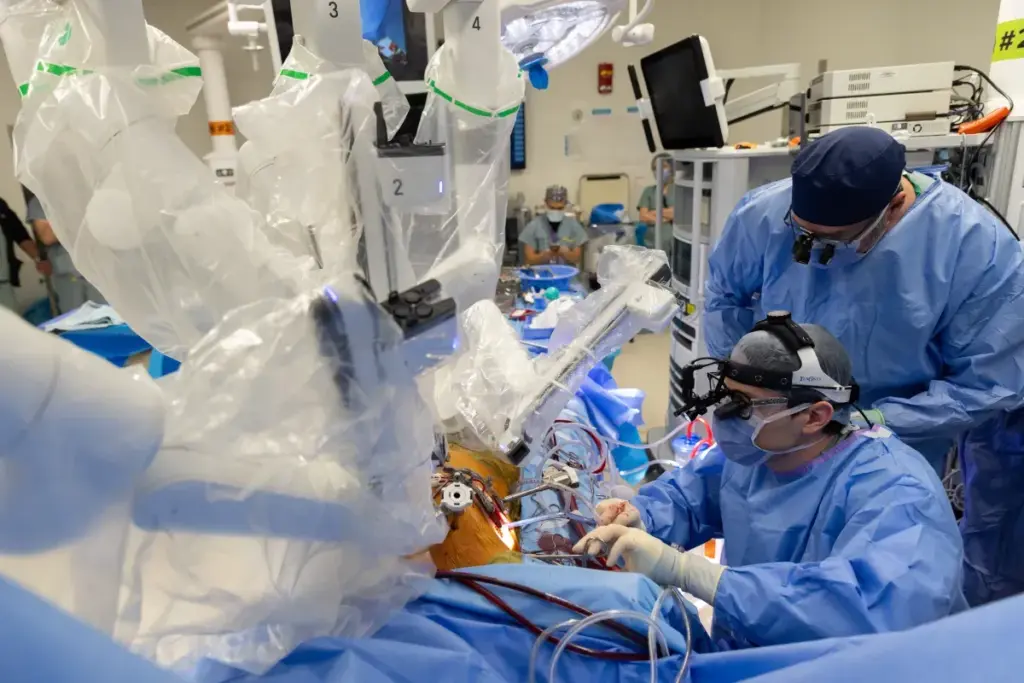
The word “robot” comes from the Czech word “robota,” meaning “labor.” Robotic surgery has been around for about 35 years. The last two decades have seen big improvements.
The da Vinci surgery robot shows how far the technology has come. It makes complex surgeries more precise and less invasive. This makes robotic surgery very important in today’s medicine.
The history of robotics in surgery is one of fast growth and new ideas. It has changed how we do complex surgeries.
Key Takeaways
- Robotic surgery has been around for approximately 35 years.
- The technology has seen significant growth in the last two decades.
- The da Vinci surgery robot is a prominent example of robotic surgery technology.
- Robotic surgery enables complex procedures with enhanced precision.
- Minimal invasion is a key benefit of robotic surgery.
The Early History of Medical Automation
The idea of using machines in medical procedures started in the early 1900s. But it wasn’t until the 1970s that robotic surgery began to take form. The dream of creating a machine that could do tasks with human hands dates back over 60 years, starting in the military.
Conceptual Beginnings in the 1970s
The 1970s were key for starting medical automation. This time brought the first ideas for using robots in surgery. The first robots were for factories, but soon people saw their use in medicine too. They wanted to use robots for their precision and reliability in surgeries.
Transition from Industrial to Medical Robotics
As industrial robots got better, medical robots started to take shape. The first medical robots were made from industrial ones, but were changed for medical use. This was a big step towards the robots we use in surgery today. The creation of the first robot made just for medicine was a major achievement.
|
Year |
Milestone |
Significance |
|---|---|---|
|
1970s |
Conceptual beginnings |
Introduction of robotic concepts in medicine |
|
1980s |
First surgical robots |
Adaptation of industrial robots for medical use |
The First Surgical Robots: 1980s Breakthroughs
In the 1980s, the first surgical robots were created. They set the stage for today’s robotic surgery. This time was key in medical robotics, moving from ideas to real use.
PUMA560: The Pioneer in Neurosurgical Biopsies
The Programmable Universal Machine for Assembly (PUMA) 560 was the first robot used on humans. In 1985, it helped with neurosurgical biopsies. This was a big step in using robots in surgery.
Early Limitations and Technical Challenges
Even with these early successes, robots like PUMA560 had big problems. They had limited dexterity, were too big, and needed better control systems. Here are some of the main issues:
|
Limitation/Challenge |
Description |
Impact on Surgery |
|---|---|---|
|
Limited Dexterity |
Early robots could not move much. |
They could not do complex surgeries. |
|
Size Constraints |
Robots were too big. |
They made it hard to use in the OR. |
|
Control Systems |
Old control systems often failed. |
They needed a lot of manual help. |
These problems showed the need for more work in surgical robotics. This led to better systems, like the da Vinci machine.
The 1990s: Foundation of Modern Surgical Robots
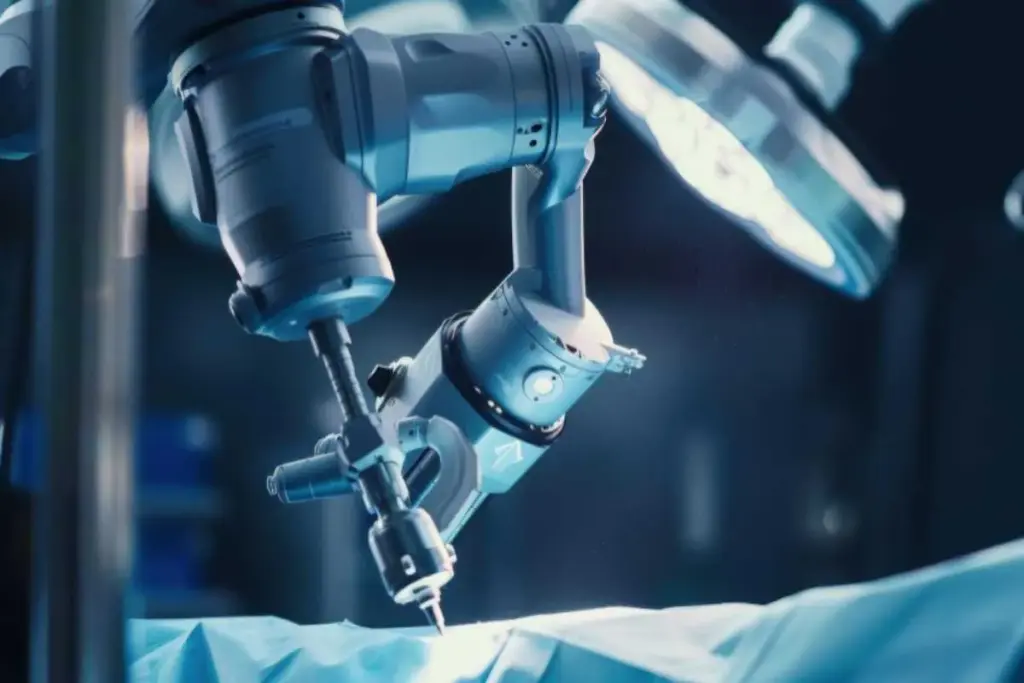
In the 1990s, robotic surgery started to take form with ROBODOC, AESOP, and ZEUS. This decade was key in building the base for today’s surgical robots. These robots are now a big part of many surgeries.
ROBODOC: Revolutionizing Orthopedic Surgery
In 1992, the Robodoc Surgical System was made for prosthetic hip replacements. It was a big step forward in orthopedic surgery. ROBODOC made bone preparation more precise, helping prosthetic hips fit better.
AESOP: Voice-Controlled Camera Systems
The AESOP system came out in the 1990s. It was a voice-controlled camera system for surgeries. This let surgeons control the camera, making operations more precise and stable.
ZEUS Robotic Surgical System
The ZEUS Robotic Surgical System had three arms, each on a surgical table. This setup made surgery more flexible and precise. Even though it was later replaced by the da Vinci System, ZEUS was a big step forward.
|
System |
Application |
Key Feature |
|---|---|---|
|
ROBODOC |
Orthopedic Surgery |
Image-guided precision |
|
AESOP |
Camera Control |
Voice-controlled |
|
ZEUS |
General Surgery |
Multi-armed robotic system |
The 1990s were a turning point for robotic surgery. It was the start of a new era. This era brought us the advanced robotic-assisted surgery we see today.
The Da Vinci Surgical System: A Turning Point
The Da Vinci Surgical System changed the game in minimally invasive surgery. It brought advanced robotic tech to the table. This made surgeries more precise and flexible.
Development History and 2000 FDA Approval
Intuitive Surgical created the Da Vinci Surgical System. It got FDA approval in 2000 for laparoscopic procedures. This was a big deal, marking the start of surgical robotics in the US.
Key Milestones:
- FDA Approval in 2000
- Initial Use in Laparoscopic Procedures
- Continuous Updates and Improvements
Technical Components of the Da Vinci Machine
The Da Vinci System has cool tech like 3D vision and precise tools. It also has a user-friendly console. These features help surgeons do complex surgeries with better accuracy and less invasion.
|
Component |
Description |
|---|---|
|
3D Vision System |
Provides high-definition, magnified view |
|
Robotic Arms |
Offers precise instrumentation and flexibility |
|
Surgeon Console |
Ergonomic design for comfort and control |
First Procedures and Initial Adoption
When the Da Vinci System first came out, surgeons were excited. They loved it for urological and gynecological surgeries. It helped them do their jobs better and made patients recover faster.
“The Da Vinci System has been a game-changer in our surgical practice, allowing us to perform complex procedures with greater ease and accuracy.” Urologist
Now, the Da Vinci System is key in robotic surgery. It’s led to more advancements and better patient care.
Evolution of Da Vinci Robots Through the Decades
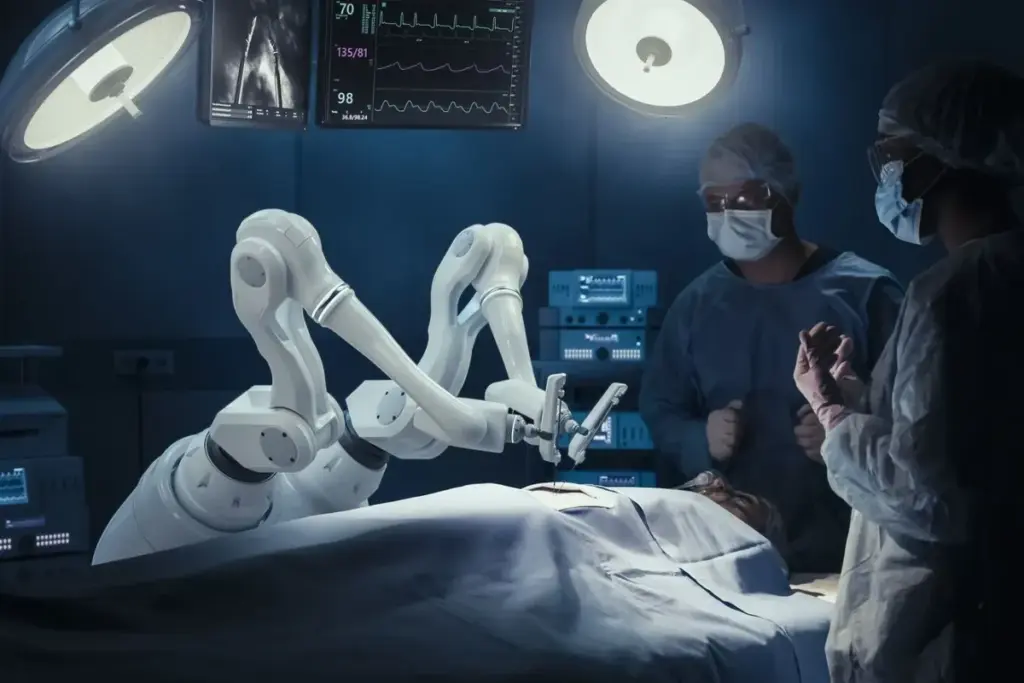
The Da Vinci robots have changed the world of robotic surgery a lot. They have grown a lot, getting better and doing more things. This has made them very useful in many surgeries.
From Original System to S, Si, and Xi Models
The first Da Vinci system was just the start. Over time, it got better with models like S, Si, and Xi. The Da Vinci Xi, released in 2014, had new tools, better vision, and easier setup. These changes made it more popular and useful in many surgeries.
|
Model |
Release Year |
Key Features |
|---|---|---|
|
Original Da Vinci |
1999 |
First robotic surgical system |
|
Da Vinci S |
2006 |
Improved vision and instrumentation |
|
Da Vinci Si |
2009 |
High-definition vision, improved ergonomics |
|
Da Vinci Xi |
2014 |
Advanced instrumentation, vision, cart design, and setup automation |
Single-Port Platform and SP Technology
The latest Da Vinci tech includes single-port platforms and SP technology. These allow for complex surgeries through just one cut. This could mean less recovery time and better looks. SP technology is a big leap in making surgery less invasive.
Competing Surgical Robots in the Market
The world of surgical robots is getting more crowded. New solutions are coming out, challenging the Da Vinci Surgical System’s lead. Other companies are joining the race with their own robotic systems.
Senhance Surgical System by TransEnterix
The Senhance Surgical System is a robotic platform with advanced tools and imaging. It gives surgeons more flexibility and control. Its user-friendly interface aims to simplify robotic surgery.
It’s used in surgeries like gynecological and colorectal ones. This shows its versatility and effectiveness.
MAKO Robotic-Arm Assisted Technology
MAKO Robotic-Arm Assisted Technology is mainly for orthopedic surgeries. It helps with precise bone cuts and implant placement. St. Elizabeth Healthcare uses it alongside Da Vinci, showing the rise of multiple robotic systems.
Versius Surgical Robotic System
The Versius Surgical Robotic System is a flexible platform for various surgeries. It’s designed to fit into existing OR setups. It aims to give surgeons better dexterity and vision, leading to better surgery results.
How Surgical Robots Have Transformed Patient Care
Robotic surgery has changed the medical world. It brings more precise and less invasive procedures. This change has greatly improved patient care, leading to better results and faster recovery times.
Reduced Recovery Times and Complications
Robotic-assisted surgery cuts down on recovery times and complications. The robotic surgery machine makes precise cuts and damages less tissue. This means less blood loss and trauma for the patient.
Patients often have less pain and a lower chance of infection after robotic surgery. This is because robotic procedures are less invasive. It’s a win-win for both patients and surgeons.
Precision and Accuracy Improvements
The precision and accuracy of robotic systems are unmatched. The robotic arms can make fine movements easily. This makes complex surgeries more precise.
Robotic systems also offer better visualization. High-definition 3D imaging helps surgeons navigate complex anatomy. This boosts the precision of the surgery.
Statistical Outcomes and Clinical Data
Studies show robotic surgery leads to better patient outcomes. For example, robotic prostatectomies have lower rates of urinary issues and erectile dysfunction. This is compared to traditional surgery.
More evidence supports the benefits of robotic surgery. Studies show it can improve patient care. As the technology advances, we can expect even more improvements in surgical robotics.
Applications of Robot-Assisted Surgery Across Specialties
Robot-assisted surgery is changing the game in many medical fields. It brings precision and flexibility to the operating room. This has improved patient care and surgical results across different specialties.
Urology: The First Major Adoption
Urology was quick to embrace robotic surgery, starting with prostatectomies. The da Vinci Surgical System has been key in this adoption. It offers better visualization and precision.
Gynecological Procedures
In gynecology, robotic surgery is now the go-to for complex procedures like hysterectomies. The robotic system’s skill in delicate dissections and suturing has led to better patient results.
Cardiac and Thoracic Applications
Cardiac and thoracic surgeons also benefit from robotic technology. They use it for mitral valve repairs and lobectomies. This precision reduces complications and shortens recovery times.
General and Colorectal Surgery
In general and colorectal surgery, robotic systems help with complex procedures. They offer better accuracy, less blood loss, and shorter hospital stays.
|
Specialty |
Common Procedures |
Benefits |
|---|---|---|
|
Urology |
Prostatectomies, nephrectomies |
Enhanced precision, reduced recovery time |
|
Gynecology |
Hysterectomies, endometriosis treatment |
Improved outcomes, less blood loss |
|
Cardiac and Thoracic |
Mitral valve repairs, lobectomies |
Reduced risk, faster recovery |
|
General and Colorectal |
Colectomies, rectal resections |
Greater accuracy, shorter hospital stays |
Challenges and Controversies in the Field of Surgical Robots
The use of surgical robots in medical practices has faced many challenges. Despite their benefits, there are concerns about their high costs, the need for special training, and safety and effectiveness issues.
Cost-Benefit Analysis and Healthcare Economics
The high costs of buying and maintaining surgical robots are a big economic problem. A cost-benefit analysis is key to figuring out if these systems are worth it. Some studies show they can cut down on hospital stays and recovery times. But others point out the higher costs of robotic surgery.
|
Aspect |
Traditional Surgery |
Robotic Surgery |
|---|---|---|
|
Cost |
$10,000 – $20,000 |
$15,000 – $30,000 |
|
Recovery Time |
4-6 weeks |
2-4 weeks |
Surgeon Training Requirements
Robotic surgical systems are complex, needing thorough surgeon training. Training programs are vital to make sure surgeons can use these systems well. They focus on both learning the theory and getting hands-on experience.
Reported Complications and Safety Concerns
Robotic surgery has improved many outcomes, but there are complications and safety concerns. Issues like mechanical failures, infections, and learning curve problems have been reported. It’s important to keep monitoring and reporting these incidents to improve safety.
Conclusion: The Future of Robotic Surgery
Robotic surgery has made huge strides, thanks to the da Vinci Surgical System. With new tech on the horizon, robotic surgery’s future is bright. It promises better care and more uses in different medical areas.
New advancements in robotic surgery mean more precise and less invasive surgeries. This could lead to faster recoveries and fewer complications. Systems like the da Vinci, Senhance, and MAKO help surgeons do complex tasks with better accuracy.
We can expect robotic surgery to grow in fields like urology, gynecology, and general surgery. This could lead to better patient results and lower healthcare costs. Robotic surgery is an exciting field that’s changing fast.
As innovation keeps pushing forward, we’ll see even better robotic systems. This will improve the care patients receive. The future of robotic surgery is looking very promising for modern medicine.
FAQ
What is robotic surgery?
Robotic surgery is a new way to do surgery. It uses a robot to help the doctor. This makes the surgery more precise and easier to do.
When was the first robot invented for surgery?
The first robot for surgery was the PUMA560. It came out in the 1980s. It was used for taking biopsies in the brain.
What is the Da Vinci Surgical System?
The Da Vinci Surgical System is a robot for surgery. It was approved by the FDA in 2000. It’s known for its advanced technology and is used in many surgeries.
How has the Da Vinci Surgical System evolved over time?
The Da Vinci System has changed a lot. It started with the original model and now has the S, Si, and Xi models. It also has new features like single-port technology. These updates have made it even better.
Are there other surgical robots beside the Da Vinci system?
Yes, there are other robots like the Senhance Surgical System and the Versius Surgical Robotic System. They offer different benefits and features.
What are the benefits of robotic surgery for patients?
Robotic surgery helps patients recover faster. It also reduces complications and improves accuracy. This leads to better results for patients.
In which medical specialties is robotic surgery commonly used?
Robotic surgery is used in many areas. This includes urology, gynecology, and even heart surgery. It’s versatile and helps a lot of patients.
What are the challenges associated with robotic surgery?
There are some challenges. These include the high cost and the need for special training. There are also safety concerns and possible complications.
How has robotic surgery impacted the field of medicine?
Robotic surgery has changed how we care for patients. It offers less invasive options with better results. It’s making a big difference in medicine.
What is the future of robotic surgery?
The future looks bright for robotic surgery. There will be more advancements and new uses. It will continue to improve patient care and outcomes.
National Center for Biotechnology Information. Evidence-Based Medical Insight. Retrieved from https://pmc.ncbi.nlm.nih.gov/articles/PMC10683436/