Getting an endometrial cancer diagnosis can feel scary. But knowing your survival rates by stage is key to choosing the right treatment.Our complete guide to the survival rate endometrial cancer by stage. Get the vital, clear statistics and prognosis data you need.
At Liv Hospital, our team is all about giving you the best cancer care. We know that prognosis changes a lot based on the cancer’s stage.
The five-year survival rate for endometrial cancer is about 81 to 84 percent. This info is vital for patients and families to grasp the survival chances and make smart choices.
Key Takeaways
- Understanding prognosis is key to making informed treatment decisions.
- The five-year relative survival rate for endometrial cancer is approximately 81 to 84 percent.
- Survival rates vary significantly across different stages of the disease.
- Early detection is key to better survival chances.
- Liv Hospital offers top-notch cancer care with a dedicated team.
Understanding Endometrial Cancer
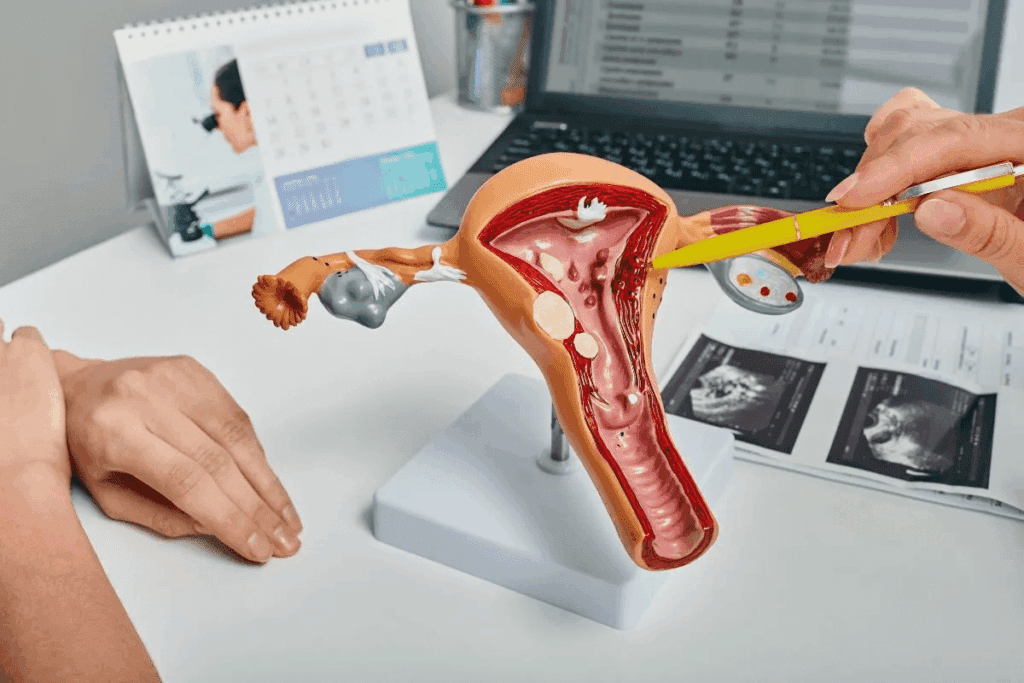
Endometrial cancer, also known as uterine adenocarcinoma, affects thousands of women every year. It’s a serious health issue. We’ll look into what endometrial cancer is, its types, and symptoms and risk factors.
What Is Endometrial Cancer?
Endometrial cancer starts in the endometrium, the uterus’s inner lining. It’s the most common uterine cancer. It happens when abnormal cells in the endometrium grow too much.
This cancer is often caught early because it causes vaginal bleeding. This bleeding makes women go to the doctor.
Types of Endometrial Cancer
There are many types of endometrial cancer, based on cell type and characteristics. The most common is endometrioid adenocarcinoma, making up about 80% of cases. Other types include serous carcinoma, clear cell carcinoma, and mucinous carcinoma.
Each type has its own features and how it might affect the future.
Common Symptoms and Risk Factors
The main symptom of endometrial cancer is abnormal vaginal bleeding. This bleeding often happens after menopause or between periods. Other signs might be pelvic pain, trouble urinating, or pain during sex.
Being overweight, using hormone therapy, taking tamoxifen, and having a family history of certain genetic syndromes are risk factors. Knowing these can help catch the cancer early and manage it better.
How Endometrial Cancer Is Staged

Staging endometrial cancer is key to managing it. It helps doctors pick the best treatment. They look at how far the cancer has spread in the body.
FIGO Staging System Explained
The FIGO staging system is used to classify endometrial cancer. It ranges from I (confined to the uterus) to IV (distant spread). Knowing the stage is vital for treatment and prognosis.
- Stage I: Cancer is confined to the uterus.
- Stage II: Cancer involves the uterus and cervix.
- Stage III: Cancer has spread to nearby tissues or lymph nodes.
- Stage IV: Cancer has spread to distant parts of the body.
SEER Staging System (Localized, Regional, Distant)
The SEER program uses a different staging system. It classifies cancer as localized, regional, or distant. This makes it easier to understand the cancer’s spread.
- Localized: Cancer is limited to the uterus.
- Regional: Cancer has spread to nearby tissues or lymph nodes.
- Distant: Cancer has metastasized to distant parts of the body.
TNM Classification System
The AJCC TNM staging system is another way to stage endometrial cancer. It looks at three main factors:
- T (Tumor): Size and extent of the main tumor.
- N (Node): Whether the cancer has spread to the nearby lymph nodes.
- M (Metastasis): Whether the cancer has spread to distant parts of the body.
Diagnostic Methods for Accurate Staging
Accurate staging uses various tests, like MRI or CT scans, and surgical procedures. These tests help doctors understand the disease and plan treatment.
Diagnostic methods include:
- Imaging tests (MRI, CT scans).
- Surgical staging (e.g., hysterectomy with lymph node dissection).
- Biopsy results.
Overall Survival Rate Endometrial Cancer Statistics
Knowing the survival rate for endometrial cancer is key for patients and their families. The survival rate statistics give a full view of the disease’s outlook.
5-Year Relative Survival Rates
The 5-year relative survival rate is a key measure for endometrial cancer patients. It shows the percentage of patients alive 5 years after diagnosis compared to the general population. Recent data shows the 5-year relative survival rate for endometrial cancer is about 81 to 84 percent.
This means women with endometrial cancer have a 81 to 84 percent chance of being alive 5 years after diagnosis, similar to women without the disease.
How Survival Rates Are Calculated
Survival rates come from cancer registries that track patient outcomes. The 5-year relative survival rate compares patients with endometrial cancer to the general population. It adjusts for age and other factors to give a clearer picture of the disease’s impact.
Interpreting Survival Statistics
When looking at survival statistics, remember they’re averages. They don’t reflect every individual’s situation. Many things can affect a patient’s prognosis, like the cancer’s stage, overall health, and treatment response.
Survival statistics should guide us, not predict our exact outcome.
Limitations of Statistical Data
Survival statistics are valuable but have limits. They might not include the latest treatment advances or individual disease progressions. Also, survival rates vary by diagnosis stage, with earlier stages having better chances.
It’s important to understand these limits to accurately interpret survival statistics.
Stage 1 Endometrial Cancer Prognosis
Stage 1 endometrial cancer has a good outlook, with high survival rates. This is because the cancer is mostly in the uterus. The 5-year survival rate is about 90 percent.
Survival Rates for Stage 1A and 1B
Stage 1 endometrial cancer is split into 1A and 1B. Stage 1A has a 5-year survival rate of 88 percent. Stage 1B’s rate is slightly lower, at 75 percent.
These numbers come from the National Cancer Institute’s SEER program. They help doctors and patients make treatment plans.
Treatment Success Rates for Localized Disease
Treatment for stage 1 endometrial cancer works well because the cancer is contained. Main treatments are surgery, radiation, and sometimes chemo. Often, surgery alone can cure the cancer.
The success of treatment depends on the cancer’s stage and type. For example, endometrioid adenocarcinoma has a good prognosis if caught early.
Endometrioid Adenocarcinoma FIGO Grade 1 Survival Rate
Endometrioid adenocarcinoma FIGO grade 1 has a very high 5-year survival rate, over 90 percent. This is because these tumors are well-differentiated and less aggressive.
Stage | 5-Year Survival Rate | Treatment Success Rate |
Stage 1A | 88% | High |
Stage 1B | 75% | Moderate to High |
Endometrioid Adenocarcinoma FIGO Grade 1 | >90% | Very High |
Knowing the prognosis and survival rates for stage 1 endometrial cancer is helpful. It’s important to talk to a healthcare provider for a personalized outlook.
Stage 2 Endometrial Cancer Prognosis
To understand stage 2 endometrial cancer’s prognosis, we look at survival rates, treatment options, and patient factors. At this stage, the cancer has spread to the cervix but stays within the pelvic area.
Survival Statistics for Stage 2
Recent data shows a 5-year survival rate of 69 percent for stage 2 endometrial cancer. This rate considers age, health, and treatment response.
Survival Rates by Age:
Age Group | 5-Year Survival Rate |
Less than 50 | 75% |
50-59 | 72% |
60-69 | 68% |
70 and above | 62% |
Cervical Involvement and Its Impact
Cervical involvement means the cancer has spread beyond the uterus. This can make treatment more complex. The extent of this involvement affects the prognosis.
The role of cervical involvement in determining the prognosis highlights the importance of accurate staging and assessment of the disease’s extent.
Treatment Approaches and Success Rates
Treatment for stage 2 endometrial cancer includes surgery, radiation, and sometimes chemotherapy. The choice depends on health, disease extent, and tumor characteristics.
- Surgery: Often the primary treatment, aiming to remove the tumor and affected tissues.
- Radiation Therapy: Used to kill any remaining cancer cells, reducing the risk of recurrence.
- Chemotherapy: May be employed to treat any cancer that has spread beyond the pelvic region.
Treatment success varies based on patient factors and disease specifics. A multidisciplinary approach is key for the best outcomes.
Factors Affecting Stage 2 Outcomes
Several factors can influence stage 2 endometrial cancer outcomes. These include age, health, tumor grade, and treatment response. Understanding these factors is vital for a personalized treatment plan.
Healthcare providers can offer more accurate prognostic information and tailor treatment strategies to individual needs by considering these elements.
Stage 3 Endometrial Cancer Prognosis
Stage 3 endometrial cancer is a serious stage. The cancer has spread beyond the uterus but is only in the pelvic area. It may have reached nearby tissues or lymph nodes, making treatment tricky but possible.
Stage 3A, 3B, and 3C Survival Rates
The outlook for Stage 3 endometrial cancer changes with each substage. Survival rates for Stage 3A, 3B, and 3C depend on how far the cancer has spread and if it’s in lymph nodes.
Stage | 5-Year Relative Survival Rate |
3A | 59% |
3B | 50% |
3C | 47% |
These survival rates show how critical early detection and aggressive treatment are. They highlight the need for treatment plans tailored to each patient’s unique situation.
Regional Spread and Its Impact
When endometrial cancer spreads to nearby tissues or lymph nodes, it affects the prognosis. This spread makes treatment harder, leading to lower survival rates.
Regional spread can involve:
- Invasion of the parametrium or pelvic lymph nodes
- Spread to the vagina or other nearby structures
- Involvement of the pelvic or para-aortic lymph nodes
Knowing how far the cancer has spread is key to finding the best treatment. It helps improve patient outcomes.
Treatment Challenges and Strategies
Treating Stage 3 endometrial cancer is tough because of its advanced stage and spread. But, there are treatment strategies to manage the disease and boost survival chances.
“Surgery is the main treatment for Stage 3 endometrial cancer. It’s often combined with radiation and chemotherapy to kill any remaining cancer cells.”
Some treatment options include:
- Surgery to remove the tumor and affected tissues
- Radiation therapy to target remaining cancer cells
- Chemotherapy to address microscopic spread
- Hormone therapy to slow disease progression
Real Patient Experiences with Stage 3
Patients with Stage 3 endometrial cancer have different experiences. These are influenced by their health, treatment response, and personal strength. Hearing from others who have gone through this can offer valuable support and insights.
“I was diagnosed with Stage 3 endometrial cancer, and it was a shock. But with the support of my medical team and loved ones, I underwent surgery and radiation therapy. It’s been a tough journey, but I’m grateful for the second chance I’ve been given.”Anonymous Patient
Understanding the prognosis and treatment options for Stage 3 endometrial cancer helps patients and their families make informed decisions. It gives them the confidence to face the challenges ahead.
Stage 4 Endometrial Cancer Life Expectancy
Knowing the life expectancy for Stage 4 endometrial cancer is key for patients and their families. At this stage, the cancer has spread beyond the pelvis. It can go to the bladder, bowel, or distant organs like the lungs or liver.
The 5-year survival rate for Stage 4 endometrial cancer is about 19%. But, this number can change a lot. It depends on where the cancer has spread, the patient’s health, and how well treatment works.
Survival Rates for Stage 4A and 4B
Stage 4 endometrial cancer is split into two parts: Stage 4A and Stage 4B. Stage 4A means the cancer has reached the bladder and/or bowel. Stage 4B means it has spread to distant organs or areas outside the pelvis.
Survival rates differ between these two stages. Stage 4A has a slightly better outlook than Stage 4B. Both are considered advanced, though.
Metastatic Endometrial Cancer to Lungs Life Expectancy
When endometrial cancer spreads to the lungs, it’s Stage 4B. Life expectancy depends on many things. This includes how much of the lung is affected, if there are other metastases, and the patient’s health.
There isn’t specific data on life expectancy for lung metastases. But, studies show patients with lung metastases might have a better chance than those with more widespread disease.
Other Common Sites of Distant Spread
Endometrial cancer can also spread to the liver, bones, and distant lymph nodes. The outlook varies based on where and how much the cancer has spread.
Treatment Goals and Palliative Approaches
For Stage 4 endometrial cancer, treatment often focuses on comfort. Palliative care aims to ease symptoms, improve life quality, and manage pain.
Treatment options include chemotherapy, hormone therapy, targeted therapy, and radiation therapy. The choice depends on the patient’s health, how far the disease has spread, and any previous treatments.
The following table summarizes key aspects of Stage 4 endometrial cancer:
Stage | 5-Year Survival Rate | Common Sites of Metastasis | Treatment Focus |
4A | Variable, generally better than 4B | Bladder, bowel | Palliative care, symptom management |
4B | Approximately 10-15% | Lungs, liver, bones, distant lymph nodes | Palliative care, quality of life |
Factors That Influence Endometrial Cancer Prognosis
Knowing what affects endometrial cancer prognosis is key to finding the right treatment. The outlook for endometrial cancer depends on many things. Doctors use this information to create treatment plans that fit each patient’s needs.
Histological Type and Grade
The type and grade of the tumor are important for predicting endometrial cancer prognosis. Type I endometrial cancers, like endometrioid adenocarcinomas, usually have a better outlook. On the other hand, Type II cancers, like serous or clear cell carcinomas, have a worse prognosis. The grade of the tumor also matters. Tumors that look more like normal cells have a better chance of recovery.
- Grade 1: Tumors that look very much like normal cells, indicating a better prognosis.
- Grade 2: Tumors that are somewhat like normal cells, with an intermediate prognosis.
- Grade 3: Tumors that look very different from normal cells, with a worse prognosis.
Age and Overall Health
A patient’s age and health are also key in predicting endometrial cancer prognosis. Generally, younger patients have a better chance of recovery than older ones. Patients who are healthier and have fewer health problems also do better with treatment.
Genetic and Molecular Factors
Genetic and molecular factors are also important in predicting endometrial cancer prognosis. Certain genetic mutations, like those found in Lynch syndrome, can affect prognosis. Molecular characteristics, such as microsatellite instability and hormone receptor status, also play a role in treatment decisions and outcomes.
Response to Initial Treatment
The response to initial treatment is a key factor in determining endometrial cancer prognosis. Patients who respond well to treatment generally have a better outlook. The success of surgery, radiation therapy, or chemotherapy can greatly affect long-term results.
By understanding these factors, doctors can create more effective treatment plans. This helps improve outcomes for those with endometrial cancer.
Recurrence and Survival After Recurrence
It’s important for patients with endometrial cancer to know about recurrence risk. Recurrence happens when cancer comes back after treatment. This happens after a time when the cancer seemed to be gone.
Recurrence Rates by Initial Stage
How likely cancer will come back depends on its initial stage. The more advanced the cancer, the higher the risk of it coming back.
- For stage 1, the chance of recurrence is low, between 5% to 15%.
- Stage 2 has a higher risk, between 15% to 30%.
- Stages 3 and 4 have a much higher risk, often over 50%.
An oncologist notes, “Early detection and the right treatment plan are key to managing recurrence.”
“The key to managing recurrence is early detection and appropriate treatment planning.”Medical Expert, Oncologist
Common Sites of Recurrence
Endometrial cancer can come back in the pelvis or in other parts of the body. Common places for it to come back include the lungs, liver, and bones.
- Local recurrence in the pelvis is often treated with surgery and radiation therapy.
- Distant recurrence needs systemic treatment, like chemotherapy or hormone therapy.
Treatment Options for Recurrent Disease
Treatment for recurring endometrial cancer depends on several things. These include where the cancer came back, past treatments, and the patient’s health.
- Surgery might be an option for isolated recurrences.
- Radiation therapy is used for local recurrences, if not already treated.
- Systemic therapies, like chemotherapy and hormone therapy, are for widespread disease.
Survival Rates After Recurrence
Survival after recurrence varies a lot. It depends on where the cancer came back, how long it took to come back, and the treatment used.
Prognosis after recurrence is harder than at first diagnosis. But, with the right treatment, some patients can live a long time.
Dealing with endometrial cancer recurrence needs a full care approach. This includes medical treatment and support for patients and their families.
Personalized Medicine and Individual Prognosis Factors
Personalized medicine is changing how we treat endometrial cancer. It tailors treatments to fit each person’s needs. This approach looks at genetic makeup, molecular characteristics, and overall health.
Advanced diagnostic tools help us understand each patient’s cancer better. This info lets doctors create targeted treatment plans. These plans are more likely to work well.
Genetic Testing and Molecular Profiling
Genetic testing and molecular profiling are key in personalized medicine for endometrial cancer. These tests find specific genetic mutations and molecular traits. They help decide on treatments.
For example, genetic tests can find mutations in BRCA1 or BRCA2. This can change how some treatments work. Molecular profiling can spot cancers that might do well with immunotherapy.
Test Type | Purpose | Potential Impact on Treatment |
Genetic Testing | Identify inherited mutations (e.g., BRCA1/2) | Influences surgical and systemic treatment decisions |
Molecular Profiling | Analyze tumor’s molecular characteristics | Guides targeted therapy and immunotherapy choices |
Biomarkers and Their Prognostic Value
Biomarkers are important for predicting outcomes and guiding treatments in endometrial cancer. For example, estrogen receptor (ER) and progesterone receptor (PR) status can show how well hormone therapy will work.
Other biomarkers, like PD-L1 expression, can show if immunotherapies will be effective. Knowing these biomarkers helps doctors tailor treatments to each patient’s cancer.
Clinical Trials and Emerging Treatments
Clinical trials are vital for improving personalized medicine in endometrial cancer. They test new treatments, like targeted therapies and immunotherapies, to see if they’re safe and work well.
Joining clinical trials can give patients access to new treatments. It’s important to talk to your doctor about clinical trials to see if you’re a good fit.
Questions to Ask Your Healthcare Provider
When talking about personalized medicine with your doctor, ask these questions:
- What genetic tests or molecular profiling is recommended for my cancer?
- How will the results of these tests influence my treatment plan?
- Are there any biomarkers that could impact my treatment options?
- Are there clinical trials available that might be suitable for me?
- How will we monitor my response to treatment, and what adjustments might be made if needed?
Talking openly with your doctor and staying up-to-date on personalized medicine can help you make better choices. This can lead to better outcomes.
Conclusion: Understanding Your Prognosis and Moving Forward
Knowing your prognosis is key when facing endometrial cancer. It helps you make smart choices about your treatment. We’ve looked at the cancer’s stages, survival rates, and what affects your prognosis in this guide.
Looking ahead, staying up-to-date with new treatments is vital. Medical research and personalized care are making a big difference. Understanding your prognosis lets you work with your team to create a plan just for you.
Survival rates for endometrial cancer depend on the stage and other factors. But, catching it early and getting the right treatment can lead to good outcomes. Talk to your doctor about your prognosis and options to feel more in control.
Being informed and active helps you manage your care better. We’re here to support you, providing top-notch healthcare and support services. We tailor everything to meet your specific needs.
FAQ
What is the overall survival rate for endometrial cancer?
The 5-year survival rate for endometrial cancer is about 82%. This means most women live at least 5 years after being diagnosed.
How do survival rates for endometrial cancer vary by stage?
Survival rates change a lot based on the stage. For stage 1, the survival rate is 88% for stage 1A and 75% for stage 1B. Stage 2 has a rate of about 69%.
For stage 3, survival rates are between 30-60% depending on the substage. Stage 4 has a survival rate of about 15-17%.
What is the survival rate for endometrioid adenocarcinoma FIGO grade 1?
Endometrioid adenocarcinoma FIGO grade 1 has a high survival rate. It’s often over 90% for early-stage disease, showing it’s usually a good prognosis.
How does age affect endometrial cancer prognosis?
Age is a big factor in endometrial cancer prognosis. Younger patients usually have better outcomes. This is because they often have fewer health problems and can get more aggressive treatments.
What is the life expectancy for stage 4 endometrial cancer with metastasis to the lungs?
Life expectancy for stage 4 endometrial cancer with lung metastasis varies a lot. The 5-year survival rate is about 15-17%. But, life expectancy can be from a few months to a few years, depending on many factors.
How does histological type and grade influence endometrial cancer prognosis?
Histological type and grade are key in determining prognosis. Type 1 endometrial cancers, like endometrioid adenocarcinoma, usually have a better prognosis than type 2 cancers, such as serous or clear cell carcinoma. Higher grades within a type also mean worse outcomes.
What are the common sites of recurrence for endometrial cancer?
Common places for recurrence include the pelvis, lymph nodes, lungs, and abdomen. Where the cancer comes back can affect treatment and survival rates.
How does personalized medicine impact endometrial cancer prognosis?
Personalized medicine, through genetic testing and biomarkers, is changing endometrial cancer prognosis. It helps tailor treatments to the unique characteristics of each tumor, potentially improving outcomes.
What are the treatment options for recurrent endometrial cancer?
Treatment for recurrent endometrial cancer depends on where it comes back, previous treatments, and overall health. Options include surgery, radiation, chemotherapy, hormone therapy, or targeted therapy, often for comfort.
How can patients ask the right questions about their prognosis?
Patients should ask about their cancer’s characteristics, stage, type, and grade. They should also ask about genetic and molecular factors and how these affect their prognosis. It’s important to discuss treatment options, outcomes, and the role of personalized medicine in their care.
References
Government Health Resource. Endometrial Cancer Survival: Stage-Specific Prognosis and Treatment. Retrieved from https://www.cancer.org/cancer/types/endometrial-cancer/detection-diagnosis-staging/survival-rates.html