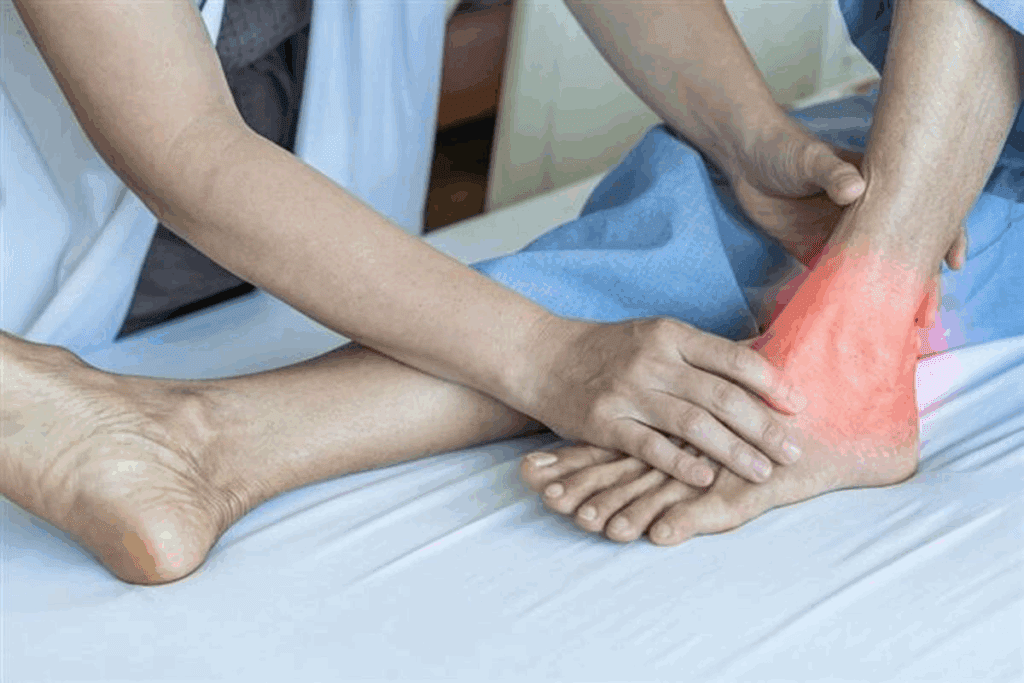
Symptoms of a snapped Achilles tendon can appear suddenly and cause severe pain. Achilles tendon injuries are on the rise, affecting both older adults and athletes. Studies show a sharp increase in Achilles tendon rupture cases in these groups.
The Achilles tendon plays a vital role in our musculoskeletal system, connecting the calf muscles to the heel bone. When it tears or ruptures, it can lead to intense pain, swelling, and difficulty walking or standing on your toes.
A torn or ruptured Achilles tendon often happens during physical activity. Recognizing the symptoms of a snapped Achilles tendon early helps ensure quick diagnosis and proper treatment.
Key Takeaways
- Spotting the signs of an Achilles injury is important for treatment.
- Achilles tendon rupture is more common among older adults and athletes.
- Getting a diagnosis fast can really help your recovery.
- A torn Achilles tendon can cause a lot of pain and make it hard to move.
- Knowing what causes these injuries can help prevent them.
Understanding the Achilles Tendon
The Achilles tendon is key for ankle movement. It’s important for both daily activities and sports. It links the calf muscles to the heel, helping us walk, run, and jump.
Anatomy and Function
The Achilles tendon is the biggest tendon in our body. It’s thick and fibrous. It helps move the foot down, which is vital for standing on tiptoes, walking, and running.
Importance in Movement and Athletics
In sports, the Achilles tendon is essential. It’s needed for quick movements in sports like sprinting and jumping. Athletes with a healthy tendon perform better, moving more powerfully and efficiently.
Injuries to this tendon can really slow down athletes. They need a lot of time to recover. Knowing how important this tendon is helps us prevent injuries and understand the need for good care when we get hurt.
The Achilles tendon is more than just for sports. It’s also important for everyday life. It helps us walk and climb stairs. So, keeping it healthy is key for our mobility and quality of life.
Types of Achilles Tendon Injuries
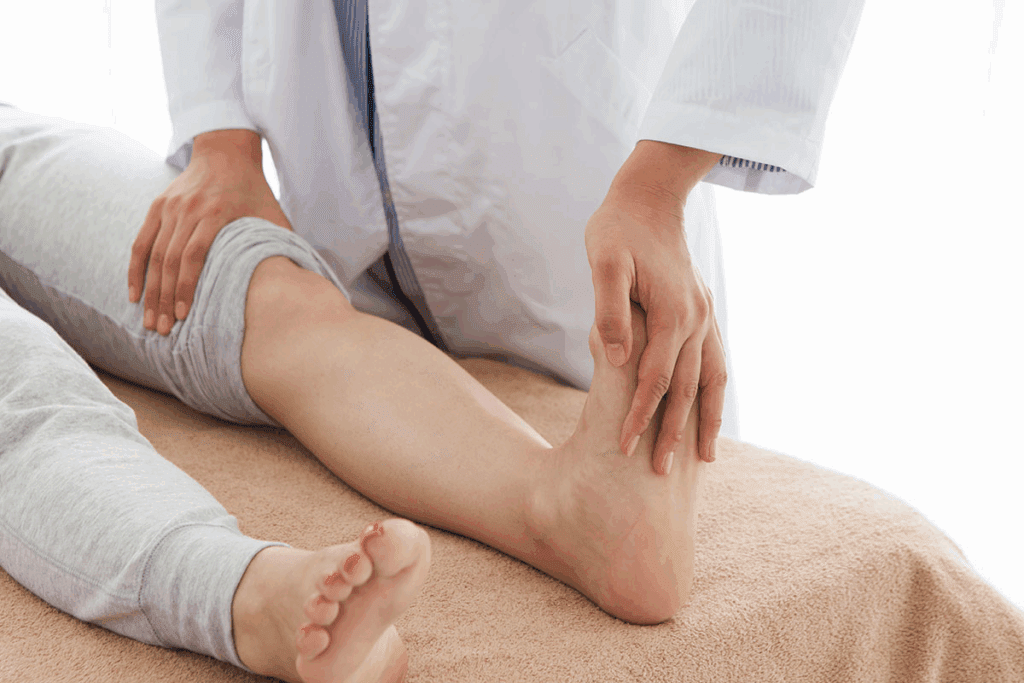
It’s important to know the different types of Achilles tendon injuries. This knowledge helps in diagnosing and treating them effectively. The Achilles tendon can face various issues, from inflammation to severe damage.
Tendinitis vs. Tendinosis
Tendinitis and tendinosis are common issues with the Achilles tendon. Tendinitis is inflammation caused by too much stress or overuse. Tendinosis, on the other hand, is a wear and tear condition without much inflammation.
Tendinitis often happens in runners or jumpers, causing pain and swelling. Tendinosis is a long-term problem that may not show inflammation but can cause a lot of pain and trouble.
“Tendinosis is often a more challenging condition to treat than tendinitis due to its degenerative nature,” according to sports medicine specialists.
Partial Tears
Partial tears of the Achilles tendon damage some fibers but don’t fully break. These tears can hurt a lot and make it hard to do activities that need pushing off the ground.
Doctors use exams and imaging like ultrasound or MRI to find partial tears. Treatment can be physical therapy and bracing or sometimes surgery.
Complete Ruptures
A complete rupture of the Achilles tendon is a serious injury where the tendon breaks completely. It’s marked by sudden, sharp pain in the ankle’s back, often with a popping sound.
Complete ruptures need quick medical help. Treatment can be surgery or conservative care with immobilization and then rehab.
| Type of Injury | Characteristics | Common Treatment Approaches |
| Tendinitis | Inflammation of the tendon | Rest, ice, physical therapy, anti-inflammatory medications |
| Tendinosis | Degeneration of tendon fibers | Physical therapy, eccentric exercises, possible surgery |
| Partial Tears | Damage to some tendon fibers | Bracing, physical therapy, possible surgery |
| Complete Ruptures | Complete tear of the tendon | Surgery, conservative care with immobilization and rehab |
Choosing between surgery and conservative treatment depends on the injury’s severity, the patient’s health, and their activity level. Knowing the exact injury type is key to picking the best treatment.
Symptoms of Snapped Achilles Tendon
The symptoms of a snapped Achilles tendon can be quite startling and debilitating. It’s important to recognize the signs to seek medical attention promptly.
Immediate Signs of Rupture
A sudden, loud “pop” or snap at the back of the ankle is a hallmark symptom. This sound is often followed by a feeling of being kicked or hit in the calf area. People usually experience severe pain and find it hard to walk or stand on their toes.
Significant swelling and bruising around the ankle are also immediate signs. The area may become tender to the touch. There might be a noticeable gap or indentation where the tendon has ruptured.
The “Pop” Sensation
The “pop” sensation is a distinctive symptom of an Achilles tendon rupture. It’s a sudden, sharp sound that occurs as the tendon tears. This sensation is often so pronounced that it’s unmistakable, and it’s usually followed by immediate pain and difficulty moving the affected ankle.
| Symptom | Description |
| “Pop” Sensation | A sudden, loud snap at the back of the ankle |
| Pain | Severe pain following the rupture |
| Swelling and Bruising | Significant swelling and bruising around the ankle |
| Difficulty Walking | Challenges in walking or standing on toes |
Recognizing these symptoms is key for diagnosing and treating an Achilles tendon rupture effectively. If you’re experiencing any of these signs, it’s essential to seek medical attention to prevent further complications.
Pain Patterns in Achilles Injuries
It’s important to know the pain patterns in Achilles injuries to diagnose and treat them well. These injuries can cause different types of pain, depending on the injury’s type and how severe it is.
Location and Intensity of Pain
Pain from Achilles tendon injuries can be felt in different ways. It usually happens in the Achilles tendon area, at the back of the ankle. Sometimes, the pain spreads to the calf or lower leg.
Pain intensity can vary a lot. Tendinitis pain is often mild and activity-based. Tendinosis pain is more constant and severe. A rupture causes sudden, sharp pain.
Pain During Different Activities
Pain from Achilles tendon injuries gets worse with running, jumping, or quick turns. Walking uphill or climbing stairs also makes it worse because it puts more stress on the tendon.
Resting or doing low-impact activities can make the pain better. But, in bad cases, even walking on flat ground can hurt. Knowing how pain changes with activities helps doctors figure out the injury’s type.
Understanding these pain patterns is key for diagnosis and treatment. By knowing the pain’s specifics, doctors can create better treatment plans.
Physical Changes and Visible Symptoms
Visible symptoms and physical changes are common signs of Achilles tendon injuries. They need quick medical attention. When an injury happens, several noticeable signs can appear. These signs can affect how well you move and how comfortable you feel.
Swelling and Bruising
One common sign of an Achilles tendon injury is swelling around the hurt area. This swelling can be mild or severe. It often comes with bruising, which gets worse as the injury does.
The swelling and bruising show that inflammation and possible tissue damage are happening.
Changes in Tendon Appearance
Swelling and bruising aren’t the only signs. The tendon might also look different. It could become thickened or have nodules, which are abnormal growths under the skin. If the tendon is badly hurt, you might see a gap or deformity.
Spotting these changes and symptoms is key to getting the right medical help. Quick diagnosis and treatment can greatly improve your recovery.
Functional Limitations After Injury
Achilles tendon injuries can really affect how we move and live. They can make everyday tasks and sports harder. When the tendon is hurt, it can make it hard to move around and enjoy life.
Difficulty Walking
One big problem after an Achilles tendon injury is difficulty walking. The pain and swelling make it hard to put weight on the leg. This can lead to more problems, like strain on other parts of the leg or back.
Inability to Stand on Tiptoes
Another big issue is the inability to stand on tiptoes. Standing on tiptoes needs a strong Achilles tendon. When it’s injured, it’s hard or impossible to do, affecting balance and movement.
Weakness in Push-off Strength
Weakness in push-off strength is also a big problem. The push-off during walking or running depends on the Achilles tendon. An injury can make this push-off weak, making running or jumping hard.
These limitations affect more than just sports. They impact daily life and how we move. Knowing about these issues helps create better treatment plans for Achilles tendon injuries.
Differentiating Achilles Injuries from Other Foot Problems
It’s important to tell Achilles tendon injuries apart from other foot issues. This is because Achilles injuries are sometimes mistaken for other problems. This mistake can lead to the wrong treatment and a longer recovery time.
Common Misdiagnoses
Achilles tendon injuries are often mixed up with other ankle and foot issues. Some common mistakes include:
- Ankle sprains
- Plantar fasciitis
- Calf strains
- Other tendonitis conditions
These conditions can have similar symptoms. So, it’s key to do a detailed check to find the right diagnosis.
Key Distinguishing Features
To spot Achilles tendon injuries, look for certain signs. These include:
- Location of pain: Pain from Achilles injuries is usually at the back of the ankle. It’s about 2-6 cm above where the tendon meets the calcaneus.
- Nature of pain: The pain is sharp or sudden, like a “pop” sensation, if it’s a rupture.
- Swelling and bruising: There’s often a lot of swelling and bruising. It spreads down to the heel and up into the calf.
- Functional impairment: Walking uphill or on stairs can be hard. Standing on tiptoes also feels weak.
Knowing these signs helps doctors correctly diagnose Achilles tendon injuries. This way, they can tell them apart from other foot and ankle problems.
The Thompson Test: A Key Diagnostic Tool
Achilles tendon ruptures can be diagnosed with the Thompson test. It’s a simple yet effective diagnostic tool. This test is widely used in medicine for checking the Achilles tendon’s health.
How the Test Works
The test is done with the patient lying on their stomach, feet hanging off the table. The examiner then squeezes the calf muscles. If the Achilles tendon is fine, the foot will point down.
What Positive Results Indicate
A positive test means the foot doesn’t move when the calf is squeezed. This shows the Achilles tendon is torn. The test is great because it’s easy and quick to do.
Even though the Thompson test is very useful, doctors often use it with other tests. This helps confirm the diagnosis and see how bad the injury is.
Common Causes of Achilles Tendon Injuries
It’s important to know why Achilles tendon injuries happen. They can come from sports or other activities. Knowing the reasons helps prevent and treat these injuries.
Sports-Related Causes
Sports are a big reason for Achilles tendon injuries. High-impact sports like running and basketball are risky. This is because they put a lot of stress on the tendon.
- Overuse or repetitive strain on the tendon
- Sudden changes in training intensity or frequency
- Inadequate warm-up or cool-down exercises
- Poor footwear or training surfaces
Non-Athletic Causes
But, injuries can also happen outside of sports. Age-related degeneration is a big factor. As we get older, our tendons lose strength and elasticity.
| Cause | Description | Risk Factors |
| Age-related degeneration | Natural wear and tear on the tendon over time | Age above 40, previous tendon injuries |
| Medical conditions | Certain health conditions can weaken the tendon | Diabetes, rheumatoid arthritis, obesity |
| Medication side effects | Some medications can affect tendon health | Fluoroquinolone antibiotics, corticosteroids |
Knowing these causes helps us prevent and treat injuries. It’s all about being aware and taking action.
Risk Factors for Achilles Tendon Rupture
The risk of Achilles tendon rupture comes from many factors. These include age, gender, medical conditions, and lifestyle. Knowing these risks helps us prevent injuries and spot who’s at higher risk.
Age and Gender Considerations
Age plays a big role in Achilles tendon ruptures. The risk goes up between 30 and 50 years old. Men are more likely to get these injuries than women, thanks to more sports and activities.
Medical Conditions That Increase Risk
Some medical conditions raise the risk of Achilles tendon rupture. These include:
- Diabetes: High blood sugar can damage tendons, like the Achilles.
- Rheumatoid arthritis: This disease causes inflammation and tendon damage.
- Hyperthyroidism: An overactive thyroid can weaken tendons.
- Obesity: Being overweight adds stress to the Achilles tendon.
Medication-Related Risks
Some medicines can also increase the risk. Fluoroquinolone antibiotics and corticosteroids are examples. They can cause tendon damage or weakening.
Knowing these risks helps us prevent injuries. If symptoms show up, getting medical help quickly is key. Early treatment is important for the best results.
Diagnosing Achilles Tendon Injuries
Diagnosing Achilles tendon injuries involves a mix of clinical checks and imaging tests. Doctors use different methods to find out what’s wrong. This ensures they can treat the injury right.
Physical Examination Techniques
Checking the tendon is the first step. Doctors look for tenderness, swelling, and any deformities. They also do tests like the Thompson test to see if the tendon is okay.
The Thompson test checks if the foot can move up when the calf is squeezed. If it can’t, it might mean the tendon is torn. Doctors also watch how the patient walks and if they can stand on tiptoes.
“A thorough physical examination is essential for diagnosing Achilles tendon injuries, as it provides critical information about the tendon’s condition.”
— Orthopedic Expert
Imaging Studies (MRI, Ultrasound, X-ray)
Imaging tests are key to confirming the injury and how bad it is. The most used tests are:
- MRI (Magnetic Resonance Imaging): Shows soft tissues like tendons in detail, perfect for finding injuries.
- Ultrasound: Gives live images and is good for seeing the tendon’s structure and any tears.
- X-ray: Not as good for soft tissues, but helps rule out bone problems like fractures.
| Imaging Modality | Primary Use | Benefits |
| MRI | Soft tissue evaluation | High-resolution images of tendons |
| Ultrasound | Real-time tendon assessment | Dynamic imaging, detects tears |
| X-ray | Bone evaluation | Rules out fractures and bone abnormalities |
Differential Diagnosis
It’s important to rule out other conditions that might look like an Achilles tendon injury. These include other tendon issues, ankle sprains, or calf strains. A detailed check and imaging tests help doctors figure out what’s really going on.
By using physical checks, imaging, and differential diagnosis, doctors can accurately find and treat Achilles tendon injuries.
First Aid and Home Management
When you think you’ve hurt your Achilles tendon, acting fast is key. The steps you take first can really help your recovery. They can also stop the injury from getting worse.
The first thing to do is follow the RICE protocol. This stands for Rest, Ice, Compression, and Elevation. It’s a top choice for treating sudden injuries.
RICE Protocol Implementation
The RICE protocol is easy to follow and works well for Achilles tendon injuries:
- Rest: Stay away from activities that make the pain worse.
- Ice: Use ice packs on the injured area for 15-20 minutes, a few times a day.
- Compression: Wear compression bandages to lessen swelling.
- Elevation: Keep the injured leg higher than your heart to reduce swelling.
Over-the-Counter Pain Management
For pain and swelling from Achilles tendon injuries, you can try over-the-counter medicines. Here are some common ones:
- Ibuprofen: It helps with inflammation.
- Acetaminophen: It’s good for pain relief.
Make sure to take the medicine as directed. If you have questions, talk to a doctor.
By using the RICE protocol and these medicines, you can handle the first signs of an Achilles tendon injury well.
Professional Treatment Options
Treating Achilles tendon injuries involves several professional options. These range from conservative management to surgical repair. The choice depends on the injury’s severity, the patient’s health, and their activity level.
Conservative Management Approaches
For less severe injuries, conservative management is often the first step. This includes:
- Rest and Ice: Reducing activity and applying ice to minimize pain and inflammation.
- Physical Therapy: Exercises to strengthen the calf muscles and improve flexibility.
- Orthotics: Using shoe inserts or heel lifts to reduce stress on the Achilles tendon.
- Medications: Anti-inflammatory drugs to reduce pain and swelling.
Surgical Repair Techniques
For more severe injuries, like complete ruptures, surgery is needed. Surgical techniques include:
- Open Repair: A traditional open surgery to directly access and repair the tendon.
- Percutaneous Repair: Minimally invasive surgery using smaller incisions.
- Tendon Transfer: In some cases, transferring a healthy tendon to support the damaged Achilles tendon.
Deciding Between Surgery and Non-Surgical Treatment
The choice between surgery and non-surgical treatment depends on several factors. These include:
- Severity of Injury: Complete ruptures may require surgery, while partial tears might be managed conservatively.
- Patient Activity Level: Active individuals may benefit from surgery to return to high-level activities.
- Overall Health: Patient health and surgical risks are considered.
The best treatment plan is determined through consultation with a healthcare professional. They consider the individual’s specific condition and needs.
The Recovery Timeline and Rehabilitation
Knowing the recovery timeline is key for those with Achilles tendon injuries. The rehab process is vital, moving from healing to full activity. It’s a structured program that helps you get back on track.
Early Rehabilitation Phase
The early rehab starts right after injury or surgery. It aims to reduce pain, promote healing, and restore movement. Immobilization is used to protect the tendon, followed by exercises to keep it flexible.
Middle Recovery Period
In the middle phase, the focus shifts to strengthening the tendon and muscles. Progressive resistance exercises are used to build strength. This stage is important for daily activities and getting ready for harder tasks.
Return to Full Activity
The last stage is about getting back to full activity, like sports. It involves gradually increasing intensity and load. Functional training is key to prepare for specific sports or activities.
A good rehab program is essential for recovery. It not only heals the injury but also prevents future ones by boosting strength and flexibility.
Long-Term Complications of Untreated Injuries
Ignoring Achilles tendon injuries can lead to severe long-term consequences. When left untreated or inadequately managed, these injuries can result in persistent discomfort and reduced functionality.
Chronic Pain and Weakness
One of the most significant long-term complications is the development of chronic pain. This persistent discomfort can be debilitating, affecting daily activities and overall quality of life. Also, untreated Achilles tendon injuries often lead to weakness in the affected leg. This makes it hard to perform tasks that require strength or endurance.
Medical professionals say, “Chronic pain associated with Achilles tendon injuries can significantly impact an individual’s ability to engage in physical activities. This can lead to a sedentary lifestyle and associated health risks.”
This highlights the importance of addressing Achilles tendon injuries promptly to prevent long-term discomfort and weakness.
Functional Limitations and Adaptations
Untreated Achilles tendon injuries can also result in functional limitations. Individuals may experience difficulty walking, running, or participating in sports due to pain or weakness. To compensate, people might adopt alternative movement patterns. This can lead to further complications, such as issues with other joints or muscles.
- Difficulty in performing daily activities due to pain or weakness
- Adaptation in movement patterns, potentially leading to additional injuries
- Reduced participation in physical activities or sports
The importance of proper treatment cannot be overstated. By addressing Achilles tendon injuries early and effectively, individuals can avoid these long-term complications and maintain their functional abilities.
Conclusion
Knowing the signs of Achilles tendon injuries is key to getting better. Pain, swelling, and trouble walking are common signs. If you notice these, get medical help right away.
Achilles tendon problems, like tendinitis and ruptures, need the right care. The Thompson Test helps doctors figure out how bad the injury is.
There are many ways to treat these injuries. Some use the RICE method and physical therapy. Others might need surgery. The best treatment depends on the injury’s severity and the person’s situation.
Getting medical help and following a rehab plan can help you heal. This way, you can get back to your usual activities. Early treatment also helps avoid long-term pain and weakness, improving your life quality.
FAQ
What are the common symptoms of an Achilles tendon injury?
Symptoms include pain, swelling, and stiffness in the ankle’s back. It’s hard to walk or stand on tiptoes. You might also hear a “pop” when it happens.
How do I know if I have torn my Achilles tendon?
A torn tendon feels like a sudden, severe pain in the ankle’s back. You might hear a “pop” and find it hard to walk or stand on tiptoes.
What is the difference between Achilles tendinitis and tendinosis?
Tendinitis is inflammation from strain. Tendinosis is a degenerative condition with chronic pain and damage.
Can I stil walk with a ruptured Achilles tendon?
Walking with a ruptured tendon is painful and difficult. It can also lead to more injury or complications if not treated.
How is an Achilles tendon rupture diagnosed?
Doctors use a physical exam, like the Thompson test, and imaging like MRI or ultrasound to diagnose.
What is the Thompson test, and how is it performed?
The Thompson test checks if the foot flexes when the calf is squeezed. If the tendon is ruptured, the foot won’t move.
What are the risk factors for Achilles tendon rupture?
Risks include age, being male, certain health conditions, and some medications like corticosteroids.
Can Achilles tendon injuries be prevented?
Some risks can’t be avoided, but you can prevent injuries. Start exercises slowly, warm up and cool down, and strengthen your calf and Achilles tendon.
What are the treatment options for Achilles tendon injuries?
Treatments include rest, ice, compression, and elevation (RICE), physical therapy, and bracing. Surgery is needed for severe injuries or ruptures.
How long does it take to recover from an Achilles tendon injury?
Recovery time varies. It can take weeks to months, depending on the injury’s severity and treatment.
What are the potencial long-term complications of untreated Achilles tendon injuries?
Untreated injuries can cause chronic pain, weakness, and limited function. They also increase the risk of further injury or degenerative changes.
Can I return to sports after an Achilles tendon injury?
Yes, with proper treatment and rehab, you can get back to sports. But, follow a structured rehab program to avoid re-injury.
References
- Maffulli, N., Longo, U. G., Denaro, V. (2023). Achilles Tendon Rupture. In StatPearls. National Center for Biotechnology Information. https://www.ncbi.nlm.nih.gov/books/NBK430844/
- Abate, M., Silbernagel, K. G. (2023). Achilles Tendinopathy: Pathophysiology and Management. ScienceDirect. https://www.sciencedirect.com/science/article/pii/S2059775421002017