
Did you know that nearly 1 in 5 adults in the United States suffer from allergies? With healthcare costs going up, it’s key to know if your insurance covers allergy testing. Most plans do, but how much they cover can change based on your plan and the test type.allergy testingWhat is lupin allergy?
Without the right insurance, the cost of allergy testing can be high. Knowing what your insurance covers helps you make better health choices.
Key Takeaways
- Most insurance plans cover some form of allergy testing.
- The extent of coverage depends on the specific insurance plan.
- Different types of allergy tests may have varying levels of coverage.
- Understanding your insurance plan’s coverage can help reduce healthcare costs.
- It’s essential to review your insurance policy before undergoing allergy testing.
Understanding Allergy Testing: Types and Procedures
Knowing about the different allergy tests is key to managing allergies well. These tests are vital for finding out what causes allergic reactions in people.
Common Types of Allergy Tests
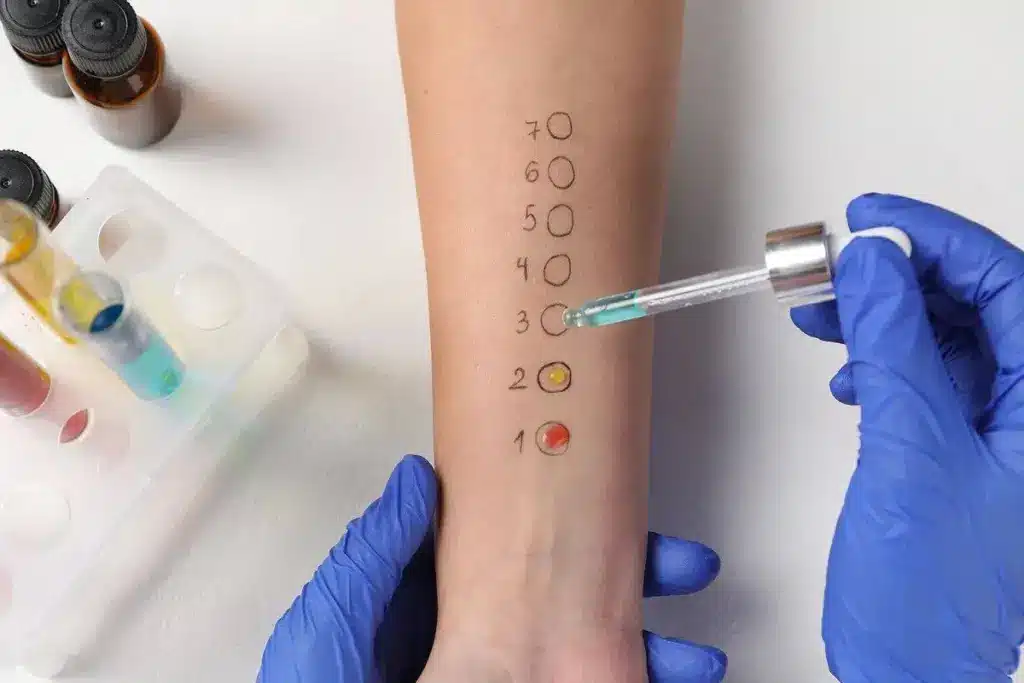
There are many allergy tests used to find allergies. The main ones are:
- Skin Prick Tests: A small amount of an allergen is placed on the skin. Then, the skin is pricked to let the allergen in.
- Blood Tests: These tests check the blood for allergy-related antibodies.
- Intradermal Tests: A small amount of allergen is injected into the skin.
How Allergy Skin Testing Works
Allergy skin tests, like skin prick and intradermal tests, check how the body reacts to allergens. The skin is watched for signs of an allergic reaction, like redness, swelling, or itching, after the allergen is introduced.
Blood Tests for Allergies
Blood tests for allergies look at IgE antibodies in the blood, linked to allergic reactions. These tests are good when skin testing isn’t possible or if there’s a high risk of anaphylaxis.
Allergy Skin Testing Cost: What to Expect

The cost of allergy skin testing can vary a lot. This depends on the type of test, where you are, and who does the test.
Average Cost Ranges for Different Allergy Tests
Allergy testing prices can go from $60 to $300 or more. This is based on how complex the test is and how many allergens are tested.
A simple skin prick test might cost between $60 to $100. More detailed tests, like intradermal testing or blood tests.
|
Type of Allergy Test |
Average Cost Range |
|---|---|
|
Skin Prick Test |
$60 – $100 |
|
Intradermal Test |
$100 – $250 |
|
Blood Test (e.g., RAST or ELISA) |
$200 – $300 |
Factors That Influence Allergy Testing Prices
Several things can affect how much allergy testing costs. These include:
- The number of allergens being tested
- The type of test being done (skin prick, intradermal, or blood test)
- Where the test is done (urban vs. rural areas)
- The fees of the healthcare provider or allergist
How Much Does an Allergy Test Cost Without Insurance
Without insurance, allergy tests can cost a lot more. You have to pay the full amount yourself.
On average, people can expect to pay between $100 to $500 or more for allergy testing without insurance.
Does Insurance Cover Allergy Testing?
It’s important to know if insurance covers allergy testing. This is because testing can be expensive. Knowing what’s covered helps plan for healthcare costs.
General Insurance Coverage Policies for Allergy Tests
Most insurance plans cover allergy testing if it’s needed. A doctor must say it’s necessary for diagnosis or treatment. But, how much is covered can vary by plan and provider.
Medical Necessity Requirements
Allergy testing needs to be medically necessary to get insurance coverage. A doctor must decide if testing is needed. Insurance companies often ask for proof of this need.
Common Insurance Exclusions and Limitations
Even though many plans cover allergy testing, there can be exceptions. Some tests might not be covered, or you might need to get approval first. Knowing these details helps avoid surprise medical bills.
In summary, insurance usually covers allergy testing when it’s medically necessary. But, it’s key to check your insurance plan. This way, you know what’s covered and what might not be.
Private Insurance Coverage for Allergy Testing
Private insurance for allergy testing changes a lot between different providers and plans. This makes it hard for people to know what they’re covered for.
Major Insurance Providers and Their Policies
Big insurance companies have different rules for allergy testing. Some might cover skin prick tests, while others might include blood tests or more.
Aetna covers allergy testing if it’s needed, like skin tests and blood tests. UnitedHealthcare also covers it, but the details depend on your plan.
PPO vs. HMO Coverage Differences
The kind of insurance you have, like PPO or HMO, affects your allergy testing coverage. PPO plans let you choose more doctors, but might cost more for out-of-network care.
- PPO plans: Give you more freedom and might cover out-of-network care at a higher cost.
- HMO plans: Need you to stay in-network for coverage, except in emergencies.
How Much Does Allergy Testing Cost With Insurance
The cost of allergy testing with insurance depends on several things. These include the test type, the doctor’s network, and your insurance plan. On average, you might pay $0 to $50 for copays or coinsurance.
|
Insurance Plan |
Average Copay |
Coinsurance |
|---|---|---|
|
Aetna |
$20-$30 |
10%-20% |
|
UnitedHealthcare |
$25-$40 |
15%-30% |
It’s important to know the details of your insurance plan to manage allergy testing costs.
Medicare Coverage for Allergy Testing
It’s important to know how Medicare covers allergy tests. Medicare pays for many medical tests, including allergy tests, if they are needed.
Medicare Part B and Allergy Test Coverage
Medicare Part B covers tests like allergy tests if a doctor says they are needed. This includes skin and blood tests for allergies.
Key aspects of Medicare Part B coverage for allergy testing:
- Coverage for diagnostic allergy tests ordered by a doctor
- Tests must be medically necessary
- May include skin tests and blood tests
Medicare Advantage Plans and Allergy Testing
Medicare Advantage plans are offered by private companies. They must cover at least as much as Original Medicare (Parts A and B). This includes allergy testing. But, each plan can have different details.
Documentation Requirements for Medicare Coverage
To get Medicare to cover allergy testing, you need to meet some rules. You’ll need a doctor’s order and proof that the test is needed.
|
Coverage Aspect |
Medicare Part B |
Medicare Advantage Plans |
|---|---|---|
|
Diagnostic Allergy Tests |
Covered if medically necessary |
Covered, specifics may vary |
|
Documentation Requirements |
Doctor’s order and medical necessity |
Similar to Medicare Part B, may have additional requirements |
Medicaid and Allergy Test Coverage
Medicaid coverage for allergy testing varies a lot from state to state. Medicaid is a program that helps low-income people get health insurance. But, what it covers can change a lot.
State Variations in Medicaid Coverage
Every state runs its own Medicaid program. This means that what’s covered for allergy testing isn’t the same everywhere. Some states may cover more types of tests, like skin tests and blood tests. Others might not cover as much.
For example, a state might pay for allergy tests for kids but not for adults. Or, it might only cover certain tests.
Qualifying for Medicaid Coverage of Allergy Tests
To get Medicaid to cover allergy tests, you need to meet your state’s rules. These rules often include income limits, family size, and if you’re disabled or pregnant. After you’re enrolled, talk to your doctor to see if the tests you need are covered.
Coverage Limitations and Restrictions
Even if Medicaid covers allergy tests, there might be limits. For example, some tests need approval before they can be done. Or, there might be a limit on how many tests you can get in a certain time.
It’s important to know these rules to use your coverage right.
In short, Medicaid is key for many people’s health care. But, its allergy test coverage depends on the state. Knowing these details is important for anyone needing allergy tests under Medicaid.
Navigating the Pre-Authorization Process
The pre-authorization process for allergy testing can seem complex. But, knowing the steps can make it easier. Pre-authorization, or prior authorization, is when healthcare providers get approval from insurance before tests or treatments.
When Pre-Authorization Is Required
Pre-authorization is needed for some tests, like allergy tests. Insurance companies check if the test is needed before they agree to pay for it. The rules can change with each insurance company.
How to Request Pre-Authorization
To get pre-authorization, you need to gather some documents and fill out a form. It’s important to work with your allergist’s office. They usually handle this for their patients.
Working with Your Allergist’s Office
Your allergist’s office is key in the pre-authorization process. They do the paperwork and talk to your insurance. Knowing your insurance plan helps them get approval faster.
How to Check If Your Insurance Covers Allergy Testing
To avoid unexpected medical bills, it’s key to check if your insurance covers allergy testing. Knowing your coverage helps you plan your healthcare costs. This way, you can get the care you need without financial surprises.
Questions to Ask Your Insurance Provider
When you call your insurance provider, ask important questions:
- Is allergy testing covered under my plan?
- Are there any specific requirements or restrictions for coverage?
- Do I need a referral from a primary care physician?
- What is the out-of-pocket cost for allergy testing?
Understanding Insurance Codes for Allergy Tests
Insurance codes, or CPT codes, identify specific medical procedures, like allergy tests. Knowing these codes helps with accurate billing and coverage.
Appealing Insurance Denials for Allergy Testing
If your insurance claim is denied, you can appeal. Find out why it was denied, collect needed documents, and send a formal appeal to your insurance provider.
Food Sensitivity Testing and Insurance Coverage
It’s important to know the difference between food allergies and sensitivities. This is because it affects how insurance works. Food allergies are serious immune reactions that can cause severe symptoms. Sensitivities, on the other hand, are less severe and involve different body responses.
Differences Between Food Allergies and Sensitivities
Food allergies are usually diagnosed with skin prick tests or blood tests that check for IgE antibodies. Sensitivities are often found through elimination diets or tests that look for IgG antibodies. Knowing these differences helps choose the right testing method.
Insurance Policies on Food Sensitivity Testing
Insurance coverage for food sensitivity tests varies a lot. Some plans might cover tests for IgG antibodies, while others might not. Always check with your insurance to see what they cover.
Alternative Testing Options and Their Costs
There are other testing options like at-home kits and special labs. But, these might not be covered by insurance. Prices can be from $100 to over $1,000, depending on the test.
|
Testing Method |
Average Cost |
Insurance Coverage |
|---|---|---|
|
IgG Antibody Test |
$200-$500 |
Variable |
|
Elimination Diet |
$0 (self-managed) |
Not applicable |
|
At-home Kits |
$100-$300 |
Rarely covered |
Conclusion: Managing Allergy Testing Costs Effectively
It’s key to know about insurance and the costs of allergy tests. This knowledge helps manage the expenses related to allergies. By understanding the different tests, their prices, and insurance, people can make smart choices about their health.
Handling allergy test costs means looking at insurance policies and knowing what’s covered. It’s also important to be ready for any extra costs. Knowing how much allergy testing costs with insurance helps with planning and budgeting.
To cut costs, check your insurance first. Understand the need for pre-authorization and appeal if denied. These steps help get the care needed while keeping costs down.
Managing allergy test costs well means knowing about insurance, testing choices, and costs. Being informed helps navigate the process confidently. This way, people can get the care they need while keeping costs in check.
FAQ
Is allergy testing covered by insurance?
Many insurance plans do cover allergy testing. But, how much they cover can change. It depends on your plan, the insurance company, and the tests needed.
Does insurance cover allergy tests?
It depends on your insurance and the test type. Some plans might cover skin prick tests, blood tests, or both.
How much does an allergy test cost without insurance?
Without insurance, allergy tests can cost between $60 and $300 or more. This price varies by test type and location.
Are allergy tests covered by insurance if they are medically necessary?
Yes, if tests are needed for health reasons, many plans will cover them. But, what counts as “medically necessary” can differ by insurance.
Will insurance cover allergy testing for food sensitivities?
Insurance for food sensitivity tests is often limited or not covered. This is because these tests are not always seen as medically necessary.
Does Medicare cover allergy testing?
Medicare Part B might cover allergy tests if they’re medically necessary. Medicare Advantage plans might also cover them, but details can vary.
Does Medicaid cover allergy testing?
Medicaid’s coverage for allergy tests varies by state. Some states offer more coverage than others.
How much does allergy testing cost with insurance?
With insurance, costs can range from a $20 to $50 copayment per test. This depends on your plan and the test type.
What is the pre-authorization process for allergy testing?
Pre-authorization means getting approval from your insurance before testing. The allergist’s office usually handles this.
How can I check if my insurance covers allergy testing?
To see if your insurance covers testing, call your provider. Ask about their policies and what’s covered.
What are the differences between food allergies and sensitivities?
Food allergies are an immune reaction to a specific food. Food sensitivities are a non-allergic reaction to food.
Are there alternative testing options for food sensitivities?
Yes, there are other ways to test for food sensitivities. Options include elimination diets or at-home kits. But, their accuracy and reliability can vary.
References
National Center for Biotechnology Information. Evidence-Based Medical Insight. Retrieved from https://www.ncbi.nlm.nih.gov/books/NBK279393/