Medical robotics has changed healthcare a lot. Now, surgical robots can do complex tasks with great accuracy. Russell Taylor is a key figure in this field, known as the father of medical robotics. His work over many years has helped create today’s computer-integrated surgery.
We look at Taylor’s big contributions, from his early days to his ongoing impact on healthcare. His research has led to the creation of advanced robotic systems. These systems have made surgeries better and helped patients more.
As we dive into his legacy, we see the key moments that have shaped his career. We also look at how his work will influence medical robotics in the future.
Key Takeaways
- Russell Taylor is a pioneer in medical robotics.
- His work has significantly advanced computer-integrated surgery.
- Taylor’s research has improved surgical precision and patient outcomes.
- His contributions continue to shape the future of healthcare.
- Medical robotics has transformed surgical practices worldwide.
The Birth of Medical Robotics
The start of medical robotics came from the growth of industrial robotics. This growth led to new ways to help healthcare. The move from industrial to medical use was a big step in healthcare tech history.
Early Concepts and Innovations
Industrial robots were first used in factories. They showed the need for precision and reliability in medical work. Key innovations were the robotic arms and sensors for better control.
Using robots in healthcare was an idea early on. But making it work took time. Pioneers saw the chance to use robots in medicine, pushing for safer and more precise robots.
Transition from Industrial to Medical Applications
Switching to medical use needed big steps in safety, precision, and control. Robotic systems had to fit into hospitals and work well with people. This was a big challenge.
Making robots safe for hospitals was hard. New materials and ways to clean them were needed. Also, precise control systems and sensors were essential for medical work.
As we moved from industrial to medical robots, the field grew fast. It brought in new tech and ideas that are changing healthcare now.
Understanding Medical Robotics: Definition and Scope
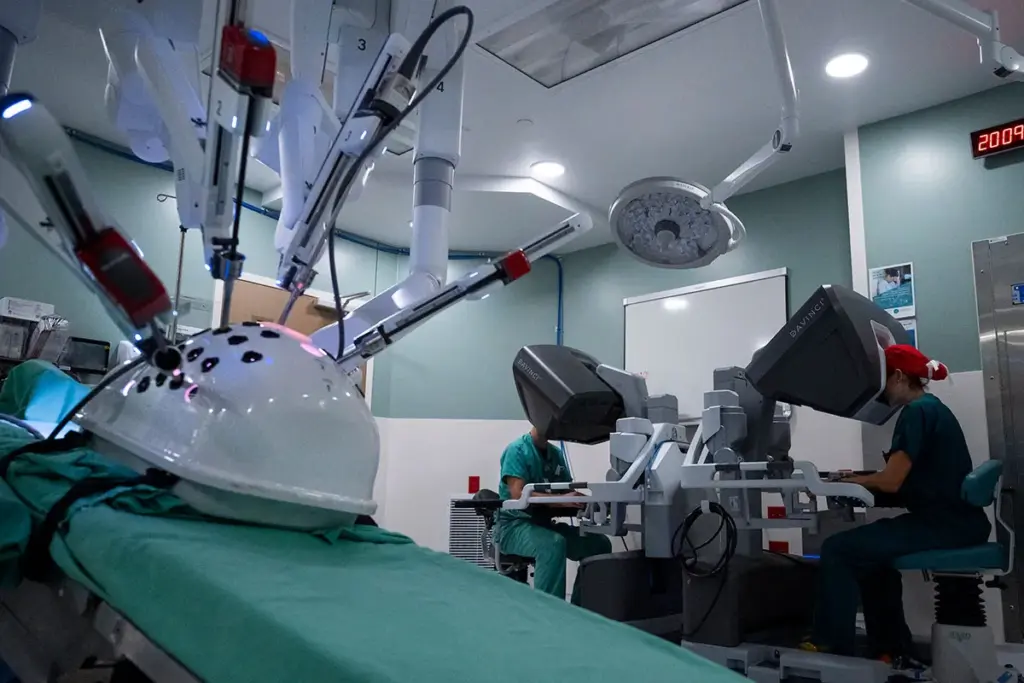
Medical robotics is a field that combines robotics, engineering, and medicine. It aims to improve healthcare with new technologies. This field is vital for modern medicine.
What Constitutes Medical Robotics
Medical robotics includes many technologies for healthcare. These systems help with surgeries, patient care, and rehab. They are known for their precision, reducing errors and improving results.
Key parts of medical robotics are robotic arms, control systems, and imaging technologies. Robotic arms do surgeries or help with patient care. Control systems make these arms precise. Imaging technologies give feedback for the robots.
Key Components and Technologies
Medical robotics needs several key parts to work well. These include:
- Advanced Sensors: These sensors give feedback to the robots, helping them adjust in real-time.
- High-Precision Actuators: Actuators move the robotic arms, allowing for precise actions during procedures.
- Imaging Technologies: MRI and CT scans give detailed images for robotic guidance.
- User Interfaces: Easy-to-use interfaces help surgeons and healthcare professionals control the robots.
These components and technologies have greatly improved medical robotics. Here’s a table showing some key features and uses:
|
Feature |
Description |
Application |
|---|---|---|
|
High Precision |
Ability to perform tasks with minimal deviation |
Surgical Procedures |
|
Real-time Feedback |
Immediate data from sensors and imaging |
Minimally Invasive Surgery |
|
Advanced Control Systems |
Intuitive interfaces for precise control |
Rehabilitation and Patient Care |
Understanding medical robotics helps us see its big impact on healthcare. As technology grows, medical robotics will play a bigger role in better patient care and medical advancements.
The Pioneers Who Paved the Way
Medical robotics has a rich history thanks to many early researchers and innovators. It wasn’t just one person but a team effort. Many pioneers worked together to make it happen.
Early Contributors to the Field
The history of medical robotics is filled with brave individuals. They challenged old medical ways and explored new possibilities.
These innovators helped create the advanced systems we use today. They didn’t just focus on technology but also on new surgical methods.
Collaborative Nature of Medical Robotics Development
The growth of medical robotics shows the strength of teamwork. Engineers, surgeons, and researchers joined forces. They shared their skills to tackle the tough challenges of combining robotics with medicine.
This team effort continues to push the field forward. Today, people from all walks of life work together. They aim to solve current problems and find new uses for medical robotics.
Russell Taylor: The Father of Medical Robotics
Russell Taylor, known as the father of medical robotics, has a rich background. His early life and education set the stage for his groundbreaking work. We’ll look at the key moments that shaped his career.
Early Life and Education
Russell Taylor showed a strong interest in engineering and medicine from a young age. He studied Mechanical Engineering at a top university. This laid the groundwork for his work in medical robotics.
In his graduate studies, Taylor delved into robotics and computer-integrated surgery. These areas became the core of his research. His studies focused on using technology to improve medical practices.
Career Trajectory
Taylor’s career is marked by major achievements, like the ROBODOC system for orthopedic surgery. This innovation was a key moment in medical robotics.
- Development of robotic systems for surgical applications
- Advancements in computer-integrated surgery concepts
- Collaboration with medical professionals to refine robotic systems
Throughout his career, Taylor aimed to enhance patient care with technology. His work has inspired many in medical robotics.
Taylor’s Groundbreaking Contributions
Taylor’s work on the ROBODOC system and computer-integrated surgery has changed surgery forever. His ideas have made surgeries more precise and controlled.
The ROBODOC System
The ROBODOC system, created by Taylor and his team, was a big step forward in robotic surgery. It made surgeries more precise and controlled, leading to better results for patients.
Key Features of ROBODOC:
- Enhanced precision in surgical procedures
- Improved control for surgeons
- Better patient outcomes
|
Feature |
Description |
Benefit |
|---|---|---|
|
Precision |
High accuracy in surgical procedures |
Improved patient outcomes |
|
Control |
Enhanced control for surgeons |
Reduced complications |
|
Integration |
Seamless integration with surgical planning |
Increased efficiency |
Computer-Integrated Surgery Concepts
Taylor’s work on computer-integrated surgery has also moved medical robotics forward. By combining computer tech with surgery, Taylor has made procedures more precise and efficient.
Taylor’s work in medical robotics has opened doors for future advancements in surgery. It continues to make a positive impact on the field.
The Evolution of Surgical Robots Under Taylor’s Influence
Russell Taylor has greatly influenced surgical robotics. His work has made surgery more precise, less invasive, and safer. This has changed the face of modern surgery.
From Prototype to Clinical Application
The journey of surgical robots from prototypes to real use has been long. Taylor’s work on the ROBODOC system was a big step. It showed how robots could improve surgery.
As technology improved, so did the robots. They now have better sensors, dexterity, and vision. This makes surgery safer and more effective.
Ensuring safety and effectiveness in surgery has been a big challenge. Taylor helped by making testing and validation a key part of development. This has become a standard in the field.
Technological Advancements and Refinements
Technological progress in surgical robots has been fast and varied. Today’s robots use advanced imaging, haptic feedback, and AI. These tools help surgeons perform complex tasks with more precision and control.
Taylor’s work has also led to ongoing improvements. For example, machine learning lets robots learn and adapt. Miniaturization is making robots smaller and more versatile for surgery.
Looking ahead, Taylor’s impact will continue to shape surgical robotics. The future of this technology promises better patient care and more access to advanced surgeries.
Other Notable Figures in Medical Robotics
Medical robotics has grown thanks to many pioneers. Russell Taylor is widely recognized as the pioneering figure in the field of medical robotics. But others have also been key in shaping the field.
The PUMA560 helped in neurosurgical biopsies. It showed robots can make surgeries more accurate and quick. This was a big step for medical robots.
Key features of PROBOT included:
- Enhanced precision in surgical procedures
- Improved patient outcomes through reduced recovery times
- Increased accuracy in complex urological surgeries
His work aims to help in complex surgeries and patient recovery.
“The future of medical robotics lies in the integration of advanced technologies, such as AI and machine learning, to enhance surgical precision and patient care.”
Fujie’s work shows the value of teamwork in medical robotics. Engineers, clinicians, and researchers work together to create new solutions.
The Da Vinci Surgical System: Building on Taylor’s Foundation
The Da Vinci Surgical System has changed the game in minimally invasive surgery. It builds on the work of Russell Taylor. This system is a big step forward in medical robotics.
Development and Implementation
Intuitive Surgical created the Da Vinci Surgical System. They used new tech in robotics, computer science, and engineering. It was made to improve on the work of pioneers like Russell Taylor. The goal was to make surgeons better at complex surgeries.
Before it was used in hospitals, the Da Vinci system went through lots of tests. These tests showed it could help patients recover faster and with less pain.
Impact on Minimally Invasive Surgery
The Da Vinci Surgical System has changed surgery a lot. It gives surgeons more control, precision, and a clearer view. This makes it easier and more accurate for them to do tough surgeries.
|
Feature |
Benefit |
|---|---|
|
Enhanced Dexterity |
Improved precision in complex procedures |
|
High-Definition Visualization |
Better understanding of anatomical structures |
|
Minimally Invasive |
Reduced patient trauma and recovery time |
The Da Vinci system has made a big difference in surgery. Many studies have shown it helps patients and makes surgery more efficient. As robotics in medicine keeps getting better, the Da Vinci system is a key part of surgery today.
Taylor’s Research Philosophy and Approach
Russell Taylor’s work in medical robotics was guided by a unique research philosophy. He combined engineering principles with medical insights. This way, he created innovative solutions that were both technically sound and clinically relevant.
Integration of Engineering and Medicine
Taylor’s research merged engineering and medicine seamlessly. He developed robotic systems that met specific clinical needs. The synergy between engineering and medicine was key in creating technologies that improved patient outcomes and enhanced surgical capabilities.
“The future of medical robotics lies in the successful integration of technological innovation with clinical expertise,” Taylor emphasized. This philosophy is seen in his work, where engineering solutions were tailored to meet medical challenges.
Human-Centered Design Principles
A key aspect of Taylor’s research was his commitment to human-centered design. He focused on the needs and experiences of clinicians and patients. This ensured that the robotic systems he developed were intuitive, safe, and effective.
- Understanding user needs and preferences
- Designing systems that are intuitive and easy to use
- Ensuring safety and reliability in clinical settings
Taylor’s emphasis on human-centered design has had a lasting impact on medical robotics. It has influenced the development of subsequent robotic systems.
Academic Legacy and Institutional Contributions
Russell Taylor has made a big impact in medical robotics. His work has led to new ideas and helped many in the field. He has left a mark that will last for a long time.
Research Labs and Centers Established
Taylor started research labs and centers that have helped a lot. These places let people work together. They push for new tech and ideas.
These labs have worked on many important things. For example:
- Creating robots for surgery
- Combining images with robots
- Improving how surgeons feel during operations
|
Research Lab/Center |
Focus Area |
Notable Achievements |
|---|---|---|
|
Taylor’s Robotics Lab |
Surgical Robotics |
Development of the ROBODOC system |
|
Center for Medical Robotics |
Imaging and Robotics Integration |
Advancements in real-time imaging for surgical procedures |
|
Institute for Robotics and Surgery |
Haptic Feedback Systems |
Development of sophisticated haptic feedback systems for surgical training |
Educational Impact and Student Mentorship
Taylor has also made a big difference in education. He has inspired many to work in medical robotics. His guidance has helped a lot of people.
Some key ways he has made an impact include:
- Helping students with projects that have led to big discoveries
- Creating courses that include the newest in medical robotics
- Building a community of scholars who keep exploring new things in medical robotics
By mixing research and teaching, Taylor has left a lasting legacy. His work will keep shaping medical robotics for a long time.
Patents and Intellectual Property Contributions
Russell Taylor has made huge strides in medical robotics, earning many patents. His work has pushed the limits of what’s possible in this field. It has also led to the creation of key technologies, all protected by patents.
Innovations Protected by Patents
Taylor’s patents cover a wide range of medical robotics technologies. Some key areas include:
- Precision engineering for surgical instruments
- Advanced control systems for robotic surgery
- Image-guided surgery technologies
- Robotic systems for minimally invasive procedures
These innovations have greatly improved surgical precision, safety, and results. Asa renowned expert in medical robotics, noted, “Taylor’s work has been key in making robotics a standard in surgery.”
“The development of medical robotics is not just about creating new technologies; it’s about improving patient outcomes and enriching healthcare professionals’ abilities.”
Russell Taylor
Technology Transfer and Commercialization
The real impact of Taylor’s patents and intellectual property is seen in their use in real-world medicine. This has involved:
- Working with industry partners to improve and develop technologies
- Licensing his patented technologies to medical device companies
- Supporting start-ups and spin-offs in medical robotics
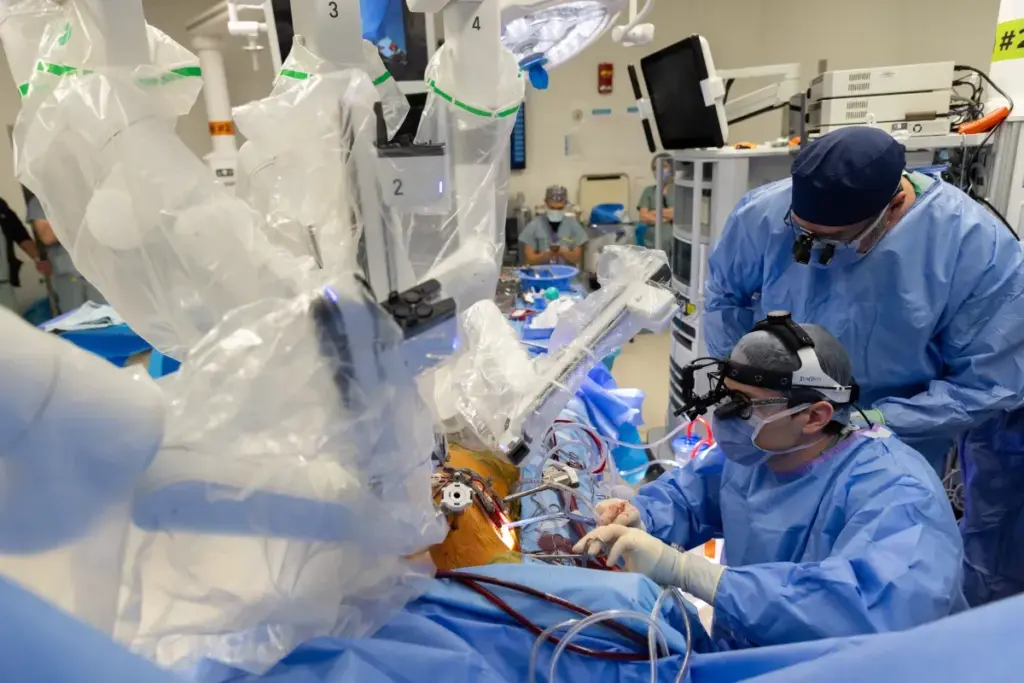
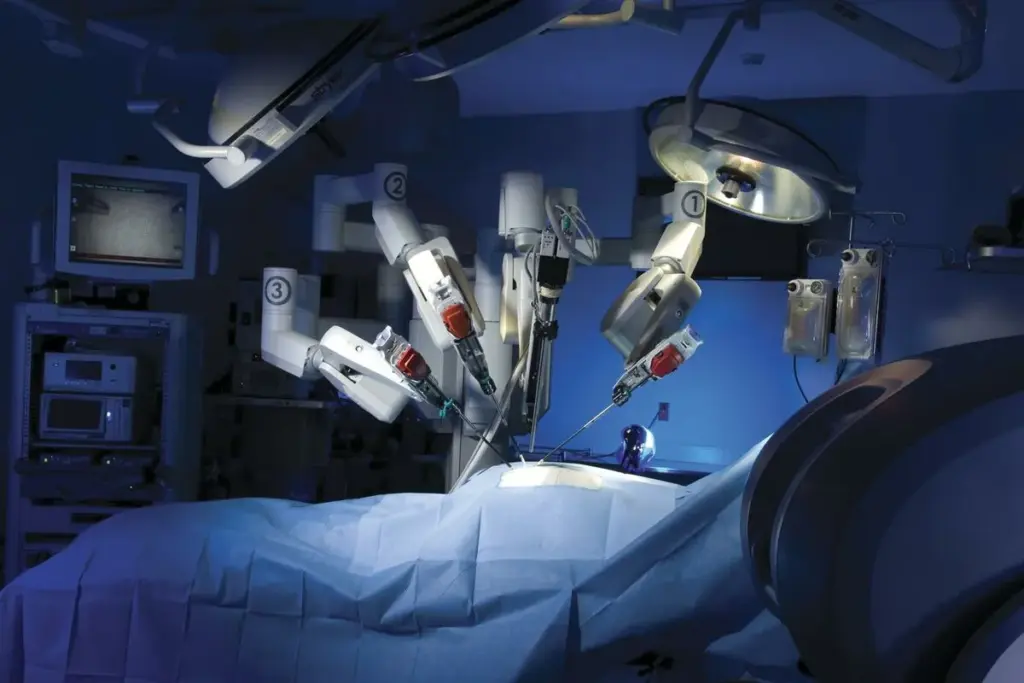
Many of Taylor’s innovations are now key parts of modern surgical systems. His foresight in protecting his intellectual property has greatly benefited these advancements. The image below shows the complexity of modern surgical robots, built on Taylor’s foundational work.
Turning research into practice is complex, needing innovation, partnerships, and understanding of clinical needs. Taylor’s work has raised the bar for the field. It shows how academic research can lead to real change in healthcare.
Recognition and Awards for Taylor’s Work
Russell Taylor has made a big impact in medical robotics. He has won many awards and honors. His work has helped improve the technology and inspired many others.
Academic Honors
Taylor has received many awards from the academic world. Here are a few that show his big impact on medical robotics.
- The IEEE Robotics and Automation Award for his significant contributions to the field.
- The MICCAI Society Endorsed Award for his pioneering work in computer-integrated surgery.
- Fellowship in the National Academy of Engineering for his advancements in medical robotics.
These honors show how much Taylor is respected by his peers and the academic community.
Industry Recognition
Taylor’s work has also been recognized by industry leaders. This shows how his research has helped medical practice and technology.
|
Award |
Year |
Organization |
|---|---|---|
|
Innovation in Medical Technology |
2010 |
Medical Device Manufacturers Association |
|
Excellence in Robotics |
2015 |
Robotics Industries Association |
Taylor’s work has had a big impact on medical robotics technology. This is shown by his industry recognition.
Taylor’s contributions have been recognized in both academic and industry circles. This shows the wide and deep influence he has had on medical robotics.
The Global Impact of Taylor’s Medical Robotics Research
Taylor’s work in medical robotics has changed surgery and inspired research worldwide. His efforts have shaped the future of healthcare.
Adoption in Healthcare Systems Worldwide
Taylor’s medical robotics innovations are used globally. Several factors have led to this widespread use:
- Improved patient outcomes thanks to better precision and less invasiveness
- Shorter recovery times, allowing for more patients to be treated
- Advanced training for surgeons through simulation systems
The ROBODOC system, one of Taylor’s key contributions, has been used in orthopedic surgeries worldwide. This shows the big impact of his research.
Influence on International Research Directions
Taylor’s work has influenced both clinical practices and new research areas in medical robotics. His research has led to:
- More advanced robotic systems for complex surgeries
- The use of artificial intelligence and machine learning in surgery
- A focus on making surgeries safer and improving patient outcomes
These advancements highlight the deep impact Taylor’s research has had on medical robotics globally. His work has driven innovation and better healthcare outcomes worldwide.
Current State of Medical Robotics: Taylor’s Continuing Influence
The field of medical robotics is growing, thanks to pioneers like Russell Taylor. Taylor’s work has greatly influenced the field, making it what it is today. This shows how his ideas are shaping the future of medical robotics.
Modern Systems and Applications
Today, medical robotics includes many advanced systems. These systems have changed how surgeries are done and how patients are cared for. Robotic-assisted surgery is now common, thanks to systems like the da Vinci Surgical System.
These systems help surgeons do complex surgeries more easily and accurately. For example, they make minimally invasive surgeries possible, which means patients recover faster and do better. The use of advanced imaging and data analysis has also improved these systems.
Ongoing Research Directions
Medical robotics is getting even better, with research in artificial intelligence, machine learning, and autonomous systems. These areas could make medical robots even more precise and capable. This could lead to more complex surgeries and wider use of robotic-assisted care.
“The future of medical robotics lies in the seamless integration of human expertise and robotic precision, driven by advances in AI and machine learning.”
Researchers are also working on making robots smaller and better at navigating inside the body. They’re also focusing on making it easier for surgeons to use these systems. This will make surgeries even safer and more effective.
Looking ahead, Taylor’s work will keep influencing medical robotics. This will lead to more innovation and better care for patients all over the world.
The Future of Medical Robotics: Building on Taylor’s Legacy
Russell Taylor’s work has laid a strong foundation for medical robotics. This field is now seeing big improvements. These changes aim to better patient care.
Emerging Technologies and Approaches
New technologies are shaping medical robotics. Artificial Intelligence (AI) and Machine Learning (ML) are key. They help robots learn and adapt, making them more precise.
Autonomous robots are also emerging. They can work on their own, changing surgery and patient care.
|
Technology |
Description |
Potential Impact |
|---|---|---|
|
AI and ML Integration |
Enables robots to learn and adapt |
Improved precision in surgery |
|
Autonomous Robots |
Performs tasks independently |
Revolutionizes surgery and patient care |
|
Enhanced Sensor Systems |
Provides real-time feedback |
Improves safety and efficacy |
Challenges and Opportunities Ahead
Medical robotics has a bright future, but hurdles must be overcome. Ensuring safety and efficacy is critical. This means thorough testing to avoid harm.
Creating regulatory frameworks is another challenge. These rules must evolve with robotics advancements. They guide how these systems are used in healthcare.
Despite these hurdles, the field offers great opportunities. As we innovate, patient care will see major improvements.
Conclusion
We’ve looked at how Russell Taylor changed medical robotics, a field that’s made healthcare better. His work has led to more precise surgeries and better care for patients.
Systems like ROBODOC and the Da Vinci Surgical System show Taylor’s big impact. His legacy will keep guiding medical robotics, leading to new discoveries and better health care.
Medical robotics is growing, and we expect even more progress. This progress will build on what pioneers like Russell Taylor started. His work is key to making medical care even better with new technology.
FAQ
What is medical robotics?
Medical robotics combines robotics and medicine. It aims to create new medical devices and technologies. These include surgical robots to better care for patients.
Who is considered the father of medical robotics?
Russell Taylor is widely recognized as the pioneering figure in the field of medical robotics. He pioneered the ROBODOC system and computer-integrated surgery.
What is the ROBODOC system?
The ROBODOC system is a robotic surgery tool. It was developed by Russell Taylor and his team. It was one of the first used in orthopedic surgery.
What is computer-integrated surgery?
Computer-integrated surgery uses technology and robotics to improve surgery. It aims for better precision and shorter recovery times.
How has Russell Taylor’s work influenced the development of medical robotics?
Taylor’s work on the ROBODOC system and computer-integrated surgery has greatly influenced medical robotics. It has led to advancements in surgical robots and other medical technologies.
What is the Da Vinci Surgical System?
The Da Vinci Surgical System is a robotic surgery tool. It was developed after Russell Taylor’s work. It’s widely used for minimally invasive surgeries.
What are some of the benefits of medical robotics?
Medical robotics offers many benefits. It improves precision and reduces recovery time. It also leads to better patient outcomes and the possibility of remote surgery.
What are some of the challenges facing the field of medical robotics?
Medical robotics faces several challenges. It needs more technological advancements and regulatory approvals. It also needs to address safety and efficacy concerns.
How is medical robotics being used in healthcare systems worldwide?
Medical robotics is being used globally in healthcare. It’s used in surgeries, patient care, and rehabilitation. It’s making a big impact.
What is the future of medical robotics?
The future of medical robotics looks promising. It will be shaped by new technologies like artificial intelligence. We can expect more advancements in surgical robots and other medical tools.
References
National Center for Biotechnology Information. Educational Robotics and Robot Creativity: An Interdisciplinary Dialogue. Retrieved from https://pmc.ncbi.nlm.nih.gov/articles/PMC8241918/