We understand that dealing with ligament damage can be challenging, causing pain and mobility issues. Orthopedic surgeons diagnose and treat a wide range of conditions affecting bones, cartilage, joints, ligaments, muscles, nerves, and tendons. Their expertise ensures that patients receive comprehensive care for their specific needs.
In this article, we will delve into the role of orthopedic surgeons in ligament repair and what patients can expect from the treatment process.
Key Takeaways
- Orthopedic surgeons specialize in treating musculoskeletal disorders, including ligament injuries.
- Ligament repair is a critical procedure for restoring mobility and reducing pain.
- These specialists diagnose and treat conditions affecting bones, cartilage, joints, and tendons.
- Patients can expect comprehensive care tailored to their specific needs.
- Understanding the role of orthopedic surgeons can help patients make informed decisions about their treatment.
Understanding Ligaments and Their Function
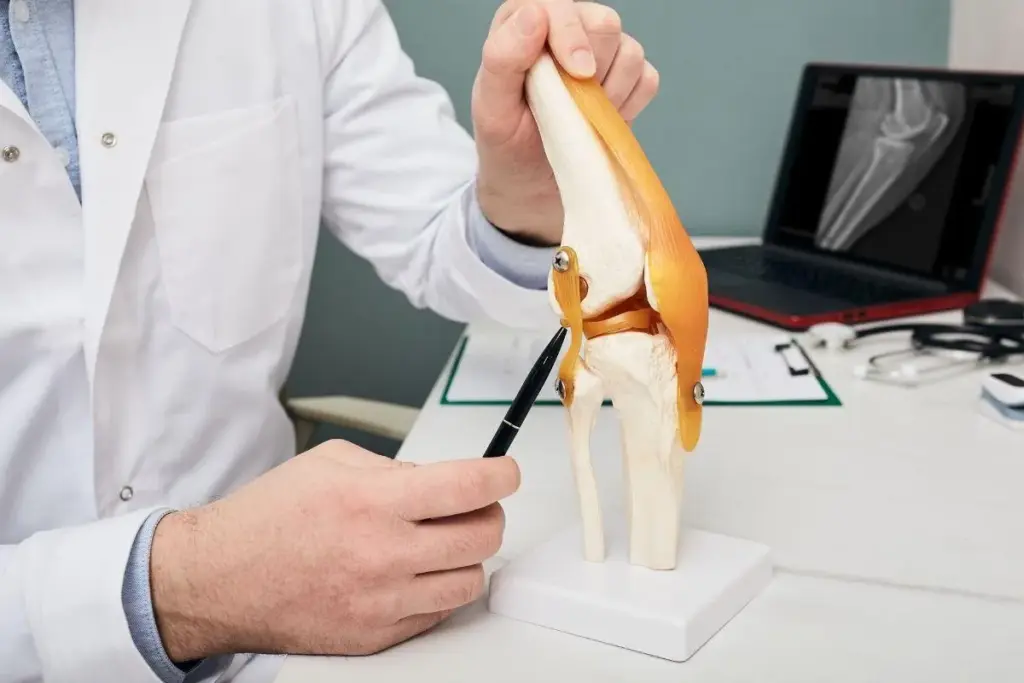
Ligaments are key to keeping joints healthy. They are bands of tough, elastic tissue that surround joints. They support and stabilize joints, and also limit their movement to prevent injury.
Anatomy of Ligaments
Ligaments are made of dense, fibrous tissue rich in collagen fibers. These fibers make ligaments strong and elastic. They can handle different stresses and strains.
The type of ligament depends on where it is in the body. For example, ankle ligaments support the ankle during weight-bearing activities. Foot ligaments help with the foot’s complex movements.
Ligaments are attached to bones on either side of a joint. This strong bond stabilizes the joint. It’s important for joint stability, especially during movement.
How Ligaments Support Joint Stability
Ligaments are essential for joint stability. They support and limit joint movements. This prevents joint dislocation or injury.
For instance, knee ligaments ensure the knee moves in a controlled way. If ligaments are damaged, joints lose stability. This can cause chronic pain, reduced mobility, and more injury risk.
Tendons: Understanding Their Role in Movement
Movement is thanks to the hard work of tendons. Tendons are tissues that link muscles to bones. They play a key role in movement by passing the muscle’s force to the bone. This lets us do many things, from walking to playing musical instruments.
Tendons are made of dense, fibrous tissue rich in collagen fibers. This makes them strong and elastic. Their structure helps them handle the stresses of movement, like tension and strain.
Tendon Structure and Composition
The way tendons are built helps them do their job. They are made of:
- Collagen Fibers: These give strength and flexibility.
- Tendon Sheath: A protective layer that reduces friction.
- Tendon Cells (Tenocytes): These cells keep the tendon matrix healthy.
Tendons are made to pass forces well. Their makeup and design let them do this job well, making movement possible.
How Tendons Connect Muscles to Bones
Tendons are the key link between muscles and bones. When a muscle contracts, it pulls the tendon, which then pulls the bone to move. This is how we do all voluntary movements.
In the foot, tendons are crucial for supporting the arch and helping with toe movements. The foot’s tendons face a lot of stress and can get injured, like tendonitis.
Understanding tendons and their role in movement shows how complex and beautiful our musculoskeletal system is. By knowing how tendons work, we can see why taking care of them is so important.
Tendon vs Ligament: Key Differences Explained
It’s important to know the difference between tendons and ligaments for treating injuries. They are both connective tissues but serve different roles in our bodies.
Structural Differences
Tendons and ligaments are made of dense connective tissue. But they are structured differently. Tendons are made to handle tension as they link muscles to bones, helping us move. Ligaments, however, connect bones to each other, keeping joints stable.
The way they are structured affects how they work and heal. Tendons have fibers that are more aligned, making them better at handling muscle stress.
Functional Differences
Tendons help transmit forces from muscles to bones, allowing us to move. On the other hand, ligaments keep joints stable by linking bones together. This is key to preventing injuries from happening.
- Tendons help us move by passing muscle forces to the skeleton.
- Ligaments keep joints stable, stopping them from moving too much.
Healing Properties Comparison
Tendons and ligaments heal differently because of their structures and blood supply. Ligaments have a worse blood supply than tendons, making their healing slower. Tendons, with better blood flow, heal faster but still face challenges.
- Ligaments heal slower because of less blood flow.
- Tendons heal better than ligaments but still face recovery challenges.
Knowing these differences helps doctors create better treatment plans for tendon and ligament injuries.
Common Ligament Injuries and Their Severity
Ligament injuries can range from mild sprains to severe tears. Each injury needs a different treatment approach. These injuries can greatly affect a person’s life, making it hard to move and causing pain.
Sprains and Tears Classification
Ligament injuries are divided into three grades based on how severe they are:
- Grade 1: Mild sprains with little damage to the ligament.
- Grade 2: Moderate sprains with some tearing of the ligament.
- Grade 3: Severe sprains with the ligament completely torn.
Knowing the grade of an injury is key to choosing the right treatment. Mild sprains might heal with simple care, but severe tears might need surgery.
Most Frequently Injured Ligaments
The ankle, knee, and wrist ligaments are often injured. The anterior talofibular ligament (ATFL) in the ankle is especially at risk, leading to a “torn ligament in ankle.” The anterior cruciate ligament (ACL) in the knee is also commonly hurt, especially in athletes.
These injuries can happen from sports, falls, or sudden twists. Knowing why they happen and being aware of the risks can help prevent and catch them early.
It’s important to treat ligament injuries quickly and correctly. This ensures a full recovery and avoids lasting damage.
Orthopedic Surgeons: Primary Ligament Repair Specialists
Orthopedic surgeons are key in treating ligament injuries. They have the training to handle musculoskeletal disorders, including ligament repairs.
These doctors are skilled in complex surgeries. They spend years learning orthopedic surgery. This makes them experts in ligament repair.
Training and Specialization
To become an orthopedic surgeon, one must go through a lot of training. This includes medical school and a residency in orthopedic surgery. Some even do fellowships in sports medicine or joint reconstruction.
Thanks to their training, orthopedic surgeons can treat many ligament injuries. They offer both surgery and non-surgery options, depending on what the patient needs.
When to Consult an Orthopedic Surgeon
If you have ongoing pain or instability from a ligament injury, see an orthopedic surgeon. They can figure out how bad the injury is and suggest the best treatment.
Signs you might need to see an orthopedic surgeon include chronic pain, a lot of swelling, or trouble walking on the affected joint. Seeing them early can help avoid more damage and speed up recovery.
Sports Medicine Surgeons: Athletes’ Ligament Repair Experts
Sports medicine surgeons are key in treating ligament injuries for athletes. They need quick and effective recovery. These experts have advanced training to handle complex injuries with precision.
Specialized Training for Athletic Injuries
Sports medicine surgeons get rigorous training to treat athletic injuries. Their education includes:
- Completing a fellowship program in sports medicine
- Gaining experience in orthopedic surgery
- Staying updated on the latest techniques in ligament repair
This training helps them diagnose and treat ligament injuries well. It ensures athletes can safely return to their sport.
Common Sports-Related Ligament Repairs
Sports medicine surgeons often fix ligament injuries common in sports. Some common repairs are:
- ACL (Anterior Cruciate Ligament) reconstruction, needed for soccer, basketball, and football players
- MCL (Medial Collateral Ligament) repair, common in contact sports
- Ligament repairs in the ankle, needed for athletes in sports with quick direction changes
Using the latest techniques and rehab plans, they help athletes recover. This way, athletes can regain their performance level.
Effective ligament repair is crucial for athletes to prevent further injury and maintain their competitive edge. Sports medicine surgeons work closely with athletes. They develop personalized rehab plans for a safe return to their sport.
We understand the importance of specialized care in treating athletic injuries. By choosing a sports medicine surgeon, athletes get expert care tailored to their needs.
Foot and Ankle Surgeons: Specialists for Foot Ligaments and Ankle Tendons
Foot and ankle surgeons are key in treating complex ligament and tendon issues. They have the skills to diagnose and treat many foot and ankle problems. This includes simple sprains and complex surgeries.
Treating Torn Ligaments in Ankle
Torn ligaments in the ankle are common, especially during sports. Foot and ankle surgeons can treat these injuries with both non-surgical and surgical methods. The treatment depends on the injury’s severity and the patient’s health.
For serious ligament tears, surgery might be needed to fix ankle stability. Ankle ligament reconstruction is a surgery to repair or replace damaged ligaments. It can be done through arthroscopic surgery.
Addressing Tendonitis in Foot
Tendonitis in the foot is a common issue for foot and ankle surgeons. It’s inflammation of the tendons, causing pain and mobility issues. Treatment includes rest, physical therapy, and medication to reduce inflammation.
In some cases, surgery is needed to fix damaged tendons. Tendon repair surgery removes the damaged tendon part and attaches the healthy part to the bone.
|
Condition |
Treatment Options |
Surgical Intervention |
|---|---|---|
|
Torn Ankle Ligaments |
Conservative management, bracing |
Ligament reconstruction, arthroscopic surgery |
|
Tendonitis in Foot |
Rest, physical therapy, anti-inflammatory medication |
Tendon repair surgery |
Foot and ankle surgeons are vital in helping patients recover from ligament and tendon injuries. They offer both surgical and non-surgical treatments. This helps patients regain mobility and get back to their normal activities.
Hand and Upper Extremity Surgeons: Wrist and Finger Ligament Experts
Ligament injuries in the hand and wrist need special care. Hand and upper extremity surgeons are experts in this area. They can diagnose and treat complex injuries, helping patients regain function and ease pain.
Common Hand Ligament Injuries
Hand ligament injuries can happen for many reasons. This includes trauma, sports injuries, or repetitive strain. Some common injuries are:
- Scapholunate ligament tears
- Triangular fibrocartilage complex (TFCC) tears
- Collateral ligament injuries in the fingers
These injuries can really affect how well your hand works and your overall quality of life. Getting the right diagnosis and treatment is key for a good recovery.
Surgical Approaches for Hand Ligaments
Hand and upper extremity surgeons use different surgical methods to fix ligament damage. The method chosen depends on the injury’s severity, where it is, and the patient’s health.
|
Surgical Technique |
Description |
Indications |
|---|---|---|
|
Ligament Repair |
Direct repair of the torn ligament |
Acute injuries with good tissue quality |
|
Ligament Reconstruction |
Reconstruction using grafts |
Chronic injuries or poor tissue quality |
|
Arthroscopic Surgery |
Minimally invasive surgery using an arthroscope |
Various ligament injuries, depending on the case |
By picking the best surgical method, hand and upper extremity surgeons can fix ligament function. This helps improve patient outcomes.
Trauma Surgeons: Emergency Ligament Repair Specialists
Emergency situations need quick and precise action. Trauma surgeons lead in treating acute ligament injuries. They are trained for the most critical cases, where fast action is key for recovery.
Acute Traumatic Ligament Injuries
Acute traumatic ligament injuries happen suddenly. They can come from accidents, sports injuries, or high-impact incidents. These injuries cause joint instability, needing immediate medical help. Trauma surgeons can assess the injury’s severity and choose the right treatment.
The severity of these injuries can range from mild sprains to complete tears. In severe cases, surgery is needed to fix the joint and help it heal. Trauma surgeons are skilled in finding out how bad the injury is and fixing it surgically.
Emergency Surgical Interventions
In emergencies, trauma surgeons do surgery to fix damaged ligaments. These surgeries aim to stabilize the joint, reduce pain, and improve function. The goal is to fix the injury’s immediate effects and prepare for recovery.
These surgeries can use different techniques, like ligament repair or reconstruction. The choice depends on the injury’s type and severity, and the patient’s health. Trauma surgeons work with other healthcare teams for full care.
|
Procedure |
Description |
Recovery Time |
|---|---|---|
|
Ligament Repair |
Surgical procedure to mend torn ligaments |
6-8 weeks |
|
Ligament Reconstruction |
Surgical procedure to rebuild ligaments using grafts |
3-6 months |
Trauma surgeons are crucial in emergency ligament injury care. They provide vital care that greatly affects patient outcomes. Their knowledge ensures patients get the right treatment for the best recovery.
Surgical Techniques for Ligament Repair
There are many ways to fix ligaments, from old methods to new ones. The right method depends on the injury’s severity and where it is. It also depends on the patient’s health.
Traditional Open Surgery
Open surgery means a big cut to see the damaged ligament. Surgeons then use stitches or grafts to fix it.
This method is good for serious injuries or when other tissues are damaged too. But, it can lead to longer healing times and more damage than smaller methods.
Arthroscopic Procedures
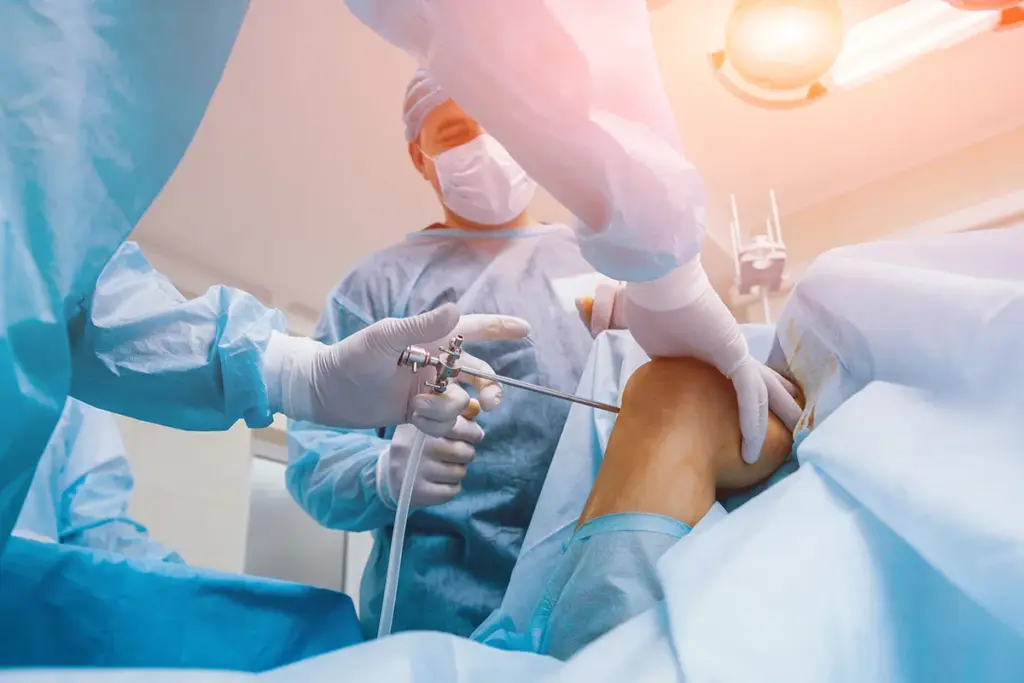
Arthroscopic surgery is a small cut method. It uses a camera and tools through tiny holes. This way, the ligament can be fixed with less harm to other tissues.
This method helps heal faster and leaves less scar. It’s great for injuries in places like the knee and shoulder.
Innovative Approaches in Ligament Surgery
New ways to fix ligaments include using special supports and stem cells. Advanced imaging helps too.
These new methods aim to heal better, recover faster, and work better. For example, special supports help grow new tissue. Stem cells help the body fix itself.
|
Surgical Technique |
Description |
Recovery Time |
Benefits |
|---|---|---|---|
|
Traditional Open Surgery |
Large incision, direct access to ligament |
Longer |
Effective for complex injuries |
|
Arthroscopic Procedures |
Minimally invasive, small incisions |
Shorter |
Less tissue trauma, faster recovery |
|
Innovative Approaches |
Use of biological scaffolds, stem cell therapy |
Varies |
Enhanced healing, improved ligament function |
Tendon to Tendon and Ligament to Ligament Grafts
Grafts are key in fixing ligaments and tendons. When these tissues get badly damaged, grafting can help fix them. Tendon grafts and ligament grafts use a piece of tissue to repair or replace the damaged part.
Types of Grafts: Autografts vs. Allografts
There are two main graft types: autografts and allografts. Autografts come from the patient themselves, usually from a less important area. This lowers the chance of rejection and disease. Allografts, on the other hand, come from donors, often from cadavers. They are processed to remove cells that could cause an immune reaction.
Autografts are often preferred because they’re more compatible and safer. But, they need another surgery site, which can cause problems. Allografts don’t need another surgery site, but there’s a tiny chance of disease.
“The choice between autografts and allografts depends on various factors, including the patient’s overall health, the extent of the injury, and the surgeon’s preference.”
Recovery Expectations After Graft Surgery
Recovery from graft surgery takes time. First, patients need to rest and heal. Then, they start physical therapy to build strength and move better. How long it takes to recover depends on the injury and the graft type.
- Immediate post-operative period: Pain management and immobilization
- Early rehabilitation phase: Gradual mobilization and strengthening exercises
- Advanced rehabilitation phase: Functional training and return to activity
With the right care and therapy, patients can see big improvements. They can then get back to their usual activities.
Non-Surgical Approaches to Ligament Injuries
Not all ligament injuries need surgery. There are non-surgical ways to treat them. These methods can help reduce pain and aid in healing.
Conservative Treatment Options
Conservative management includes rest, physical therapy, and pain relief. Rest helps the ligament heal. Physical therapy improves strength and flexibility.
- Rest, Ice, Compression, and Elevation (RICE) to reduce pain and inflammation
- Physical therapy to improve joint mobility and strength
- Pain management through medication or alternative therapies
- Bracing or taping to provide support to the affected joint
When Surgery Can Be Avoided
Surgery might not be needed for less severe ligament injuries. Conservative management works well for grade 1 and 2 sprains.
Deciding to avoid surgery depends on injury severity, health, and activity level.
- The severity of the ligament injury
- The patient’s overall health and medical history
- The patient’s activity level and expectations for recovery
Healthcare providers consider these factors to choose the best treatment. Often, surgery can be avoided.
Rehabilitation After Ligament Surgery
Rehabilitation is crucial after ligament surgery. It helps patients regain strength and mobility. The process includes physical therapy and exercises to heal and restore joint function.
Physical Therapy Protocols
Physical therapy is essential for recovery. We tailor therapy to each patient’s needs. It starts with pain reduction and then moves to improving range of motion and muscle strength.
Tendon Exercises for Recovery
Tendon exercises are vital for healing. They help strengthen and flex the tendons, reducing injury risk. We start with gentle exercises and gradually increase intensity as the tendon heals.
|
Phase |
Goals |
Interventions |
|---|---|---|
|
Acute Phase (0-2 weeks) |
Reduce pain and inflammation, improve range of motion |
Ice, compression, elevation, gentle mobilization |
|
Strengthening Phase (2-6 weeks) |
Improve strength, enhance joint stability |
Resistance band exercises, strengthening exercises |
|
Advanced Strengthening Phase (6-12 weeks) |
Enhance functional strength, prepare for return to activity |
Agility drills, plyometric exercises, sport-specific training |
Preventing Ligament and Tendon Injuries
To prevent ligament and tendon injuries, it’s important to focus on strengthening exercises and using the right equipment. Understanding these factors can help lower injury risk and keep muscles and joints healthy.
Strengthening Exercises
Strengthening exercises are key in preventing injuries. They make muscles around joints stronger. This helps absorb shocks and reduces strain on ligaments and tendons.
- Resistance Training: Doing resistance training builds muscle strength. This supports ligaments and tendons.
- Flexibility Exercises: Adding flexibility exercises to your routine improves movement. It also lowers injury risk.
Proper Technique and Equipment
Using the right technique and equipment is crucial for injury prevention. It means adopting correct postures and movements during activities.
- Proper Footwear: Wearing the right shoes supports joints and reduces impact.
- Protective Gear: Using gear like knee pads protects vulnerable areas.
Advancements in Ligament Repair Technology
The field of ligament repair is evolving fast. New surgical methods and regenerative medicine are changing how we treat ligament injuries. These advancements aim to improve patient outcomes.
Regenerative Medicine Approaches
Regenerative medicine is key in ligament repair. It uses the body’s healing powers to fix damaged ligaments.
Stem cell therapy is a big part of this. It uses stem cells to help heal and grow new tissue. Another method is platelet-rich plasma (PRP) therapy. This involves injecting PRP into the ligament to boost healing.
Future Directions in Surgical Techniques
Surgical methods for ligament repair are getting better. There’s a push for less invasive procedures and better grafting. Arthroscopic surgery is becoming more common. It uses small incisions for quicker recovery.
Future advancements include biodegradable scaffolds for ligament growth. Also, 3D printing will help make custom grafts.
Here’s a look at old and new ligament repair methods:
|
Technique |
Description |
Benefits |
|---|---|---|
|
Traditional Open Surgery |
Involves a large incision to access the damaged ligament |
Well-established technique, widely available |
|
Arthroscopic Surgery |
Minimally invasive, using small incisions and a camera |
Less tissue damage, faster recovery |
|
Regenerative Medicine |
Uses the body’s natural healing processes to repair ligaments |
Potential for faster healing, less invasive |
Medical imaging is also getting better. It helps doctors see ligament injuries more clearly.
These new technologies in ligament repair are making treatments better. They offer hope to those with ligament injuries. As research goes on, we’ll see even more innovative ways to fix ligaments.
Conclusion: Choosing the Right Surgeon for Your Ligament Injury
Choosing the right surgeon is key when you have a ligament injury. Orthopedic surgeons are experts in treating musculoskeletal issues, like ligament injuries. They help fix joint stability and function.
We’ve looked at different surgeons for ligament injuries, like orthopedic, sports medicine, and foot and ankle surgeons. We’ve also talked about surgical and non-surgical treatments, and how to recover.
It’s important to pick a surgeon with the right skills and experience. Look at their specialization, training, and success with ligament injuries. This way, you get the best care and a good chance of a full recovery.
FAQ
What type of surgeon specializes in repairing ligaments?
Orthopedic surgeons specialize in the diagnosis and treatment of ligament injuries. They can diagnose and treat injuries like sprains and tears.
What is the difference between a tendon and a ligament?
Tendons link muscles to bones, helping with movement. Ligaments connect bones to each other, keeping joints stable. Knowing the difference is key for treating injuries.
How are ligament injuries classified?
Injuries are graded from 1 to 3, with 1 being mild and 3 being severe. This helps decide the best treatment.
What are the common causes of ligament injuries?
Injuries can happen from sudden trauma, sports, or repeated strain. The ankle, knee, and wrist are most often affected.
When should I consult an orthopedic surgeon for a ligament injury?
See an orthopedic surgeon if pain, swelling, or instability lasts after an injury. They can help figure out the best treatment.
What is the role of physical therapy in rehabilitation after ligament surgery?
Physical therapy is vital after surgery. It helps regain strength, flexibility, and movement. A therapist will create a plan for your recovery.
How can I prevent ligament and tendon injuries?
Prevent injuries by doing strengthening exercises and using the right equipment. Warm up before activities. Keeping a healthy weight and being aware of your surroundings also helps.
What are the latest advancements in ligament repair technology?
New technologies include regenerative medicine like stem cell and PRP therapy. These advancements improve treatment and reduce recovery time.
What is the difference between autografts and allografts in ligament and tendon repair?
Autografts come from the patient, while allografts come from donors. Each has its own benefits and drawbacks, depending on the case.
Can ligament injuries be treated without surgery?
Yes, some injuries can be managed without surgery. This includes bracing, physical therapy, and pain management. But severe cases might need surgery.
What are the benefits of arthroscopic procedures for ligament repair?
Arthroscopic procedures are less invasive. They reduce recovery time, scarring, and pain. They’re often used for knee, shoulder, and ankle injuries.
How do I choose the right surgeon for my ligament injury?
Look for a surgeon with the right specialization and experience. Ask about their treatment approach and success rates with similar cases.
ScienceDirect. Evidence-Based Medical Insight. Retrieved from https://www.sciencedirect.com/book/9780323056026/clinical-orthopaedic-rehabilitation