

Achilles tendon injuries are common in sports, causing many athletes to miss games. Dorothy Wall’s recent withdrawal from a major event due to an Achilles tendon injury shows how serious it can be. Use this Simple Ultimate test for torn Achilles to check your injury accurately at home now!
Knowing the signs of an Achilles tendon rupture is key to getting help fast. The pain from a rupture can be very bad. So, it’s important to spot the symptoms early.
Key Takeaways
- Recognizing the symptoms of an Achilles tendon rupture is vital.
- Achilles tendon injuries are common in sports and can be severe.
- Understanding the pain associated with an Achilles tendon rupture can aid in diagnosis.
- Timely medical intervention is critical for recovery.
- Identifying the signs of an Achilles tendon injury can prevent further damage.
Understanding the Achilles Tendon Anatomy
The Achilles tendon is a key part of the lower leg. It connects the calf muscles to the heel bone. It’s vital for moving and walking. Knowing about the Achilles tendon is key for treating injuries.
Structure and Function of the Achilles Tendon
The Achilles tendon is a strong, fibrous cord. It’s made from the gastrocnemius and soleus muscles. These muscles merge into a tendon that attaches to the heel bone.
This tendon helps us move by allowing us to walk, run, and jump. It’s made of dense tissue that’s strong and elastic. But, it has poor blood flow, which makes it more injury-prone.
Common Mechanisms of Injury
Achilles tendon injuries happen for many reasons. Overuse, bad training, and wrong shoes are common causes. Common mechanisms of injury include sudden stops, direct hits, and falls.
Running and jumping sports put a lot of stress on the tendon. Age, steroid use, and some health issues also weaken it. This makes it more likely to tear or strain.
Knowing how injuries happen helps prevent them. It also helps diagnose and treat them better, speeding up recovery.
Signs and Symptoms of an Achilles Tendon Tear
Knowing the signs of an Achilles tendon rupture is key to better treatment. A torn tendon can cause severe pain and limit movement. This makes everyday activities hard.
Immediate Symptoms After Injury
People with an Achilles tendon tear often feel sudden, sharp pain in their ankle’s back. This pain can feel like a strong kick. Common symptoms include:
- A loud snap or pop at the time of injury
- Severe pain in the lower leg or ankle
- Swelling and bruising around the affected area
- Difficulty walking or standing on tiptoes
Delayed Symptoms That May Develop
Some symptoms show up right away, while others take time. These can include:
- Increasing pain during physical activities
- Weakness in the ankle or calf
- Limited range of motion in the ankle
Watching for these signs is important. They can show how serious the injury is.
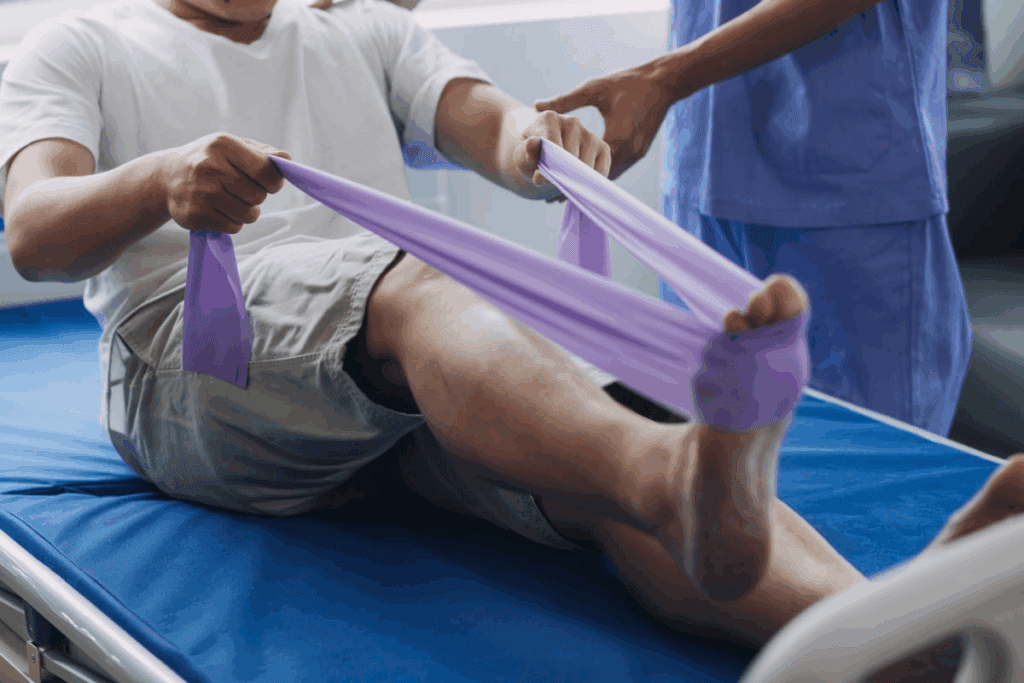
Heel pain from Achilles tendon ruptures is very painful. This pain is often felt when pushing off with the foot. It can also be tender to the touch and worse with activity.
- Pain when pushing off with the affected foot
- Tenderness to the touch along the Achilles tendon
- Pain that worsens with activity and improves with rest
Spotting these symptoms can help diagnose an Achilles tendon rupture.
The Thompson Squeeze Test for Achilles Rupture

The Thompson squeeze test is a well-known way to check for Achilles tendon ruptures. It’s very helpful for doctors and people who think they might have hurt their Achilles tendon.
Performing the Thompson Test
To do the Thompson test, lie on your stomach with your feet off the table. The doctor will then squeeze your calf muscles. It’s important to squeeze gently to avoid hurting you.
Understanding Thompson Test Results
Understanding the test results is easy. If your Achilles tendon is okay, squeezing your calf will make your foot move down. If it’s ruptured, your foot won’t move down or will move very little.
Limitations of the Thompson Squeeze Test
The Thompson test is useful but has some downsides. It can give false negatives, like if it’s done wrong or if there’s a lot of swelling. It also can’t tell if the tear is full or partial.
So, it’s best to use this test with other methods for a better diagnosis.
Achilles Rupture Self-Test Methods
There are several ways to check if you’ve torn your Achilles tendon. These tests are not a full diagnosis but can give you an idea of your tendon’s condition.
The Calf Squeeze Test
The Calf Squeeze Test, also known as the Thompson test, is a simple way to check for a tear. Sit on the floor with your legs straight out or lie on your stomach with your feet hanging off the bed.
Have someone squeeze your calf muscles. If your foot flexes down, your tendon is likely okay. But if it doesn’t move, it might be torn.
Single Leg Heel Raise Test
The Single Leg Heel Raise Test checks your tendon’s strength. Stand on one leg and try to raise your heel. If you can do this easily, your tendon is probably fine.
If you struggle or can’t do it, it could mean a serious injury, like a tear.
Achilles Tendon Palpation Test
The Achilles Tendon Palpation Test feels the tendon for any issues. Sit comfortably and find the tendon by tracing it from your calf to your heel.
Press gently along the tendon to look for pain, swelling, or gaps. These signs could mean a tear.
| Self-Test Method | Description | Indication of Rupture |
| Calf Squeeze Test | Squeeze calf muscles while seated or lying down. | No foot movement upon squeezing. |
| Single Leg Heel Raise | Stand on one leg and raise the heel. | Inability or pain when raising the heel. |
| Achilles Tendon Palpation | Feel the Achilles tendon for gaps or pain. | Pain, swelling, or a gap along the tendon. |
Achilles Tendon Movement Test Techniques
Diagnosing Achilles tendon issues needs a detailed movement assessment. Testing how the tendon moves is key to checking its health and function.
Active Range of Motion Testing
Active range of motion testing asks the patient to move their ankle on their own. They do this by moving it up and down without help. This test shows if the tendon works well when the patient moves it.
- Watch how well the patient can move their ankle.
- Look for any pain or discomfort when they move it.
- Compare the movement with the other ankle.
Passive Movement Evaluation
Passive movement evaluation is when a healthcare provider gently moves the patient’s ankle. This is done by moving it up and down with an outside force. It helps find any mechanical problems or pain in the tendon.
- Gently move the patient’s foot up and down.
- Check for any resistance or pain during this.
- Compare it with the other ankle.
Resistance Testing for Partial Tears
Resistance testing is important for finding partial tears in the Achilles tendon. By pushing against the ankle’s movement, doctors can see how strong the tendon is.
- Push against the ankle’s movement.
- Look for weakness or pain when pushing.
- Compare the strength with the other ankle.
Using these tests together gives a full picture of the Achilles tendon’s health. They help doctors find injuries like tears or ruptures.
Professional Physical Examination for Achilles Tears
If you think you might have torn your Achilles tendon, getting a professional check-up is key. A doctor will do a detailed check to see how bad the injury is.
What to Expect During a Clinical Examination

When you go for a check-up for an Achilles tendon tear, the doctor will start by asking about your injury. They’ll want to know how it happened, your symptoms, and any past injuries. Then, they’ll do physical tests to see if your Achilles tendon is okay.
Tests Performed by Healthcare Providers
Doctors use different tests to find out if you have an Achilles tendon tear. The Thompson Squeeze Test is one. It checks if your foot moves down when your calf is squeezed. If it doesn’t, it might mean a tear.
Other tests, like the Calf Squeeze Test and the Single Leg Heel Raise Test, also check your tendon’s strength and function.
Grading Systems for Achilles Injuries
Achilles tendon injuries are graded to show how serious they are. This helps decide the best treatment. Grade 1 is a mild strain, Grade 2 is a partial tear, and Grade 3 is a complete tear.
Knowing the grade of your injury is important for treatment and getting better.
Diagnostic Imaging Tests for Torn Achilles
Diagnostic imaging is key in confirming Achilles tendon tears. Several tests are available for this purpose. These tests help doctors accurately diagnose the injury’s extent, guiding treatment plans.
Ultrasound for Achilles Rupture Evaluation
Ultrasound is a common imaging technique for Achilles tendon ruptures. It has many benefits, like real-time imaging and no radiation. During an ultrasound, the technician can see the tendon, checking for tears or inflammation.
Key benefits of ultrasound include:
- Dynamic assessment of the tendon
- Ability to compare with the unaffected side
- Guidance for therapeutic injections
MRI Test for Achilles Tendon Injuries
Magnetic Resonance Imaging (MRI) is also effective for Achilles tendon injuries. MRI gives detailed images of the tendon, spotting both partial and complete tears. It’s great for seeing how severe the injury is and planning surgery if needed.
Advantages of MRI for Achilles tendon evaluation:
- High-resolution images of soft tissues
- Ability to detect associated injuries
- Preoperative planning for surgeons
X-rays and Other Imaging Techniques
X-rays aren’t usually used for direct Achilles tendon views. But, they can help rule out other heel pain causes or find bony injuries. Other methods, like CT scans, are less common for Achilles tendon checks but might be used in certain cases.
| Imaging Modality | Key Features | Clinical Utility |
| Ultrasound | Real-time imaging, low cost, no radiation | Initial assessment, dynamic evaluation |
| MRI | High-resolution soft tissue imaging | Detailed assessment, preoperative planning |
| X-ray | Bony structure evaluation | Ruling out other causes of heel pain |
Test for Achilles Tendon Damage: Complete Protocol
To find out how bad Achilles tendon damage is, doctors use a detailed testing plan. This plan helps them figure out the right treatment.
Step-by-Step Evaluation Process
Checking for Achilles tendon damage starts with a detailed look at the patient’s past health. Then, a physical exam is done with special tests.
The Thompson Squeeze Test is a key part of this check-up. The patient lies on their stomach with their feet off the table. The doctor squeezes the calf muscles. If the tendon is okay, the foot should move up. If it doesn’t, it might be torn.
The Single Leg Heel Raise test is also important. People with a torn tendon often can’t lift their heel on one leg. This test checks the tendon and how well the patient can move.
Combining Multiple Tests for Accuracy
One test isn’t enough to be sure. So, doctors use many tests together. The Thompson Squeeze Test and Single Leg Heel Raise are joined by other tests like the Calf Squeeze Test and Achilles Tendon Palpation Test.
By mixing the results of these tests, doctors get a full picture of the patient’s injury. This helps them tell if it’s a small tear, a big rupture, or something else.
Documentation for Medical Professionals
Keeping good records is key for doctors when checking Achilles tendon damage. The records should have the patient’s health history, what the exam found, and test results.
“Accurate diagnosis is the cornerstone of effective treatment planning for Achilles tendon injuries.”
— Orthopedic Specialist
Good records help with patient care and talking between doctors. They make sure everyone knows what’s going on and helps plan the best treatment.
Differentiating Between Achilles Tendonitis vs Rupture
It’s important to tell the difference between Achilles tendonitis and a rupture. Both affect the Achilles tendon but show different symptoms and need different treatments. Knowing the difference helps avoid more harm and aids in recovery.
Key Differences in Symptoms and Presentation
Achilles tendonitis causes pain and inflammation in the tendon but doesn’t usually stop you from moving much. An Achilles rupture, on the other hand, causes sudden, severe pain and makes it hard to move. You might hear a popping sound when it happens.
With tendonitis, pain and stiffness in the ankle back start slowly, often after rest or at the start of activity. An Achilles rupture, though, hits you hard right away, making it tough to walk or stand on tiptoes.
Diagnostic Tests to Distinguish Between Conditions
There are tests to tell tendonitis from a rupture. The Thompson squeeze test is good for spotting a rupture. Ultrasound and MRI can also check the tendon’s health and confirm the diagnosis.
- The Thompson squeeze test checks if squeezing the calf makes the foot plantarflex.
- Ultrasound looks at the tendon’s structure for tears or swelling.
- MRI gives detailed views of the tendon and nearby tissues, helping diagnose both conditions.
When to Suspect Tendonitis vs Complete Tear
Healthcare providers must look at the symptoms and history to guess if it’s tendonitis or a complete tear. A detailed check-up and imaging help make the right call.
If pain and swelling come on slowly but you can move okay, it’s likely tendonitis. But if pain hits hard and fast, and you can’t move well, it might be a rupture.
Getting the right diagnosis is key for the right treatment. Knowing the difference helps doctors plan better care.
Achilles Tendon Strength Test Methods
Checking the strength of the Achilles tendon is key for diagnosing and planning treatment. It shows how much damage there is and guides treatment choices.
Manual Muscle Testing Techniques
Manual muscle testing is a common way to check Achilles tendon strength. It involves pushing against the patient’s foot while they try to point their toes down. The strength is graded based on how well the patient can resist this push.
The strength is rated from 0 to 5. A 0 means no movement, and a 5 is normal strength. This helps find muscle weakness and track progress in therapy.
Functional Strength Assessments
Functional strength tests use movements that are like everyday activities or sports. For example, single-leg heel raises or hopping on one leg. These tests check the tendon’s strength, endurance, and how well it handles daily activities.
Adding these tests to the evaluation gives a fuller picture of a patient’s abilities and challenges.
Comparing Injured vs Uninjured Side
It’s important to compare the injured Achilles tendon to the healthy one. This helps set a recovery goal and understand the injury’s full impact.
Using the healthy side as a benchmark helps set realistic goals and track progress. This comparison is key in knowing when a patient is ready to go back to full activity.
When to Seek Immediate Medical Attention
Knowing when to get emergency care for an Achilles tendon rupture is key to a good recovery. If you’ve hurt your Achilles tendon badly, it’s important to know the signs that mean you need to see a doctor right away.
Red Flag Symptoms Requiring Emergency Care
Some symptoms mean you need to go to the hospital fast. These red flag symptoms include:
- Severe pain in the back of the ankle or leg
- A sudden, loud “pop” or snap at the time of injury
- Difficulty walking or standing on tiptoe
- A noticeable gap or deformity in the Achilles tendon area
- Significant swelling or bruising around the ankle
If you’re showing any of these signs, you should get medical help quickly. Waiting too long can make the injury worse and lead to more problems.
Complications of Untreated Achilles Ruptures
Not getting the right care for an Achilles tendon rupture can cause serious issues. These may include:
- Chronic weakness in the affected leg, making it hard to do everyday things or get back to sports
- Persistent pain that keeps going even after the injury seems to have healed
- Increased risk of re-rupture because the tendon didn’t heal fully or wasn’t treated right
- Long-term disability, which can really affect how you move and your overall quality of life
These problems show why it’s so important to get medical help quickly for Achilles tendon ruptures.
Finding the Right Specialist
When you think you might have an Achilles tendon rupture, finding the right doctor is key. You might start by seeing:
- An orthopedic surgeon who specializes in sports medicine or foot and ankle injuries
- A podiatrist who knows a lot about treating Achilles tendon problems
- A primary care physician who can first check you out and send you to a specialist if needed
Make sure the doctor you pick has dealt with Achilles tendon ruptures before. This way, you’ll get the best care for your injury.
At-Home Management While Awaiting Diagnosis
If you think you might have hurt your Achilles tendon, start taking care of it at home. This can help ease your symptoms and stop the injury from getting worse. Taking the right steps at home can make a big difference in your recovery.
RICE Protocol for Suspected Achilles Tears
The RICE method is a good way to handle acute injuries, like a suspected Achilles tendon tear. RICE means Rest, Ice, Compression, and Elevation.
- Rest: Stay away from activities that make it worse.
- Ice: Use ice to lessen pain and swelling.
- Compression: A compression bandage can help reduce swelling.
- Elevation: Keep your leg up to lower swelling.
Temporary Support Options
It’s important to use temporary support to manage the injury and prevent more damage. Here are some options:
| Support Option | Description | Benefits |
| Crutches | Helps with walking | Reduces stress on the Achilles tendon |
| Walking Boot | Provides support and keeps the tendon stable | Protects the tendon from more injury |
| Elastic Bandage | Offers compression | Helps reduce swelling |
Activities to Avoid
Some activities can make the injury worse. It’s best to avoid them until you get a proper diagnosis and treatment plan.
- Avoid high-impact activities like running or jumping.
- Don’t do heavy lifting or bending.
- Try to avoid climbing stairs if it hurts.
Achilles Tear Recovery Test Milestones
Recovering from an Achilles tear involves several important milestones. These milestones help healthcare providers know when it’s safe for a patient to return to their usual activities. This includes sports.
Strength Testing During Rehabilitation
Strength testing is key in rehabbing Achilles tendon tears. Doctors check the strength of the calf muscles, which are linked to the Achilles tendon. They often use manual muscle testing to see how well the patient can resist foot force.
Key aspects of strength testing include:
- Comparing the strength of the injured leg to the uninjured leg
- Assessing the patient’s ability to perform single-leg heel raises
- Evaluating the patient’s overall calf muscle strength
Range of Motion Assessments
Range of motion assessments are also critical. They check the ankle’s flexibility and mobility, vital for walking and movement. Doctors measure how far the foot can move up and down to assess this.
Important considerations for range of motion assessments include:
- Comparing the range of motion of the injured ankle to the uninjured ankle
- Monitoring improvements in ankle mobility over time
- Adjusting rehabilitation protocols based on range of motion findings
Functional Testing for Return to Activity
Functional testing is the last step in recovery. It checks if the patient can do activities related to their sport or daily life. Examples include hopping, jumping, and running on a treadmill.
Functional tests help determine:
- The patient’s ability to generate power and speed
- The presence of any pain or discomfort during activity
- The overall readiness to return to full activity
Conclusion
Knowing how serious an Achilles tendon injury is is key to getting better. We’ve looked at ways to figure out if you have a tear, like the Thompson Squeeze Test. We also talked about self-tests and doctor exams.
Getting the right diagnosis is the first step to treating an injury. Whether it’s a small tear or a full rupture, having a good recovery plan is important. This helps you get back to normal faster.
Using different tests and seeing a doctor when needed helps you heal right. Taking care of an Achilles tendon injury means more than just one step. It’s about everything from finding out what’s wrong to getting better.
With the right treatment, you can get your strength and movement back. If you think you might have hurt your Achilles tendon, see a doctor. They can help you make a plan to get better.
FAQ
What is the Thompson squeeze test for Achilles rupture?
The Thompson squeeze test checks if the Achilles tendon is okay. You squeeze your calf to see if your foot bends. If it does, the tendon is likely fine.
How can I test for Achilles tendon damage at home?
At home, you can try the calf squeeze test or single leg heel raise. You can also feel your Achilles tendon. But, seeing a doctor is best for a sure diagnosis.
What are the signs and symptoms of an Achilles tendon tear?
Signs include sudden pain and swelling. You might find it hard to walk. You might also hear a popping sound when it happens.
How is an Achilles tendon rupture diagnosed?
Doctors use a physical exam, your medical history, and tests like ultrasound or MRI to diagnose a rupture.
What is the difference between Achilles tendonitis and rupture?
Tendonitis is inflammation, causing pain and stiffness. A rupture is a tear, leading to sudden pain and loss of function.
How can I test my Achilles tendon strength?
You can test it by squeezing your calf or doing strength tests. Comparing the injured side to the healthy one helps too.
When should I seek immediate medical attention for an Achilles injury?
Get help right away if you have severe pain, swelling, or trouble walking. Look out for sudden pain, a popping sound, or trouble standing on tiptoes.
What is the RICE protocol for suspected Achilles tears?
RICE stands for Rest, Ice, Compression, and Elevation. It helps reduce pain and swelling until you see a doctor.
How is Achilles tendon function assessed during rehabilitation?
Doctors check strength, range of motion, and how well you can move. This shows if you’re getting better and ready to start activities again.
What diagnostic imaging tests are used to evaluate Achilles tendon injuries?
Doctors use ultrasound, MRI, and X-rays to see how bad the injury is. These tests help decide the best treatment.
Can I continue to walk with a torn Achilles tendon?
Walking with a torn tendon is not a good idea. It can make the injury worse and cause more problems.
How long does it take to recover from an Achilles tendon tear?
Recovery time depends on the injury’s severity and treatment. It usually takes several months to get back to normal.
Reference
- MedlinePlus – Achilles tendon rupture and related information, https://medlineplus.gov/ency/article/000449.htm