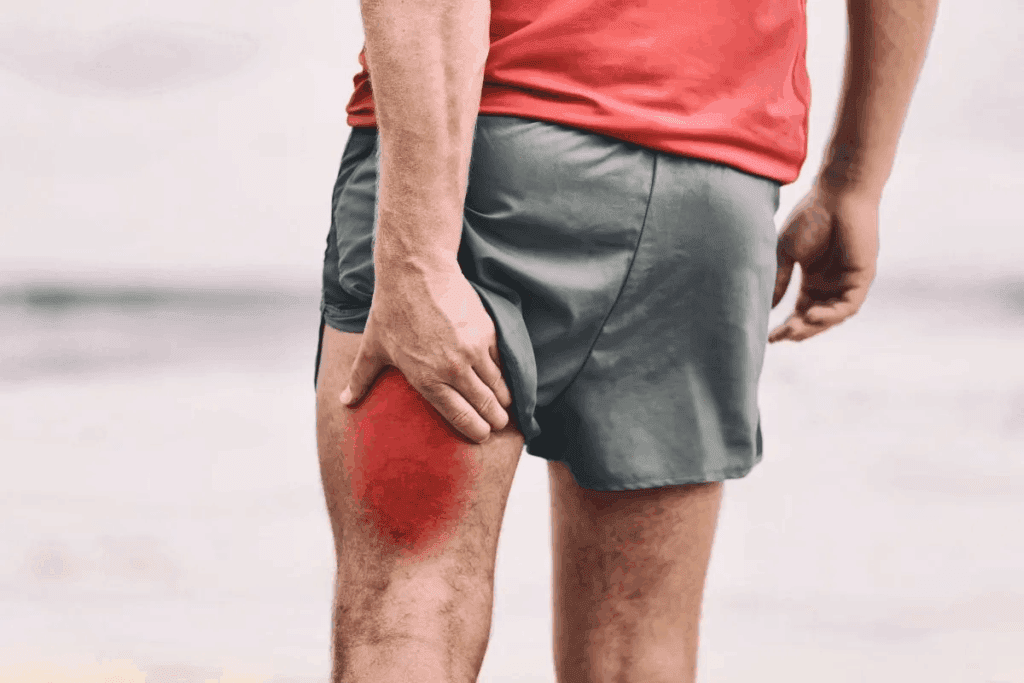
Testicle injuries can be painful and worrying for men. At Liv Hospital, we know how important it is to deal with these issues quickly and well testicle problems.
Testicular trauma can be anything from small bruises to serious injuries that need immediate help. It’s key for men to know about the risks and treatments. This is because testicles are exposed and can easily get hurt.
We offer detailed checks and care that focuses on the patient for all testicle injuries. This way, our patients get the top care they need.
Key Takeaways
- Testicular trauma can range from minor to severe injuries.
- Understanding the risks and treatments is key for men’s health.
- Testicle injuries need quick and effective medical help.
- Liv Hospital gives detailed checks and care that puts the patient first.
- Testicles are vulnerable because they are outside the body.
Testicle Anatomy and Structure

To understand testis damage and conditions of the testicles, we need to know their anatomy. The testicles, or testes, are key for male reproductive health. They produce sperm and testosterone.
What Testicles Are Made Of
The testicles have several layers of tissue. The outermost layer is the tunica vaginalis, a protective covering. Underneath is the tunica albuginea, a tough layer that adds protection. Inside, the testicular tissue is divided into lobules where sperm are made.
Muscles and Tissues Surrounding the Testicles
The testicles are surrounded by muscles and tissues that help them function. The scrotum is a sac of skin and muscle that holds and protects the testicles. It keeps their temperature right. The spermatic cord, with blood vessels, nerves, and the vas deferens, connects the testicles to the abdomen.
The Cremaster Muscle and Its Function
The cremaster muscle is key in keeping testicular temperature right. It contracts or relaxes to move the testicles closer to or further from the body. This is important for sperm production.
Blood Supply and Nerve Pathways
The testicles get their blood from the testicular arteries, which come from the abdominal aorta. The venous drainage is through the pampiniform plexus, helping to regulate temperature. Nerve pathways control testicular function and sensation.
Anatomical Component | Function |
Tunica Vaginalis | Protective covering |
Tunica Albuginea | Tough fibrous layer for protection |
Cremaster Muscle | Regulates testicular temperature |
Testicular Arteries | Supply blood to the testicles |
Pampiniform Plexus | Venous drainage and temperature regulation |
Knowing the testicles’ anatomy is key to diagnosing and treating issues. The complex mix of muscles, tissues, blood supply, and nerve pathways shows why caring for testis damage and other conditions is so important.
Can You Actually Pull a Muscle in Your Testicles?

Many people wonder if it’s possible to pull a muscle in the testicles. To answer this, we need to look at the anatomy and function of the testicles and the muscles around them.
The Myth vs. Reality of Testicular Muscle Strains
The testicles themselves don’t have much muscle tissue. This makes direct muscle strains in the testicles rare. But, the muscles around the testicles, like the cremaster muscle, are important for their movement and temperature control.
The cremaster muscle surrounds the spermatic cord. It helps control the testicles’ temperature by moving them closer to or further from the body.
What’s Really Happening When You Feel “Pulled” Pain
Men often feel pain in their testicles that feels like a pulled muscle. This pain usually comes from the muscles around the testicles or other issues in the area.
Strain in Surrounding Muscles vs. Testicular Tissue
Pain from the testicles can also come from the muscles around them, like the cremaster or abdominal muscles. It’s important to tell the difference between muscle strain and damage to the testicles for the right treatment.
Condition | Symptoms | Treatment |
Muscle Strain | Pain, swelling, bruising | Rest, ice, compression, elevation |
Testicular Injury | Severe pain, swelling, nausea | Immediate medical attention |
Differentiating Muscle Strain from Other Injuries
A doctor will do a detailed check to figure out if the pain is from a muscle strain or a serious injury. This might include imaging tests.
It’s key to know the difference between a pulled muscle and a serious injury. If you have severe pain or other symptoms, you should see a doctor right away.
Common Testicle Problems and Injuries
Understanding common testicle problems and injuries is key to good health. Testicle injuries can happen for many reasons. Knowing about these issues helps you get medical help quickly.
Blunt Trauma Injuries
Blunt trauma is behind about 85% of testicle injuries. These happen when something hits the groin area hard, like in sports. This can damage the testicles, possibly causing testicular rupture or hematoceles.
Testicular Rupture and Hematoceles
A testicular rupture is when the protective layer around the testicle tears. This can push testicular tissue out. Hematoceles are when blood builds up around the testicle. Both need quick medical care to keep the testicle working.
Testicular Torsion: The Twisted Emergency
Testicular torsion is a serious emergency where the spermatic cord twists. This cuts off blood to the testicle. It’s very painful and needs surgery right away. Knowing the signs, like sudden pain and swelling, is critical for treatment.
Abnormal Testicles: Recognizing Structural Issues
Some people are born with or get structural problems in their testicles. This includes undescended testes or testicular microlithiasis. While some may not show symptoms, others raise the risk of cancer or infertility. Regular self-checks and doctor visits are important for catching and managing these issues early.
Sports-Related Testicular Trauma
Testicular trauma in sports is a growing concern. It’s important to understand the scope and impact of these injuries.
Statistics on Sports Injuries to Testicles
Between 2012 and 2021, there were 28,844 emergency department cases of testicular injuries. This number shows the need for awareness and prevention.
Key Statistics:
- Most injuries happened in young patients aged 10-19 years.
- Basketball, football, and soccer were the most common sports for these injuries.
- Most cases needed immediate medical attention, showing how serious these injuries are.
High-Risk Sports
Athletes in contact sports face a higher risk of testicular injuries. Basketball, football, and soccer are the most dangerous due to high-speed collisions.
Why are these sports riskier? The fast pace and direct blows to the groin area increase the risk of testicular trauma.
Age Groups Most Affected
Young athletes, aged 10-19, are most at risk of testicular injuries. This is due to physical activity, risk-taking, and physical development.
Crush Injuries: Mechanisms and Outcomes
Crush injuries to the testicles happen from severe compression or direct trauma. These injuries often come from:
- Direct blows to the groin area.
- Compression between objects or surfaces.
- High-impact collisions during sports.
The outcomes can be severe, including testicular rupture, hematoma, or even loss of the testicle. Understanding these mechanisms is key to prevention and treatment.
As we explore sports-related testicular trauma, awareness, education, and prevention are vital. They help reduce the incidence and impact of these injuries.
Symptoms of Serious Testicular Injuries
It’s important to know the signs of serious testicular injuries. These injuries can hurt a lot and need quick help to avoid lasting damage.
Immediate Pain Patterns and Severity
The pain from testicular injuries can be very different. Immediate and severe pain is common, feeling sharp or stabbing. This pain might stay in the testicle or spread to the groin or lower belly.
But, the pain’s intensity doesn’t always show how bad the injury is. Some serious injuries might start with only mild pain. So, it’s key to watch your symptoms closely.
Swelling, Bruising, and Visual Changes
Swelling and bruising are signs of testicular injuries. Significant swelling happens because of inflammation or bleeding in the scrotum. Bruising shows up as discoloration of the scrotal skin, from red to purple or blue.
Visual signs can also point to serious injuries. These include:
- Enlargement or distortion of the testicle
- Visible bruising or hematoma
- Changes in the testicle’s position or orientation
Blood Clots in Testicles: Recognition and Risks
A blood clot in the testicle, or testicular hematoma, can happen from trauma. Symptoms include severe pain, swelling, and a feeling of heaviness in the scrotum.
Symptom | Description | Risks if Untreated |
Pain | Immediate and severe pain | Chronic pain, testicular atrophy |
Swelling | Inflammation or bleeding within the scrotum | Infection, abscess formation |
Blood Clot | Testicular hematoma | Testicular damage, infertility |
Warning Signs Requiring Emergency Care
Some symptoms need immediate medical help. These include:
- Severe pain that doesn’t get better with pain meds
- Significant swelling or bruising
- Nausea or vomiting
- Fever or chills
- Difficulty walking because of pain or swelling
As a medical expert said,
“Quick action and treatment for testicular injuries are key to avoid long-term problems and get the best results.”
Conditions Commonly Mistaken for Testicular Torsion
Many conditions can look like testicular torsion, making it important to get a correct diagnosis. Testicular torsion is a serious issue that needs quick action. But, other problems can have similar symptoms, leading to wrong diagnoses.
Epididymitis: Bacterial Infection vs. Torsion
Epididymitis is an inflammation of the epididymis, often caused by bacteria. It can cause pain and swelling, just like testicular torsion. But, the cause and treatment are different.
Key differences: Epididymitis usually starts slowly and may include fever or urinary issues. This is unlike testicular torsion, which happens quickly.
Inguinal Hernia Presentation
An inguinal hernia happens when tissue bulges through a weak spot in the abdominal muscles. It can cause groin pain that might seem like testicular torsion. The type of pain and other symptoms can help tell them apart.
- Inguinal hernias often show a bulge in the groin.
- Pain from an inguinal hernia gets worse with activities that raise abdominal pressure.
Trauma-Related Swelling vs. Cord Twisting
Testicular area trauma can cause swelling and pain, making it seem like testicular torsion. It’s important to tell the difference for the right treatment.
Clinical evaluation is key: A detailed medical check-up, including history and physical exam, is vital to tell these conditions apart.
Diagnosis and Treatment Options
Diagnosing testicular injuries requires a detailed approach. This includes looking at medical history, physical exams, and imaging tests. Getting the diagnosis right is key to choosing the right treatment.
Medical Examination Process
When someone comes in with a testicular injury, we start with a detailed exam. We check their symptoms, medical history, and examine the injured area. We look for tenderness, swelling, and any shape or consistency changes in the testicle.
We also take a close look at their medical history. This helps us understand any conditions that might affect treatment. We check for trauma signs to see how severe the injury is.
Imaging Tests for Testis Damage Assessment
Imaging tests are essential for checking testis damage. We mainly use ultrasound and sometimes MRI. Ultrasound is great for spotting different injuries like hematomas, tumors, or torsion.
Conservative Treatment Approaches
For minor injuries, we often use conservative treatments. This includes pain meds, rest, and supportive underwear. We keep a close eye on the patient to make sure the injury doesn’t get worse.
Surgical Interventions for Testicular Injuries
For serious injuries like rupture or torsion, surgery is needed. Surgery tries to save the testicle, restore function, and prevent problems like infection or infertility. The choice to operate depends on the injury’s severity and the patient’s health.
Treatment Approach | Indications | Benefits |
Conservative Management | Minor injuries, low risk of complications | Avoids surgery, quicker recovery |
Surgical Intervention | Severe injuries, testicular rupture, torsion | Salvages testicle, prevents complications |
When to Seek Medical Attention
Getting medical help quickly is key to treating testicle injuries. These injuries can be mild or severe. Knowing when to get help is vital to avoid long-term problems.
Emergency Symptoms That Cannot Wait
Some symptoms need immediate care. Severe pain, swelling, or bruising in your testicles mean you should go to urgent care. Severe pain that doesn’t subside or swelling that worsens over time are signs of a serious issue.
Other emergency symptoms include:
- Testicular torsion, which is a twisting of the spermatic cord that can cut off blood supply to the testicle
- Severe trauma to the testicles, such as from a sports injury or a direct blow
- Nausea or vomiting accompanying testicular pain
- Fever or chills with testicular pain or swelling
Distinguishing Between Urgent and Non-Urgent Cases
Not all testicle injuries need immediate care. But, it’s important to know the difference between urgent and non-urgent cases. If you have mild discomfort or pain that goes away, it might not be an emergency. Yet, if you’re unsure, it’s best to talk to a healthcare professional.
One way to tell is by looking at how bad your symptoms are. If you have:
Symptom | Urgent or Non-Urgent |
Severe pain or swelling | Urgent |
Mild discomfort resolving on its own | Non-Urgent |
Nausea or vomiting with testicular pain | Urgent |
What to Tell Your Doctor
When you see your doctor, tell them everything about your symptoms and injury. Be ready to share:
- The nature of the injury (e.g., blunt trauma, sports injury)
- The severity of the pain or discomfort
- Any changes in the testicle, such as swelling or bruising
- Any associated symptoms like nausea, vomiting, or fever
“Accurate diagnosis and effective treatment depend on the information you provide to your doctor. Being thorough and honest about your symptoms can significantly impact your recovery.”
Long-Term Complications of Untreated Injuries
Not getting medical help when needed can cause long-term problems. These can include:
- Infertility due to damage to the spermatic cords or testicles
- Chronic pain or discomfort
- Testicular atrophy or loss
Knowing the long-term effects shows why getting medical care for testicle injuries is so important.
Conclusion
It’s important to know about testicle problems and injuries to keep reproductive health in check. We’ve looked at the testicles’ anatomy, common injuries, and why quick medical help is key. Testicular issues range from minor to severe, needing different medical responses.
Spotting serious testicular injury symptoms early helps get the right medical care. This can prevent long-term problems. Issues like testicular torsion, epididymitis, and rupture need fast diagnosis and treatment. Knowing about these conditions helps get the care needed.
In short, knowing about testicle issues helps people take care of their reproductive health. We stress the need to see a doctor when symptoms show up. This ensures quick action and the best results.
FAQ
Can you pull a muscle in your testicles?
The testicles themselves have little muscle. But, the muscles around them can get strained. This can cause pain that feels like a pulled muscle in the testicles.
What are the common causes of testicular injuries?
Testicular injuries often come from blunt trauma or accidents. They can also happen during sports due to direct impact to the testicles.
What is testicular torsion, and how is it different from other testicle conditions?
Testicular torsion is a serious issue where the spermatic cord twists. This cuts off blood to the testicle. It’s different from conditions like epididymitis or inguinal hernia, though these can look similar.
How can you differentiate between a muscle strain and testicular tissue damage?
To tell the difference, look at the pain and how the injury happened. A doctor’s exam and imaging tests can help figure out what’s wrong.
What are the symptoms of serious testicular injuries that require immediate medical attention?
Look out for severe pain, swelling, and bruising. Also, any visual changes in the testicles or signs of blood clots are serious signs.
Can sports-related testicular trauma be prevented?
While injuries can’t always be avoided, wearing protective gear helps. Knowing the risks also plays a big role in prevention.
What are the risks associated with blood clots in the testicles?
Blood clots in the testicles, or hematoceles, cause a lot of pain and swelling. If not treated, they can lead to infection or damage to the testicle.
How are testicular injuries diagnosed?
Doctors use a detailed exam and imaging tests to check the damage to the testis.
What are the treatment options for testicular injuries?
Treatment depends on the injury’s severity. It can range from rest and pain management to surgery for more serious cases.
When should you seek medical attention for testicular injuries?
Get help right away for severe pain, swelling, or other emergency symptoms. Knowing when to act fast is key.
What are the long-term complications of untreated testicular injuries?
Untreated injuries can lead to chronic pain, infertility, or even losing a testicle.
References
National Center for Biotechnology Information. Evidence-Based Medical Guidance. Retrieved from https://pmc.ncbi.nlm.nih.gov/articles/PMC10411256/