


Bilal Hasdemir is a dedicated Content Writer with 5 years of professional…
View author profile →We review our content at regular intervals and update it whenever new research or a change in clinical guidelines requires it.
Overview
What Is Breast Augmentation?
Breast augmentation, also called augmentation mammoplasty, is surgery to increase breast size or restore volume. A surgeon may use breast implants or transfer fat from another area of the body. This breast enhancement procedure can improve fullness and proportion, but it does not reliably correct significant breast sagging on its own; a breast lift may be discussed when loose skin or drooping is a main concern.
Who It's For
Who Is Breast Augmentation For?
Suitable candidates are generally healthy adults with stable breast size, realistic expectations, and a personal desire for increased fullness, improved symmetry, or restored volume after pregnancy, weight change, or aging. Breast implants can change size and contour, but they may not address every concern, such as marked sagging or a breast symptom that needs medical evaluation.
- Overall health and ability to undergo anesthesia and surgery.
- Stable personal goals and realistic expectations about size, shape, scars, and longevity.
- Discussion of pregnancy, breastfeeding, prior breast surgery, and current breast symptoms.
- Willingness to attend follow-up visits and understand that implants may require future monitoring or replacement.
Preparation
How to Prepare for Breast Augmentation
During the consultation, the surgeon reviews your medical and breast history, discusses your desired size and shape, and examines your anatomy. You can discuss breast augmentation breast implants, fat transfer, implant size and shape, incision locations, and whether the implant is placed above or below the chest muscle. The team should also explain expected scars, recovery, risks, and the limits of each approach.
- Give the surgical team a complete list of medicines, vitamins, supplements, allergies, and medical conditions.
- Follow instructions about nicotine, medicines that increase bleeding risk, bathing, and fasting.
- Complete any requested examination, imaging, or laboratory testing before surgery.
- Arrange an adult driver, postoperative support, and comfortable clothing for the return home.
During the Procedure / What to Expect
What Happens During Breast Augmentation?
Breast augmentation is typically performed under general anesthesia or another planned anesthetic. The surgeon makes an incision, creates a pocket, places an implant or transferred fat, checks the position and symmetry, and closes the incisions. The patient is monitored after the breast enlarge surgery before discharge or any planned overnight observation.
Technique choices
Risks & Benefits
Benefits and Risks of Breast Augmentation
| Potential benefits | Limitations and risks |
|---|---|
| Increased fullness, improved proportion, or restored volume | Results vary and may not correct significant sagging or asymmetry |
| More clothing or body-contour options for some patients | Pain, swelling, bruising, scarring, infection, bleeding, or changes in sensation |
| Customizable implant or fat-transfer planning | Capsular contracture, implant movement or rupture, revision surgery, and future monitoring may be needed |
Important consideration
Discuss long-term implant care
Breast implants are not lifetime devices. Complications or changes over time can require additional surgery, and patients should review implant-specific risks, monitoring, and possible replacement with their surgeon.
Recovery
Recovery After Breast Augmentation
Recovery commonly includes soreness, tightness, swelling, and bruising during the early period. Your surgeon may prescribe pain control and recommend a support garment, gentle walking, and scheduled follow-up. Timing varies by technique and individual healing, so your breast surgery team’s instructions should guide activity and wound care.
- Keep incisions clean and follow dressing, drain, and support-garment instructions.
- Avoid heavy lifting, strenuous exercise, and pressure on the breasts until cleared.
- Attend follow-up visits so healing, implant position, and symptoms can be assessed.
- Expect swelling and breast position to change as tissues heal and scars mature.
Before & After
Breast Augmentation Before and After
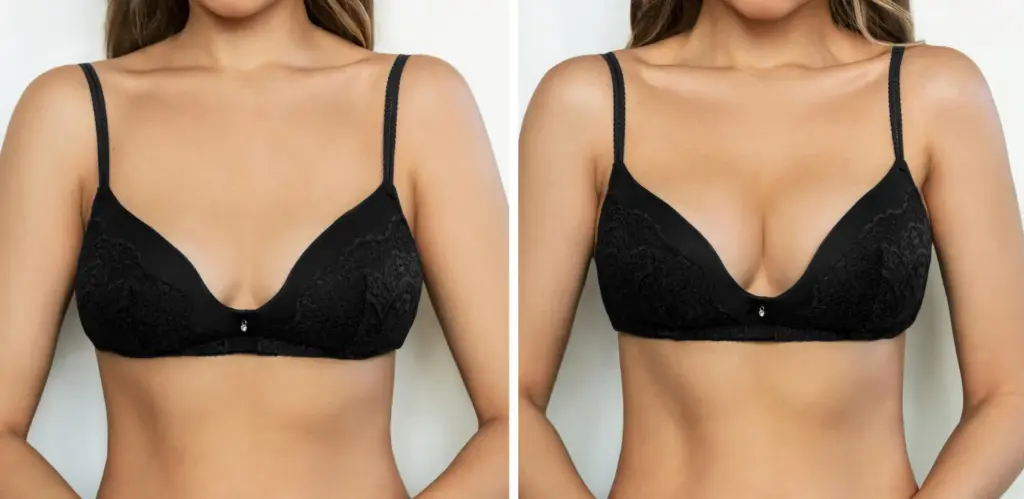
Breast augmentation before and after images can illustrate changes in volume, shape, symmetry, and scarring. However, visible results depend on starting anatomy, implant or fat-transfer choice, surgical technique, healing, and photography conditions, so before and after breast enlargement photos should not be treated as a guarantee.
When to Call a Doctor
When to Call a Doctor After Breast Augmentation
- Call promptly for increasing redness, warmth, swelling, drainage, fever, worsening pain, or an incision that opens.
- Contact the surgical team for sudden breast asymmetry, rapidly increasing swelling, new severe firmness, or a change in implant position.
- Seek urgent medical care for chest pain, severe shortness of breath, fainting, or sudden one-sided leg swelling.
- Follow the surgeon’s instructions for any symptom that is new, severe, or worsening rather than waiting for a routine visit.


