


Uğurkan Demir is a Medical Content Writer with experience creating clear, well-researched,…
View author profile →
Dr. Lamiya Gurbanova is a physician who completed her specialization training in…
View profile →We review our content at regular intervals and update it whenever new research or a change in clinical guidelines requires it.
Overview
What Is Traditional Liposuction?
Traditional liposuction is a surgical body-contouring procedure that removes localized pockets of fat. After the treatment area is prepared with fluid, a surgeon guides a thin tube called a cannula through small access points to loosen and suction out fat. Liposuction surgery shapes selected areas such as the abdomen, thighs, hips, arms, or chin; it is not a treatment for obesity and does not replace healthy eating, physical activity, or other weight-management habits.
Who It's For
Who Is Traditional Liposuction For?
People who may be candidates generally have localized fat that has not responded as hoped to diet and exercise, a relatively stable weight, and enough skin elasticity for the area to contour appropriately. They should understand that liposuction is intended to refine body shape rather than produce dramatic weight loss. Realistic expectations, good general health, and a willingness to follow recovery instructions are important when considering liposculpture or other forms of liposuction.
- Candidate factors: A suitable candidate is generally in overall stable health, has localized fat, maintains a relatively stable weight, and has realistic expectations.
- Skin quality: Adequate skin elasticity may help the treated area contract smoothly after fat removal.
- Smoking and nicotine: Smoking or nicotine use can impair healing, so the surgeon may require a period of avoidance before and after surgery.
- Medical conditions: Conditions affecting the heart, lungs, blood clotting, healing, or anesthesia safety must be reviewed and controlled when possible.
- Medications and supplements: Prescription medicines, over-the-counter drugs, and supplements may need adjustment because some affect bleeding or anesthesia.
- Pregnancy plans: Surgery may be postponed during pregnancy or while pregnancy is being planned, and future body changes can affect the result.
- Recovery responsibilities: Candidates need to be able to arrange help and follow activity, wound, medication, and follow-up instructions.
- Questions to review with the surgeon: Ask about expected contour changes, alternatives, personal risks, anesthesia, recovery, and whether another procedure is appropriate.
Medical assessment
Candidacy must be evaluated in person
Whether liposuction is safe and appropriate cannot be determined reliably from photographs or an online checklist. A qualified, appropriately credentialed surgeon should review your health, treatment goals, medications, skin quality, and the areas you want treated.
Preparation
How to Prepare for Traditional Liposuction
During the consultation, the surgeon discusses the areas you want treated, your goals, skin quality, medical history, medications, and the anesthesia plan. You should also review expected limitations, possible alternatives, recovery needs, and whether additional procedures are being considered. This visit is an opportunity to ask how the planned liposuction surgery will be performed and what result is realistic for your body.
- Medical and medication review: Provide a complete list of medical conditions, allergies, medicines, vitamins, and supplements so the surgical team can plan safely.
- Nicotine guidance: Follow the surgeon’s instructions about stopping smoking, vaping, and other nicotine products before and after surgery.
- Testing and clearance: Complete any laboratory tests, medical evaluations, or anesthesia clearance requested for your individual health needs.
- Day-of-surgery planning: Follow instructions about eating, drinking, bathing, clothing, and medicines on the day of the procedure.
- Transportation and home support: Arrange an adult to take you home and help with basic needs during the early recovery period.
- Compression garments: Obtain a properly fitted compression garment if the surgeon recommends one for recovery.
- Financial and cost questions: Ask what the quoted cost includes, such as surgeon and anesthesia fees, facility charges, garments, follow-up, and possible additional procedures.
During the Procedure / What to Expect
What Happens During Traditional Liposuction?
Before surgery, the treatment areas are marked and the planned anesthesia is administered. The surgeon makes small access points and introduces fluid, commonly using a tumescent liposuction technique, to prepare the tissue and help limit bleeding. A cannula is moved in controlled passes to loosen and remove fat from the selected areas. The access points may be left to drain or covered and closed according to the technique, after which dressings or compression garments are applied and you are monitored during the initial recovery period.
Anesthesia and the surgical setting
Anesthesia may range from local anesthesia with sedation to a deeper anesthetic, depending on the extent of treatment and the surgeon’s and anesthesia professional’s assessment. The procedure should take place in an appropriately equipped, accredited setting suited to the planned operation and your medical needs.
What varies
Your operative plan is individualized
The exact technique, amount of fat removed, treatment areas, procedure duration, and need for overnight observation vary from person to person. Do not use another patient’s experience to predict your own liposuction surgery plan.
Risks & Benefits
Benefits and Risks of Traditional Liposuction
POTENTIAL BENEFITS
Liposuction may improve the contour and proportion of selected areas with localized fat that has been resistant to diet and exercise. The change can make clothing fit differently, but the visible outcome develops as swelling settles.
IMPORTANT LIMITATIONS
Liposuction does not treat obesity, cellulite, loose skin, or the medical and lifestyle causes of weight gain. It is not a substitute for weight management, and it cannot guarantee a perfectly smooth or symmetrical contour.
- Expected short-term effects: Swelling, bruising, soreness, drainage from small access points, and temporary numbness are common during early healing.
- Possible contour changes: Unevenness, contour irregularity, asymmetry, or changes in skin sensation can occur.
- Infection and bleeding: Infection or bleeding may require medical treatment or additional intervention.
- Fluid shifts: Changes in body fluid balance can affect circulation and may be serious when extensive areas are treated.
- Blood clots: Deep vein thrombosis or a pulmonary embolism can occur after surgery, although these complications are uncommon.
- Anesthesia complications: Reactions or breathing, heart, or other problems related to anesthesia are possible.
- Rare serious injury: Damage to internal structures or other severe complications can occur in rare cases.
- Factors that influence safety: Patient health, treatment extent, facility standards, anesthesia, surgeon experience, and adherence to aftercare all affect risk.
Safety
Discuss individualized risks before deciding
Ask the surgeon to explain the risks that apply to your health, the planned treatment areas, and any combined procedures. No surgery is risk-free, and claims about whether liposuction is safe should be weighed against your personal assessment and the standards of the facility and care team.
Recovery
Recovery After Traditional Liposuction
After traditional liposuction, soreness, bruising, swelling, and temporary numbness are common. Small openings may release fluid for a short time, and your surgeon may recommend a compression garment and prescribed or recommended pain control. Follow-up visits allow the team to check healing, review activity restrictions, and address concerns during recovery.
- First days after surgery: Walk short distances as instructed, use pain medicines only as directed, and expect swelling, bruising, soreness, and possible drainage.
- Activity and work: Gradually increase activity, avoid heavy lifting and strenuous exercise until cleared, and understand that return to work varies by the extent of surgery and job demands.
- Compression and incision care: Wear the recommended garment and keep dressings or small access points clean according to the surgical team’s instructions.
- Sun protection: Protect healing skin from direct sun and follow guidance about when sunscreen or other products may be used.
- Follow-up and longer-term healing: Attend all scheduled visits so the surgeon can monitor healing and guide the return to normal activities.
Before & After
Traditional Liposuction Before and After
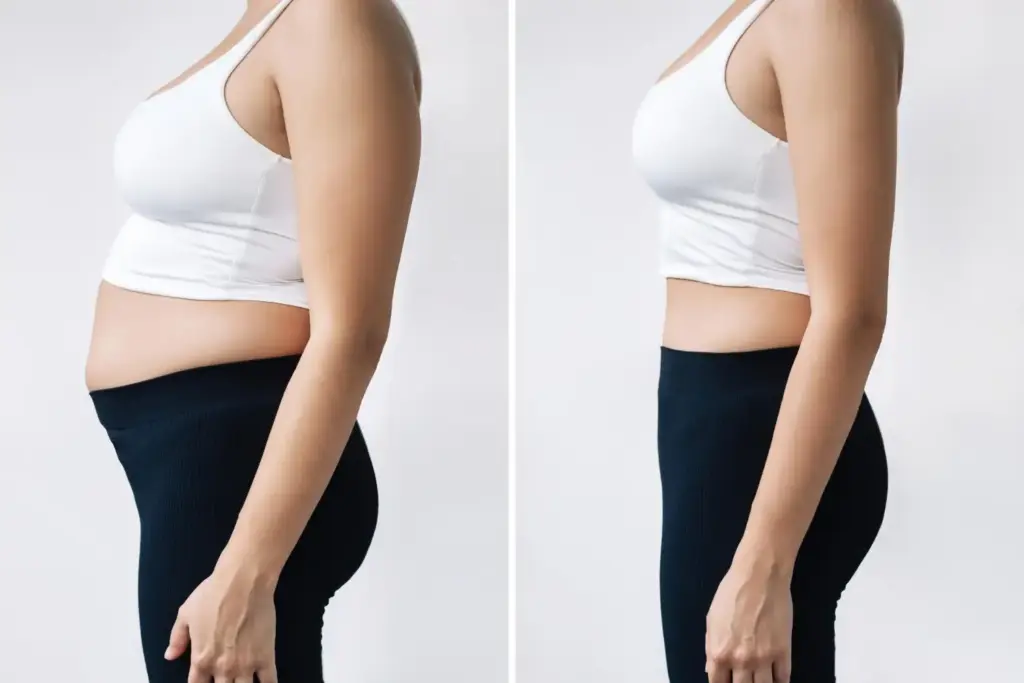
When reviewing traditional liposuction before and after images, look for similar views, lighting, posture, clothing, camera distance, and healing stages. Early photographs may show swelling rather than the final contour. Patient examples can help explain possible changes, but they should be treated as educational examples rather than promises of a specific result.
| May improve | May remain | Can affect the result |
|---|---|---|
| Localized fat contour in the selected treatment area | Loose skin, cellulite, stretch marks, or unrelated body changes | Weight changes, skin elasticity, technique, and healing |
| Body proportions or the way clothing fits | The underlying causes of weight gain or obesity | The number and location of treated areas and aftercare |
| Contour asymmetry caused by a removable fat deposit | Every natural difference between the two sides of the body | Swelling, scar formation, recovery timing, and future pregnancy or weight changes |
When to Call a Doctor
When to Call a Doctor After Traditional Liposuction
- Contact the surgical team promptly for pain that is worsening or not controlled by the prescribed plan.
- Contact the surgical team promptly for spreading redness, increasing warmth, fever, pus, or foul-smelling drainage.
- Contact the surgical team promptly for heavy bleeding or swelling that is increasing rapidly.
- Seek urgent or emergency care for shortness of breath, chest pain, fainting, or sudden difficulty breathing.
- Seek urgent or emergency care for one-sided leg swelling or pain, which may indicate a blood clot.
- Seek urgent or emergency care for severe weakness, confusion, or other sudden neurologic symptoms.
Get help
Do not wait with severe symptoms
Follow your discharge instructions and contact the surgical team when symptoms are concerning or worsening. Use emergency services for severe breathing, chest, neurologic, or bleeding symptoms rather than waiting for a routine appointment.


