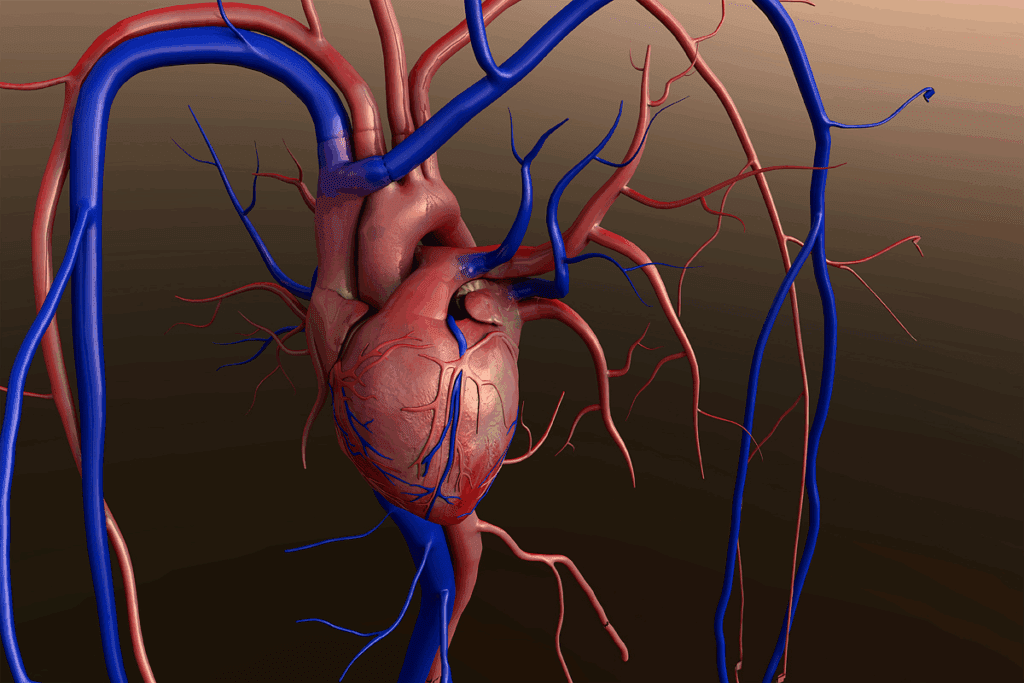
Learn the blood vessel that carries blood to the heart and how the cardiovascular system functions.
The cardiovascular system is a complex network that plays a vital role in maintaining our overall health. At its center is the heart, a powerful organ that pumps blood throughout our body. It supplies oxygen and nutrients to tissues and removes waste products.
The circulatory system involves an intricately connected network of vessels. These vessels carry blood to and from the heart. The superior and inferior vena cava are two major veins that bring deoxygenated blood back to the heart. Understanding how this system functions is key to appreciating the importance of cardiovascular health.
Key Takeaways
- The cardiovascular system transports blood throughout the body.
- The heart pumps blood through arteries and veins.
- Arteries carry oxygenated blood away from the heart.
- Veins return deoxygenated blood to the heart.
- The superior and inferior vena cava are key veins.
The Cardiovascular System Overview
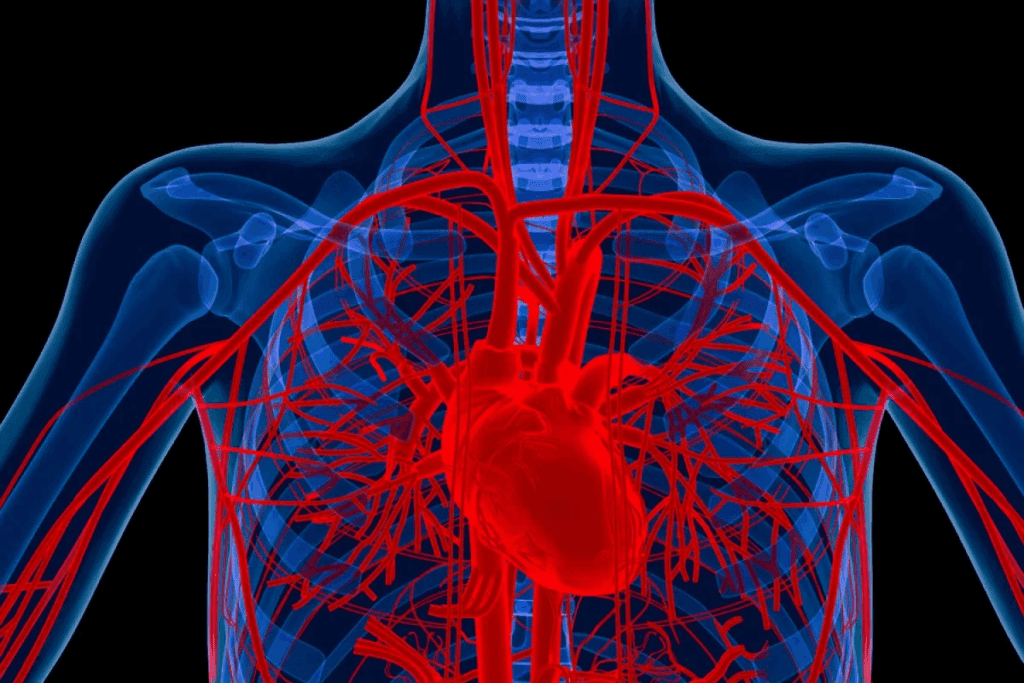
The cardiovascular system is key for our health. It includes the heart, blood vessels, and blood. It delivers nutrients and oxygen to every part of our body.
Essential Components of Heart and Circulation
The heart is a muscular organ that pumps blood. It has four chambers: the right and left atria, and the right and left ventricles. The atria get blood coming back to the heart, and the ventricles send it out to the body and lungs.
The heart’s electrical system controls the heartbeat. This ensures the heart pumps blood in a steady rhythm. The heart’s valves also help blood flow in the right direction. They stop blood from flowing backward, making sure it circulates well.
The Role of Blood Vessels in Circulation
Blood vessels are vital for the circulatory system. They carry blood all over the body. There are three main types: arteries, veins, and capillaries.
- Arteries carry oxygen-rich blood to the body.
- Veins bring oxygen-poor blood back to the heart.
- Capillaries are tiny where oxygen, nutrients, and waste are exchanged with cells.
Each blood vessel is designed for its role in the circulatory process. This ensures our body’s needs are met efficiently.
The Blood Vessel That Carries Blood to the Heart
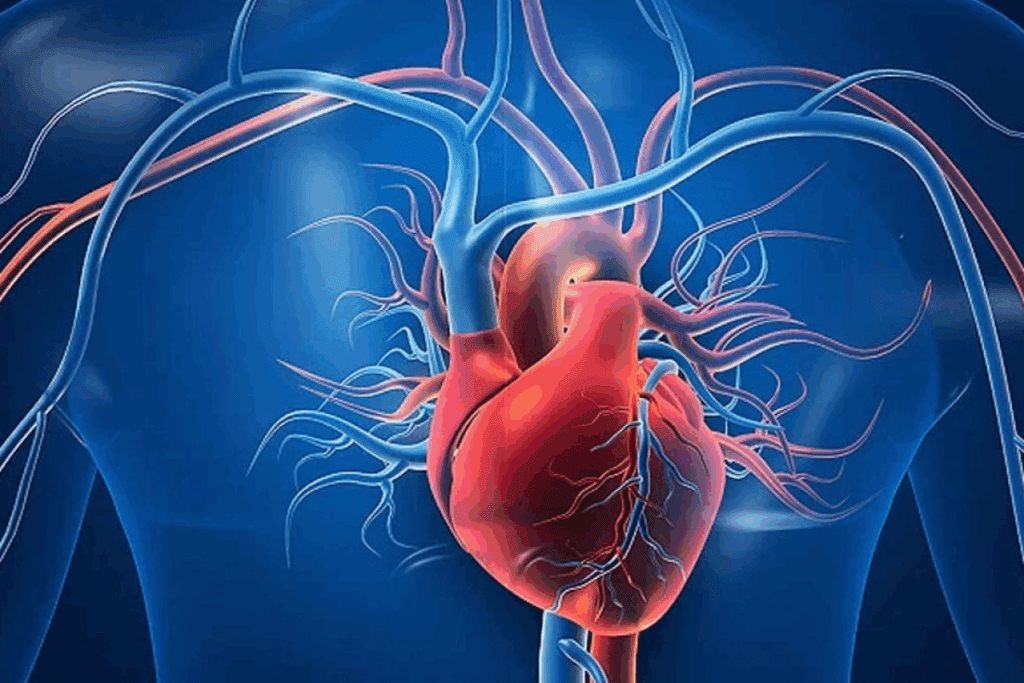
Veins are key in the circulatory system. They carry deoxygenated blood back to the heart. This is essential for the body’s health, keeping blood flowing everywhere.
Structure and Function of Veins
Veins are blood vessels that carry deoxygenated blood to the heart. They are different from arteries, which carry oxygenated blood. Veins have thinner walls and one-way valves.
These valves stop blood from flowing back. This ensures blood moves only towards the heart.
Veins are made to handle a lot of blood. They have a big lumen and walls that stretch. This lets them adjust to different blood volumes.
Direction of Blood Flow in Veins
Blood in veins flows towards the heart. The heart’s pumping and one-way valves make this happen. The heart’s pressure pushes blood forward.
The valves in veins keep blood from going back. This lets blood move only towards the heart.
| Characteristics | Veins | Arteries |
| Direction of Blood Flow | Towards the heart | Away from the heart |
| Presence of Valves | One-way valves | No valves (except for semilunar valves at the base) |
| Wall Thickness | Thinner walls | Thicker walls |
In conclusion, veins are vital for bringing deoxygenated blood back to the heart. Their design and function are perfect for this job. One-way valves make sure blood flows the right way.
Major Veins in the Human Body
## Major Veins in the Human Body
The human body has a complex network of blood vessels. These vessels are key to keeping us healthy. The major veins return deoxygenated blood to the heart. We’ll look at these veins, their structure, function, and why they’re important.
### Superior and Inferior Vena Cava: The Main Return Routes
The superior and inferior vena cava are big veins that carry deoxygenated blood back to the heart. Thesuperior vena cavagets blood from the upper body, like the head and arms. Theinferior vena cavagets blood from the lower body, like the legs. Both veins empty into the right atrium of the heart.
The superior vena cava is formed by the left and right brachiocephalic veins. It’s a big, short vein that goes down to the right atrium. The inferior vena cava is longer and goes through the diaphragm to the right atrium.
### Pulmonary Veins: Bringing Oxygenated Blood Back to the Heart
The pulmonary veins carry oxygenated blood from the lungs to the heart. There are four of them, two from each lung, that go into the left atrium. This oxygen-rich blood then goes out to the body through the aorta.
The pulmonary veins are very important. They help exchange oxygen and carbon dioxide between the lungs and the blood. Any problems with them can cause serious health issues.
To show how the major veins work, let’s look at this table:
| Vein | Function | Destination |
| — | — | — |
| Superior Vena Cava | Returns deoxygenated blood from upper body | Right atrium |
| Inferior Vena Cava | Returns deoxygenated blood from lower body | Right atrium |
| Pulmonary Veins | Bring oxygenated blood from lungs | Left atrium |
In conclusion, the major veins are vital for our circulatory system. Knowing how they work helps us understand human anatomy and physiology better.
The Heart as a Pump: Anatomy and Function
The heart is an amazing organ that acts as a muscular pump. It moves blood all over the body. This is key for getting oxygen and nutrients to our tissues and organs.
Four Chambers Working in Harmony
The heart’s four-chambered design makes it very efficient. It has the right and left atria, and the right and left ventricles.
“The atria catch blood coming back to the heart, while the ventricles send it out,” explains the heart’s division of work.
The right atrium gets blood from the body, which then goes to the right ventricle. This ventricle sends it to the lungs for oxygen.
The left atrium then gets the oxygen-rich blood from the lungs. It goes to the left ventricle, which sends it to the body through the aorta, the biggest artery.
The Cardiac Cycle: Systole and Diastole
The cardiac cycle is what happens in the heart with each beat. It has two main parts: systole and diastole.
Duringsystole, the heart muscle tightens, pushing blood out.
On the other hand,diastoleis when the heart relaxes and fills with blood.
This cycle of tightening and relaxing helps the heart pump blood well.
The heart’s chambers and the cardiac cycle work together to keep blood flowing right. Any problem here can cause heart issues. This shows how vital a healthy heart is.
Blood Vessels That Carry Blood Away from the Heart: Arteries
The arterial system is key for moving oxygen-rich blood around the body. Arteries are built to handle the heart’s high blood pressure.
Structure and Function of Arteries
Arteries have three layers: the tunica intima, tunica media, and tunica externa. The tunica media is the thickest. It’s made of smooth muscle and elastic fibers, letting arteries change size.
Arteries can change their size to meet the body’s needs. This helps keep blood pressure right and ensures tissues get enough blood.
Major Arteries and Their Roles
The aorta is the biggest artery, starting from the left ventricle of the heart. It splits into the ascending aorta, aortic arch, and descending aorta. The aorta branches off to the head, neck, and upper limbs.
Other important arteries are the coronary arteries. They supply blood to the heart. The pulmonary arteries carry blood to the lungs.
The Pulmonary Circulation: Oxygenating the Blood
The pulmonary circulation is key to oxygenating our blood. It moves deoxygenated blood from the heart to the lungs and back. This ensures our body gets the oxygen it needs.
Where Does the Pulmonary Artery Carry Blood To?
The pulmonary artery is vital for carrying deoxygenated blood. It takes blood low in oxygen to the lungs for oxygenation. The artery splits into two branches, one for each lung, ensuring both lungs get blood.
Gas Exchange in the Lungs
In the lungs, deoxygenated blood undergoes gas exchange. Oxygen from the air diffuses into the blood in the alveoli. At the same time, carbon dioxide, a waste, diffuses out to be exhaled.
After gas exchange, the blood, now rich in oxygen, returns to the heart. It then moves into the systemic circulation. There, it delivers oxygen to all parts of the body.
The Systemic Circulation
The cardiovascular system is complex, but the systemic circulation is key. It delivers oxygenated blood to tissues and organs. We’ll look at how this process works, focusing on the aorta’s role.
Distribution of Oxygenated Blood
The aorta splits into smaller arteries. These then branch into arterioles and capillaries. This network ensures oxygenated blood reaches the body’s tissues. It’s very efficient, delivering oxygen and nutrients everywhere.
The Aorta: The Main Artery
The aorta is the largest artery. It carries oxygenated blood from the heart to the rest of the body. Its strong structure can handle high pressures, keeping blood flow steady.
| Level of Branching | Artery Type | Function |
| 1st Level | Aorta | Main artery carrying oxygenated blood from the heart |
| 2nd Level | Major Arteries | Supplies blood to vital organs and the head |
| 3rd Level | Smaller Arteries and Arterioles | Distributes blood to specific regions and tissues |
Cardiovascular System: Veins and Arteries Key Differences
The cardiovascular system is a complex network. It relies on veins and arteries to keep the body healthy. Understanding the differences between these blood vessels is key to knowing how the system works.
Structural Variations for Different Functions
Arteries have thick walls to handle the heart’s high blood pressure. Veins, on the other hand, have one-way valves. These valves stop blood from flowing backward, ensuring it moves towards the heart.
Blood Pressure Differences
Blood pressure in arteries is much higher than in veins. This is because arteries and veins have different roles in the circulatory system.
| Characteristic | Arteries | Veins |
| Wall Thickness | Thicker | Thinner |
| Blood Pressure | Higher | Lower |
| Valves | Generally absent | Present |
| Direction of Blood Flow | Away from the heart | Towards the heart |
Regulation and Control of the Cardiovascular System
Our heart and blood pressure are controlled by a fine balance. This balance comes from the nervous system and hormones. It makes sure our heart rate and blood pressure match our body’s needs, whether we’re resting or active.
Nervous System Control of Heart Rate
The autonomic nervous system is key in managing heart rate. It has two parts: the sympathetic system, which speeds up the heart, and the parasympathetic system, which slows it down. This balance keeps our heart rate right for our activity level.
| Nervous System Branch | Effect on Heart Rate | Activity Level |
| Sympathetic | Increases | High |
| Parasympathetic | Decreases | Low |
Hormonal Influences on Circulation
Hormones like adrenaline and thyroxine greatly affect our heart and blood. Adrenaline, for example, makes our heart beat faster and blood pressure rise. This gets our body ready for ‘fight or flight’ situations.
Hormonal Effects on the Cardiovascular System:
- Adrenaline: Increases heart rate and blood pressure
- Thyroxine: Influences heart rate and cardiac output
Learning about how our heart and blood are regulated helps us stay healthy. By understanding what affects our heart rate and blood flow, we can improve our overall health.
Conclusion: The Importance of Cardiovascular Health
Keeping our cardiovascular system healthy is key to feeling good. We’ve looked at how blood vessels and the heart work together. This helps us understand why cardiovascular health is so important.
A healthy heart health means more than just not having heart disease. It’s about living a lifestyle that keeps the heart working well. This includes regular exercise, eating right, and avoiding bad habits.
By focusing on cardiovascular health, we can lower the risk of heart problems. This improves our life quality. It’s about taking care of our heart, so it keeps pumping well. This ensures our bodies get the oxygen and nutrients they need.
FAQ
Q: What is the cardiovascular system and how does it work?
A: The cardiovascular system is a complex network. It includes the heart, arteries, veins, and capillaries. It transports blood throughout the body. It supplies oxygen and nutrients to tissues and removes waste products.
Q: What is the role of the heart in the circulatory system?
A: The heart is a muscular organ that pumps blood. It has four chambers: the right and left atria, and the right and left ventricles. These chambers work together to pump blood efficiently.
Q: Which blood vessels carry blood towards the heart?
A: Veins carry blood towards the heart. They have one-way valves that prevent backflow. This ensures blood moves in one direction towards the heart.
Q: What is the function of the superior and inferior vena cava?
A: The superior vena cava brings blood from the upper body. The inferior vena cava brings blood from the lower body. Both empty into the right atrium.
Q: How does the heart pump blood throughout the body?
A: The heart’s four chambers work together to pump blood efficiently. This is through the cardiac cycle. It includes systole, when the heart contracts, and diastole, when it relaxes.
Q: Where does the pulmonary artery carry blood to?
A: The pulmonary artery carries blood to the lungs. There, gas exchange occurs. Oxygen is absorbed into the blood, and carbon dioxide is removed.
Q: What is the main artery that comes from the heart?
A: The aorta is the main artery. It branches into smaller arteries. These supply oxygenated blood to various parts of the body.
Q: What is the difference between arteries and veins?
A: Arteries carry blood away from the heart. Veins carry blood towards the heart. They have structural variations for different functions and blood pressure differences.
Q: How is the cardiovascular system regulated?
A: The cardiovascular system is regulated through nervous system control. It also has hormonal influences on circulation.
Q: What is the importance of the cardiovascular system?
A: The cardiovascular system is vital. It delivers oxygen and nutrients to tissues. It also removes waste products. It is essential for overall health.
References:
Shahoud, J. S. (2023). Physiology, Arterial Pressure Regulation. StatPearls.
https://www.ncbi.nlm.nih.gov/books/NBK538509/
National Heart, Lung, and Blood Institute. (2023). How the Heart Works.
https://www.nhlbi.nih.gov/health-topics/how-heart-works