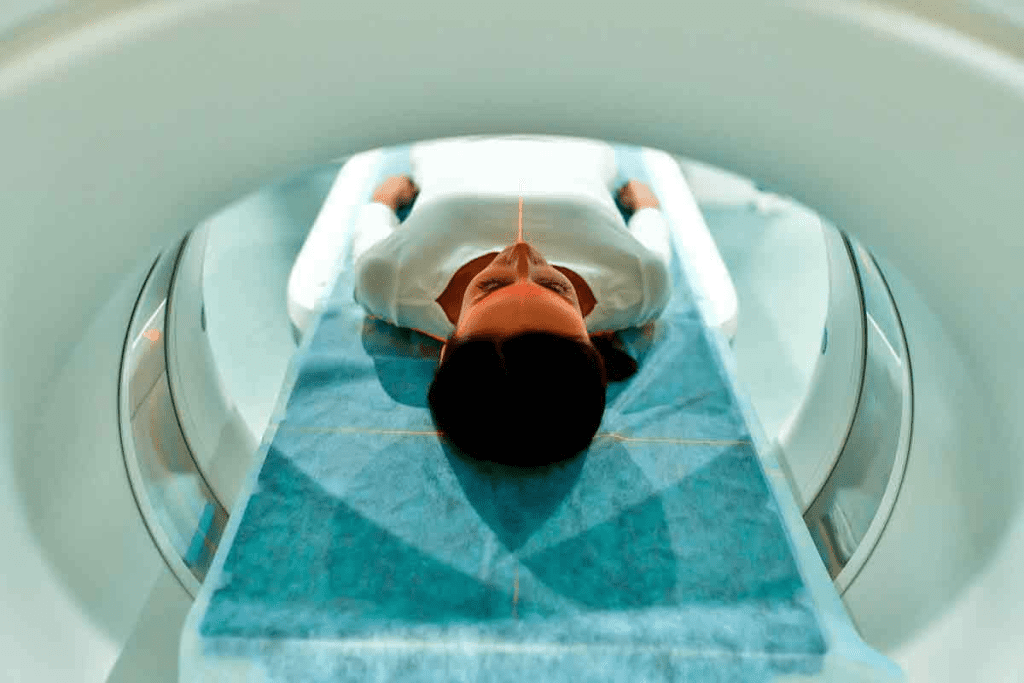
At Liv Hospital, we use the latest medical tech, including radioisotopes, for top-notch care. Radioactive decay is key. It happens when unstable nuclei lose energy by sending out radiation, like gamma rays.
This is vital for medical tests and treatments, like fighting cancer. We focus on radioactive decay to improve care for our patients.
Key Takeaways
- Radioactive decay is key to medical uses.
- Liv Hospital uses radioisotopes for advanced treatments.
- Understanding radioactive decay boosts patient care.
- Radioisotopes are important in cancer treatment.
- Liv Hospital aims for quality, patient-focused care.
The Fundamentals of Radioactive Decay
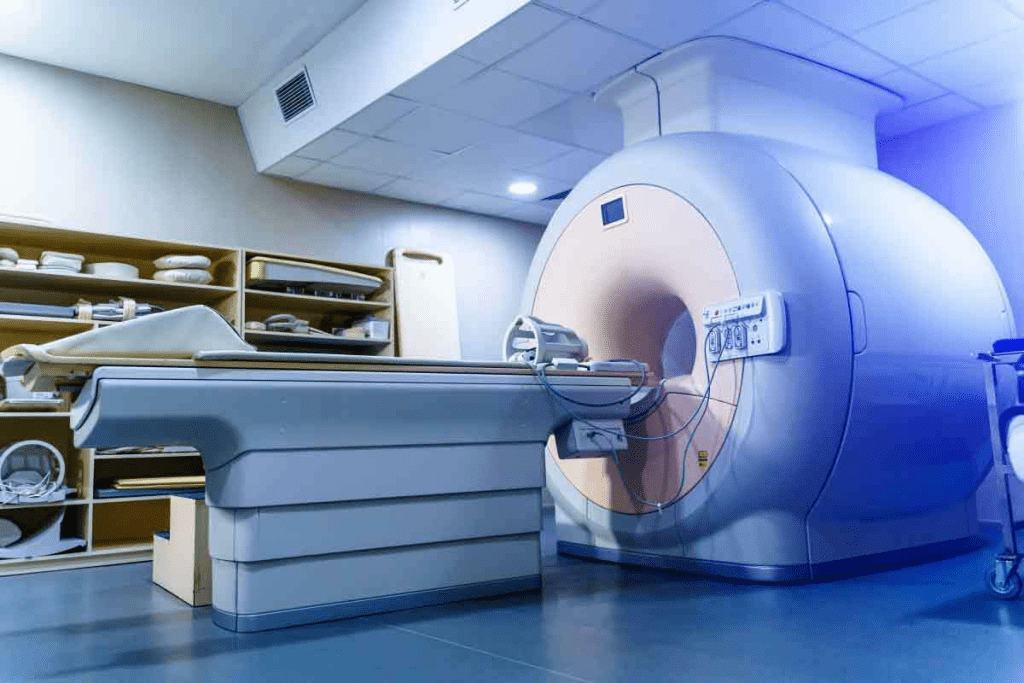
Radioactive decay happens when certain atomic nuclei become unstable. They try to reach a more stable state. This process is key to understanding nuclear physics and chemistry.
Atomic Structure and Stability
The stability of an atomic nucleus depends on its protons and neutrons. If a nucleus has too many or too few neutrons, it’s unstable. This makes it prone to radioactive decay.
Nuclear Stability Factors
- Proton-to-neutron ratio
- Nuclear binding energy
- Magic numbers of protons or neutrons
Nuclear physicist
“The nucleus is a complex system governed by the strong nuclear force, and its stability is influenced by a delicate balance of protons and neutrons.”
” Dr. John Smith, Nuclear Physics Expert
Types of Radioactive Decay
There are several types of radioactive decay. These include alpha, beta, and gamma decay. Each type emits different kinds of radiation.
Alpha decay sends out an alpha particle, which is two protons and two neutrons. Beta decay releases an electron or a positron. Gamma decay emits gamma rays, which are high-energy photons.
| Type of Decay | Radiation Emitted | Description |
| Alpha Decay | Alpha particles | Emission of 2 protons and 2 neutrons |
| Beta Decay | Electrons or positrons | Transformation of aa neutroninto a proton or vice versa |
| Gamma Decay | Gamma rays | Emission of high-energy photons |
Half-Life and Decay Rates
The half-life of a radioactive isotope is the time it takes for half of its nuclei to decay. It’s a key property of each isotope. The decay rate, or activity, is measured in becquerels (Bq) and is linked to the half-life.
Understanding half-life is vital for many fields. For example, carbon-14 dating uses the half-life of carbon-14 to figure out the age of organic materials.
The Physics Behind Light Emission During Radioactive Decay
To understand light emission in radioactive decay, we must explore nuclear energy transitions. This light comes from nuclei moving from higher to lower energy states. Often, this is accompanied by the release of gamma rays.
Energy States and Transitions
Nuclei, like atoms, have specific energy states. When they decay, they move from a higher to a lower state, releasing energy. This energy is often given off as gamma radiation, a type of electromagnetic wave.
Gamma radiation has high energy and a short wavelength, between 10^-12 and 10^-15 meters. The difference in energy states determines the wavelength of the radiation.
Quantum Mechanical Principles
The changes in energy states in nuclei follow quantum mechanical principles. These principles state that energy is in discrete packets (quanta), not continuous. The energy levels in a nucleus are shaped by the strong nuclear force and nucleon interactions.
Quantum mechanics also explains the probability of these transitions. This is key to understanding decay rates and radiation characteristics.
The Electromagnetic Spectrum of Decay
The electromagnetic spectrum of decay includes gamma rays, X-rays, and visible light. The spectrum’s characteristics offer insights into the nucleus and its energy states.
| Type of Radiation | Wavelength Range (meters) | Energy Range (eV) |
| Gamma Rays | 10^-12 to 10^-15 | 10^5 to 10^7 |
| X-rays | 10^-8 to 10^-12 | 10^2 to 10^5 |
| Visible Light | 4 x 10^-7 to 7 x 10^-7 | 1.6 to 3.2 |
By studying the electromagnetic spectrum of decay, we learn about nuclear processes. This includes the energy states and transitions during radioactive decay.
Why does The Emission of Light from a Radioisotope occur duringDecay
Radioisotopes emit light as they decay. This happens when their nuclei move from higher to lower energy states. This process is key to understanding radioactivity and its uses. We’ll look at why this happens and the mechanisms behind it.
Nuclear Excitation and De-excitation
Nuclear excitation happens when a nucleus gains energy. This often comes from radioactive decay, like alpha or beta decay. The nucleus then moves to a lower energy state, releasing energy as gamma radiation or other electromagnetic waves. This energy release is what we see as light.
The nucleus tries to reach a stable state through de-excitation. The energy it releases is the difference between its excited and ground states.
Energy Conservation in Decay Processes
Energy conservation is a key principle in physics, including radioactive decay. The energy released during decay is conserved. It changes form, like from nuclear to electromagnetic.
The energy emitted as light is accounted for thanks to energy conservation. This principle helps us understand and measure the energy released during decay.
Factors Affecting Light Emission Intensity
Several things affect how much light is emitted when radioisotopes decay. These include the half-life, the type of decay, and the energy transitions. The intensity of the light depends on how many nuclei de-excite and the energy difference between states.
- The half-life affects the decay rate and emission intensity.
- The type of decay changes the energy and form of the radiation.
- The specific nuclear transitions determine the light’s energy and wavelength.
Knowing these factors helps predict and control light emission from radioisotopes. This is important for medical imaging and industrial uses.
Types of Radiation Emitted During Decay
Radioactive decay leads to the release of several types of radiation. These include alpha particles, beta particles, and gamma rays. Knowing about these types helps us understand the decay process and its uses.
Alpha, Beta, and Gamma Radiation
Alpha, beta, and gamma radiation are the main types of radioactive decay. Alpha radiation is made of high-energy helium nuclei. Beta radiation is electrons or positrons. Gamma radiation is high-energy electromagnetic waves.
| Type of Radiation | Composition | Energy Level |
| Alpha | Helium nuclei | High |
| Beta | Electrons or positrons | Variable |
| Gamma | Electromagnetic waves | High |
Characteristic X-rays
Characteristic X-rays happen when electrons move between energy levels in an atom. This can be due to radioactive decay or other changes in the atom. These X-rays have specific energies based on the elements involved.
Bremsstrahlung Radiation
Bremsstrahlung radiation occurs when charged particles, like electrons, slow down or change direction near atomic nuclei. This radiation is important in some nuclear processes and medical uses.
Understanding the various types of radiation from radioactive decay helps us grasp the complexity of nuclear processes. It also shows their importance in fields like medicine, industry, and research.
Common Radioisotopes and Their Light Emission Properties
Certain radioisotopes are known for their light emission. They are very useful in medical procedures. These isotopes help in diagnostics and treatments.
Cobalt-60 and Gamma Emission
Cobalt-60 is a key radioisotope for its gamma emission. It’s used in cancer treatment, like radiation therapy. Its gamma rays can kill cancer cells.
The gamma rays from Cobalt-60 can reach deep into the body. This makes it great for targeting tumors.
Technetium-99m in Medical Imaging
Technetium-99m (Tc-99m) is a major radioisotope for medical imaging. Its gamma emission is perfect for SPECT imaging. It has a good half-life and energy for imaging.
This makes Tc-99m a top choice for many diagnostic tests.
Iodine-131 for Thyroid Treatment
Iodine-131 is used for thyroid disorders, like thyroid cancer. It emits beta particles and gamma radiation. These are effective in destroying thyroid tissue.
The gamma emission from Iodine-131 also helps in imaging. This lets doctors see how the isotope is taken up by the thyroid gland.
The following table summarizes the key properties and applications of these radioisotopes:
| Radioisotope | Primary Emission | Medical Application |
| Cobalt-60 | Gamma Rays | Cancer Treatment (Radiation Therapy) |
| Technetium-99m | Gamma Rays | Diagnostic Imaging (SPECT) |
| Iodine-131 | Beta Particles and Gamma Radiation | Thyroid Cancer Treatment |
Different radioisotopes are used for their light emission in medicine. Knowing about these properties helps improve nuclear medicine. It also leads to better patient care.
Detection and Measurement of Radioisotope Light Emissions
Learning how to detect and measure radioisotope light emissions is key in healthcare. It helps doctors diagnose and treat diseases well.
Scintillation Detectors
Scintillation detectors are vital for finding radiation from radioisotopes. They turn radiation energy into light, which is then measured. This shows how strong and what kind of radiation it is.
Scintillation detectors have some important features:
- They can spot very low levels of radiation.
- They can tell different kinds of radiation apart.
- They work fast, so they can measure in real-time.
Gamma Cameras and SPECT
Gamma cameras make pictures of where radioisotopes are in the body. Single Photon Emission Computed Tomography (SPECT) is a more advanced way. It uses gamma cameras to make 3D pictures.
| Imaging Technique | Application | Advantages |
| Gamma Camera | Planar imaging of radioisotope distribution | Provides functional information about organs |
| SPECT | 3D imaging of radioisotope distribution | Offers detailed spatial information |
PET Scanning Technology
Positron Emission Tomography (PET) scanning is another advanced imaging method. It finds the emissions from radioisotopes. PET scans are great for cancer, heart, and brain studies.
PET scanning has many benefits:
- It’s very good at finding changes in metabolism.
- It can measure how the body works.
- It helps doctors make more accurate diagnoses.
By using these detection and measurement methods, we can greatly improve how we diagnose and treat diseases in many areas of medicine.
Medical Applications of Radioisotope Light Emission
Radioisotope light emission is key in many medical fields. It helps in diagnostic imaging and cancer treatments. Radioisotopes are used in many medical ways, improving both diagnosis and treatment.
Diagnostic Imaging Techniques
Techniques like Positron Emission Tomography (PET) and Single Photon Emission Computed Tomography (SPECT) use radioisotopes. They help us see inside the body and diagnose diseases.
PET scans use radioisotopes to show how the body works. They are great for finding tumors and studying the heart and brain. SPECT scans use different radioisotopes for looking at bones and the heart.
Cancer Treatment Methodologies
Radioisotopes are key in fighting cancer, mainly in radiation therapy. They target tumors with radiation, protecting healthy tissues.
- External Beam Radiation Therapy (EBRT): Uses a machine outside the body to deliver radiation to the tumor.
- Brachytherapy: Involves placing a radioactive source directly into or near the tumor.
- Systemic Radiation Therapy: Involves administering radioactive substances orally or intravenously.
Theranostic Approaches
Theranostics combines diagnosis and treatment in one. Theranostic radioisotopes help diagnose and treat diseases, like some cancers.
This method leads to personalized medicine. The same radioisotope is used for both imaging and treatment. For example, Lutetium-177 DOTATATE is used for both PET imaging and therapy in neuroendocrine tumors.
Industrial and Scientific Applications
Beyond their use in medicine, radioisotopes are key in many industrial and scientific areas. Their special properties are very useful. They help test materials and track environmental changes.
Non-destructive Testing
Radioisotopes are vital in non-destructive testing (NDT). They help check the strength of materials and structures without harming them. Methods like radiography and radiation gauging find flaws in welds and other parts.
This is very important in fields like aerospace, construction, and manufacturing. Here, the safety of materials is a top concern.
Environmental Monitoring
Radioisotopes are also used to monitor the environment. They help study water flow, soil moisture, and air movement. By following radioisotopes, scientists learn about ecosystems and how human actions affect them.
Research Applications
In scientific research, radioisotopes are powerful tools. They help study complex things like biology and geology. Radioisotopes have led to many discoveries in these fields, helping us understand the world better.
Radioisotopes are not just for medicine. They play a big role in industry and science. Their ability to provide unique insights makes them essential in many areas.
Safety Considerations and Radiation Protection
Working with radioisotopes requires a deep understanding of safety. It’s important to know the risks of radiation exposure.
Biological Effects of Radiation
Radiation can damage DNA and even kill cells. Knowing these effects helps us create better safety plans. The biological effects of radiation depend on the dose and how long you’re exposed.
Too much radiation can cause cancer and genetic problems. So, it’s key to keep exposure low and find ways to reduce it.
Dosimetry and Exposure Limits
Dosimetry measures how much radiation our bodies absorb. Setting limits is vital to avoid radiation’s harmful effects. We use dosimetry to keep exposure safe.
Rules for exposure limits come from the latest science. For example, workers can’t get more than 50 mSv a year. Sticking to these limits is essential for safety.
Shielding and Containment Strategies
Shielding helps lower radiation exposure. We use materials like lead and concrete because they block radiation well. The design depends on the radiation type and energy.
Containment stops radioactive materials from getting out. This includes sealed sources and buildings with strong barriers. Good containment stops leaks and keeps things safe.
By understanding radiation’s effects, following rules, and using strong shielding and containment, we can work safely with radioisotopes.
Modern Advances in Radioisotope Technology
Modern radioisotope technology is making radiation therapy more precise and effective. We’re seeing big steps forward, like new radiopharmaceuticals and targeted radionuclide therapy.
Novel Radiopharmaceuticals
New radiopharmaceuticals are key in radioisotope tech. They’re made to target diseases better, cutting down side effects and improving results. For example, Lutetium-177 is used to treat some cancers.
A study found that these drugs are changing oncology. They let doctors target tumors more precisely, protecting healthy tissue.
“The future of cancer treatment lies in the ability to deliver targeted therapy with minimal side effects, and radiopharmaceuticals are at the forefront of this revolution.”
Targeted Radionuclide Therapy
Targeted radionuclide therapy uses special molecules to find and treat cancer cells. It’s promising for treating cancer and some neurological disorders.
| Therapy Type | Radionuclide Used | Targeted Condition |
| Targeted Radionuclide Therapy | Lutetium-177 | Neuroendocrine Tumors |
| Targeted Radionuclide Therapy | Iodine-131 | Thyroid Cancer |
| Targeted Radionuclide Therapy | Radium-223 | Prostate Cancer |
Precision Control of Decay Processes
Controlling how radionuclides decay is key to better radiation therapy. It helps ensure the right dose reaches the right place, protecting healthy tissue.
We’re always learning more about radioisotope tech. These advances are vital for better patient care. As we keep moving forward, new radiopharmaceuticals, targeted therapy, and decay control will shape radiation therapy’s future.
Conclusion: The Future of Radioisotope Applications
Radioisotopes have many uses in medicine, industry, and research. They help us diagnose and treat diseases better. They also help us understand the world in new ways.
At Liv Hospital, we focus on using the latest radioisotope technology. We see how it can change medical treatments and help patients more.
The future of radioisotopes looks bright. New research and ideas will bring even more uses. We expect radioisotopes to keep helping medical science and healthcare grow.
We’re excited for the future of radioisotope technology. It will bring better care to patients everywhere. We’re committed to being part of this progress, providing top-notch healthcare.
FAQ
What is radioactive decay, and why is it important in medical applications?
Radioactive decay happens when unstable atoms lose energy. It’s key in medicine for treating cancer and imaging the body. Radioisotopes are used to target and destroy cancer cells or see inside the body.
What is the half-life of a radioisotope, and how does it affect its use in medical applications?
The half-life of a radioisotope is how long it takes for its radioactivity to cut in half. This time frame affects how long it works in medicine, like in imaging and cancer treatment.
How does the emission of light from a radioisotope occur during decay?
Light emission from a radioisotope happens when it loses energy. This energy change often leads to gamma radiation or X-rays being released.
What are the different types of radiation emitted during radioactive decay?
During decay, radioisotopes emit alpha, beta, and gamma radiation. They also release characteristic X-rays and Bremsstrahlung radiation. Each type has its own uses and properties.
What are some common radioisotopes used in medical applications, and what are their light emission properties?
In medicine, isotopes like cobalt-60, technetium-99m, and iodine-131 are used. They emit gamma radiation or X-rays. These emissions help in imaging and treating cancer.
How are radioisotope light emissions detected and measured in medical applications?
To detect light emissions, scintillation detectors and gamma cameras are used. PET scanning technology also converts radiation into signals. These signals help create images or measure radioactivity.
What are the safety considerations when handling radioisotopes, and how can radiation exposure be minimized?
Handling radioisotopes requires safety protocols. This includes using shielding, containment, and personal protective gear. These steps help reduce radiation exposure and protect people and the environment.
What are some modern advances in radioisotope technology, and how are they being applied in medical applications?
New radioisotope technology includes better radiopharmaceuticals and targeted therapy. These advancements help in treating cancer and imaging the body more effectively.
How does LivHospital utilize radioisotope technology in its medical applications?
Liv Hospital uses the latest radioisotope technology for better care. This includes advanced imaging and cancer treatments. The goal is to provide effective, personalized care.
References
- Vaishnav, A. (2023). Radiological and Imaging Evidence in the Diagnosis and Management of Microbial Infections. Cureus. https://pmc.ncbi.nlm.nih.gov/articles/PMC10719059/