<SEP-7293_image_1>Most thyroid nodules are harmless, but knowing when to worry is key for catching thyroid cancer early. The number of thyroid nodules is rising globally. It’s important to know the signs to act quickly.
We’ll talk about the need to be aware of thyroid nodules and the signs that mean you should see a doctor. Studies show nearly half of adults over 60 have a thyroid nodule. And about 5% of biopsies show cancer.
Key Takeaways
- Thyroid nodules are common, mostly in older adults.
- Most thyroid nodules are benign, but some can be malignant.
- A thyroid nodule in a younger person is a big warning sign.
- Biopsy results showing cancer or suspicious of cancer need action.
- Knowing the risks and symptoms is key for early detection and treatment.
Understanding Thyroid Nodules
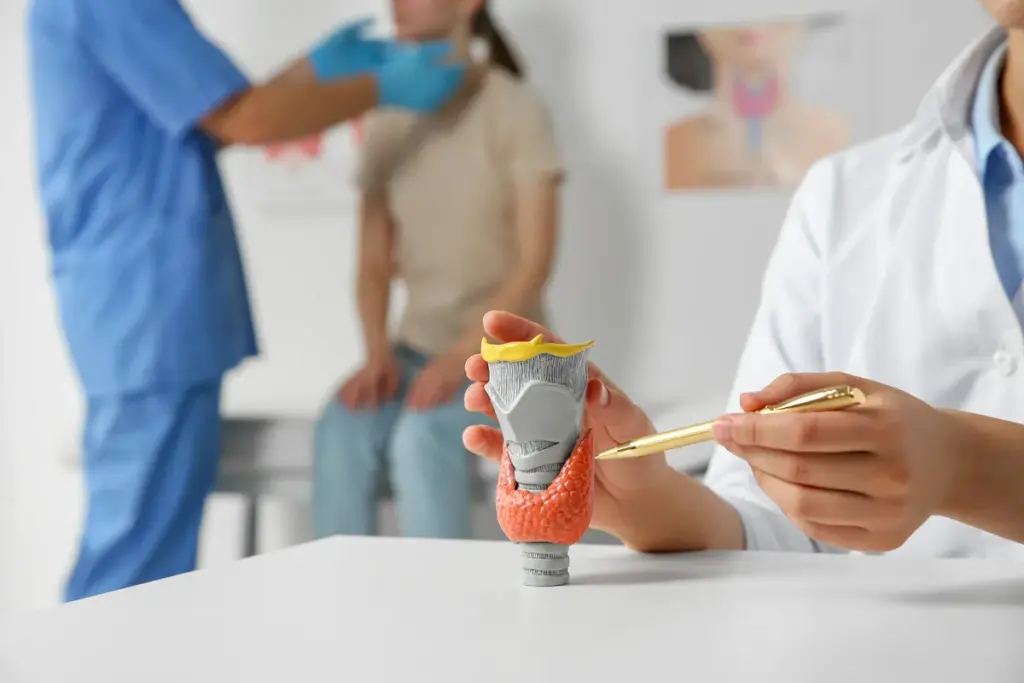
Thyroid nodules are abnormal growths on the thyroid gland. They can be solid or fluid-filled and vary in size. Knowing about thyroid nodules is key if you’re diagnosed with one.
What is a thyroid nodule?
A thyroid nodule is an abnormal growth of thyroid cells. It forms a lump in the thyroid gland. The thyroid gland is at the base of the neck and helps with metabolism and growth.
Thyroid nodules can be benign (non-cancerous) or malignant (cancerous). Most are benign, but a few are malignant.
How common are thyroid nodules?
Thyroid nodules are common, more so in women and older adults. Up to 50% of people may have them, though many are too small to see without tests. They become more common with age and in those exposed to radiation or with certain genetic conditions.
Types of thyroid nodules
There are several types of thyroid nodules, including:
- Colloid nodules: These are benign nodules made of colloid, a gel-like substance.
- Thyroid cysts: Fluid-filled nodules that can be benign or, rarely, malignant.
- Toxic nodules: Nodules that produce thyroid hormone, potentially leading to hyperthyroidism.
- Malignant nodules: Cancerous nodules that require prompt medical attention.
Knowing the type of thyroid nodule you have is important for treatment. Most thyroid nodules are benign and don’t cause symptoms. But, some can lead to thyroid nodules symptoms like difficulty swallowing or changes in voice.
If you’re diagnosed with a thyroid nodule, follow up with your healthcare provider. They will monitor its size and characteristics.
The Anatomy of the Thyroid Gland
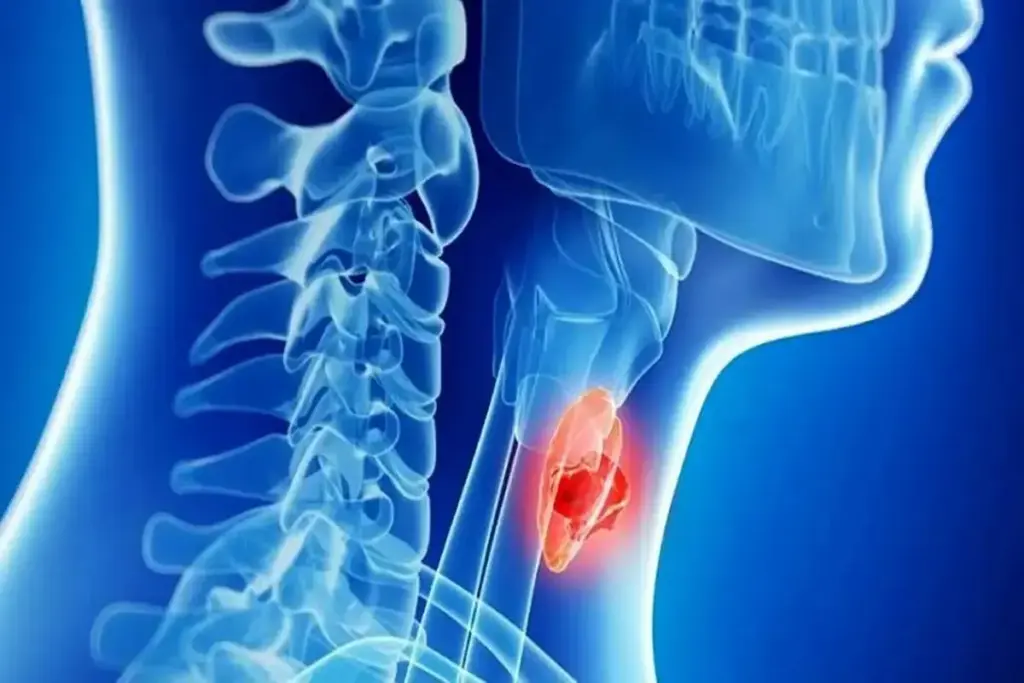
To understand thyroid nodules, we must first know about the thyroid gland. It’s a key part of our endocrine system. It helps control how our body uses energy, grows, and develops.
Location and Structure
The thyroid gland is in the neck, below the Adam’s apple. It looks like a butterfly, with two lobes joined by a thin isthmus. This gland makes thyroid hormones, which are vital for our body’s functions. It stores these hormones and releases them into the blood when needed.
Function of the Thyroid Gland
The thyroid gland’s main job is to make thyroid hormones, like T3 and T4. These hormones control how our body uses energy. They are also important for growth and development, mainly in young people. The pituitary gland controls the thyroid gland by sending thyroid-stimulating hormone (TSH).
Thyroid hormones affect many things, like heart rate and body temperature. If there’s too much or too little, it can cause health problems. For example, too little can lead to hypothyroidism, and too much to hyperthyroidism.
How Nodules Affect Thyroid Function
Thyroid nodules can change how the gland works. Some nodules make too many hormones, causing hyperthyroidism. Others don’t make hormones and can lead to hypothyroidism if they take up too much space. Nodules can also make diagnosing and treating thyroid problems harder.
|
Nodule Type |
Effect on Thyroid Function |
|---|---|
|
Hyperfunctioning Nodules |
Can cause hyperthyroidism by producing excess thyroid hormones. |
|
Non-functional Nodules |
May not affect thyroid hormone production directly but can be a sign of underlying thyroid issues. |
|
Cystic Nodules |
Typically fluid-filled and may not directly impact thyroid function unless they cause significant glandular disruption. |
Knowing how nodules affect the thyroid is key to managing thyroid health. Regular checks and the right treatment can help avoid problems caused by nodules.
“The presence of thyroid nodules can be a significant indicator of thyroid health, and understanding their impact is vital for effective management.” -Endocrinologist
Common Causes of Thyroid Nodules
Knowing why thyroid nodules happen is key to treating them well. These nodules are common and finding their causes helps in making the right treatment plans.
Iodine Deficiency
Iodine deficiency is a major reason for thyroid nodules. Iodine is needed for thyroid hormones. Low iodine can make the thyroid gland grow, causing nodules. In areas with little iodine, more people get thyroid nodules. Thanks to iodizing salt, many places have fewer iodine deficiency-related nodules.
Hashimoto’s Thyroiditis
Hashimoto’s thyroiditis is an autoimmune disease that hurts the thyroid gland. It causes inflammation and hypothyroidism. This condition can also lead to thyroid nodules. The exact reason is not clear, but it’s thought that the immune system’s attack might make thyroid cells grow into nodules.
Overgrowth of Normal Thyroid Tissue
Thyroid nodules can also come from normal thyroid tissue growing too much. This can happen for many reasons, like genetics or hormones. This growth can create benign nodules, which are usually not cancer but can cause problems if they’re big or in the wrong place.
Thyroid Cysts
Thyroid cysts are fluid-filled nodules in the thyroid gland. They are mostly harmless and can be simple or complex with solid parts. Thyroid cysts can be uncomfortable or make swallowing hard if they get big. Even though they’re often not cancerous, complex cysts might need more checks to make sure they’re not cancerous.
Understanding these common causes helps doctors diagnose and treat thyroid nodules better. This improves how well patients do.
Recognizing Thyroid Nodule Symptoms
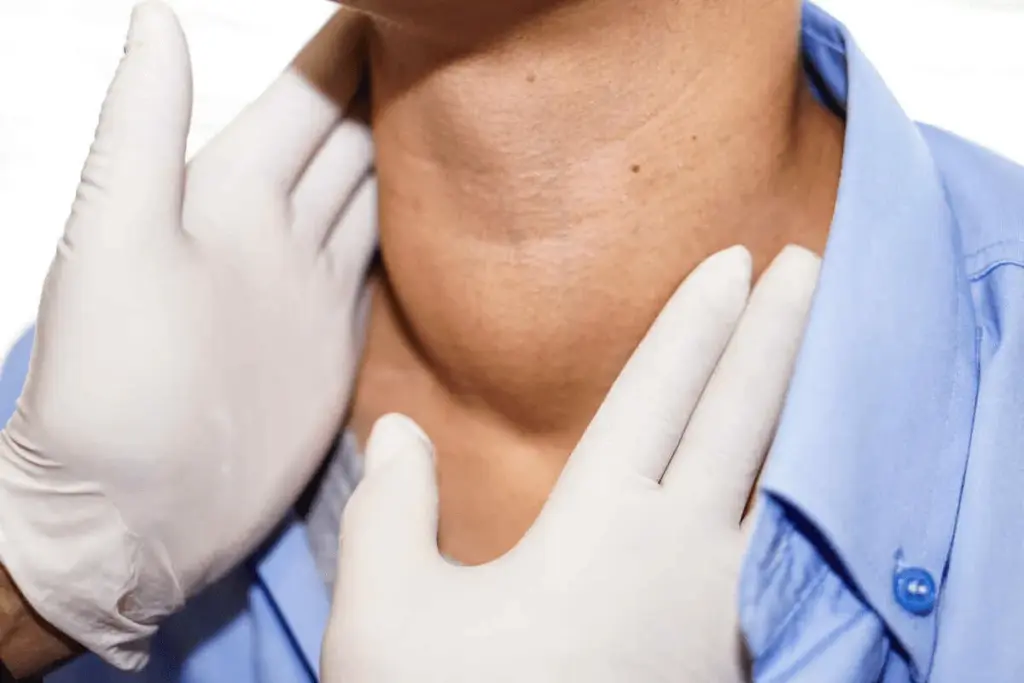
Knowing the signs of thyroid nodules is important. They can be without symptoms or show signs like a neck lump. Spotting these signs early is key for getting medical help.
Physical Symptoms You Might Notice
A common sign is a lump or swelling in the neck. This can be painless or hurt, depending on its size. Other signs include:
- Difficulty swallowing if the nodule presses on the esophagus
- Changes in voice, like hoarseness, if it affects nerves
- Neck pain or discomfort
Experts say thyroid nodules can cause various symptoms.
When Nodules Are Asymptomatic
Many thyroid nodules are found by chance during exams or scans. These nodules often don’t cause symptoms. Yet, it’s vital to have them checked by a doctor to see if they affect thyroid function.
Symptoms That Warrant Immediate Attention
Even though most nodules are harmless, some symptoms need quick medical help. These include:
- Rapid growth of the nodule
- Severe pain or trouble swallowing
- Hoarseness or voice changes
- Difficulty breathing if it presses on the trachea
Seek medical help right away if you notice these symptoms. Doctors stress the importance of quick evaluation and treatment.
“Thyroid nodules are common, and most are harmless. But some can be serious or even cancerous. Spotting the signs early is essential for managing them well.”
Risk Factors for Developing Thyroid Nodules
Thyroid nodules can be caused by genetics, environment, and age. Knowing these factors helps find who’s at higher risk.
Age and Gender Considerations
Age and gender play big roles in getting thyroid nodules. Women are more likely than men to develop thyroid nodules. The risk goes up after 40.
Family History and Genetic Factors
Having a family history of thyroid disease is a big risk factor. If a first-degree relative has thyroid nodules or cancer, you’re at higher risk. Certain genetic conditions like Multiple Endocrine Neoplasia type 2 (MEN2) and Familial Medullary Thyroid Cancer (FMTC) also raise the risk.
Radiation Exposure
Being exposed to radiation, mainly in childhood, increases the risk of thyroid nodules and cancer. This includes radiation therapy to the head and neck.
Other Medical Conditions
Some medical conditions raise the risk of thyroid nodules. For example, people with Hashimoto’s thyroiditis, an autoimmune thyroid condition, are at higher risk.
Knowing these risk factors helps understand your chance of getting thyroid nodules. Regular check-ups and screenings are key for early detection.
Benign vs. Malignant Thyroid Nodules
It’s important to know if a thyroid nodule is benign or malignant to choose the right treatment. Most thyroid nodules are not cancerous, but a few can be. Knowing the difference helps manage them better.
Characteristics of Benign Nodules
Benign thyroid nodules are not cancerous and don’t spread. They are usually:
- Single or multiple
- Varying in size
- Often asymptomatic
- May cause symptoms due to their size or location
Benign nodules can be different types, like colloid nodules, adenomas, or cysts. Colloid nodules are common and linked to iodine deficiency.
Warning Signs of Malignant Nodules
Malignant thyroid nodules are cancerous and can spread. Signs that might mean a nodule is cancerous include:
- Rapid growth
- Hard or fixed nodule
- Associated lymphadenopathy
- Voice changes or hoarseness
Many cancerous nodules don’t show symptoms at first. So, it’s key to check them thoroughly.
“The evaluation of thyroid nodules requires a complete approach, including clinical assessment, imaging studies, and cytological examination.” -American Thyroid Association
Statistical Likelihood of Cancer
The chance of a thyroid nodule being cancerous depends on age, sex, and medical history. About 5-10% of thyroid nodules are cancerous.
|
Category |
Risk of Malignancy |
|---|---|
|
Low-risk nodules |
<5% |
|
High-risk nodules |
Up to 70-80% |
Diagnostic Procedures for Thyroid Nodule Evaluation
To figure out what thyroid nodules are, we need a detailed approach. We use many tests to check thyroid nodules. This helps us find out what they are and how to treat them.
Physical Examination Techniques
First, we do a physical check. We feel the thyroid gland in the neck. This tells us about the nodule’s size, where it is, and what it feels like. This step helps us decide if we need more tests.
Blood Tests for Thyroid Function
Blood tests are key to checking how the thyroid works. We look at thyroid-stimulating hormone (TSH) levels and free thyroxine (FT4) and free triiodothyronine (FT3). These tests show if the nodule is working right or if it’s causing problems.
Imaging Studies: Ultrasound, CT, MRI
Imaging tests are very important for diagnosing thyroid nodules. Ultrasound is the main tool. It gives us detailed info about the nodule. Sometimes, we also use CT or MRI scans to see how big the nodule is and where it is in relation to other parts.
Fine Needle Aspiration Biopsy
Fine needle aspiration biopsy (FNAB) is a key test for thyroid nodules. We take cells from the nodule with FNAB. Then, we check these cells for cancer. This tells us if the nodule is harmless or if it’s cancerous, which helps us decide what to do next.
Understanding Thyroid Nodule Ultrasound Results
Getting the results of a thyroid nodule ultrasound is a big moment for your health. An ultrasound gives detailed pictures of your thyroid gland and any nodules. These pictures help doctors see what the nodules are like. This is key for figuring out if they might be cancerous and what to do next.
TI-RADS Classification System
The Thyroid Imaging Reporting and Data System (TI-RADS) helps doctors guess the risk of cancer. It uses ultrasound features to rate nodules from TR1 (safe) to TR5 (likely cancer). Knowing your TI-RADS score is important because it tells doctors what to do next, like if you need a biopsy.
Concerning Features on Ultrasound
Some ultrasound features can worry doctors about thyroid nodules. These include a nodule that’s taller than it is wide, has uneven edges, or has tiny spots inside. If a nodule looks darker than the rest of the thyroid, that’s also a red flag. These signs might mean the nodule could be cancerous, so doctors want to check it out more.
Heterogeneous Thyroid Findings
A thyroid gland that looks uneven on ultrasound can mean different things. It could be inflammation or many nodules. While unevenness itself doesn’t mean cancer, it makes it harder to understand the ultrasound. Doctors might use other tests or watch the gland closely to see if anything changes.
What Your Doctor Looks For?
Doctors look at many things when they check thyroid nodule ultrasound results. They consider the size, number, and look of the nodules, and any swollen lymph nodes. They also think about your medical history and symptoms. This helps them give you the best advice for what to do next.
The Thyroid Nodule Biopsy Process
Learning about the thyroid nodule biopsy process can help ease anxiety for those going through it. A thyroid nodule biopsy, or fine needle aspiration biopsy (FNA), is key in checking thyroid nodules.
What to Expect During FNA
A healthcare professional uses a thin needle to take a cell sample from the thyroid nodule during a fine needle aspiration biopsy. This is done under ultrasound to make sure it’s accurate. The procedure might cause some pain, but it’s usually quick, lasting 15 to 30 minutes.
Preparation is minimal, and most patients can go back to their usual activities right after. We might use local anesthesia to lessen pain, based on the nodule’s location and your anxiety level.
Interpreting Biopsy Results
After the FNA, the cell sample goes to a lab for analysis. The results can be benign, malignant, suspicious, or nondiagnostic. A benign result means the nodule is not cancerous, while a malignant result shows cancer. If it’s suspicious, more tests might be needed to figure out the nodule’s type.
It’s important to understand these results to know what to do next with your thyroid nodule. We’ll talk about what your results mean and plan your next steps.
When Repeat Biopsies Are Necessary
Sometimes, you might need another biopsy. This could happen if the first sample wasn’t clear or if the nodule changes. We might also suggest another FNA if the nodule grows or shows suspicious signs on ultrasound.
It’s key to follow our advice for follow-up care. This way, we can catch any changes in the nodule quickly. We’ll keep a close eye on your thyroid nodule and adjust your treatment as needed.
Red Flags: When to Worry About Your Thyroid Nodule
Thyroid nodules can be a concern if they show certain signs. Most nodules are harmless, but knowing when to see a doctor is key. We’ll look at signs that might mean a nodule is serious.
Size Considerations
The size of a thyroid nodule matters. Nodules over 1 cm need more attention. But size isn’t the only thing to look at.
Key size-related factors to consider:
- Nodules larger than 1 cm
- Rapid growth
- Symptoms such as difficulty swallowing or breathing
Growth Patterns That Concern Doctors
Watching how a thyroid nodule grows is important. Fast growth or shape changes might mean trouble. Regular ultrasounds help track size and shape.
A growth rate that is concerning typically involves a significant increase in size over a short period.
|
Growth Pattern |
Level of Concern |
|---|---|
|
Slow growth over years |
Low |
|
Rapid growth over months |
High |
Suspicious Ultrasound Features
Ultrasound details are key in checking thyroid nodules. Features like hypoechogenicity, irregular margins, and microcalcifications might mean cancer. We use the TI-RADS system to check these.
“The presence of suspicious ultrasound features in a thyroid nodule should prompt further investigation, typically through fine-needle aspiration biopsy.”
Lymph Node Involvement
Lymph nodes in the neck are another important sign. If they’re big, it could mean cancer has spread. We check them during the first ultrasound.
Knowing these warning signs helps you understand your thyroid nodule better. It lets you work with your doctor to decide what to do next.
Thyroid Nodule Management Guidelines
Healthcare providers need to know about thyroid nodule management guidelines. These guidelines help create effective treatment plans. They ensure patients get the right care.
Current Medical Guidelines
Guidelines for managing thyroid nodules suggest a team effort. This includes clinical checks, imaging, and cell tests. These rules change as new evidence comes in.
We stick to these guidelines to give our patients the best care. The approach depends on the nodule’s size, ultrasound findings, and the patient’s history.
Thyroid Nodule ICD-10 Coding
Accurate coding is key for thyroid nodule care. The ICD-10 system has codes for both benign and cancerous nodules. Here are some common ones:
|
ICD-10 Code |
Description |
|---|---|
|
E04.1 |
Nontoxic single thyroid nodule |
|
E04.2 |
Nontoxic multinodular goiter |
|
C73 |
Malignant neoplasm of thyroid gland |
Follow-up Recommendations
Follow-up plans for thyroid nodules vary based on the initial findings. For benign nodules, regular ultrasounds are recommended. This is to watch for any changes.
The follow-up schedule depends on the nodule’s risk level. High-risk nodules need more frequent checks.
When to Consider More Aggressive Treatment
Aggressive treatment is needed for malignant nodules or those with a high cancer risk. Surgery might be required for nodules causing symptoms or showing significant changes.
We assess each patient’s situation to decide the best treatment. Aggressive treatment is considered when it’s safe and beneficial for the patient’s health.
Treatment Options for Benign Thyroid Nodules
Understanding your treatment options is key when you’re diagnosed with a benign thyroid nodule. These nodules are common and usually don’t need aggressive treatment. But, it’s important to monitor them and manage them properly to avoid complications and ease symptoms.
Watchful Waiting Approach
For many, a watchful waiting approach is best, mainly if the nodules are small and don’t cause symptoms. This means regular ultrasounds to check if the nodule is changing size or shape. We help patients find a balance between keeping an eye on the nodule and avoiding too many tests.
Medication Options
In some cases, medication can help manage symptoms of benign thyroid nodules. This might include thyroid hormone suppression therapy to shrink the nodule. We talk to our patients about the pros and cons of medication, making sure it fits their needs and health.
Key considerations for medication include:
- The size and characteristics of the nodule
- The presence of symptoms such as pain or difficulty swallowing
- The patient’s overall thyroid function
Minimally Invasive Procedures
For larger nodules or those causing a lot of symptoms, we might suggest minimally invasive procedures. Options like radiofrequency ablation (RFA) or laser ablation can shrink the nodule and ease symptoms without surgery. We assess each patient to see if these options are right for them.
When Surgery is Recommended for Benign Nodules
While many benign thyroid nodules don’t need surgery, there are times when it’s necessary. This might be for nodules causing a lot of symptoms, showing suspicious features on imaging, or growing fast. We make sure our patients understand the risks and benefits of surgery.
Knowing about the different treatment options for benign thyroid nodules helps patients make better choices. We’re here to offer personalized guidance and support every step of the way.
Thyroid Cancer: Detection and Treatment
It’s key to understand thyroid cancer to create good treatment plans. Thyroid cancer starts in the thyroid gland. It can be different types based on the cells it affects.
Types of Thyroid Cancer
There are several types of thyroid cancer, including:
- Papillary thyroid cancer: The most common type, often treated successfully with surgery.
- Follicular thyroid cancer: Less common, but can spread to other parts of the body if not treated promptly.
- Medullary thyroid cancer: Originates in the C cells of the thyroid gland.
- Anaplastic thyroid cancer: A rare and aggressive form that requires immediate medical attention.
For more detailed information on thyroid cancer types and treatment options, we recommend visiting the National Cancer Institute’s page on thyroid cancer.
Staging and Prognosis
The staging of thyroid cancer is critical for determining the prognosis and guiding treatment decisions. The staging process involves evaluating the size of the tumor, lymph node involvement, and whether the cancer has spread to other parts of the body.
The prognosis for thyroid cancer varies depending on the type and stage at diagnosis. Generally, the survival rate for thyroid cancer is high, thanks to early detection and treatment.
Treatment Approaches
Treatment for thyroid cancer may involve one or more of the following approaches:
- Surgery: To remove part or all of the thyroid gland.
- Radioactive iodine therapy: To destroy any remaining thyroid tissue or cancer cells.
- Thyroid hormone therapy: To replace the hormones produced by the thyroid gland.
- Targeted therapy: To treat advanced thyroid cancer that doesn’t respond to other treatments.
Long-term Monitoring
After treatment, long-term monitoring is essential to detect any recurrence or metastasis. This typically involves regular blood tests, imaging studies, and physical examinations.
We emphasize the importance of follow-up care for patients with thyroid cancer to ensure the best possible outcomes.
Thyroid Nodule Surgery: What to Expect
If you’re facing thyroid nodule surgery, knowing the details can ease your worries. Being informed is key to feeling ready for this big step.
Types of Surgical Procedures
There are several ways to approach thyroid nodule surgery. The choice depends on the nodule’s size and type. Partial thyroidectomy removes just the affected lobe. Total thyroidectomy removes the whole gland. Your doctor will decide the best option for you.
The choice between these options depends on the nodule, your health, and the surgeon’s advice. Knowing the differences helps you make a better choice.
Preparing for Thyroid Surgery
Getting ready for surgery is important. You’ll need to have tests like blood work and imaging. Your team will also tell you what to eat and what medicines to skip.
Talking to your doctor about your worries is key. It’s a chance to clear up any misunderstandings about the surgery.
Recovery and Follow-up Care
After surgery, you’ll stay in a recovery area until you’re okay to go home. You’ll get instructions on caring for your wound, managing pain, and when to see your doctor again.
Follow-up care is vital for healing right. Your team will tell you when to start normal activities and how to handle any side effects.
Potential Complications
Thyroid nodule surgery is usually safe, but there are risks. These include infection, bleeding, or changes in your voice. Knowing these risks helps you spot any problems early.
Talking to your doctor about these risks helps you understand how to avoid them. It also prepares you for what to expect during recovery.
Living with Thyroid Nodules
Thyroid nodules can be tough to deal with, but you can live a normal life with the right approach. It’s key to manage thyroid nodules well to improve your quality of life.
Managing Symptoms
Managing symptoms is a big part of living with thyroid nodules. Monitoring thyroid hormone levels is key to make sure nodules don’t harm thyroid function. Regular blood tests are a must to check for hormone imbalances.
Thyroid nodules can sometimes cause pain or discomfort. Over-the-counter pain relievers might help with these symptoms. But, always talk to a doctor before taking any medication.
Follow-up Schedule
Having a regular follow-up schedule is important to keep an eye on thyroid nodules. Ultrasound exams can spot any changes in the nodules, helping to act fast if needed.
People with thyroid nodules should stick to a regular follow-up schedule with their doctor. This helps keep an eye on the condition and adjust treatments as needed.
Lifestyle Modifications
Changing your lifestyle can help manage thyroid nodules and boost your health. Eating a healthy diet full of iodine, selenium, and other nutrients is vital for your thyroid.
Regular exercise can also help manage stress and improve your well-being. Adding physical activity to your daily routine is a good idea.
Coping with Anxiety
Living with thyroid nodules can be stressful, but there are ways to cope. Getting support from healthcare providers, family, and friends can help manage anxiety and feel more in control.
Stress-reducing techniques, like meditation or deep breathing, can also help with anxiety. We encourage trying different methods to find what works best for you.
Conclusion
Understanding thyroid nodules is key to knowing what to do next. We’ve covered their causes, symptoms, diagnosis, and treatment. Knowing the warning signs and risk factors helps you act fast and feel better.
So, when should you worry about thyroid nodules? If you notice unusual symptoms or have a family history of thyroid problems, see a doctor. Managing thyroid nodules well means regular check-ups and sometimes more tests.
Being informed about thyroid nodules helps us take care of our thyroid health. Stay alert and get medical help if you’re worried about your thyroid nodule.
FAQ
What is a thyroid nodule?
A thyroid nodule is an abnormal growth of thyroid cells. It forms a lump in the thyroid gland.
How common are thyroid nodules?
Thyroid nodules are quite common. They affect up to 50% of people. Women and older adults are more likely to have them.
What are the symptoms of thyroid nodules?
Symptoms include a visible lump or swelling in the neck. You might also have trouble swallowing or breathing. Some nodules don’t cause any symptoms.
What causes thyroid nodules?
The exact cause is often unknown. But risk factors include iodine deficiency and radiation exposure. Hashimoto’s thyroiditis also increases the risk.
How are thyroid nodules diagnosed?
Diagnosis involves a physical exam and blood tests. Imaging studies like ultrasound and fine needle aspiration biopsy are also used.
What is the TI-RADS classification system?
The TI-RADS system evaluates thyroid nodules by ultrasound. It helps determine if a nodule might be cancerous.
When is a thyroid nodule biopsy necessary?
A biopsy is needed for nodules with suspicious ultrasound features. It’s also recommended for large or rapidly growing nodules.
What are the treatment options for benign thyroid nodules?
Treatment for benign nodules includes watchful waiting. Medication can help manage symptoms. Minimally invasive procedures can also reduce nodule size.
When is surgery recommended for thyroid nodules?
Surgery is often needed for malignant nodules. It’s also recommended for large or symptomatic nodules. Sometimes, it’s needed for benign nodules too.
Can thyroid nodules be cancerous?
Yes, some thyroid nodules can be cancerous. The risk depends on the nodule’s characteristics and the patient’s history.
How are thyroid nodules monitored over time?
Monitoring involves regular ultrasound exams. Clinical assessments are also done to check nodule size and characteristics.
What lifestyle modifications can help manage thyroid nodules?
Eating a balanced diet and managing stress can help. Avoiding too much iodine intake can also reduce nodule growth.
What is the ICD-10 coding for thyroid nodules?
The ICD-10 code for thyroid nodules depends on the diagnosis. For example, E04.1 is for a nontoxic single thyroid nodule.
How do thyroid nodules affect thyroid function?
Thyroid nodules can sometimes affect hormone production. This can lead to hypothyroidism or hyperthyroidism. But many nodules don’t impact function.
What are the risk factors for developing thyroid nodules?
Risk factors include age, gender, and family history. Radiation exposure and certain medical conditions like Hashimoto’s thyroiditis also increase the risk.
References
National Center for Biotechnology Information. Evidence-Based Medical Insight. Retrieved from https://pmc.ncbi.nlm.nih.gov/articles/PMC11374351/[1