
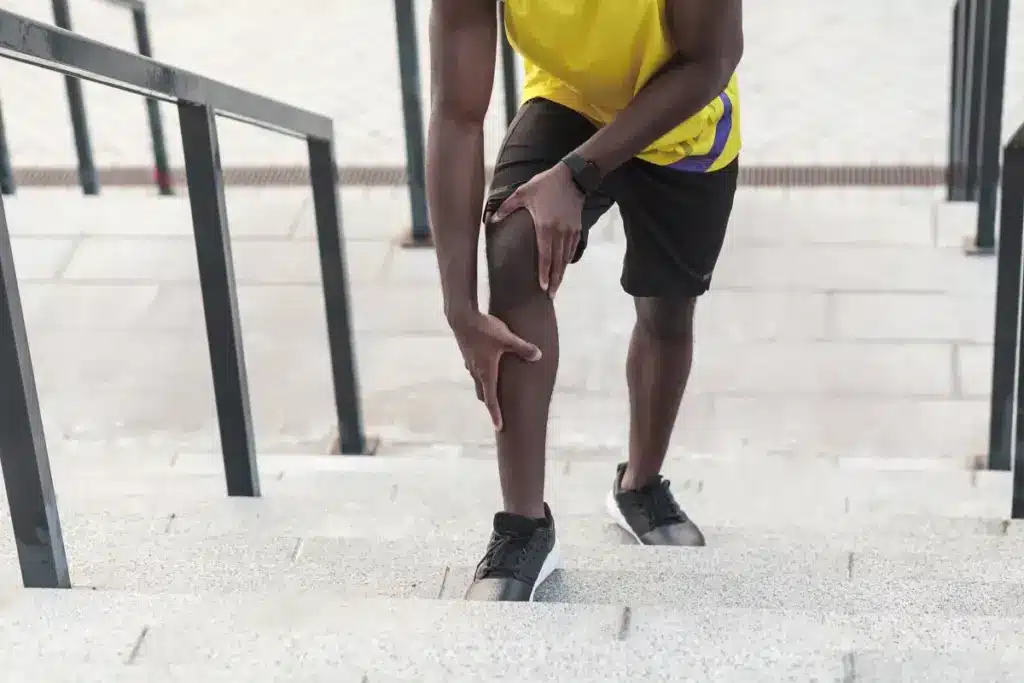
Every year, over 600,000 knee replacement surgeries happen in the U.S. Many patients wonder when they can start walking up stairs again. Recovery times differ, but knowing what to expect can help. Stop making the top 5 mistakes after knee replacement for pain. Follow amazing and essential tips for a powerful and healthy joint recovery.
Knee replacement surgery, or knee arthroplasty, replaces a damaged knee joint with an artificial one. The recovery includes physical therapy and special exercises.
Patients want to get back to moving easily and doing things on their own. Walking up stairs is a big step. It needs strength, balance, and coordination.
Key Takeaways
- Understanding the knee replacement recovery process is key for success.
- Walking up stairs is a big step in getting better.
- Physical therapy is important for getting strong and moving well.
- Some exercises should be avoided during recovery.
- A good rehab plan can help avoid problems.
Understanding Knee Replacement Surgery

Knee replacement surgery is a solution for those with severe knee arthritis or damage. It helps restore mobility and reduce pain. The surgery replaces the knee joint with artificial parts.
Types of Knee Replacement Procedures
There are different types of knee replacement surgeries. Total knee replacement is the most common, where the whole knee is replaced. Partial knee replacement only replaces the damaged part, keeping the healthy bone and tissue.
The right procedure depends on the damage, the patient’s health, and their lifestyle. Knowing these options helps in making a well-informed choice.
What Happens During Surgery
The surgeon makes an incision to reach the knee joint during surgery. The damaged parts are removed, and artificial ones are put in. The surgery is done under general or regional anesthesia.
The surgery can last from 1 to 2 hours, based on the case’s complexity. The surgeon might use minimally invasive techniques to speed up recovery.
Initial Recovery Expectations
After surgery, patients will feel pain, swelling, and stiffness. Pain management is key, using medication and other methods to control pain.
Following post-knee surgery care tips is also important. This includes elevating the leg, using ice, and doing gentle exercises. These help in healing and prevent complications.
The Immediate Post-Surgery Period
After knee replacement surgery, there are key things to focus on for a smooth recovery. This early stage is vital for healing and getting back to daily activities.
First 24-48 Hours After Surgery
The first 24-48 hours after surgery are big changes for the body. Patients often feel pain, swelling, and can’t move much. It’s important to manage pain well to stay comfortable and move early.
Using a knee surgery ice machine or cold therapy helps a lot. It reduces swelling and pain by narrowing blood vessels and cutting down on blood flow to the area.
Hospital Stay Duration
The time spent in the hospital after knee replacement surgery varies. It depends on the patient’s health, age, and the surgery’s complexity. Usually, patients stay 1-3 days.
Doctors and nurses watch over patients closely. They manage pain and start physical therapy to help patients move early.
Pain Management Strategies
Managing pain well is key after surgery. Here are some ways to do it:
- Medication: Taking pain relief medicine as told by the doctor.
- Cold Therapy: Using ice machines or cold packs to lessen swelling and pain.
- Elevation: Keeping the leg up to cut down swelling.
A good pain management plan makes recovery easier and less painful.
|
Pain Management Method |
Description |
Benefits |
|---|---|---|
|
Medication |
Administering pain relief medication as prescribed. |
Effective pain relief, promotes comfort. |
|
Cold Therapy |
Using ice machines or cold packs. |
Reduces swelling and pain. |
|
Elevation |
Elevating the leg to reduce swelling. |
Reduces inflammation, promotes healing. |
Early Mobility After Knee Replacement

Getting up and moving early is key after knee replacement surgery. It helps you regain strength and flexibility. It also lowers the risk of blood clots and stiffness.
First Steps With Assistive Devices
After surgery, you’ll start moving with walkers or crutches. These tools help you stay balanced and safe. It’s important to use them right to avoid straining your new knee.
- Use a walker or crutches as directed by your healthcare provider.
- Take small steps and avoid sudden movements.
- Keep your weight centered over your legs.
Physical Therapy Begins
Physical therapy starts soon after surgery. A therapist will show you exercises to improve your movement and strength. These exercises are key for a good recovery and will fit your needs.
Key physical therapy goals include:
- Improving knee flexion and extension.
- Strengthening the muscles around the knee.
- Enhancing balance and coordination.
Realistic Expectations for Week One
The first week is a big recovery time. You might feel pain, swelling, and be a bit stiff. But, following your doctor’s advice and doing physical therapy can help a lot. Remember, full recovery takes time.
During the first week, you can expect to:
- Experience pain and swelling, which will be managed with medication.
- Gradually increase your mobility with the help of assistive devices.
- Begin to perform simple exercises as guided by your physical therapist.
Timeline for Walking Up Stairs After Knee Replacement
Walking up stairs is key to getting back on your feet after knee surgery. It’s a step-by-step journey that starts right after the surgery.
Initial Stair Navigation (1-2 Weeks)
Right after surgery, start with short steps and use assistive devices like handrails. At first, stairs might be tough, but it’s a big step towards getting better. You’ll start with small steps and slowly get better.
Progressing to More Confident Stair Climbing (2-4 Weeks)
By the 2-4 week mark, you’ll feel more sure on stairs. Physical therapy is key here, helping you get stronger and better at climbing stairs. Keep using handrails and practice proper stair-climbing techniques to avoid injury.
Normal Stair Function (4-12 Weeks)
By 4-12 weeks, you’ll likely be able to climb stairs easily. You might feel a bit stiff sometimes, but that’s normal. Keep up with knee replacement recovery exercises to stay strong and flexible.
Always listen to your healthcare team and stick to your physical therapy plan. This will help you recover smoothly and get back to walking stairs without trouble.
Physical Therapy Exercises for Stair Climbing Ability
Getting back to climbing stairs after knee replacement surgery takes work. It involves strengthening, improving range of motion, and sticking to a home workout plan. Physical therapy is key, helping patients build the strength, flexibility, and confidence needed to safely climb stairs.
Strengthening Exercises
It’s important to strengthen the muscles around the knee to climb stairs again. Straight leg raises, quad sets, and straight leg dips are good for this. Start these exercises early and make them harder as your knee gets stronger.
Example Strengthening Exercises:
|
Exercise |
Description |
Repetitions |
|---|---|---|
|
Straight Leg Raise |
Lift the leg straight out while keeping it straight |
10-15 |
|
Quad Sets |
Tighten the quadriceps muscles by pushing the knee down |
10-15 |
|
Straight Leg Dips |
Lower the leg slightly while keeping it straight, then return to the starting position |
10-15 |
Range of Motion Exercises
Doing exercises that keep your knee flexible is vital. Heel slides and knee bends help your knee move better. This makes it easier to climb stairs.
Tips for Range of Motion Exercises:
- Start with gentle movements and gradually increase the range as the knee becomes more comfortable.
- Perform exercises regularly to maintain consistent progress.
Neglecting Home Exercise Program
Ignoring your home exercise plan can slow down your recovery and make it harder to climb stairs. It’s important to stick to your physical therapy exercises. This will help you get the best results.
Consequences of Neglect:
- Reduced strength and flexibility.
- Increased risk of complications.
- Slower recovery.
By doing strengthening exercises, range of motion exercises, and following your home exercise plan, you can improve your stair climbing ability after knee replacement surgery.
Knee Replacement Exercises to Avoid
Knowing which exercises to skip after knee replacement is key for a smooth recovery. Some activities can stress the new knee too much. This might cause problems or slow down healing.
High-Impact Activities
Stay away from high-impact activities like running or jumping. These can wear down the artificial knee. Instead, choose low-impact exercises that help your knee heal without too much strain.
Deep Knee Bends and Squats
Deep knee bends and squats can stress the knee too much. While some bending is okay for daily life, deep squats can harm early on. Stick to gentle, controlled movements that don’t hurt your knee.
Twisting Movements
Avoid twisting movements, like pivoting on the knee. They can make the new knee unstable or injured. Stay away from sudden turns or twists and choose safer options instead.
Alternative Safe Exercises
There are many safe exercises to help you recover. Try gentle stretching, straight leg raises, and short arc quad exercises. These low-impact activities can strengthen your knee without stress. Physical therapy and a custom exercise plan can also help a lot.
By skipping harmful exercises and doing safe ones, you can improve your recovery after knee replacement surgery.
Essential Recovery Items After Knee Surgery
Recovering from knee surgery is more than just resting. You need the right tools and a home setup. Having the right items can greatly improve your comfort and recovery.
Knee Surgery Ice Machines and Cold Therapy
Cold therapy is key in recovery, helping to lessen pain and swelling. Knee surgery ice machines offer consistent cold, making it easier to manage pain.
- Cryotherapy units: These devices circulate cold water to keep your knee at a therapeutic temperature.
- Ice packs: Ice packs are a simpler, yet effective, option for cold therapy.
Supportive Pillows and Positioning Aids
Proper positioning is essential for comfort and healing after surgery. Supportive pillows and aids help keep your knee in the right position.
- Wedge pillows: These support your leg and help with elevation.
- Body pillows: Full-body pillows support your entire body, making it easier to rest.
Mobility Assistance Devices
Mobility aids are key for safe movement at home during recovery. Walkers and canes offer the support and balance you need.
|
Device |
Purpose |
Benefits |
|---|---|---|
|
Walker |
Provides support and balance |
Reduces fall risk, boosts mobility confidence |
|
Cane |
Assists with balance and weight-bearing |
Improves stability, great for stairs |
Home Modifications for Recovery
Changing your home can greatly improve your recovery. Simple adjustments can make a big difference in safety and comfort.
- Clearing clutter: Removing hazards makes your home safer.
- Bathroom modifications: Grab bars and non-slip mats reduce fall risks.
By using these essential items, you can make your recovery space safer, more comfortable, and more effective.
Best Practices for Stair Safety During Recovery
Keeping stairs safe is key when you’re recovering from knee surgery. As you start moving around again, stairs can be tricky. We’ll cover important steps to make going up and down stairs safer.
Home Modifications for Stair Safety
Changing your home to make stairs safer can really help. Adding handrails on both sides of the stairs is a good idea. It gives you more support. Make sure the stairs are bright and free from things that could trip you up. Non-slip treads or stair runners can also help prevent slipping.
“According to the National Institute on Aging, home modifications are a critical aspect of fall prevention, specially for those recovering from surgery.”
Proper Technique for Ascending Stairs
Going up stairs after knee surgery needs a special way to avoid hurting your knee. Hold the handrail tight and start with your non-operative leg. Then, bring your operated leg up to the same step. Use canes or walkers if you need to. This helps you stay balanced and puts less stress on your knee.
Proper Technique for Descending Stairs
Going down stairs is harder than going up, as it needs more control to avoid falling. Start by holding the handrail and step down with your operative leg first. Then, step down with your non-operative leg. This way, you control your operated leg as you go down. It’s smart to take stairs one step at a time and rest when needed.
Following these stair safety tips can help those recovering from knee surgery avoid falls and injuries. This makes the recovery process smoother.
Managing Pain and Swelling While Using Stairs
Climbing stairs after knee replacement surgery needs careful pain and swelling management. This ensures a smooth recovery. Good pain management helps regain mobility and confidence on stairs.
Effective Ice Therapy Techniques
Ice therapy is a simple yet effective way to reduce pain and swelling. Applying ice to the affected area for 15-20 minutes, several times a day, can help a lot. Make sure to wrap the ice pack in a towel to avoid skin contact and ice burn.
- Use ice packs or cold compresses as recommended by your healthcare provider.
- Apply ice for 15-20 minutes, then remove for at least 30 minutes before reapplying.
- Monitor your skin’s response to ice therapy and adjust as needed.
Elevation Strategies
Elevating the affected leg is another effective way to reduce swelling. When sitting or lying down, propping the leg up on a pillow can help. This also promotes blood flow.
- Elevate your leg above the level of your heart to reduce swelling.
- Use pillows or cushions to support your leg in an elevated position.
- Avoid crossing your legs or bending at the knee, as this can restrict blood flow.
When to Use Pain Medication
Pain medication is often needed during the initial recovery period. It’s important to follow your healthcare provider’s instructions for dosage and timing. This ensures effective pain management.
Tips for Using Pain Medication:
- Take pain medication as directed, typically before physical therapy or activities like climbing stairs.
- Be aware of possible side effects and report any concerns to your healthcare provider.
- Gradually taper off pain medication as your pain subsides, under the guidance of your healthcare provider.
By using these strategies in your recovery routine, you can manage pain and swelling while using stairs. This makes your recovery smoother and more manageable.
The Worst Day After Knee Replacement and How to Cope
Recovering from knee replacement surgery is tough, with some days harder than others. Knowing what to expect helps patients prepare and manage their recovery better.
Common Timeline for Peak Discomfort
The second or third day after surgery is usually the toughest. This is when the pain from surgery peaks, and the anesthesia wears off. Patients often feel a lot of pain, swelling, and discomfort.
It’s key to follow your healthcare team’s pain management plan. This might include medication, rest, and gentle exercises.
Strategies for Getting Through Difficult Days
There are ways to make tough days easier. These include:
- Maintaining a positive attitude and focusing on progress
- Staying hydrated and eating well to support healing
- Using pain management techniques as directed by your healthcare provider
- Engaging in gentle exercises and physical therapy as recommended
- Having a support system, like family, friends, or a caregiver
By using these strategies, patients can handle tough days better and stay on track with their recovery.
When to Contact Your Doctor
Some discomfort is normal after surgery, but there are times to call your doctor. If you have any of these symptoms, seek medical attention:
- Increased pain that’s not managed with medication
- Excessive swelling or redness around the surgical site
- Fever or chills
- Difficulty moving the knee or bearing weight
- Any unusual symptoms or concerns
Your healthcare team is there to support you. Don’t hesitate to reach out if you have any questions or concerns.
Best Sitting Position After Knee Replacement
After knee replacement, sitting right is key for comfort and healing. The way you sit affects your recovery. It impacts both how comfortable you feel and how well you heal.
Optimal Chair Height and Features
Finding the right chair is important early on. An optimal chair height lets you sit with your feet flat. This keeps your knees at or below your hips, easing strain on your new knee.
Look for a chair with armrests for extra help. Armrests make standing and sitting easier, which is good for your knee. Also, a firm cushion supports your back and keeps you comfortable.
|
Feature |
Benefit |
|---|---|
|
Adjustable Height |
Allows for customization to reduce strain on the knee |
|
Armrests |
Assists in standing and sitting, minimizing knee stress |
|
Firm Cushion |
Provides necessary support and maintains proper posture |
Proper Positioning for Comfort and Healing
When sitting, keep your back straight and shoulders relaxed. Feet should be flat on the floor. Don’t cross your legs or ankles to avoid discomfort and poor blood flow.
Using a pillow or cushion under your knee can help in the early stages. It supports your knee and helps with swelling and healing.
Getting In and Out of Chairs Safely
Learning to get in and out of chairs safely is important. To stand up, slide to the edge and use the armrests. Slowly get up, keeping your knee straight.
To sit down, do the opposite. Slowly lower yourself, using the armrests for control. Adjust to a comfortable sitting position.
By following these tips, you can reduce discomfort and improve your recovery after knee replacement surgery.
Permanent Restrictions After Knee Replacement
After knee replacement surgery, patients must follow new rules to keep their artificial knee working well. Knee replacement greatly improves life quality. But, some activities and habits can harm the prosthetic.
Activities to Avoid Long-Term
It’s best to stay away from high-impact activities like running, jumping, or contact sports. These can stress the artificial knee too much, causing wear and tear or damage.
- Avoid deep knee bends and squats, as they can strain the knee joint.
- Limit twisting movements, which can also stress the knee.
- High-impact aerobics or dancing should be replaced with low-impact alternatives.
Modifications for Daily Activities
Making simple changes in daily life can help your knee replacement last longer. Using ergonomic furniture and tools can lessen knee strain.
When doing activities like gardening or household chores, use adaptive tools. Also, take breaks to rest your knee.
Extending the Life of Your Knee Replacement
Keeping a healthy weight is key, as extra weight adds stress to the knee. Swimming or cycling can keep your knee mobile without wearing it down.
Regular visits to your orthopedic surgeon are important. They can check your knee’s condition and fix any problems quickly.
Conclusion: Achieving Full Mobility After Knee Replacement
Getting back to full mobility after knee replacement surgery takes time and effort. It’s all about the right rehabilitation, patience, and following recovery tips. By understanding the recovery journey and using effective strategies, patients can reach their best outcomes.
A key part of getting better is a good physical therapy program. It should include exercises that boost strength, improve movement, and help with stairs. Following knee replacement recovery tips, like staying at a healthy weight and going to physical therapy, can really help.
Full mobility means more than just doing everyday tasks. It’s about getting back to more challenging activities too. With a detailed rehabilitation plan and making lifestyle changes, people can have a successful recovery. They can look forward to a better quality of life.
FAQ
How long after knee replacement surgery can I walk up stairs?
Most patients can start walking up stairs within 1-2 weeks after surgery. But, it’s key to follow your doctor’s and physical therapist’s advice.
What are the different types of knee replacement surgeries?
There are several types, including total knee replacement, partial knee replacement, and revision knee replacement. Your doctor will choose the best type for you.
How can I manage pain after knee replacement surgery?
To manage pain, use ice machines, take pain medication as directed, and elevate your leg to reduce swelling.
What are the most common complications after knee replacement surgery?
Common complications include infection, blood clots, and knee stiffness. Following your doctor’s instructions and attending physical therapy can help minimize these risks.
How long does it take to recover from knee replacement surgery?
Recovery time varies, but most patients regain significant mobility in 4-12 weeks. Full recovery can take several months.
What exercises should I avoid after knee replacement surgery?
Avoid high-impact activities, deep knee bends, and twisting movements. Instead, focus on strengthening exercises, range of motion exercises, and low-impact activities like cycling or swimming.
How can I ensure stair safety during recovery?
Modify your home by installing handrails, using non-slip treads, and ensuring proper lighting. Use proper techniques for ascending and descending stairs, and consider using a stairlift if necessary.
What are the best practices for managing pain and swelling while using stairs?
Use effective ice therapy techniques, elevate your leg, and take pain medication as prescribed to manage pain and swelling.
What is the worst day after knee replacement surgery?
The worst day is often around 2-3 days after surgery, when pain and swelling tend to peak. Strategies for coping include using pain medication, ice therapy, and rest.
What is the best sitting position after knee replacement surgery?
The best sitting position involves using a chair with a firm seat, keeping your back straight, and avoiding crossing your legs or bending at the knee.
Are there permanent restrictions after knee replacement surgery?
Yes, it’s recommended to avoid high-impact activities, heavy lifting, and bending. Modifying daily activities and following your doctor’s instructions can help extend the life of your knee replacement.
How can I extend the life of my knee replacement?
By following your doctor’s instructions, attending regular check-ups, and maintaining a healthy lifestyle, you can help extend the life of your knee replacement.
What are the top mistakes to avoid after knee replacement surgery?
Common mistakes include neglecting physical therapy, ignoring pain, and returning to high-impact activities too quickly. Being aware of these pitfalls can help ensure a successful recovery.
How can I prepare my home for recovery after knee surgery?
Prepare your home by installing handrails, using non-slip mats, and rearranging furniture to create a safe and accessible environment.
References
https://www.healthline.com/health/osteoarthritis/arthritis-natural-relief



 Departments
 Related Videos
 Our Doctors
 News
News