Did you know that over 200,000 people worldwide have undergone Transcatheter Aortic Valve Replacement (TAVR)?
TAVR is a groundbreaking, minimally invasive method. It inserts a new valve inside the old one. This greatly improves symptoms and survival rates for those with severe aortic stenosis. What specialist performs it? Learn the crucial transcatheter aortic valve replacement specialist fact and powerful information on the type of cardiologist needed.
This complex procedure needs a highly skilled cardiologist. You’ll need either an interventional cardiologist or a cardiothoracic surgeon with TAVR expertise.
Key Takeaways
- TAVR is a minimally invasive procedure for treating aortic stenosis.
- Interventional cardiologists or cardiothoracic surgeons perform TAVR.
- TAVR improves symptoms and survival rates.
- The procedure involves inserting a new valve inside the diseased one.
- TAVR has become a significant treatment option worldwide.
Understanding Transcatheter Aortic Valve Replacement (TAVR)

TAVR has changed cardiology, giving hope to those with severe aortic stenosis. This new method is less invasive than traditional surgery. It’s a big step forward in treating aortic valve disease.
Definition and Purpose of TAVR
TAVR is a way to replace the aortic valve without open-heart surgery. A small catheter is used to put in a new valve through a tiny opening, usually in the groin. It’s mainly for treating aortic stenosis, where the valve gets too narrow.
“TAVR has emerged as a vital treatment option for patients with severe aortic stenosis, providing a less invasive alternative to traditional surgical aortic valve replacement.” It’s great for those at high risk for surgery complications.
Evolution of TAVR as a Treatment Option
TAVR has seen big improvements over time. It was first for those at high risk for surgery. Now, it’s used for more patients. New technology and techniques have made it safer and more effective.
Conditions Treated with TAVR
TAVR mainly treats severe aortic stenosis. This condition narrows the valve opening, causing symptoms like chest pain and shortness of breath. It’s also being looked at for other valve diseases, showing its wide range of uses.
A famous cardiologist, said,
“TAVR represents a paradigm shift in the treatment of aortic valve disease, providing patients a less invasive and highly effective therapy.”
This highlights TAVR’s importance in today’s cardiology.
Interventional Cardiologists: The Primary TAVR Specialists

In the world of heart care, interventional cardiologists lead the way with TAVR. They are key in diagnosing, treating, and caring for patients getting Transcatheter Aortic Valve Replacement.
Role and Expertise of Interventional Cardiologists
Interventional cardiologists are specially trained for TAVR and other minimally invasive procedures. They know how to navigate complex heart paths and use advanced imaging to guide their work.
They do more than just the procedure. They assess patients before, do the TAVR, and care for them after. They work with a team of heart experts to give patients the best care.
Training and Certification Requirements
To master TAVR, interventional cardiologists go through tough training and certification programs. These programs teach them the skills needed for catheter-based procedures and how to handle problems.
To get certified, they finish a fellowship and pass a board exam. They also keep learning about new methods and tools.
Specialized Skills Needed for TAVR Procedures
Doing TAVR needs a lot of specialized skills. They must be good at accessing blood vessels, navigating the aortic valve, and placing the new valve correctly.
They also need to handle any complications that might come up, like blood vessel damage or valve issues. Their quick thinking and ability to work well under pressure are key to TAVR success.
Cardiac Surgeons in the TAVR Team
Cardiac surgeons play a key role in TAVR teams. They work closely with cardiologists, making important decisions. Their expertise in heart surgery is vital for patient care.
Collaboration Between Cardiologists and Cardiac Surgeons
Success in TAVR depends on teamwork between cardiologists and cardiac surgeons. This team approach ensures patients get the best care. Cardiac surgeons use their surgical skills and knowledge to help in complex cases.
Good communication is key to choosing the right treatment. Often, a team discussion decides between TAVR and open-heart surgery.
The Surgical Perspective in TAVR Procedures
Cardiac surgeons add a unique view to TAVR. Their knowledge of heart anatomy and surgery is essential. This is true for patients with complex heart issues or past surgeries.
When a Cardiac Surgeon Takes the Lead
In some cases, a cardiac surgeon leads the TAVR. This happens when complications arise or a patient needs urgent surgery. Having a cardiac surgeon ready for open-heart surgery is critical.
|
Scenario |
Role of Cardiac Surgeon |
Benefits |
|---|---|---|
|
Complex Anatomy |
Surgical expertise for TAVR planning |
Better outcomes due to precise planning |
|
Complications During TAVR |
Immediate surgical intervention |
Reduced risk of serious complications |
|
Previous Cardiac Surgery |
Knowledge of previous surgical interventions |
Informed decision-making for TAVR approach |
Together, cardiac surgeons and cardiologists make TAVR safe and effective. They work to get the best results for patients.
The Multidisciplinary Heart Team Approach
A team of experts leads the way in TAVR, making sure patients get care that fits their needs. This team is key to TAVR’s success. It combines many healthcare pros with unique skills.
Composition of a TAVR Heart Team
The TAVR team includes interventional cardiologists, cardiac surgeons, imaging specialists, anesthesiologists, and critical care specialists. Each one is important for diagnosing, treating, and helping patients recover.
Working together, the team makes sure every patient gets the best care. They consider everything from the first check-up to after the treatment. This teamwork helps choose the best treatment for each patient.
Role of Imaging Specialists
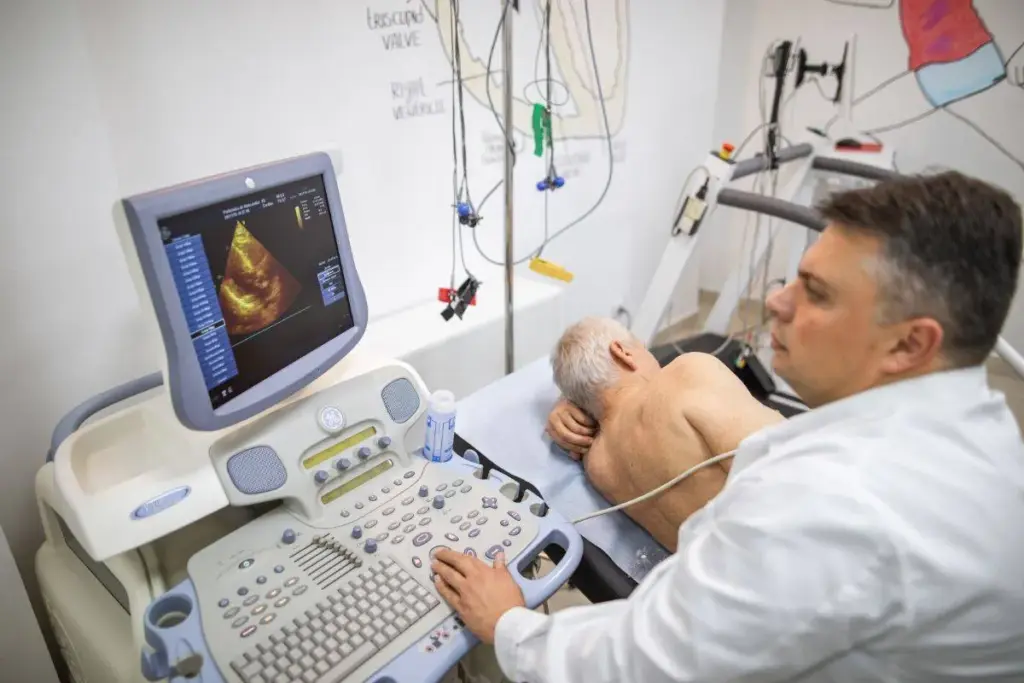
Imaging specialists are key in TAVR. They use high-tech imaging to guide the procedure and check the heart’s health. Advanced imaging modalities like echocardiography and CT angiography are used before, during, and after the procedure.
They work with cardiologists and surgeons to place the valve correctly. Their skills are essential for avoiding problems and making the procedure a success.
Importance of Anesthesiologists and Critical Care Specialists
Anesthesiologists and critical care specialists are vital to the TAVR team. They provide care and watch over patients during and after the procedure. They manage anesthesia, pain, and keep an eye on vital signs during recovery.
Their knowledge is critical in handling any issues that might arise. By teaming up with others, they help patients recover better and get the best care possible.
Transcatheter Aortic Valve Replacement: The Procedure
The Transcatheter Aortic Valve Replacement (TAVR) has changed how we treat aortic stenosis. It’s a less invasive option compared to open-heart surgery.
Pre-Procedure Assessment and Planning
Before TAVR, patients get a detailed check-up. This includes tests like echocardiography and CT scans. These help see the aortic valve and the area around it.
Doctors also look at the patient’s overall health. They check for any health issues that might affect the procedure or recovery. A team of doctors, including cardiologists and surgeons, work together. They use the patient’s data to plan the best treatment.
Step-by-Step TAVR Procedure
The TAVR procedure has several important steps:
- Doctors give local anesthesia and sedation to keep the patient comfortable.
- They use the femoral artery (or another site) to put in the catheter.
- They guide the catheter to the aortic valve using special imaging.
- They then deploy the new valve, which is attached to a balloon or stent.
- They check how well the new valve works and look for any problems.
Different Approaches to TAVR
TAVR can be done in two main ways: transfemoral and transapical.
Transfemoral Approach:
This method uses the femoral artery in the groin. It’s less invasive and leads to faster recovery.
Transapical Approach:
In this method, access is through the heart’s apex, via a small chest incision. It’s used when the femoral arteries are not suitable.
Types of TAVR Valves and Devices
There are different TAVR valves and devices, like balloon-expandable and self-expanding ones. The choice depends on the patient’s anatomy and the doctor’s preference.
|
Device Type |
Description |
Key Features |
|---|---|---|
|
Balloon-expandable |
Crimped onto a balloon, deployed by inflation. |
Precise positioning, widely used. |
|
Self-expanding |
Deployed by retracting a sheath, expands automatically. |
Flexible, adaptable to varying anatomy. |
Duration of the TAVR Procedure
The TAVR procedure usually takes 1 to 3 hours. This time can vary based on the case’s complexity and the approach used.
Recovery After TAVR
Recovery after TAVR is a detailed process. It includes care right after the procedure, a hospital stay, and follow-up visits. This approach helps patients get the best results.
Immediate Post-Procedure Care
Right after TAVR, patients are watched closely in a recovery area or ICU. They are checked for vital signs, pain, and any complications. Doctors also use echocardiography to see how the new valve is working.
Hospital Stay Duration
The time in the hospital after TAVR varies. It depends on the patient’s health and the procedure details. Most stay a few days, but it can be longer if there are complications.
|
Factor |
Average Hospital Stay |
Range |
|---|---|---|
|
Uncomplicated TAVR |
3 days |
2-5 days |
|
Complications Present |
5 days |
3-7 days |
Recovery Timeline and Milestones
The recovery time after TAVR varies. But, most people start feeling better in a few weeks. They see big improvements in 1-3 months.
Managing Fatigue After TAVR
Fatigue is common after TAVR. It’s important to manage it well. Patients should pace themselves, rest when needed, and slowly increase exercise as advised by their doctor.
Follow-up Appointments and Monitoring
Follow-up visits are key to recovery. They let doctors check on the patient’s progress and the valve’s function. These visits include tests like echocardiograms to make sure everything is okay.
Risks and Benefits of TAVR
TAVR has changed how we treat aortic valve disease. It has its own risks and benefits. Knowing these is key for making smart choices.
Potential Complications and Risks
TAVR is mostly safe, but complications can happen. These might include:
- Stroke or transient ischemic attack
- Bleeding or vascular complications
- Aortic regurgitation
- Pacemaker implantation due to heart block
- Device malfunction or migration
Table: Possible Complications of TAVR
|
Complication |
Description |
Frequency |
|---|---|---|
|
Stroke/TIA |
Neurological event due to blood clot |
2-5% |
|
Bleeding |
Excessive bleeding at access site |
5-10% |
|
Aortic Regurgitation |
Leakage around the valve |
5-15% |
Short-term and Long-term Benefits
TAVR has many benefits. Short-term advantages include:
- Less invasive than surgical AVR
- Shorter hospital stay
- Faster recovery time
Long-term benefits include:
- Improved survival
- Enhanced quality of life
- Reduced symptoms of aortic stenosis
Risk-Benefit Analysis for Different Patient Groups
The benefits and risks of TAVR differ for each patient. For example, those at high risk for surgery might benefit more from TAVR. But, those at lower risk might have other things to consider.
Criteria for TAVR Candidacy
To decide if TAVR is right for someone, several factors are looked at. These include:
- Severity of aortic stenosis
- Surgical risk assessment
- Anatomical suitability
- Patient’s overall health and preferences
A team of heart experts must carefully evaluate each patient. This helps find the best treatment plan.
TAVR vs. Traditional Surgical Aortic Valve Replacement
It’s important to know the differences between TAVR and traditional aortic valve replacement. Both have their own benefits and drawbacks. The right choice depends on the patient’s health, how severe their condition is, and their body’s specific needs.
Comparing Procedures and Recovery Times
TAVR is a less invasive procedure that replaces the aortic valve through a catheter. This catheter is inserted through an artery in the leg. On the other hand, traditional surgery opens the chest to access the heart. TAVR usually has a shorter recovery time compared to traditional surgery.
|
Procedure |
Recovery Time |
Invasiveness |
|---|---|---|
|
TAVR |
Several weeks to a few months |
Minimally invasive |
|
Surgical AVR |
Several months |
Open-heart surgery |
When TAVR is Preferred Over Surgery
TAVR is often chosen for those at high risk for surgery complications or who can’t have open-heart surgery. It’s also an option for those who have had heart surgery before.
“TAVR has been shown to be a safe and effective alternative to surgical aortic valve replacement in high-risk patients.”
Journal of the American College of Cardiology
When Traditional Surgery Might Be Better
Younger patients or those at lower risk might prefer traditional surgery. It allows for the removal and replacement of the diseased valve. It’s also needed for certain conditions where TAVR isn’t suitable.
Valve-in-Valve TAVR for Failed Bioprosthetic Valves
For those with failed bioprosthetic valves, Valve-in-Valve TAVR is a new option. This involves placing a new valve inside the old one.
Choosing between TAVR and traditional surgery depends on each patient’s unique situation. A team of cardiologists, cardiac surgeons, and specialists should work together to decide the best course of action.
Conclusion
Transcatheter aortic valve replacement (TAVR) has changed how we treat aortic valve disease. It’s a less invasive option compared to traditional surgery. A team of experts, including cardiologists and surgeons, work together to perform TAVR.
The procedure starts with a detailed check-up before the valve is replaced through a catheter. This method means patients often recover faster. They usually see big improvements in their health and life quality.
In summary, TAVR is a big step forward in treating aortic valve disease. It’s safe and effective for those at high risk for surgery or with other health issues. As TAVR technology gets better, patients will have even better results. This supports a strong conclusion for TAVR.
FAQ
What is TAVR?
TAVR stands for Transcatheter Aortic Valve Replacement. It’s a new way to fix a heart problem called aortic stenosis. This problem makes it hard for blood to flow from the heart.
What type of cardiologist performs TAVR?
Interventional cardiologists do TAVR. They are experts in using catheters to fix heart problems.
How is TAVR performed?
To do TAVR, a doctor puts a thin tube through an artery in the leg. They guide it to the heart. There, a new valve is put in place of the old one.
What are the benefits of TAVR?
TAVR is less invasive than traditional surgery. It means less pain and quicker recovery. It’s also good for people who can’t have open-heart surgery.
What are the risks associated with TAVR?
TAVR can have risks like bleeding and stroke. Kidney injury and problems with blood vessels are also possible.
How long is the recovery time for TAVR?
Recovery from TAVR varies. Most patients go home in a few days. It takes weeks to months to fully recover.
How does TAVR compare to traditional surgical aortic valve replacement?
TAVR is better for high-risk patients or those with certain heart shapes. Traditional surgery might be better for younger people or those with specific heart issues.
What is the role of cardiac surgeons in TAVR?
Cardiac surgeons are key in the TAVR team. They help decide the best treatment with interventional cardiologists.
What is the composition of a TAVR heart team?
A TAVR team has many experts. They include cardiologists, surgeons, imaging specialists, anesthesiologists, and critical care doctors. They all work together to help patients.
Can TAVR be used for patients with previous aortic valve replacement?
Yes, TAVR can be used for patients with a failed previous valve. This is called a “valve-in-valve” procedure.
What are the different approaches to TAVR?
There are several ways to do TAVR. These include transfemoral, transapical, transaortic, and transcarotid. The choice depends on the patient’s body and other factors.
How is a patient evaluated for TAVR?
Patients are checked for TAVR with many tests. These include echocardiography and CT scans. They also have a clinical check-up to see if they’re a good fit for the procedure.
New England Journal of Medicine. Evidence-Based Medical Insight. Retrieved from https://www.nejm.org/doi/full/10.1056/NEJMoa1008232