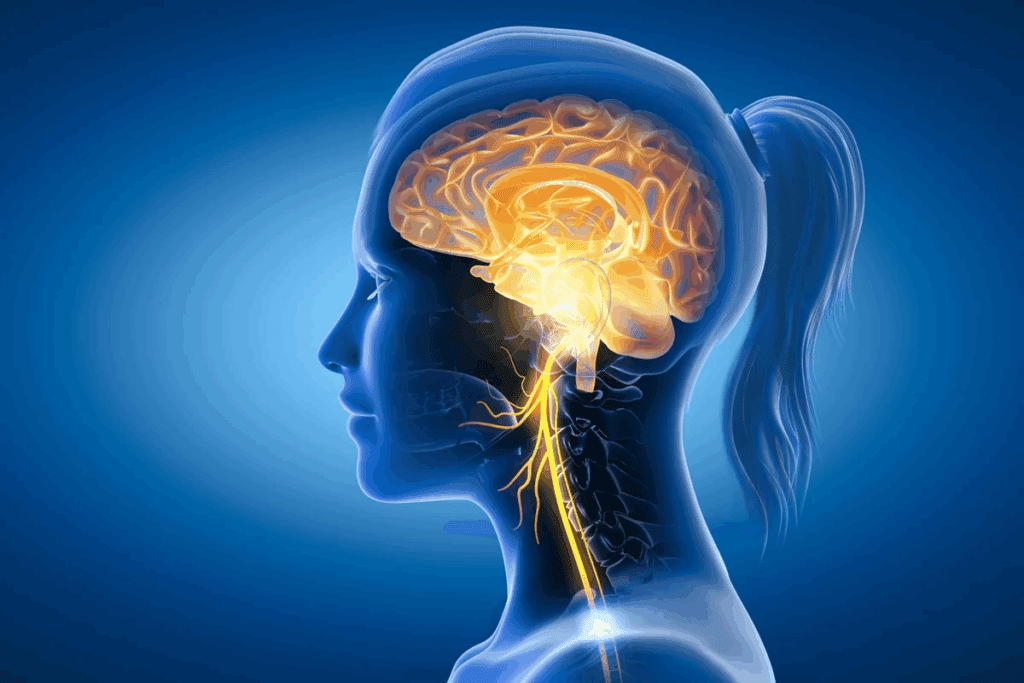
The human eye moves hundreds of times a day. It does this thanks to cranial nerve pathways working together. But, not all eye movements are controlled by one nerve. The oculomotor and trochlear nerves have different but important roles. Trochlear nerve vs oculomotor nerve (CN IV vs CN III): Our critical guide explains the key differences in the muscles they control.
Knowing how these nerves work is key to spotting nerve dysfunction early. At Liv Hospital, we understand how vital these nerves are for eye movements and vision.
Key Takeaways
- The oculomotor and trochlear nerves are key for eye movement.
- They start in the midbrain and control how our eyes move.
- The oculomotor nerve helps four muscles around the eye.
- The trochlear nerve helps the superior oblique muscle.
- Knowing about their roles helps in diagnosing eye problems.
The Neural Control of Eye Movement
Our eyes move with precision, thanks to a complex system of neural control. This system involves the coordination of several cranial nerves. Together, they ensure our eyes move smoothly and accurately.
Overview of the Six Cranial Nerves Controlling Vision
The oculomotor (CN III), trochlear (CN IV), and abducens (CN VI) nerves control eye movements. They work with other nerves to let our eyes move in all directions. This helps us focus on various objects.
Let’s look at how these nerves control our eye movements. The oculomotor nerve controls muscles like the superior and medial rectus. The trochlear nerve is linked to the superior oblique muscle. The abducens nerve controls the lateral rectus muscle.
Importance of Coordinated Nerve Function
Coordinated nerve function is key for smooth eye movements. Any problem in this coordination can cause eye movement disorders. These include strabismus or nystagmus. The complex work of these nerves shows how vital the nervous system is for our vision.
Cranial Nerve | Muscle Innervated | Primary Function |
Oculomotor (CN III) | Superior Rectus, Medial Rectus, Inferior Rectus, Inferior Oblique | Elevation, Adduction, Depression, Rotation |
Trochlear (CN IV) | Superior Oblique | Intorsion, Depression |
Abducens (CN VI) | Lateral Rectus | Abduction |
Understanding how our eyes move is key to treating eye disorders. By knowing the role of cranial nerves, we can better diagnose and treat these issues. This knowledge helps us see how our eyes and nervous system work together.
Anatomy of the Oculomotor Nerve (CN III)
Understanding the oculomotor nerve is key to knowing how our eyes move together. This nerve, or cranial nerve III, controls several eye muscles and helps with eye movements.
Origin and Course
The oculomotor nerve starts in the midbrain, a part of the brainstem. It comes out between the superior and inferior colliculi. It then goes between the posterior cerebral artery and the superior cerebellar artery.
After starting, the nerve moves forward with the posterior communicating artery. It then goes between the superior and inferior branches of the superior cerebellar artery. It goes through the dura mater to enter the cavernous sinus.
Nuclei and Branches
The oculomotor nerve has several nuclei. The oculomotor nucleus handles the somatic motor functions. The Edinger-Westphal nucleus is for parasympathetic innervation.
The nerve splits into a superior and an inferior branch. The superior branch goes to the superior rectus and levator palpebrae superioris muscles. The inferior branch goes to the medial rectus, inferior rectus, and inferior oblique muscles. The parasympathetic fibers go with the inferior branch to the ciliary ganglion.
Relationship to Surrounding Structures
The oculomotor nerve is near many important structures. In the cavernous sinus, it’s close to the internal carotid artery and the trochlear nerve. Damage to the nerve can cause eye movement problems.
Structure | Relation to Oculomotor Nerve | Clinical Significance |
Posterior Cerebral Artery | The nerve passes between it and the superior cerebellar artery. | Aneurysms can compress the nerve. |
Cavernous Sinus | The nerve traverses through it. | Lesions here can affect multiple nerves. |
Internal Carotid Artery | Adjacent within the cavernous sinus. | Aneurysms or stenosis can impact nerve function. |
Anatomy of the Trochlear Nerve (CN IV)
The trochlear nerve is the longest cranial nerve inside the brain. It controls the superior oblique muscle. This muscle is key for eye movements.
Origin and Unique Dorsal Exit
The trochlear nerve starts in the midbrain. It’s in the caudal part of the periaqueductal gray matter. It’s the only nerve that leaves the brainstem from the back.
This unique exit means it crosses over before leaving the brainstem. This is called decussation.
Course and Distribution
After leaving the brainstem, the trochlear nerve travels a long way. It goes between two arteries before reaching the orbit. It enters the eye through the superior orbital fissure.
This nerve controls the superior oblique muscle. It helps with several eye movements:
- Intorsion (rotating the top of the eye toward the nose)
- Depression (moving the eye downward)
- Abduction (moving the eye outward)
Notable Anatomical Characteristics
The trochlear nerve stands out for several reasons:
- It’s the smallest cranial nerve by axon count, with about 1,000 to 2,000 axons.
- It has the longest intracranial course. This makes it prone to injury.
- Its unique dorsal exit from the brainstem and decussation before emerging.
Knowing the anatomy of the trochlear nerve is key. It helps in diagnosing and treating nerve palsy. This can cause double vision and other eye problems.
Trochlear Nerve vs Oculomotor Nerve: Key Differences
It’s important to know how the trochlear and oculomotor nerves work together. They control eye movements but have key differences.
Size and Length Comparison
The trochlear nerve (CN IV) is the smallest but longest cranial nerve. The oculomotor nerve (CN III) is bigger and more complex, controlling more muscles.
Size and length are critical factors in understanding the unique challenges and characteristics of each nerve. The trochlear nerve’s lengthy course makes it susceptible to certain types of damage, while the oculomotor nerve’s larger size and complex branching pattern contribute to its diverse functions.
Exit Points from the Brainstem
The trochlear nerve exits dorsally, a unique characteristic among cranial nerves, while the oculomotor nerve exits ventrally from the midbrain. This distinction has important implications for their anatomical pathways and possible injury sites.
“The trochlear nerve is the only cranial nerve that emerges from the dorsal aspect of the brainstem, making its anatomy particular.”
Muscle Innervation Patterns
The oculomotor nerve controls four muscles: superior rectus, medial rectus, inferior rectus, and inferior oblique. The trochlear nerve, on the other hand, only controls the superior oblique muscle. This shows their different roles in eye movement.
Functional Distinctions
The oculomotor nerve handles a wide range of eye movements. The trochlear nerve, through the superior oblique muscle, mainly controls eye rotation towards the nose. It also helps in eye depression and abduction.
The functional differences between these nerves show the complexity and precision of the ocular motor system. Knowing these differences is key for diagnosing and treating eye movement disorders.
Muscles Controlled by the Oculomotor Nerve
The oculomotor nerve is key in eye movement. It controls four main extraocular muscles. These muscles help us see clearly and move our eyes smoothly.
Superior Rectus Muscle
The superior rectus muscle is controlled by the oculomotor nerve. It helps lift the eye, mainly when it’s turned outward. This muscle is vital for looking up.
Medial Rectus Muscle
The medial rectus muscle is also controlled by the oculomotor nerve. It moves the eye towards the body’s center. This is important for focusing both eyes together.
Inferior Rectus Muscle
The inferior rectus muscle is another muscle controlled by the oculomotor nerve. It lowers the eye, helping us look down. This is useful for reading or walking down stairs.
Inferior Oblique Muscle
The inferior oblique muscle is controlled by the oculomotor nerve. It rotates the eye outward and helps lift it when it’s turned inward. It works with other muscles for smooth eye movements.
Muscle | Primary Function | Secondary Function |
Superior Rectus | Elevation | Assists in upward gaze |
Medial Rectus | Adduction | Convergence |
Inferior Rectus | Depression | Downward gaze |
Inferior Oblique | Extorsion | Assists in elevation when adducted |
As shown in the table, each muscle has its own main and secondary functions. They work together for a wide range of eye movements. Knowing about these muscles helps us understand the oculomotor nerve’s role in vision.
“The precise coordination of extraocular muscles is key for binocular vision and smooth tracking of objects.”
— Medical Expert, Ophthalmologist
The Superior Oblique Muscle: Function of the Trochlear Nerve
The superior oblique muscle is controlled by the trochlear nerve. It helps with eye movements that are key for good vision. This muscle is important for controlling how our eyes move.
Unique Pulley System of the Superior Oblique
The superior oblique muscle has a special pulley system. This system lets the muscle work well. The pulley system is key for the muscle to rotate the eye. The trochlear nerve makes sure this system works right.
A leading ophthalmology textbook says, “The superior oblique muscle’s tendon goes through the trochlea, a pulley-like structure, before attaching to the eye’s sclera.”
This setup helps the muscle move the eye in the right way. It helps with intorsion, depression, and abduction.
Eye Movements Controlled by the Trochlear Nerve
The trochlear nerve controls the superior oblique muscle. This muscle helps with eye movements. These include intorsion, depression, and abduction. These movements are important for good vision and avoiding double vision.
Eye Movement | Description |
Intorsion | Rotating the top of the eye toward the nose |
Depression | Moving the eye downward |
Abduction | Moving the eye outward |
In summary, the trochlear nerve is very important for eye movements. Knowing about the pulley system and the superior oblique muscle helps us understand how our eyes work.
Parasympathetic Functions of the Oculomotor Nerve
The oculomotor nerve does more than just control eye movements. It also plays a key role in eye health through its parasympathetic functions. This part of the nerve helps control automatic eye functions.
Pupillary Constriction Mechanism
The oculomotor nerve helps control the iris sphincter muscle. This muscle is key for pupillary constriction. It helps adjust how much light gets into the eye.
When it’s too bright, the pupils get smaller. This prevents damage to the retina. The parasympathetic fibers in the oculomotor nerve make this happen.
A leading neuro-ophthalmologist says, “The parasympathetic control of pupil size is vital for adapting to light changes.”
“The oculomotor nerve’s parasympathetic fibers are key in controlling pupil size. This affects how well we see and feel comfortable.”
Accommodation for Near Vision
The oculomotor nerve also controls the ciliary muscles. These muscles change the lens shape for near vision. This is important for reading and other close tasks.
When focusing on something close, the ciliary muscles contract. This makes the lens rounder, helping it focus better.
The Ciliary Ganglion Pathway
The parasympathetic fibers of the oculomotor nerve meet at the ciliary ganglion. This is behind the eye. From there, they connect to the iris sphincter and ciliary muscles.
This pathway is vital for controlling pupil size and lens shape. It shows how complex the oculomotor nerve’s parasympathetic functions are.
Understanding these functions is key for diagnosing and treating eye problems.
Embryological Development of Ocular Motor Nerves
Ocular motor nerves start forming in the midbrain early in a baby’s development. This process is complex. It involves the growth and change of neurons that control eye movements.
Formation During Neural Development
The neural tube forms and grows into different brain parts, including the midbrain. The ocular motor nerves, like the oculomotor, trochlear, and abducens nerves, come from specific areas in the midbrain and hindbrain. Their growth is controlled by genes and the environment.
Neurons grow and move to their correct spots. Axon guidance helps them find their way to the muscles they control. This ensures our eyes move correctly.
Developmental Timing Differences
The ocular motor nerves develop at different times. For example, the oculomotor nerve (CN III) and trochlear nerve (CN IV) start early. Their exact timing is key for their structure and function.
Knowing these developmental timing differences helps us understand the complex ocular motor system. It also shows how problems during development can affect it.
Congential Anomalies
Problems with the ocular motor nerves can happen during development. These issues can cause congenital cranial dysinnervation disorders (CCDDs). These affect how our eyes move and line up.
Conditions like Duane syndrome and congenital fibrosis of the extraocular muscles are examples. Knowing how these conditions develop helps doctors treat them better.
Clinical Assessment and Diagnostic Imaging
Clinical assessment and diagnostic imaging are key in checking the oculomotor and trochlear nerves. We use physical exams and advanced imaging to find and treat nerve problems.
Physical Examination Techniques
A detailed physical exam is the first step to check these nerves. We look at eye movements, pupil reactions, and check for strabismus or diplopia. We also test visual acuity and eye movement range.
Key components of the physical examination include:
- Assessment of eye alignment and movement
- Evaluation of pupil size and reactivity
- Testing of visual acuity
- Examination for signs of ptosis or eyelid abnormalities
MRI and CT Visualization
MRI and CT scans are vital for seeing the oculomotor and trochlear nerves. They help spot issues like tumors or nerve damage.
MRI is great for soft tissue imaging, showing nerves and structures clearly. CT scans are good for bone details and quick in emergencies.
Imaging Modality | Strengths | Weaknesses |
MRI | High-resolution soft tissue imaging, no radiation | Contraindicated in some metal implants, longer examination time |
CT | Quick examination time, excellent bone detail | Involves radiation, less soft tissue detail |
Electrophysiological Testing
Electrophysiological tests, like electromyography (EMG), check the electrical activity of eye muscles. These tests help find neuromuscular disorders affecting eye movement.
By using clinical exams, imaging, and electrophysiological tests, we can accurately diagnose and treat oculomotor and trochlear nerve disorders. This ensures the best care for our patients.
Oculomotor Nerve Disorders and Palsy
It’s key to understand oculomotor nerve palsy to treat it well. The oculomotor nerve controls eye movements, eyelid opening, and pupil size. Problems with this nerve can cause big vision issues.
Causes and Risk Factors
Oculomotor nerve palsy can come from many sources. Vascular causes include diabetes and high blood pressure. These can harm the nerve. Traumatic causes happen from head injuries. Compressive lesions like tumors can also cause palsy by pressing on the nerve.
- Diabetes
- Hypertension
- Head trauma
- Aneurysms
- Tumors
Clinical Presentation
Symptoms of oculomotor nerve palsy include ptosis (drooping eyelid), diplopia (double vision), and limited eye movements. The affected pupil may also be larger. How bad the symptoms are depends on the nerve damage.
- Ptotic eyelid
- Double vision
- Limited ocular motility
- Pupil dilation
Treatment Approaches
Treatment for oculomotor nerve palsy varies by cause. For microvascular ischemia from diabetes or high blood pressure, managing these conditions is key. Conservative management means watching and treating symptoms. For compressive lesions, surgery might be needed to ease nerve pressure. Rehabilitation could include surgery to fix double vision or eye alignment.
It’s vital to do a full check-up to find the cause of oculomotor nerve palsy. This way, doctors can give the right treatment. Knowing the cause helps improve patient care.
Trochlear Nerve Disorders and Palsy
Trochlear nerve disorders can really affect someone’s life. They need the right diagnosis and care. The trochlear nerve controls the superior oblique muscle of the eye.
Etiology and Pathophysiology
Trochlear nerve palsy can happen for many reasons. Trauma is a big one because the nerve is long and inside the skull.
Knowing why it happens helps us figure out how to treat it. We’ll look at the different causes and how they affect the nerve.
Symptoms and Clinical Signs
People with trochlear nerve palsy often see double vision, or diplopia. This is worse when looking down. It makes everyday tasks hard, like reading or going down stairs.
Doctors might see a head tilt away from the bad side. This is how the body tries to fix the double vision. We’ll talk about these signs and what they mean.
Management Strategies
There are ways to manage trochlear nerve palsy. Conservative management includes watching it, using prism glasses, and occlusion therapy.
If these don’t work, surgery might be needed. We’ll explain the surgery options and when they’re used.
Good care means understanding the condition well. With the right plan, we can help people with trochlear nerve disorders live better.
Conclusion
We’ve looked into how the trochlear and oculomotor nerves control our eye movements. Each nerve has its own role and function. The trochlear nerve works with the superior oblique muscle. The oculomotor nerve controls the medial, superior, inferior rectus, and inferior oblique muscles.
Knowing the differences between these nerves is key for diagnosing and treating eye problems. It helps doctors manage issues like palsies or neuropathies. These conditions can really affect how well our eyes work and our vision.
Healthcare experts can improve patient care by understanding these nerves better. This knowledge helps them diagnose and treat eye issues more effectively. It shows how complex our visual system is and why we need detailed care for eye problems.
FAQ
What is the main difference between the trochlear and oculomotor nerves?
The trochlear nerve controls the superior oblique muscle. The oculomotor nerve controls four extraocular muscles. These include the superior rectus, medial rectus, inferior rectus, and inferior oblique muscles.
What are the six cranial nerves that control eye movements?
The six cranial nerves for eye movements are the oculomotor, trochlear, abducens, optic, trigeminal, and facial nerves. The oculomotor, trochlear, and abducens nerves mainly control the extraocular muscles.
What is the function of the oculomotor nerve?
The oculomotor nerve controls four extraocular muscles. It also handles parasympathetic functions. This includes pupillary constriction and accommodation for near vision.
What is unique about the trochlear nerve?
The trochlear nerve is the smallest by axon count. It also has the longest intracranial length. This makes it vulnerable to injury and disorders.
How do the trochlear and oculomotor nerves differ in terms of size and length?
The trochlear nerve is smaller and longer than the oculomotor nerve. It has a longer intracranial course.
What is the role of the superior oblique muscle in eye movements?
The superior oblique muscle, controlled by the trochlear nerve, helps with rotational eye movements. It controls intorsion, depression, and abduction.
How are oculomotor nerve disorders diagnosed?
Oculomotor nerve disorders are diagnosed through physical exams, imaging like MRI and CT, and electrophysiological testing.
What are the causes and risk factors for oculomotor nerve palsy?
Oculomotor nerve palsy can result from trauma, vascular disorders, and tumors. Risk factors include diabetes, hypertension, and atherosclerosis.
How are trochlear nerve disorders managed?
Trochlear nerve disorders are managed with conservative methods like prism glasses and occlusion therapy. Surgical interventions like trochlear surgery are also used.
What is the importance of understanding the anatomy and function of the oculomotor and trochlear nerves?
Knowing the anatomy and function of these nerves is key for diagnosing and treating disorders. It also helps us understand the complex neural control of eye movements.
What is the role of the ciliary ganglion in the parasympathetic functions of the oculomotor nerve?
The ciliary ganglion is vital for the oculomotor nerve’s parasympathetic functions. It helps with pupillary constriction and accommodation for near vision.
How do the oculomotor and trochlear nerves develop embryologically?
The oculomotor and trochlear nerves develop from the neural crest and motor nuclei during embryonic development. They have different developmental timings and formations.
What are the clinical implications of understanding the differences between the trochlear and oculomotor nerves?
Knowing the differences between these nerves is critical. It improves diagnosis and treatment of related disorders. It also enhances our understanding of eye movement control.
What is the innervation of the eye by cranial nerves?
The eye is innervated by several cranial nerves. These include the oculomotor, trochlear, and abducens nerves for extraocular muscle control. The optic nerve transmits visual information.
What is the relationship between the nerves and the eyeball?
The nerves controlling the eye, like the oculomotor, trochlear, and abducens nerves, have a complex relationship with the eyeball. They control its movements and functions.
Do eyeballs have nerves?
Yes, the eyeball has nerves. This includes the optic nerve for visual information and the nerves controlling the extraocular muscles.
What is the nervous system of the eye?
The eye’s nervous system includes cranial nerves for extraocular muscle control and the optic nerve for visual information. It also includes parasympathetic and sympathetic nerves for pupillary constriction and dilation.
References
National Center for Biotechnology Information. Oculomotor Nerve: Function and Consequences of Palsy. Retrieved from https://www.ncbi.nlm.nih.gov/books/NBK538321/