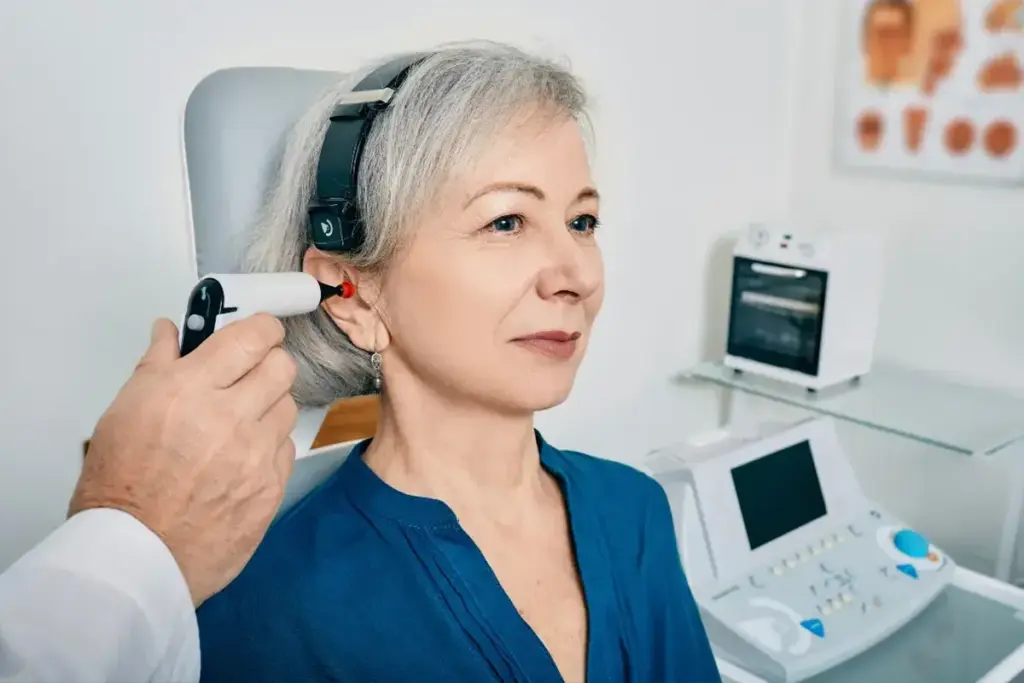
Tympanometry is a non-invasive test that checks middle ear function. It measures how well the eardrum moves and the pressure inside. This test helps find problems that might cause hearing loss.
It looks at how the eardrum and middle ear muscles react. This gives us important info about middle ear issues. For example, it can spot otitis media with effusion (OME), Eustachian tube problems, and eardrum tears.
Finding these problems early is key. It helps protect kids from speech and thinking problems later on. We use tympanometry to check ear health and find any issues.
Key Takeaways
- Middle ear function is assessed through tympanometry.
- Conditions like otitis media with effusion (OME) can be detected.
- Eustachian tube dysfunction and tympanic membrane perforations are identifiable.
- Early detection is crucial for preventing lasting effects.
- Tympanometry is a simple, non-invasive diagnostic tool.
The Fundamentals of Tympanometry

Tympanometry is a key tool in audiology, checking the middle ear’s function. It helps see if sound moves well through the middle ear. This method is key for spotting middle ear problems and how they affect hearing.
Definition and Purpose
Tympanometry is a way to check the middle ear’s health. It’s different from audiometry, which tests sound sensitivity. Tympanometry looks at how sound moves through the middle ear. It helps find middle ear issues that might hurt hearing.
Healthcare pros use a tympanometer to learn about the middle ear. This info is key for diagnosing problems like otitis media with effusion and Eustachian tube issues.
Historical Development in Audiology
Tympanometry has grown a lot since it started. It’s now a key tool for finding middle ear problems. New tech has made tympanometry more accurate and helpful.
The history of tympanometry shows its growing role in audiology. As tech gets better, tympanometry will help find and fix middle ear issues even more.
How Tympanometry Works as a Diagnostic Tool
The tympanometry test checks how the eardrum moves and the middle ear muscles react. It’s a non-invasive way to find out about middle ear problems.
The Science Behind the Test
Tympanometry uses a tympanometer to change air pressure in the ear and see how the eardrum moves. It looks at how the eardrum and middle ear muscles act under different pressures. This is done by sending a sound into the ear and catching the sound that bounces back.
This test also looks at the acoustic reflex. This is when the middle ear muscles respond to sound. It shows if the middle ear is working right and can handle sound pressure.
Equipment and Technology Used
A tympanometer is the main tool for this test. It has a probe that goes into the ear to send a sound and change air pressure. Today’s tympanometers have new tech like digital signals and clear graphics to give accurate results.
|
Equipment Component |
Function |
|---|---|
|
Probe |
Placed in the ear canal to emit a probe tone and vary air pressure |
|
Microphone |
Measures the sound reflected back from the eardrum |
|
Pressure Pump |
Alters the air pressure in the ear canal |
The test’s data helps figure out if the middle ear is healthy. This info is key for spotting issues like otitis media with effusion and Eustachian tube problems.
The Tympanometry Procedure: What to Expect

The tympanometry procedure is quick and painless. It gives important insights into ear health. We know it might make you a bit nervous, but knowing what to expect can help.
Step-by-Step Testing Process
Before starting, we check if there are any issues like wax or infections. Then, a probe is gently put into the ear canal. We change the air pressure to see how the eardrum moves.
The steps are:
- Preparation: We check the ear canal for blockages or infections.
- Probe Insertion: A soft-tipped probe is gently put into the ear canal.
- Air Pressure Variation: We change the air pressure in the ear canal to test the eardrum’s mobility.
- Measurement: We measure and record how the eardrum moves.
Patient Experience and Preparation
We ask patients to stay still for the test. It’s usually quick, taking just a few minutes per ear. Research on PubMed Central shows tympanometry is great for checking middle ear function.
To get ready, patients should:
|
Preparation Step |
Description |
|---|---|
|
Remove ear wax or debris |
Make sure the ear canal is clear to avoid blockages. |
|
Inform your healthcare provider |
Tell them about any ear infections or discomfort. |
|
Remain still during the test |
This helps get accurate measurements. |
By knowing what happens during a tympanometry test, patients can feel more at ease and ready for their ear exam.
Understanding Tympanogram Types and Their Clinical Significance
It’s key to know the different tympanogram types to read results right. Tympanograms show how the middle ear works. They are split into types based on what they show.
Classification of Tympanograms
Tympanograms are sorted using Jerger’s system. This system labels them based on the peak’s height and spot. It helps spot middle ear problems.
Type A Tympanograms: Normal Findings
Type A tympanograms mean the middle ear is working well. They have a clear peak. These results help rule out some ear problems.
Type B Tympanograms: Flat Patterns
Type B tympanograms are flat, with no peak. This means there’s fluid or other issues like a hole in the eardrum. They help spot problems like otitis media with effusion.
Type C Tympanograms: Negative Pressure
Type C tympanograms have a peak that leans left. This shows negative pressure in the middle ear. It’s linked to Eustachian tube issues. Spotting Type C early can prevent bigger problems.
The table below shows the main tympanogram types and what they mean:
|
Tympanogram Type |
Characteristics |
Clinical Implication |
|---|---|---|
|
Type A |
Distinct peak |
Normal middle ear function |
|
Type B |
Flat, no peak |
Fluid in the middle ear or other abnormalities |
|
Type C |
Peak shifted to the left |
Negative pressure, Eustachian tube dysfunction |
In short, knowing about tympanogram types is vital for diagnosing and treating ear issues. By understanding these results, doctors can give the right care.
Otitis Media with Effusion: Primary Detection Target
Otitis media with effusion (OME) is a common condition that tympanometry can detect with high accuracy. It is when fluid builds up in the middle ear behind a healthy eardrum. This can cause hearing loss and delay speech in kids if not treated.
Tympanometry is great for finding OME because it checks how well the middle ear works. It’s easy and quick, which makes it very helpful for doctors.
Diagnostic Accuracy for OME
Tympanometry is very good at finding middle ear fluid, which is key for diagnosing OME. Research shows it can spot fluid in the middle ear well. This is important for treating OME right.
|
Diagnostic Parameter |
Tympanometry Performance |
|---|---|
|
Sensitivity |
High |
|
Specificity |
High |
|
Accuracy |
High |
As shown in the table, tympanometry does well in many areas. This makes it a trusted way to find OME.
Clinical Implications of Early Detection
Finding OME early through tympanometry is very important. It lets doctors start treatment early. This can stop hearing loss, speech delays, and other problems.
“Early identification and management of otitis media with effusion are critical to prevent long-term effects on hearing and speech development in children.”
Using tympanometry helps doctors make better choices for treating OME. They can pick the best treatment, which helps patients get better faster.
Middle Ear Fluid and Effusion Detection
Tympanometry is a key tool for checking the middle ear. It helps find fluid and effusion with great accuracy. This is vital for diagnosing and treating related issues.
Middle ear fluid and effusion can cause hearing loss and other problems. Tympanometry is very sensitive and specific in finding these issues. It’s a crucial tool in audiology and ENT fields.
Sensitivity and Specificity Rates
Research shows tympanometry is very good at finding middle ear fluid. A study in the Journal of Laryngology and Otology found it’s useful in hearing loss surveys evaluating tympanometry in hearing loss surveys.
|
Condition |
Sensitivity |
Specificity |
|---|---|---|
|
Middle Ear Fluid |
85% |
90% |
|
Effusion Detection |
80% |
95% |
Advantages Over Visual Examination Alone
Tympanometry gives more detailed info than just looking. It can spot issues not seen by the eye, like fluid behind a closed eardrum.
It’s especially helpful when just looking doesn’t show enough. The test is safe and fast. It’s a great addition to any check-up.
Using tympanometry helps us make better diagnoses. This leads to more effective treatments for middle ear fluid and effusion.
Eustachian Tube Dysfunction Diagnosis
Tympanometry is a key tool for diagnosing Eustachian tube dysfunction. It helps us understand how it affects hearing and ear health. The Eustachian tube connects the middle ear to the back of the nose and throat. When it doesn’t work right, it can cause problems with ear pressure.
We use tympanometry to check the middle ear and Eustachian tube. This test gives us important information about Eustachian tube dysfunction.
Characteristic Tympanometric Patterns
Eustachian tube dysfunction often shows up as negative pressure in the middle ear. Characteristic tympanometric patterns include a Type C tympanogram. This means there’s negative middle ear pressure.
Tympanogram interpretation is key in diagnosing Eustachian tube dysfunction. A Type C tympanogram shows the Eustachian tube isn’t working right. This leads to negative pressure in the middle ear.
Monitoring Treatment Effectiveness
Tympanometry helps not just in diagnosing but also in checking if treatments work. We do tympanometry tests before and after treatment. This way, we can see if Eustachian tube function and middle ear pressure have improved.
Managing Eustachian tube dysfunction well is important. It helps ease symptoms and prevent bigger problems. Tympanometry is crucial here. It gives us clear measurements of middle ear function.
Identifying Tympanic Membrane Perforations
Tympanometry is key in finding tympanic membrane perforations. These can really hurt your hearing and ear health. We use it to measure the ear canal and check the tympanogram for signs of a perforated eardrum.
Tympanogram Features in Perforated Eardrums
With a perforated eardrum, the tympanogram shows a big ear canal volume. This is because the perforation lets the tympanometer see the middle ear space too. A high volume reading means a perforated eardrum.
We use tympanometry to check the tympanic membrane’s health. It’s good at spotting changes in middle ear pressure and finding perforations.
Differentiating Types and Sizes of Perforations
Tympanometry helps us find and tell apart different perforation sizes. The size of the perforation changes the tympanogram reading. Bigger perforations usually mean higher ear canal volumes.
|
Perforation Size |
Typical Ear Canal Volume |
Clinical Implication |
|---|---|---|
|
Small |
Moderately elevated |
May require monitoring |
|
Medium |
Elevated |
May need surgical intervention |
|
Large |
Significantly elevated |
Often requires surgical repair |
Looking at the tympanogram and ear canal volume gives us important info. It helps us decide the best treatment for the tympanic membrane.
Conductive Hearing Loss Assessment
Tympanometry is key in checking for conductive hearing loss by looking at the middle ear. This type of hearing loss happens when sound can’t move properly through the outer ear, eardrum, or middle ear bones. Tympanometry spots problems in the middle ear that cause this hearing loss.
Correlation Between Tympanograms and Audiometry
Tympanometry and audiometry are both important for hearing tests. Audiometry checks how well you can hear different sounds. Tympanometry looks at the eardrum and middle ear muscles’ function. A tympanogram shows how well the middle ear works.
A Type A tympanogram means the middle ear is working right. But, a Type B or C might show fluid or Eustachian tube problems. These can cause conductive hearing loss. By comparing these results with audiometry, doctors can better understand hearing issues.
|
Tympanogram Type |
Middle Ear Status |
Possible Impact on Hearing |
|---|---|---|
|
Type A |
Normal |
No significant conductive hearing loss |
|
Type B |
Fluid or perforation |
Conductive hearing loss likely |
|
Type C |
Eustachian tube dysfunction |
Potential for conductive hearing loss |
Long-term Implications for Speech and Cognition
Untreated conductive hearing loss can harm speech and thinking skills, especially in kids. Hearing is key for learning language and new things. If hearing problems happen when kids are young, it can mess with their speech, school work, and social skills.
Early detection and management of conductive hearing loss are key to avoid these problems. Tympanometry helps find middle ear issues early. This way, doctors can start the right treatment to help those with hearing loss.
In summary, tympanometry is very helpful in finding conductive hearing loss. It checks the middle ear and matches its findings with audiometry. This helps doctors diagnose and treat hearing loss better. Knowing how untreated hearing loss can affect people shows why finding and treating it early is so important.
Abnormal Ear Canal Volume Measurement
Ear canal volume is key in tympanometry, helping diagnose ear issues. It shows the middle ear’s health by measuring ear canal volume.
Interpreting High and Low Volume Readings
Abnormal ear canal volume can point to different problems. High volume readings might mean a hole in the eardrum or a tube that’s open. This lets more volume into the ear canal.
Low volume readings suggest a blockage or narrowing in the ear canal. This could be due to wax buildup, a narrow ear canal, or other issues.
It’s important to understand these readings to diagnose correctly. For example, a high volume might mean the eardrum needs checking. A low volume could mean there’s something blocking the ear canal.
Clinical Significance in Diagnosis
Abnormal ear canal volume measurements are very important. They help doctors decide what tests and treatments are needed. For instance, finding a hole in the eardrum through high volume readings can lead to the right treatment.
Low volume readings might mean the doctor needs to look into why the ear canal is blocked. This could involve removing wax or other steps to fix the problem.
Doctors use ear canal volume measurements to make accurate diagnoses and treatment plans. This helps improve patient care and outcomes.
Tympanometry in Special Populations
Special groups, like kids and older adults, really benefit from tympanometry. It’s great for checking the middle ear in children. It helps find problems like otitis media with effusion.
Pediatric Applications and Considerations
Tympanometry is key in kids’ hearing tests. It spots issues like otitis media with effusion, a big cause of hearing loss in young ones. It’s safe and easy for kids, needing little from them.
Spotting middle ear problems early is key to avoiding hearing and speech issues later.
When testing kids, their age and how they develop matter. Young ones might need a gentler test and more patience. Getting good results depends on the tester’s skill and the kid’s calmness.
Geriatric Assessment Challenges
For older folks, tympanometry has its own hurdles. Their ears might be different, like a stiffer eardrum or holes. It’s important to look at the whole picture when reading these results.
Older patients might have other health issues that make diagnosis harder. For example, someone with ear surgery or hearing loss might need special attention. Thinking carefully about these factors helps make tympanometry work better for seniors.
Knowing the special needs of different groups helps doctors use tympanometry better. This makes diagnosis more accurate and helps patients in all age groups.
Advanced Applications and Future of Tympanometry
Tympanometry is getting better, thanks to new methods like multi-frequency and wideband techniques. These new ways help doctors diagnose better and do more tests. This makes tympanometry a key tool in hearing health.
Multi-frequency and Wideband Techniques
Old tympanometry tests at just one frequency, 226 Hz. Multi-frequency tympanometry tests at many frequencies. This gives a clearer picture of the middle ear’s health.
Wideband tympanometry measures sound absorbance across many frequencies. It shows how sound moves through the middle ear. This makes diagnoses more accurate.
|
Technique |
Frequency Range |
Diagnostic Benefits |
|---|---|---|
|
Traditional Tympanometry |
226 Hz |
Basic middle ear assessment |
|
Multi-frequency Tympanometry |
Multiple frequencies |
Improved detection of middle ear disorders |
|
Wideband Tympanometry |
Wide range of frequencies |
Detailed insights into middle ear function and energy transfer |
Integration with Telemedicine and AI
The future of tympanometry includes working with new healthcare tools. Telemedicine lets doctors see patients online. This means more people can get help without leaving home.
“The integration of tympanometry with telemedicine and AI represents a significant step forward in audiological diagnostics, enabling more accessible and precise care.” — Expert in Audiology
Artificial Intelligence (AI) will also play a big role. AI can spot patterns in tympanometry data that humans might miss. This could lead to quicker and more accurate diagnoses.
As we keep improving tympanometry and using new tech, care will get better. We’re looking forward to seeing how these changes will help patients and make diagnosis easier.
Conclusion
We’ve looked into how important tympanometry is for checking middle ear health. This test is safe and helps find problems like otitis media with effusion and conductive hearing loss.
Tympanometry gives doctors key info about the middle ear. This helps them decide the best care for patients. As technology gets better, tympanometry will play an even bigger role in hearing health.
Using tympanometry and other tests, we can learn more about ear health. This knowledge helps us find better ways to treat ear problems. It means better health and a better life for people with these issues.
FAQ
What is tympanometry and how does it work?
Tympanometry is a test that checks the middle ear’s function. It measures how well the eardrum moves and the middle ear muscles’ reflexes. A tympanometer changes the air pressure in the ear canal to do this.
What conditions can tympanometry detect?
It can find middle ear problems like fluid buildup, Eustachian tube issues, eardrum holes, and hearing loss due to the middle ear.
What are the different types of tympanograms?
There are three main types of tympanograms. Type A shows normal function, Type B indicates fluid or other issues, and Type C points to Eustachian tube problems.
Is tympanometry a painful procedure?
No, it’s usually painless. You might feel a bit of discomfort when the probe goes in, but it’s mild.
How is tympanometry used in pediatric audiology?
It helps check the middle ear in kids. This is key for spotting issues like fluid buildup early on.
Can tympanometry be used to monitor treatment effectiveness?
Yes, it can track how well treatments work for middle ear problems, like Eustachian tube issues.
What is the significance of ear canal volume measurement in tympanometry?
Measuring ear canal volume is important. It shows if there are holes or blockages. Getting these measurements right is key for making a diagnosis.
How does tympanometry correlate with audiometry results?
Tympanometry gives insights into the middle ear’s function. This info matches up with what audiometry shows. It helps figure out hearing loss and its causes.
What advancements are being made in tympanometry technology?
New tech in tympanometry includes multi-frequency and wideband methods. There’s also work on using telemedicine and artificial intelligence. These changes aim to improve how well it can diagnose problems.
Is tympanometry suitable for geriatric populations?
Yes, it can be used for older adults. But, it’s important to consider how age affects the results. Audiologists need to understand these changes to interpret the results correctly.
National Center for Biotechnology Information. Evidence-Based Medical Insight. Retrieved from https://pubmed.ncbi.nlm.nih.gov/5473877/