

At Liv Hospital, we know how vital heart health is. Cardiac stents are key in treating heart disease. These small, mesh tubes help keep blood flowing in narrowed arteries. Thanks to new tech, many stent types now exist to meet various patient needs.
We’ll look into the materials used in these stents, their uses, and types of cardiac stents that set them apart. Knowing these details is key for the best treatment and care. Our aim is to help patients understand their options, making them more informed about their heart health.
Key Takeaways
- Cardiac stents are used to treat narrowed arteries and restore blood flow.
- Different types of stents are available, each with unique materials and applications.
- Understanding the key differences between stent types is critical for effective treatment.
- Liv Hospital is committed to providing patient-centered care and advanced cardiovascular treatments.
- Our team is dedicated to guiding patients through their treatment options.
Understanding Cardiac Stents and Their Function
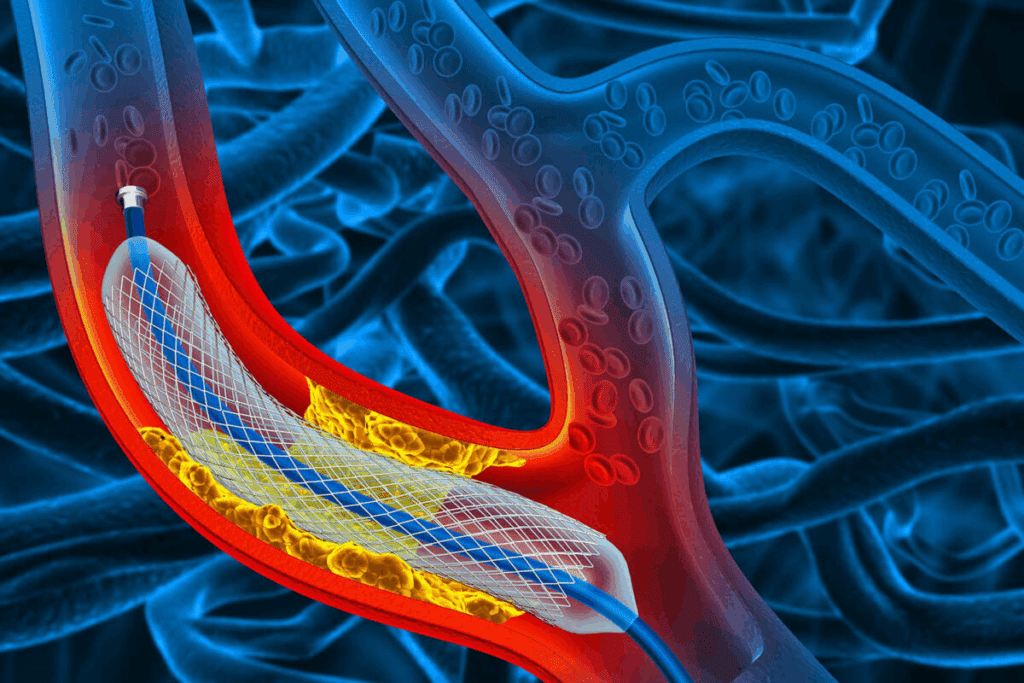
Cardiac stents are small, complex devices. They help keep arteries open, ensuring blood flows freely to the heart. These devices are key in treating heart disease and other heart conditions.
What Are Cardiac Stents?
Cardiac stents are like tiny, mesh-like tubes. They are used to keep arteries open after a procedure. Stent material for heart use includes stainless steel, cobalt-chromium, and platinum-chromium. Each material is chosen for its strength, flexibility, and how well it works with the body.
How Cardiac Stents Restore Blood Flow
Stents are used when arteries get blocked by plaque. A stent is placed on a balloon and guided to the blockage. When the balloon is inflated, the stent expands, opening the artery. This procedure is less invasive than surgery and helps patients recover faster.
Primary Uses in Cardiovascular Treatment
Cardiac stents mainly treat heart disease. They are also used for other heart conditions where arteries are narrowed or blocked. The type of stent heart patients get depends on their health and the disease’s severity.
| Material | Strength | Flexibility | Biocompatibility |
| Stainless Steel | High | Moderate | Good |
| Cobalt-Chromium | Very High | High | Excellent |
| Platinum-Chromium | High | Very High | Excellent |
In summary, cardiac stents are essential in managing heart disease. They help keep arteries open and improve blood flow. The right stent material and type are chosen based on the patient’s health and the specific heart condition.
The Evolution of Cardiac Stent Technology

Cardiac stent technology has grown a lot, starting with the first coronary angioplasty in 1977. We’ve seen big changes in stent design, materials, and how they work. These changes aim to make treatments better for patients.
Historical Development of Stents
Stents were created to fix problems with balloon angioplasty, like the artery closing back up. The first stents were just metal frames to keep the artery open. Now, they have special coatings and can release drugs to help the artery stay open.
Stents have gone through many changes, from simple metal frames to drug-eluting stents and now bioresorbable stents. Each new type has tackled different problems, like lessening the artery closing back up and being more friendly to the body.
Major Advancements in Stent Design
Stent design has improved a lot, focusing on being easier to use, more flexible, and strong. Today’s stents can move through complex arteries easily, ensuring they are placed correctly and expand well.
Drug-eluting stents have been a big step forward, cutting down on artery closing back up by stopping cell growth. Bioresorbable stents are another big leap, providing temporary support that disappears over time, which could lead to fewer long-term problems.
Impact on Cardiovascular Treatment Outcomes
The changes in cardiac stent technology have greatly improved treatment results. Better stent designs and materials have led to fewer complications and better long-term results for patients.
| Stent Type | Key Features | Clinical Outcomes |
| Bare-Metal Stents (BMS) | Simple metallic scaffolds | Higher restenosis rates |
| Drug-Eluting Stents (DES) | Drug coatings to reduce restenosis | Lower restenosis rates, improved long-term outcomes |
| Bioresorbable Stents | Temporary scaffolding, gradual absorption | Potential for reduced long-term complications |
As we keep working on cardiac stent technology, we’re dedicated to better patient care and treatment results. The future of heart medicine looks bright, with new research and developments promising even better treatments.
Common Materials Used in Cardiac Stent Manufacturing
Material science has led to new options for making cardiac stents. These materials are picked for being safe, strong, and visible on X-rays. We’ll look at the usual materials used and what they’re for.
Stainless Steel Applications
Stainless steel is often used in stents because it’s strong, doesn’t rust, and shows up well on X-rays. It’s also safe for the body and can handle the body’s corrosive environment. But, stainless steel stents might not bend as well as others, which can cause problems during use.
Cobalt-Chromium and Platinum-Chromium Alloys
Cobalt-chromium and platinum-chromium alloys are getting more popular. They’re stronger, more flexible, and show up well on X-rays than stainless steel. They have thinner parts, making it easier to put the stent in place and lowering the chance of problems. Studies show they lead to better results for patients.
Nickel-Chromium Alloys
Nickel-chromium alloys are a mix that balances strength and flexibility. But, worries about nickel ions and allergic reactions have held them back. Scientists are working to fix these issues.
Magnesium and Zinc-Based Alloys
Magnesium and zinc-based alloys are being looked at for their ability to break down over time. This could mean less risk for patients in the long run. Tests are being done to see how well they work and if they’re safe.
Choosing the right material for stents depends on many things. This includes the patient’s health, what the stent is for, and what doctors hope to achieve. As technology gets better, new materials and alloys are being made to help stents work better and help patients more.
5 Types of Cardiac Stents: An Overview
It’s important to know about the different cardiac stents for good heart care. These stents have changed how we treat heart disease. They offer a new way that’s less invasive than old surgeries.
Comparative Analysis of Stent Types
There are five main types of cardiac stents. Each one is made for different heart problems and patient needs. Let’s look at them:
- Bare-Metal Stents (BMS): These stents are simple and made from metals. They help keep the artery open but don’t have extra coatings.
- Drug-Eluting Stents (DES): These stents have medicine that stops cells from growing too much. This helps prevent the artery from getting blocked again.
- Bioresorbable Stents: These stents are made to dissolve over time. They provide support and then disappear, which might help avoid long-term problems.
- Polymer-Coated Stents: These stents have a special coating. It can carry medicine or make the stent more friendly to the body.
- Covered Stents: These stents are used for special heart problems. They can help with things like holes in the artery.
Selection Criteria for Different Patient Profiles
Choosing the right stent depends on many things. It includes the heart problem, the patient’s health history, and the chance of complications.
For example, drug-eluting stents are good for people at high risk of the artery getting blocked again. Bioresorbable stents might be better for younger patients or those with certain heart issues.
Global Usage Statistics and Trends
The world’s use of cardiac stents is changing. In different places, people prefer different types of stents. Right now, drug-eluting stents are used in about 80% of cases worldwide.
| Stent Type | Global Market Share | Primary Use |
| Bare-Metal Stents | 15% | Simple lesions, cost-sensitive cases |
| Drug-Eluting Stents | 80% | Complex lesions, high-risk patients |
| Bioresorbable Stents | 3% | Specific lesion characteristics, younger patients |
| Polymer-Coated Stents | 1% | Research and specialized applications |
| Covered Stents | 1% | Complex cardiac conditions, perforations |
Bare-Metal Stents (BMS): The First Generation
Bare-metal stents, the first stents, are used to treat coronary artery disease. They are made from materials like stainless steel and cobalt-chromium. These stents keep arteries open by providing mechanical support.
Structure and Design Features
Bare-metal stents are flexible and durable. They are designed to fit precisely during angioplasty. Their mesh-like structure expands to support the arterial walls.
Key design features include:
- High radiopacity for visibility during procedures
- Flexibility to navigate complex arterial paths
- Sufficient radial strength to keep the artery open
Materials and Manufacturing Process
The main materials for BMS are stainless steel and cobalt-chromium alloys. These are chosen for their strength and biocompatibility. They can also be made into thin struts.
The stents are made through laser cutting or wire braiding. Then, surface treatment is applied to improve biocompatibility and visibility.
Advantages and Limitations
Bare-metal stents are simple, easy to deploy, and cost-effective. But, they can cause restenosis due to neointimal hyperplasia. This can lead to the artery narrowing again.
The main limitations are:
- Higher risk of restenosis
- Lack of anti-proliferative drug coating
- Potential for in-stent thrombosis
Current Applications in Cardiac Care
Even with newer stents, BMS are used in certain cases. This includes patients who can’t take dual antiplatelet therapy or specific anatomical lesions.
Bare-metal stents are used in cardiac care where their simplicity and cost are beneficial.
Drug-Eluting Stents (DES): Enhanced Healing Properties
Drug-eluting stents (DES) have changed how we treat coronary artery disease (CAD). They greatly lower the chance of the artery narrowing again. These stents release medicine that stops new tissue from growing, keeping the artery open.
How Drug-Eluting Technology Works
DES use drugs like sirolimus or paclitaxel to stop new tissue growth. These drugs are in a special coating on the stent. The controlled release of these drugs keeps the artery open, helping patients.
Common Medications Used in DES
The drugs in DES are usually used to prevent the immune system from attacking or to fight cancer. Sirolimus and its friends are often picked because they slow down cell growth. Paclitaxel is also used because it’s very good at stopping the artery from narrowing. The right drug depends on the patient and the problem being treated.
Clinical Outcomes and Success Rates
Many studies show DES are better than bare-metal stents (BMS) at preventing the artery from narrowing. They can cut the risk of restenosis by up to 70%.
“The use of drug-eluting stents has become the standard of care in interventional cardiology, giving patients a very effective treatment with better long-term results.”
Because of their success, over 80% of stents used for CAD are drug-eluting.
Why DES Dominates 80% of Stent Placements
DES are used in most stent placements because they work so well. They greatly reduce the risk of the artery narrowing again. The ability to tailor the treatment to the individual patient’s needs makes them even more appealing. So, DES are the top choice for treating CAD, providing a lasting solution.
Bioresorbable Stents: Temporary Support Solutions
Bioresorbable stents offer a new approach in heart care. They provide temporary support to arteries and dissolve as they heal. This is different from metal stents, which stay in the artery forever.
Biodegradable Materials and Mechanisms
Bioresorbable stents are made from materials that dissolve in the body. Poly-L-lactic acid (PLLA) and magnesium are the most used. PLLA breaks down through hydrolysis, a process where water breaks it down.
Magnesium corrodes in the body’s chloride ions, eventually being absorbed. The material used affects the stent’s strength, how fast it breaks down, and how well it works with the body.
Absorption Timeline and Process
The time it takes for bioresorbable stents to dissolve varies. PLLA stents take 2 to 3 years to dissolve. Magnesium stents dissolve faster, in 12 to 18 months.
The stent’s breakdown is timed to match the artery’s healing. As it dissolves, the artery can return to normal, possibly avoiding long-term problems.
Ideal Candidates for Bioresorbable Stents
Bioresorbable stents work best for those with coronary artery disease and simple lesions. They’re for patients at low risk of complications and likely to benefit from temporary support.
Guidelines are being updated to find the best candidates. They consider the lesion, patient health, and risk of restenosis.
Current Research and Development
Research aims to improve bioresorbable stents. It focuses on making them stronger, reducing inflammation, and matching their breakdown to the artery’s healing.
Clinical trials are testing these stents against metal stents and other treatments. The results will guide their use in the future.
Polymer-Coated Stents: Combining Materials for Better Outcomes
Polymer-coated stents are a big step forward in heart treatment. They are more friendly to the body and cause less inflammation. These stents mix different materials to be both flexible and strong, making them work better.
Types of Polymer Coatings
Polymer-coated stents use different coatings to get better results. Some common coatings are:
- Biodegradable polymers: These break down over time, lowering the chance of long-term problems.
- Durable polymers: These are stable and help drugs work better, lasting through the heart’s challenges.
- Synthetic polymers: Made to have special traits, like being more body-friendly or better at drug delivery.
Benefits of Polymer Technology
Polymer coatings on stents bring many advantages, such as:
- Improved biocompatibility: These coatings can make the stent safer and more compatible with the body.
- Enhanced drug delivery: Polymers can be made to release drugs, making the stent more effective.
- Reduced inflammation: By lessening the stent’s interaction with tissue, coatings can cut down on inflammation.
A leading researcher said, “Polymer-coated stents have changed the game in heart treatments. They offer a safer and more effective way to treat heart disease.”
“The use of polymer coatings has significantly improved the performance of stents, enabling us to provide better outcomes for our patients.”
Addressing Hypersensitivity Concerns
Even with their many benefits, there are worries about hypersensitivity to these materials. To tackle this, makers have created new polymers that are safer and less likely to cause reactions.
Recent Innovations in Coating Technology
New advancements in coating tech have brought more advanced polymer coatings. These include:
- Nanocoatings: These offer a precise release of drugs.
- Bioactive coatings: These help the body heal and grow new tissue.
These new coatings are expected to make polymer-coated stents even better. They will help patients with heart disease get better results.
Covered Stents: Special Applications in Cardiac Care
Covered stents are a special tool in cardiac care for tough cases. They offer extra support and coverage for complex heart problems.
Design and Material Composition
Covered stents are made from metals and synthetic fabrics. The material choice depends on the case and needed stent properties like strength and safety.
We use stainless steel and polytetrafluoroethylene (PTFE) in making covered stents. These materials give the stent the needed strength and flexibility. They help the stent stay in place and lower the risk of problems.
Specialized Uses in Complex Cardiac Conditions
Covered stents are great for treating complex heart issues like artery tears and aneurysms. Their design helps cover the affected area. This promotes healing and lowers the chance of more problems.
We suggest covered stents for patients with complex lesions not fit for other stents. Their specialized design makes them key in treating tough heart cases.
Comparing Covered Stents to Other Types
Covered stents have unique benefits compared to bare-metal or drug-eluting stents. They are best when extra coverage is needed.
We look at many factors when picking a stent, like the patient’s health and the lesion type. Covered stents are picked for their full coverage and support in complex cases.
Case Studies and Clinical Applications
Many case studies show covered stents work well in real-world use. They’ve helped treat various complex heart issues, improving patient results and cutting down on more treatments needed.
Patients with coronary artery perforations have seen big benefits from covered stents. They’ve become a key part of our treatment plan for complex heart conditions.
Stent Selection for Coronary Artery Disease (CAD)
Choosing the right stent for CAD is complex. It depends on the patient and the disease. The goal is to get the best results for the patient.
Assessing Patient-Specific Factors
Each patient’s needs are different. Factors like medical history and the disease’s location matter. These help decide the best stent.
- Medical History: Diabetes, high blood pressure, or past heart procedures.
- Lesion Complexity: The disease’s length, hardness, and where it is.
- Patient Age and Lifestyle: Age and lifestyle can affect the stent choice.
Healthcare providers use these factors to pick the right stent for each patient.
Lesion Characteristics and Stent Choice
The disease’s details are key in picking a stent. For example:
- Long Lesions: Need longer stents or more than one.
- Calcified Lesions: Special stents are needed for hard lesions.
Long-Term Outcomes by Stent Type
Stents vary in how well they work over time. For instance:
| Stent Type | Restenosis Rate | Long-Term Outcomes |
| Bare-Metal Stents (BMS) | Higher | More frequent need for repeat procedures |
| Drug-Eluting Stents (DES) | Lower | Reduced need for repeat procedures, improved long-term patency |
Choosing the right stent can greatly improve long-term results.
Guidelines for CAD Stent Selection
Guidelines suggest a personalized approach. They consider the patient and the disease. This helps improve outcomes.
It’s important to tailor stent selection for each patient. This ensures they get the best treatment for their condition.
Advanced Stent Materials and Surface Modifications
Advanced stent materials and surface changes are changing how we treat heart issues. We’re seeing big steps forward in stent tech. These steps aim to make treatments better and safer for patients.
Enhancing Biocompatibility
Improving how well stents work with the body is a big goal. Biocompatible materials help avoid bad reactions and make stents safer. We’re looking at new materials and coatings to help stents fit better with blood vessels.
Biodegradable materials are also being explored. These materials break down over time. This could help avoid long-term problems caused by stents staying in the body too long.
Improving Radiopacity
Being able to see stents clearly during and after procedures is key. Advanced materials that show up better on X-rays help doctors place stents accurately. This makes follow-up checks easier and more precise.
We’re working on materials that are clear on X-rays but also flexible and strong. Finding this balance is important for stent success.
Impact on Vascular Healing
The material of the stent affects how well the body heals. Surface modifications help reduce clotting and support healing. We’re studying different treatments and coatings to make stents better.
By helping the body heal faster, we can lower the chance of problems like clogged arteries and blood clots. This leads to better health for patients.
Future Material Developments
Research is pushing us to find new stent materials. Nanomaterials and bioactive coatings are promising areas. These could make stents even safer and more effective.
We expect future stent materials to improve care and offer more treatment options for heart disease.
Conclusion: The Future of Cardiac Stent Technology
Cardiac stent technology has seen big changes, changing how we treat heart diseases. We’ve looked at different stents, like bare-metal and drug-eluting ones. Each has its own special features and uses.
The future looks bright for stents. Scientists are working hard to make them better. They want to improve how safe and effective they are. This could lead to even better care for heart patients.
New materials and technologies will be key in the future of stents. With a focus on making things better for patients, stents will keep being a big help. They offer hope and better lives for people all over the world.
FAQ
What are cardiac stents made of?
Cardiac stents are made from different materials. These include stainless steel, cobalt-chromium, and platinum-chromium alloys. They also use nickel-chromium alloys and biodegradable materials like magnesium and zinc-based alloys.
What is the difference between bare-metal stents and drug-eluting stents?
Bare-metal stents are just metal and help keep the artery open. Drug-eluting stents release medicine to stop the artery from narrowing and help it heal.
What are bioresorbable stents, and how do they work?
Bioresorbable stents are made from materials that dissolve over time. They provide temporary support and help the artery heal naturally.
What are the benefits of polymer-coated stents?
Polymer-coated stents are better for the body. They cause less inflammation and help the body heal faster. This makes them a good choice for complex heart conditions.
How are covered stents used in cardiac care?
Covered stents are used for serious heart problems. They act as a barrier between the artery and surrounding tissue.
What factors influence stent selection for coronary artery disease?
Choosing the right stent depends on many things. These include the patient’s needs, the condition of the artery, and what will happen in the long run. It’s a very personal choice.
What are the advantages of advanced stent materials and surface modifications?
New stent materials and designs are better for the body. They are more visible on scans and help the artery heal. This leads to better results for patients and fewer problems.
What is the future of cardiac stent technology?
Cardiac stent technology will keep getting better. We can expect new materials, designs, and coatings. This will lead to even better care for patients.
What are the different types of cardiac stents available?
There are many types of cardiac stents. These include bare-metal stents, drug-eluting stents, bioresorbable stents, polymer-coated stents, and covered stents. Each has its own benefits.
How do drug-eluting stents work?
Drug-eluting stents release medicine. This medicine stops cells from growing and helps the artery heal. This reduces the chance of the artery narrowing again and improves patient outcomes.
What are the benefits of using cobalt-chromium alloys in stent manufacturing?
Cobalt-chromium alloys are strong, flexible, and show up well on scans. This makes them a top choice for making stents.
What is the role of stent material in cardiovascular treatment?
The material of the stent is very important. It affects how well the body accepts the stent, how the artery heals, and the long-term results.
References
ScienceDirect. (2012). Minimally invasive treatment of varicose veins. Galanopoulos, G. (2012). Retrieved from https://www.sciencedirect.com/science/article/pii/S1743919112000313



 Departments
 Related Videos
 Our Doctors
 News
News