
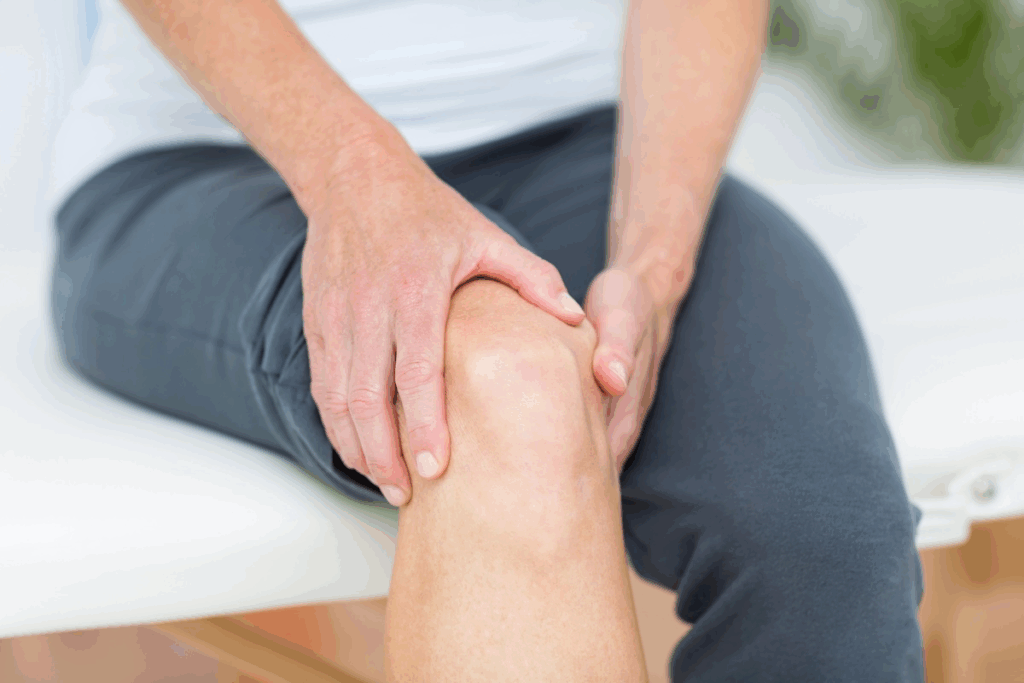
The human body can move thanks to synovial joints. These joints allow us to move in many ways. Studies show that different parts of the brain help us move, showing how important it is to know about types of moveable joints.
We will look at how joints are classified and the four main types of moveable joints. These joints help us do everyday things. Knowing how they work helps us understand the human body better.
Key Takeaways
- Synovial joints are a type of moveable joint that enables various movements.
- The classification of joints is important for understanding their functions.
- There are four main types of moveable joints in the human body.
- Understanding moveable joints is key to appreciating the musculoskeletal system.
- Different cortical areas play a role in generating movement.
The Fundamentals of Moveable Joints
Moveable joints are key to our musculoskeletal system, allowing us to move freely. They help us do everyday tasks, from walking to dancing.
To grasp moveable joints, we must first know what they are and how they’re classified. These joints, also known as synovial joints, enable significant bone movement.
Definition and Classification of Joints
Joints are categorized by their movement and type. They’re divided into immovable, slightly moveable, and freely moveable types. Moveable joints fall into the freely moveable category, which is further split by movement type.
There are several types of moveable joints, like ball and socket, hinge, pivot, and saddle joints. Each has its own role and function.
| Type of Moveable Joint | Examples | Movement Allowed |
| Ball and Socket | Shoulder, Hip | Multi-directional |
| Hinge | Elbow, Knee | Flexion, Extension |
| Pivot | Neck, Forearm | Rotation |
| Saddle | Thumb Carpometacarpal | Complex movements |
Basic Structure and Components
Moveable joints have several parts that work together for movement. These include the synovial membrane, joint capsule, articular cartilage, and synovial fluid.
The synovial membrane lines the joint capsule and makes synovial fluid. This fluid lubricates the joint. The joint capsule is a fibrous structure that encloses the joint, providing stability. Articular cartilage covers the bone ends, reducing friction during movement.
The Importance of Joint Mobility
Joint mobility is vital for flexibility and movement range. It’s essential for daily activities and staying independent, more so as we age.
“The ability to move is a fundamental aspect of human life, and moveable joints play a critical role in this ability.”
— An Orthopedic Specialist
Keeping joints mobile through exercise and care can prevent injuries. It also lowers the risk of conditions like arthritis.
Synovial Joints: The Primary Types of Moveable Joints
Synovial joints are key to our ability to move and do physical activities. They have a special structure that lets us move in many ways.
What Makes a Joint Synovial
A synovial joint has a space between bones filled with synovial fluid. This fluid cuts down on bone friction and makes movement smooth. The joint is also wrapped in a joint capsule for support and stability.
The bones in a synovial joint have articular cartilage on them. This cartilage is smooth and white, reducing friction and absorbing shock. Together, synovial fluid, joint capsule, and cartilage make synovial joints very efficient for complex movements.
Common Characteristics of Synovial Joints
Synovial joints have some key features that help them work well. These include:
- The presence of synovial fluid
- A joint capsule that surrounds the joint
- Articular cartilage covering the articulating bones
- A space between the articulating bones
These features allow for a wide range of movements. This includes simple actions like bending and stretching, and more complex ones like rotating.
The Role of Synovial Fluid in Joint Function
Synovial fluid is vital for synovial joints. It acts as a lubricant, reducing bone friction and making movement smooth. It also helps supply nutrients to the cartilage and removes waste.
The fluid’s thickness is important for its lubricating effect. In healthy joints, it’s thick enough to lubricate but not so thick it gets in the way of movement.
The 4 Main Types of Moveable Joints
The human body has four main types of moveable joints. Each type allows for different movements. These joints help us move and stay flexible.
Overview of Ball and Socket, Hinge, Pivot, and Saddle Joints
There are four main types of moveable joints: ball and socket, hinge, pivot, and saddle joints. Each type has a special structure for specific movements.
- Ball and Socket Joints: These joints let us move in almost all directions. Examples are the shoulder and hip joints.
- Hinge Joints: Hinge joints move in one plane, like opening a door. The elbow and knee are examples.
- Pivot Joints: Pivot joints allow us to rotate around a single axis. The neck’s first and second vertebrae have a pivot joint.
- Saddle Joints: Saddle joints move in a wide range, including circumduction. They are found in the thumb.
Classification Based on Movement Capabilities
The joints are classified by their movement. Ball and socket joints have the most motion. Hinge joints move less. Pivot joints rotate, and saddle joints move in complex ways.
Knowing how each joint moves helps us understand and treat joint problems. We’ll see how these movements affect our joints and how we move.
Functional Differences Between the Types
The four types of moveable joints work differently. Ball and socket joints move in many directions. Hinge joints move in just one plane.
- Ball and socket joints are flexible and move widely.
- Hinge joints are stable and move in a controlled way.
- Pivot joints allow us to rotate, important for turning the head.
- Saddle joints mix flexibility and stability, seen in the thumb.
These differences show how complex and versatile our skeletal system is. It allows for many movements and functions.
Ball and Socket Joints: Maximum Mobility
The ball and socket joint is a wonder of human anatomy. It offers unmatched freedom of movement. This joint has a rounded surface (the ball) that fits into a cup-like depression (the socket). This allows for rotational movement in almost all directions.
Anatomy and Structure
Ball and socket joints are filled with synovial fluid. This fluid reduces friction and makes movement smooth. The joint is surrounded by a fibrous capsule and reinforced by ligaments. This setup provides stability while allowing for a wide range of motion.
Key components of ball and socket joints include:
- The ball (or head) of one bone
- The socket (or acetabulum) of another bone
- Synovial fluid for lubrication
- A fibrous capsule for stability
- Ligaments to reinforce the joint
Range of Motion and Movement Types
Ball and socket joints enable various movements. These include flexion, extension, abduction, adduction, rotation, and circumduction. The joint’s anatomy allows the ball to rotate freely within the socket.
Movement types in ball and socket joints include:
- Flexion and extension: Moving the limb towards or away from the body
- Abduction and adduction: Moving the limb away from or towards the midline of the body
- Rotation: Turning the limb around its axis
- Circumduction: Moving the limb in a circular motion
Examples: Shoulder and Hip Joints
The human body has two major ball and socket joints: the shoulder and hip joints. The shoulder joint is very mobile, allowing for a wide range of movements. The hip joint provides a balance between mobility and stability, supporting the body’s weight while facilitating movement.
Medical professionals say, “The shoulder joint’s remarkable mobility is both a blessing and a curse. It makes it more susceptible to injuries and dislocations.”
“The hip joint, with its deep socket and strong ligaments, offers greater stability but at the cost of reduced mobility compared to the shoulder.”
Hinge Joints: Controlled Movement in One Plane
Hinge joints are key for our daily movements. They let us bend and straighten in one direction. These joints are stable and allow for movement.
Anatomy and Structure
Hinge joints have a special shape. One bone’s convex surface meets another’s concave surface. This setup lets them move in one direction, keeping things stable.
The main parts of hinge joints are:
- Ligaments: They keep the joint stable and supported.
- Tendons: These connect muscles to bones, helping us move.
- Synovial fluid: It makes the joint smooth, reducing friction.
Range of Motion and Movement Limitations
Hinge joints move in one direction, like bending and straightening. The amount of movement varies. For example, the elbow moves less than the knee.
The design of hinge joints and the muscles around them limit movement. These limits help prevent injuries by keeping movement controlled.
Examples: Knee, Elbow, and Ankle Joints
Here are some hinge joints in our bodies:
- Knee Joint: It’s big and lets us bend and straighten our legs.
- Elbow Joint: It connects the humerus and ulna, letting us bend and straighten our arms.
- Ankle Joint: It helps us move our feet up and down.
These joints are vital for everyday tasks. They help us walk, run, and even bend our arms.
Pivot Joints: Rotational Movement
Pivot joints are key in the human body for rotational movement. They let us turn our head or rotate our forearm. This is because they allow rotation around a single axis.
Anatomy and Structure of Pivot Joints
Pivot joints have a unique shape. A rounded or pointed bone surface meets a ring-shaped surface of another bone. This setup makes rotation possible.
For instance, the neck’s atlas (C1 vertebra) and axis (C2 vertebra) form a pivot joint. This lets us turn our head. The forearm’s radius bone also rotates around the ulna, enabling hand adjustments.
Rotational Capabilities and Limitations
Pivot joints are all about rotation. This is vital for daily tasks like looking over our shoulder or changing hand grip. Yet, they have a big limitation: they only allow movement in one plane.
Key characteristics of pivot joints include:
- Rotation around a single axis
- Limited to one plane of movement
- Stability provided by surrounding ligaments and capsule
Examples: Neck and Forearm Joints
The atlanto-axial joint in the neck is a prime example of a pivot joint. It lets us rotate our head. The forearm’s proximal radioulnar joint also plays a key role, enabling hand adjustments.
These examples show how vital pivot joints are for our movements. Knowing about them helps us understand human anatomy better.
Saddle Joints: Complex Movement Patterns
Saddle joints are really interesting in the human body. They let us move in many ways. Their special shape helps us move freely but stay stable.
Anatomy and Structure
Saddle joints have a unique shape. One bone fits into another like a saddle. This lets the bones move in different directions.
They have a special covering that makes movement smooth. This covering is called articular cartilage. It reduces friction.
These joints are also supported by ligaments and muscles. They help keep the joints stable. This teamwork is key for the joints to work right.
Unique Range of Motion Capabilities
Saddle joints can move in many ways. They can rotate, bend, stretch, and move in and out. This is because of their special shape.
This flexibility is important for daily tasks. It helps us do things with precision and skill.
For example, the thumb can oppose other fingers thanks to a saddle joint. This is important for gripping and handling things.
Example: The Thumb Carpometacarpal Joint
The thumb carpometacarpal joint is a great example of a saddle joint. It’s at the base of the thumb. It lets the thumb move in many ways.
This joint is key for hand function. It helps us grasp, pinch, and manipulate objects. It shows how important saddle joints are for us.
Additional Types of Moveable Joints
Exploring moveable joints further, we find plane and condyloid joints. These are key for our movements. While we know the four main types, these others are vital for our flexibility and mobility.
Plane (Gliding) Joints
Plane joints, or gliding joints, let bones slide against each other. They are between flat bones. Examples include the wrist and ankle bones. These joints have flat surfaces for smooth sliding.
Condyloid (Ellipsoidal) Joints
Condyloid joints, or ellipsoidal joints, allow movement in two planes. They have oval shapes that fit into elliptical cavities. The wrist is a great example. These joints balance mobility and stability.
How These Compare to the Main Four Types
Plane and condyloid joints add to the main four types of moveable joints. Plane joints offer limited but important movements. Condyloid joints allow for complex movements in many directions. Knowing about these joints helps us understand the human body’s complexity.
Understanding the different types of moveable joints helps us grasp human movement and flexibility. This knowledge is key for medical professionals and those who want to keep their joints healthy.
The Shoulder Joint: Premier Ball and Socket
The shoulder joint is a ball and socket joint known for its flexibility. It’s essential for daily activities and movements. Knowing about it is important for health care and keeping the shoulder in good shape.
Key Structural Elements
The shoulder joint, or glenohumeral joint, is complex. It allows for a wide range of movements. It connects the head of the humerus to the glenoid cavity of the scapula.
Its stability and mobility come from several key parts. These include:
- The glenoid labrum, a cartilage ring that deepens the glenoid cavity, making the joint more stable.
- The rotator cuff, a group of muscles and tendons around the joint. They support and help move the joint.
- The joint capsule, a fibrous sac around the joint. It’s filled with synovial fluid to reduce friction.
Movement and Limitations
The shoulder joint can move in many directions. It can flex, extend, abduct, adduct, rotate, and circumduct. But, this flexibility also means it’s more likely to get injured or dislocated.
Common Issues
Several problems can affect the shoulder joint’s movement. These include:
- Dislocations and subluxations, where the humerus partially or completely loses contact with the glenoid cavity.
- Rotator cuff injuries, which can greatly reduce shoulder movement and stability.
- Adhesive capsulitis (frozen shoulder), a condition with stiffness and pain in the shoulder joint.
In summary, the shoulder joint’s structure as a ball and socket joint offers great mobility. But, it also faces challenges in stability and injury risk. Knowing its parts, abilities, and issues is key to keeping the shoulder healthy and addressing joint pain and mobility problems.
The Hip Joint: Stability and Mobility Balance
The hip joint is a marvel of balance, blending stability with flexibility. It’s a complex part of our body, key to our movement and stability.
Structural Components
The hip joint is a ball-and-socket joint, made up of the femoral head and the acetabulum of the pelvis. The femoral head has articular cartilage to reduce friction. The acetabulum is lined with a cartilaginous labrum, adding to the joint’s stability.
Movement Capabilities
The hip joint can move in many ways, like flexion, extension, and rotation. But it focuses more on stability than extreme mobility, unlike the shoulder joint.
Comparison to the Shoulder Joint
Both the hip and shoulder joints are ball-and-socket types. Yet, they differ in mobility and stability. The shoulder is more mobile but less stable. The hip is more stable but less mobile.
Now, let’s explore the hip joint’s anatomy and function:
- Ball-and-socket structure
- Articular cartilage covering the femoral head
- Cartilaginous labrum surrounding the acetabulum
- Strong ligaments and joint capsule
In conclusion, the hip joint is a masterpiece of anatomy. It perfectly balances stability and mobility. Its unique design and function are essential for our daily lives.
The Knee Joint: Complex Hinge Mechanics
The knee is a vital hinge joint that helps us move and do daily tasks. It links the femur (thigh bone), tibia (shin bone), and patella (kneecap). This connection allows us to walk, run, and climb.
Structural Components
The knee has several important parts that work together. These include:
- The articulating bones (femur, tibia, and patella)
- Articular cartilage covering the ends of these bones
- Menisci, which are cartilage structures between the femur and tibia
- Ligaments that provide stability
- Tendons that connect muscles to bones
Movement Capabilities and Limitations
The knee mainly bends and straightens. A healthy knee can move from 0 to 135 degrees. But, it can’t rotate much because of its structure and ligaments.
| Movement Type | Range of Motion | Primary Limiting Factors |
| Flexion | 0-135 degrees | Soft tissue approximation, hamstring tightness |
| Extension | 0 degrees | Ligamentous constraints, bony alignment |
| Rotation | Limited | Ligamentous constraints, menisci |
Supporting Structures and Their Functions
The knee has ligaments and tendons that keep it stable. The anterior cruciate ligament (ACL) and posterior cruciate ligament (PCL) stop the tibia from moving too much. The medial collateral ligament (MCL) and lateral collateral ligament (LCL) add more stability.
Tendons, like the quadriceps tendon and patellar tendon, help muscles move bones. This lets us extend our knee.
Joint Movement Types and Terminology
Joint movements are key to our body’s ability to do many things. They range from simple gestures to complex actions. Knowing about these movements helps us understand our body better and keeps our joints healthy.
Flexion and Extension Movements
Flexion is when we bend a joint, making the angle between bones smaller. For example, bending our elbow or knee is flexion. On the other hand, extension straightens a joint, making the angle bigger. Straightening our arm or leg is an example of extension.
These basic movements are used in many daily tasks. For instance, bending and straightening our elbow lets us throw or lift things.
Abduction, Adduction, and Circumduction
Abduction is moving a limb away from our body’s center. Adduction is moving it towards the center. Lifting an arm out to the side is abduction, and bringing it back is adduction. Circumduction is a mix of these movements in a circle.
| Movement Type | Description | Example |
| Flexion | Bending a joint | Bending the elbow |
| Extension | Straightening a joint | Straightening the elbow |
| Abduction | Moving a limb away from the body’s midline | Lifting the arm out to the side |
| Adduction | Moving a limb towards the body’s midline | Bringing the arm back to the body |
| Circumduction | Circular movement of a limb | Rotating the arm in a full circle |
Rotation, Pronation, and Supination
Rotation is turning a bone around its own axis. For example, turning our head side to side is rotation. Pronation is when we rotate our forearm so our palm faces down. Supination is when our palm faces up.
These movements are important for fine motor skills. They help us with activities like writing or using tools.
Supporting Structures in Joint Function
Joints rely on several key structures to stay stable and move smoothly. These parts work together to help our joints move freely and handle stress.
Ligaments, Tendons, and Muscles
Ligaments, tendons, and muscles are vital for joint stability and movement. Ligaments connect bones to each other, giving the joint support and stability. Tendons link muscles to bones, allowing muscles to move bones.
Muscles are the active parts of the musculoskeletal system. They contract and relax, moving the joints. The teamwork of muscles and tendons is key for smooth movements and posture.
Joint Capsules and Bursae
The joint capsule is a fibrous sac around the joint. It adds support and stability. It also holds the synovial cavity with synovial fluid, which lubricates the joint.
Bursae are small sacs filled with fluid. They cushion bones, tendons, and muscles near joints. They reduce friction and pressure, helping joints last longer, even with repeated use.
Articular Cartilage and Menisci
Articular cartilage covers the bone ends in joints, making movement smooth. It absorbs shock and spreads out loads, preventing bone-on-bone contact.
Menisci are cartilage in some joints, like the knee. They add cushioning and distribute forces evenly. They also help stabilize the joint and allow for more movement.
Knowing about these structures helps us understand how joints work and how to keep them healthy. By understanding the roles of ligaments, tendons, muscles, joint capsules, bursae, articular cartilage, and menisci, we can better care for our joints.
Common Conditions Affecting Moveable Joints
It’s important to know about common conditions that affect moveable joints. These joints help us move and stay flexible. But, they can be impacted by various factors that affect their function and our quality of life.
Acute Injuries: Dislocations and Sprains
Dislocations and sprains are common injuries that affect moveable joints. A dislocation happens when bones in a joint are forced out of place. This leads to pain, swelling, and limited mobility. Sprains, on the other hand, involve the stretching or tearing of ligaments, which connect bones to each other.
These injuries can occur during sports, accidents, or even simple movements. “The immediate treatment for acute injuries typically involves the RICE method: Rest, Ice, Compression, and Elevation,” a principle that guides initial care for many joint-related injuries.
Chronic Conditions: Arthritis and Tendinitis
Chronic conditions like arthritis and tendinitis significantly impact joint health. Arthritis causes inflammation and pain in the joints, with osteoarthritis being the most common form. It results from the wear and tear of joint cartilage. Tendinitis refers to the inflammation of tendons, which are tissues that connect muscles to bones, often causing pain and tenderness around the affected joint.
Degenerative Changes and Their Impact
Degenerative changes in moveable joints occur over time, often due to aging, wear and tear, or previous injuries. These changes can lead to conditions such as osteoporosis, where bones become weaker, or the deterioration of articular cartilage, which can result in joint pain and reduced mobility. Understanding these degenerative changes is key to managing and potentially slowing down their progression.
As we age, our joints undergo natural degenerative changes. But, lifestyle factors, including diet, exercise, and overall health, play a big role in how these changes affect our joint health and mobility.
Maintaining Healthy Moveable Joints
Keeping our moveable joints healthy is key to staying independent and mobile as we get older. Healthy joints make daily tasks easier and help us stay active. Here, we’ll look at the best ways to keep our joints in top shape.
Exercise for Joint Flexibility and Strength
Exercise is essential for keeping joints flexible and strong. Joint flexibility exercises boost our range of motion, lowering injury risks and improving mobility. It’s good to mix aerobic, strength, and flexibility exercises into your routine.
- Aerobic exercises, like walking or cycling, boost heart health and joint mobility.
- Strength training builds muscles around joints, adding support and stability.
- Flexibility exercises, like yoga or Pilates, increase motion range and reduce stiffness.
Nutrition and Supplements for Joint Health
Eating a balanced diet full of important nutrients is critical for joint health. Nutrients like omega-3 fatty acids, vitamin D, and glucosamine support joint health. Adding these to your diet can cut inflammation and keep joints healthy.
| Nutrient | Benefit | Food Sources |
| Omega-3 Fatty Acids | Reduces inflammation | Fatty fish, flaxseeds, chia seeds |
| Vitamin D | Supports bone health | Fatty fish, fortified dairy products, sunlight exposure |
| Glucosamine | Supports cartilage health | Shellfish, supplements |
Preventative Measures Against Joint Deterioration
Preventive steps can greatly lower joint deterioration risks. Keeping a healthy weight, avoiding repetitive strain injuries, and wearing protective gear during sports are good strategies. Also, exercises that strengthen joint muscles offer extra support and stability.
By following these tips, people can greatly enhance their joint health and lower joint problem risks. Regular exercise, a balanced diet, and preventive steps are key to maintaining healthy moveable joints.
Conclusion
We’ve looked at the types of moveable joints and why they’re key for our health. Knowing how our joints move helps us understand our bodies better. Each joint type – ball and socket, hinge, pivot, and saddle – helps us move in different ways.
Keeping our joint health in check is vital for long-term movement. By learning about our joints and what affects them, we can prevent problems. This knowledge helps us live healthier and seek medical help when needed.
In short, the variety of moveable joints shows how important it is to care for them. By focusing on joint health, we can keep our bodies moving well and stay healthy.
FAQ
What are the main types of moveable joints in the human body?
The human body has four main types of moveable joints. These are ball and socket, hinge, pivot, and saddle joints. Each type allows different types and ranges of motion.
What is the function of synovial fluid in joints?
Synovial fluid helps reduce friction in joints. It also reduces wear and tear. Plus, it supplies nutrients to the cartilage.
How do different types of joints enable various movements?
Joints enable different movements based on their structure. For example, ball and socket joints allow for many movements. Hinge joints allow movement in one plane, like flexion and extension.
What is the difference between a ball and socket joint and a hinge joint?
Ball and socket joints allow for many movements. Hinge joints allow movement in only one plane, like flexion and extension.
What are some examples of hinge joints in the human body?
Hinge joints include the knee, elbow, and ankle joints. These joints allow movement in one plane.
How do pivot joints differ from other types of joints?
Pivot joints allow for rotational movement around a single axis. An example is the joint between the first and second vertebrae in the neck.
What is the role of ligaments and tendons in joint function?
Ligaments connect bones to other bones, providing stability. Tendons connect muscles to bones, helping with movement.
What are some common conditions that affect moveable joints?
Common conditions include acute injuries like dislocations and sprains. Chronic conditions like arthritis and tendinitis also affect joints. Degenerative changes can also occur.
How can one maintain healthy moveable joints?
To keep joints healthy, exercise for flexibility and strength is key. Eating a balanced diet and taking supplements for joint health is also important. Preventative measures against joint deterioration are essential.
What is the importance of joint mobility in overall health?
Joint mobility is vital for flexibility and movement. It supports overall musculoskeletal health.
How do saddle joints enable complex movement patterns?
Saddle joints, like the carpometacarpal joint of the thumb, allow for unique movements. These include flexion, extension, abduction, adduction, and circumduction.
What are the structural components of the shoulder and hip joints?
Both are ball and socket joints. The shoulder joint has a shallower socket and is more mobile. The hip joint has a deeper socket and is more stable.
How do joint capsules and bursae contribute to joint function?
Joint capsules enclose the joint space and attach to bones. Bursae are fluid-filled sacs that reduce friction. Both contribute to smooth joint movement.
What is the impact of degenerative changes on moveable joints?
Degenerative changes, like those in osteoarthritis, can cause pain, stiffness, and reduced mobility in joints.
References
Adogwa, O., Parker, S. L., Bydon, M., Cheng, J. S., Shau, D. N., McGirt, M. J. (2008). Life expectancy after lumbar spine surgery: A retrospective study comparing elderly patients to the general population. Spine, 33(17), 1883-1888.https://pubmed.ncbi.nlm.nih.gov/18758368/



 Departments
 Related Videos
 Our Doctors
 News
News