Do you have lower back pain, notice you’re limping, or feel like one hip sits higher than the other? Hip misalignment is common but can be fixed with the right exercises. Listing seven effective hip alignment exercises to help correct imbalances and relieve pain from uneven hips.
At Liv Hospital, we provide top-notch orthopedic advice based on the latest research. Keeping your hips aligned is key for your health and how well you move. Misaligned hips can cause many problems.
Learn how exercises for uneven hips can fix your pelvis balance, stop pain, and improve your life quality.
Key Takeaways
- Proper hip alignment is vital for your health and movement.
- Misaligned hips can cause lower back pain and muscle imbalances.
- Specific exercises can fix hip misalignment.
- Liv Hospital offers detailed orthopedic advice.
- Evidence-based exercises can balance and remove pain.
Understanding Hip Misalignment
Hip misalignment, also known as lateral pelvic tilt, can cause physical discomfort. It happens when one hip is higher than the other. This can be due to muscle imbalances, poor posture, a sedentary lifestyle, or past injuries.
What Is Lateral Pelvic Tilt?
Lateral pelvic tilt means one hip is higher than the other. This can upset the body’s muscle balance. It might cause pain and affect how you move. The main signs of lateral pelvic tilt are:
- Uneven hip alignment
- Muscle imbalances
- Potential for lower back pain
- Changes in gait or posture
Research shows that focusing on the hips can help. It can strengthen muscles around the hips. This might help ease some symptoms of hip misalignment.
The Prevalence of Hip Alignment Issues
Hip alignment problems are more common than you might think. Studies show many people have some form of hip misalignment. This is often because of:
- Sedentary lifestyles
- Poor posture
- Muscle imbalances
- Previous injuries
Knowing about hip misalignment is key to finding solutions. By tackling these issues, people can lower their risk of health problems.
Signs Your Hips Are Out of Alignment
Knowing the signs of hip misalignment is key to fixing it early. Hip alignment problems can affect not just the hips but other body parts too. We’ll look at common symptoms and how to check if your hips are misaligned.
Physical Symptoms to Watch For
When hips are out of alignment, you might feel lower back pain. This happens because weight and stress are unevenly distributed on the spine. People with uneven hips might also notice:
- Uneven leg length, causing gait problems
- Postural issues, straining other body parts
- Pain in hips, knees, or ankles from changed biomechanics
For women, female uneven hips can cause pelvic tilt. This can affect pregnancy and how well you move. Knowing these symptoms is important for getting the right treatment.
Self-Assessment Techniques
To see if your hips are out of alignment, try these simple tests. First, look at your posture in a mirror. See if your hips look uneven or if one leg seems shorter. You can also do a standing test:
- Stand on a flat surface with your feet shoulder-width apart.
- Check if your hips are even or if one side is higher.
Another way is to lie on your back with legs straight and feet flexed. If one leg looks shorter or rotated differently, it might mean your hips are misaligned. If you notice any signs, see a healthcare professional for a detailed check.
Understanding hip misalignment signs and acting early can greatly improve your life. It can reduce pain and improve how well you move. Regular checks and knowing your body’s signs can help catch and treat problems early.
Common Causes of Uneven Hips
Many factors can cause hip misalignment, affecting the pelvis’s position. Knowing these causes is key to fixing the problem.
Muscle Imbalances and Weakness
Muscle imbalances in the hip area can lead to misalignment. When some muscles are too tight and others too weak, it can pull the pelvis off-center. Hip imbalance exercises help strengthen weak muscles and stretch tight ones, improving alignment.
The gluteus medius muscle is vital for hip stability. Weakness in this muscle can cause a tilt in the pelvis. It’s important to strengthen this muscle through specific exercises to correct hip misalignment.
Sedentary Lifestyle and Prolonged Sitting
A sedentary lifestyle and long sitting periods can cause hip misalignment. Sitting for too long tightens hip flexors and weakens glutes, tilting the pelvis. Hip out of alignment exercises can help by improving flexibility and strength.
Lifestyle Factor | Effect on Hip Alignment | Corrective Measure |
Prolonged Sitting | Tight Hip Flexors, Weak Glutes | Hip Flexor Stretches, Glute Strengthening Exercises |
Sedentary Lifestyle | Reduced Hip Mobility | Hip Mobilization Exercises |
Impact of Previous Injuries
Previous injuries, like those to the hip, pelvis, or lower back, can cause misalignment. The impact of previous injuries can lead to scar tissue and changed movement patterns, causing uneven hips. It’s vital to tackle these issues with the right exercises for hip out of alignment.
“Rehabilitation exercises play a key role in fixing hip alignment after an injury. A good exercise plan can help regain strength and improve joint movement.”
Understanding the common causes of uneven hips, like muscle imbalances, sedentary lifestyles, and previous injuries, is the first step to fixing them. By doing hip out of alignment exercises and making lifestyle changes, we can greatly improve hip alignment and overall health.
How Misaligned Hips Affect Your Body
When hips are out of alignment, it can cause many problems. It can lead to strain on other parts of the body. This can cause discomfort and pain.
Connection to Lower Back Pain
Misaligned hips often lead to lower back pain. The hips and lower back are connected through muscles and bones. When the hips are not aligned, it can stress the lower back, causing pain.
Studies have shown that people with hip misalignment are more likely to have lower back pain. This is because the misalignment can put uneven stress on the spine.
Changes in Gait and Posture
Misaligned hips can also change how we walk and stand. This can lead to more musculoskeletal problems.
- Altered gait patterns can put additional stress on the knees and ankles.
- Poor posture can lead to strain on the neck and shoulders.
- Changes in gait and posture can also affect balance and coordination.
Impact on Daily Activities
Misaligned hips can make everyday tasks hard. Simple actions like walking, standing, or sitting can become challenging.
Activity | Potential Impact of Misaligned Hips |
Walking | Altered gait, increased pain |
Standing | Poor posture, strain on lower back |
Sitting | Discomfort, long-term damage risk |
Understanding how misaligned hips affect us helps us find solutions. We can use exercises and lifestyle changes to address these issues.
Before You Start: Preparation for Hip Alignment Exercises
Before starting hip alignment exercises, it’s key to prepare well. This prep helps you do the exercises right and safely. It also makes sure you get the most health benefits for your hips.
Required Equipment
Most hip alignment exercises need little to no equipment. This makes them easy and convenient. But, the right gear can make your workout better. Here are some basic items you might need:
- A good quality exercise mat for comfort and stability
- Resistance bands for added strength training
- A stability ball for certain exercises that require support
- Comfortable, flexible clothing that allows for a full range of motion
Equipment | Purpose |
Exercise Mat | Provides comfort and stability during floor exercises |
Resistance Bands | Adds resistance to strengthen hip muscles |
Stability Ball | Supports certain exercises, improving balance and form |
Creating a Safe Exercise Environment
It’s important to make a safe space for your hip alignment exercises. This helps avoid injuries and makes sure your workouts are effective. Here are some tips for setting up a safe area:
Clear the Area: Make sure the space is free from obstacles and tripping hazards. A clear area lets you move freely without worrying about bumping into things.
Use Proper Lighting: Good lighting is key to see what you’re doing. It helps avoid eye strain and keeps you balanced.
Flooring: If you’re working out on a hard floor, use an exercise mat. It cushions your joints and keeps you stable.
By getting your equipment and space ready, you’re setting yourself up for success. Next, we’ll look at the 7 essential exercises for better hip alignment.
7 Essential Hip Alignment Exercises for Uneven Hips
Fixing hip alignment is key for a balanced pelvis. Uneven hips can cause posture, gait, and comfort problems. We’ll show you 7 key exercises to align your hips and stabilize your pelvis.
1. Glute Bridge for Pelvic Stability
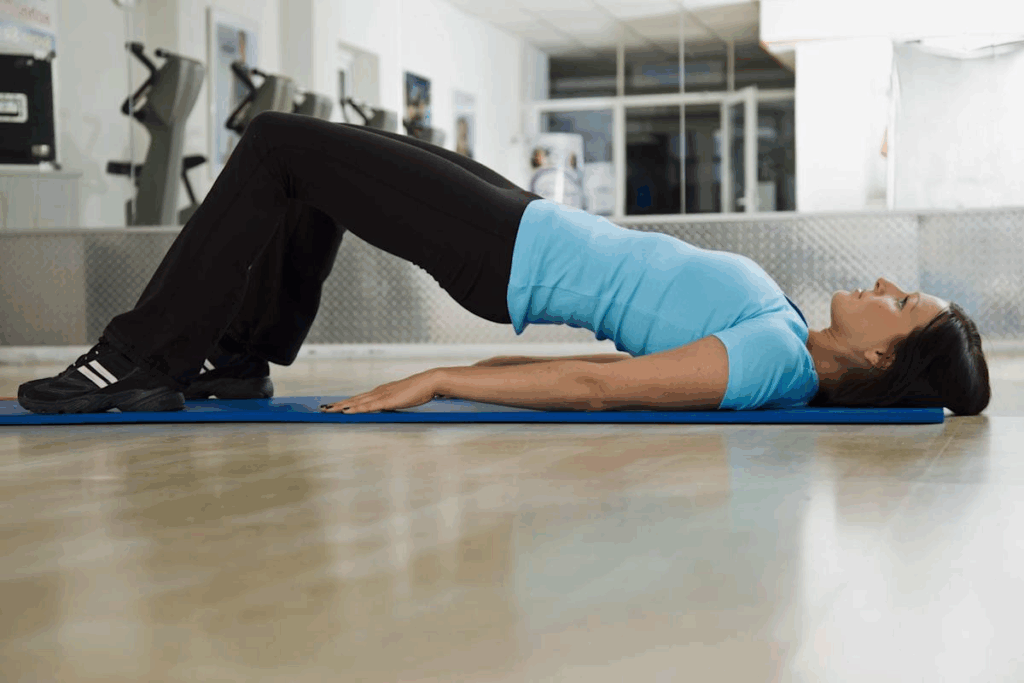
The glute bridge strengthens gluteal muscles, vital for hip alignment. Lie on your back, knees bent, feet flat. Lift your hips up, squeezing your glutes, then lower back down. This exercise stabilizes the pelvis and improves hip alignment.
2. Clamshell Exercise for External Rotation
The clamshell targets hip external rotators for alignment. Lie on your side, knees bent, feet touching. Lift your top knee up, then lower it. This strengthens muscles for external rotation and stability.
3. Side-Lying Hip Abduction for Gluteus Medius
Side-lying hip abduction works the gluteus medius for alignment. Lie on your side, legs straight, lift your top leg up, then lower it. This strengthens the gluteus medius, improving alignment and stability.
4. Hip Flexor Stretch for Anterior Pelvic Tilt
The hip flexor stretch corrects anterior pelvic tilt. Kneel on one knee, the other in front. Lean forward, stretching your hip. This stretch lengthens hip flexors, promoting balanced alignment.
Adding these exercises to your routine can help fix uneven hips and improve pelvic stability. Do these exercises regularly and correctly for the best results.
Research-Backed Benefits of Hip Alignment Exercises
Hip alignment exercises are proven to boost strength, mobility, and reduce pain. Adding these exercises to your routine can greatly improve your hip function. This leads to a better quality of life.
Strength Improvements in Hip Muscles
Studies show hip exercises can make muscles stronger. They found strength gains of 7% to 42% in hip abduction and 6% to 56% in hip external rotation. These gains help keep the hips aligned and prevent problems later on.
Key Strength Improvements:
- Increased hip abduction strength
- Enhanced hip external rotation strength
- Better overall hip stability
Pain Reduction and Mobility Gains
Hip alignment exercises also reduce pain and boost mobility. They target muscles and structures around the hip. This helps ease discomfort and improves movement.
Benefits for Pain and Mobility:
- Reduced hip and lower back pain
- Improved range of motion
- Enhanced functional mobility for daily activities
Understanding the benefits of hip alignment exercises is key. They help achieve stronger, more aligned hips. This improves our overall quality of life.
Creating an Effective Hip Realignment Routine
To create a good hip realignment routine, mix targeted exercises with regular practice. It’s important to know how to set up your workout plan. Also, understand what to expect as you get better.
Sample Weekly Exercise Schedule
Having a weekly exercise plan helps keep you consistent. It also helps you see progress in hip alignment. Here’s a sample plan that includes the exercises we’ve talked about:
- Monday: Glute Bridge and Clamshell Exercise
- Wednesday: Side-Lying Hip Abduction and Hip Flexor Stretch
- Friday: Repeat Monday’s exercises
- Sunday: Repeat Wednesday’s exercises
Start with fewer reps (8-10) and slowly add more as you get stronger and more flexible.
Progression Timeline and Expectations
Knowing how long it takes to see progress is important. It keeps you motivated and lets you see how your hips are getting better.
- Weeks 1-2: You’ll start to feel more flexible and see small strength gains.
- Weeks 3-4: You’ll notice your hips are more aligned and your walk will improve.
- Weeks 5-6: Your strength will increase a lot, and your hips will align even more.
- Weeks 7-8: You’ll move better and feel less pain.
Sticking to it is important. Always listen to your body and change your routine if needed.
Tracking Progress and Expected Results
It’s key to keep an eye on our progress for successful hip realignment. As we do hip alignment exercises, knowing how to track our growth is vital. We also need to know what to expect.
Measurable Improvements to Look For
When we do exercises for hips out of alignment, we can see several important changes:
- Increased strength in the hip muscles
- Reduced pain during daily activities
- Improved mobility and range of motion
These changes are not just feelings; they can be measured. For example, doing a glute bridge more easily or feeling less pain during a hip flexor stretch shows we’re getting better.
“Consistency is key when it comes to seeing results from hip alignment exercises. Regular practice and patience will yield noticeable improvements over time.” – Expert in Physical Therapy
Timeline for Noticeable Changes
The time it takes to see changes can differ. It depends on how bad the misalignment is, how often we exercise, and our physical health. But, many people start to feel better in a few weeks.
Here’s a rough idea of when to expect changes:
- First, we might see better flexibility and less pain in 4-6 weeks.
- Then, we’ll likely notice stronger muscles and better posture in 8-12 weeks.
- After 3-6 months, we’ll see big improvements in how our hips align and how mobile we are.
It’s important to stick with the hip realignment exercise plan and be patient. As we keep track of our progress, we can tweak our routine to get even better results.
Lifestyle Modifications to Support Hip Alignment
To get the most out of hip alignment exercises, making lifestyle changes can help a lot. These changes can make your exercises for uneven hips work better and keep your hips healthy.
Optimal Sitting and Standing Posture
Keeping the right sitting and standing posture is key for hip alignment. When sitting, your feet should be flat on the floor or on a footrest. Your knees should be at or below hip level, and your back should be straight. Standing right means your weight is evenly on both feet and your shoulders are relaxed.
Bad posture can cause muscle imbalances that hurt hip alignment. Being mindful of our posture helps lessen hip strain. This makes hip realignment exercises more effective.
Ergonomic Considerations for Work
Workplace ergonomics play a big role in hip health. A well-set-up workstation promotes good posture, preventing hip misalignment. Adjust your chair height, monitor angle, and keyboard position to ease body strain.
An ergonomic workspace helps maintain better posture and lowers muscle imbalance risks. These changes support hip health while doing daily tasks.
Importance of Supportive Footwear
Wearing the right shoes is vital for hip alignment. Shoes with good arch support and cushioning spread out body weight evenly. This reduces hip strain.
Choosing the right shoes is key for hip health. Pick shoes made for your activities, like walking, running, or standing long hours. Good footwear strengthens your posture foundation, helping exercises for uneven hips.
When to Consult a Healthcare Professional
It’s important to know when to see a doctor for hip misalignment. Exercises and lifestyle changes can help a lot. But sometimes, you need a doctor’s help.
Warning Signs That Require Medical Attention
Some symptoms mean you need to see a doctor fast. These include:
- Severe pain that makes it hard to do everyday things or keeps you awake at night.
- Numbness or tingling in your legs or hips.
- Big trouble walking or staying steady.
- Recent trauma or injury to your hip.
If you notice any of these signs, see a doctor right away. They can check you out and create a treatment plan.
Types of Specialists for Hip Issues
Depending on your hip problem, you might need to see different doctors. These include:
- Orthopedic specialists for bone and muscle issues.
- Physical therapists for exercises and therapy.
- Rheumatologists for problems caused by inflammation.
Seeing the right doctor is key. They can give you the best care for your hip issues. This might include hip alignment exercises and other treatments.
Conclusion
Adding hip alignment exercises to your routine can greatly improve your health. We’ve seen how important hip alignment is. Exercises for uneven hips can help balance and ease discomfort.
Combining hip alignment exercises with lifestyle changes can lead to better mobility and less pain. We suggest sticking with the exercises and tips from this article. This will help keep your hips aligned and improve your overall health.
Starting hip alignment exercises is a big step towards a healthier you. Our aim is to give you the knowledge and tools for optimal hip alignment and health.
FAQ
What are the common signs that indicate my hips are out of alignment?
Signs include lower back pain and an uneven gait. You might notice changes in your posture or have trouble with daily tasks. Muscle imbalances, weakness, or pain in the hip area are also common.
How can I self-assess if my hips are out of alignment?
Stand in front of a mirror to check if your hips are even. Lie on your back to see if your legs are level. Also, check if your hips have different flexibility levels.
What are the causes of uneven hips?
Muscle imbalances and a sedentary lifestyle can cause uneven hips. Previous injuries or conditions like scoliosis also play a role. Sitting or standing in the wrong way for too long can also misalign your hips.
How do hip alignment exercises help?
These exercises strengthen hip muscles and improve flexibility. They also reduce pain. This helps restore proper alignment and function to the hip joint.
What are the benefits of hip alignment exercises?
These exercises improve hip muscle strength and reduce pain. They also increase mobility. Regularly doing these exercises can prevent future hip alignment problems.
How often should I perform hip alignment exercises?
Aim to do hip alignment exercises three to four times a week. Gradually increase frequency and intensity as you get better.
What lifestyle modifications can support hip alignment?
Keep good sitting and standing posture. Use ergonomic furniture and supportive shoes. Avoid sitting or standing for too long to support hip alignment.
When should I consult a healthcare professional about my hip alignment?
See a healthcare professional for severe pain, numbness, or tingling. If your symptoms get worse, seek help. Orthopedic doctors or physical therapists can guide and treat you.
How long does it take to see results from hip alignment exercises?
Results vary by individual and the severity of misalignment. You might see improvements in a few weeks to months with regular exercise.
Can hip alignment exercises help with lower back pain?
Yes, these exercises can help with lower back pain. They address hip misalignment, which often causes back pain.
Are there any specific exercises for asymmetrical hips?
Yes, exercises like the clamshell, side-lying hip abduction, and glute bridges help. They strengthen muscles and improve alignment for asymmetrical hips.
References
National Center for Biotechnology Information. Evidence-Based Medical Guidance. Retrieved from https://www.ncbi.nlm.nih.gov/pmc/articles/PMC4556293/