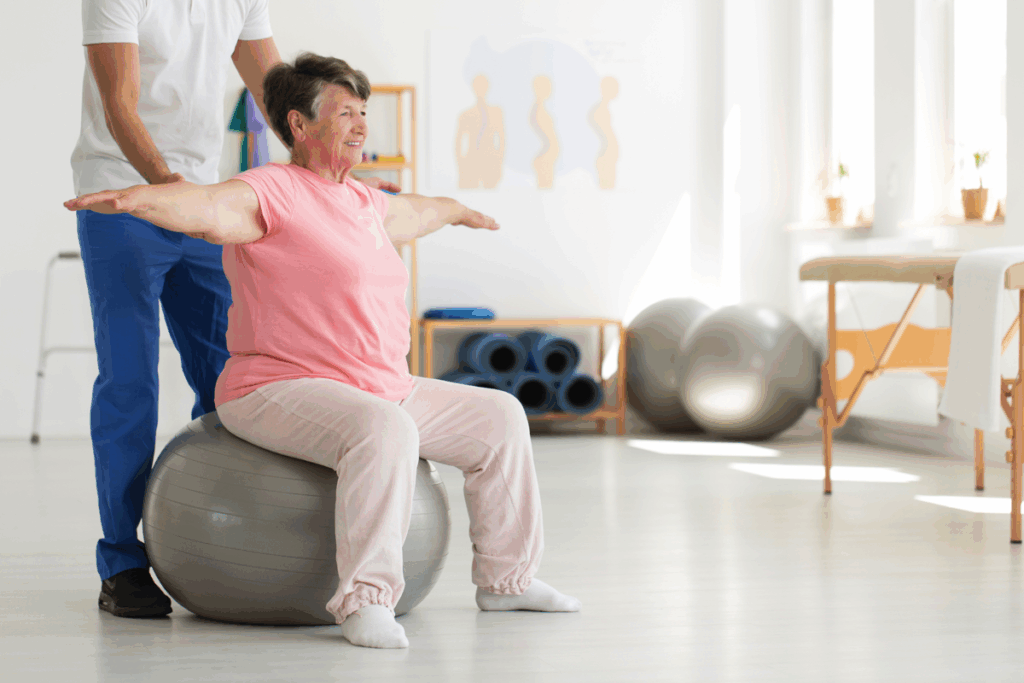
Hand injuries and disorders can really change our daily lives. They affect millions of people around the world. The National Centre for Health Statistics says many visits to emergency departments are for upper extremity injuries.
Guide to performingoccupational therapy hand exercises for improved dexterity, function, and pain relief.
Occupational therapy hand exercises are key in getting better. They help improve grip strength, range of motion, and how well we can do things.
These exercises are very important. They help people get over injuries, deal with long-term health issues, or keep their hands strong and flexible. Occupational therapists make a big difference by adding hand rehab to treatment plans.
Key Takeaways
- Occupational therapy hand exercises are essential for rehabilitation.
- These exercises improve grip strength, range of motion, and functional ability.
- Personalized treatment plans can enhance patient outcomes.
- Hand rehab is key for getting better from injuries and managing long-term health issues.
- Occupational therapists are very important in helping patients with hand exercises.
The Science Behind Hand Rehabilitation
Fixing hand injuries needs a detailed plan based on science. Hand rehab exercises help bring back function, boost dexterity, and cut down pain. Knowing the science behind hand therapy shows why these exercises are key to getting better.
Statistics on Hand Injuries and Recovery
Hand injuries happen a lot, affecting millions globally each year. Studies say hand and wrist injuries are a big part of emergency visits. The healing journey is long and tough, making good rehab plans very important.
Early and right use of hand rehabilitation exercises can greatly help. These exercises are made to fix specific problems like less motion, strength, and dexterity.
Evidence-Based Benefits of Hand Therapy
Hand therapy’s benefits are supported by lots of research. Occupational therapy exercises for hands can make functions better, lessen pain, and boost hand performance. Adding these exercises to a rehab plan helps people get back to their daily life faster.
Research proves that hand rehab programs, with exercises and therapy, improve grip, motion, and function. These findings highlight the critical role of hand therapy in healing.
Understanding hand rehab science and using hand rehabilitation exercises in treatment plans helps a lot. Whether it’s after surgery, injury, or a long-term condition, a good hand therapy plan can greatly improve hand function.
Common Conditions Treated with Hand Therapy
Hand therapy is key in treating many hand and wrist issues. It helps with specific hand injuries and conditions. This promotes recovery and keeps hands working well.
Post-Surgical Rehabilitation
After surgery, hands and wrists can feel stiff, hurt, and not work as well. Hand therapy exercises are important for getting better. They help with moving, strengthening, and improving hand function.
We make special exercise plans for each patient. This ensures they recover smoothly and effectively.
For example, after tendon repair, occupational therapy for hands exercises help tendons move right. After carpal tunnel surgery, hand physical therapy exercises help regain wrist strength and mobility.
Arthritis and Joint Conditions
Arthritis and joint issues can make hands hurt, stiff, and less dexterous. Hand therapy helps manage these problems and improves life quality. We use gentle exercises, joint mobilization, and adaptive strategies to help.
For osteoarthritis, exercises strengthen muscles around the joints. For rheumatoid arthritis, we use adaptive techniques to manage pain and keep range of motion. Our therapists create treatment plans that meet each patient’s needs.
Nerve Injuries and Compression Syndromes
Nerve injuries and compression, like carpal tunnel syndrome, cause numbness, tingling, and weakness. Hand therapy exercises help lessen symptoms, aid nerve recovery, and improve hand function. We combine exercises, manual techniques, and ergonomics education for effective treatment.
For nerve compression, exercises improve nerve gliding and reduce symptoms. We also suggest ergonomic changes and adaptive equipment to prevent further irritation and aid healing.
Essential Equipment for Occupational Therapy Hand Exercises
To get the best results in hand rehab, you need the right tools. The right equipment makes hand therapy more effective, whether at home or in a clinic.
Basic Tools for Home Exercise Programs
For those starting hand therapy at home, some basic tools are very helpful. These include:
- Therapy putty, which boosts hand strength and dexterity
- Stress balls, great for improving grip strength
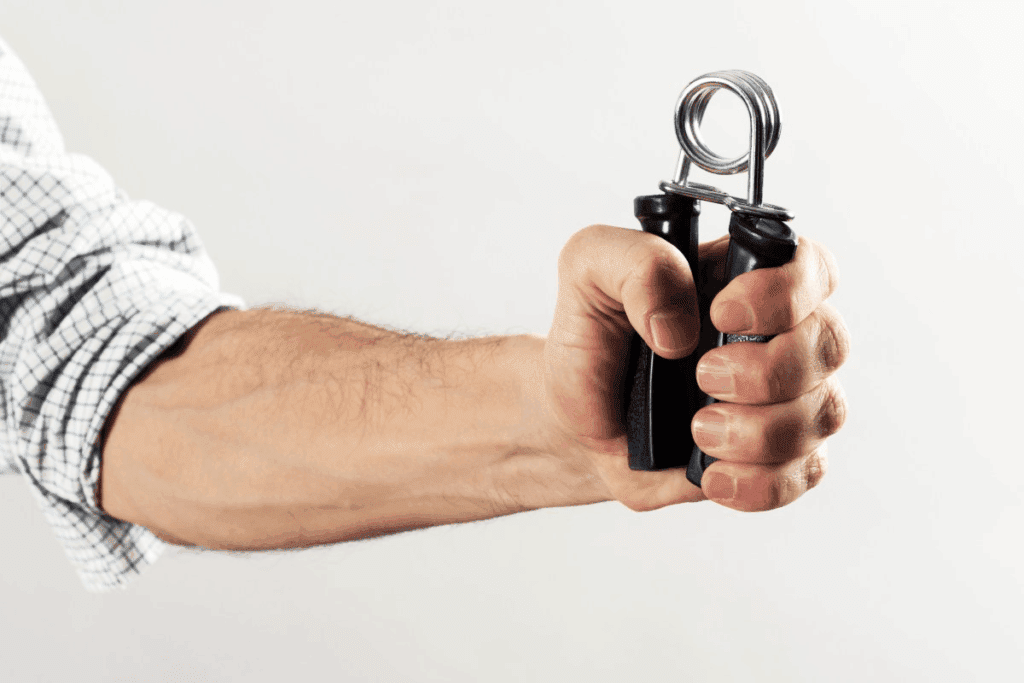
- Hand grippers, to strengthen hand muscles
- Finger exercisers, for better finger mobility
These tools are not only effective but also affordable and easy to find. Using them daily can greatly improve hand function.
Specialized Therapeutic Equipment
There are also specialized tools for occupational therapy hand exercises. These include:
Equipment | Purpose | Benefits |
Hand dynamometer | Measures grip strength | Provides objective data for tracking progress |
Finger ladder | Improves finger extension and flexion | Enhances range of motion and coordination |
Pegboard | Develops fine motor skills and hand-eye coordination | Improves dexterity and precision |
These specialized tools offer targeted therapy options. They can be tailored to meet individual needs, making them key in a complete hand rehab program.
Using both basic and specialized equipment in occupational therapy hand exercises can lead to big improvements. It can greatly enhance hand function and dexterity.
Preparing for Your Hand Exercise Routine
To get the most out of your hand exercise routine, proper preparation is key. It sets the stage for successful physical therapy for the hand. Preparing for hand exercises is vital for the best results from hand therapy exercises occupational therapy.
Creating an Optimal Exercise Environment
Creating a conducive environment for hand exercises is essential. We recommend a quiet, comfortable space with minimal distractions. This allows you to focus on your hand pt exercises. Ensure good lighting and a stable surface for performing exercises.
Warm-Up Techniques for Hand Therapy
Warming up your hands before starting exercises can enhance flexibility and reduce the risk of injury. Simple warm-up techniques include gently massaging your hands, fingers, and wrists. Or soaking them in warm water for a few minutes.
We suggest starting with low-intensity movements and gradually increasing the range of motion.
Safety Precautions and Modifications
Safety should always be a priority when performing hand exercises. We advise being mindful of any pain or discomfort and stopping if you experience sharp pain. Modifying exercises to suit your comfort level is also important.
If certain movements cause pain, try adjusting the range of motion or taking regular breaks.
By following these guidelines, you can create a safe and effective hand exercise routine. Remember, consistency and patience are key to achieving the best results in hand therapy.
Fundamental Occupational Therapy Hand Exercises
Our hand therapy program starts with basic exercises to boost hand function. These exercises help improve grip strength, range of motion, and dexterity. Doing these exercises daily can greatly improve your hand’s ability to function.
Finger Flexion and Extension Exercises
Finger flexion and extension are key for finger mobility and strength. Start by placing your hand flat on a table with your palm down. Lift each finger one at a time, then lower it back down. Repeat for each finger, focusing on controlled movements.
To do finger flexion, curl your fingers toward your palm and hold for a few seconds before releasing. This strengthens the flexor muscles in your forearm. Regular practice improves finger dexterity and reduces stiffness.
Wrist Mobility Exercises
Wrist mobility exercises are important for flexibility and strength in the wrist. Hold your arm straight out in front of you with your palm down. Tilt your wrist up and down, then rotate it in a circular motion. These movements help keep or improve your wrist’s range of motion.
Another good exercise is bending your wrist forward and backward. With your arm extended, use your other hand to gently pull your hand back, stretching your wrist. Hold the stretch for a few seconds before releasing. This enhances flexibility and reduces injury risk.
Thumb Opposition and Abduction Movements
Thumb opposition and abduction are key for hand function, enabling precise grasping and manipulation. To practice thumb opposition, touch the tip of your thumb to the tip of each of your other fingers, one at a time. This improves coordination and strength.
For thumb abduction, move your thumb away from your other fingers. Use your other hand to gently stretch your thumb, improving its range of motion. Regular practice of these movements greatly improves hand function.
By regularly doing these basic occupational therapy hand exercises, you can see big improvements in hand strength, dexterity, and function. Always do these exercises gently and within a comfortable range to avoid injury.
Strengthening Exercises for Hand Rehabilitation
Strengthening exercises are key for hand rehab. They help people regain strength and function in their hands. These exercises boost grip, pinch, and intrinsic muscle strength. This is important for daily tasks.
Grip Strength Development Techniques
Grip strength is vital for hand function. There are several ways to improve it. Here are some exercises we suggest:
- Grip strengthening using a hand gripper or rubber ball
- Finger bends with a light weight or resistance band
- Wrist curls and extensions to enhance forearm strength
Do these exercises often. Gradually increase the resistance to build strength.
Pinch Strength Exercises
Pinch strength is key for fine motor tasks, like picking up small items. Try these exercises to boost pinch strength:
- Pinching small objects like coins or marbles
- Thumb opposition exercises, touching the thumb to each fingertip
- Pinch grip strengthening with a pinch gripper or putty
These exercises will improve your pinch grip’s precision and strength.
Intrinsic Muscle Strengthening
Intrinsic muscle strengthening is essential for hand dexterity and coordination. Try these exercises to target these muscles:
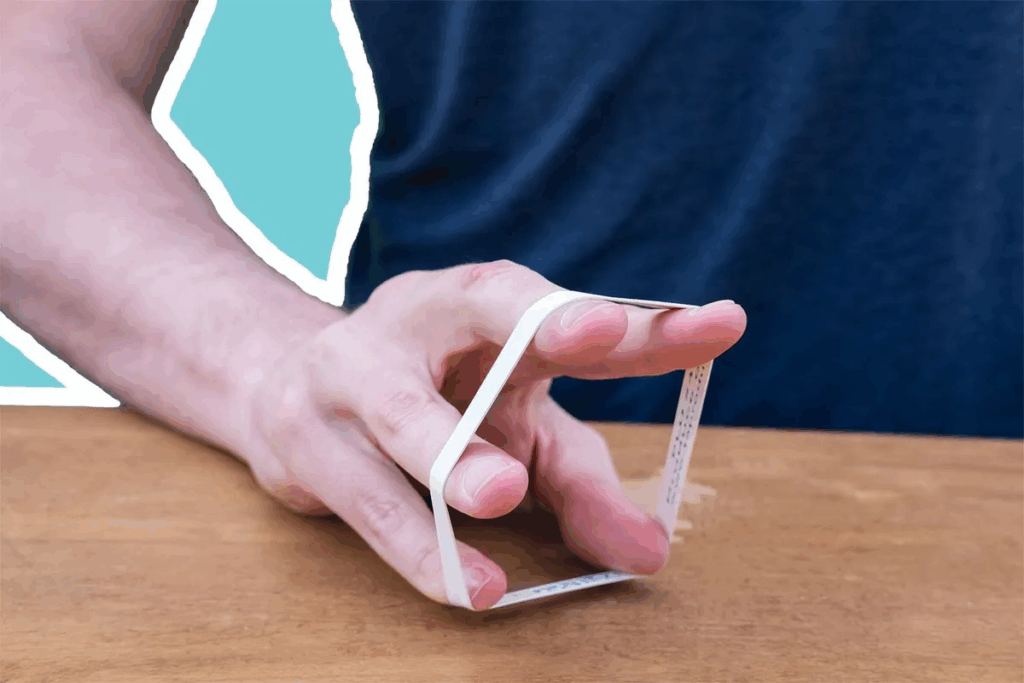
- Finger spreads using a resistance band
- Finger walks on a flat surface
- Intrinsic muscle exercises with a small ball or putty
Regular practice of these exercises will enhance hand function and dexterity.
Fine Motor and Dexterity Exercises
Dexterity and fine motor control are key for detailed hand movements. There are many exercises to boost these skills. They help improve hand function and coordination, making daily tasks easier and more precise.
Precision Grasping Activities
Precision grasping is a basic part of fine motor control. It lets you hold and move small objects. Exercises that improve precision grasping include picking up small items like coins or beads. These activities help the thumb and fingers work together better.
This is important for tasks like writing, buttoning, and using utensils. To make these exercises harder, use smaller objects or time yourself. For example, try putting a small coin into a piggy bank or a jar with a narrow opening. This boosts precision and hand-eye coordination.
In-Hand Manipulation Exercises
In-hand manipulation lets you move objects around in your hand. It’s key for tasks like adjusting a pen or using small tools. Exercises that focus on in-hand manipulation include rotating a coin or a small object in your hand, or moving a pen or pencil from your fingertips to your palm and back.
To practice, start with a small object like a coin or a marble. Hold it in your fingertips and rotate it in your hand. Use your thumb and fingers to move it. As you get better, use different objects or add new challenges to the exercise.
Bilateral Coordination Techniques
Bilateral coordination means using both hands together. Bilateral coordination exercises are important for tasks that need both hands, like tying shoelaces or playing musical instruments. Examples include clapping hands, doing symmetrical movements with both hands, or using both hands to handle a single object, like stabilizing a jar while unscrewing the lid.
To improve bilateral coordination, try activities that need both hands, like playing a piano or folding laundry. These exercises help the two sides of the brain talk better. This improves overall hand function and coordination.
Functional Occupational Therapy Hand Exercises for Daily Living
Functional occupational therapy hand exercises are key for daily living. They boost dexterity, strength, and coordination. This makes everyday tasks easier and more independent.
We use real-life activities in our hand exercises. This helps people regain hand function and adapt to various situations.
Kitchen-Based Therapeutic Activities
Kitchen tasks are a big part of our hand exercises. Activities include:
- Peeling vegetables
- Stirring mixtures
- Opening jars
- Using utensils for simple meals
These tasks improve hand strength, dexterity, and coordination. For example, peeling vegetables boosts fine motor skills. Stirring mixtures helps with wrist mobility.
Dressing and Self-Care Hand Exercises
Dressing and self-care are key in hand therapy. Examples are:
- Buttoning and unbuttoning shirts
- Zipping and unzipping jackets
- Tying shoelaces
- Using a comb or brush for grooming
These exercises improve hand function and daily living independence. Regular practice boosts self-care abilities.
Work-Related Hand Function Training
For those returning to work, exercises focus on job tasks. This includes:
- Typing on a keyboard
- Using tools specific to one’s profession
- Tasks that mimic job duties
Work-related activities in hand therapy help regain job skills. This ensures effective job performance.
We tailor exercises to meet individual needs and goals. This makes therapy effective and relevant to their daily and work life.
Advanced Hand Therapy Techniques
Complex hand conditions need advanced hand therapy techniques for the best recovery. These methods tackle challenges like sensory loss, scar tissue, and hypersensitivity.
Every patient’s journey is different, and therapy must fit their needs. “The key to successful hand therapy lies in its ability to adapt to the patient’s specific condition and progress,” experts say.
Sensory Re-education Exercises
Sensory re-education exercises are key for those with nerve damage or sensory issues in their hands. These exercises help bring back normal sensation, improving dexterity and coordination.
- Texture discrimination exercises
- Vibration desensitization techniques
- Object identification through touch
Adding these exercises to a therapy program can greatly enhance sensory skills and hand function.
Scar Management Techniques
Scar management is vital for those who have had surgery or hand trauma. Good scar management can prevent adhesions and improve movement.
Techniques used in scar management include:
- Massage therapy to soften scar tissue
- Application of silicone gel or sheets to flatten and soften scars
- Desensitization techniques to reduce hypersensitivity around the scar area
Desensitization Programs for Hypersensitivity
Desensitization programs help those with hypersensitivity in their hands, often from nerve injury or surgery. These programs slowly introduce different textures and stimuli to lessen sensitivity.
A typical desensitization program might include:
- Progressive exposure to different textures, from smooth to rough
- Vibration therapy to help the nervous system adapt to stimuli
- Functional activities that challenge the hand in a controlled manner
Using these advanced hand therapy techniques, patients can see big improvements in hand function and quality of life. As we learn more, we can help more people recover from complex hand conditions.
Monitoring Progress and Adapting Your Program
Effective hand rehabilitation needs ongoing monitoring and adjusting the exercise plan. As we do occupational therapy exercises for hands, it’s key to check our progress and tweak the plan. This keeps us pushing our hands and reaching our goals.
Assessment Tools and Measurements
To track progress well, we use different tools and measurements. These include:
- Goniometry to measure joint range of motion
- Manual muscle testing to assess strength
- Functional assessments to evaluate daily activity performance
These tools help us see how far we’ve come and spot areas needing more work in our hand therapy exercises occupational therapy program.
Setting Realistic Goals and Milestones
Setting realistic goals and milestones is key for staying motivated and tracking progress in hand rehab. We work with our occupational therapist to set clear, reachable goals. These goals are made just for us, based on our needs and goals.
“The key to successful rehabilitation is setting achievable goals and celebrating small victories along the way.”
When to Progress or Modify Exercises
Knowing when to move up or change exercises is vital for bettering ourselves in occupational therapy exercises for hands. We keep a close eye on our progress and change our exercises when needed. This could be when we hit certain milestones or face new challenges.
By regularly checking our progress and adjusting our program, we make sure our hand therapy exercises occupational therapy stays effective and meets our needs.
Conclusion: Maintaining Hand Health Long-Term
To keep hands healthy, it’s important to keep exercising them. Adding occupational therapy hand exercises to your daily routine helps a lot. This way, you can avoid future problems and keep your hands working well.
It’s smart to keep doing hand rehabilitation exercises as part of your health plan. This helps keep your hands strong and lets you do things on your own. Taking care of your hands means you can live a better life.
Make hand exercises a regular part of your life. Adding occupational therapy hand exercises to your daily routine is key. It keeps your hands healthy and strong for the long run.
FAQ
What are occupational therapy hand exercises?
Occupational therapy hand exercises are designed to improve hand function. They help with dexterity and strength. This is for people recovering from hand injuries or conditions.
Why are hand therapy exercises important for rehabilitation?
Hand therapy exercises are key for getting better. They help regain grip strength and range of motion. This makes it easier to do daily tasks.
What are some common conditions treated with hand therapy?
Hand therapy helps with many issues. This includes post-surgical care, arthritis, and nerve injuries. It also treats problems with the hand, wrist, and forearm.
What equipment is needed for occupational therapy hand exercises?
You’ll need basic tools like hand grippers and putty. Therapeutic balls and specialized devices can also help.
How do I prepare for a hand exercise routine?
Prepare by setting up a good exercise space. Use warm-ups and follow safety rules. This makes your exercises more effective.
What are some fundamental occupational therapy hand exercises?
Key exercises include finger flexion and extension. Wrist mobility and thumb opposition are also important. They improve hand function and dexterity.
How can I improve hand strength through exercises?
Focus on grip and pinch strength. Strengthening intrinsic muscles also helps. These exercises boost hand strength and function.
What are fine motor and dexterity exercises?
Fine motor exercises include precision grasping and in-hand manipulation. Bilateral coordination techniques also help. They improve hand function and coordination.
How can occupational therapy hand exercises be applied to daily living?
Use exercises in kitchen tasks and dressing. Work-related training also applies hand exercises to daily life.
What are advanced hand therapy techniques?
Advanced techniques include sensory re-education and scar management. Desensitization programs also help with complex hand conditions.
How do I monitor progress and adapt my exercise program?
Use assessment tools and set goals. Modify exercises as needed. This helps track progress and improve your program.
How can I maintain hand health long-term?
Keep doing hand exercises and include them in your daily routine. This helps keep your hands healthy and prevents future problems.
Are hand physical therapy exercises the same as occupational therapy hand exercises?
Hand physical therapy focuses on physical aspects of hand function. Occupational therapy hand exercises focus on daily activities and tasks.
Can hand rehabilitation exercises be done at home?
Yes, many exercises can be done at home. You just need proper guidance and the right equipment.
References
National Center for Biotechnology Information. Evidence-Based Medical Guidance. Retrieved from https://www.ncbi.nlm.nih.gov/pmc/articles/PMC10897503/



 Departments
 Related Videos
 Our Doctors
 News
News