Going to see a urologist for the first time can be scary. A urologist is a doctor who deals with problems of the urinary and reproductive systems in adults and kids.
At your first visit, we’ll take a detailed medical history and do a physical check-up. This helps us find out what’s causing your symptoms. You might have a genital or prostate exam, which are common in urology.
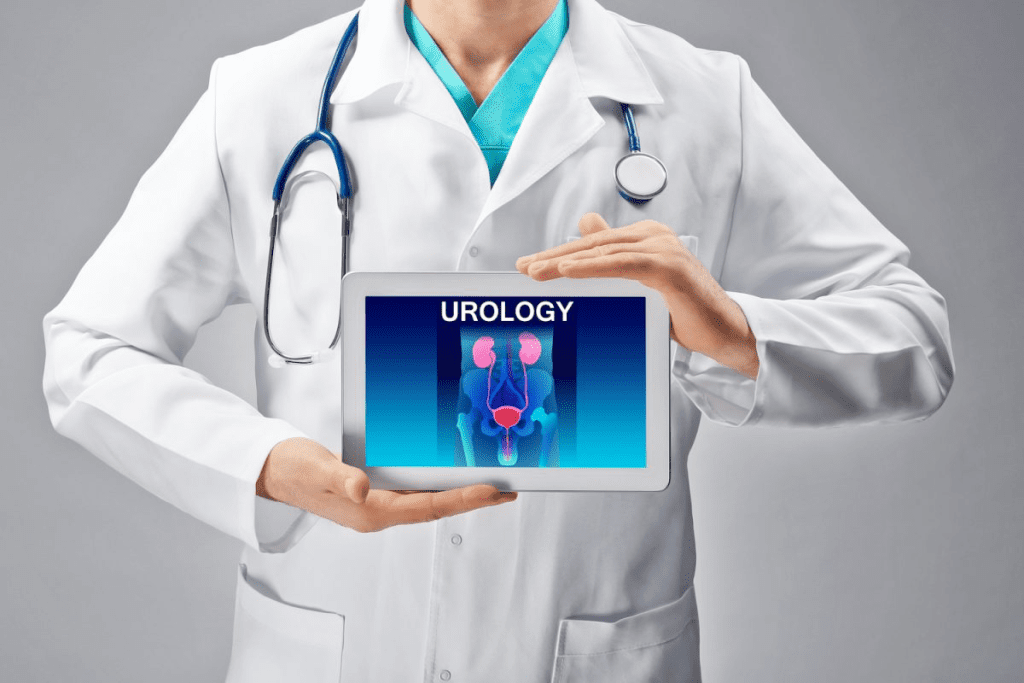
We want you to feel at ease and know what’s happening. We aim to make sure you understand what to expect at your first urology visit.
Key Takeaways
- A detailed medical history is taken at the first appointment.
- A physical check-up is done to find the cause of your symptoms.
- The check-up might include a genital or prostate exam.
- Tests might be suggested to help diagnose a condition.
- It’s important to talk openly about your symptoms and medical history.
Preparing for Your First Visit to a Urologist
Getting ready for your first urology visit is key for a good check-up and treatment plan. Visiting a urologist for the first time can be scary. But, being well-prepared can really help your experience.
What to Bring to Your Appointment
Here’s what you should bring to your appointment:
- A list of your current medications and supplements
- Any relevant medical records or previous test results
- A detailed account of your symptoms, including when they started and any factors that exacerbate or relieve them
- Any questions or concerns you have about your condition
Also, try to arrive with a full bladder. This might be needed for a urinalysis. Being ready with the right info helps us care for you better.
Common Reasons People Seek Urological Care
People go to urologists for many reasons. This includes urinary tract infections, prostate issues, kidney stones, and incontinence. Urologists are doctors who deal with the urinary tract and male reproductive system. Knowing why you might visit a urologist can help you feel more ready for your appointment.
Some common conditions treated by urologists are:
- Urinary tract infections and other infections
- Prostate issues, such as benign prostatic hyperplasia (BPH) and prostate cancer
- Kidney stones and other obstructions
- Incontinence and other urinary disorders
Understanding Wait Times for Urology Appointments
Wait times for urology appointments can change based on several things. This includes how urgent your condition is and our team’s schedule. Studies show that the average wait time for a first urology visit can be over 24 days for adults and 28 days for kids. But, we try to see our patients as soon as we can.
About 85% of new patient access is within our control. The rest is due to patient choices, like scheduling. We’ll work with you to find a good appointment time that fits your needs.
By knowing what to expect and being prepared, you can make the most of your first urologist visit. If you have any more questions or concerns, please don’t hesitate to contact us.
The Initial Consultation Process

When you first see a urologist, the initial visit is key. It’s designed to get a full picture of your urological health.
Meeting Your Medical Team
You’ll meet our medical team on your first visit. They’re here to give you top-notch care and make you feel at ease. We know talking about health can be tough. So, we aim to make you feel welcome.
Discussing Your Complete Medical History
Talking about your medical history is a big part of the visit. We’ll go over your past health, surgeries, and current meds. This helps us see how your health might link to your urological issues.
Knowing your full medical history helps us spot risks and make a better diagnosis. This way, we cover all bases of your health.
Explaining Your Symptoms and Concerns
You’ll get to share your symptoms and worries in detail. This is your time to tell us everything and ask questions. We want to hear it all to understand you fully.
Our team will listen carefully and create a plan just for you. By sharing your symptoms, we can focus our tests and care on what you need most.
What Your Urologist Will Do During the Examination
When you visit, our urologist will do a detailed check to understand your health better. This is key to finding and treating many urological problems. These can be anything from urinary tract infections to sexual health issues. Men often come in for issues like an enlarged prostate or problems with ejaculation.
General Physical Assessment Techniques
First, our urologist will use general physical checks. They will look at your vital signs and check your abdomen for any issues. A detailed physical check is vital to find out what’s causing your symptoms.
Genital Examination Procedures
Both men and women may need a genital check. This is done with care and respect for your privacy. We aim to make sure you’re comfortable and know what’s happening. For men, this might include looking at the penis and testes for any problems or infections.
Prostate Examination for Male Patients
Men might have a digital rectal exam (DRE) done. This helps our urologist check the prostate for any issues, like growths or irregularities. We know this can be sensitive, so we make sure you’re comfortable.
Privacy and Comfort Considerations
At our clinic, we really care about your privacy and comfort during the exam.
“We understand that a urological exam can be sensitive, and we’re here to make you as comfortable as possible.”
Our team is trained to be respectful and professional. We want to make sure you get the care you need in a supportive setting.
To wrap it up, your urology visit will include a detailed exam with different checks. For men, this might include a genital or prostate exam, like a DRE. Urology is all about diagnosing, treating, and managing urinary and male reproductive system issues. A digital rectal exam is a common and important part of checking male urological health.
Diagnostic Tests and Procedures
To find out what’s wrong and fix it, we use tests and procedures. These tools help us figure out why you’re feeling sick. Then, we make a plan just for you.
Urine Analysis and What It Reveals
Urine tests are a big help in urology. They show us if you have an infection or blood in your pee. This lets us catch problems early and act fast.
Imaging Studies: Ultrasounds and Other Scans
Imaging tests like ultrasound and CT scans are key. They let us see inside your urinary system. This helps us understand how serious your problem is and how to fix it.
Specialized Urological Assessments
Sometimes, we need more detailed tests. These might include tests to check how your bladder works or to look inside your bladder and urethra. These tests give us more info and help us make a treatment plan just for you.
By using all these tests, we get a clear picture of your health. Then, we can make a plan to help you feel better. Our aim is to give you the best care and support on your urology journey.
Treatment Planning and Next Steps
Getting a diagnosis is just the start. Next, we create a treatment plan that is right for you. After your tests, we’ll talk about your options and make a plan just for you.
Developing a Treatment Plan
Our urologists will get to know you and your condition well. They’ll plan a treatment that works well and is as easy as possible. This plan will be based on your tests, medical history, and what you prefer.
For many issues, day-case procedures are a good choice. These procedures are often very successful and have few complications. Most patients (93%) don’t need a catheter after these procedures, making recovery easier.
Day-Case Procedures and Their Success Rates
Day-case procedures let you go home the same day. They’re great because they avoid long hospital stays and reduce infection risks. Plus, they usually mean a quicker recovery.
We’ll tell you all about your day-case procedure. We’ll explain what to expect during and after, so you’re ready for your recovery.
Follow-Up Appointment Scheduling
After your treatment, we’ll set up follow-up appointments. These are important to check on your progress and adjust your plan if needed. They help make sure your condition is being well-managed and you’re recovering right.
When to Expect Results from Tests
We know how important quick results are. Usually, you’ll get your test results in a few days. We’ll tell you exactly when during your treatment plan, so you always know what’s happening.
At our urology department, we’re all about giving you the best care. From diagnosis to treatment and follow-ups, our team is here to help. We want to make sure you get the best results possible.
Conclusion: Getting the Most from Your Urology Care
Knowing what to expect at your first urology visit can make you feel more ready. Urology is about treating problems with the urinary system and male reproductive system. That’s why a urologist is the best doctor for these issues.
We aim to give you top-notch care and support on your urology journey. We promise to treat you with kindness and skill, ensuring you get the best care. Learning about urology and what a urologist does helps you understand your care better.
We want your visit to be as easy and helpful as possible. We believe teamwork leads to the best health outcomes for you. Whether you need a diagnosis, treatment, or advice on staying healthy, we’re here to help. We’ll explain your urological condition and treatment options clearly.
FAQ
What is a urologist, and what do they do?
A urologist is a doctor who deals with the urinary tract and male reproductive system. They treat many issues, from infections to prostate problems.
What should I bring to my first urology appointment?
Bring any medical records, a list of your medications, and a detailed symptom list. This helps us understand your condition and care for you better.
What happens during a genital or prostate examination?
Our urologist will use physical techniques to check your condition. For men, this might include a genital or prostate check. These are done with care for your privacy and comfort.
What diagnostic tests might be conducted during my urology appointment?
We might do urine tests, ultrasounds, and other urological tests. These help us find out what’s wrong and plan your treatment.
How are treatment plans developed, and what can I expect?
After tests, we create a treatment plan just for you. This might include day-case procedures. We’ll follow up to see how you’re doing and adjust the plan if needed.
What is urology, and what conditions do urologists treat?
Urology is the study and treatment of urinary and male reproductive system disorders. Urologists handle issues like infections, prostate problems, and more.
How long does it take to get the results from diagnostic tests?
We’ll tell you when to expect test results. The wait time depends on the test and your condition.
What is a urological assessment, and why is it necessary?
A urological assessment is a detailed evaluation for your condition. It includes tests and procedures like urine analysis and imaging studies.
Can I expect a day-case procedure as part of my treatment?
Depending on your condition, a day-case procedure might be part of your treatment. These procedures are often successful and have few complications. We’ll discuss it with you during your visit.
References
- Desert Sky Urology. (2025). How to Prepare for Your First Urology Appointment.