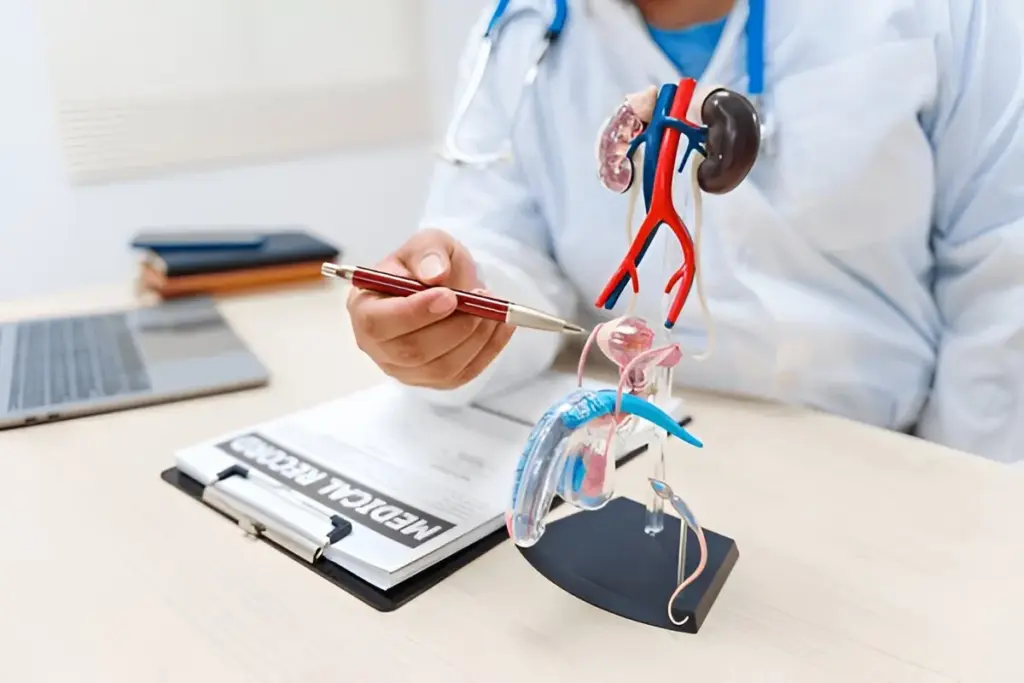
Nearly 1 in 3 men will face urinary tract issues at some point. Procedures like cystoscopy are key for diagnosis and treatment.
A cystoscopy procedure uses a thin tube with a camera to look inside the bladder. It’s vital for men to check for bladder stones, tumors, or infections.
So, what is a cystoscopy and how much pain does it cause? We’ll dive into the cystoscopy male patients go through. You’ll learn what to expect during and after, thanks to a urologist.
Key Takeaways
- A cystoscopy is a common diagnostic tool for urinary tract issues.
- The procedure involves a thin tube with a camera to examine the bladder.
- Understanding the process can help alleviate concerns about pain.
- Guidance from a urologist is key for a smooth experience.
- Knowing what to expect can make the procedure less intimidating.
Understanding Male Cystoscopy
Cystoscopy is a medical test that lets doctors see inside the bladder and urethra. It’s key for finding problems and figuring out why men have urinary symptoms.
What Is a Cystoscopy?
A cystoscopy uses a cystoscope, a thin tube with a camera and light. It lets doctors look at the bladder and urethra. This test can spot things like bladder stones, tumors, and infections.
Urology experts say, “Cystoscopy is a vital tool. It gives a clear view of the urinary tract. This helps doctors diagnose and sometimes treat problems in the bladder and urethra.”
Purpose of the Procedure
The main goal of a cystoscopy is to find and watch conditions in the bladder and urethra. It helps figure out why men might have symptoms like:
- Blood in the urine
- Painful urination
- Frequent urinary tract infections
- Urinary incontinence
This test can also treat some issues, like removing bladder stones or tumors.
|
Condition |
Description |
How Cystoscopy Helps |
|---|---|---|
|
Bladder Stones |
Hard masses of minerals in the bladder |
Diagnose and sometimes remove stones |
|
Bladder Tumors |
Abnormal cell growths in the bladder |
Visual inspection for tumors |
|
Urinary Tract Infections |
Infections in the bladder or urethra |
Identify source of infection |
Who Needs This Test?
Men with certain urinary symptoms or bladder and urethra issues might need a cystoscopy. This includes those with:
- Unexplained bleeding in the urine
- Recurring urinary tract infections
- Abnormal cells in the urine
- Urinary retention or incontinence
A urologist will suggest a cystoscopy based on a patient’s history and symptoms. Knowing about this test helps men understand what to expect and make informed choices about their health.
Preparing for a Cystoscopy
Knowing what to expect before a cystoscopy can make you feel less anxious. We help our patients get ready for the procedure. This way, they can feel comfortable and the procedure can go well.
Initial Consultations With a Urologist
First, you’ll meet with a urologist. They will explain why you need the procedure and what it involves. This is a chance to learn what a urologist does and how they can help you.
It’s a good idea to write down any questions you have. Also, share any important medical history. This meeting is key for building trust and making sure you know what’s happening.
Pre-Procedure Instructions
After meeting with the urologist, you’ll get specific pre-procedure instructions. These might include what to eat or not eat, changes to your medication, and other steps to take. Following these instructions is important for your safety and the success of the procedure.
- You might need to stop taking certain medications that could affect the procedure.
- There could be dietary restrictions to avoid complications.
- You’ll learn how to prepare your bowel for the procedure, if needed.
Sedation Options
Sedation and anesthesia options will be discussed with you. This is to find the best choice for your comfort during the cystoscopy. The type of sedation can vary, from local anesthesia to conscious sedation, based on your health and preferences.
We listen to your concerns and tailor the sedation plan to fit your needs. This makes the experience as comfortable as possible for you.
The Cystoscopy Procedure
A cystoscopy is a medical test that lets doctors see inside the bladder and urethra. It’s key for finding and sometimes fixing problems with the urinary system.
Step-by-Step Process
The cystoscopy process has several steps. First, the patient lies on a table, usually on their back with legs up. The doctor cleans the area and uses a local anesthetic to reduce pain. Sometimes, sedation is given to help the patient relax.
The doctor then uses a thin, flexible or rigid tube with a camera and light. This tube, called a cystoscope, is inserted into the urethra and moved towards the bladder. The camera shows images on a screen, letting the doctor check for any issues.
If needed, the doctor can take tissue samples or do other treatments. This might include removing small growths or injecting medicine into the bladder wall.
Types of Cystoscopes Used
There are two main types of cystoscopes: flexible and rigid. The flexible cystoscope is thin and bendable, making it easier to use. It’s often used for looking around and is less likely to cause discomfort.
The rigid cystoscope is thicker and used for treatments. It has a bigger channel for passing tools. The choice depends on the procedure’s purpose and the patient’s needs.
Duration of the Procedure
The time it takes for a cystoscopy varies. It can be quick for just looking around, taking 5 to 15 minutes. If treatments are needed, it can take longer, from 15 to 60 minutes.
|
Procedure Type |
Typical Duration |
Characteristics |
|---|---|---|
|
Diagnostic Cystoscopy |
5-15 minutes |
Visual examination of the bladder and urethra |
|
Therapeutic Cystoscopy |
15-60 minutes |
Includes interventions like biopsies or treatments |
Pain Level During Cystoscopy
Pain during male cystoscopy is a common worry. But, the actual pain can vary a lot. Knowing what affects pain can help manage expectations and discomfort.
Common Sensations Experienced
Patients may feel different sensations during a cystoscopy. These can range from mild discomfort to more pain. The procedure involves putting a cystoscope into the urethra, which can cause pressure or discomfort.
Some men might feel a stinging or burning sensation when the cystoscope moves. Using numbing medication or anesthesia can help lessen these feelings. Numbing medication numbs the urethra, making the procedure less uncomfortable. Anesthesia can make you feel relaxed or even asleep, depending on the type.
Assessing Pain Tolerance
How much pain someone can handle varies a lot. Things like previous pain experiences, anxiety levels, and health condition play a big role. Knowing your pain tolerance before the procedure helps doctors choose the best pain management.
Factors Influencing Pain Levels
Many things can affect how much pain you feel during a cystoscopy. These include:
- The skill of the urologist doing the procedure
- The type of cystoscope used, with newer ones being more flexible and less painful
- The use of anesthesia or numbing medication
- The individual’s pain tolerance
Knowing these factors can help reduce discomfort. Here’s a table that shows how each factor can impact pain levels:
|
Factor |
Potential Impact on Pain Level |
|---|---|
|
Skill of the Urologist |
A more skilled urologist can make the procedure less painful by being gentle and efficient. |
|
Type of Cystoscope |
Newer, more flexible cystoscopes are less invasive and can cause less discomfort. |
|
Use of Anesthesia/Numbing Medication |
Good pain management can greatly reduce or remove pain during the procedure. |
|
Individual’s Pain Tolerance |
Those with a higher pain tolerance may feel less discomfort during and after the procedure. |
Pain Management Strategies
Managing pain is key for a comfortable cystoscopy experience. We know that many patients feel anxious about cystoscopy. So, we focus on pain management to make the procedure easier.
Anesthetic Options for Patients
Anesthetic options are important for pain management during cystoscopy. Different types of anesthesia are available, based on the patient’s needs and the urologist’s advice.
- Local Anesthesia: This numbs the area where the cystoscope is inserted. It’s often used for cystoscopy.
- Sedation: Sedation can be added to local anesthesia to help the patient relax.
- General Anesthesia: Though rare for cystoscopy, general anesthesia might be used for other procedures or special needs.
Understanding numbing definitions and local anesthesia can ease concerns. Local anesthesia numbs the urethra and nearby areas, reducing discomfort during the procedure.
Comfort Measures Before and After
Comfort measures are taken before and after the procedure to reduce discomfort.
|
Comfort Measure |
Description |
Benefit |
|---|---|---|
|
Pre-procedure relaxation techniques |
Deep breathing, meditation, or other relaxation methods |
Reduces anxiety and helps the patient relax |
|
Post-procedure warm baths |
Soaking in a warm bath after the procedure |
Helps to soothe the urethra and reduce discomfort |
|
Adequate hydration |
Drinking plenty of water before and after the procedure |
Helps to flush out the system and reduce the risk of infection |
Medications to Minimize Discomfort
Medications are prescribed to manage pain and discomfort after the procedure. These include:
- Pain relievers to manage discomfort and pain
- Antibiotics to prevent infection
Following the urologist’s instructions on medication use is important for a smooth recovery.
Post-Procedure Recovery
After a male cystoscopy, knowing what to expect can help a lot. This time can be full of questions and worries. We aim to help you through it clearly and with care.
Typical Recovery Timeline
The time it takes to recover from a cystoscopy varies. But most men can get back to normal in a few days. Right after, you might feel some discomfort or mild symptoms, which usually go away in 48 hours. It’s best to rest and avoid hard activities during this time.
Expected Side Effects
Some side effects are normal after a cystoscopy, but they’re usually mild and short-lived. You might feel a burning sensation when you pee, see a bit of blood, or need to pee more often. These symptoms don’t last long and should get better in a few days. Drinking lots of water can help by flushing out your system.
When to Contact a Urologist
While most side effects can be handled at home, there are times to call your urologist. If you see a lot of bleeding, feel a lot of pain, or have signs of infection like fever or chills, you should get medical help right away. Your urologist is there to help you through recovery and answer any questions.
In summary, recovering from a male cystoscopy needs some care and knowledge. By knowing what to expect and when to ask for help, you can get through this period with confidence.
Complications and Risks
Knowing about the possible complications and risks of cystoscopy can ease worries. It helps patients get ready for the procedure. Even though cystoscopy is generally safe, knowing the risks is key for a quick recovery.
Rare But Serious Risks
Though rare, serious problems can happen during or after cystoscopy. These include:
- Severe infection: Bacteria can get into the urinary tract, causing infections that might need antibiotics.
- Bleeding: Heavy bleeding is rare but can happen. It might need more medical help.
- Perforation: There’s a small chance the cystoscope can puncture the bladder or urethra. This might need surgery to fix.
Signs of Complications to Watch For
It’s important to know the signs of possible complications. This way, you can get medical help quickly. Look out for:
- Severe pain: Pain that’s too much or doesn’t go away after the procedure.
- Heavy bleeding: Bleeding that doesn’t stop or is too much.
- Fever: A high body temperature that could mean an infection.
- Difficulty urinating: Trouble peeing or painful urination.
Strategies to Minimize Risks
To lower the risks of cystoscopy, several steps can be taken:
|
Strategy |
Description |
|---|---|
|
Proper patient selection |
Make sure cystoscopy is the right choice for the patient’s issue. |
|
Antibiotic prophylaxis |
Give antibiotics before the procedure to cut down infection risk. |
|
Skilled practitioner |
Have an experienced urologist do the procedure to reduce risks. |
|
Post-procedure care |
Give clear instructions and support for aftercare to catch and handle any problems early. |
Alternatives to Cystoscopy
Cystoscopy isn’t the only way to diagnose issues. There are other methods, each with their own benefits and drawbacks. If cystoscopy isn’t right or preferred, other options can be explored.
Imaging Tests as Alternatives
Imaging tests are a big alternative to cystoscopy. They let you see the urinary tract without invasive methods. Tests like ultrasound, CT scans, and MRI are used.
Ultrasound is great for looking at the bladder and kidneys. It shows real-time images without radiation or dyes. CT scans give detailed views and are good for finding stones and tumors. MRI is best for soft tissue images, helping with complex conditions.
Pros and Cons of Other Methods
Each imaging test has its own good and bad points. Ultrasound is safe but might not show as much detail as cystoscopy. CT scans use radiation, which is a concern, mainly for young patients or those needing many scans.
It’s important to compare these methods to find the best one for each patient. Here’s a table that highlights the main points of these alternatives:
|
Diagnostic Method |
Advantages |
Disadvantages |
|---|---|---|
|
Ultrasound |
Non-invasive, real-time imaging, no radiation |
Limited detail of mucosal surfaces, operator-dependent |
|
CT Scan |
High-resolution images, detects a wide range of abnormalities |
Involves radiation, may require contrast dye |
|
MRI |
Excellent soft tissue detail, no radiation |
High cost, claustrophobia, not suitable for all patients |
Discussing Options With Your Urologist
Talking to a urologist about these options is key. They can help choose the best test based on your needs and health. They consider your medical history, the condition, and your preferences.
By talking openly with your doctor, you can make a smart choice about your care. This ensures you get the right and most effective tests.
Real Patient Experiences
Real patient stories give a close look at the cystoscopy process. They cover everything from first worries to recovery after. We share these to help men understand what they might go through.
Common Concerns and Reactions
Many men worry about pain and the whole experience when facing cystoscopy for the first time. Will it hurt? is a big question. They often feel nervous about the unknown parts of the procedure.
Talking to their urologist helps ease these worries. Knowing what happens step by step can make them feel less anxious.
Testimonials on Pain Levels
Testimonials give insights into pain levels during and after cystoscopy. While everyone’s experience is different, many say it was less painful than they thought.
“I was surprised at how quick and relatively painless the procedure was. The staff were very supportive and explained everything clearly.”
Some men found the discomfort was not bad and didn’t last long. Sedation or local anesthesia helped a lot in keeping pain down.
Coping Mechanisms Post-Procedure
After the procedure, men use different ways to deal with any pain or side effects. Staying hydrated and resting are key tips.
- Drinking plenty of water to help flush out the bladder
- Avoiding strenuous activities for a short period
- Using warm baths to relieve discomfort
Following the doctor’s post-procedure advice is also helpful. This includes taking pain meds as directed and watching for any complications.
Conclusion and Recommendations
Understanding male cystoscopy is key. Knowing its benefits and risks is important. Always talk to a urologist to find the best solution for you.
Effective Pain Management
Pain management is a big part of cystoscopy. Talk to your urologist about sedation and anesthetics. This can help reduce pain.
Open Dialogue with Healthcare Providers
It’s important to talk openly with your healthcare team. This helps with recovery and dealing with any issues. Being informed and proactive leads to better results.
By following these tips and seeing a skilled urologist, you can face cystoscopy confidently. You’ll know you’re taking care of your urological health.
FAQ
What is a male cystoscopy?
A male cystoscopy is a medical procedure. It uses a cystoscope to look inside the bladder and urethra.
Is a cystoscopy painful?
Some discomfort is possible, but most men find it mild. Local anesthesia or sedation helps manage the pain.
How long does a cystoscopy take?
It usually takes 5 to 30 minutes. This depends on the examination’s complexity and any extra procedures.
What can I expect during a cystoscopy?
You’ll lie on an examination table. A cystoscope is inserted through the urethra into the bladder. You might feel some discomfort or pressure, but it’s usually minimal.
How do I prepare for a cystoscopy?
Your urologist will give you specific instructions. You might need to arrive with a full bladder and stop certain medications beforehand.
What are the risks and complications of a cystoscopy?
Rare complications include infection, bleeding, and injury to the bladder or urethra. Your urologist will discuss these risks with you.
Can I drive after a cystoscopy?
It’s best to have someone else drive you home. The sedation or anesthesia may affect your reaction time.
How long does it take to recover from a cystoscopy?
Most men can go back to normal activities within a day or two. You might experience some discomfort or bleeding during this time.
Are there alternatives to cystoscopy?
Yes, imaging tests like ultrasound or CT scans can be used as alternatives. But a cystoscopy is the most direct way to visually examine the bladder and urethra.
Will I be sedated during a cystoscopy?
Sedation options are available. Your urologist will discuss the best approach for your needs.
Can I eat before a cystoscopy?
Your urologist will give you specific instructions about eating and drinking before the procedure. In general, you might need to fast for a while.
How often is a cystoscopy needed?
The frequency depends on your condition and your urologist’s recommendations.
Reference
National Center for Biotechnology Information. Evidence-Based Medical Insight. Retrieved from https://pmc.ncbi.nlm.nih.gov/articles/PMC8506429/