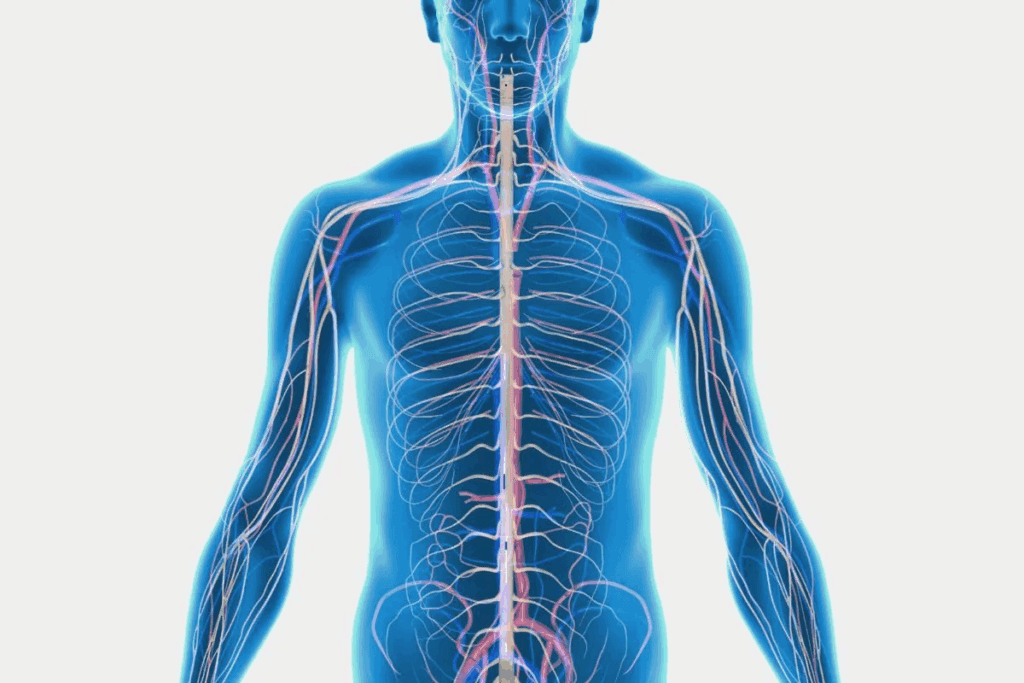
The vagus nerve, also known as the tenth cranial nerve or CN X, is the longest and most spread out cranial nerve in the human body. It is key in controlling important body functions from the head to the belly.Explore the essential vagus cranial nerve function (CN X). Our guide details its critical role in heart rate, digestion, and more.
At Liv Hospital, we understand the vagus nerve’s complexity and importance. It acts as a main path for messages between the brain and body. It has both motor and sensory fibers, making it very versatile.
Key Takeaways
- The vagus nerve is the longest cranial nerve, extending from the brainstem to the abdomen.
- It plays a critical role in various bodily functions, including regulating essential processes.
- The vagus nerve contains both motor and sensory fibers, making it functionally diverse.
- It is a major conduit for bi-directional communication between the brain and body.
- Understanding the vagus nerve is essential for appreciating its clinical significance.
The Wandering Nerve: Overview and Significance
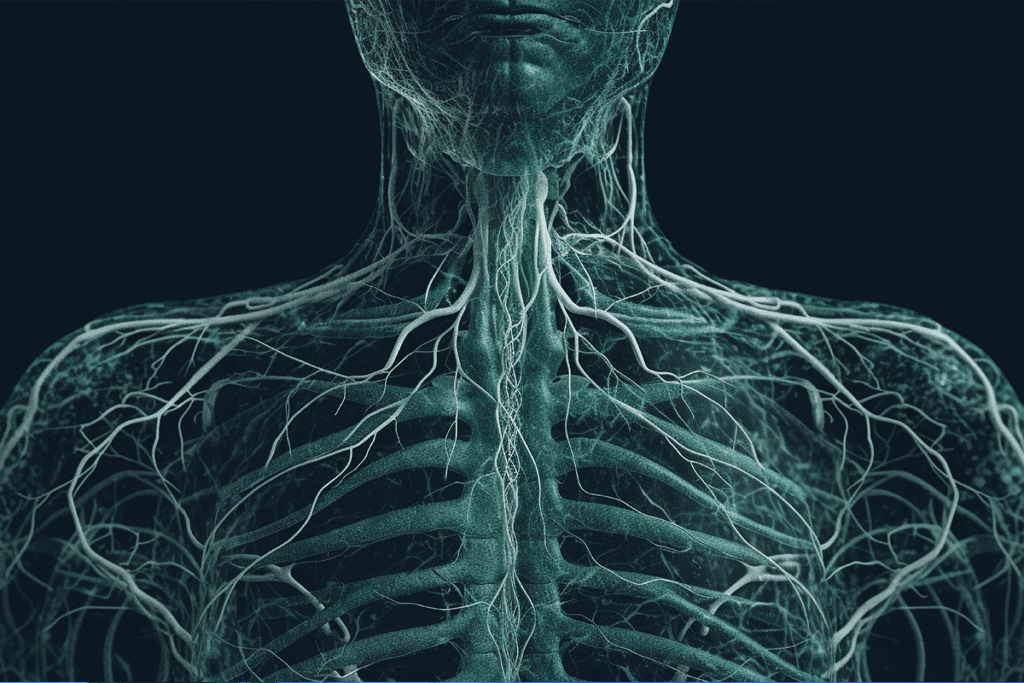
The vagus nerve starts in the brainstem and travels far. It’s called the “wandering nerve” because it goes from the brain to the abdomen. This nerve is key to the nervous system.
Definition and Basic Characteristics
The vagus nerve is complex and has many roles. It’s the longest cranial nerve and is vital for the parasympathetic nervous system. It begins with many rootlets in the medulla oblongata, showing its complexity.
This nerve has both sensory and motor fibers. This mix lets it control many body functions, like heart rate and digestion.
Historical Context and Etymology
The word “vagus” comes from Latin, meaning “wandering.” This name shows the nerve’s long and winding path through the body.
For a long time, people have known the vagus nerve is important. Its name shows how ancient cultures understood its wide impact on the body.
Position Among Cranial Nerves
The vagus nerve is the tenth cranial nerve. It’s the longest and most complex, covering a lot of the body.
Its role is not just its number. It’s also key to the autonomic nervous system. It controls many body actions without us thinking about them.
Characteristics | Description |
Origin | Multiple rootlets in the medulla oblongata |
Course | Extensive, from brainstem to abdomen |
Function | Mixed, containing both sensory and motor fibers |
Significance | Critical role in parasympathetic nervous system and various bodily functions |
Anatomical Origin and Course of the Vagus Nerve
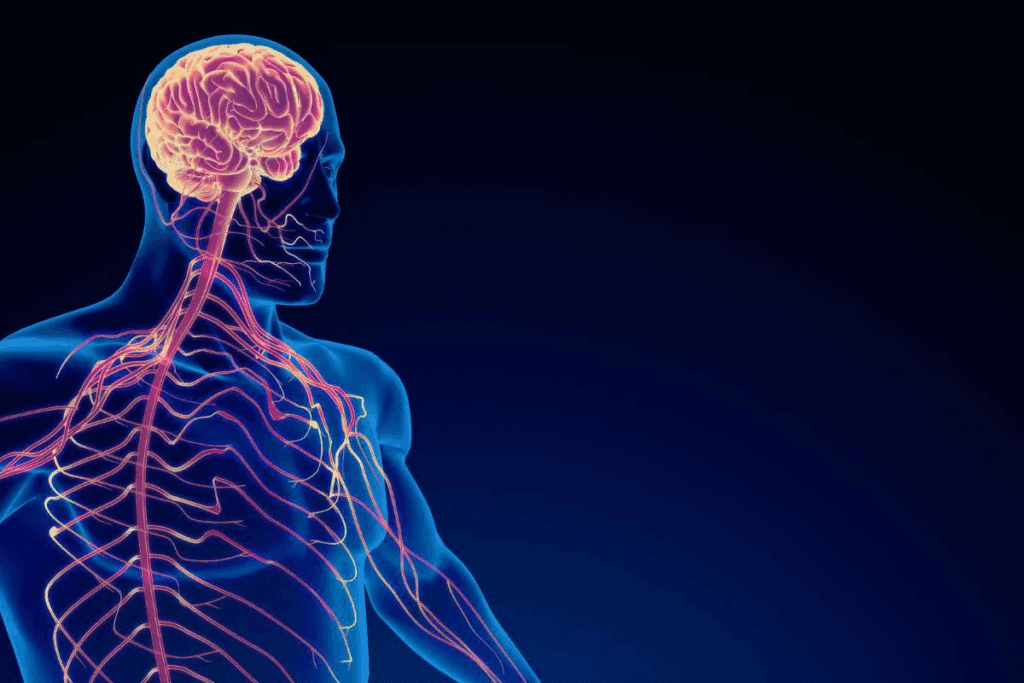
The vagus nerve starts in the medulla oblongata and travels through many parts of the body. This path is key to understanding its many roles in our health.
Medulla Oblongata Origin Points
The vagus nerve comes from the medulla oblongata, a part of the brainstem. It begins in the posterior-lateral sulcus and forms from several rootlets. These rootlets join to create the nerve, which then leaves the skull.
The medulla oblongata connects the pons and spinal cord. It controls many automatic body functions.
Path Through the Jugular Foramen
After starting in the medulla oblongata, the vagus nerve goes through the jugular foramen. This foramen is a key spot where the nerve, along with the internal jugular vein and common carotid artery, passes. These structures form a vital bundle together.
Extensive Course Through Body Regions
The vagus nerve moves down the neck with the internal jugular vein and common carotid artery. It then goes through the chest, reaching the heart, lungs, and other organs. It also goes into the abdomen, affecting many organs there.
This wide path lets the vagus nerve control many body functions. It affects heart rate, digestion, and breathing. The nerve’s journey is vital for keeping the body balanced and healthy.
Vagus Cranial Nerve Function: Motor and Sensory Components
The vagus nerve is a key part of our nervous system. It affects both motor and sensory functions. This nerve, or cranial nerve X, is unique because of its wide reach and complex tasks. It plays a big role in many bodily processes.
Parasympathetic Control System
The vagus nerve is a key part of the parasympathetic nervous system. This system helps us relax, reduces stress, and saves energy. The vagus nerve controls involuntary functions like heart rate, digestion, and breathing.
Motor Functions Overview
The vagus nerve controls important muscles in the pharynx, soft palate, and larynx. It helps us swallow, speak, and control our voice.
Here are some of the vagus nerve’s motor functions:
- Innervation of pharyngeal muscles for swallowing
- Control of the soft palate and uvula for speech and swallowing
- Regulation of laryngeal muscles for voice production
Sensory Functions Overview
The vagus nerve also has sensory roles. It sends signals from the skin of the ear canal and the inside of the throat and larynx. This lets us feel touch, temperature, and pain from these areas.
Afferent vs. Efferent Fiber Distribution
The vagus nerve has both afferent and efferent fibers. Most of its fibers, about 80 to 90 percent, are afferent. These fibers send sensory information to the brain. The rest are efferent, carrying motor signals to muscles and glands.
Fiber Type | Function | Percentage |
Afferent | Sensory information to CNS | 80-90% |
Efferent | Motor signals from CNS | 10-20% |
Knowing about afferent and efferent fibers in the vagus nerve is important. It helps us understand its role in our body. This knowledge is also key for diagnosing and treating vagus nerve disorders.
Comprehensive Diagram and Structural Organization
The vagus nerve’s complex anatomy is best understood through its detailed diagram and branching patterns. It is a vital part of the autonomic nervous system, affecting many bodily functions. To grasp its role, we must look at its structure.
Anatomical Mapping of the Vagus Nerve
The vagus nerve’s path through the body is extensive. It starts in the medulla oblongata and goes through the jugular foramen. It then moves through the neck, thorax, and abdomen. A detailed anatomical map is key to understanding its interactions with other structures.
Exploring its path, we see it has several branches. These include the pharyngeal branches, superior laryngeal nerves, and more. Each branch has a specific role in controlling bodily functions.
Key Landmarks and Relationships
The vagus nerve passes through the jugular foramen, where it’s near other important structures. Knowing these relationships helps us understand its functions and clinical implications.
The vagus nerve interacts with other nerves and organs in complex ways. Its branches control muscles and glands, affecting swallowing, vocalization, and heart rate. Accurate knowledge of these relationships is vital for diagnosing and treating vagus nerve-related conditions.
Nerve Fiber Types and Organization
The vagus nerve has both motor and sensory fibers. Motor fibers control muscles, while sensory fibers transmit information. Understanding their organization is key to grasping the nerve’s function.
The vagus nerve’s fibers include parasympathetic fibers, which regulate the autonomic nervous system. Their distribution and organization show the nerve’s diverse functions.
Clinical Anatomy Considerations
Clinical anatomy is critical when dealing with the vagus nerve. Damage can cause symptoms like dysphagia and cardiac dysfunction. Understanding the clinical anatomy is essential for diagnosing and managing these conditions.
“The vagus nerve is a complex structure with a wide range of functions, and its clinical significance cannot be overstated.”
— Medical Expert, Neurologist
In conclusion, the vagus nerve’s detailed diagram and structure are essential for understanding its role. By studying its anatomy, landmarks, fiber types, and clinical anatomy, we can appreciate this vital nerve and its functions.
Major Branches of the Vagus Nerve
The vagus nerve, also known as cranial nerve X, has several major branches. These branches are key for controlling many bodily functions. They help with swallowing, vocalization, and regulating heart rate.
Pharyngeal Branches and Function
The pharyngeal branches of the vagus nerve control most muscles of the pharynx and soft palate. This is vital for swallowing, as it helps move food through the pharynx. They also help form the pharyngeal plexus, a network of nerve fibers.
Key functions of the pharyngeal branches include:
- Motor innervation to pharyngeal muscles
- Coordination of swallowing
- Formation of the pharyngeal plexus
Superior Laryngeal Nerve
The superior laryngeal nerve is a significant branch of the vagus nerve. It splits into two parts: the internal laryngeal nerve and the external laryngeal nerve. The internal laryngeal nerve senses the laryngeal mucosa above the vocal cords. The external laryngeal nerve controls the cricothyroid muscle.
Recurrent Laryngeal Nerve
The recurrent laryngeal nerve is a branch of the vagus nerve. It controls most intrinsic muscles of the larynx, except for the cricothyroid muscle. It also senses the laryngeal mucosa below the vocal cords. This nerve is vital for vocal control and protecting the airway during swallowing.
Functions of the recurrent laryngeal nerve include:
- Motor innervation to intrinsic laryngeal muscles
- Sensory innervation to the laryngeal mucosa below the vocal cords
- Control of vocalization
Cardiac Branches
The cardiac branches of the vagus nerve innervate the heart. They help regulate heart rate and function. These branches slow down the heart rate and improve cardiac efficiency.
In conclusion, the major branches of the vagus nerve are vital for many bodily functions. Understanding their roles is key to appreciating the vagus nerve’s importance in health.
Motor Functions in Detail
We will explore the motor functions of the vagus nerve in detail. It’s important for many bodily functions. The vagus nerve controls muscles, helping to regulate several processes in our body.
Innervation of Pharyngeal Muscles
The vagus nerve helps control the muscles of the pharynx. These muscles are key for swallowing. This control is vital for moving food from the mouth to the esophagus.
Key muscles innervated by the vagus nerve include:
- Superior constrictor muscle
- Middle constrictor muscle
- Inferior constrictor muscle
- Stylopharyngeus muscle
- Salpingopharyngeus muscle
- Palatopharyngeus muscle
Control of Soft Palate and Uvula
The vagus nerve also controls the muscles of the soft palate and uvula. These muscles are important for speech and swallowing. The levator veli palatini and musculus uvulae are key, ensuring the soft palate and uvula move correctly.
Laryngeal Muscle Innervation
Laryngeal muscles control the voice and the opening and closing of the glottis. The vagus nerve, through its recurrent laryngeal branch, innervates these muscles. This is vital for voice production and preventing food from going down the wrong way.
Laryngeal Muscle | Function |
Posterior cricoarytenoid | Opens the glottis |
Lateral cricoarytenoid | Adducts and rotates the arytenoid cartilages |
Thyroarytenoid | Relaxes the vocal folds |
Regulation of Cardiac Function
The vagus nerve also regulates the heart. It does this through its cardiac branches. This parasympathetic innervation affects heart rate and contractility, helping to keep the heart in balance.
The effects of vagus nerve stimulation on the heart include:
- Decreased heart rate
- Reduced contractility
- Increased vasodilation
In conclusion, the vagus nerve’s motor functions are vital for many bodily processes. These include swallowing, speech, voice production, and heart regulation. Understanding these functions helps us appreciate the nerve’s importance in health and disease.
Sensory Functions and Pathways
The vagus nerve has many roles, including sensing our body’s state. It sends signals from different parts of our body. This helps us stay in balance.
External Ear Innervation
The vagus nerve touches the skin of the ear’s outer part. It helps us feel sensations in the ear. This is part of how it sends us important body signals.
Visceral Sensory Information Processing
The vagus nerve also handles signals from inside our body. It helps control how we swallow and speak. This is key for our body’s functions.
Afferent Signaling to the Central Nervous System
The vagus nerve sends signals to our brain. It tells our brain about our body’s needs. This helps our body respond and stay healthy.
Role in Interoception and Body Awareness
The vagus nerve helps us feel what’s going on inside our body. It lets us know when we’re hungry, thirsty, or in pain. This affects how we feel overall.
The vagus nerve’s job is complex and important. It involves:
- Sensory innervation of the external auditory canal
- Processing of visceral sensory information from the laryngopharynx and larynx
- Afferent signaling to the central nervous system
- Contribution to interoception and body awareness
Knowing about the vagus nerve’s role shows how vital it is for our health and balance.
Clinical Significance and Vagus Nerve Disorders
It’s key to understand the vagus nerve’s role in health and disease. This nerve is vital for many body functions. Damage can cause serious symptoms.
Causes and Symptoms of Vagus Nerve Damage
Vagus nerve damage can lead to many symptoms. It can cause dysphagia (trouble swallowing) and dysphonia (voice issues). This is because it connects to many organs.
Uvula Deviation and Its Diagnostic Significance
Uvula deviation is a sign of vagus nerve damage. It happens when the nerve’s muscles weaken. This makes the uvula move off-center. It’s a key sign of nerve problems.
Vagus Nerve Stimulation Therapy
Vagus nerve stimulation (VNS) is a treatment for some conditions. It’s used for epilepsy and depression that doesn’t respond to other treatments. VNS helps by stimulating the nerve, reducing seizures and improving mood.
Relationship to Common Conditions
The vagus nerve is linked to many common issues. This includes stomach problems, heart diseases, and brain disorders. Knowing its role helps find new treatments.
Conclusion: The Vagus Nerve’s Essential Role in Health and Disease
The vagus nerve, also known as cranial nerve X, is key to our health. It helps control many body functions. Knowing what it does is important for our well-being.
This nerve connects our brain and body, helping control many processes. Problems with it can cause symptoms. So, it’s important to understand its role.
We’ve looked at how the vagus nerve works its way through our body. It has parts that help our heart and muscles, and it senses our body’s needs. This shows how vital it is for our health.
In short, the vagus nerve is a vital part of our nervous system. It keeps us healthy. By knowing its importance, we can take care of it better.
FAQ
What is the vagus nerve?
The vagus nerve, also known as cranial nerve X (CN X), is the longest cranial nerve. It starts at the brainstem and goes through the neck, thorax, and abdomen.
What is the origin of the vagus nerve?
The vagus nerve comes from the medulla oblongata. It leaves the skull through the jugular foramen.
What are the functions of the vagus nerve?
The vagus nerve has many roles. It controls most muscles in the pharynx, soft palate, and larynx. It also sends signals from the skin of the ear and inside the larynx.
What is the significance of the vagus nerve’s parasympathetic control system?
The vagus nerve is key in controlling the body’s autonomic functions. It helps manage the heart, lungs, and digestive system.
What are the major branches of the vagus nerve?
The vagus nerve has several main branches. These include the pharyngeal branches, superior laryngeal nerve, recurrent laryngeal nerve, and cardiac branches.
What is the role of the vagus nerve in regulating cardiac function?
The vagus nerve controls the heart. It helps regulate heart rate and function.
What is vagus nerve stimulation therapy?
Vagus nerve stimulation therapy is a treatment. It involves stimulating the vagus nerve to help with conditions like epilepsy and depression.
What are the symptoms of vagus nerve damage?
Damage to the vagus nerve can cause problems. Symptoms include trouble swallowing, hoarseness, and irregular heart rate.
What is the relationship between the vagus nerve and uvula deviation?
The vagus nerve controls the muscles of the soft palate and uvula. Damage can lead to uvula deviation.
What is the clinical significance of the vagus nerve?
Knowing about the vagus nerve is important. It helps in diagnosing and treating related conditions.
Is the vagus nerve a sensory or motor nerve?
The vagus nerve is both sensory and motor. It has fibers for sensation and control to various parts of the body.
What is cranial nerve X?
Cranial nerve X is another name for the vagus nerve. It is the tenth cranial nerve.
What is the longest cranial nerve?
The vagus nerve is the longest cranial nerve. It runs from the brainstem to the abdomen.
References
National Center for Biotechnology Information. Evidence-Based Medical Guidance. Retrieved from https://www.ncbi.nlm.nih.gov/books/NBK537171/



 Departments
 Related Videos
 Our Doctors
 News
News