
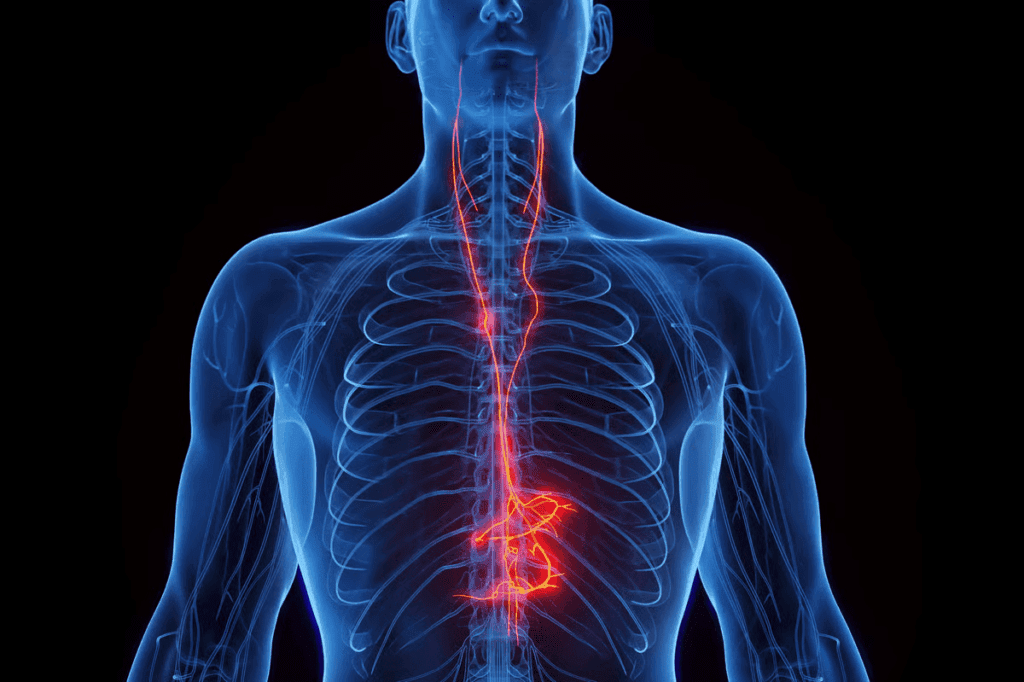
The vagus nerve, also known as cranial nerve X, is a complex and vital part of our nervous system. It is the longest cranial nerve. It runs from the brain through the neck, chest, and abdomen.This is the complete guide to the vagus nerve cranial nerve (CN X). Learn about its vital functions as the longest cranial nerve.
We will dive into the vagus nerve’s detailed anatomy and its role in many bodily processes. This includes heart rate, digestion, and breathing. Knowing about the vagus nerve’s functions helps us see its importance for our health.
Key Takeaways
- The vagus nerve is the longest cranial nerve, playing a vital role in various bodily functions.
- It is a key component of the parasympathetic nervous system, maintaining homeostasis.
- The nerve’s complex anatomy involves motor and sensory pathways.
- Its functions include regulating heart rate, digestion, and breathing.
- Understanding the vagus nerve is essential for appreciating its clinical significance.
The Wandering Nerve: Understanding the Vagus Nerve

It’s key to know about the vagus nerve to understand its health benefits. Known as the tenth cranial nerve or cranial nerve X, it’s a vital part of our nervous system.
Definition and Significance of Cranial Nerve X
The vagus nerve starts in the brain and goes to many organs in the neck, chest, and belly. It’s important because it helps control many functions. This includes the muscles of the larynx, heart rate, and digestion.
Its role in our body is huge. Problems with it can cause many health issues. We’ll dive deeper into its importance later.
Etymology: Why It’s Called the “Wandering” Nerve
The word “vagus” comes from the Latin “vagary,” meaning to wander. This is because the nerve travels a long way in the body, touching many organs and structures.
The name “vagus nerve” shows its unique path. It’s the longest cranial nerve, reaching far and wide. This etymology shows its complex and extensive nature.
The Vagus Nerve as the Longest Cranial Nerve
The vagus nerve is the longest cranial nerve, stretching from the brain to the belly. Its long path and many branches let it connect with many organs. This makes it a critical part of our nervous system.
- The vagus nerve has both sensory and motor functions.
- It’s key in controlling body functions like heart rate and digestion.
- Its wide reach lets it connect with organs like the larynx, lungs, and intestines.
Knowing about the vagus nerve’s structure and functions helps us see its importance for our health.
Anatomical Origin and Course of the Vagus Nerve

The vagus nerve starts in the medulla oblongata, a key part of the brainstem. It is the longest cranial nerve and is vital for many bodily functions. It travels from the brainstem down the neck and into the chest, affecting many structures along its path.
Brainstem Origin in the Medulla Oblongata
The vagus nerve comes from the medulla oblongata, from the nucleus ambiguus and the dorsal nucleus of the vagus nerve. These areas handle the nerve’s motor and parasympathetic functions. The nerve fibers from these nuclei come together to form the vagus nerve.
Exit Through the Jugular Foramen
After starting in the medulla oblongata, the vagus nerve leaves the skull through the jugular foramen. This foramen is a big opening in the skull. It lets the vagus nerve pass through, along with other important structures like the internal jugular vein and the glossopharyngeal and accessory nerves.
Cervical Course and Relationships
As the vagus nerve goes down the neck, it is wrapped in the carotid sheath. This sheath also holds the common carotid artery and the internal jugular vein. This close relationship with major blood vessels is key to understanding the nerve’s path and its clinical importance.
Thoracic Pathway
In the chest, the vagus nerve continues its journey, branching off to innervate thoracic organs. The left and right vagus nerves have different paths in the chest. They help form the pulmonary and esophageal plexuses. These plexuses are vital for the lungs and esophagus.
Region | Course and Branches | Structures Innervated |
Brainstem | Originates from medulla oblongata | Nucleus ambiguus, dorsal nucleus of vagus |
Neck | Descends within carotid sheath | Pharyngeal muscles, laryngeal muscles |
Thorax | Forms pulmonary and esophageal plexuses | Lungs, esophagus, heart |
Major Branches of the Vagus Nerve Cranial Nerve
The vagus nerve has many branches that help with different body functions. These branches are key for controlling movement and sensing the body. They play a big role in how our body works.
Meningeal Branch
The meningeal branch of the vagus nerve helps the dura mater in the back of the skull. It senses pain and other feelings in the dura mater. This branch comes from the superior ganglion of the vagus nerve and is mainly for sensing.
Auricular Branch
The auricular branch, also known as Arnold’s nerve, is a big deal. It sends signals to the outer ear and the ear canal. It’s special because it’s the only nerve from the head that goes to the outer ear. It helps with the reflex cough when the ear is touched.
Pharyngeal Branches
The pharyngeal branches help the muscles of the throat work, except for one. They form a plexus that helps us swallow. These nerves let us swallow by controlling the muscles of the throat.
Superior and Recurrent Laryngeal Nerves
The superior and recurrent laryngeal nerves are important for the voice box. The superior laryngeal nerve has two parts that help with feeling and moving above the vocal cords. The recurrent laryngeal nerve helps with feeling and moving below the vocal cords. These nerves are key for making sound and keeping the airway safe while swallowing.
In short, the main branches of the vagus nerve are vital for many body functions. They help with feeling, moving, and keeping the body working right. Knowing about these branches helps us understand how the vagus nerve keeps us healthy.
Motor Functions: How the Tenth Cranial Nerve Controls Movement
Understanding the motor functions of the vagus nerve is key to appreciating its importance in our overall health and wellbeing. The vagus nerve, or the tenth cranial nerve, plays a vital role in controlling various bodily functions through its motor functions.
Innervation of Pharyngeal Muscles
The vagus nerve innervates the pharyngeal muscles, which are key for swallowing. This innervation is essential for the proper movement of food from the mouth to the esophagus. The vagus nerve’s motor functions enable the coordination of these muscles, ensuring that swallowing occurs smoothly and efficiently.
Control of Laryngeal Muscles and Voice Production
The vagus nerve also controls the laryngeal muscles, which are vital for voice production. The recurrent laryngeal nerve, a branch of the vagus nerve, innervates these muscles, enabling us to speak and sing. Damage to this nerve can result in vocal cord paralysis, leading to changes in voice quality.
Uvula Movement and Palatal Function
The vagus nerve is responsible for the movement of the uvula and the functioning of the soft palate. The uvula deviation can be an indicator of vagus nerve dysfunction. Proper functioning of these structures is essential for preventing food from entering the nasal cavity during swallowing.
Parasympathetic Motor Control of Visceral Organs
The vagus nerve provides parasympathetic motor control to various visceral organs, including the heart, lungs, and digestive tract. This control is vital for regulating heart rate, promoting digestion, and maintaining homeostasis. The parasympathetic motor control functions of the vagus nerve help to counterbalance the sympathetic nervous system, promoting relaxation and reducing stress.
Organ/System | Motor Function | Effect of Vagus Nerve Stimulation |
Heart | Regulation of heart rate | Decreased heart rate |
Lungs | Regulation of bronchial tone | Bronchodilation |
Digestive Tract | Regulation of gut motility and secretion | Increased digestive activity |
Sensory Functions and Pathways
The vagus nerve does more than just control movement. It also sends a wide range of sensory information. Understanding its role in our body is key to seeing its importance.
Visceral Sensory Information from Thoracic Organs
The vagus nerve carries vital information from the heart, lungs, and esophagus. This info helps control heart rate, blood pressure, and breathing.
- The vagus nerve helps control the heart, sending feedback to regulate its rate and function.
- It also sends signals from the lungs, affecting how we breathe.
- The esophagus gets sensory innervation, helping with swallowing and movement.
Abdominal Sensory Pathways
The vagus nerve also connects to the stomach, small intestine, and liver. This connection is vital for digestion, including controlling stomach acid, gut movement, and nutrient absorption.
Key functions of the vagus nerve in abdominal sensory pathways include:
- It regulates digestion by sending sensory info from the abdomen.
- It helps manage pain from the abdominal area.
- It affects the gut-brain axis, impacting gut health and function.
Special Sensory Functions
The vagus nerve is also involved in special senses. It helps with taste from the epiglottis and the tongue’s root.
The auricular branch of the vagus nerve sends signals to the ear’s outer part and concha.
Afferent Signals and Brain Communication
The vagus nerve sends afferent signals to the brain. These signals are vital for understanding our body’s state. They are processed in the brainstem, helping control autonomic functions.
The communication between the vagus nerve and the brain is two-way. The brain sends signals back to the vagus nerve. This interaction is key for keeping our body balanced and healthy.
The Vagus Nerve and the Parasympathetic Nervous System
The tenth cranial nerve, or vagus nerve, is key for controlling the body’s automatic functions. It helps with rest and digestion. It works against the “fight or flight” response, helping the body relax and recover.
The “Rest and Digest” Response
The vagus nerve lowers heart rate, blood pressure, and stress. It also boosts digestion. This is vital for the body to recover from daily stress.
Medical Expert, a renowned expert in the field, notes, “The vagus nerve is involved in the regulation of the autonomic nervous system, playing a critical role in the ‘rest and digest’ response.”
“The vagus nerve is the primary nerve of the parasympathetic nervous system, and its dysfunction can lead to various health issues, including cardiovascular disease and gastrointestinal disorders.”
Medical Expert
Vagal Tone and Heart Rate Regulation
A healthy vagal tone means a strong parasympathetic response. This is linked to better heart rate, emotional resilience, and health. The vagus nerve affects heart rate variability (HRV), showing good heart health.
Influence on Digestive Function
The vagus nerve is important for digestive health. It controls the movement and secretion of the gut. It helps with digestion and nutrient absorption, keeping the gut healthy.
Neurotransmitters and Receptors in Vagal Signaling
The vagus nerve uses neurotransmitters like acetylcholine to communicate. It works on muscarinic and nicotinic receptors. Knowing how it signals helps us understand its role in the body and how to use it for healing.
Clinical Significance and Disorders
The vagus nerve, or cranial nerve X, is key to our body’s functions. Knowing its role helps us diagnose and treat related health issues.
Signs and Symptoms of Vagus Nerve Lesions
Damage to the vagus nerve can cause many symptoms. This is because it connects to many organs. Some common problems include:
- Dysphagia (difficulty swallowing)
- Dysphonia (voice disorders)
- Nausea and vomiting
- Abdominal pain
- Heart rate abnormalities
It can also affect the uvula, causing it to deviate or weaken. This is a clear sign of vagal nerve issues.
Diagnostic Tests for Vagal Function
There are tests to check how well the vagus nerve works. These help doctors find and treat nerve problems. Some tests include:
Test | Description |
Heart Rate Variability (HRV) Test | Looks at how heart rate changes, showing vagal tone |
Gastric Emptying Study | Checks how fast the stomach empties, showing vagal influence |
Laryngoscopy | Examines the larynx to see vocal cord health and vagal damage |
Common Vagus Nerve Disorders
Many conditions can harm the vagus nerve, causing serious health issues. Some common ones are:
- Postural Orthostatic Tachycardia Syndrome (POTS)
- Vasovagal Syncope
- Gastroparesis
- Vocal Cord Paralysis
It’s important to know about these disorders and how they relate to vagus nerve problems. This knowledge helps in managing and treating them effectively.
Therapeutic Applications of Vagus Nerve Stimulation
Vagus nerve stimulation is a new treatment for many neurological conditions. It brings hope to those with epilepsy, depression, and other chronic diseases.
Epilepsy Management
For over 20 years, VNS has helped manage epilepsy. A device is implanted to send electrical impulses to the vagus nerve. Studies show it can cut down on seizures in those who don’t respond to drugs.
How VNS works in epilepsy is not fully known. But it’s thought to change brain activity. Clinical trials have proven its success, earning FDA approval.
Key benefits of VNS in epilepsy management include:
- Reduction in seizure frequency
- Improved quality of life for patients
- Potential reduction in antiepileptic medication
Applications in Depression Treatment
VNS is also being tested for treatment-resistant depression. It sends electrical impulses to the vagus nerve, affecting mood-regulating brain areas.
Research shows VNS can improve depression symptoms. It’s considered when other treatments fail, giving hope to those with severe depression.
The promise of VNS in depression treatment is huge. It targets the complex brain circuits involved in mood disorders.
Emerging Uses in Inflammatory Conditions
Recent studies suggest VNS could treat inflammatory conditions. The vagus nerve is key in the body’s anti-inflammatory response.
Research is ongoing to see if VNS helps with conditions like rheumatoid arthritis and inflammatory bowel disease. Its anti-inflammatory effects are promising.
Non-invasive Vagus Nerve Stimulation Techniques
Non-invasive VNS methods are being developed. Transcutaneous vagus nerve stimulation (tVNS) sends stimulation through the skin.
tVNS is being studied for conditions like migraines, anxiety, and depression. Its non-invasive nature is appealing to those who don’t want surgery.
Advantages of non-invasive VNS include:
- Ease of application
- Reduced risk compared to surgical implantation
- Potential for self-administration at home
As research goes on, VNS’s uses are likely to grow. It could offer new treatments for many conditions.
Conclusion: The Critical Importance of the Vagus Nerve
The vagus nerve, also known as cranial nerve X (CN X), is a complex and vital structure. It plays a key role in many physiological processes. This nerve is the longest cranial nerve, stretching from the brainstem to the abdomen.
It is responsible for many functions, including regulating heart rate and facilitating digestion. It also influences vocal production. Understanding the vagus nerve definition and its significance is key to appreciating its impact on health.
The vagus nerve is involved in both motor and sensory functions. This makes it a critical part of the nervous system. Its role in the parasympathetic nervous system, or the “rest and digest” response, is vital for maintaining homeostasis and promoting well-being.
Dysfunction of the vagus nerve can lead to various disorders. Its stimulation has emerged as a therapeutic approach for managing conditions like epilepsy and depression. Recognizing the vagus nerve’s importance helps us understand the complex mechanisms that govern our health and well-being.
FAQ
What is the vagus nerve?
The vagus nerve, also known as cranial nerve X, is the longest cranial nerve. It plays a key role in many bodily functions. This includes regulating heart rate and controlling muscles for swallowing. It also transmits sensory information from various organs.
What is the origin of the vagus nerve?
The vagus nerve starts in the medulla oblongata of the brainstem. It exits through the jugular foramen. Then, it goes through the neck and thorax, branching into nerves that innervate different structures.
What are the major branches of the vagus nerve?
The vagus nerve has several major branches. These include the meningeal branch, auricular branch, and pharyngeal branches. It also has the superior and recurrent laryngeal nerves. These branches innervate various muscles and organs.
What is the role of the vagus nerve in motor functions?
The vagus nerve controls the movement of muscles. This includes muscles for swallowing, voice production, and uvula movement. It also provides parasympathetic motor control to visceral organs.
What is the significance of the vagus nerve in the parasympathetic nervous system?
The vagus nerve is vital in the parasympathetic nervous system. It promotes the “rest and digest” response. It regulates heart rate and influences digestive function through neurotransmitters and receptor activation.
What are the clinical significance and disorders associated with the vagus nerve?
Damage to the vagus nerve can cause various symptoms. Diagnostic tests can assess vagal function. Disorders include those affecting swallowing, voice production, and heart rate regulation.
What is vagus nerve stimulation, and what are its therapeutic applications?
Vagus nerve stimulation involves using electrical impulses to activate the vagus nerve. It has therapeutic uses, including managing epilepsy and treating depression. It’s also used in inflammatory conditions, with both invasive and non-invasive methods.
Is the vagus nerve a sensory or motor nerve?
The vagus nerve is both sensory and motor. It transmits visceral sensory information and controls muscle movement.
What is the relationship between the vagus nerve and the tenth cranial nerve?
The vagus nerve is also known as the tenth cranial nerve (CN X). These terms are often used interchangeably.
How does the vagus nerve influence heart rate regulation?
The vagus nerve affects heart rate through neurotransmitters like acetylcholine. These neurotransmitters act on heart receptors to modulate heart rate.
References
National Center for Biotechnology Information. Evidence-Based Medical Guidance. Retrieved from https://www.ncbi.nlm.nih.gov/books/NBK585066/