Chronic constipation affects millions globally. Diet, hydration, and lifestyle play big roles. But, pelvic floor dysfunction (PFD) is often missed as a cause. Explaining how pelvic floor dysfunction and constipation are interrelated conditions that require specialized treatment.
PFD greatly affects bowel health. It’s key in controlling bowel movements. Muscle dysfunction can cause constipation, making treatment complex.
It’s important to understand this link. Proper pelvic floor muscle coordination is vital for bowel health. Knowing PFD’s role in constipation helps in finding better treatments.
Key Takeaways
- Pelvic floor dysfunction is a significant contributor to chronic constipation.
- The relationship between PFD and constipation is complex and bidirectional.
- Understanding PFD’s role in bowel health is vital for effective treatment.
- Properly coordinated pelvic floor muscles are essential for normal bowel function.
- Recognizing PFD as a cause of constipation can lead to better treatment approaches.
The Science Behind Pelvic Floor Dysfunction and Constipation

Understanding pelvic floor dysfunction is key to solving constipation. The pelvic floor is complex and vital for bowel control.
What Constitutes the Pelvic Floor
The pelvic floor is made of muscles and tissues. It supports the bladder, rectum, and reproductive organs. These muscles help control bowel and bladder functions.
The main parts of the pelvic floor are:
- The levator ani muscle, key for supporting pelvic organs.
- The coccygeus muscle, important for overall support and function.
- Connective tissues that add support and structure.
Together, these parts help keep waste in and out properly.
Statistical Evidence of the Connection
Research shows that 40-50 percent of chronic constipation patients have pelvic floor dysfunction. This is when the muscles for bowel movements don’t work right.
Studies reveal:
- Up to 85% of constipation patients strain too much during bowel movements.
- 65% have hard stools.
- A lot of patients feel like they didn’t fully empty their bowels.
These numbers show a clear link between pelvic floor issues and constipation. They stress the importance of correct diagnosis and treatment.
Pelvic Floor Anatomy and Its Role in Digestion

Knowing about the pelvic floor’s anatomy is key to understanding its role in digestion and bowel health. It’s made up of muscles, ligaments, and fascia. These support the pelvic organs, like the rectum, and help control bowel movements.
Key Muscles and Their Functions
The pelvic floor muscles are vital for keeping things inside and letting stool out. The main muscles are the puborectalis, iliococcygeus, and pubococcygeus. They work together to support the pelvic organs and control the anal sphincter.
The puborectalis muscle is very important. It forms a sling around the rectum, keeping the anorectal angle right for continence. When it relaxes, it lets the anorectal angle straighten, making it easier to pass stool.
Normal Coordination During Bowel Movements
For a bowel movement to happen right, the pelvic floor muscles and other abdominal muscles need to work together. When the abdominal muscles contract, the pelvic floor muscles relax. This lets stool move through the rectum.
“For a healthy bowel movement, the pelvic floor muscles must relax to allow stool to pass through the rectum.” This is key for normal bowel function. Any problem here can make it hard to pass stool.
How Proper Muscle Function Facilitates Elimination
For bowel movements to work well, the muscles need to function right. When the pelvic floor muscles work as they should, they relax with the abdominal muscles. This makes elimination smooth and efficient. Studies show that women with constipation often can’t relax their pelvic floor muscles well, showing how important it is.
Muscle Group | Function | Role in Bowel Movement |
Puborectalis | Maintains anorectal angle | Relaxes to allow stool passage |
Iliococcygeus | Supports pelvic floor | Aids in maintaining continence |
Pubococcygeus | Supports pelvic organs | Assists in controlling anal sphincter |
In conclusion, the pelvic floor’s anatomy and its role in digestion are complex. Understanding how its muscles work during bowel movements is key. It helps us see how normal elimination works and how problems can lead to constipation.
Mechanisms: How Pelvic Floor Dysfunction Causes Constipation
When the pelvic floor muscles don’t work right, it can cause constipation. This is because of how the muscles in the abdomen, rectum, and anus work together. They are key for a normal bowel movement.
Dyssynergic Defecation Explained
Dyssynergic defecation is a condition where these muscles can’t work together. This makes it hard to move stool out, leading to constipation.
Paradoxical Contraction During Bowel Movements
Normally, the pelvic floor muscles relax when we go to the bathroom. But with pelvic floor dysfunction, they contract instead. This is called paradoxical contraction. It makes it hard to move stool out smoothly.
Impaired Coordination Between Abdominal and Pelvic Muscles
The muscles in the abdomen and pelvis need to work together for bowel movements. If they don’t, it can lead to constipation.
Weakened Relaxation Response
A key part of going to the bathroom is the pelvic floor muscles relaxing. If they can’t relax well, it’s hard to pass stool. This can cause constipation.
Mechanism | Description | Effect on Bowel Movement |
Dyssynergic Defecation | Incoordination of abdominal, rectal, and anal muscles | Impaired rectal evacuation |
Paradoxical Contraction | Contraction instead of relaxation of pelvic floor muscles during defecation | Hinders smooth evacuation of bowel |
Impaired Coordination | Poor coordination between abdominal and pelvic muscles | Inefficient defecation |
Weakened Relaxation Response | Inadequate relaxation of pelvic floor muscles | Difficulty in passing stool |
Understanding these mechanisms is key to treating constipation from pelvic floor issues. Healthcare providers can then create specific treatment plans. This helps improve bowel function and reduce symptoms.
Recognizing Symptoms of Pelvic Floor-Related Constipation
It’s important to know the signs of pelvic floor-related constipation. This helps in diagnosing and treating it properly. Understanding these symptoms is key to giving the right care.
Incomplete Evacuation Sensations
Feeling like you haven’t fully emptied your bowels is a big sign. People often say they feel this way after trying to go to the bathroom. This feeling can be very upsetting and might make them try again, making things worse.
Excessive Straining (Affecting up to 85% of Patients)
Straining too much during bowel movements is common, affecting 85% of those with pelvic floor-related constipation. This can be painful and might harm the pelvic floor muscles over time.
Hard Stool Passage (Present in 65% of Cases)
About 65% of people with this condition have trouble passing hard stools. Hard stools can be very uncomfortable and painful, making the problem worse.
Reduced Bowel Movement Frequency
Going to the bathroom less than three times a week is another sign. This can make stools harder, leading to more severe constipation.
Symptom | Prevalence | Clinical Impact |
Incomplete Evacuation Sensation | Common | Distress and repeated defecation attempts |
Excessive Straining | Up to 85% | Discomfort and possible muscle damage |
Hard Stool Passage | 65% | Pain and discomfort during bowel movements |
Reduced Bowel Movement Frequency | Less than 3 per week | Accumulation of harder stools, severe constipation |
Spotting these symptoms is key to treating pelvic floor dysfunction-related constipation well. Knowing how common and impactful these signs are helps doctors create better treatment plans for their patients.
The Bidirectional Relationship: Constipation and Pelvic Pain
Constipation and pelvic pain are closely linked. Pelvic floor dysfunction can cause many issues, including urinary problems, pain, and constipation. It’s important to tackle this condition from all angles to manage its symptoms well.
How Constipation Triggers Pelvic Pain
Constipation can cause pelvic pain in several ways. Stool that stays in the bowel too long can stretch and hurt. This pain can spread to the pelvic area, causing more discomfort.
Straining to pass stool can also stress the pelvic muscles, making pain worse. People with dyssynergic defecation often feel pelvic pain because their muscles contract the wrong way during bowel movements. This can make pain and constipation problems worse.
Pelvic Pain Patterns Associated with Bowel Dysfunction
Pelvic pain from bowel issues can show up in different ways. Some feel sharp pains during bowel movements, while others have a dull ache. Knowing these patterns helps doctors find and treat the cause of the pain.
Distinguishing Between Primary and Secondary Symptoms
It’s key to tell primary symptoms from secondary ones. Primary symptoms are directly related to pelvic floor issues, like constipation and pain. Secondary symptoms might include emotional problems or sexual issues caused by the primary symptoms.
By finding the main cause of symptoms, doctors can create better treatment plans. This helps improve the patient’s life quality.
Impact on Quality of Life
The link between constipation and pelvic pain can really affect a person’s life. Chronic pain and bowel problems can cause emotional issues, make people withdraw socially, and reduce physical activity. It’s important to manage these symptoms well to improve overall well-being.
Symptom | Impact on Quality of Life | Potential Intervention |
Chronic Pelvic Pain | Emotional distress, reduced physical activity | Pain management therapy, physical therapy |
Constipation | Dietary restrictions, social withdrawal | Dietary counseling, bowel habit training |
Dyssynergic Defecation | Anxiety during bowel movements, pain | Biofeedback therapy, pelvic floor physical therapy |
Understanding the connection between constipation and pelvic pain helps us find better treatments. This can improve patient outcomes and enhance their quality of life.
Risk Factors for Developing Weak Pelvic Muscles and Constipation
Many factors can increase the chance of weak pelvic muscles and constipation. These include age, health, and lifestyle. Knowing these risks helps spot who might face these issues more often.
Gender-Specific Considerations
Women are more likely to have pelvic floor problems and constipation. This is true, even more so for those with a history of constipation. Women with constipation have a harder time relaxing their pelvic muscles, making things worse.
Women’s pelvic anatomy and hormonal changes play a big role. For example, estrogen changes can affect muscle tone and bowel movements.
Pregnancy and Childbirth Effects
Pregnancy and childbirth can weaken pelvic muscles and cause constipation. The extra pressure and strain on the pelvic floor can damage or weaken it.
Women who have had multiple vaginal births or experienced complications are at higher risk. The strain from these events can harm the muscles needed for bowel movements.
Age-Related Changes to Pelvic Floor
Age also affects the pelvic floor. As we get older, the muscles and tissues that support our pelvic organs weaken. This increases the risk of constipation and pelvic floor problems.
With age, muscle mass decreases and tissues lose elasticity. This can make it harder for the pelvic floor muscles to work right, leading to constipation and other bowel issues.
Lifestyle and Behavioral Factors
Lifestyle and behavior also matter. A diet low in fiber, not drinking enough water, and not being active enough can cause constipation.
Bad habits like sitting for too long, straining during bowel movements, and ignoring the urge to go can make pelvic floor problems worse. Changing your diet, being more active, and practicing good bowel habits can help prevent these issues.
Diagnosing Pelvic Floor Disorder Constipation
To find out if you have pelvic floor disorder constipation, doctors use many tools and methods. This detailed approach helps find the real cause of constipation and fix it.
Initial Assessment Approaches
The first step is to talk about your medical history and symptoms. We ask about your bowel habits, like how often you go and what your stool is like. We also look for signs like straining or pain. This helps us understand your situation and decide what tests to do next.
Physical Examination Techniques
A physical exam is key in diagnosing pelvic floor disorder constipation. We do a digital rectal exam (DRE) to check the muscles. This exam can show if there are any muscle problems that might be causing constipation.
Specialized Testing Methods
Special tests are needed to really check how pelvic floor dysfunction affects bowel movements. These include:
- Anorectal manometry to check the muscles’ pressure and coordination.
- Defecography, a test that shows how you go to the bathroom.
- Electromyography (EMG) to see how the pelvic floor muscles work.
These tests give us important info about the pelvic floor muscles. They help us accurately diagnose pelvic floor disorder constipation.
Differentiating from Other Causes of Constipation
It’s important to tell pelvic floor disorder constipation apart from other types of constipation. We use the tests mentioned before and a detailed clinical check-up to do this.
Here’s a look at what we find with these tests:
Diagnostic Test | Primary Use | Key Findings in Pelvic Floor Disorder Constipation |
Anorectal Manometry | Assess anal sphincter pressure and coordination | Abnormal pressure profiles, paradoxical contraction |
Defecography | Visualize defecation process | Incomplete evacuation, abnormal pelvic floor descent |
Electromyography (EMG) | Evaluate electrical activity of pelvic floor muscles | Abnormal muscle activity, dyssynergia |
By using these tools and methods, we can accurately diagnose pelvic floor disorder constipation. Then, we can create a treatment plan that fits the patient’s needs.
Treatment Approaches for Pelvic Floor Dysfunction Constipation
Managing pelvic floor dysfunction constipation needs a mix of treatments. Each patient’s case is different. So, treatment plans are made to fit their specific needs and symptoms.
Pelvic Floor Physical Therapy Protocols
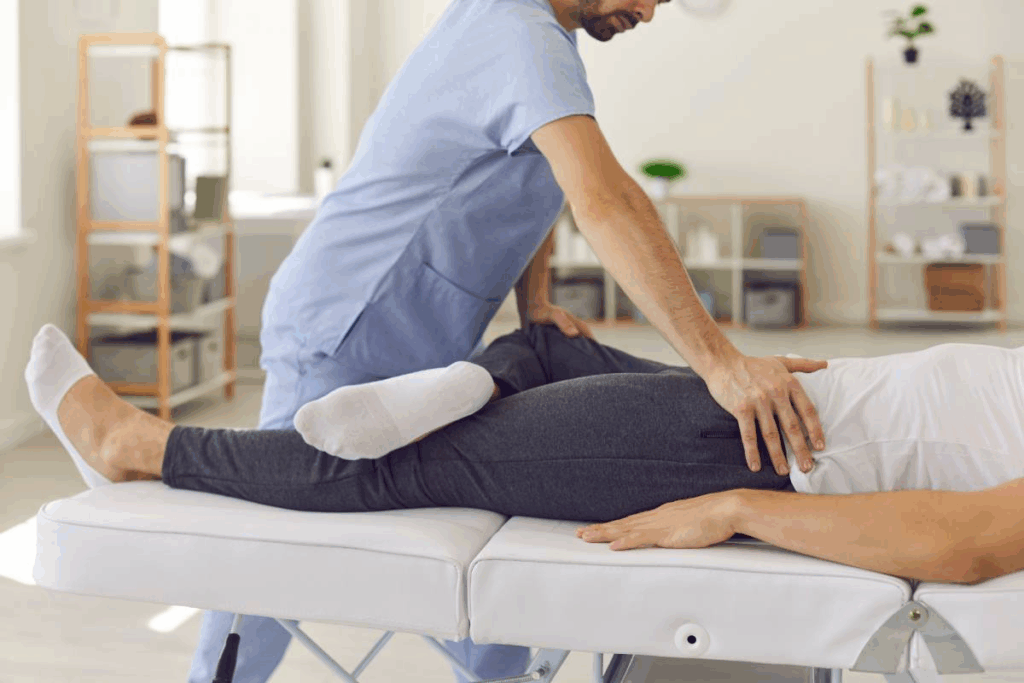
Pelvic floor physical therapy is key in treating pelvic floor dysfunction constipation. It starts with checking the pelvic floor muscles. Then, a custom exercise plan is made to strengthen and relax these muscles.
Techniques used include Kegel exercises, biofeedback, and manual therapy. These help improve muscle function and coordination.
Biofeedback Training Techniques
Biofeedback training helps patients control their pelvic floor muscles during bowel movements. Sensors track muscle activity. This way, patients learn to relax their muscles and improve bowel habits.
This method has been shown to greatly reduce constipation symptoms.
Medication Options and Considerations
In some cases, medication is needed to manage constipation symptoms. Laxatives and stool softeners can help. But, their use must be carefully thought out due to possible side effects and dependency.
Surgical Interventions When Necessary
For severe cases that don’t respond to other treatments, surgery might be an option. Procedures like sacral nerve stimulation or rectal prolapse repair can help. The decision to have surgery is made after careful evaluation and discussion with the healthcare provider.
We summarize the treatment approaches in the following table:
Treatment Approach | Description | Benefits |
Pelvic Floor Physical Therapy | Personalized exercise program to improve muscle strength and coordination | Improved muscle function, reduced symptoms |
Biofeedback Training | Technique to teach proper coordination of pelvic floor muscles | Improved bowel habits, reduced constipation |
Medication | Laxatives and stool softeners to regulate bowel movements | Regulated bowel movements, symptom relief |
Surgical Interventions | Procedures for severe cases, such as sacral nerve stimulation | Significant symptom improvement in severe cases |
Conclusion: Long-term Management and Prognosis
Understanding the link between pelvic floor dysfunction and constipation is key. We’ve seen how pelvic floor issues can cause constipation. It’s important to notice symptoms like feeling like you can’t fully empty your bowels and straining too much.
With the right treatment, people can see big improvements. Treatments like pelvic floor physical therapy and biofeedback can help. These methods tackle the root causes of constipation and pain, making life better for those affected.
Managing these issues long-term means making lifestyle changes and sticking with therapy. Working with healthcare experts, people can create a plan that works for them. This approach helps manage constipation and pain, leading to lasting relief.
FAQ
Can pelvic floor dysfunction cause constipation?
Yes, it can. The pelvic floor muscles help control bowel movements. When they don’t work right, it can cause constipation.
What are the symptoms of pelvic floor-related constipation?
Symptoms include feeling like you can’t fully empty your bowels. You might also strain too much, have hard stool, and go to the bathroom less often.
How does constipation trigger pelvic pain?
Constipation puts extra pressure on the pelvic floor muscles. This strain can cause pain in the pelvic area.
What are the risk factors for developing weak pelvic muscles and constipation?
Being female, pregnancy, childbirth, and age can increase your risk. Lifestyle choices also play a role.
How is pelvic floor disorder constipation diagnosed?
Doctors start with basic checks and physical exams. They might use special tests to confirm the diagnosis. They also rule out other causes of constipation.
What are the treatment approaches for pelvic floor dysfunction constipation?
Treatments include physical therapy and biofeedback. Medications and surgery are options too, if needed.
Does constipation cause pelvic pain?
Yes, it can. The strain from constipation can lead to pain in the pelvic area.
Can weak pelvic muscles cause constipation?
Yes, they can. Weak muscles in the pelvic floor can make it hard to have regular bowel movements.
How can pelvic floor dysfunction be managed long-term?
Long-term management involves understanding the link between pelvic floor issues and constipation. Effective treatments include physical therapy and making lifestyle changes.
Is pelvic pain a common symptom of constipation?
Yes, it is. Pelvic pain is often seen in people with constipation, due to pelvic floor dysfunction.
Can constipation cause vaginal pain?
Yes, it can. The strain from constipation can cause pain in the vagina.
What is dyssynergic defecation?
It’s a condition where the pelvic floor muscles contract instead of relax during bowel movements. This can lead to constipation.
References
National Center for Biotechnology Information. Evidence-Based Medical Guidance. Retrieved from https://www.ncbi.nlm.nih.gov/pmc/articles/PMC341393/