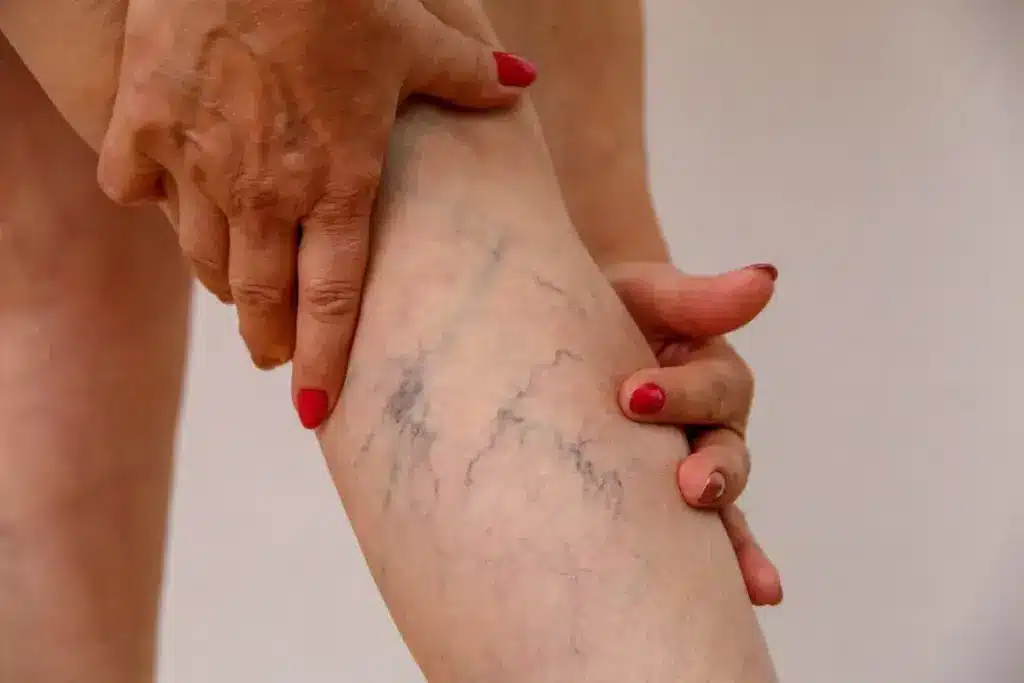
Varicose veins are enlarged, twisted veins in the legs. They can be uncomfortable and lower your self-confidence.
Modern treatments have changed how we deal with varicose veins. Methods like Endovenous Laser Ablation (EVLA) and Radiofrequency Ablation (RFA) are now top choices. They work well and don’t keep you out of action for long. The demand for varicose vein treatment is rising, with the market expected to hit over $2.7 billion by 2029.
We’ll look at the different ways to treat varicose veins. We’ll talk about what works best for each case.
Key Takeaways
- Minimally invasive treatments are the gold standard for shrinking varicose veins.
- EVLA and RFA are highly effective methods with minimal downtime.
- The global market for varicose vein treatment is growing rapidly.
- Varicose veins can cause significant discomfort and affect quality of life.
- Treatment options vary, and the best approach depends on individual cases.
Understanding Varicose Veins and Their Impact
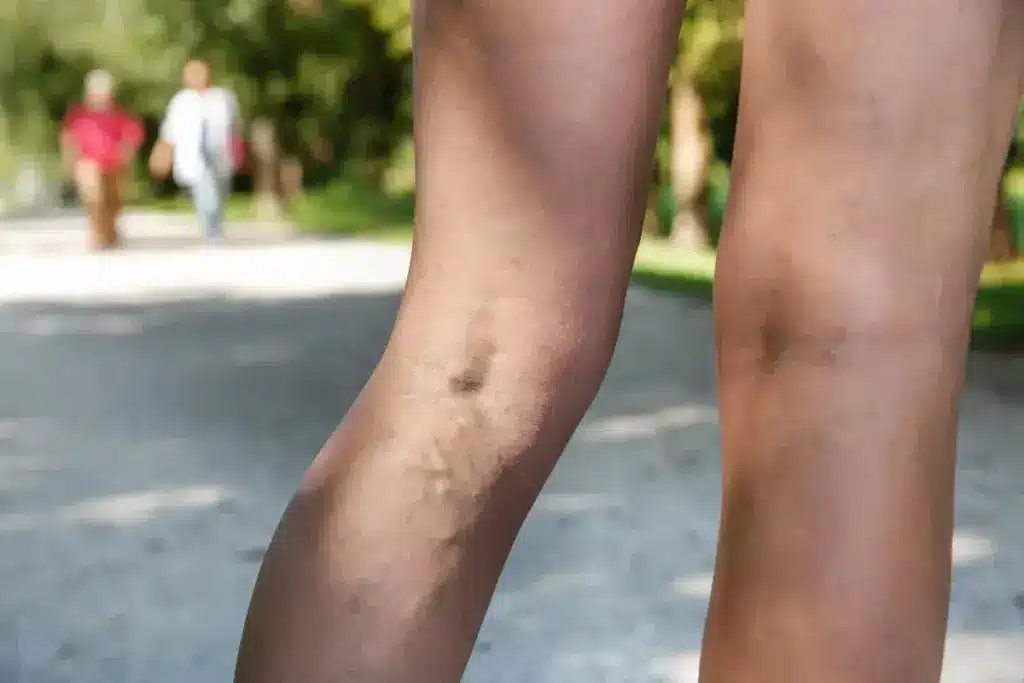
Varicose veins are more than just a cosmetic issue. They can lead to serious health problems. These enlarged veins, often seen in the legs, show signs of venous issues. They can cause discomfort, pain, and even more severe conditions if not treated.
What Are Varicose Veins?
Varicose veins happen when vein valves get weak or damaged. This lets blood flow backwards, making veins bigger. The great saphenous vein, a major vein in the leg, is often affected. When these valves fail, it causes venous stasis, where blood pools in the veins, making the problem worse.
Common Symptoms and Complications
Symptoms of varicose veins include visible, twisted veins and leg pain or aching. Swelling in the legs, ankles, or feet is also common. In severe cases, skin ulcers or venous eczema can occur. If ignored, varicose veins can lead to deep vein thrombosis (DVT), a blood clot in a deep vein. This clot can break loose and cause a pulmonary embolism.
It’s important to understand these symptoms of varicose veins for early detection and treatment. Spotting the signs early can stop the disease from getting worse and lower the risk of complications.
Risk Factors and Prevalence
Varicose veins are common, affecting many people. Risk factors include age, genetics, obesity, and lifestyle choices like standing or sitting for long periods. The risk goes up with age, making it a common problem in older adults. Knowing these risk factors helps in prevention and management.
By recognizing the causes and symptoms, people can take steps to manage their condition. This can include lifestyle changes, compression therapy, or medical treatment.
The Science Behind Varicose Vein Development
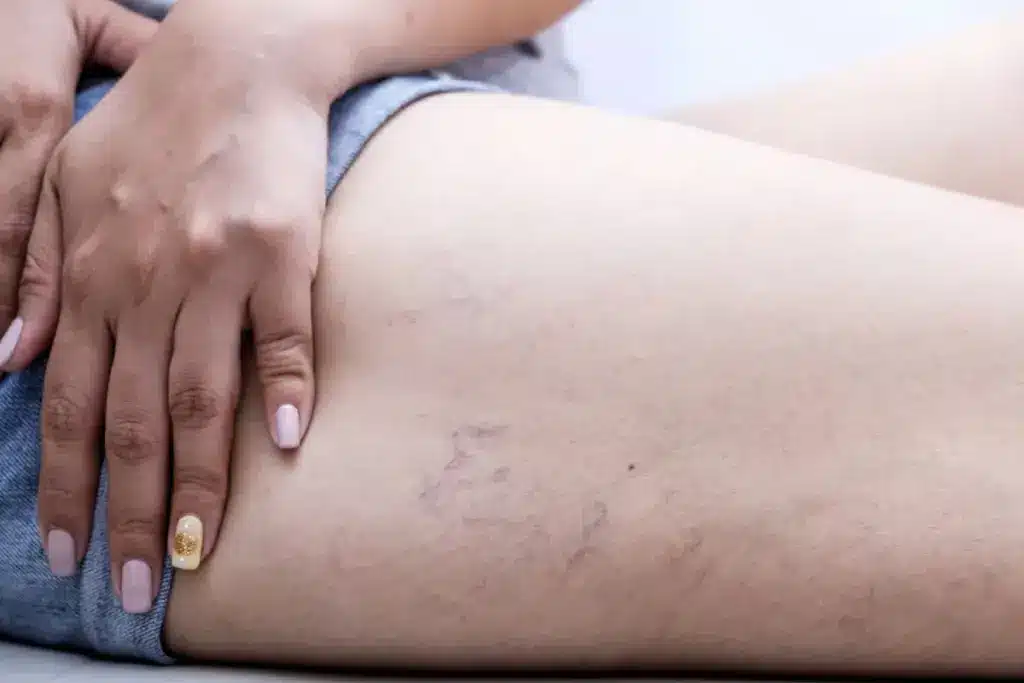
To understand varicose veins, we must first know about the venous system. It plays a key role in blood circulation. The venous system is essential for bringing blood back to the heart.
Venous Anatomy and Function
The legs have both superficial and deep veins. The superficial veins are near the skin, while the deep veins are deeper, surrounded by muscles. The great saphenous vein is a superficial vein that runs from the foot to the groin.
Veins have one-way valves to keep blood flowing upwards. This ensures blood moves towards the heart efficiently, even against gravity in the legs.
The Role of Venous Insufficiency
Venous insufficiency happens when vein valves weaken or get damaged. This leads to venous stasis, or blood pooling. It’s a main cause of varicose veins. When valves fail, blood flows backward, causing veins to stretch and become varicose.
Great Saphenous Vein Involvement
The great saphenous vein is more likely to develop varicose veins. Its length and superficial location make it prone to issues. When it becomes varicose, it can cause discomfort and visible signs.
|
Vein Type |
Location |
Function |
|---|---|---|
|
Superficial Veins |
Close to the skin’s surface |
Return blood from the skin and subcutaneous tissue |
|
Deep Veins |
Deeper in the leg, surrounded by muscles |
Return blood from the muscles and deep tissues |
|
Great Saphenous Vein |
Runs from the foot to the groin |
Major superficial vein that can be affected by varicose veins |
Knowing about the venous system and its role is key to treating varicose veins. The great saphenous vein’s involvement shows how complex varicose vein development is. It highlights the need for specific treatment methods.
Minimally Invasive Treatments: The Gold Standard
Minimally invasive treatments have changed how we treat varicose veins. They offer a more comfortable and quick fix compared to old surgery methods. More and more people are choosing these new procedures.
The Shift Away From Surgery
Today, 90.2% of patients choose endovenous procedures for varicose veins. Only 9.8% go for surgery. This change is because these new treatments are less painful and have faster recovery times.
Patients like these treatments because they are less painful. They also get back to their daily lives faster. So, more people are asking for these treatments.
Treatment Selection Criteria
Choosing a treatment for varicose veins depends on several things. We look at how bad the veins are, the patient’s health, and what they want. We pick the best treatment for each person.
Many things influence the choice of treatment. We consider the size and where the veins are. We also think about the patient’s health. This way, we make sure the treatment works well for them.
|
Treatment Criteria |
Factors Considered |
|---|---|
|
Severity of Varicose Veins |
Size, location, and symptoms |
|
Patient Health |
Medical history, current health status |
|
Personal Preferences |
Treatment goals, tolerance for risk |
Success Rates and Patient Satisfaction
Studies show that these treatments work well and make patients happy. A study found they are effective and last long.
Patients who get these treatments often feel much better. They say their quality of life improves a lot. This is why more people and doctors are choosing these treatments.
Endovenous Laser Ablation (EVLA) Explained
For those with varicose veins, Endovenous Laser Ablation (EVLA) is a good option. It’s a minimally invasive treatment that has changed how we manage varicose veins.
How EVLA Works
EVLA uses laser energy to close varicose veins. The procedure starts with a laser fiber being inserted into the vein under ultrasound. The laser heats the vein, causing it to close and be absorbed by the body.
The Procedure Process
The EVLA procedure is quick and simple. Patients get local anesthesia to reduce pain. It usually takes an hour, depending on the number of veins treated.
Recovery and Success Rates
EVLA has a high success rate. Studies show it works over 90% of the time. Recovery is fast, with most people back to normal in a few days. The risk of complications is low, making it a safe choice.
Potential Side Effects
While EVLA is safe, side effects can include bruising, pain, or inflammation. These are usually mild and short-lived. Serious problems are rare, but there are risks. We make sure patients are well-informed and supported.
In summary, EVLA is a top choice for treating varicose veins. It offers quick recovery and high success rates. Our team is committed to providing the best care for EVLA patients.
Radiofrequency Ablation (RFA) for Varicose Veins
Radiofrequency Ablation (RFA) is a top choice for treating varicose veins. It’s a minimally invasive method that uses heat to close off veins. This helps reduce symptoms of varicose veins.
Procedure Details
The RFA process starts with a thin catheter being inserted into the vein. This is done under ultrasound guidance. The catheter then sends out radiofrequency energy, heating the vein wall until it collapses.
The body then finds new veins to use for blood flow. This makes the treatment effective and safe.
Key aspects of the RFA procedure include:
- Minimally invasive with local anesthesia
- Performed under ultrasound guidance for precision
- Quick recovery time, often allowing immediate return to normal activities
Comparing RFA to EVLA
RFA and Endovenous Laser Ablation (EVLA) are both good for treating varicose veins. But they work differently. EVLA uses laser energy, while RFA uses radiofrequency energy.
Both methods have high success rates. But RFA might lead to faster recovery for some patients.
|
Aspect |
RFA |
EVLA |
|---|---|---|
|
Energy Source |
Radiofrequency |
Laser |
|
Success Rate |
High |
High |
|
Recovery Time |
Generally quick |
Generally quick, may vary |
Patient Experience and Recovery
Patients usually feel little pain during and after RFA, thanks to local anesthesia. After the procedure, some might see bruising or numbness. But these side effects usually go away quickly.
Clinical Outcomes
RFA is very effective in treating varicose veins. It greatly improves symptoms and quality of life for patients. Studies show that RFA can close veins over 90% of the time, with low recurrence rates.
Our review of clinical data shows RFA is a reliable and effective treatment. It offers a quick recovery and significant symptom relief for patients.
VenaSeal™: Closing Veins with Medical Adhesive
Patients with varicose veins now have a new treatment option with VenaSeal. This method uses a medical adhesive to close off veins. It’s a new way to treat varicose veins that is both effective and safe.
The Procedure
The VenaSeal procedure uses a special catheter to put medical adhesive in the vein. This seals the vein, stopping blood flow and directing it to healthier veins. The process is guided by ultrasound for precision.
“The VenaSeal procedure is a big step forward in treating varicose veins,” says a leading vascular specialist. “It’s a minimally invasive option with little downtime. This makes it a great choice for those wanting to get back to normal activities quickly.”
Advantages Over Other Treatments
VenaSeal has many benefits over other treatments. It’s a minimally invasive procedure that doesn’t need heat or anesthesia. This makes it more comfortable for patients. Also, patients can start normal activities right away with little pain after.
- No need for anesthesia or sedation
- Minimally invasive with no incisions
- Quick recovery time
- High success rates in closing off varicose veins
Recovery and Effectiveness
Recovery from VenaSeal is usually quick, with little discomfort. Studies show VenaSeal is very effective in closing veins. It has high success rates and improves symptoms a lot.
Like any medical procedure, VenaSeal has risks and side effects. These are usually mild and short-term, like bruising, pain, or swelling at the site.
In conclusion, VenaSeal is a big step forward in treating varicose veins. It’s safe, effective, and minimally invasive. Its benefits make it a good choice for those looking to improve their vein health.
Ultrasound-Guided Foam Sclerotherapy
Ultrasound-guided foam sclerotherapy is a non-invasive way to treat varicose veins. It’s popular because it works well and you can get back to normal life quickly. This is unlike old-school surgery.
How Sclerotherapy Works
This method uses foam to close off varicose veins. A doctor injects the foam under ultrasound guidance. The foam irritates the vein, causing it to close and be absorbed by the body. It’s great for bigger veins.
Ultrasound guidance makes sure the foam goes exactly where it needs to. This makes the treatment more effective and safe. The whole thing usually takes less than an hour.
The Procedure Experience
Most people find the procedure barely uncomfortable. You might not need local anesthesia, but it depends on your sensitivity and the vein size.
Here are some important points about the procedure:
- It’s minimally invasive, so no big cuts
- You can get back to your usual activities fast
- It works well to close off varicose veins
Ideal Candidates and Limitations
Many people with varicose veins can try this treatment. It’s best for those with:
- Large veins that bother you
- Veins that keep coming back after treatment
- Veins that look bad or hurt
But, it’s not for everyone. People with certain health issues or allergies to the foam might not be good candidates. Always talk to a doctor first.
In short, ultrasound-guided foam sclerotherapy is a good choice for varicose veins. It’s safe, works well, and doesn’t hurt much. Knowing about it helps you make the best choice for your health.
Traditional Surgical Options for Varicose Veins
When less invasive treatments don’t work, surgery is an option. It’s used for severe varicose veins that really hurt your daily life.
Vein Stripping and Ligation
Vein stripping and ligation are old-school surgical fixes for varicose veins. Vein stripping means taking out the bad vein. Ligation is about tying off the vein to stop blood flow. These surgeries need general anesthesia or sedation.
Doctors choose these methods for big, painful varicose veins. They’re also used for veins that cause ulcers or bleeding.
Ambulatory Phlebectomy
Ambulatory phlebectomy is a surgery that removes varicose veins through tiny cuts. It’s done under local anesthesia and you can get back to normal fast.
This method is best for veins near the skin’s surface. It’s for those causing a lot of trouble.
When Surgery Is Recommended
Surgery is for severe symptoms like a lot of pain, swelling, or skin ulcers. It’s also for when other treatments don’t help.
We look at each case carefully. We consider how bad the symptoms are, your health, and what you prefer.
Compression Therapy for Varicose Veins
Compression therapy is a non-invasive way to manage varicose veins. It involves wearing compression garments. These help reduce discomfort and improve blood flow.
Types of Compression Garments
There are many types of compression garments. These include compression socks, stockings, and tights. They provide graduated compression, with more pressure at the ankle.
This pressure helps push blood towards the heart. It reduces swelling and discomfort. Compression socks for women and compression socks for men fit different leg shapes and sizes.
Proper Use and Selection
Choosing the right compression garment is key. It’s important to pick one that offers the correct level of compression. This level varies based on the severity of varicose veins.
Consider comfort, ease of use, and durability when selecting. Some prefer best compression socks that are easy to wear. Others value durability more.
Effectiveness for Different Stages
Compression therapy works for all stages of varicose veins. For early stages, it can ease symptoms and prevent worsening. In advanced cases, it can be used with other treatments to manage symptoms.
Best Compression Socks for Men and Women
Choosing the best compression socks involves several factors. Look for socks that offer graduated compression and are made from breathable materials. They should also be comfortable to wear. Popular brands offer compression stockings for women and men that are both effective and stylish.
The best compression socks are those that fit individual needs. They should provide the right balance of comfort, support, and compression.
Home Remedies and Lifestyle Changes for Varicose Veins
Medical treatments are often needed for varicose veins. But, there are home remedies and lifestyle changes that can help. These changes can ease symptoms and slow the condition’s progress.
Exercise and Movement Recommendations
Regular exercise is key in managing varicose veins. Activities like walking, cycling, or swimming boost circulation. They help reduce vein pressure. Strengthening calf muscles is also important, as they help push blood towards the heart.
- Walking: A simple and effective way to improve circulation.
- Cycling: Low-impact exercise that strengthens leg muscles.
- Swimming: Gentle on the joints while improving circulation.
Dietary Considerations
Eating a diet rich in fiber can prevent constipation, which affects varicose veins. Foods full of antioxidants, like fruits and veggies, boost vascular health. Limiting salt intake also helps reduce swelling.
- High-fiber foods: Include whole grains, legumes, and fresh fruits.
- Antioxidant-rich foods: Berries, leafy greens, and other vegetables.
- Low-sodium diet: Helps reduce water retention.
Weight Management
Keeping a healthy weight is vital for managing varicose veins. Extra weight increases vein pressure, worsening symptoms. A balanced diet and regular exercise help maintain a healthy weight.
Elevation and Rest Techniques
Elevating your legs above your heart reduces swelling and vein pressure. It’s good to take breaks to elevate your legs, if you’re on your feet or sitting for long.
- Elevate legs: For 15-20 minutes, 3-4 times a day.
- Avoid standing or sitting for long periods.
- Take regular breaks to move around.
By using these home remedies and lifestyle changes, people with varicose veins can find relief. They can also lower the risk of complications.
Comparing Treatment Effectiveness: What Works Best?
When it comes to treating varicose veins, different treatments work in different ways. It’s important to look at how well each method works, how often they need to be done again, and how much they cost. This helps find the best treatment for each person.
Success Rates Across Different Methods
Each treatment for varicose veins has its own success rate. For example, Endovenous Laser Ablation (EVLA) and Radiofrequency Ablation (RFA) often close varicose veins with success rates over 90%. VenaSeal, a newer treatment, also shows promising results, with success rates similar to EVLA and RFA.
It’s key to compare the success rates of different treatments. This helps us understand which ones work best. Here’s a list of success rates for various treatments:
- EVLA: 90-95% success rate
- RFA: 90-95% success rate
- VenaSeal: 85-90% success rate
- Sclerotherapy: 80-85% success rate
- Surgical stripping: 80-85% success rate
Recurrence Rates and Long-Term Outcomes
How often a treatment needs to be done again is another important factor. Studies show that treatments like EVLA and RFA have lower rates of needing to be done again compared to surgery. Research on how well these treatments work over time is ongoing. Most treatments seem to keep working well for many years.
|
Treatment |
Recurrence Rate |
Long-Term Outcome |
|---|---|---|
|
EVLA |
5-10% |
Sustained closure |
|
RFA |
5-10% |
Sustained closure |
|
VenaSeal |
10-15% |
Sustained closure |
Patient Satisfaction Metrics
How happy patients are with their treatment is very important. Things that make patients happy include feeling better, looking good, and having an easy treatment process. Most people are very happy with treatments that are quick and don’t keep them out of work for long.
Cost-Effectiveness Analysis
The cost of treating varicose veins can vary a lot. It depends on the treatment, where you live, and your insurance. Some treatments might cost more upfront, but they can save money in the long run because they work better and don’t need to be done as often. It’s important to look at the cost of each treatment to find the best one for each person.
In summary, comparing varicose vein treatments means looking at how well they work, how often they need to be done, how happy patients are, and how much they cost. By considering these things, doctors can recommend the best treatment for each patient.
Cost Considerations and Insurance Coverage
It’s important to know the costs of varicose vein treatment. Prices can change a lot based on the procedure, the doctor’s skill, and where you are.
Average Treatment Costs
The cost for treating varicose veins can be between $1,000 and $3,000 per session. For example, sclerotherapy might cost less than laser or radiofrequency ablation.
|
Treatment Type |
Average Cost Range |
|---|---|
|
Sclerotherapy |
$1,000 – $2,000 |
|
Laser Ablation |
$2,000 – $3,500 |
|
Radiofrequency Ablation |
$2,500 – $4,000 |
Insurance Coverage Criteria
Insurance for varicose vein treatment varies a lot. Treatments that are seen as medically necessary are more likely to be covered. Patients should check their insurance before treatment.
- Check if your insurance covers varicose vein treatments.
- Understand what makes a treatment medically necessary.
- Some treatments might need pre-authorization.
The Growing Market
The market for varicose vein treatments is growing fast. This is because more people are getting treatments and new technologies are coming out. The global market is expected to grow from $1.99 billion in 2024 to over $2.7 billion by 2029.
This growth shows more people want effective and easy treatments. It’s because of better results and what patients prefer.
When to Consult a Varicose Vein Specialist
Knowing when to see a varicose vein specialist is key to getting the right treatment. Varicose veins are not just about looks. They can cause pain, discomfort, and other serious problems if not treated.
Warning Signs and Symptoms
It’s important to know the signs that mean you need to see a specialist. Look out for:
- Persistent pain or aching in the legs
- Swelling in the legs or ankles
- Visible, twisted varicose veins
- Heaviness or fatigue in the legs
- Skin discoloration or ulcers near the ankles
If you notice any of these, it’s time to get medical help. A specialist can diagnose and suggest the best treatment.
Cosmetic vs. Medical Necessity
Some people get varicose veins treated for looks, while others need it for health reasons. It’s important to know the difference.
If varicose veins are causing pain, you might need medical treatment. But if it’s mostly about looks, there are other options.
Finding a Qualified Specialist
Finding a good varicose vein specialist is important. Ask your doctor for recommendations or check with organizations that certify vein specialists.
Make sure the specialist uses the latest treatments, like endovenous laser ablation or sclerotherapy.
What to Expect During Consultation
At your first visit, the specialist will check you physically and might use tests like ultrasound. They’ll look at your veins.
They’ll talk about your symptoms, health history, and treatment choices. This is also a chance to ask about the treatment, recovery, and what to expect.
|
Aspect |
Description |
|---|---|
|
Initial Assessment |
Physical examination and potentially imaging tests |
|
Discussion |
Review of symptoms, medical history, and treatment options |
|
Treatment Planning |
Personalized plan based on the assessment and discussion |
Seeing a varicose vein specialist is a smart move. By knowing when to seek help and what to expect, you can make the best choices for your health.
Conclusion
Varicose veins are a common issue that can be treated with modern, minimally invasive methods. These treatments have become the top choice for fixing varicose veins. We’ve looked at options like Endovenous Laser Ablation (EVLA), Radiofrequency Ablation (RFA), and VenaSeal, among others.
These modern treatments work well, have little downtime, and are safer than old-school surgery. It’s key to see a varicose vein expert for the right diagnosis and treatment plan.
Getting professional help can make your symptoms better, improve how your veins look, and boost your life quality. We suggest you start by talking to a skilled specialist. They can help you through the treatment process.
FAQ
What are varicose veins and how do they develop?
Varicose veins are enlarged, twisted veins. They happen when the valves in the veins get weak. This lets blood flow backwards, making the veins big.
What are the common symptoms of varicose veins?
Symptoms include visible twisted veins, leg pain, and swelling. Varicose veins can also cause blood clots or skin ulcers.
What are the risk factors for developing varicose veins?
Risk factors include genetics, age, obesity, and sitting or standing a lot. Knowing these can help prevent them.
How effective are minimally invasive treatments for varicose veins?
Treatments like Endovenous Laser Ablation (EVLA) and Radiofrequency Ablation (RFA) work well. They have little downtime, making them popular choices.
What is the difference between EVLA and RFA?
EVLA uses laser energy to close veins. RFA uses heat. Both are effective, but the choice depends on the patient’s needs.
What is VenaSeal, and how does it work?
VenaSeal uses a medical adhesive to close veins. It’s a quick procedure with fast recovery.
Is sclerotherapy effective for treating varicose veins?
Sclerotherapy uses foam to close veins. It works for small veins but not big ones.
When is surgical treatment recommended for varicose veins?
Surgery is for severe cases or when other treatments fail. It includes vein stripping and ligation.
How can compression therapy help alleviate varicose vein symptoms?
Compression therapy uses special garments to ease symptoms. It can be used alone or with other treatments.
What lifestyle changes can help alleviate varicose vein symptoms?
Changes like regular exercise, healthy weight, and leg elevation help. They slow disease progression.
How much does varicose vein treatment cost, and is it covered by insurance?
Treatment costs vary by option and location. Insurance often covers minimally invasive treatments.
When should I consult a varicose vein specialist?
See a specialist for leg pain, swelling, or visible veins. They can diagnose and treat.
What can I expect during a consultation with a varicose vein specialist?
Expect a check-up, discussion of options, and a treatment plan. It’s personalized.
Are there any exercises that can help alleviate varicose vein symptoms?
Yes, walking, cycling, and leg lifts help. They improve circulation.
Can varicose veins be prevented?
Preventing varicose veins is hard, but lifestyle changes and compression help. They reduce risk.
National Center for Biotechnology Information. Evidence-Based Medical Insight. Retrieved from