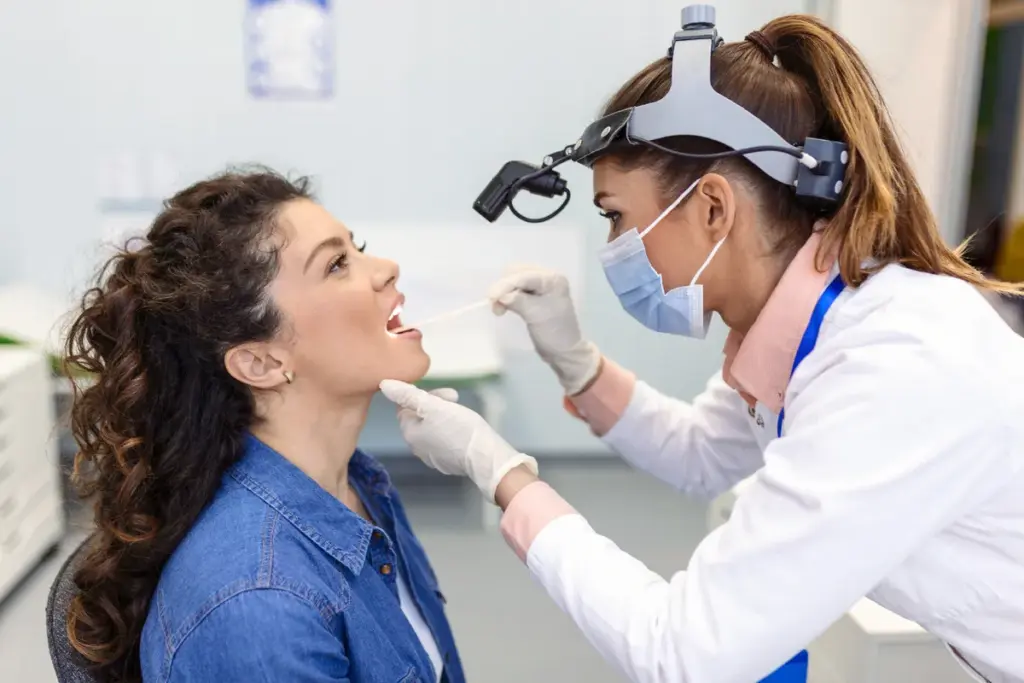
At our center, we use videostroboscopy to check how well your vocal folds work. This advanced tool helps identify and address voice problems efficiently.
Videostroboscopy is done by otolaryngologists (ENT doctors) and speech-language pathologists. They know how to read the results and plan treatments. Our team has the newest tools for clear, detailed images of your vocal folds. This means we can make accurate diagnoses and treatments.
Key Takeaways
- Videostroboscopy is a specialized imaging technique used to assess vocal fold function.
- Otolaryngologists and speech-language pathologists typically perform videostroboscopy.
- Our center is equipped with the latest equipment for real-time and high-definition imaging.
- Accurate diagnosis and effective treatment of voice disorders rely on videostroboscopy.
- Our team develops personalized treatment plans based on videostroboscopy results.
What is Videostroboscopy: Definition and Clinical Significance
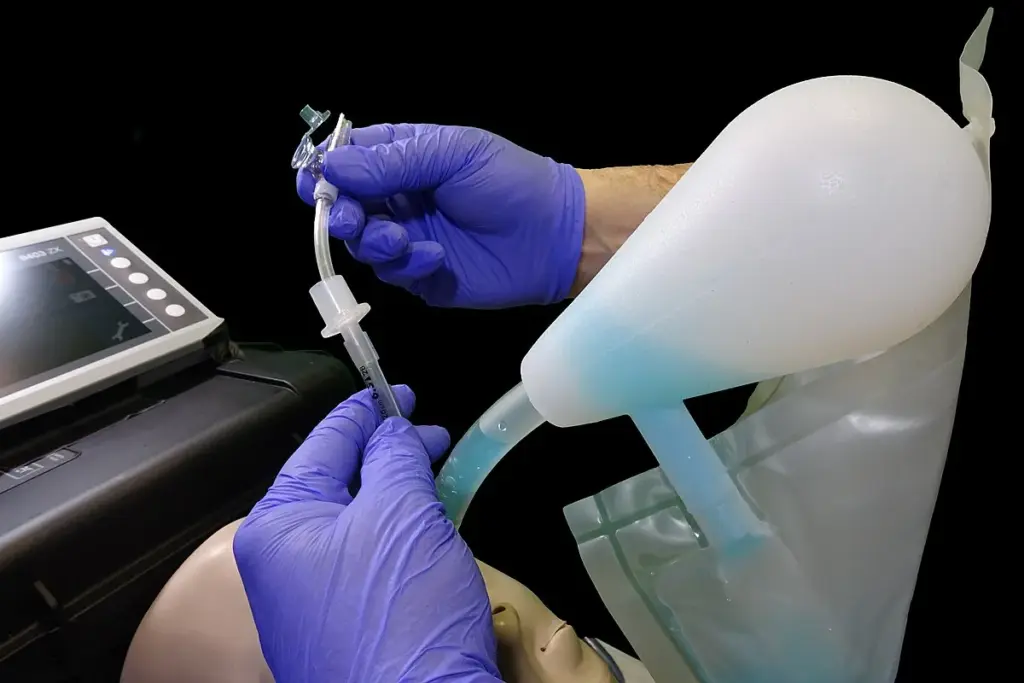
Videostroboscopy is a key tool in otolaryngology. It lets doctors see how vocal folds vibrate closely. This tool has changed how we look at voice problems, giving us a clear view of the larynx while speaking.
The Science Behind Stroboscopic Imaging
Stroboscopic imaging makes vocal folds seem to move in slow motion. It uses a special light that matches the vocal fold’s vibration. This lets us see tiny movements that are hard to spot with the eye alone. It’s key for spotting voice issues.
Visualizing Vocal Fold Vibration Patterns
Seeing how vocal folds move is key to figuring out voice problems. Videostroboscopy uses a special camera and light to show these movements. It helps find issues like nodules or paralysis.
Diagnostic Value in Voice Disorders
Videostroboscopy is great for spotting voice problems early. It gives a clear, slow-motion view of the vocal folds. This helps doctors find and fix issues quickly.
- Accurate Diagnosis: Finds vocal fold problems clearly.
- Personalized Treatment Plans: Makes treatment plans fit each patient’s needs.
- Monitoring Progress: Keeps track of how treatment is going and makes changes as needed.
The global digital videostroboscopy market was worth USD 450 million in 2024. It’s expected to hit USD 800 million by 2033. This shows more people want this tech for voice disorder diagnosis and treatment.
Primary Practitioners of Videostroboscopy
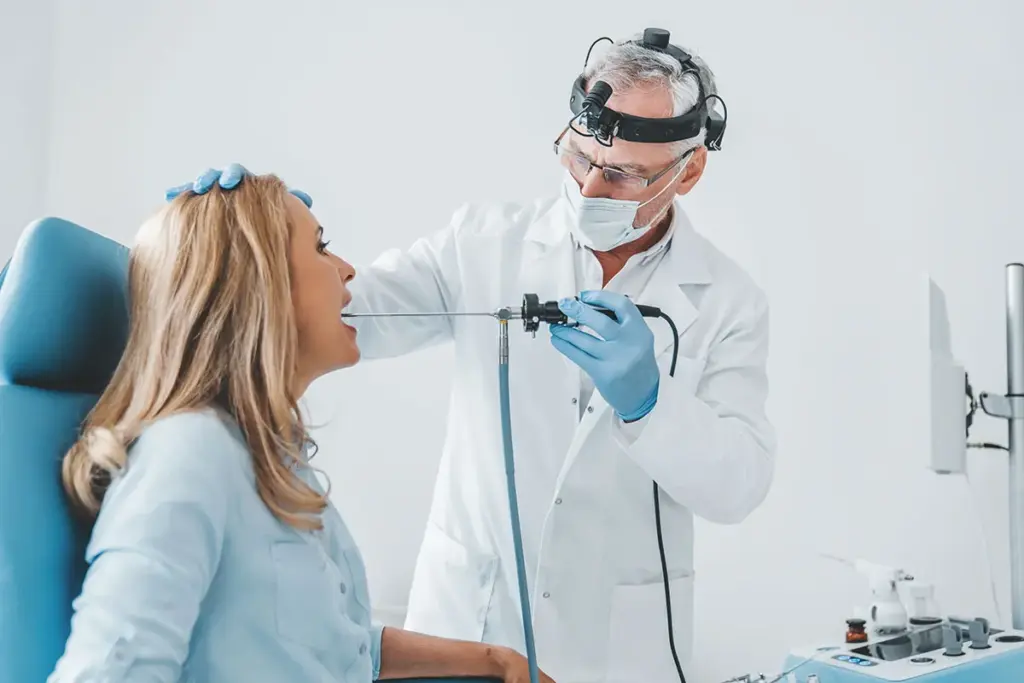
Specialists are key in diagnosing voice disorders with videostroboscopy. They assess how well the vocal folds work and spot any issues.
Otolaryngologists (ENT Specialists)
Otolaryngologists, or ENT specialists, treat ear, nose, and throat problems. They are experts in videostroboscopy because of their deep knowledge of the larynx. Otolaryngologists learn to do videostroboscopy in their training, helping them diagnose and treat voice issues well.
About 7.5% of U.S. adults face voice problems each year. This shows the need for advanced tests like videostroboscopy. Otolaryngologists lead in using videostroboscopy to see how vocal folds vibrate and find problems.
Speech-Language Pathologists
Speech-language pathologists (SLPs) focus on communication disorders, including voice issues. They don’t do videostroboscopy but work with otolaryngologists for patient care. Our SLPs have special training and work with doctors to help patients.
SLPs are key in understanding videostroboscopy results and making treatment plans. Their voice therapy skills are vital for helping patients get better.
Voice Specialists and Laryngologists
Voice specialists and laryngologists have advanced training in voice disorders. They work with otolaryngologists and SLPs in voice clinics. These experts know a lot about vocal fold health, helping with complex voice issues.
A leading expert says teamwork is key for voice disorder care. This team approach ensures patients get a full check-up and effective treatment.
“The accurate diagnosis of voice disorders through videostroboscopy relies on the expertise of a multidisciplinary team of professionals.”
— Expert in Laryngology
Practice Settings for Video Laryngoscopy Procedures
Video laryngoscopy is used in many places, from schools to clinics. This means patients can get care that fits their needs.
Hospital-Based Voice Centers
Hospital voice centers have the latest tech, like video laryngoscopy. They have teams ready to tackle tough voice problems. Liv Hospital’s voice center is a top example, using the newest methods.
Academic Medical Institutions
Academic places are key for learning and research in laryngology. They teach the next ENT doctors and voice experts. They also try new things in voice care through trials.
Private ENT Practices
Private ENT offices give more personal care and quicker visits. They use advanced video laryngoscopy for top-notch checks. Patients get care that’s just right for them.
Multidisciplinary Voice Clinics
Voice clinics team up doctors, speech therapists, and sometimes music coaches. This team effort helps those with hard voice issues. Our clinic has the best tools for voice care, showing our dedication to top healthcare.
Video laryngoscopy is used in many places to meet different patient needs. Whether it’s in a hospital, school, private office, or clinic, the aim is the same. It’s to find the right diagnosis and treatment for voice problems.
Required Qualifications and Specialized Training
People who do videostroboscopy need special training and qualifications. This is to accurately diagnose and treat voice disorders. At our institution, we focus on giving healthcare professionals the best education and training in voice care.
Medical Education and Residency Requirements
Otolaryngologists, or ENT specialists, are doctors who have done a residency in otolaryngology. This training gives them the skills to diagnose and treat ear, nose, and throat problems, including voice disorders.
Residency programs in otolaryngology include time in laryngology. This hands-on experience helps them manage voice disorders. Some doctors also get extra training through laryngology fellowships.
Speech Pathology Certification Pathways
Speech-language pathologists (SLPs) are key in assessing and treating voice disorders. SLPs must acquire a master’s degree in speech-language pathology along with completing a clinical fellowship for certification.
SLPs get certified through the Certificate of Clinical Competence in Speech-Language Pathology (CCC-SLP) from the American Speech-Language-Hearing Association (ASHA). Our SLPs have special training and work with doctors to give full care.
Specialized Fellowships in Laryngology
Otolaryngologists can get advanced training in laryngology through fellowships. These programs give deep knowledge and hands-on experience in treating complex voice disorders.
Fellowships in laryngology teach videostroboscopy and other advanced diagnostic techniques. They also cover surgical and non-surgical treatments for voice disorders.
Continuing Education in Voice Disorders
Practitioners need to keep learning about videostroboscopy and voice disorder management. Our institution supports ongoing education with workshops, conferences, and online courses.
New technologies like high-definition video and artificial intelligence have improved diagnosis. Practitioners must keep up with these advancements to offer the best care.
|
Specialization |
Typical Degree |
Certification |
Additional Training |
|---|---|---|---|
|
Otolaryngologist |
MD or DO |
Board Certification in Otolaryngology |
Fellowship in Laryngology |
|
Speech-Language Pathologist |
Master’s in Speech-Language Pathology |
CCC-SLP |
Specialized training in voice therapy |
|
Laryngologist |
MD or DO |
Board Certification in Otolaryngology |
Fellowship in Laryngology |
The Videostroboscopy Equipment and Technology Ecosystem
Our center uses top-notch videostroboscopy equipment. It shows vocal fold motion in real-time and high definition. This tech is key for precise diagnosis and treatment plans.
Rigid and Flexible Endoscopic Systems
Videostroboscopy uses both rigid and flexible endoscopes to see the vocal folds. Rigid endoscopes give clear images and are best for those who find the procedure easy. Flexible endoscopes are more flexible and needed for detailed larynx checks.
Stroboscopic Light Sources
The stroboscopic light is vital for videostroboscopy. It flashes in sync with vocal fold vibrations. This makes the motion slow, helping to see the folds clearly. New stroboscopic tech has made diagnoses more accurate.
High-Definition Imaging Components
High-definition imaging parts are key for clear vocal fold pictures. Our gear has high-resolution cameras and smart image processing. This ensures we see even tiny issues clearly.
Recording and Documentation Software
We use advanced software to record and analyze videostroboscopy exams. This software lets doctors review and compare exams. It also helps share findings with other healthcare pros.
AI models have shown up to 98% accuracy in spotting vocal fold issues. This shows how tech can improve diagnosis. With our advanced tools and software, we can give accurate diagnoses and effective treatments for voice problems.
Step-by-Step Videostroboscopy Examination Process
A videostroboscopy examination is detailed and involves several steps. It starts with patient preparation and ends with analyzing images. This thorough process helps diagnose voice disorders and plan treatments.
Patient Preparation and Positioning
Before starting, patients are prepared for comfort and clear views of their larynx. They are told what to expect and positioned correctly. Sometimes, a numbing agent is used to reduce discomfort.
Getting patients ready is key to getting good images. We make sure they know what’s happening and feel at ease.
Endoscope Insertion Techniques
Inserting the endoscope is a precise step. The choice between rigid and flexible endoscopy depends on the patient’s needs. Both methods are used to get clear images of the vocal folds.
- Rigid endoscopy gives sharp images and is used for detailed looks at the vocal folds.
- Flexible endoscopy is more comfortable for patients and helps check laryngeal function during tasks.
Vocal Tasks During Examination
Patients are asked to do specific vocal tasks during the exam. These tasks help assess how well the vocal folds work. They might include making sounds for a long time or changing pitch.
By watching how the vocal folds react, we learn a lot about their function. This helps us spot any problems.
Image Capture and Analysis
The last step is capturing and analyzing images of the vocal folds. High-definition imaging and advanced software help us see how the vocal folds vibrate. This is important for diagnosing voice disorders.
|
Aspect |
Description |
Importance |
|---|---|---|
|
Image Quality |
High-definition imaging for clear visualization |
Critical for accurate diagnosis |
|
Vocal Fold Vibration |
Analysis of vibration patterns during phonation |
Essential for assessing vocal fold function |
|
Software Analysis |
Use of advanced software for detailed analysis |
Enhances diagnostic accuracy and treatment planning |
Videostroboscopy offers a detailed look at laryngeal function. It helps doctors diagnose and treat voice disorders well.
Common Voice Disorders Diagnosed Through Videostroboscopy
About 7.5% of U.S. adults face voice problems each year. Videostroboscopy is key in finding the causes of these issues. It lets doctors see the vocal folds in detail, helping them plan the right treatment.
Vocal Fold Nodules, Polyps, and Cysts
Vocal fold nodules, polyps, and cysts can really mess with your voice. Vocal fold nodules often come from too much strain. Polyps might happen from sudden, loud voice use. Cysts are fluid-filled and can change how you sound. Videostroboscopy shows how the vocal folds vibrate, helping spot these problems.
These issues can really affect someone’s life, like singers or teachers. Getting a clear diagnosis is key to fixing the problem.
Vocal Fold Paralysis and Paresis
Vocal fold paralysis happens when nerves controlling the vocal folds get damaged. Paresis is when the vocal folds are weak but not paralyzed. Videostroboscopy helps see how well the vocal folds move, guiding treatment.
Diagnosing paralysis or paresis means looking at how the vocal folds vibrate and move. This info helps decide the best treatment, like therapy or surgery.
Laryngeal Cancer and Precancerous Lesions
Laryngeal cancer and precancerous spots are serious if caught late. Videostroboscopy helps spot these early by showing the larynx and vocal fold vibrations. Precancerous lesions can be found early, too.
Spotting these early can greatly improve treatment success. Regular check-ups are also important to watch precancerous spots.
Functional Voice Disorders and Muscle Tension Dysphonia
Muscle tension dysphonia is a common voice disorder from too much tension in the larynx muscles. Videostroboscopy shows abnormal vibrations and glottal closure. Functional voice disorders can be treated with voice therapy and other methods.
Videostroboscopy is great for figuring out if a voice problem is functional or structural. This helps doctors give the right treatment, improving voice quality and patient results.
Global Market for Digital Videostroboscopy Systems
The digital videostroboscopy systems market is growing fast, valued at $450 million in 2024. This growth is thanks to new technology and more people needing diagnostic tools.
Current Market Valuation
The global market for these systems was worth $450 million in 2024. This shows how widely these tools are being used in healthcare around the world. It highlights how important videostroboscopy is for making diagnoses.
Projected Growth to $800 Million by 2033
Experts think the market will grow even more, reaching $800 million by 2033. This increase is expected because of new tech and more people with voice problems.
Key Market Drivers and Regional Adoption
Several things are making the market grow:
- More people have voice disorders and laryngeal problems.
- New videostroboscopy tech is coming out.
- More doctors are learning about videostroboscopy’s benefits.
- It’s being used in more medical areas.
In North America, the market is strong because of good healthcare and new tech adoption. Europe is also growing, thanks to more money spent on healthcare and an older population.
Leading Manufacturers and Technology Providers
The market has a few big players leading the way. They are:
- Companies that make ENT equipment.
- Medical device makers focused on diagnostics.
- Providers of advanced imaging tech.
These leaders keep improving their products. They invest in research to stay ahead in the market.
Technological Advancements in Modern Video Laryngoscopy
Video laryngoscopy has seen big changes thanks to new tech. These changes help us better understand and treat voice problems. They make it easier to spot and fix issues.
Evolution from Standard to High-Definition Imaging
Going from standard to high-definition (HD) imaging has been a big step. HD gives us clearer and more detailed visuals of the vocal folds. This helps doctors see small problems that were hard to spot before.
Now, HD imaging is the norm in many places. It gives us superior image quality that helps find complex voice issues. It also makes talking to patients about their health easier.
Artificial Intelligence Integration in Diagnosis
Artificial intelligence (AI) is changing video laryngoscopy too. AI can look at images and find things humans might miss. Studies show AI can be 98% accurate in spotting different vocal fold problems.
AI tools are becoming more common in clinics. They help make diagnoses more consistent and cut down on mistakes.
3D Visualization Capabilities
3D imaging in video laryngoscopy is a big deal. Three-dimensional imaging lets us see the larynx in a new way. It helps us understand complex problems better.
We think 3D imaging will be key for planning surgeries and teaching doctors. It gives us a more nuanced understanding of the larynx’s layout.
Portable and Wireless Systems Development
New portable and wireless video laryngoscopy systems are a game-changer. They make it easier to use the tech in different places. Clinicians can now do exams in clinics or even at the bedside.
Portable systems are great for remote or underserved areas. They’re useful where it’s hard to get to special equipment. Wireless tech makes them even easier to use and less cluttered.
Patient Experience During Videostroboscopy
At our center, we know that a videostroboscopy procedure can be scary for many. We aim to make this process as easy and helpful as we can.
What to Expect During the Procedure
Patients sit comfortably during a videostroboscopy. A flexible or rigid endoscope is gently put through the nose or mouth. This lets us see the vocal folds clearly.
Preparation is key for a good videostroboscopy. Patients should come with a clean throat, having not eaten or drunk anything for an hour. They should also try not to talk much before the test to avoid straining their voice.
Comfort Measures and Topical Anesthesia
We use several ways to make patients comfortable. Topical anesthesia might be used to numb the area. This makes the endoscope insertion less uncomfortable.
Our skilled team is trained to be gentle and caring. They make sure patients are as comfortable as possible during the test.
Duration and Recovery Considerations
The videostroboscopy usually takes 15 to 30 minutes. The time needed can change based on the case’s complexity and what we need to find out.
Recovery is usually quick, and most can go back to their usual activities soon. Some might feel a bit of sore throat or nasal irritation, but these usually go away quickly.
Patient Testimonials and Satisfaction Rates
We’re proud of our high patient satisfaction rates. Many patients have said they felt cared for and relieved after their videostroboscopy.
|
Aspect of Care |
Patient Satisfaction Rate |
|---|---|
|
Comfort During Procedure |
95% |
|
Clarity of Explanation |
98% |
|
Overall Experience |
96% |
Our dedication to top-notch patient care shows in these numbers. We keep working to better our services and support our patients every step of the way.
Comparing Videostroboscopy to Alternative Vocal Fold Examination Methods
It’s important to know how videostroboscopy compares to other ways to look at vocal folds. Each method has its own strengths and weaknesses. This helps doctors make the right diagnosis and plan the best treatment.
Traditional Mirror Laryngoscopy
Traditional mirror laryngoscopy has been key in checking the larynx. It uses a mirror to reflect light and let doctors see the vocal folds indirectly. It’s easy and cheap, but it has its limits, like a narrow view and trouble seeing the folds vibrate well.
Videostroboscopy gives a clearer and moving picture of the vocal folds. It lets doctors see how the folds vibrate better. Studies show that about half of the time, doctors find new things after using videostroboscopy after they’ve already looked with a mirror.
High-Speed Digital Imaging
High-speed digital imaging is another way to look at the vocal folds. It captures the vibrations at a faster rate than videostroboscopy. This method is great for seeing complex vibrations that videostroboscopy might miss.
But, it needs special equipment and skills. This makes it less common than videostroboscopy in some places. The choice between these methods depends on what the doctor needs and what’s available.
Kymography and Other Specialized Techniques
Kymography shows the vibration of the vocal folds in a special graph. It gives a unique look at how the folds move. This can show things that other methods don’t.
Other special techniques, like videokymography, also help understand how vocal folds work. They’re not as common as videostroboscopy, but they’re useful in certain cases.
Relative Advantages and Clinical Applications
When looking at these methods, several things matter. These include how well they work, how easy they are to use, and what they’re best for. Videostroboscopy is often the top choice because it’s detailed, easy to get, and not too expensive.
- Videostroboscopy: Shows the details of vocal fold vibrations well, is easy to get, and is not too expensive.
- Mirror Laryngoscopy: Is simple and cheap but has a narrow view and can’t show vibrations well.
- High-Speed Digital Imaging: Gives a detailed look at how vocal folds move but needs special tools and skills.
- Kymography: Shows vocal fold vibration in a special graph, useful in certain cases.
Knowing the good and bad of each method helps doctors choose the best one for their patients. This improves how well they can diagnose and treat problems.
International Standards and Best Practices
International standards in videostroboscopy are key to better diagnosis and treatment. As this tool grows worldwide, sticking to one set of rules is vital. This ensures top-notch care for patients.
Clinical Protocols for Examination
Having set clinical protocols is essential for videostroboscopy. These cover how to prepare patients, insert the endoscope, and what vocal tasks to do during the exam. Following these rules helps doctors give thorough checks and make accurate diagnoses.
We suggest that these protocols should include:
- Pre-examination patient education
- Standardized vocal tasks for consistent results
- High-quality imaging to capture detailed vocal fold vibrations
Documentation Requirements
Good documentation is key in videostroboscopy. It should include patient history, exam results, and treatment plans. This makes it easier for doctors to talk to each other and keep care consistent.
Important parts of documentation are:
- Patient demographics and medical history
- Videostroboscopy examination findings
- Treatment recommendations and follow-up plans
Quality Assurance Measures
Quality checks are vital for videostroboscopy. They include keeping equipment in good shape, training staff, and following protocols. These steps help ensure accurate diagnoses and keep patients safe.
|
Quality Assurance Measure |
Description |
Frequency |
|---|---|---|
|
Equipment Calibration |
Ensuring videostroboscopy equipment is accurately calibrated |
Quarterly |
|
Staff Training |
Providing ongoing education for healthcare professionals |
Bi-annually |
|
Protocol Review |
Reviewing and updating clinical protocols as necessary |
Annually |
Liv Hospital’s Exemplary Approach
Liv Hospital is a great example of videostroboscopy best practices. They follow international standards and focus on quality. Their detailed protocols and records show their commitment to excellent care.
We admire Liv Hospital’s effort to provide top healthcare, including their videostroboscopy services. Their methods are a guide for others aiming to improve their diagnostic skills and patient care.
Case Studies: Diagnostic Success Stories
Videostroboscopy has been a game-changer in diagnosing voice disorders. It’s been key in helping us manage issues for singers, teachers, and public speakers. This tool has shown great success in different patient groups.
Professional Voice Users
Professionals with high vocal demands face unique challenges. Videostroboscopy has been a game-changer for them. For example, a singer with hoarseness was found to have vocal fold nodules. This led to targeted treatment and a quick return to singing.
- Accurate Diagnosis: Videostroboscopy gave a clear view of the vocal fold lesions.
- Effective Treatment: The findings guided voice therapy and minor surgery.
- Outcome: The singer could sing again without strain.
Early Detection of Serious Pathologies
Spotting serious conditions early is key to effective treatment. Videostroboscopy has helped us catch laryngeal cancer early. A patient with slight voice changes was found to have early-stage laryngeal cancer through videostroboscopy.
Key Benefits:
- Early action improved the patient’s chances.
- Early detection allowed for less invasive treatments.
- The patient saw a big improvement in their health.
Resolution of Persistent Voice Complaints
Many patients have voice issues that doctors can’t figure out. Videostroboscopy has been a game-changer. For example, a teacher with persistent voice problems was found to have muscle tension dysphonia. This led to effective voice therapy.
Pediatric Applications and Outcomes
Videostroboscopy is also great for kids with voice problems. It’s helped us diagnose and treat conditions like vocal fold cysts in children. The detailed images from videostroboscopy allowed for precise treatment plans and better results.
Videostroboscopy in kids has opened new doors for treating voice disorders. It offers hope for better vocal health and quality of life for children.
Future Innovations in Videostroboscopy Technology
Videostroboscopy is changing fast, thanks to new tech like AI-assisted diagnosis and remote exams. These advancements are shaping the future of voice care.
Revolutionary AI-Assisted Diagnostic Algorithms
AI models now spot vocal fold issues with 98% accuracy. This is a big step up in getting the right diagnosis. AI-assisted diagnosis gives doctors better tools to look at stroboscopic images.
AI in videostroboscopy systems does a lot:
- It spots patterns in vocal fold vibrations better
- It finds small problems that were missed before
- It helps diagnose tough voice disorders more accurately
Expanding Access with Remote Examination Capabilities
Remote examination capabilities are making voice care more accessible. This is great for people in far-off or hard-to-reach areas. It lets them:
- Chat live with experts from anywhere in the world
- Save on travel costs, making visits more comfortable
- Work better with other healthcare teams
Streamlining Care through Electronic Health Records Integration
Linking with electronic health records (EHRs) makes things easier for doctors. It helps them share and access patient info smoothly. This integration:
- Less work for healthcare providers
- Better care because of shared info
- More complete patient histories
Emerging Research Applications
Videostroboscopy is not just helping patients; it’s also opening doors for research. New uses include:
|
Research Area |
Potential Impact |
|---|---|
|
Longitudinal studies of vocal fold pathology |
Deeper understanding of disease and treatment success |
|
Investigations into new therapeutic interventions |
Creating better treatments for voice issues |
|
Analysis of vocal fold vibration patterns in various populations |
More knowledge on normal and abnormal vocal fold function |
As these new ideas keep growing, they will make diagnosing and treating voice problems better. This will lead to better health and quality of life for patients.
Conclusion: The Essential Role of Videostroboscopy in Voice Care
We’ve seen how important videostroboscopy is in checking how well the vocal folds work. It helps doctors see how the vocal folds vibrate. This is key for making the right diagnosis and treatment plans.
Videostroboscopy is very good at spotting voice problems like nodules, polyps, and paralysis. It lets doctors see exactly how the vocal folds are working. This helps them create better treatment plans, making patients’ lives better.
Videostroboscopy is a vital tool in voice care as we keep learning more about laryngology. It gives doctors clear pictures of the vocal folds. This means they can give patients care that’s just right for them, showing its big role in today’s medicine.
FAQ
What is videostroboscopy and how does it work?
Videostroboscopy uses a strobe light and camera to see how vocal folds vibrate. It helps doctors check how well the vocal folds work and find voice problems.
Who performs videostroboscopy examinations?
Doctors and specialists trained in this technique do videostroboscopy. They include otolaryngologists, speech-language pathologists, and voice specialists.
What are the benefits of videostroboscopy over other vocal fold examination methods?
Videostroboscopy gives a clear, slow-motion view of vocal fold vibration. This makes diagnosing voice disorders more accurate than traditional methods like mirror laryngoscopy.
What can I expect during a videostroboscopy procedure?
A flexible or rigid endoscope is used to see the vocal folds. You might be asked to do certain vocal tasks while being recorded.
Is videostroboscopy a painful procedure?
Videostroboscopy is usually not painful. You might feel some discomfort when the endoscope is inserted. Topical anesthesia can help reduce this.
How long does a videostroboscopy examination take?
The actual exam takes a few minutes. But getting ready and recovering can add to the time. The whole process usually takes about 30 minutes to an hour.
What voice disorders can be diagnosed using videostroboscopy?
Videostroboscopy can spot many voice disorders. This includes nodules, polyps, cysts, paralysis, and muscle tension dysphonia.
How is videostroboscopy used in treating voice disorders?
It gives detailed info on vocal fold function and problems. This helps plan the right treatment, like therapy, medication, or surgery.
Are there any risks or complications associated with videostroboscopy?
Videostroboscopy is mostly safe. Some might feel gagging or discomfort, but serious problems are rare.
How has technology advanced in videostroboscopy?
New tech in videostroboscopy includes high-definition imaging and AI. There are also portable and wireless systems. These advancements improve accuracy and care.
What is the future of videostroboscopy?
The future includes AI-assisted diagnosis and remote exams. It will also integrate with electronic health records. These changes will enhance patient care and research.
Reference List
- “Digital Video Stroboscopy System Market”
- “Video Stroboscopy”
- “Advances in Laryngeal Imaging: A 2025 Perspective”
- “Clinical Utility of Video Stroboscopy in Voice Disorders”
- “Videostroboscopy: A Patient’s Guide”
National Center for Biotechnology Information. Evidence-Based Medical Insight. Retrieved from https://pubmed.ncbi.nlm.nih.gov/19758774/