As we age, our eyes change a lot. Aging eyes are a natural part of life, but they can cause vision challenges. At Liv Hospital, we focus on keeping your eyes healthy as you age.
Did you know that 1 in 4 adults over 71 have trouble seeing? This number is expected to double by 2050. We believe that catching problems early and getting the right care can help you stay independent and live well. In this article, we’ll look at the 7 signs of aging eyes and the vision problems they can cause.
Key Takeaways
- Understanding the natural aging process of the eyes is key.
- 1 in 4 adults over 71 have trouble seeing.
- Prevalence rates of visual impairment are expected to double by 2050.
- Early detection is vital for keeping your vision healthy.
- Liv Hospital offers caring and all-around eye care.
The Natural Aging Process of Eyes

As we get older, our eyes change in ways that can affect our sight. It’s important to know these changes to keep our vision healthy. This helps us tell normal aging from serious eye problems.
Changes Over Time
Starting at about 40, many people find it hard to focus on close things. This is called presbyopia. It’s just one of the eye issues that come with age. Other changes include worse vision quality, more glare sensitivity, and trouble seeing at night.
The lens in our eyes gets less flexible with age. This makes focusing on near things harder. Also, the chance of getting eye problems like cataracts, glaucoma, and age-related macular degeneration goes up.
Normal vs. Pathological Changes
It’s key to know the difference between normal aging changes and serious eye issues. While some changes, like presbyopia, are just part of getting older, others might mean a bigger problem.
Change | Normal Aging | Pathological Condition |
Presbyopia | Difficulty focusing on close objects | Not applicable |
Cataracts | Gradual clouding of the lens | Rapid vision loss, significant clouding |
Dry Eyes | Reduced tear production | Severe dryness, discomfort |
Getting regular eye exams is key for catching and managing eye problems early. Knowing what’s normal and what’s not helps us protect our vision.
The Growing Public Health Challenge of Vision Problems with Age

Vision problems with age are becoming a big public health issue. They affect millions of people worldwide. As people live longer, more people face vision loss, which is a big challenge for everyone.
Current Prevalence Statistics
More people lose their vision as they get older. Studies show that 46% of adults over 90 have vision problems. This number is likely to grow as more people live longer.
Age-related vision issues are becoming more common. They not only affect older adults’ quality of life but also cost a lot for healthcare. We need better eye care and ways to prevent these problems.
“The aging population is leading to an increase in age-related vision problems, which now represent a considerable public health burden.”
World Health Organization
Age Group | Prevalence of Vision Impairment |
60-69 years | 15% |
70-79 years | 25% |
80-89 years | 35% |
90 years and older | 46% |
Economic and Quality of Life Impact
Vision problems with age cost a lot. The expenses for eye care, treatment, and help to get back on track are high. Also, vision loss can lead to more healthcare costs because of accidents and injuries.
The quality of life of older adults is also severely affected. Vision loss can make daily tasks hard, reduce independence, and increase the chance of feeling lonely and depressed. We need to find ways to manage and prevent these issues.
We must tackle the growing issue of vision problems with age. We need better eye care, awareness campaigns, and research for new treatments and prevention methods.
Sign #1: Presbyopia – Difficulty with Near Vision
Presbyopia starts in the early to mid-40s. It changes how we see close objects. It’s a normal part of aging, not a disease.
Mechanism Behind Presbyopia
The lens in our eyes loses flexibility with age. This makes focusing on near objects harder. The main reason for presbyopia is aging, which affects everyone.
Treatment Options and Adaptive Strategies
There are many ways to deal with presbyopia. Here are some common ones:
- Reading Glasses: Using reading glasses or magnifying lenses is simple.
- Contact Lenses: Special contact lenses for presbyopia can be very helpful.
- Surgery: LASIK or implantable lenses might be options for some.
- Adaptive Strategies: Changing daily habits, like better lighting, can also help.
Understanding presbyopia and trying these options can greatly improve life. It’s wise to talk to an eye care professional to find the best solution.
Sign #2: Cataracts – Clouding of the Lens
As we get older, the lens in our eyes can cloud over, causing cataracts. This clouding can make it hard to see, affecting our daily lives.
Development and Progression
Cataracts happen when the lens in our eyes gets cloudy. This is often because of changes in the lens’s water content or the fibers clumping together. Over time, cataracts can get worse, making it harder to see.
Factors contributing to cataract development include:
- Aging
- Exposure to UV radiation
- Diabetes
- Certain medications (e.g., steroids)
- Eye injuries
Symptoms and Treatment Approaches
The signs of cataracts can vary. Common symptoms include:
- Blurred or cloudy vision
- Double vision or ghosting
- Sensitivity to light
- Difficulty seeing at night
- Fading or yellowing of colors
To treat cataracts, doctors usually remove the cloudy lens and replace it with an artificial one. This surgery is very effective in improving vision and quality of life.
Cataract Type | Description | Symptoms |
Nuclear Cataract | Affects the center of the lens | Myopia, difficulty seeing distant objects |
Cortical Cataract | Affects the edges of the lens | Glare, difficulty seeing in bright light |
Posterior Subcapsular Cataract | Affects the back of the lens | Glare, halos around lights, difficulty reading |
Getting cataracts treated early can make a big difference. Regular eye exams are key to catching cataracts early and finding the best treatment.
Sign #3: Dry Eyes and Decreased Tear Production
Dry eyes are more common with age, starting around 50. As we get older, our eyes change. This can affect how we produce tears and the health of our eyes.
Age-Related Changes in Tear Film
The tear film is a layer of fluids that covers our eyes. It’s key for eye health and clear vision. With age, the tear film’s composition and function can change, causing dry eyes. Decreased tear production is common in older adults. This can happen due to changes in the lacrimal gland or other parts of the tear system.
Many factors contribute to dry eyes with age. Hormonal changes, some medications, and environmental factors play a role. Knowing these factors helps manage dry eyes better.
Management and Treatment Options
There are many ways to manage and treat dry eyes. These range from simple lifestyle changes to medical treatments.
- Using artificial tears to supplement natural tear production
- Avoiding environmental irritants and maintaining a humid environment
- Adjusting medications that may be contributing to dry eyes
- Punctal plugs to block tear drainage
In severe cases, other treatments may be needed. The table below lists some common treatments for dry eyes.
Treatment Option | Description | Benefit |
Artificial Tears | Lubricating eye drops | Immediate relief |
Punctal Plugs | Blocking tear drainage | Conserves natural tears |
Restasis | Anti-inflammatory medication | Increases tear production |
Understanding dry eyes and its treatments helps find relief. This is important for managing this common age-related issue.
Sign #4: Reduced Pupil Size and Light Sensitivity
As people age, their pupils get smaller. This affects how much light gets to the retina. It makes it harder to see in dim places.
Impact on Night Vision and Dark Adaptation
Smaller pupils make it tough to see at night. Older adults struggle to drive at night or move around in dark rooms. They also find it hard to adjust to light changes.
Studies show older people need more light to do things. This is because their pupils are smaller. So, they might need brighter lights at home and in public places.
Safety Considerations for Older Adults
Less light sensitivity and poor night vision can be dangerous for older adults. They are more likely to fall or have accidents in the dark. It’s important to make their surroundings safer.
- Make sure homes have enough light, in hallways, stairs, and outside.
- Use nightlights or lights that turn on when someone moves.
- Think about using tools like magnifying glasses or devices that help with light and contrast.
Knowing how smaller pupils affect vision helps older adults stay safe. Regular eye exams are key. They help catch changes early and find ways to adapt.
Sign #5: Floaters and Flashes
As we age, we might see floaters and flashes in our eyes. Floaters are small, shadowy spots. Flashes are brief, bright lights. Both happen because of changes in the vitreous gel in our eyes.
Normal Age-Related Floaters vs. Warning Signs
Floaters appear as we age because the vitreous gel shrinks. This is usually normal. But, if you see more floaters suddenly, it could mean trouble.
It’s key to know when floaters are just part of aging and when they’re a sign of something serious. Warning signs include:
- A sudden onset of numerous floaters
- Flashes of light, which can be a sign of a tear or detachment
- A shadow or curtain descending over the field of vision
When to Seek Emergency Care
If you notice any of these warning signs, get help right away. A retinal detachment is an emergency that can cause permanent vision loss. An eye care professional or emergency room will check your eyes to find out what’s wrong.
Quick action can greatly improve your chances of a good outcome. They might do surgery or use laser therapy to fix any tears.
In short, while floaters and flashes are common with age, knowing the warning signs is key. This helps keep your vision and eye health in top shape.
Sign #6: Glaucoma and Peripheral Vision Loss
Glaucoma is a major cause of blindness worldwide. It often starts quietly, leading to serious vision loss. As we get older, the chance of getting glaucoma goes up, making it a big worry for seniors.
Silent Progression of Glaucoma
Glaucoma damages the optic nerve, usually because of high eye pressure. It can cause loss of side vision, which might not be noticed until it’s too late. This quiet start makes glaucoma very dangerous, as people might not know they’re losing their sight until it’s gone for good.
Key Facts About Glaucoma:
- Glaucoma is a leading cause of blindness in people over 60.
- It often has no symptoms in the early stages.
- Regular eye exams are key for catching it early.
Screening and Early Detection Methods
Finding glaucoma early is key to saving vision. There are several ways to screen for it:
Screening Method | Description |
Tonometry | Measures intraocular pressure. |
Visual Field Test | Checks side vision. |
Optic Nerve Imaging | Looks at optic nerve damage. |
Regular eye checks, using these tests, can spot glaucoma early. This makes it easier to treat. As
“Early detection and treatment can save vision in patients with glaucoma.”
Knowing the risks and acting early can help keep your eyes healthy. This can lower the chance of getting glaucoma and other age-related eye problems.
Sign #7: Age-Related Macular Degeneration (AMD)
It’s important to know about age-related macular degeneration (AMD) to keep your eyes healthy as you get older. AMD affects the macula, which is key for clear vision. The risk of AMD grows with age, leading to serious vision loss if not treated early.
Dry vs. Wet AMD
AMD comes in two types: dry and wet. Dry AMD is more common, making up 85-90% of cases. It happens when small yellow deposits called drusen build up under the macula, causing it to thin and dry out.
Dry AMD progresses slowly, causing gradual vision loss. Wet AMD, though, is more severe and can cause quick vision loss. Knowing the difference is key to choosing the right treatment.
Risk Factors and Prevention Strategies
Several factors increase the risk of AMD, including age, smoking, family history, and race. Older adults, smokers, and those with a family history of AMD are at higher risk. To prevent AMD, quit smoking, eat a diet full of fruits and veggies, and protect your eyes from UV light.
Risk Factor | Description | Prevention Strategy |
Age | Risk increases with age | Regular eye check-ups |
Smoking | Smoking doubles the risk of AMD | Quit smoking |
Family History | Having a family history increases risk | Regular monitoring |
By understanding risk factors and taking preventive steps, you can lower your chance of getting AMD. Regular eye exams are also vital for catching and treating AMD early.
Prevention and Proactive Management of Aging Eyes
Keeping our vision sharp as we age needs lifestyle changes and eye care. Aging eyes face changes that can cause vision problems. But, by making smart choices and staying active, we can lower the risk of these issues.
Lifestyle Factors That Protect Vision
Eating well is key to keeping our eyes healthy. A balanced diet with fruits, veggies, and omega-3s supports our eyes. Also, wearing sunglasses with UV protection shields our eyes from harmful rays. Exercise boosts our overall health, including our eyes.
Not smoking is also important. Smoking raises the risk of eye diseases like macular degeneration and cataracts. Managing health issues like diabetes and high blood pressure helps prevent eye problems.
Recommended Screening Schedule by Age
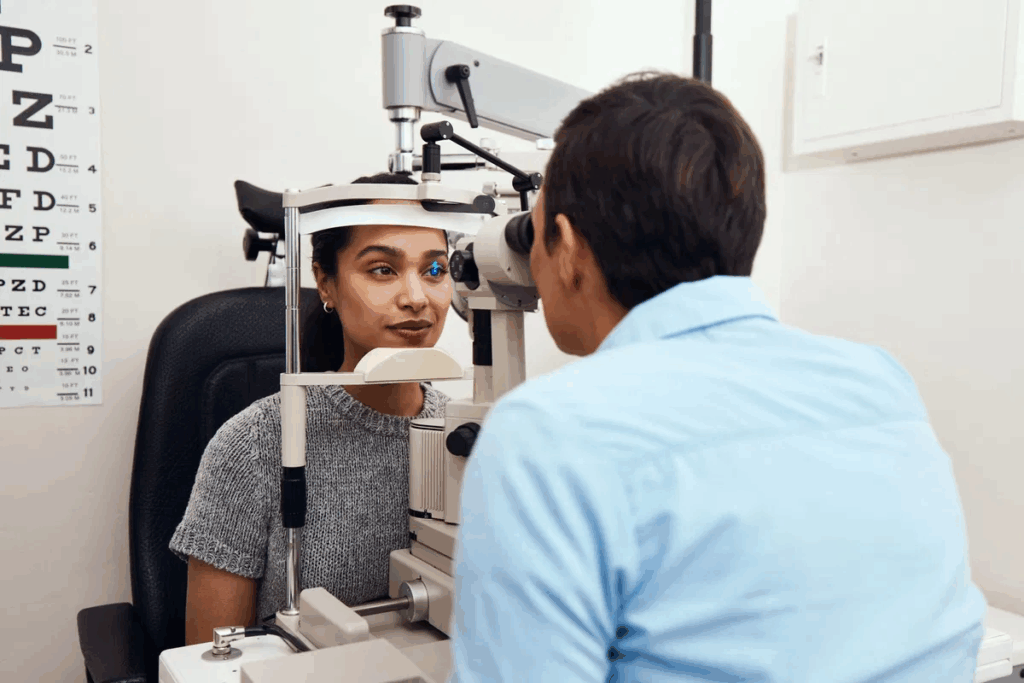
Eye exams are vital for good vision. The exam frequency changes with age and risk. Under 40, see an eye doctor every 2-3 years. Between 40 and 54, go every 1-2 years. Over 55, go annually.
Those with eye disease history or diabetes might need more frequent checks. Early detection through regular exams can greatly improve treatment results for many eye conditions.
Assistive Technologies for Vision Impairment
For those with vision loss, assistive tech can greatly improve life. Tools like magnifying glasses, screen readers, and smart canes help. New tech, like artificial vision devices and smart glasses, can also enhance vision.
By living healthily, getting regular eye exams, and using assistive tech, we can manage and prevent many vision problems as we age. Taking proactive steps is essential for keeping our vision sharp.
Conclusion: Embracing Healthy Vision Aging
As we get older, our eyes change in ways that can affect our sight. It’s important to know the signs of aging eyes to keep our vision healthy. We talked about seven key signs, like presbyopia and cataracts, and how to deal with them.
By spotting these signs early and taking action, we can protect our eyes. Regular eye exams, a healthy diet, and a good lifestyle are key. We also talked about the role of assistive technologies and screening schedules for those with vision issues.
To age well and keep our vision sharp, we need to make lifestyle changes and take care of our eyes. Working with eye care experts helps us avoid vision problems. Together, we can keep our eyes healthy for many years.
FAQ
What are the common signs of aging eyes?
Signs of aging eyes include presbyopia, cataracts, and dry eyes. Other signs are reduced pupil size, floaters, flashes, glaucoma, and age-related macular degeneration.
How does presbyopia affect vision?
Presbyopia makes it hard to see close objects. It affects near vision.
What are the symptoms of cataracts?
Cataracts cause cloudy or blurry vision. They can also lead to double vision and light sensitivity.
How can dry eyes be managed?
Dry eyes can be managed with artificial tears. Lifestyle changes and sometimes medical treatment also help.
How does reduced pupil size affect vision?
Smaller pupils make it harder to see in the dark. It affects night vision and dark adaptation.
What is the difference between normal age-related floaters and warning signs?
Normal floaters are usually harmless. But, a sudden increase in floaters or flashes of light can be serious.
What is glaucoma and how can it be detected?
Glaucoma causes peripheral vision loss. It’s detected through eye exams and screenings.
What is age-related macular degeneration (AMD)?
AMD causes vision loss. It’s when the macula deteriorates.
How can vision problems with age be prevented or managed?
Vision problems can be prevented or managed with lifestyle changes. Regular eye exams and assistive technologies also help.
What lifestyle factors can protect vision?
A healthy diet, regular exercise, and not smoking protect vision.
How often should I have my eyes screened?
Eye screenings should be done every 2-3 years. This depends on age and risk factors.
What assistive technologies are available for vision impairment?
Assistive technologies include magnifying glasses, screen readers, and smart glasses. They help those with vision impairment.
References
National Center for Biotechnology Information. Aging Eyes: Vision Problems and Signs. Retrieved from https://www.ncbi.nlm.nih.gov/pmc/articles/PMC6321384/