

Lesions on the vocal cords raise a big question: can they be cancerous? Laryngeal cancer, which affects the larynx (voice box), is a rare disease. It makes up about 1% of all cancers found each year worldwide. We aim to provide accurate info and care with compassion.
Laryngeal cancer can show up as a larynx tumor. Its symptoms include voice changes. These symptoms might mean cancer, so a doctor’s check is key.
We’re dedicated to top-notch healthcare, including for international patients. Knowing about vocal chord cancer risks is vital for those affected.
Key Takeaways
- Laryngeal cancer accounts for about 1% of all malignant diseases diagnosed worldwide each year.
- Symptoms of laryngeal cancer can include changes in voice and other related symptoms.
- A diagnosis of vocal cord lesions requires thorough examination to determine if they are cancerous.
- Understanding the risks and implications of vocal chord cancer is important for patients.
- Comprehensive support is available for international patients seeking treatment.
The Structure and Function of Vocal Cords

The larynx, where the vocal cords are found, is key for breathing, swallowing, and making sound. It’s a vital part of our respiratory system. It helps us communicate through speech and singing.
Anatomy of the Larynx
The larynx sits at the top of the trachea. It’s made of cartilages, muscles, and mucous membranes. It’s a passageway for air from the pharynx to the trachea.
The vocal cords, or vocal folds, are inside the larynx. They are bands of muscle tissue. A mucous membrane covers them, helping them vibrate and make sound when we speak or sing.
|
Component |
Function |
|---|---|
|
Cartilages |
Provide structural support |
|
Muscles |
Control vocal cord movement |
|
Mucous membranes |
Facilitate vibration and sound production |
How Sound Production Works
Sound is made when air goes through the vocal cords, making them vibrate. The tension and thickness of the vocal cords change the pitch and volume. This complex process needs the work of many muscles and nerves.
Mucosal Layers and Tissue Composition
The vocal cords have several layers, including the epithelium, lamina propria, and muscle. The mucosal layer is key for sound production, vibrating to make sound waves. Problems like vocal cord nodules or nodules on vocal cords can affect this, causing voice changes and other symptoms.
Common Types of Vocal Cord Lesions
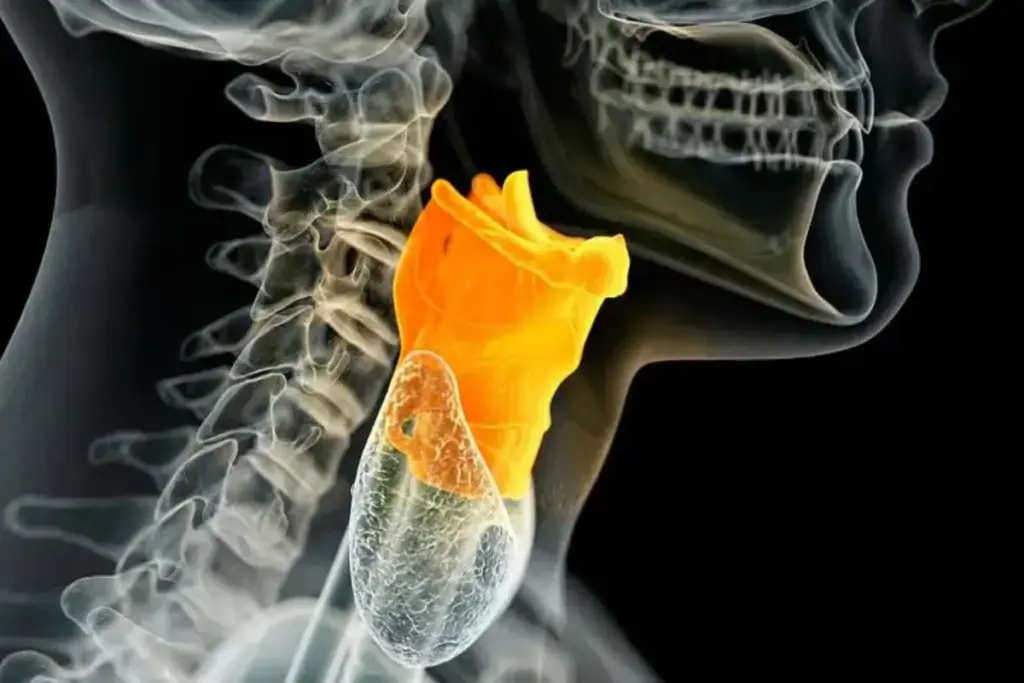
Vocal cord lesions come in many forms, each with its own traits and effects on voice health. These issues can greatly impact a person’s life, making it hard to speak clearly or do tasks that require a strong voice.
Nodules on Vocal Cords
Vocal cord nodules, also known as “singer’s nodes,” are growths caused by misuse or overuse of the voice. They usually appear on both vocal cords, at a specific spot. Symptoms include a hoarse voice, vocal tiredness, and a breathy or raspy sound. Early treatment with voice therapy can often help improve or reverse these symptoms.
Vocal Cord Polyps
A vocal cord polyp is a benign growth that can appear on one or both vocal cords. Unlike nodules, polyps are usually found on just one side and can be different sizes and shapes. They often happen due to vocal abuse or long-term irritation. Symptoms include a sudden change in voice, like hoarseness or a raspy sound. Treatment might be voice therapy or surgery, depending on the polyp.
Vocal Cord Cysts
Vocal cord cysts are fluid-filled or semi-solid lesions on the vocal cords. They can be present at birth or develop later due to vocal trauma or misuse. Symptoms include hoarseness, discomfort, or tiredness. Diagnosis usually involves laryngoscopy, and treatment might be surgery or voice therapy.
Granulomas and Other Lesions
Granulomas are inflammatory lesions on the vocal cords, often from irritation or injury, like from intubation. Other rare lesions include papillomas, caused by HPV, and contact ulcers from vocal cord trauma. Getting an accurate diagnosis and treatment plan is key to managing these conditions well.
Knowing about the different types of vocal cord lesions is vital for proper care and treatment. Each type has its own signs, symptoms, and treatment options. This shows why a detailed check-up by a healthcare expert is so important.
Causes and Risk Factors for Vocal Cord Lesions
Vocal cord lesions can come from many sources, like misuse of the voice and harmful environmental factors. Knowing these causes is key to preventing and treating them.
Vocal Misuse and Overuse
Using your voice too much or incorrectly can lead to lesions. This includes yelling, singing loudly, or talking too long. Prolonged strain on the vocal cords can cause nodules or polyps.
Environmental Irritants
Being around things like smoke, dust, and pollutants can also harm your vocal cords. These can cause long-term inflammation and irritation.
Medical Conditions That Affect Vocal Health
Some health issues, like GERD and allergies, can harm your voice. They can increase the chance of getting vocal cord lesions.
|
Risk Factor |
Description |
Impact on Vocal Cords |
|---|---|---|
|
Vocal Misuse |
Shouting, loud singing, or prolonged speaking |
Nodules, polyps |
|
Environmental Irritants |
Smoke, dust, pollutants |
Chronic inflammation, irritation |
|
GERD |
Stomach acid reflux |
Irritation, inflammation |
Smoking and drinking too much alcohol are also risks for laryngeal cancer. These factors can harm your vocal cords. Knowing these risks helps in preventing and catching serious problems early.
Recognizing Symptoms of Benign Vocal Cord Lesions
It’s important to know the signs of benign vocal cord lesions early. These include nodules, polyps, and cysts. They can really hurt your voice and your life.
Voice Changes and Hoarseness
Changes in your voice, like hoarseness or breathiness, are key signs. This happens because the lesions mess with how your vocal cords vibrate. “Hoarseness can be a persistent and frustrating symptom for individuals with vocal cord lesions,” as it makes talking hard.
Vocal Fatigue and Strain
Vocal fatigue and strain are common in people with these lesions. The lesions make your vocal cords work too hard. This leads to tiredness and strain, which is tough for those who use their voice a lot.
Pain or Discomfort During Phonation
Some people feel pain or discomfort when speaking or singing. This is because the lesions irritate or inflame the area. This symptom is serious and needs a doctor’s check-up to make sure it’s not something worse.
Spotting these symptoms early can help manage and treat them. If you notice changes in your voice, feel tired, or have pain, see a doctor.
The Science Behind Vocal Cord Lesions
Vocal cord lesions come from many factors like cell changes, inflammation, and tissue repair. Knowing how these happen helps us find better ways to stop and treat them.
Cellular Mechanisms of Lesion Formation
Lesions on the vocal cords are caused by genes, the environment, and how we use our voice. At the cell level, it’s about changes in the vocal cord’s outer layers and the tissue underneath. For more on why vocal cord lesions happen, check outNews-Medical.net.
Inflammatory Processes in the Vocal Folds
Inflammation is a big part of why vocal cord lesions form and grow. Things like smoke, acid reflux, and too much voice use can cause long-term inflammation. This inflammation damages the tissue and leads to lesions. It’s important to manage this inflammation to stop lesions from forming.
Tissue Remodeling and Healing
The vocal cords can heal and change shape after injury. But, if they don’t heal right, lesions can form. Knowing how the vocal cords heal can help us find ways to heal them better and stop lesions from coming back.
|
Process |
Description |
Impact on Vocal Cord Lesions |
|---|---|---|
|
Cellular Changes |
Alterations in mucosal layers and connective tissue |
Lesion formation and progression |
|
Inflammation |
Chronic irritation leading to tissue damage |
Development and exacerbation of lesions |
|
Tissue Remodeling |
Healing response to injury |
Potential for lesion recurrence if improper |
By understanding the science behind vocal cord lesions, we can improve how we prevent and treat them. This knowledge helps us give better care to our patients.
When to Suspect Cancerous Vocal Cord Lesions
Knowing the warning signs of cancerous vocal cord lesions can save lives. Many vocal cord lesions are not serious, but some signs may point to laryngeal cancer. It’s important to watch for these signs.
Warning Signs That Suggest Malignancy
Some symptoms may mean a vocal cord lesion is cancerous. These include persistent hoarseness, voice changes, trouble swallowing, and a neck lump. If you notice any of these, see a doctor right away.
Other signs that might mean cancer include:
- Persistent coughing or coughing up blood
- Ear pain, which can be from the laryngeal area
- Unexplained weight loss
- Difficulty breathing or swallowing
Risk Factors for Laryngeal Cancer
Some things increase the chance of getting laryngeal cancer. These include:
- Smoking and tobacco use
- Drinking too much alcohol
- Human papillomavirus (HPV) infection
- Being around certain chemicals and substances, like asbestos
Knowing these risk factors can help find and prevent cancer early.
Demographic Patterns and Statistics
Laryngeal cancer is more common in men and those over 60. It’s also linked to smoking and alcohol abuse.
|
Demographic |
Incidence Rate |
|---|---|
|
Men over 60 |
Higher incidence |
|
Smokers |
Increased risk |
|
Individuals with alcohol abuse history |
Higher risk |
Knowing these patterns and statistics helps spot people at higher risk. This allows for early action.
Understanding Vocal Cord Cancer
It’s important for both patients and doctors to know about vocal cord cancer. This knowledge helps in making treatment choices. Vocal cord cancer, or laryngeal carcinoma, includes many types of cancer in the larynx. We’ll look at the different types, the cell changes, and how cancer is staged.
Types of Laryngeal Carcinoma
Laryngeal squamous cell carcinoma is the most common, making up about 95% of cases. Other types include verrucous carcinoma, spindle cell carcinoma, and basaloid squamous cell carcinoma. Each type has its own features that affect treatment.
Key Types of Laryngeal Carcinoma:
- Laryngeal Squamous Cell Carcinoma
- Verrucous Carcinoma
- Spindle Cell Carcinoma
- Basaloid Squamous Cell Carcinoma
Cellular Pathology of Cancerous Lesions
The changes in cells that lead to vocal cord cancer are complex. These changes cause abnormal cell growth and tumor formation. Knowing these changes is key to diagnosing and treating the cancer.
“The cellular alterations in laryngeal carcinoma are characterized by uncontrolled cell proliferation and genetic mutations, leading to tumor formation.”
Cancer Staging and Progression
Cancer staging is vital for knowing how far the cancer has spread. For laryngeal carcinoma, it looks at tumor size, lymph node involvement, and if the cancer has spread. Accurate staging helps choose the best treatment.
Staging Considerations:
- Tumor Size and Location
- Lymph Node Involvement
- Presence of Metastasis
Understanding vocal cord cancer, including its types, cell changes, and staging, helps patients and doctors make better treatment choices.
Diagnostic Procedures for Evaluating Vocal Cord Lesions
To find out what’s wrong with vocal cord lesions, we use a mix of looking and advanced tests. We have several ways to check and treat these issues.
Laryngoscopy and Stroboscopy Techniques
Laryngoscopy lets us see the vocal cords up close. There are two ways to do it: indirect and direct. Indirect uses a mirror, while direct uses a scope. Stroboscopy slows down the vocal cords with a strobe light to check how they move.
These methods help us spot problems like vocal cord nodules and vocal cord polyps. Stroboscopy lets us see how lesions affect the vocal cords’ vibration.
Biopsy Methods and Importance
If we think it might be cancer, we take a biopsy. This gets tissue for a detailed check. We use fine-needle aspiration and direct biopsy during laryngoscopy.
Advanced Imaging and Laboratory Tests
CT scans and MRI help us see how big the problem is and if it’s spreading. Blood tests also help check for other issues that might be causing the problem.
By using all these methods, we can find out what’s wrong and how to fix it. This is true for both harmless issues like nodules in the vocal cords and serious ones.
Treatment Approaches for Benign Vocal Cord Conditions
Managing benign vocal cord conditions is key to getting your voice back to normal. Treatment plans are made just for you, based on the type and size of the problem. They also consider your overall health and what you prefer.
Voice Therapy Protocols
Voice therapy is often the first step for issues like vocal nodules or polyps. It teaches you how to use your voice better, easing strain on your vocal cords. You’ll learn vocal exercises, breathing techniques, and how to keep your voice clean.
Lifestyle and Behavioral Modifications
Changing your lifestyle is important for managing vocal cord issues. You’ll be told to avoid using your voice too much and to stay hydrated. Quitting smoking and avoiding harmful chemicals is also key. Making these changes can help your symptoms and prevent them from coming back.
Minimally Invasive Surgical Options
If other treatments don’t work, surgery might be needed. Procedures like microlaryngoscopy remove lesions carefully, with less downtime and fewer risks. These surgeries are done by skilled laryngologists.
Using these treatments together, doctors can give you the best care for benign vocal cord issues. This approach helps improve your voice and quality of life.
Managing Cancerous Vocal Cord Lesions
Dealing with cancerous lesions on the vocal cords involves different treatments. Getting a diagnosis of vocal cord cancer can be scary. It’s important to look at all treatment options to find the best one.
Surgical Interventions for Vocal Cord Cancer
Surgery is often the first step in treating vocal cord cancer. It aims to remove the tumor and keep the voice working. Laser surgery and transoral robotic surgery (TORS) are new, less invasive methods. We choose these when they can help you heal faster and with less scarring.
Radiation Therapy Protocols
Radiation therapy is key for early-stage vocal cord cancer. It can be used alone or with surgery. Intensity-modulated radiation therapy (IMRT) targets the tumor precisely, protecting healthy tissues.
Chemotherapy and Targeted Treatments
Chemotherapy is used for more advanced cases or with radiation. Targeted therapy targets specific cancer traits. We weigh the benefits and risks of these treatments for each patient.
Emerging Therapeutic Approaches
New treatments for vocal cord cancer are being researched, like immunotherapy. Clinical trials test these new therapies. We suggest talking to your doctor about joining a trial.
In summary, treating cancerous vocal cord lesions needs a team effort. This includes surgery, radiation, chemotherapy, and new treatments. We work with patients to create a treatment plan that fits their needs.
Conclusion
Early detection and proper treatment of vocal cord lesions are key to stopping laryngeal cancer. We’ve talked about the different types of lesions, their causes, and symptoms. It’s also important to know the warning signs of cancer, like carcinoma of the larynx symptoms.
Vocal cord cancer, or laryngeal carcinoma, needs quick medical help. Knowing the risk factors and symptoms helps get the right care fast. By understanding the risks, people can keep their vocal health in check.
If you notice any unusual changes in your voice, see a doctor. Knowing about vocal cord lesions and their cancer risk can help with treatment. Always talk to a healthcare expert for the right diagnosis and care.
FAQ
What are the common symptoms of vocal cord lesions?
Symptoms include hoarseness, vocal fatigue, and strain. You might also feel pain or discomfort when speaking. These signs can mean you have a vocal cord lesion, which could be benign or cancerous.
Can vocal cord nodules be cancerous?
Usually, nodules are not cancer. They often come from misuse or overuse of the voice. But, it’s important to get a check-up to know for sure.
What are the risk factors for developing laryngeal cancer?
Smoking and drinking alcohol increase your risk. So does being around harmful chemicals and having GERD. Knowing these risks helps figure out if a lesion might be cancer.
How are vocal cord lesions diagnosed?
Doctors use laryngoscopy and stroboscopy to look at the vocal cords. They might take a biopsy to check for cancer cells. Imaging studies also help in diagnosing.
What are the treatment options for benign vocal cord lesions?
For benign lesions, voice therapy is often used. It helps improve how you use your voice. Lifestyle changes and surgery are also options to remove the lesion.
How is vocal cord cancer treated?
Treatment for cancer includes surgery to remove the tumor. Radiation and chemotherapy are also used. The treatment plan depends on the cancer’s stage and size.
Can vocal cord cancer be prevented?
While prevention isn’t always possible, you can lower your risk. Quitting smoking and drinking, managing GERD, and avoiding harmful substances help.
What is the importance of early detection of vocal cord cancer?
Finding cancer early greatly improves treatment chances and survival. Spotting symptoms early and getting checked can lead to quicker diagnosis and treatment.
Are vocal cord polyps cancerous?
Polyps are usually not cancerous. They can be caused by vocal abuse or irritants. But, a doctor’s check-up is needed to confirm what a lesion is.
How do vocal cord lesions affect voice production?
Lesions, whether benign or cancerous, can change how you speak. They affect the vibration and closure of the vocal cords. This can alter your voice’s quality, pitch, and volume.
Reference
The Lancet. Evidence-Based Medical Insight. Retrieved from https://www.thelancet.com/journals/lanonc/article/PIIS1470-2045(23)00123-4/fulltext



 Departments
 Related Videos
 Our Doctors
 News
News