Last Updated on November 17, 2025 by Ugurkan Demir
Iron deficiency is a big problem worldwide, affecting millions of people of all ages. It’s a main cause of anemia symptoms, which can really hurt your quality of life. At Liv Hospital, we know how important it is to tackle iron deficiency well.
Many patients ask, “what are you laughing at the deficient in iron?“—a question that reflects the need to understand the seriousness of this condition. We stick to the latest methods to diagnose and treat iron deficiency and related issues, ensuring our patients receive the best care possible.
By knowing the signs of iron deficiency and applying our healthcare expertise, we provide comprehensive care for those affected. Our goal is to offer top-notch, personalized healthcare, aiming for the best results for every patient.
Key Takeaways
- Iron deficiency is a significant global health issue affecting millions.
- The health care recommendations are crucial in treating iron deficiency.
- Understanding the signs of iron deficiency is key to providing effective care.
- Liv Hospital follows international standards and patient-centered care.
- Comprehensive care involves leveraging the latest diagnostic and treatment pathways.
Understanding Iron Deficiency and Its Global Impact

Iron is key for our bodies, and not having enough can affect us all over the world. It helps make hemoglobin, a protein in red blood cells that carries oxygen. Health experts say, “Iron is essential for the production of healthy red blood cells, which are vital for delivering oxygen to tissues and organs.” Research shows how important iron is for our red blood cells.
The Role of Iron in the Human Body
Iron is vital for making hemoglobin, which carries oxygen to our body’s tissues. Without enough iron, our body’s tissues and organs don’t get the oxygen they need. This can cause fatigue, weakness, and a weak immune system. Iron deficiency can significantly impair the body’s ability to transport oxygen, leading to various health complications.
Iron also helps in making hormones and keeping our skin, hair, and nails healthy. Getting enough iron is key for our overall health and well-being.
Prevalence of Iron Deficiency Worldwide
Iron deficiency is a big health problem worldwide, affecting people of all ages and backgrounds. Global health statistics show it’s one of the most common nutritional deficiencies. The World Health Organization recognizes iron deficiency as a major global health problem, highlighting the need for awareness and action.
Many factors contribute to iron deficiency, like diet, socioeconomic status, and medical conditions. In areas where iron-rich foods are scarce, the risk is higher. People with certain health issues, like chronic blood loss or malabsorption disorders, are also at risk.
Common Signs and Symptoms of Iron Deficiency

It’s important to know the signs of iron deficiency early. Iron deficiency can cause health problems, from mild to severe. Here are the common signs and symptoms of iron deficiency.
Fatigue and Weakness
Fatigue and weakness are common symptoms. Iron helps carry oxygen to cells. Without enough iron, you might feel tired and struggle with daily tasks.
Pale or Yellowish Skin
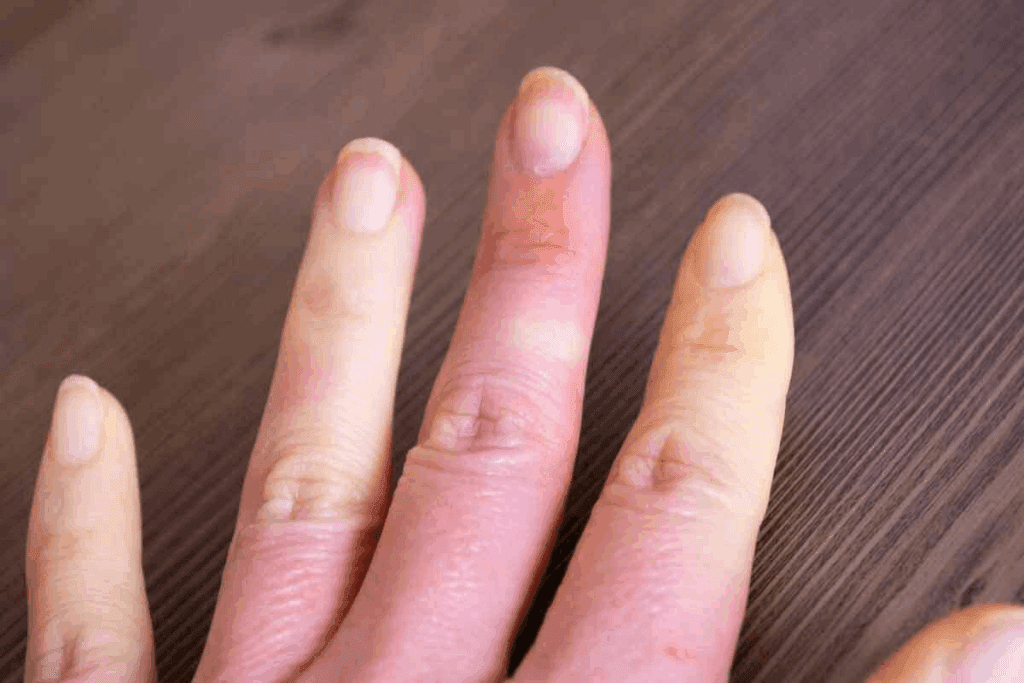
Pale or yellowish skin is another sign. Iron is needed to make hemoglobin, which gives blood its red color. Without enough, your skin might look pale or yellowish.
Shortness of Breath and Heart Palpitations
Iron deficiency can also cause shortness of breath and heart palpitations. Without enough iron, your body can’t make enough hemoglobin. This means less oxygen for your body, making your heart work harder and possibly leading to palpitations.
Here’s a table that summarizes the common signs and symptoms of iron deficiency:
| Symptom | Description |
| Fatigue and Weakness | Decrease in energy levels due to insufficient oxygen delivery to cells. |
| Pale or Yellowish Skin | Reduced hemoglobin levels cause the skin to appear pale or washed out. |
| Shortness of Breath and Heart Palpitations | Insufficient oxygen delivery leads to increased heart rate and breathing difficulties. |
What Are You Laughing At? The Deficient in Iron May Experience These Unusual Symptoms
Iron deficiency can show up in unexpected ways. It often leaves people wondering about their symptoms. Besides the usual signs like fatigue and pale skin, there are other signs that are less common. We will look at two of these: pica and restless leg syndrome.
Pica: Unusual Cravings for Non-Food Items
Pica is when you crave things that aren’t food, like dirt, clay, paper, or ice. It’s a big sign of iron deficiency, but why it happens isn’t fully known. Some think it’s the body trying to make up for missing nutrients.
People with pica might eat things they shouldn’t. This can cause stomach problems and infections. It’s important to talk to a doctor about these cravings to check for iron deficiency.
| Common Non-Food Items Craving in Pica | Potential Health Risks |
| Dirt or Clay | Gastrointestinal blockage or infection |
| Ice | Dental problems, gastrointestinal issues |
| Paper | Intestinal blockage, nutritional deficiencies |
Restless Leg Syndrome and Other Neurological Symptoms
Restless leg syndrome (RLS) is another sign of iron deficiency. It makes you feel like you must move your legs, often with uncomfortable feelings. Studies have found a link between RLS and low iron, showing that iron can help symptoms.
Other brain symptoms include headaches, dizziness, and trouble focusing. These can really affect your daily life. Finding and treating the cause is key.
Knowing about these symptoms helps us find and treat iron deficiency. If you’re showing any of these signs, see a doctor for help.
How Iron Deficiency Progresses to Anemia
It’s important to know how iron deficiency turns into anemia. Iron deficiency means the body doesn’t have enough iron. Iron is key for making hemoglobin, which carries oxygen in red blood cells.
The Stages of Iron Depletion
Iron depletion happens in stages. It starts with a drop in iron stores. At first, you might not feel any symptoms. But as it gets worse, health problems can grow.
There are three main stages of iron depletion:
- Stage 1: Iron stores are used up. Hemoglobin and red blood cell production isn’t affected much yet.
- Stage 2: Iron starts to affect red blood cell production. Hemoglobin levels begin to drop.
- Stage 3: Iron deficiency anemia sets in. Iron is so low that hemoglobin production is severely impaired.
When Iron Deficiency Becomes Iron Deficiency Anemia
Iron deficiency anemia happens when iron stores are too low. The body can’t make enough hemoglobin for red blood cells. Symptoms include fatigue, weakness, pale skin, and shortness of breath.
Several things can cause iron deficiency anemia. These include not getting enough iron in your diet, losing blood too much, or needing more iron because of pregnancy or growing fast.
| Stage | Description | Symptoms |
| 1 | Depletion of iron stores | Generally asymptomatic |
| 2 | Iron-deficient erythropoiesis | Mild fatigue, weakness |
| 3 | Iron deficiency anemia | Significant fatigue, weakness, pale skin, shortness of breath |
We stress the need to catch iron deficiency early. This can stop it from becoming anemia. Eating a balanced diet with enough iron and taking supplements when needed can help keep iron levels right.
Health Care Diagnostic Approach to Iron Deficiency
At Health care, diagnosing iron deficiency starts with a detailed check-up and physical exam. Our doctors are great at spotting the early signs of iron deficiency. These signs are often missed by others.
Initial Assessment and Physical Examination
When you come to health care, we first ask about your health history and diet. We also want to know about any symptoms you’re feeling. This helps us understand your health and find out if you might have iron deficiency.
Then, we do a physical exam to look for signs like pale skin or fatigue. Our doctors know how to spot these signs. They then decide what tests you need next.
Blood Tests for Iron Deficiency
Blood tests are key in finding iron deficiency. At health care, we do several tests to check your iron levels.
- Hemoglobin and Hematocrit Levels: These tests check your red blood cells and their size.
- Ferritin Levels: Ferritin shows how much iron you have stored. Low levels mean you might be iron deficient.
- Red Blood Cell Morphology: This test looks at your red blood cells’ shape and size. It can show if you have iron deficiency anemia.
| Blood Test | Purpose | Indicator of Iron Deficiency |
| Hemoglobin | Measures the amount of hemoglobin in blood | Low levels |
| Hematocrit | Measures the proportion of red blood cells | Low levels |
| Ferritin | Measures stored iron in the body | Low levels |
Additional Diagnostic Procedures
Sometimes, we need more tests to find why you have iron deficiency. These might include:
- Gastrointestinal Evaluation: To check for conditions like celiac disease or bleeding in the gut.
- Endoscopy: To look at the upper gut for bleeding.
- Colonoscopy: To check the lower gut for bleeding.
We don’t just look for iron deficiency. We also try to find out why you have it. Our detailed approach helps us give you the right treatment for your needs.
Understanding Your Iron-Related Blood Test Results
Interpreting iron-related blood tests is key. You need to know about hemoglobin and ferritin. These markers help show your iron levels.
Hemoglobin and Hematocrit Levels
Hemoglobin and hematocrit are important in your blood test. Hemoglobin carries oxygen in red blood cells. Hematocrit shows the red blood cell count in your blood. Low levels mean you might have iron deficiency.
Here’s what your hemoglobin and hematocrit levels could mean:
| Test | Normal Range | Indications of Low Levels |
| Hemoglobin | 13.8-17.2 g/dL (men), 12.1-15.1 g/dL (women) | Iron deficiency, anemia |
| Hematocrit | 40.7-50.3% (men), 36.1-44.3% (women) | Iron deficiency, anemia, blood loss |
Ferritin and Other Iron Markers
Ferritin stores iron in your body. It’s measured to check your iron levels. Other markers are serum iron and total iron-binding capacity (TIBC).
It’s important to understand these markers:
- Ferritin: Low levels mean you’re running low on iron.
- Serum Iron: Shows the iron in your blood.
- TIBC: Tells how well your blood can bind iron.
Healthcare professionals use these markers to find iron deficiency. They then decide the best treatment.
Health Care Treatment Recommendations for Iron Deficiency
The health care suggests treating iron deficiency with a mix of supplements and finding the cause. It’s not just about adding iron back into the body. It’s also about fixing the problem that led to the deficiency in the first place.
Oral Iron Supplementation Guidelines
Oral iron supplements are often the first step in treating iron deficiency. like ferrous sulfate or ferrous gluconate. These types are easier for the body to absorb.
- Take iron supplements on an empty stomach to improve absorption.
- Adding vitamin C to your diet can help your body absorb iron better.
- Some foods and medicines, like tea and milk, can block iron absorption.
It’s important to stick to the recommended dosage and be patient. It can take months for oral iron supplements to fully restore iron levels.
Intravenous Iron Therapy: When and Why
Intravenous iron therapy is sometimes needed. This is for those who can’t take oral supplements, have severe anemia, or have kidney disease.
| Condition | Treatment Approach |
| Mild to Moderate Iron Deficiency | Oral Iron Supplementation |
| Severe Iron Deficiency Anemia | Intravenous Iron Therapy |
| Chronic Kidney Disease | Intravenous Iron Therapy |
Intravenous iron therapy quickly fills up iron stores. It’s great for those with a lot of blood loss or who don’t respond to oral iron.
They consider how severe the iron deficiency is, the patient’s health, and their specific needs.
Dietary Approaches to Correcting Iron Deficiency
A well-planned diet is key to correcting iron deficiency and maintaining overall health. We recommend focusing on iron-rich foods and understanding how to optimize iron absorption through dietary choices.
Iron-Rich Foods Recommended
Incorporating iron-rich foods into your diet is the first step towards correcting iron deficiency.
- Lean red meat
- Poultry
- Fish
- Iron-fortified breakfast cereals
- Dark green leafy vegetables
- Dried beans and peas
These foods can be easily integrated into your daily meals to help boost your iron levels.
Optimizing Iron Absorption Through Diet
While consuming iron-rich foods is crucial, it’s equally important to understand how to enhance iron absorption. Vitamin C can significantly improve iron absorption, so we recommend consuming foods high in vitamin C (such as citrus fruits, bell peppers, and tomatoes) along with iron-rich foods.
| Food | Iron Content | Vitamin C Content |
| Lean Beef | 3 mg per 3 oz serving | 0 mg |
| Spinach | 4.9 mg per 1 cup cooked | 0 mg |
| Orange | 0.2 mg per 1 medium | 70 mg |
| Broccoli | 1 mg per 1 cup cooked | 100 mg |
On the other hand, certain foods and beverages, such as tea, coffee, and milk, can inhibit iron absorption. We advise limiting these items when consuming iron-rich foods.
By making informed dietary choices and being mindful of how different foods interact with iron absorption, you can effectively correct iron deficiency and improve your overall health.
High-Risk Groups for Iron Deficiency
This includes people based on age, gender, and health conditions. Iron deficiency can cause serious health problems if not treated.
Women of Reproductive Age
Women of childbearing age often lose iron due to menstruation. This loss can build up over time, especially if they don’t eat enough iron or have heavy periods.
We suggest that women in this age group eat iron-rich foods. They might also need supplements, but only with a doctor’s advice.
Children and Adolescents
Young people grow fast and need more iron. This is because their bodies are making more hemoglobin and other important proteins.
Parents should make sure kids get enough iron. They can do this by feeding them foods high in iron, like lean meats, beans, and fortified cereals.
Elderly Individuals
Older adults are also at risk for iron deficiency. This can be due to not eating enough iron, having chronic diseases, or taking certain medicines that block iron absorption.
It’s important for caregivers and doctors to check the iron levels of seniors. They should suggest changes in diet or supplements if needed.
The table below shows the main risk factors and what to do for these groups:
| High-Risk Group | Primary Risk Factors | Recommendations |
| Women of Reproductive Age | Menstrual blood loss | Consume iron-rich foods, consider supplements |
| Children and Adolescents | Rapid growth and development | Ensure adequate iron intake through diet |
| Elderly Individuals | Inadequate diet, chronic diseases, medication interference | Monitor iron status, dietary adjustments, supplements |
Knowing who is at risk and taking action can help prevent and treat iron deficiency.
Complications of Untreated Iron Deficiency
Untreated iron deficiency can cause many health problems. It can affect different parts of the body. If not treated, it can lead to serious issues.
Cardiovascular Complications
Iron deficiency can harm the heart. It makes the heart work harder to get oxygen to the body. This can cause heart palpitations and shortness of breath.
In severe cases, it can lead to heart failure. The heart has to pump more blood. This can cause cardiomyopathy and other heart problems. It’s important to treat iron deficiency early to avoid these issues.
Developmental Issues in Children
Iron deficiency in kids can affect their growth. Iron is key for brain development. Kids without enough iron may have delays in learning and moving.
Iron helps with many body functions. Kids without enough iron may act out or have trouble learning. It’s important to catch and treat iron deficiency early in kids.
Parents and caregivers should watch for signs of iron deficiency in kids. If they see any unusual signs, they should get medical help. Early treatment can help kids grow and develop normally.
Addressing Underlying Causes of Iron Deficiency
Understanding the root causes of iron deficiency is key to effective treatment. We must find and fix the problems that cause iron deficiency. This way, we can give better care.
Chronic Blood Loss Conditions
Chronic blood loss is a big reason for iron deficiency. It can happen due to gastrointestinal ulcers, colon cancer, and regular menstrual bleeding in women. We need to find out where the blood loss is coming from to treat iron deficiency well.
For example, ulcerative colitis or Crohn’s disease can cause ongoing blood loss. Also, colorectal cancer can lead to bleeding. Finding and treating these issues is crucial to fix the iron deficiency.
Malabsorption Disorders
Malabsorption disorders are another big cause of iron deficiency. Conditions like celiac disease, gastric bypass surgery, and some infections can stop the body from absorbing iron from food.
In celiac disease, the small intestine can’t absorb nutrients well, including iron. People with these disorders should work closely with their doctors. This helps manage their condition and improve iron absorption.
In conclusion, tackling the root causes of iron deficiency is vital for good management. By finding and treating issues like chronic blood loss and malabsorption, we can boost iron levels and improve health.
Conclusion: Managing Iron Deficiency for Optimal Health
Managing iron deficiency is key to avoiding health problems and staying healthy. Iron is essential for our bodies, and not having enough can cause fatigue and weakness. It can even lead to iron deficiency anemia, a serious condition.
Knowing the signs of iron deficiency and getting medical help is the first step. This helps manage the condition and improves health.
We suggest a complete plan to tackle iron deficiency. This includes changing your diet, taking iron supplements, and finding the root cause. Working with doctors and following Health care advice can help manage iron deficiency well.
By focusing on iron health, we can lower the risk of serious problems. Managing iron deficiency is crucial for good health and a better quality of life.
FAQ
What are the common signs and symptoms of iron deficiency?
Signs include fatigue, weakness, and pale skin. You might also feel short of breath or have heart palpitations. Pica and restless leg syndrome are unusual symptoms too.
How does the Health Care diagnose iron deficiency?
They then do blood tests for hemoglobin, hematocrit, and ferritin. More tests might follow if needed.
What are the stages of iron depletion, and how does it progress to iron deficiency anemia?
Iron depletion starts with low iron stores. It then moves to iron-deficient erythropoiesis. If not treated, it turns into iron deficiency anemia.
What are the treatment recommendations for iron deficiency according to the Health Care?
For those who can’t take oral supplements, intravenous iron therapy is recommended.
What dietary approaches can help correct iron deficiency?
Eating iron-rich foods helps. These include red meat, poultry, fish, beans, lentils, and fortified cereals. Also, diet can improve iron absorption.
Who are the high-risk groups for iron deficiency?
Women of childbearing age, children, teens, and the elderly are at high risk. They might lose iron due to menstruation, growth, or diet.
What are the complications of untreated iron deficiency?
Untreated iron deficiency can cause heart problems and developmental issues in kids. It’s crucial to diagnose and treat it early.
What are the underlying causes of iron deficiency?
Causes include chronic blood loss and malabsorption disorders. Gastrointestinal ulcers, menstrual disorders, celiac disease, and Crohn’s disease are examples.
How can I understand my iron-related blood test results?
Your blood test results show iron levels. They include hemoglobin, hematocrit, ferritin, and more. These help diagnose iron deficiency.
Can restless leg syndrome be a symptom of iron deficiency?
Yes, restless leg syndrome can be linked to iron deficiency. Treating the iron deficiency may help symptoms.
How does the Health Care recommend treating iron deficiency anemia?
This can be oral or intravenous, based on the patient’s needs and severity.
References:
- NHS. (2025). Iron deficiency anaemia – Symptoms, diagnosis and treatment. Retrieved from