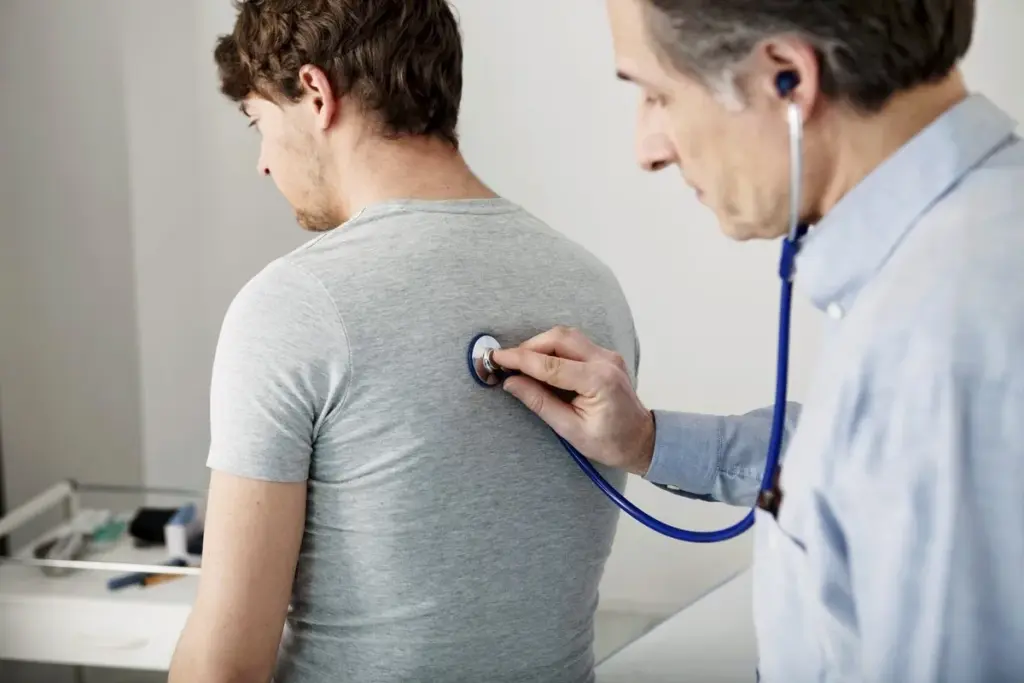
Nearly 300,000 people in the United States get diagnosed with pulmonary embolism every year. But many are misdiagnosed because of symptoms that look like other conditions, like pleurisy. It’s key to know the differences between these health issues to get the right treatment.
What can be mistaken for pleurisy or PE? Discover the scary look-alikes of chest pain and find amazing ways to get the right heart diagnosis.
Pulmonary embolism and pleurisy can both cause chest pain. This makes it important to tell them apart. At our place, we focus on spotting these differences to help our patients get the best care.
Key Takeaways
- Pulmonary embolism and pleurisy share similar symptoms, complicating diagnosis.
- Understanding the differences between these conditions is vital for accurate treatment.
- Differential diagnosis is critical in managing chest pain causes effectively.
- Recognizing pulmonary embolism symptoms can lead to timely medical intervention.
- Pleurisy can mimic pulmonary embolism, highlighting the need for precise diagnosis.
The Relationship Between Pulmonary Embolism and Pleurisy

Pulmonary embolism and pleurisy are two health issues that share similar symptoms. This makes it hard to tell them apart. Doctors need to know the details of each to make the right diagnosis and treatment plan.
Definition and Pathophysiology of Pulmonary Embolism
Pulmonary embolism happens when a blood clot blocks blood flow in the lungs. This blockage can cause symptoms like sudden breathing trouble, chest pain, and cough. It’s caused by factors like blood clotting too much and injury to the blood vessel walls.
The symptoms of pulmonary embolism can vary. Some people might not show any signs at all. Risk factors include recent surgery, not moving much, cancer, and genetic blood clotting problems. Doctors use imaging tests like CT scans to diagnose it.
Definition and Pathophysiology of Pleurisy
Pleurisy is when the pleura, the lung’s covering, gets inflamed. This can happen for many reasons, like infections or injuries. The main symptom is pleuritic chest pain, which gets worse when you breathe or cough.
The inflammation in pleurisy causes pain and can lead to fluid buildup. Doctors usually diagnose it based on symptoms and might use imaging tests like X-rays or ultrasound.
How These Conditions Can Present Similarily
Both pulmonary embolism and pleurisy can cause chest pain, making it hard to tell them apart. The pain from pulmonary embolism often comes with other symptoms like breathing trouble. Pleurisy pain, on the other hand, gets worse with breathing or coughing.
- Common symptoms include chest pain and breathing trouble.
- Differential diagnosis relies on clinical evaluation, imaging, and sometimes lab tests.
- Accurate diagnosis is key because each condition needs different treatment.
It’s important to understand how pulmonary embolism and pleurisy are related. By looking at symptoms, risk factors, and test results, doctors can make the right choices for treatment.
Classic Symptoms and Presentation
Pulmonary embolism and pleurisy have symptoms that are different but can overlap. It’s important to understand these symptoms well. This helps doctors make the right decisions and care for patients better.
Pulmonary Embolism Symptoms
The symptoms of pulmonary embolism can vary. Common ones include:
- Dyspnea (shortness of breath)
- Chest pain that may worsen with deep breathing
- Cough
- Rapid heart rate
- Lightheadedness or dizziness
The American Heart Association says symptoms can come on suddenly. They can be very serious.
“Prompt medical attention is key if you think you have pulmonary embolism.”
Pleuritis Symptoms
Pleurisy is when the pleura, the lining around the lungs, gets inflamed. Symptoms include:
- Sharp, stabbing chest pain that worsens with breathing or coughing
- Dyspnea
- Cough
- Fever
The pain from pleurisy is often sharp, stabbing, and can be very severe.
Red Flag Symptoms Requiring Immediate Attention
Some symptoms need immediate medical help. These are red flag symptoms. They include:
|
Symptom |
Description |
|---|---|
|
Severe Dyspnea |
Sudden onset shortness of breath |
|
Chest Pain |
Severe or worsening chest pain |
|
Hemoptysis |
Coughing up blood |
|
Syncope |
Fainting or near-fainting episodes |
Spotting these red flag symptoms is vital. It helps prevent serious problems.
Pneumonia vs Pleurisy: Key Differences
Pneumonia and pleurisy can seem similar at first, but they have key differences. These differences are important for doctors to know. Both affect the lungs and can cause serious problems if not treated right.
Clinical Presentation of Pneumonia
Pneumonia is when the lung gets inflamed, usually from an infection. People with pneumonia often have a cough, fever, and trouble breathing. They might cough up mucus or pus.
In serious cases, they might breathe too fast or use extra muscles to breathe.
How Pneumonia Can Cause Pleuritic Pain
Pneumonia can cause pleuritic pain if it affects the pleura. This is the membrane around the lungs. The pain feels sharp and gets worse when you breathe deeply or cough.
The pain usually happens in the area where the lung is affected.
Diagnostic Approaches to Differentiate
To tell pneumonia and pleurisy apart, doctors use several methods. They look at how you feel, do imaging tests, and run lab tests. Chest X-rays are key for spotting pneumonia in the lungs.
Pleurisy might show up as fluid in the pleura on imaging tests.
We summarize the key differences in the following table:
|
Characteristics |
Pneumonia |
Pleurisy |
|---|---|---|
|
Primary Involvement |
Lung parenchyma |
Pleura |
|
Common Symptoms |
Cough, fever, difficulty breathing |
Pleuritic chest pain, dyspnea |
|
Diagnostic Findings |
Lung infiltrates on chest X-ray |
Pleural effusion on imaging |
Costochondritis: A Common Chest Wall Mimicker
Understanding costochondritis is key to diagnosing and treating chest pain. It’s the inflammation of the costochondral junctions, where ribs meet the sternum. This condition can mimic pleurisy, making diagnosis tricky.
Understanding Costochondritis vs Pleurisy
Costochondritis and pleurisy cause chest pain but are different. Pleurisy is inflammation of the pleura, the lung lining. Costochondritis affects the costochondral junctions. Costochondritis pain is felt when pressing on the area, unlike pleuritic pain, which worsens with deep breathing or coughing.
To tell them apart, a detailed clinical exam is needed. The pain’s characteristics and the patient’s history are important clues.
Physical Examination Findings
In a physical exam for costochondritis, tenderness at the costochondral junction is key. This tenderness is usually localized and can be felt by applying pressure.
The table below shows the main differences in physical exam findings between costochondritis and pleurisy:
|
Characteristic |
Costochondritis |
Pleurisy |
|---|---|---|
|
Tenderness Location |
Costochondral junctions |
Over the pleura, often diffuse |
|
Pain on Palpation |
Yes, localized |
No, or minimal |
|
Pain with Deep Breathing |
Less likely |
Yes, often severe |
Treatment Approaches
Treatment for costochondritis includes pain and inflammation reduction. This can be done with NSAIDs, physical therapy, and avoiding activities that make it worse.
In severe cases, specific treatments like local injections with corticosteroids or anesthetics might be needed.
Pericarditis Chest Pain: Cardiac Inflammation
Understanding pericarditis is key because its symptoms can look like other heart problems. Pericarditis is when the sac around the heart gets inflamed.
Distinguishing Features of Pericarditis
Pericarditis causes sharp chest pain. This pain gets better when sitting up and leaning forward. But it gets worse when lying down. Other signs include:
- Positional pain: Pain that changes with position.
- Pleuritic characteristics: Pain that may be pleuritic in nature, worsening with deep breathing.
- Systemic symptoms: Fever, fatigue, and malaise may accompany the chest pain.
ECG Findings in Pericarditis vs Pulmonary Embolism
ECG findings are key in telling pericarditis apart from pulmonary embolism. In pericarditis, the ECG might show:
- ST-segment elevation: Often seen in multiple leads, not limited to the coronary artery distribution.
- PR segment depression: A specific finding that can be observed.
On the other hand, pulmonary embolism might show:
- S1Q3T3 pattern: A classic but not common finding.
- Incomplete or complete right bundle branch block: Can be seen due to strain on the right ventricle.
Management Considerations
Managing pericarditis involves treating the cause and easing symptoms. This might include:
- Nonsteroidal anti-inflammatory drugs (NSAIDs): To reduce inflammation and pain.
- Colchicine: To reduce the risk of recurrence.
- Corticosteroids: Used cautiously for specific cases, due to the risk of recurrence.
It’s vital to tell pericarditis apart from other chest pain causes, like pulmonary embolism. This helps in choosing the right treatment and improving patient care.
Pleural Effusion: Fluid Around the Lungs
Pleural effusion is when fluid builds up around the lungs. It’s a serious condition that needs quick diagnosis and treatment. Finding the cause can be hard because it’s linked to many diseases.
Types and Causes of Pleural Effusions
Pleural effusions are divided into two types: transudative and exudative. Transudative effusions happen when there’s an imbalance in fluid pressure, like in heart failure. Exudative effusions are caused by local issues, like infections or cancer, that make the pleural capillaries more permeable.
|
Type of Effusion |
Causes |
Characteristics |
|---|---|---|
|
Transudative |
Heart failure, cirrhosis, nephrotic syndrome |
Low protein content, clear fluid |
|
Exudative |
Infections, malignancies, pulmonary embolism |
High protein content, often cloudy or bloody |
Clinical Manifestations
The symptoms of pleural effusion depend on the cause and how much fluid there is. People often feel pleuritic pain, have trouble breathing, and cough. The pain is sharp and gets worse when you breathe deeply or cough.
Diagnostic Imaging and Thoracentesis
Imaging is key in spotting pleural effusions. Chest X-rays are usually the first step, showing a blunted costophrenic angle. Ultrasound and CT scans help figure out the effusion’s details and guide thoracentesis. Thoracentesis is when fluid is taken out for testing to find the cause.
We use imaging and thoracentesis to diagnose and understand pleural effusion. This helps us choose the right treatment.
Rib Fractures and Chest Wall Trauma
It’s important to understand how rib fractures and chest wall trauma affect patients. These injuries can cause symptoms that seem like other serious problems. So, a detailed check-up is key.
Traumatic vs Non-Traumatic Chest Pain
Chest pain can come from injuries or medical issues. Rib fractures and other chest injuries are examples of traumatic pain. Non-traumatic pain might be due to conditions like pulmonary embolism or pleurisy. Knowing the cause helps in treating it right.
Traumatic pain often comes after an injury. People might say they fell or had an accident. Non-traumatic pain doesn’t usually follow an injury and might be from a health problem.
Radiographic Findings
Chest X-rays and Computed Tomography (CT) scans are used to find rib fractures and chest injuries. X-rays are a first step, but CT scans show more details. They help see how bad the injury is.
When looking at X-rays or CT scans, doctors look for signs of fractures or other problems. They need to understand these findings to decide how to treat the patient.
Pain Management Approaches
Managing pain is a big part of treating rib fractures and chest injuries. Doctors use oral analgesics, nerve blocks, or other methods to help with pain. The goal is to control pain well without causing more harm.
Doctors also use multimodal analgesia. This means combining different pain treatments to get better results with fewer side effects. The type of treatment depends on the patient’s injury and health.
What Can Be Mistaken for Pleurisy: Muscle Strain and Nerve Pain
When trying to figure out if someone has pleurisy, it’s important to look at other possible causes. Muscle strain and nerve pain can seem like pleurisy because they share similar symptoms. We’ll look at what makes muscle strain and nerve pain different and how to tell them apart from pleurisy through physical checks.
Intercostal Muscle Strain Characteristics
Intercostal muscle strain happens when the muscles between the ribs get hurt. This can cause sharp chest pain that gets worse when you move, breathe deeply, or cough. The pain usually stays in one spot and might feel sore when touched.
Key characteristics of intercostal muscle strain include:
- Pain that worsens with movement or deep breathing
- Localized tenderness
- Possible history of recent physical activity or trauma
Intercostal Neuralgia and Shingles
Intercostal neuralgia is when the nerves between the ribs get inflamed or irritated, causing severe pain. Shingles, caused by the varicella-zoster virus, can also affect these nerves, leading to a painful rash. The pain from intercostal neuralgiaand shingles can be mistaken for pleurisy because of its location and intensity.
Important features of intercostal neuralgia and shingles include:
- Severe, sharp, or stabbing pain
- Possible presence of a rash in the case of shingles
- Pain that may be accompanied by other neurological symptoms
Physical Examination Clues
A detailed physical check is key to telling pleurisy apart from muscle strain and nerve pain. Certain signs can guide us to the right diagnosis.
|
Condition |
Physical Examination Findings |
|---|---|
|
Intercostal Muscle Strain |
Tenderness to palpation, pain with movement or deep breathing |
|
Intercostal Neuralgia |
Sharp pain, possible neurological symptoms, tenderness along the nerve path |
|
Pleurisy |
Pleuritic pain, possible pleural rub, pain with deep breathing |
By carefully looking at the pain’s characteristics and the results of the physical check, we can better tell these conditions apart. This helps us make an accurate diagnosis.
Lung Cancer Symptoms That Mimic Inflammatory Conditions
Lung cancer can show symptoms that look like other conditions, making it hard to catch early. It’s key to know how these symptoms can be mixed up with other illnesses. This helps in getting the right diagnosis.
Early vs Late Presentations of Lung Malignancies
Lung cancer can show up in different ways, based on the tumor’s stage and location. Early-stage lung cancer might have mild symptoms like cough or feeling tired. These can be confused with less serious issues.
On the other hand, late-stage lung cancer can have more serious signs. These include losing a lot of weight, chest pain, and trouble breathing.
Knowing how lung cancer symptoms change is key for catching it early. We’ll look at risk factors and warning signs that can help spot lung cancer early.
Risk Factors and Warning Signs
Some things increase the chance of getting lung cancer. These include smoking, being around harmful substances like asbestos, and having a family history of lung cancer. Smoking is the main cause of lung cancer and leads to most deaths from it.
- Smoking or being around secondhand smoke
- Being exposed to harmful substances like asbestos or radon
- Having a family history of lung cancer
- Having had radiation therapy to the chest before
Knowing these risk factors and the warning signs can help catch lung cancer early. Signs include a persistent cough, chest pain, or unexplained weight loss.
Diagnostic Workup and Imaging
Diagnosing lung cancer involves several steps. This includes imaging tests, lab work, and taking tissue samples. Computed Tomography (CT) scans are used to find lung nodules and see how far the disease has spread. Positron Emission Tomography (PET) scans help figure out if a nodule is cancerous.
A biopsy is needed for a sure diagnosis. It involves taking a lung tissue sample to check for cancer cells. Knowing how lung cancer is diagnosed is important for planning treatment.
Cardiac Conditions Confused with Pulmonary Embolism
Some heart conditions can look a lot like pulmonary embolism. This makes it hard for doctors to tell them apart. Conditions like acute coronary syndrome, heart failure getting worse, and valvular heart disease can have similar symptoms. It’s important for doctors to know about these look-alikes.
Acute Coronary Syndrome
Acute coronary syndrome (ACS) is when the heart’s blood flow suddenly drops. A big symptom of ACS is chest pain, which is also seen in pulmonary embolism. Spotting ACS early is key to save lives.
The pain from ACS feels like pressure or tightness in the chest. It might spread to the arm, neck, or jaw. While it’s similar to pulmonary embolism pain, ECG changes and high troponin levels can tell them apart.
Heart Failure Exacerbation
Heart failure getting worse can also show symptoms like those of pulmonary embolism. Heart failure happens when the heart can’t pump enough blood. It can get worse for many reasons, like not taking medicine or eating too much salt.
To diagnose worsening heart failure, doctors check if the patient has too much fluid and how well the heart is working. They use echocardiography for this. It’s important to look at the patient’s history, physical exam, and test results to tell it apart from pulmonary embolism.
Valvular Heart Disease
Valvular heart disease affects the heart valves. It can cause symptoms like chest pain, trouble breathing, and fainting. These symptoms can be mistaken for pulmonary embolism.
Doctors use echocardiography to diagnose valvular heart disease. This test shows how well the valves are working. Knowing about valvular heart disease is key when patients have symptoms that could be from pulmonary embolism.
|
Condition |
Key Symptoms |
Diagnostic Clues |
|---|---|---|
|
Acute Coronary Syndrome |
Chest pain, pressure, or tightness |
ECG changes, troponin elevation |
|
Heart Failure Exacerbation |
Dyspnea, chest discomfort, fluid overload |
Signs of fluid overload, echocardiography findings |
|
Valvular Heart Disease |
Chest pain, dyspnea, syncope |
Echocardiography findings, valve morphology |
Gastrointestinal Causes of Chest and Pleuritic Pain
It’s important to know how stomach problems can cause chest pain. These issues can make it hard to tell if the pain is from the heart or stomach. This is why figuring out the cause is so tricky.
GERD and Esophageal Spasm
Gastroesophageal reflux disease (GERD) happens when stomach acid goes back up into the esophagus. This can feel like heart pain. GERD symptoms include heartburn, regurgitation, and trouble swallowing. Esophageal spasm can also cause severe chest pain that might feel like it’s coming from the back, arms, or jaw.
A study in the Journal of Clinical Gastroenterology showed that GERD is a common reason for chest pain that’s not from the heart. This highlights the need to carefully check if it’s GERD or something else.
“The diagnosis of GERD-related chest pain requires a thorough approach. This includes checking symptoms, doing an endoscopy, and sometimes, using an ambulatory acid probe test.”
|
Condition |
Primary Symptoms |
Diagnostic Approaches |
|---|---|---|
|
GERD |
Heartburn, Regurgitation |
Endoscopy, Ambulatory acid probe tests |
|
Esophageal Spasm |
Severe chest pain, Dysphagia |
Manometry, Barium swallow |
Biliary Colic and Cholecystitis
Biliary colic and cholecystitis are problems with the gallbladder. They can cause pain in the upper belly that might feel like it’s in the chest or shoulder. Biliary colic is when a gallstone blocks the cystic duct. Cholecystitis is when the gallbladder gets inflamed.
Symptoms of biliary colic include sudden, severe pain in the right upper belly or middle area, often after eating fatty foods. Cholecystitis has similar pain, plus fever and high white blood cell count.
Subdiaphragmatic Irritation
Subdiaphragmatic irritation is when the area below the diaphragm gets irritated. This can cause pain in the shoulder or chest. It can happen for many reasons, like a subphrenic abscess or hemorrhage.
To diagnose it, doctors use imaging like ultrasound or CT scans. Treatment depends on what’s causing the problem. It could be antibiotics for an abscess or surgery for bleeding.
- Subdiaphragmatic irritation can cause referred pain to the shoulder or chest.
- Diagnosis is made through imaging studies like ultrasound or CT scans.
- Treatment varies based on the underlying cause.
Anxiety-Related Chest Pain and Hyperventilation
Anxiety can cause chest pain that feels like a heart attack. This can be very scary for people. It often happens because of hyperventilation, which is fast and deep breathing.
Panic Attack Presentation
A panic attack can make you feel sudden and severe chest pain. You might also feel your heart racing, sweat a lot, shake, and feel like you’re going to die. These attacks can be very scary and make people think they need to go to the emergency room.
During a panic attack, people often hyperventilate. This can make them feel dizzy, lightheaded, and even more scared.
Distinguishing Psychological from Organic Causes
It’s important to know if chest pain is from anxiety or a real heart problem. Clinical history and physical examinationhelp figure this out.
Signs that chest pain might be from anxiety include:
- Pain that is sharp, stabbing, or localized to a small area
- Pain that is worse when stressed or anxious
- Other symptoms of anxiety or panic
- No risk factors for heart disease
Management Strategies
Managing anxiety-related chest pain involves several steps:
- Cognitive-behavioral therapy (CBT): Helps with anxiety disorders.
- Relaxation techniques: Like deep breathing, muscle relaxation, and meditation.
- Pharmacological interventions: Anxiolytics and antidepressants when needed.
- Education and reassurance: Understanding symptoms and knowing they’re not deadly.
Using these methods can help manage anxiety-related chest pain. It can also improve the lives of those affected.
Diagnostic Approach to Differentiating Chest Pain Causes
Figuring out why someone has chest pain is key for doctors to help them. We need a detailed plan to find out what’s causing the pain.
History Taking and Physical Examination
Starting with a detailed medical history and physical check-up is essential. We look at the patient’s symptoms, past health, and risk factors. The pain’s location, how long it lasts, and how bad it is gives us important hints.
Key elements of history taking include:
- Onset and duration of chest pain
- Quality and severity of pain
- Associated symptoms such as dyspnea or palpitations
- Past medical history and risk factors
A careful physical exam can show signs of what might be causing the pain. This could be a pleural rub or a heart murmur.
Laboratory Tests
Labs are a big part of figuring out chest pain. We use different tests to find out what’s causing it and to check for serious problems.
Common laboratory tests include:
- Complete Blood Count (CBC)
- Cardiac biomarkers (troponin, CK-MB)
- D-dimer for suspected pulmonary embolism
- Liver and pancreatic enzymes
These tests help us narrow down what might be wrong and guide us to the next steps.
Imaging Studies
Imaging tests are often key in finding out why someone has chest pain. We pick the best test based on what the patient says and what we’ve found so far.
- Chest X-ray
- Computed Tomography (CT) scan
- Echocardiography
- Ventilation-perfusion scan
Each test gives us different info. This helps us spot things like a blood clot in the lungs, pneumonia, or heart problems.
Conclusion: Navigating the Differential Diagnosis
Understanding chest pain is complex. We’ve seen how pulmonary embolism and pleurisy can look similar. This makes it key to get a correct diagnosis.
Healthcare providers need to know the differences between these conditions and other chest pain causes. A good differential diagnosis looks at many possible reasons. This includes heart, lung, stomach, and muscle problems.
Doctors use tests and scans to find the exact cause. This way, they can give the right treatment. It helps patients get better and improves care quality.
Keeping up with new medical knowledge and technology is vital. It helps ensure patients get the best care for their needs.
FAQ
What is the difference between pleurisy and pneumonia?
Pleurisy is when the lining around the lungs gets inflamed. Pneumonia is an infection in the lung tissue. Both can cause chest pain and breathing trouble. But pneumonia usually brings fever, cough, and sputum.
Can costochondritis be mistaken for pleurisy?
Yes, costochondritis can look like pleurisy because of similar chest pain. But costochondritis pain gets worse when you press on it.
How can pulmonary embolism be differentiated from pericarditis?
You can tell them apart by looking at ECG results. Pericarditis shows ST-segment elevation all over. Pulmonary embolism might show signs of right heart strain.
What are the symptoms of pleural effusion?
Pleural effusion makes it hard to breathe, causes chest pain, and coughs. How bad it feels depends on how much fluid there is and why.
Can rib fractures be confused with pleurisy?
Yes, rib fractures can cause pain like pleurisy. But fractures usually come from trauma and hurt in one spot.
How can lung cancer be distinguished from inflammatory conditions?
Lung cancer symptoms can be like those of inflammation. But if symptoms keep getting worse, or if you smoke, you should get checked out more.
What gastrointestinal conditions can cause chest pain?
GERD, esophageal spasm, and other stomach issues can cause chest pain. It might seem like heart or lung problems.
Can anxiety cause chest pain similar to pulmonary embolism?
Yes, anxiety can make you feel chest pain. It’s important to figure out if it’s from your mind or something serious.
What is the diagnostic approach to differentiating chest pain causes?
Doctors use history, physical checks, tests, and scans to find out what’s causing chest pain. This helps tell apart things like pulmonary embolism and pleurisy.
What are the key differences between pneumonia and pleurisy?
Pneumonia affects the lung itself, often with fever, cough, and sputum. Pleurisy is inflammation of the pleura, causing sharp chest pain.
How can pericarditis be managed?
Doctors treat pericarditis with anti-inflammatory meds or sometimes steroids. Severe cases might need more treatment.
What are the risk factors for pulmonary embolism?
Pulmonary embolism risks include deep vein thrombosis, recent surgery, and cancer. Also, being immobile or having certain blood conditions can increase risk.
References
National Center for Biotechnology Information. Evidence-Based Medical Insight. Retrieved from https://www.ncbi.nlm.nih.gov/books/NBK558958/



 Departments
 Related Videos
 Our Doctors
 News
News