Ewing sarcoma is a rare and aggressive cancer that starts in the bones or the soft tissue around them. It mostly affects children and young adults but can occur at any age.
Many people wonder what causes Ewing sarcoma. While the exact cause isn’t fully understood, experts believe it’s linked to genetic mutations that lead to abnormal cell growth in the bone or surrounding tissue. These genetic changes are not inherited but happen randomly during a person’s life.
Ewing sarcoma in adults is less common and often presents a tougher challenge than in younger patients. Understanding what causes Ewing sarcoma, along with its symptoms and effects, helps doctors diagnose and treat it more effectively. At Liv Hospital, specialists combine compassionate care with advanced medical science to offer the best outcomes for patients.
Key Takeaways
- Ewing sarcoma is a rare cancer that affects bones and soft tissue.
- It is more common in children and young adults, but can occur at any age.
- Adults with Ewing sarcoma often have lower 5-year survival rates compared to children.
- The exact cause of Ewing sarcoma is unclear, but it is linked to genetic changes.
- Institutions like Liv Hospital provide compassionate and evidence-based care for Ewing sarcoma patients.
Understanding Ewing Sarcoma: A Rare and Aggressive Cancer
Ewing sarcoma is a rare cancer that starts in bones or soft tissues. It’s aggressive and often found in teens and young adults. Knowing about it helps us understand its impact.
Definition and Classification of Ewing Sarcoma
Ewing sarcoma is a type of cancer known as a primitive neuroectodermal tumor (PNET). It’s part of the Ewing family of tumors. It’s identified by a specific genetic change involving the EWSR1 gene.
The World Health Organization (WHO) calls Ewing sarcoma a malignant bone tumor. It’s divided based on where and how big the tumor is. Knowing this helps doctors plan the best treatment.
Historical Background and Discovery
James Ewing first described Ewing sarcoma in 1921. He was an American pathologist who recognized it as a unique tumor. His work helped us understand Ewing sarcoma’s pathology and clinical features.
Over time, we’ve learned more about Ewing sarcoma’s genetics and molecular mechanisms. This research has led to better diagnosis and treatment options for patients.
Overview of Ewing Sarcoma Age Distribution
Ewing sarcoma mainly affects young people, mostly between 10 and 20 years old. But it can happen at any age, including in adults and older adults.
| Age Group | Incidence Rate |
| 0-9 years | Low |
| 10-20 years | High |
| 21-30 years | Moderate |
| 31+ years | Low |
The age distribution of Ewing sarcoma shows it mostly affects the young. Knowing this helps doctors plan better treatments.
What Causes Ewing Sarcoma: Genetic Foundations
Ewing sarcoma starts with genetic changes, like the EWSR1-FLI1 fusion from a specific chromosomal swap. This swap happens between chromosomes 11 and 22. It’s a key sign of Ewing sarcoma and plays a big role in how it grows.
The EWSR1-FLI1 Chromosomal Translocation
The EWSR1 gene on chromosome 22 swaps with the FLI1 gene on chromosome 11. This creates the EWSR1-FLI1 fusion. About 85% of Ewing sarcoma cases have this fusion. It’s a key sign of the disease.
The EWSR1-FLI1 fusion acts like a bad transcription factor. It changes how genes work, affecting cell growth, death, and change. This change is key to understanding ewings sarcoma causes and finding new treatments.
Other Genetic Alterations in Ewing Sarcoma
While the EWSR1-FLI1 fusion is common, other changes have been found. These include fusions with ERG, ETV1, ETV4, and FEV. These show that Ewing sarcoma can be different in each person.
| Gene Fusion | Frequency | Clinical Significance |
| EWSR1-FLI1 | 85% | Diagnostic hallmark, therapeutic target |
| EWSR1-ERG | 5-10% | Variant translocation, similar prognosis |
| Other EWSR1 fusions | 5% | Rare variant translocations |
Why Ewing’s Sarcoma Is Not Hereditary
Ewing sarcoma is usually not passed down in families. The genetic changes, like the EWSR1-FLI1 fusion, happen in the tumor cells. They are not inherited.
Knowing Ewing sarcoma is not hereditary helps address patient worries. It’s important to understand what causes ewing’s sarcoma and how it relates to family history. Scientists are working to find out more about the mix of genetics and environment that leads to this disease.
Risk Factors and Epidemiology
The study of Ewing sarcoma shows how different groups are affected. Knowing this helps us find who is most at risk. It also guides us in making better treatments.
Demographic Patterns and Incidence Rates
Ewing sarcoma mainly hits young people. Most cases are found in those under 20. It’s also more common in males than females. People of European ancestry are more likely to get it.
The rate of new cases is about 2-3 per million in kids and teens. This makes it a rare cancer.
Absence of Environmental and Lifestyle Risk Factors
Ewing sarcoma doesn’t have clear causes like many cancers do. There’s no strong link to chemicals, radiation, or lifestyle choices. Diet, smoking, and exercise don’t seem to play a role in getting Ewing sarcoma.
Distinguishing Ewing Sarcoma from Other Bone Cancers
Ewing sarcoma is different from other bone cancers like osteosarcoma and chondrosarcoma. It has a unique genetic profile and clinical presentation. The EWSR1-FLI1 fusion is a key sign of Ewing sarcoma.
Knowing these differences is key for correct diagnosis and treatment.
Ewing Sarcoma in Adults: An Emerging Recognition
Adults can also get Ewing sarcoma, a cancer often linked to kids and teens. While most cases happen in the young, many adults are also diagnosed with this aggressive cancer.
Incidence Rates in Adult Populations
Ewing sarcoma in adults is rare, making up about 30% of all cases. It’s found in about 0.2-0.4 cases per million people each year. It’s important for doctors to know about it to catch it early.
The age when Ewing sarcoma strikes adults varies. Some studies show it peaks in late teens to early twenties. But, it can also happen in adults up to their 40s and beyond.
Unique Challenges in Adult Diagnosis
Diagnosing Ewing sarcoma in adults is tricky. Symptoms like pain and swelling can be mistaken for other, more common issues. This can lead to delays in finding out what’s wrong.
Also, Ewing sarcoma in adults can show up in unusual places. This makes it harder to spot. Not knowing about it can also cause doctors to miss it.
Ewing Sarcoma in Adults Over 40
Ewing sarcoma in adults over 40 is very rare. But, when it happens, it’s often more aggressive and has worse outcomes. This rarity can cause big delays in getting a diagnosis.
Doctors need to keep Ewing sarcoma in mind, even for older adults. This is true when they see unusual bone or soft tissue masses.
Ewing Sarcoma Symptoms in Adults
It’s important to know the symptoms of Ewing sarcoma in adults to get help early. This rare and aggressive cancer can show up in different parts of the body. This leads to various symptoms.
Primary Symptom Patterns
The main symptoms include persistent bone pain and swelling in the affected area. This pain might seem like a sports injury or arthritis at first. This can cause a delay in finding out what’s wrong.
Another symptom is a lump or mass under the skin. This lump can be firm and tender to the touch. It can vary in size and feel.
Ewing Sarcoma Lump Characteristics
The lump from Ewing sarcoma can be different sizes. It might also have redness and warmth around it. Sometimes, it’s big enough to hurt or make it hard to move.
Systemic Symptoms in Advanced Disease
In more advanced cases, Ewing sarcoma can cause systemic symptoms. These include fever, fatigue, and weight loss. These happen as the cancer grows and might spread to other parts of the body.
The table below lists common symptoms of Ewing sarcoma in adults:
| Symptom Category | Common Symptoms |
| Primary Symptoms | Bone pain, swelling, lump or mass |
| Lump Characteristics | Firm, tender, variable size, redness, warmth |
| Systemic Symptoms | Fever, fatigue, weight loss |
Common Locations and Presentations in Adults
It’s important to know where Ewing sarcoma often shows up in adults. This knowledge helps doctors catch it early. Ewing sarcoma can happen in any bone or soft tissue, but some spots are more common.
Hip Sarcoma and Pelvic Presentations
Ewing sarcoma often hits the pelvis and hip. This can cause a lot of trouble because of the tumor’s size and where it is. Hip sarcoma can make people feel pain and have trouble moving. It’s key to think of Ewing sarcoma when someone has hip or pelvic pain.
| Location | Common Symptoms | Diagnostic Challenges |
| Pelvis/Hip | Pain, limited mobility | Non-specific symptoms, large tumor size at diagnosis |
| Soft Tissue | Swelling, pain | Differential diagnosis from other soft tissue sarcomas |
| Extraskeletal | Varies by location | Diagnosis often delayed due to non-specific symptoms |
Soft Tissue Ewing Sarcoma in Adults
Ewing sarcoma isn’t just about bones; it can also show up in soft tissue. Soft tissue Ewing sarcoma might look like a swelling or a mass that hurts. It’s hard to tell it apart from other soft tissue sarcomas.
Extraskeletal Manifestations
Extraskeletal Ewing sarcoma happens outside of bones. It can pop up in places like the chest wall, belly, or pelvis. Symptoms depend on where it is and can include pain, swelling, or other specific issues.
In short, Ewing sarcoma in adults can appear in many places, with the pelvis and hip being common. Knowing where it shows up is key to catching it early and treating it right.
Diagnostic Approach for Adult Ewing Sarcoma
Diagnosing adult Ewing sarcoma is complex. It uses imaging techniques, biopsy procedures, and molecular analysis to confirm the disease.
Imaging Techniques and Their Significance
Imaging is key in diagnosing and staging Ewing sarcoma. X-ray, Computed Tomography (CT), Magnetic Resonance Imaging (MRI), and Positron Emission Tomography (PET) scans help. They show the tumor’s size, location, and if it has spread.
The right imaging depends on the symptoms and disease extent. MRI is great for soft tissue, CT for bone damage, and PET for metastasis.
Biopsy and Molecular Testing
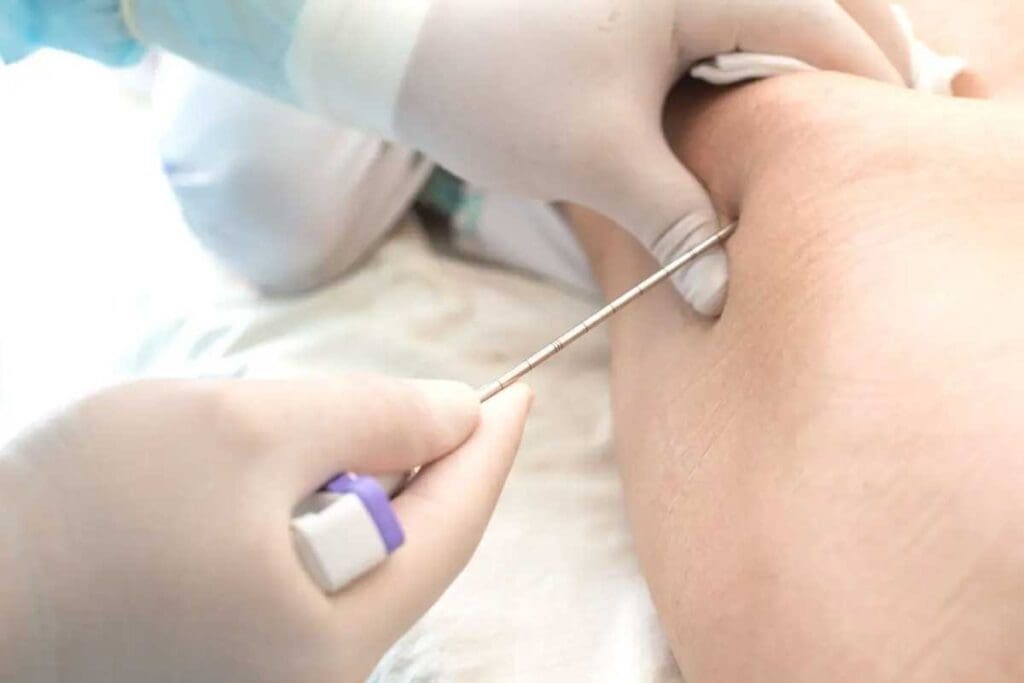
A biopsy is needed for a definitive Ewing sarcoma diagnosis. The biopsy is checked for specific markers and molecular testing confirms the diagnosis. This includes genetic tests like Fluorescence In Situ Hybridization (FISH) and Polymerase Chain Reaction (PCR).
Differential Diagnosis Considerations
Ewing sarcoma is rare and symptoms are not specific. It’s hard to diagnose and must be distinguished from other conditions. These include bone sarcomas, lymphoma, and neuroblastoma.
Getting the diagnosis right is key for treatment. A team of radiologists, pathologists, and oncologists is essential. They ensure a precise diagnosis and effective treatment plan.
Ewing’s Sarcoma Metastasis and Disease Progression
Ewing’s sarcoma metastasis is a key part of the disease’s growth. It needs quick and focused treatments. The cancer often spreads to the lungs, bones, and bone marrow.
Common Metastatic Sites
The lungs are the top place for Ewing’s sarcoma to spread. Bones are also common. Bone metastasis can cause a lot of pain and even break bones.
Common metastatic sites include:
- Lungs
- Bones
- Bone marrow
Knowing where the cancer spreads helps doctors plan better treatments.
Staging Systems and Prognostic Indicators
Staging Ewing’s sarcoma accurately is key for knowing the patient’s outlook and treatment. The main staging system looks at the tumor size, if it has spread, and its grade.
| Stage | Description | Prognosis |
| Localized | Tumor is confined to the primary site | Favorable |
| Metastatic | Tumor has spread to distant sites | Poor |
Things like if the cancer has spread, its size, and how it reacts to first treatments are important for predicting outcomes.
Detection of Metastatic Disease
Finding metastasis early is vital for better patient results. Scans like PET/CT are key for spotting where the cancer has spread.
Keeping a close eye on patients and using advanced scans helps catch metastasis early. This lets doctors change treatments to help more.
Treatment Strategies for Adult Ewing Sarcoma
Adults with Ewing sarcoma need a mix of treatments. This approach is tailored to each patient’s needs.
Multimodal Approach to Treatment
The treatment for adults with Ewing sarcoma combines surgery, radiation therapy, and chemotherapy. This mix helps improve survival chances and lower the chance of the cancer coming back.
Surgical Interventions
Surgery is key for treating Ewing sarcoma, mainly for tumors that are in one place. The goal is to take out the tumor and some healthy tissue around it.
- Surgery is often paired with other treatments.
- The surgery type depends on the tumor’s size and where it is.
- When possible, doctors try to save the limb.
Radiation Therapy Applications
Radiation therapy is also a big part of treating Ewing sarcoma. It can be used before surgery to make the tumor smaller or after to kill any cancer cells left behind.
New radiation methods, like IMRT, aim the treatment right at the tumor. This helps protect the healthy tissue around it.
Chemotherapy Protocols Specific to Adults
Chemotherapy for adults with Ewing sarcoma is special. It’s used along with surgery and/or radiation therapy.
The chemotherapy plan depends on the patient’s health and the tumor’s details.
Conclusion: Ewing’s Sarcoma Survival and Future Directions
Ewing sarcoma in adults is rare and aggressive. It’s important to understand its genetic roots and risk factors. This knowledge helps improve how we diagnose and treat it.
Adults with Ewing sarcoma face lower survival rates than children. We need to develop treatments that fit each patient’s needs. Research into the disease’s biology and new therapies could improve survival chances.
New studies aim to find better chemotherapy and explore immunotherapy. Advances in testing and imaging will help diagnose and stage the disease more accurately.
As we learn more about Ewing sarcoma, we must keep looking for new treatments. Our goal is to improve survival rates and quality of life for those affected. This way, we can make a real difference for adults with this disease.
FAQ
What is Ewing sarcoma?
Ewing sarcoma is a rare and aggressive cancer. It affects bones or the soft tissue around them. It’s part of the Ewing sarcoma family of tumors (ESFT).
What are the causes of Ewing sarcoma?
It’s caused by a genetic mutation. This mutation involves the EWSR1 gene. It’s not passed down through families.
What are the symptoms of Ewing sarcoma in adults?
Adults may feel pain, swelling, or a lump in bones or soft tissue. They might also have fever and weight loss in later stages.
How is Ewing sarcoma diagnosed?
Doctors use X-rays, CT scans, and MRI to start. Then, they do a biopsy and molecular tests to confirm the genetic mutation.
What are the common locations for Ewing sarcoma in adults?
It can happen in any bone but often affects the pelvis, chest wall, and long bones. It can also be in soft tissues.
How does Ewing sarcoma metastasis occur?
It can spread to other parts like the lungs, bones, and bone marrow. This spread affects the prognosis.
What is the treatment for Ewing sarcoma in adults?
Treatment includes surgery, radiation, and chemotherapy. It’s tailored to each patient’s needs and disease stage.
What is the survival rate for adults with Ewing sarcoma?
Survival rates vary based on the disease stage, location, and treatment response. Adults generally have a poorer prognosis than children.
Can Ewing sarcoma be treated in adults over 40?
Yes, adults over 40 can be treated. The treatment might need to be adjusted due to age-related factors.
Is Ewing sarcoma hereditary?
No, it’s not hereditary. It’s caused by a sporadic genetic mutation.
What is the role of chemotherapy in treating Ewing sarcoma?
Chemotherapy is key in treating Ewing sarcoma. It’s often used with surgery and/or radiation therapy.
How does Ewing sarcoma differ from other bone cancers?
Ewing sarcoma is different from other bone cancers like osteosarcoma. It has a unique genetic mutation and clinical presentation.
References
- Medical News Today. (2024). Causes of Ewing sarcoma: Genetics, risk factors, and FAQs.https://www.medicalnewstoday.com/articles/ewings-sarcoma-causes