
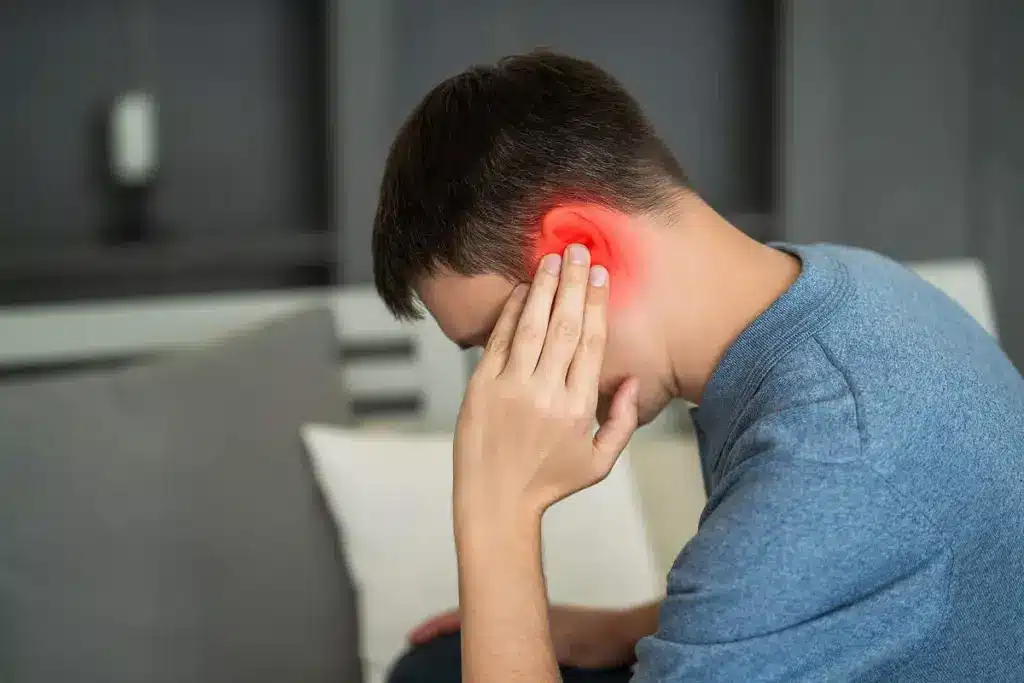
Are you feeling pain behind your ear that won’t go away? It could be a sharp pain right behind your ear, soreness that hurts when you touch it, or severe discomfort below your earlobe. Knowing what’s causing it is the first step to feeling better.
Pain behind the ear can come from many things, like infections, nerve irritation, jaw problems, or tension headaches. Studies show that a lot of people, including kids, have ear issues. About 83% of children have had a middle ear infection by the time they’re three. Knowing the causes and symptoms is key to getting the right treatment. For more info, check out Verywell Health.
Key Takeaways
- Ear infections are a common cause of pain behind the ear.
- TMJ disorders can lead to ear pain and discomfort.
- Nerve irritation and tension headaches are also possible causes.
- Understanding the underlying cause is vital for effective treatment.
- There are many treatment options, including medicine and therapy.
Understanding Otalgia and Its Causes
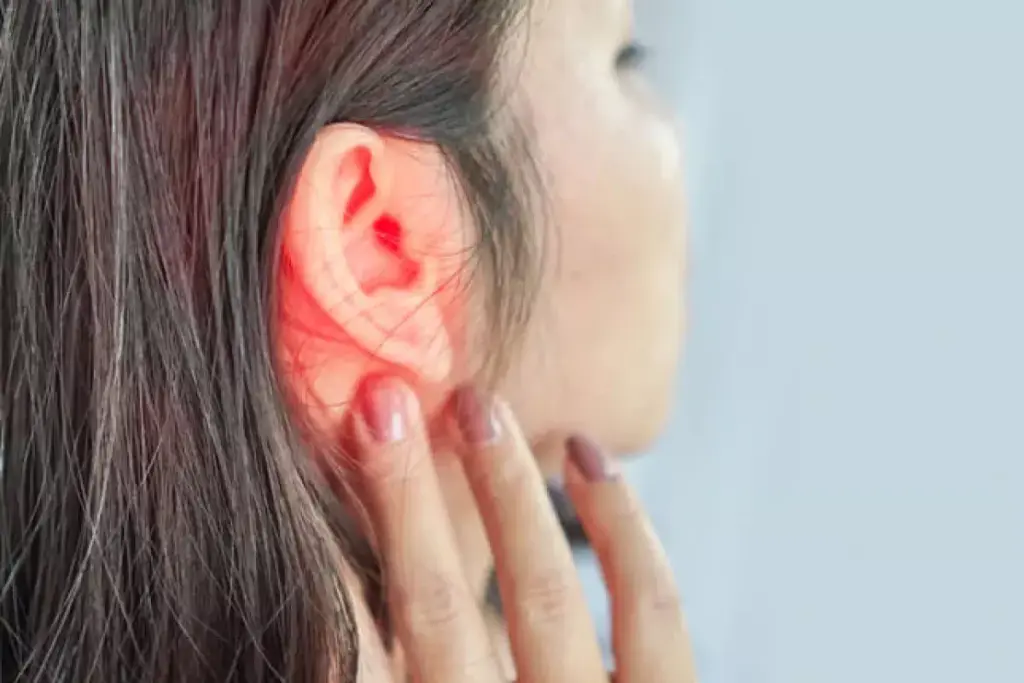
Otalgia is a term for ear pain, which can feel sharp, aching, or throbbing. It can really affect how well you live your life. It’s not a disease itself but a sign of many possible problems, making it hard to figure out and treat.
What is Otalgia?
Otalgia is pain in the ear, which can happen all the time or just sometimes. It might feel dull and aching, sharp and shooting, or even throbbing. Medical studies say it can be either primary or secondary, depending on where it comes from.
Types of Pain Sensations
The pain from otalgia can feel different for everyone. Here are some common feelings:
- Sharp or Stabbing Pain: This is often from infections or swelling.
- Dull and Aching: This might mean you have a long-term problem or pain that’s coming from somewhere else.
- Throbbing: This usually means there’s an infection or swelling.
Knowing these different feelings of pain is key to finding out why you have otalgia. The table below shows the types of pain and what they might mean:
| Type of Pain | Possible Causes |
| Sharp/Stabbing | Infections, Inflammation |
| Dull/Aching | Chronic Conditions, Referred Pain |
| Throbbing | Infectious/Inflammatory Processes |
By knowing the details of otalgia, doctors can guess what might be causing it and plan the right treatment. If you have ear pain, it’s important to see a doctor. This is true if the pain doesn’t go away or if you have other symptoms that worry you.
Common Causes of Behind Ear Pain

Knowing why pain occurs behind the ear is key to feeling better. We’ll look at main reasons like infections, TMJ disorders, and nerve issues. We’ll also talk about pain under the earlobe.
Primary Causes of Ear Pain
Ear pain can stem from several sources. Ear infections like otitis media and otitis externa are common culprits. Otitis media is an infection in the middle ear, often caused by bacteria or viruses. Otitis externa, or swimmer’s ear, affects the outer ear canal.
- Ear infections can cause severe pain behind the ear, along with fever and hearing loss.
- TMJ disorders can lead to pain behind the ear because of the joint’s close location to the ear.
- Nerve irritation, like occipital neuralgia, can cause sharp, stabbing pain in the area behind the ear.
Referred Pain Sources
Sometimes, pain behind the ear comes from other areas. TMJ disorders are a common source, as the joint is near the ear. Dental problems, like tooth abscesses or impacted molars, can also cause pain in this area.
Pain Under the Earlobe: Specific Causes
Pain under the earlobe can be worrying. This pain might be linked to TMJ dysfunction or dental issues. It could also signal a more serious problem that needs medical attention.
It’s vital to find out why you’re experiencing pain under the earlobe. A healthcare professional can help with a thorough check-up and diagnosis.
Diagnosing and Treating Behind Ear Pain
Pain behind the ear can have many causes. Finding the right cause needs a detailed check-up. We’ll show you when to get medical help, how doctors diagnose, and what treatments are available.
When to Seek Medical Attention
If your ear pain is bad, lasts a long time, or comes with fever or hearing loss, see a doctor fast. These signs might mean you have a serious issue. Also, if you have trouble swallowing or pain when you turn your head, get medical advice.
Diagnostic Approaches
Doctors use many ways to find out why you have ear pain. They might:
- Do a physical check to look for signs of infection or swelling
- Use X-rays, CT scans, or MRIs to see inside your body
- Run lab tests to find infections or other problems
Treatment Options
What you need to treat ear pain depends on why you have it. You might get:
- Medications like antibiotics for infections or painkillers for pain
- Lifestyle changes to ease strain on your neck and ear
- Surgery if your pain needs a surgical fix
Knowing why you have ear pain is the first step to getting the right treatment. We’re here to help you through every step of your care.
Prevention and Long-Term Management of Ear Pain
To prevent ear pain, we need to take action. Keeping your ears clean and avoiding loud sounds is key. Also, managing TMJ disorders can help reduce ear pain risks.
Good ear care means cleaning regularly and avoiding sharp objects. If you have pain behind or under your earlobe, watch your posture. Taking breaks if you sit a lot can help.
Managing ear pain long-term might mean changing your lifestyle. Stress reduction and exercise are good starts. These habits can help manage ear pain and boost your health.
If ear pain doesn’t go away or gets worse, see a doctor. A healthcare team can help you create a plan to manage ear pain. This way, you can prevent future problems.
FAQ
What are the common causes of pain behind the ear?
Common causes include ear infections, mastoiditis, TMJ disorders, sinus infections, or dental issues.
What is otalgia, and what are its symptoms?
Otalgia is ear pain, and symptoms include sharp, dull, or throbbing pain, sometimes with swelling, fever, or hearing changes.
How is ear pain diagnosed?
Diagnosis involves a physical exam, medical history, and sometimes imaging or hearing tests to find the underlying cause.
What are the treatment options for pain behind the ear?
Treatment may include pain relievers, antibiotics for infections, warm compresses, or dental or TMJ therapy depending on the cause.
How can I prevent ear pain?
Prevent ear pain by maintaining ear hygiene, treating infections promptly, avoiding loud noise, and managing allergies or TMJ issues.
When should I seek medical attention for ear pain?
Seek care if pain is severe, persistent, accompanied by fever, hearing loss, discharge, or swelling behind the ear.
Can TMJ disorders cause pain behind the ear?
Yes, TMJ disorders can cause referred pain behind the ear due to jaw joint inflammation or misalignment.
What is referred pain, and how does it relate to ear pain?
Referred pain occurs when pain from another area, like the jaw, throat, or teeth, is felt in the ear.
How can I manage ear pain in the long term?
Long-term management includes treating underlying causes, using proper ear care, managing TMJ or sinus issues, and avoiding triggers.
References
National Center for Biotechnology Information. Evidence-Based Medical Insight. Retrieved from https://pmc.ncbi.nlm.nih.gov/articles/PMC3030044/