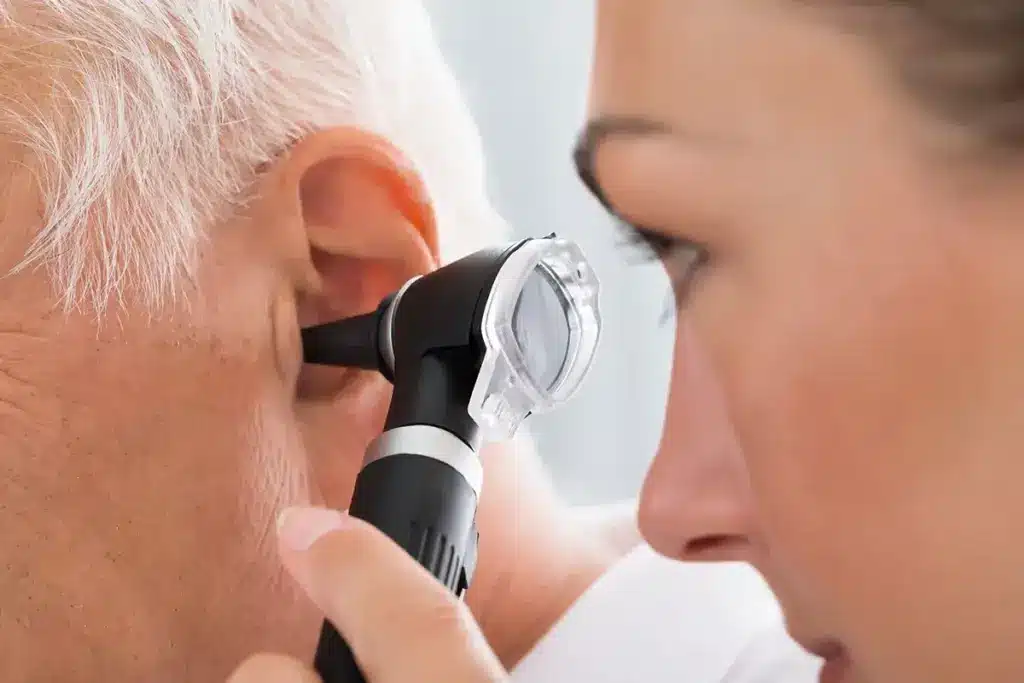
Sudden hearing loss in one ear is called sudden sensorineural hearing loss (SSHL). It’s a quick loss of hearing that usually happens in one ear. It can start right away or over a few days. At Liv Hospital, we say it’s a medical emergency that needs quick action.
Time is very important when you have sudden deafness. You have about two weeks to get the right treatment.
In the United States, about 66,000 cases of SSHL happen every year. This shows how important it is to know what causes it and get medical help fast. We want everyone to know the signs and act quickly to help their hearing.
Key Takeaways
- Sudden sensorineural hearing loss (SSHL) is a medical emergency requiring immediate attention.
- SSHL typically affects one ear and develops over a few days or less.
- Approximately 66,000 cases are reported annually in the United States.
- Prompt medical care is critical for effective treatment and potentially restoring hearing.
- Recognizing the symptoms of SSHL is key for timely action.
Understanding Sudden Sensorineural Hearing Loss (SSHL)

SSHL is a sudden and unexpected loss of hearing in one ear. It needs quick medical help. Unlike other hearing losses, SSHL happens very fast.
Definition and Clinical Presentation
SSHL is when hearing drops by 30 decibels or more in three hours. It can also bring dizziness, vertigo, or tinnitus. This makes its symptoms complex and varied.
The sudden loss of hearing is very scary. That’s why getting medical help right away is so important.
Prevalence and Demographics
SSHL happens to about 1 in 5,000 people each year. It usually hits adults in their 40s to early 60s. But it can happen to anyone at any age.
Studies say SSHL is more common than we thought. Its numbers might even be going up. We need to think about this when looking at its health impact.
Sudden Deafness in One Ear: Primary Causes
[Add image here]
Sudden deafness in one ear, also known as sudden sensorineural hearing loss (SSHL), has many causes. Knowing these causes helps doctors diagnose and treat it better. We’ll look at the main reasons, like viral infections, autoimmune inner ear disease, and vascular occlusion. We’ll also cover cases where the cause is unknown.
Viral Infections and Herpes Simplex
Viral infections are a big reason for SSHL. Viruses like herpes simplex can cause it. These viruses can lead to inflammation and damage in the inner ear, causing sudden hearing loss.
Studies show that antiviral meds can help treat SSHL caused by viruses. But, we need more research to fully understand this link.
Autoimmune Inner Ear Disease
Autoimmune inner ear disease is another cause of SSHL. Here, the immune system attacks the inner ear by mistake. Corticosteroids are often used to treat it.
It’s hard to diagnose autoimmune inner ear disease because its symptoms are similar to other conditions. A detailed medical check-up is needed to find the real cause of SSHL.
Vascular Occlusion and Blood Flow Issues
Vascular occlusion, or blockage of blood vessels, can also cause SSHL. The inner ear needs blood to work right. If blood flow stops, it can cause sudden hearing loss.
Vascular occlusion can happen for many reasons, like blood clots or atherosclerosis. Treatment might include meds to improve blood flow or fix the underlying vascular issues.
Idiopathic Cases: When the Cause Remains Unknown
About 90% of SSHL cases have no known cause. These are called idiopathic SSHL. Scientists are working hard to find out why.
In some cases, SSHL might be caused by more than one thing. This makes it hard to pinpoint a single cause. More research is needed to find effective treatments for idiopathic SSHL.
In summary, sudden deafness in one ear can be caused by many things, like viral infections, autoimmune inner ear disease, and vascular occlusion. In many cases, we don’t know the exact cause. Knowing these causes is key to finding good treatments.
Diagnosis and the Critical Treatment Window
Diagnosing SSHL is a medical emergency that needs quick action. Sudden hearing loss can be a sign of many health issues. Getting a diagnosis fast is key to treating it well.
Recognizing the Warning Signs
It’s important to know the signs of SSHL to get help fast. Symptoms include sudden hearing loss in one ear, feeling like your ear is full, or constant ringing in your ear. If you notice these, you should see a doctor right away.
Warning signs to watch out for:
- Sudden hearing loss in one ear
- Ear fullness or pressure
- Tinnitus that persists
Diagnostic Approaches
Doctors use many steps to diagnose SSHL. They will ask about your health, do a physical check, and run hearing tests. Sometimes, they might also do an MRI to check for other reasons for hearing loss.
| Diagnostic Test | Purpose |
| Audiological Evaluation | Assess the extent of hearing loss |
| MRI | Rule out other causes of hearing loss |
| Medical History | Identify possible underlying conditions |
Why Immediate Medical Attention Is Crucial
Getting medical help right away is very important for SSHL. If you don’t get treatment quickly, you might lose your hearing forever. The best time to treat SSHL is within 10 to 14 days. Getting help during this time can help a lot in getting your hearing back.
Prompt action can make a significant difference in the treatment outcome.
Conclusion
Sudden sensorineural hearing loss (SSHL) is a serious issue that needs quick action. The success of treatment depends on how much hearing is lost, the cause, and how fast you get medical help. If you suddenly lose your hearing, feel ear fullness, or have tinnitus, you must see a doctor right away.
At Midwest Medical Specialists, we know how critical it is to treat SSHL quickly. We’re dedicated to top-notch healthcare and support for patients from around the world. Check out our blog to learn about sudden hearing loss causes, symptoms, and treatments.
SSHL can happen for many reasons, like viral infections, blood flow issues, or unknown causes. Getting a quick diagnosis and starting treatment early can greatly help your recovery. We urge anyone with sudden hearing loss to get medical help fast to avoid permanent damage.
FAQ
What is sudden sensorineural hearing loss (SSHL)?
SSHL is a rapid, unexplained loss of hearing—usually in one ear—that develops within hours to a few days.
How common is SSHL?
SSHL affects about 5–20 people per 100,000 each year, though many cases may go unreported.
What are the primary causes of sudden deafness in one ear?
Causes include viral infections, blood flow problems, autoimmune conditions, inner ear injury, or are sometimes idiopathic.
What are the symptoms associated with SSHL?
Symptoms include sudden hearing loss, ear fullness, ringing in the ear (tinnitus), dizziness, or vertigo.
Why is prompt medical attention critical for SSHL?
Early treatment greatly improves the chance of hearing recovery and reduces the risk of permanent loss.
How is SSHL diagnosed?
Diagnosis is made through urgent hearing tests (audiometry) and clinical evaluation to rule out other causes.
Can SSHL be treated?
Yes, SSHL is often treated with corticosteroids given orally or via intratympanic injection.
What happens if SSHL is left untreated?
Untreated SSHL can result in permanent hearing loss and ongoing balance or tinnitus problems.
Is SSHL a common condition after a cold?
It is not common, but SSHL can occasionally occur after viral upper respiratory infections.
References
JAMA Network. Evidence-Based Medical Insight. Retrieved from https://jamanetwork.com/journals/jamaotolaryngology/fullarticle/2666579