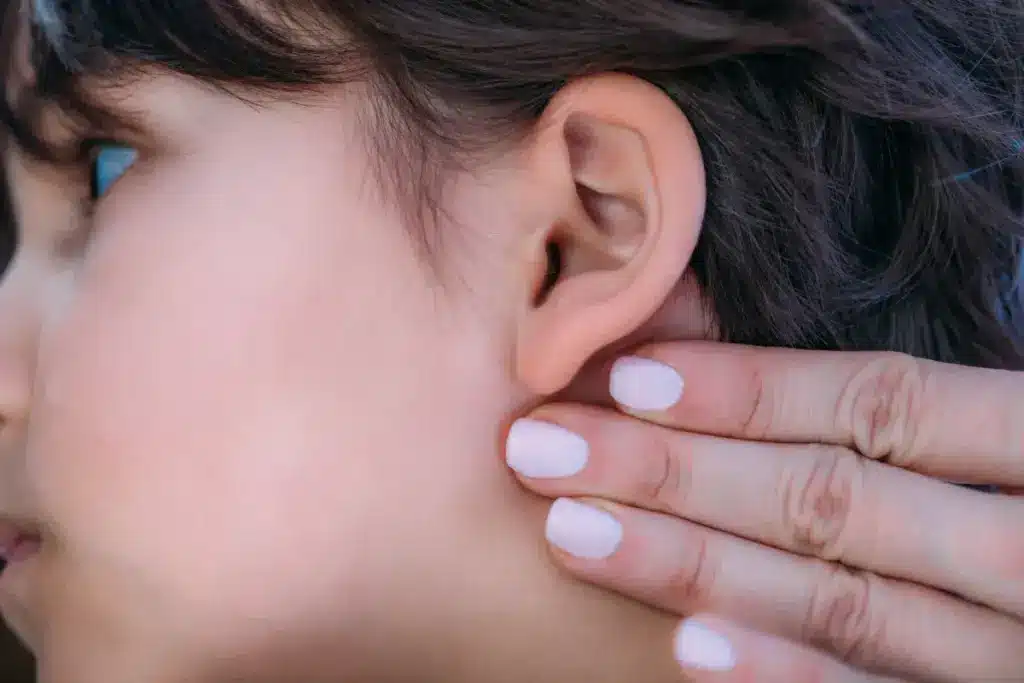
Have you noticed a tender lump in front of your ear or swelling under the earlobe? Swollen lymph nodes in this area are common. They usually mean your immune system is fighting an infection or inflammation nearby.
Preauricular lymph nodes are in front of your ears. They help drain lymph fluid from your eyes, cheeks, and scalp. If these nodes swell, it might mean you have an issue that needs to be looked at.
It’s important to know why preauricular lymph nodes swell. This helps figure out what to do next. We’ll look at why this happens and when you should see a doctor.
Key Takeaways
- Preauricular lymphadenopathy refers to the swelling of lymph nodes in front of the ear.
- These lymph nodes drain fluid from the eyes, cheeks, and scalp.
- Swollen preauricular lymph nodes can signal an immune response to infection or inflammation.
- Understanding the causes is key to knowing what to do.
- Seeing a doctor might be needed to find out what’s going on.
Understanding Preauricular and Deep Parotid Lymph Nodes
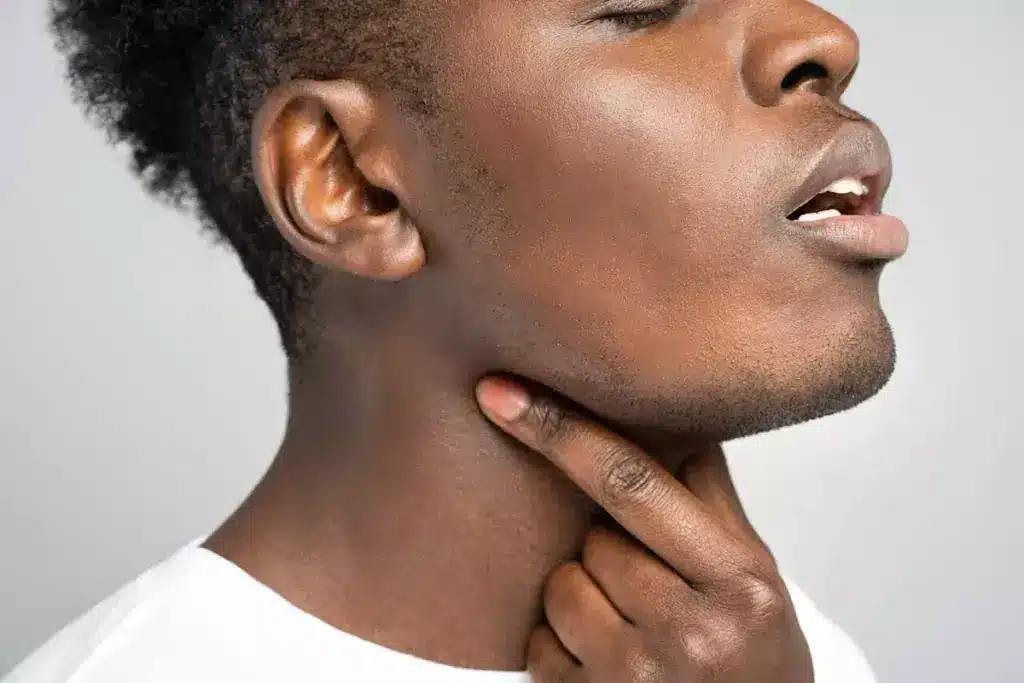
It’s important to know about preauricular and deep parotid lymph nodes. They help fight off infections in the head and neck. These nodes are near the ear and jaw, filtering fluid from the eyes, cheeks, scalp, and temporal regions.
Location and Anatomical Significance
The preauricular lymph nodes are in the neck area. They filter fluid from the face, including the eyes and scalp. The deep parotid lymph nodes are inside the parotid gland, near the ear. Together, they protect the head and neck from infections.
These nodes are key in fighting off infections. They are the first defense against harmful substances entering the body through the face and scalp. Their role is vital in detecting and responding to threats early on.
Normal Function in the Immune System
Preauricular and deep parotid lymph nodes act as filters. They catch pathogens and foreign particles. They also activate immune cells to fight infections.
Normally, these nodes can’t be felt. But when they’re involved in an immune response, they swell and become tender. This shows there’s an infection or other issue.
How Lymph Nodes Respond to Threats
When the body finds a threat, like an infection, the lymph nodes spring into action. They filter out pathogens and foreign substances. This makes them swell with immune cells.
The swelling of these nodes can mean different things. It could be a local infection or a bigger disease. Knowing how they react to threats helps in diagnosing and treating head and neck issues.
Common Causes of Swollen Lymph in Front of Ear
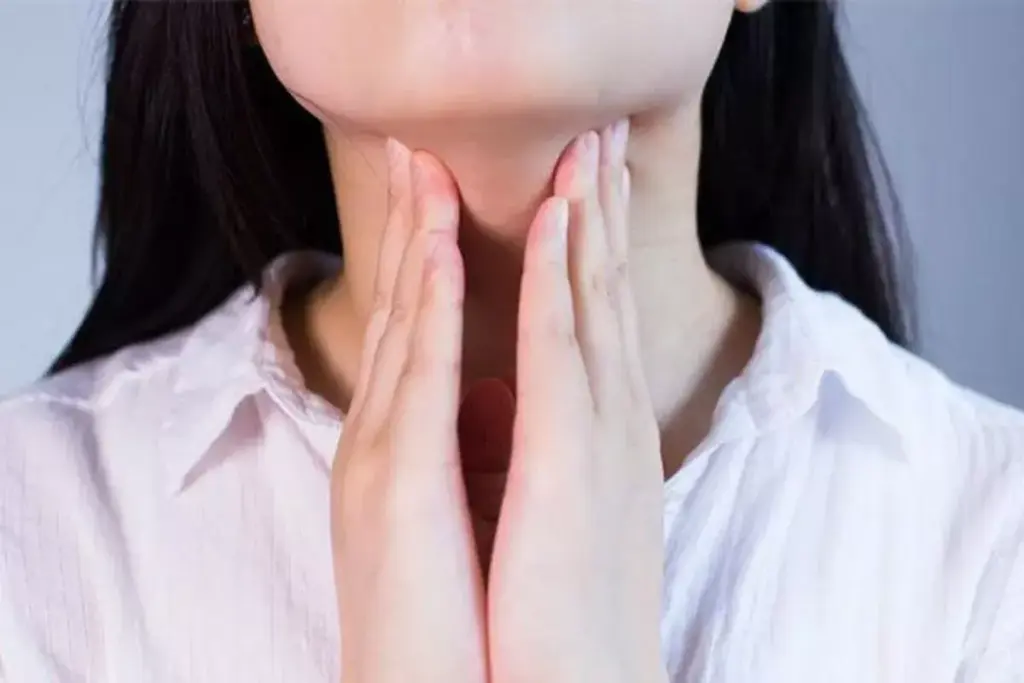
Swollen lymph nodes in front of the ear can signal an infection or health issue. We’ll look at the causes, like bacterial and viral infections, and other less common problems.
When the body fights off an infection, lymph nodes can swell. The preauricular lymph nodes, near the ear, can swell for many reasons.
Bacterial Infections
Bacterial infections often cause swollen lymph nodes in front of the ear. These include:
- Ear infections, like otitis externa or otitis media, make lymph nodes swell as the body fights the infection.
- Tooth abscesses or dental infections can also swell lymph nodes in this area.
- Skin infections on the face or scalp can make the preauricular lymph nodes enlarge.
Viral Infections
Viral infections are another big reason for swollen lymph nodes in front of the ear. Common ones include:
- The common cold or flu can cause swollen lymph nodes, including the preauricular nodes.
- Herpes simplex virus can cause cold sores and swollen lymph nodes.
- Other viral infections, like mononucleosis or HIV, can also swell lymph nodes.
Less Common Causes
While infections are common, other reasons for swollen lymph nodes in front of the ear exist. These include:
- Autoimmune disorders, like lupus or rheumatoid arthritis, can swell lymph nodes.
- Cancers, including lymphomas or leukemias, can also cause swollen lymph nodes.
- Allergic reactions can sometimes swell lymph nodes.
Knowing why lymph nodes swell in front of the ear is key for the right treatment. We’ll now explore some important factors and their connection to swelling.
| Cause | Common Symptoms | Typical Treatment |
| Bacterial Infections | Redness, swelling, pain, fever | Antibiotics, drainage of abscesses |
| Viral Infections | Fever, sore throat, fatigue | Supportive care, antiviral medications |
| Autoimmune Disorders | Joint pain, skin rashes, fatigue | Immunosuppressive medications, lifestyle changes |
Symptoms and Treatment Options
Knowing the symptoms and treatment options for swollen lymph nodes in front of the ear is key. When these nodes swell, it often means there’s an issue that needs quick attention.
Recognizing Associated Symptoms
Symptoms like fever, sensitivity to food, and skin inflammation are common. Watching these symptoms closely is important because they show how serious the problem is.
Other signs include redness, swelling, or pain. Spotting these early can help get the right treatment sooner.
Home Care Measures
For mild cases, home care can help. Try using a warm compress, staying hydrated, and resting. Over-the-counter pain relievers can also ease discomfort.
Medical Treatments Based on Underlying Cause
Treatment for swollen lymph nodes depends on the cause. For bacterial infections, antibiotics are often used. Viral infections might just need symptom management until they clear up.
| Cause | Typical Treatment |
| Bacterial Infection | Antibiotics |
| Viral Infection | Symptom management |
| Cancer | Specialized treatment (e.g., chemotherapy, radiation) |
When to Seek Immediate Medical Attention
See a doctor if symptoms are severe, like trouble swallowing or high fever. Getting medical help quickly is vital for finding the right treatment.
Knowing the symptoms and when to see a doctor is critical. If you’re unsure or have other concerning symptoms, it’s best to talk to a healthcare professional.
Conclusion
Swollen lymph nodes in front of the ear can signal an infection or another issue. We’ve talked about why they swell, like infections or autoimmune diseases. Usually, swollen glands near the ears aren’t a big deal and go away once the cause is treated.
If you notice an enlarged lymph node or a swollen ear lobe, watch it closely. See a doctor if the nodes are red, hurt a lot, or don’t get better in a few weeks. For more details, check out Verywell Health.
Knowing what causes swollen lymph nodes helps you handle your symptoms better. It’s key to recognize the signs and get medical help when needed. We encourage you to stay informed and take action to treat any underlying issues.
FAQ
References
National Center for Biotechnology Information. Evidence-Based Medical Insight. Retrieved from