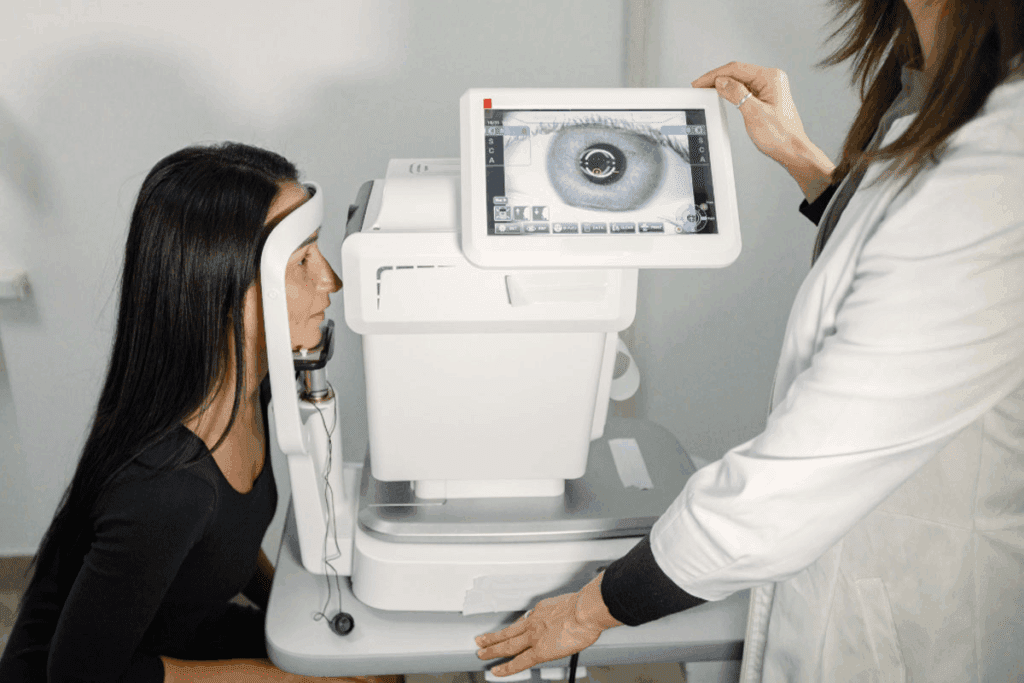
For those with diabetes, a detailed diabetic eye exam is key. It helps catch problems early. Diabetic retinopathy, which can cause blindness, affects about 30 percent of diabetics. At Liv Hospital, we use the latest tech to spot vision dangers before they show up.
Our team knows how vital early detection is. A comprehensive eye exam for diabetes has many parts. These parts help find eye issues linked to diabetes. We follow international standards and focus on our patients to give top-notch care.
Wondering what does a diabetic eye exam consist of? Our guide details every step, from dilation to the retinal check.
Key Takeaways
- Diabetic eye exams are vital for catching eye problems early.
- Liv Hospital uses the latest tech for eye screenings.
- A detailed eye exam has many parts to find diabetic retinopathy.
- Spotting problems early helps keep vision for diabetics.
- We follow international standards and put our patients first at Liv Hospital.
The Importance of Regular Eye Exams for Diabetic Patients

Regular eye exams are very important for people with diabetes. Diabetes can cause eye problems. Early detection and prevention are key.
Diabetes can harm the blood vessels in the retina. This can lead to diabetic retinopathy, glaucoma, and cataracts. Regular exams can catch these issues early, helping to save vision.
Why Diabetes Affects Eye Health
Diabetes mainly affects eye health by damaging blood vessels. High blood sugar can cause these vessels to leak or block. This can lead to:
- Diabetic retinopathy, where the retina’s blood vessels are damaged.
- Glaucoma, a condition that can lead to optic nerve damage.
- Cataracts, where the lens of the eye becomes cloudy.
The American Diabetes Association says eye exams are key. They help catch eye diseases early, when they’re easier to treat.
Recommended Frequency of Eye Exams for Diabetics
The frequency of eye exams for diabetics depends on their type and health. People with type 1 diabetes should see an eye doctor within five years of diagnosis. Those with type 2 diabetes should see one at diagnosis. After that, annual exams are recommended.
Eye exams are a big part of managing diabetes. They help keep vision and eye health safe. By understanding the risks and getting regular exams, diabetics can lower their risk of eye problems.
Understanding Diabetic Eye Disease

Diabetic eye disease is a group of eye problems linked to diabetes. It’s a big worry for people with diabetes because it can cause serious vision loss if not treated.
There are several eye conditions caused by diabetes, each with its own symptoms and risks. Knowing about these conditions helps catch problems early and treat them well.
Diabetic Retinopathy
Diabetic retinopathy is a common diabetes complication. It happens when high blood sugar damages the retina’s blood vessels. This can lead to vision loss or blindness.
There are two types of diabetic retinopathy. Non-proliferative has damaged blood vessels that can leak. Proliferative is more serious, with new, fragile blood vessels that can cause severe vision loss.
Diabetic Macular Edema
Diabetic macular edema (DME) is a serious diabetes-related eye condition. It happens when fluid builds up in the macula, affecting sharp vision. This can make everyday tasks like reading and driving hard.
The risk of DME grows with diabetes duration and other complications. Regular eye checks are key to catching DME early, when it’s easier to treat.
Other Eye Conditions Associated with Diabetes
Diabetes is also linked to cataracts and glaucoma. People with diabetes often get cataracts younger and faster. Glaucoma, mainly open-angle, is more common too.
Glaucoma increases intraocular pressure, damaging the optic nerve. This can lead to vision loss.
Condition | Description | Potential Complications |
Diabetic Retinopathy | Damage to blood vessels in the retina due to high blood sugar levels. | Vision loss or blindness. |
Diabetic Macular Edema | Fluid buildup in the macula, causing vision distortion. | Vision impairment affecting daily activities. |
Cataracts | Clouding of the lens in the eye. | Vision loss if left untreated. |
Glaucoma | Increased intraocular pressure damaging the optic nerve. | Vision loss or blindness if not managed properly. |
Preparing for Your Diabetic Eye Exam
Before your diabetic eye exam, there are steps to take. Being prepared helps your eye doctor do a thorough check. This way, they can give you accurate advice and care.
What to Bring to Your Appointment
Bring important medical info to your exam. This includes:
- A summary of your diabetic history, including the type of diabetes and any related complications.
- A list of all medications you are currently taking, including dosages and frequencies.
- Any previous eye exam records or relevant medical history.
- Your insurance information and any necessary identification.
Medication List Importance
A detailed list of your medications is key. It helps your eye doctor understand any effects on your eyes.
Medication Considerations Before the Exam
Some medications can affect your eye exam. This includes those that cause pupil dilation or interact with eye drops. Tell your eye doctor about:
- Any allergies or sensitivities to medications, specially eye drops.
- Medications that may cause drowsiness or other side effects.
Also, talk about any worries or questions you have about your medications and how they might affect your exam.
Preparation Step | Description |
Bring Medical History | Summary of diabetic history and previous eye exams. |
List Medications | All current medications with dosages and frequencies. |
Discuss Medication Concerns | Inform about allergies, sensitivities, and possible side effects. |
Being well-prepared for your diabetic eye exam makes your visit more effective. It helps your eye doctor give you the best care for your eyes.
Medical History Review in Diabetic Eye Exams
During a diabetic eye exam, we look closely at the patient’s medical history. This helps us understand how they manage their diabetes. It’s key to spotting eye problems linked to diabetes.
We review the patient’s health history to see how it affects their eyes. We check their diabetes plan, look at their medical records, and talk about any symptoms. This helps us get a full picture of their health.
Diabetes Management Assessment
Checking how well a patient manages their diabetes is very important. We look at their blood sugar levels, what medicines they take, and their lifestyle. This tells us how well they’re controlling their diabetes and if it’s affecting their eyes.
Good diabetes management is vital to avoid eye problems. Knowing how a patient manages their diabetes lets us give them advice to keep their eyes healthy.
A1C Levels and Their Significance
A1C levels show how well a patient controls their diabetes. We check these levels to see their average blood sugar over 2-3 months. High A1C levels mean poor diabetes control, which raises the risk of eye problems.
Keeping an eye on A1C levels helps us see if a patient’s diabetes control is changing. By keeping A1C levels in check, patients can lower their risk of eye issues.
Previous Eye Issues Documentation
It’s important to document any past eye problems. We look at the patient’s medical records for any eye issues like diabetic retinopathy or cataracts. This helps us understand their eye health history and spot any risks.
Knowing about a patient’s past eye problems lets us tailor their care. We can create a treatment plan just for them and offer advice on managing their diabetes.
Visual Acuity Testing Procedures
During a diabetic eye exam, visual acuity testing checks how well a patient sees objects at different distances. This test is key to spotting vision changes linked to diabetes.
Standard Vision Charts Used
The Snellen chart is the main tool for this test. It has letters of different sizes, with the biggest at the top and the smallest at the bottom. Patients cover one eye and read the letters from the top down. The results are noted for each eye.
Other charts, like the LogMAR chart, are also used. They are more precise, great for those with poor vision. The choice depends on the patient’s needs and the eye doctor’s preference.
How Results Are Interpreted for Diabetic Patients
The test results show the smallest line of letters a patient can read. For diabetics, a change in vision can mean diabetic retinopathy or other eye issues are starting or getting worse.
Important things to look at include:
- The sharpness of vision in each eye
- Any differences in visual acuity between the two eyes
- Changes over time compared to previous tests
For diabetic patients, regular visual acuity tests are critical. They help catch eye problems early. This lets eye care professionals adjust treatments as needed.
What Does a Diabetic Eye Exam Consist Of: Core Procedures
A diabetic eye exam includes several key steps. These help doctors find and treat eye problems linked to diabetes. They check the eyes thoroughly to spot and treat issues early.
Initial Assessment Steps
The first steps of a diabetic eye exam are very important. Visual acuity testing is often the first thing done. It checks how well you can see, using a vision chart. This test shows if there are vision problems that need more checking.
Doctors also look at your medical history. They want to know about your diabetes and any eye problems you’ve had before. This helps them understand your health better.
Specialized Tests for Diabetes-Related Complications
Diabetic eye exams use specialized tests to find eye problems caused by diabetes. A dilated funduscopic examination lets doctors see the retina and blood vessels. They look for signs of diabetic retinopathy or other problems.
Duration and Patient Experience
How long a diabetic eye exam takes can vary. It usually lasts 1 to 2 hours. This time is needed to do a detailed check of your eyes.
Eye care clinics try to make the exam comfortable for you. They explain everything clearly and answer your questions. They also make sure you’re comfortable during the exam.
Pupil Dilation Process and Purpose
Dilating the pupils is key in diabetic eye exams. It lets doctors see the retina clearly. This helps spot eye problems early.
Eye drops are used to make the pupils bigger. This makes it easier for doctors to check the eye’s inside parts.
Dilating Eye Drops: Types and Effects
There are many types of dilating eye drops. The most common ones have tropicamide or phenylephrine. These drops relax the muscles around the pupil, making it bigger.
Type of Drop | Active Ingredient | Effect |
Tropicamide Drops | Tropicamide | Temporary pupil dilation |
Phenylephrine Drops | Phenylephrine | Pupil dilation and reduced eye redness |
What to Expect After Dilation
After dilation, you might feel light sensitivity and blurred vision. These effects last a few hours until the drops fade. Wearing sunglasses can help with light sensitivity.
“Pupil dilation is a safe and effective way to ensure a complete eye exam. While it may cause some temporary discomfort, the benefits of a dilated eye exam far outweigh the inconvenience.”
— Eye Care Professional
Post-Dilation Care Instructions
To feel comfortable after the exam, follow these tips:
- Avoid driving until your vision is back to normal.
- Wear sunglasses to protect your eyes from light sensitivity.
- Take it easy for the rest of the day if you’re experiencing blurred vision or discomfort.
By following these guidelines, you can reduce any discomfort and recover smoothly from dilation.
Slit-Lamp Examination Technique
The slit-lamp examination is key in diabetic eye care. It helps eye doctors check the eye’s front part. This tool is essential for spotting eye problems linked to diabetes.
How the Slit-Lamp Works
A slit-lamp combines a bright light with a microscope. It gives a close-up look at the eye’s parts, like the cornea and lens. Doctors adjust the light to see different eye areas well.
What Doctors Look for in Diabetic Patients
Doctors use the slit-lamp to find signs of diabetic eye disease. They look for cataracts or new blood vessels in the iris. They also check the eye’s front part for any diabetes-related issues.
Key aspects examined include:
- The clarity of the cornea and lens
- The presence of any inflammation or infection
- Abnormal blood vessel growth
Using a slit-lamp, doctors can spot problems early. This allows for quick action to manage diabetic eye disease.
Intraocular Pressure Testing for Glaucoma
Intraocular pressure testing is key in finding glaucoma. It checks the eye’s pressure. People with diabetes are more likely to get glaucoma, so this test is very important for them.
Normal Pressure Ranges
Normal eye pressure is between 10 to 21 mmHg. But, having a normal pressure doesn’t mean you’re safe from glaucoma. Some people can have glaucoma even with normal pressure, called normal-tension glaucoma.
Testing Methods: Tonometry
Tonometry is how we measure eye pressure. There are a few types:
- Goldmann Applanation Tonometry: This is the top choice. It uses a special dye and a slit-lamp to flatten a small cornea area.
- Non-Contact Tonometry: This method uses air to flatten the cornea without touching it.
- Portable Tonometry: Great for home use or when you can’t use other methods.
Each type has its own benefits. The doctor picks the best one for you.
Relationship Between Diabetes and Glaucoma Risk
Diabetes makes you more likely to get glaucoma. High blood sugar can harm the optic nerve. This makes diabetic patients more at risk.
Getting your eye pressure checked often is key. It helps catch glaucoma early, which is very important for diabetic patients. Knowing the risks and getting tested regularly can help protect your vision.
Advanced Imaging Techniques in Diabetic Eye Care
We use advanced imaging techniques to care for diabetic patients’ eyes. These technologies help us spot and track diabetic eye disease better.
Fundus Photography
Fundus photography is a non-invasive way to see the retina’s details. It lets us watch for changes in the retina. This helps us find signs of diabetic retinopathy and other eye issues.
Optical Coherence Tomography (OCT)
Optical Coherence Tomography (OCT) is a detailed imaging test. It uses low-coherence interferometry to show the retina’s layers clearly. OCT helps us see problems like diabetic macular edema and other retinal diseases.
Ultra-Widefield Retinal Imaging
Ultra-widefield retinal imaging shows more of the retina than usual methods. It’s great for finding peripheral retinal lesions and tracking disease in diabetic patients.
With these advanced imaging techniques, we can make more accurate diagnoses. This leads to better treatment plans for our diabetic patients. Our goal is to give top-notch care and improve patient results.
Dilated Funduscopic Examination Explained
A dilated funduscopic examination is key for eye doctors to check the retina and blood vessels in people with diabetes. It’s important for spotting and treating diabetic eye disease.
We use special tools to see the retina and blood vessels up close. The pupils are dilated to let more light in, making the retina clearer to see.
Examination of the Retina and Blood Vessels
This exam lets us closely look at the retina and blood vessels. We search for damage like hemorrhages or abnormal blood vessel growth. Diabetes can make blood vessels weak and leaky.
We check the retina thoroughly, including the macula and outer areas. We also look at the blood vessels for signs of diabetic retinopathy or other issues.
Signs of Diabetic Eye Disease Doctors Look For
We search for signs of diabetic eye disease like microaneurysms or retinal edema. These signs show diabetic retinopathy is present or getting worse.
Finding these signs early is key for good treatment and care. We can spot risky areas and take steps to avoid vision loss.
Understanding the findings of this exam helps us create a treatment plan. This plan aims to manage diabetic eye disease and keep vision safe.
Conclusion: The Value of Comprehensive Diabetic Eye Exams
Comprehensive diabetic eye exams are key in managing diabetes. They help find and treat eye problems early. This is important for keeping your vision and eye health good.
These exams check your vision, dilate your pupils, and use advanced imaging. This gives a full view of your eye health. Finding problems early means you can get treatment quickly, which helps avoid losing your sight.
If you have diabetes, make eye exams a priority. Regular exams help keep your vision sharp and your life quality high. Diabetic eye exams are vital for spotting and handling eye issues related to diabetes. They are a big part of taking care of diabetes.
FAQ
What is a diabetic eye exam?
A diabetic eye exam is a detailed eye check. It looks for eye problems linked to diabetes, like diabetic retinopathy and macular edema, early on.
Why is a diabetic eye exam important?
It’s key for people with diabetes. It catches eye issues early, so they can get treated quickly and avoid losing vision.
How often should I have a diabetic eye exam?
The American Diabetes Association says people with type 1 diabetes should see an eye doctor within five years of diagnosis. Those with type 2 diabetes should go at diagnosis.
What does a diabetic eye exam consist of?
It includes a visual test, pupil dilation, and a slit-lamp exam. You’ll also get intraocular pressure tests and advanced imaging like fundus photography and OCT.
What is pupil dilation, and why is it necessary?
Pupil dilation uses eye drops to widen your pupils. This lets doctors see the retina and blood vessels better. It’s key for spotting diabetic eye disease.
What is diabetic retinopathy?
Diabetic retinopathy damages the retina’s blood vessels. If not treated, it can cause vision loss.
What are the symptoms of diabetic eye disease?
Early diabetic eye disease often has no symptoms. Regular eye exams are vital to catch problems before they show symptoms.
Can diabetes cause glaucoma?
Yes, diabetes raises glaucoma risk. Intraocular pressure tests during exams help catch glaucoma early.
How can I prepare for my diabetic eye exam?
Bring your medical history, including diabetes and medications, to your appointment. This helps your doctor understand your care and spot eye issues.
What is the role of OCT in diabetic eye exams?
OCT provides detailed retina images. It helps doctors diagnose and monitor diabetic eye disease.
How long does a diabetic eye exam take?
A diabetic eye exam usually takes 1-2 hours. This includes time for pupil dilation.
What should I expect after a diabetic eye exam?
Your doctor will talk about the exam’s results and any needed treatment. You might see blurry vision after dilation, but it usually clears up in a few hours.
References
National Center for Biotechnology Information. Diabetic Eye Exams: Early Detection and Technology at Liv Hospital. Retrieved from https://www.ncbi.nlm.nih.gov/books/NBK582424/